Three Old Boys (三叉戟, Gao Qunshu, 2024)

In a surprising development of Chinese propaganda cinema, the once untouchable subject of police corruption has become a prominent feature albeit often in tales of righteous cops who stand up for real justice against the few bad apples who’ve allowed themselves to be corrupted by contemporary capitalism. Then again, its subject matter might explain why TV police procedural veteran Gao Qunshu’s Three Old Boys (三叉戟, sānchājǐ) has been languishing on the shelf since at least 2020 if it were not also for the inevitable effects of the pandemic. 

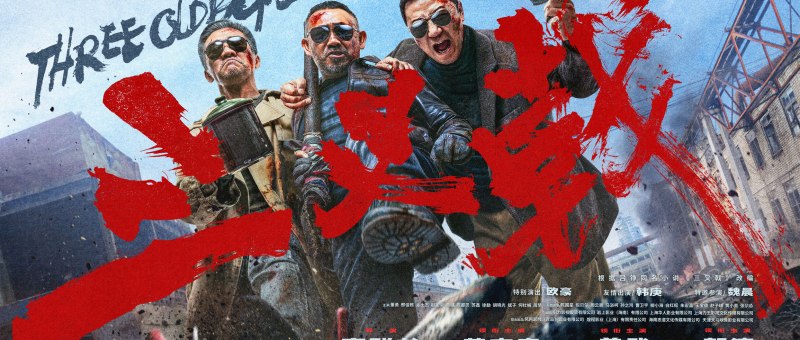
In any case, Gao’s film has a distinctly retro vibe with use of classic Chinese pop and very ‘70s soundtrack while its maverick cop heroes all dress in the fashions of 40 years previously. All born in the late 1960s, they are products of an even more authoritarian era and began their careers in the late 1980s. Like any other old cop movie, they bemoan the restrictions of the contemporary society and suggest modern notions of appropriate police behaviour prevent them from doing their jobs which has its degree of awkwardness on the one hand implying the modern police force is now not so hardline but also that it should be because that’s what gets the job done. 

As they contemplate retirement, the trio are offered positions as part of a new squad set up to tackle economic crimes and specifically international money laundering, the chief problem with being that the criminals had the effrontery to move the money out of China which is stealing from honest, hardworking, Chinese citizens aside from having already ripped them off with fraudulent investment schemes and good old-fashioned blackmail operations. Of course, as it turns out, the case has a connection to something that happened 20 years earlier and police officer Cui’s (Huang Zhizhong) desire for revenge on the gangster king pin, Huang Youfa (Jin Shijie), who caused the death of his younger brother murdered by gangster Donzgi who was then shot dead by fellow officer Big G (Jiang Wu). 

The convoluted narrative is heralded by a homeless man who takes the police chief hostage and mutters something about a sword of justice that sounds like something right out of a wuxia serial before being updated to the present day. The sword does actually make a reappearance and is wielded by Big G against a young whippersnapper out for revenge and to take care of what he sees as corruption in the earlier generation. When the trio are first put on the case, they are given a young rookie to help them because he’ll be able to do the tech stuff which the old guys probably can’t because their idea of policing was largely rooted in their fists and a capacity for intimidation. But this doesn’t really work with the youth of today who are for some reason fond of reminding them they aren’t their fathers so they don’t have to do what they say. This is particularly true of young thug Blondie who is caught between Ghost, the old gangster king, and Qing an upstart who is actually working for Huang but in pursuit of his own particular goals. 

Huang has his claws well and truly embedded in the modern society and has it seems manoeuvred favourable people into the police force ensuring that Cui and his team are neutered before they get the chance to do anything. Then again, Big G seems to have a very co-dependent relationship with Ghost who tells Blondie off for getting into a fight with him because cops are off limits. Nevertheless, the point is to dismantle Huang’s networks of influence to restore the integrity of the police force so they can enforce the law which exists for the protection of the people. It’s all rather confusing, but generally lightened by the intense action sequences designed by Yoo Sang-Seob which are also suitably retro but make good use of sword play along with a motorcycle chase. Perhaps ironically inspired by Hollywood hero cop dramas, the film ends with a regime change and a new photo being taken of the guys in their more modern uniforms receiving a commendation with the clear indication that something has been put to rest and the rebellion suggested by Qing’s attempt to steal power from the old quelled while the old boys seemingly decide that justice requires they put off their retirement just a little longer.


International trailer (English subtitles)
Fat Buddies (胖子行动队, Bao Bei’er, 2018)

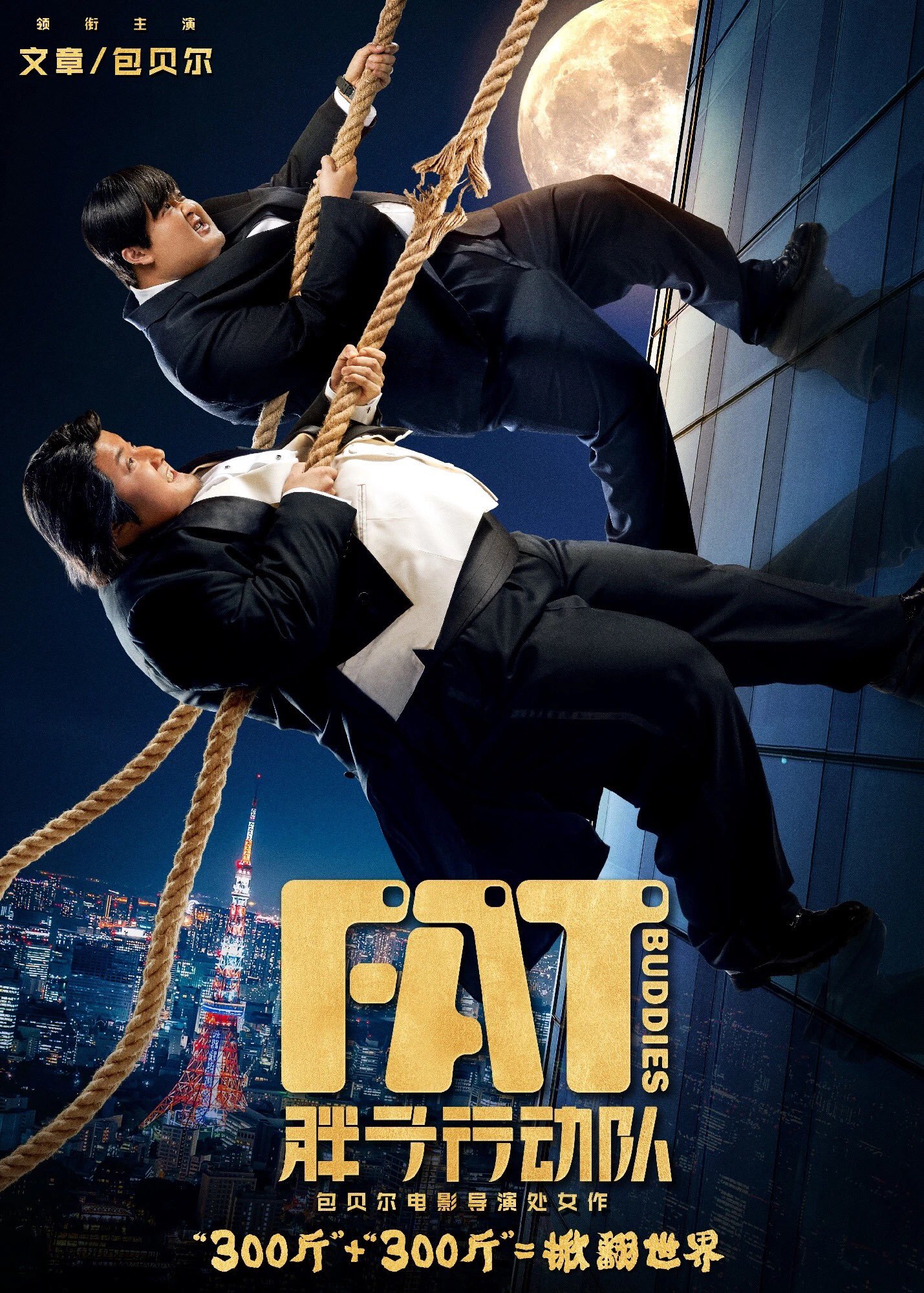
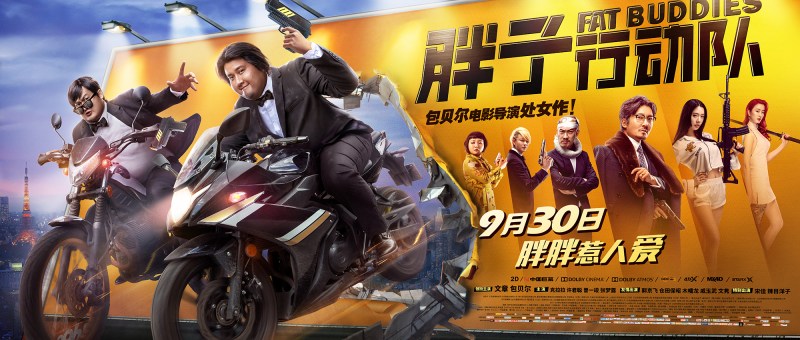
Fat Buddies posterChinese cinema hasn’t exactly had the best record when it comes to dealing with atypical heroes, but then no cinema really has. Gazing at the poster for Fat Buddies (胖子行动队, Pàngzi Xíngdòng Duì) – the debut directorial feature from actor Bao Beier who also stars, one can’t help but assume the next two hours will be one long joke at the protagonists’ expense, but to its credit Fat Buddies is not (entirely) the film it seems to be and, ironically enough, there is more going on beneath the surface than an excuse to have at a “permissible” target.

The hero, played by Bao Beier himself, is a very rotund security guard currently working in a hospital in Tokyo for reasons which will (mostly) be explained later. Though Hao is a cheerful and friendly man with a strong sense of justice, he is ostracised by the (strangely large number of) other guards and has no real friends save his extraordinarily beautiful Japanese wife. Hao’s life changes forever one day when another large Chinese man calling himself “J” arrives at the hospital and causes a ruckus by trying to escape without paying. J convinces Hao that he is an international super spy on a top secret mission and that he needs Hao’s help to get out of the hospital so he can save the world. Believing he is finally being given the chance to become the agent of justice he’s always dreamed of being, Hao is only too eager to oblige.

Strangely enough, the entire film takes place in Tokyo even though the heroes and antagonists are all Chinese. Even so, it never resorts to the comedic caricatures common in recent mainland cinema when depicting the Japanese with even the police characterised as dedicated and efficient if sometimes a little overzealous and misguided, though one does wonder if the setting was chosen solely for the sumo associations of the grand finale. There is however a degree of bite in Hao’s view of himself as a non-Japanese person living in Japan who is married to a Japanese citizen and speaks the language fluently but still remains an outsider both because of his unusual appearance and because of his nationality (with a mild implication from some that perhaps the two things are not entirely unrelated). In an early set piece, Hao and J find themselves trying to infiltrate an upscale party where they have unwittingly stolen the clothes of a pair of famous dancers and eventually end up improvising a strange routine to a bawdy song which is all about being a “foreigner” in Japan who “doesn’t understand Japanese but loves Sora Aoi” and then continues in a similarly lowbrow vein with a mix of Mandarin, international English, and intentionally broken Japanese.

Rather than a two hour fat joke – though there are a fair few of those in a recurrent motif of J getting stuck in things Pooh-style and losing his trousers in the process, the the major message is that the pair are fine as they are and apart from the aforementioned problem, their size is not a barrier to being able to do anything they want including taking on international spy missions. Despite his happy marriage, Hao still suffers from loneliness and low self-esteem due to a lifetime of being looked down and on belittled, unable to make friends because of prevalent social stigma towards those on the heavier side. The solution, however, is not a makeover or a crash diet but a gradual process towards Hao regaining his sense of self worth and realising he has plenty to offer the world despite what anyone else might say. Similarly J, who experienced rapid weight gain after a life threatening injury and also suffers from narcolepsy, proves that he is still able to do his job even if he benefits from having a partner around when he randomly falls asleep at inopportune moments.

Fat Buddies isn’t claiming to be high art and there is certainly enough of the low humour the title implies to keep those enticed by the poster happy enough, but there is also genuine heart in its odd couple buddy comedy as the two similarly under-appreciated big guys bond in their shared desire to reclaim their sense of dignity and refuse to be shamed or belittled just because of their size (even if they are otherwise quite bumbling and inefficient in their mission). Strangely uplifting, Fat Buddies is an extremely silly comedy starring two men in fat suits repeatedly bumping into things but like its heroes refuses to be bound by stereotypical conventions and manages to make heartwarming drama out of its admittedly ridiculous premise. 


Fat Buddies is currently on limited release in UK Cinemas.

International trailer (English subtitles)