The Vancouver Asahi (バンクーバーの朝日, Yuya Ishii, 2014)

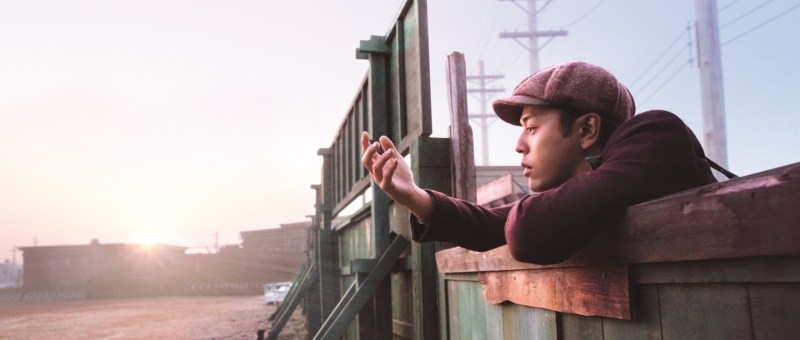
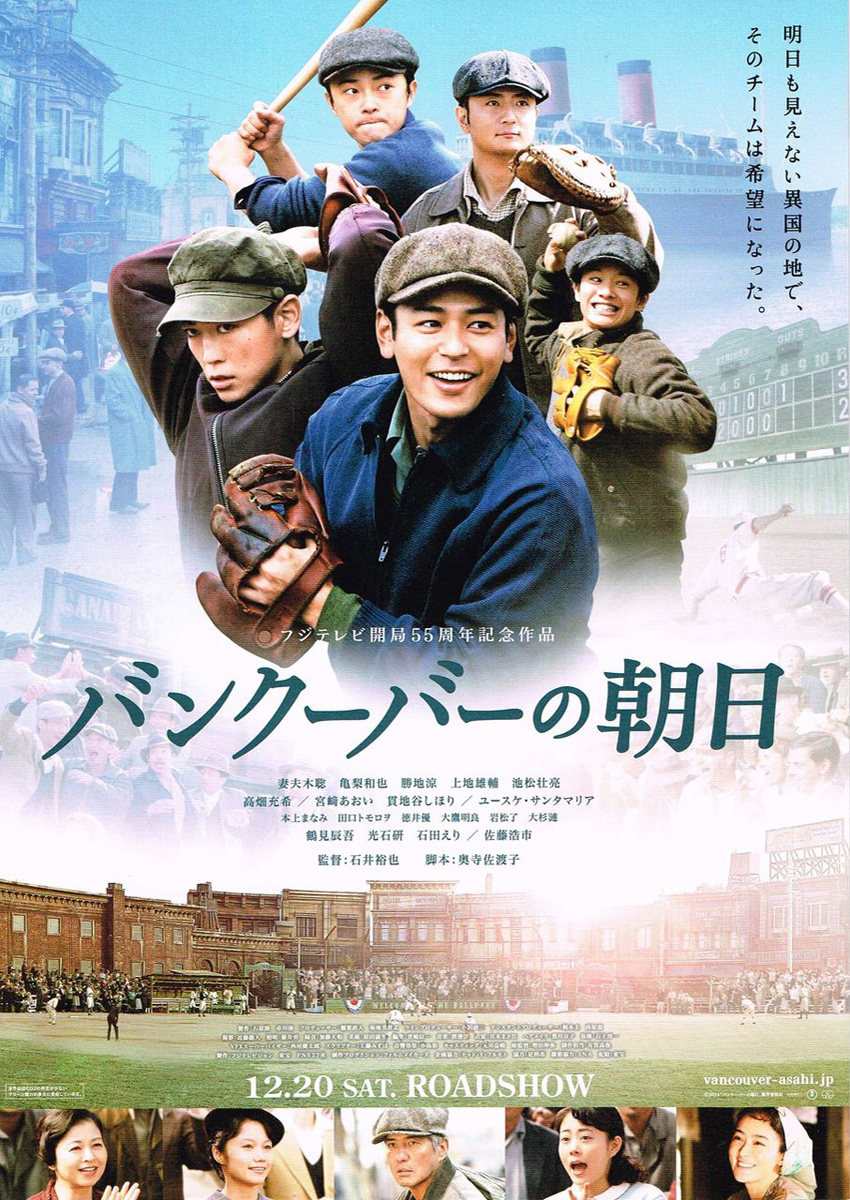
Second generation Japanese-Canadians stake their hopes on baseball in Yuya Ishii’s historical drama The Vancouver Asahi (バンクーバーの朝日, Vancouver no Asahi), inspired by the story of the Vancouver Asahi baseball team which was belatedly granted a place in the Canadian Baseball Hall of Fame in 2003. In many ways a conventional sporting movie in which the underdogs eventually triumph, Ishii does not shy away from the dark shadows of the 1930s even while framing the Asahi’s path to glory as a symbolic punch back against discrimination and oppression. 

As the hero, Reggie (Satoshi Tsumabuki), relates, many like his parents came to Canada at the beginning of the 20th century planning to work for three years and then return to a more comfortable life in Japan only to find themselves trapped in low-paid and exploitative work. Reggie’s main concern is that his drunken and dejected father Seiji (Koichi Sato) still sends the majority of his pay back relatives in Japan meaning their family live like paupers while as he never meant to stay he hasn’t bothered to learn the language or attempt to integrate into the local community. In fact, Reggie is their major breadwinner with his job at the sawmill but the only thing that makes his life worth living is playing baseball with the Vancouver Asahi baseball team even though they are regarded as something of a joke, always at the bottom of the league tables and never actually winning a game. 

The plight of Asahi is closely aligned with that of the immigrant community, divided as it is in its approach to integration with some feeling they should abandon their Japaneseness in order to better get along with Canadians and others fiercely determined to hang on to their traditions. When Reggie admits that they can’t win against the power of the Canadians it feels as if he’s talking about more than just baseball though his solutions are perhaps apt for both in realising that to beat strength you need to be smart. What he comes up with is essentially a bunt and run strategy that plays to their advantages of speed and lightness but also at times feels to him like a trick or a gimmick, an admission that they can’t compete in the normal way. “Why are you always apologising?” Reggie is repeatedly asked, his shyness and mumbling speech always seeking to keep the peace while his desire to offer justification is less as one Japanese old lady puts it “a bad habit of their culture” but a defence mechanism in an environment of potentially violent oppression. 

As Japanese migrants the family faces constant xenophobic micro aggressions, a woman at the hotel refusing to let Reggie’s bellboy friend Frank (Sosuke Ikematsu) carry her bags while they are also suspected as thieves or harassed by the local Canadians. Reggie’s hothead friend Kei (Ryo Katsuji) finds it increasingly difficult to keep his cool, not least as it turns out because his father was killed fighting for the Canadians in the last war and yet he is still treated as a dangerous outsider. Meanwhile, they are paid only half the wages of the Canadian workers, expected to work unreasonable hours, and can be fired without warning. Now an ageing man, Seiji is still a casual labourer fighting for a place on a truck to work at a quarry or construction site often in other towns away from his family in order to get more money. The team is constantly losing players because men lose their jobs and focus on finding new ones or moving away. As one old man laments, there’s no job security and even if you go to a Canadian university it won’t make any difference to your job prospects. Reggie’s sister Emi (Mitsuki Takahata) was on track for a scholarship only to have it pulled at the last minute when parents of the other kids complained it wasn’t right it was going to a Japanese girl. 

After the hotel fires all of its Japanese staff, Frank decides to go “back” to Japan where relatives will help him find work but pointing out to Reggie that he’ll still be seen as an outsider even there and there’s no guarantee anything will be any better in Japan. Poignantly the guys later catch sight of him in a newsreel as a soldier having been sent to the Machurian front. Once war breaks out they are discriminated against again, forced out of their homes and interned leaving all their property behind and destroying their small community, the Asahi included. The team’s unexpected success had forged a bridge between the Japanese and Canadian communities but it was not strong enough to survive the war. Stepping away from the sports movie, Ishii concentrates more on the ways they were betrayed, the team’s success later buried and forgotten while they find the advances they’d made washed away on the shore as if to suggest their strike back against an oppressive society could never be more than superficial while their position remains so precarious. 


Trailer (no subtitles)
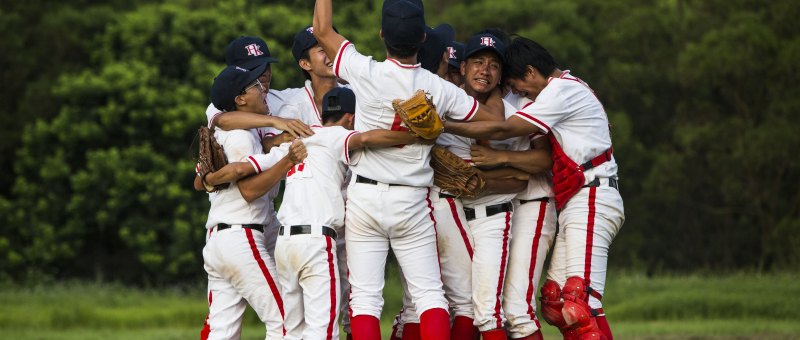
Weeds on Fire (點五步, Steve Chan Chi-Fat, 2016)

“Even though disappointed, do not lose hope” reads a piece of graffiti in the closing moments of Steve Chan Chi-fat’s nostalgic coming-of-age drama Weeds on Fire (點五步). Though touted as a baseball movie, as incongruous as that may sound given that the sport is a niche interest in contemporary Hong Kong, Chan’s strangely hopeful if quietly melancholy tale of ‘80s Sha Tin is bookended by scenes of the present day city in the midst of the Umbrella Movement protests the story the hero wants to offer seemingly intended for an audience of dejected youngsters as confused and disappointed as he once was in order to encourage them that what’s important isn’t winning or losing but staying the course and gaining the confidence to take the first step. 

Now in his mid-40s, Lung (Lam Yiu-sing) casts his mind back to the Hong Kong of 1984 when he lived on a rundown council estate in Sha Tin and attended a high school with a less than stellar academic record. A shy and nerdy boy, he was often bullied but always had childhood friend Wai (Tony Wu Tsz-tung), physically imposing and with a confident swagger, at his back. When the city comes up with additional funding for schools to use in the promotion of sport their enterprising headmaster Lu Kwong-fai (Liu Kai-chi) hatches on the idea of starting the region’s very first local high school baseball team, recruiting both Wai and Lung in the hope of teaching them teamwork and discipline. Nevertheless, being teammates begins to place a strain on their friendship and it becomes clear that the boys are destined for different paths. Wai quits the team in a huff and leaves school, mooching round in pool bars and hanging out with triads while Lung steps up to the plate but is troubled by the loss of his friendship and the fracturing relationship between his unhappily married parents. 

Chan somewhat unsubtly ties Lung’s personal development to that of Hong Kong as he finds himself coming of age in era of anxiety. The world is literally changing around him, 1984 being as says the year that the redevelopment of Sha Tin began in earnest while it also marked the signing of the Sino-British Declaration paving the way for the transfer of power in the 1997 Handover. A young man, Lung wants to “change” himself in that he longs for the confidence to ask out a young woman he’s developed a crush on but is too shy and disappointed in himself for doing nothing when witnessing her being harassed by a drunken creep in the lift of the apartment block where they both live. Yet in other ways change frightens him and really he wants everything to stay the same believing that saying nothing will maintain the status quo only to realise that there are situations over which he has no real control. 

His headmaster and coach of the baseball team Lu admits that he set Wai and Lung against each other in order to encourage him to come out from his friend’s shadow embracing his own identity and discovering a sense of self-confidence. Yet Lung continues to struggle, a little lost unable to find clear direction in his life while everything changes around him occasionally consumed by a sense of despair as perhaps are the young protestors in believing their movement has failed. In baseball what he realises that it isn’t about winning or losing but having the confidence to step up to the plate, subtly telling the protestors to hang in there because there’s still time to turn this around. “I never said we had to win”, inspirational coach Lu reminds the boys, “but I did say never give up!”.

Loosely based on the real life story of the Shatin Martins though as the closing credit reel reveals the original team were primary school children rather than high schoolers, Chan shifts away from sporting drama towards the more familiar youth movie metaphor of two former friends heading in different directions, the good boy knuckling down while the “bad” becomes a victim of his own hotheaded arrogance even if managing to repair his fractured friendship with Lung before tragedy strikes. Filled with memories of Handover anxiety and a healthy dose of ‘80s nostalgia, the film’s incongruous jauntiness is perhaps at odds with the gravity of the tale though that is perhaps itself part of the message the older Lung has for the young. “This is the city where I grew up. It’s become increasingly unfamiliar” he laments striding through streets filled with tents occupied by student protestors, sympathising with their cause while offering them a note of melancholy hope in his own, sometimes painful, tale of finding his feet in a changing Hong Kong. 


Weeds on Fire streams in Poland until Nov. 29 as part of the 15th Five Flavours Film Festival.

Original trailer (English subtitles)

Not Out (낫아웃, Lee Jung-gon, 2021)

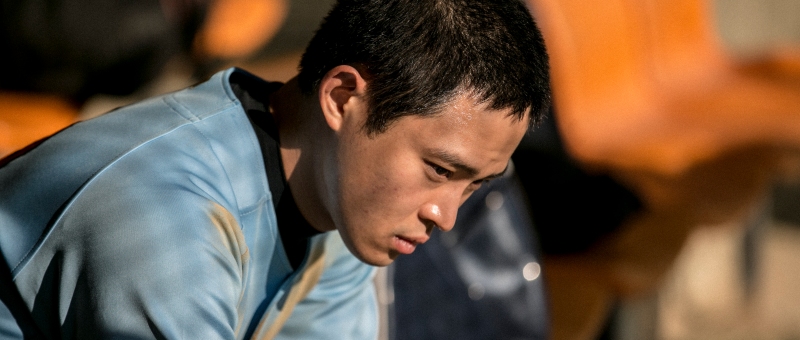
“I just wanted to keep playing baseball” the hero of Lee Jung-gon’s Not Out (낫아웃) eventually wails on finally being confronted with the consequences of his actions. Not so much a baseball movie as a gentle character study Lee’s unexpectedly dark drama sees its singleminded hero descending to depths of sociopathic manipulation in his determination to make his sporting dreams come true but less perhaps out of pure hearted yearning than a sense of embarrassment and fragile masculinity. 

“You won, then it’s over isn’t it?” someone asks Shin Gwang-ho (Jeong Jae-Kwang), the hero of his high school baseball team having just carried them to a miraculous victory. No, he corrects them, it’s only just beginning. Approaching graduation, all Gwang-ho’s ever wanted to do is play baseball, and everyone’s always telling him how good he is at it so much so that he’s internalised a puffed-up sense of himself as a sporting prodigy. That’s one reason why when his coach (Kim Hee-chang) tells him he’s been offered a trainee position with a professional team he arrogantly turns it down, sure that he’s going to be drafted. But his decision backfires, he’s not picked while another boy is leaving him confused, somewhat humiliated, and completely lost as to what to do now. Regretting having thrown away the trainee opportunity he makes the knee-jerk decision to apply to colleges to play in the uni leagues and get another shot at being drafted by the pros, but his decision negatively impacts the life plan of another player whose request not to apply to the same uni falls on deaf ears. Gwang-ho doesn’t really get why it’s a big deal, surely he has the right to try out and let the best player win but his friend, knowing he isn’t talented as Gwang-ho, doesn’t see it that way and intensely resents his insensitivity. 

There is a peculiarly childish component to Gwang-ho’s unthinking determination as he makes a series of increasingly bad decisions in order to pursue his goal little caring who might get hurt in the process. His problem is compounded by the fact that his family is poor, resenting his friend for being wealthy enough to make uni his main plan as if he thinks he can simply do without baseball while to Gwang-ho it’s the only thing that matters. “You think you can play baseball all on your own?” his exasperated coach asks him, fed up with his tendency to alienate his teammates but himself exploiting him in asking for money from his father to improve his chances of being able to continue playing. Gwang-ho, meanwhile, also resents his dad, going so far as to try to guilt him into selling his restaurant to get him the money to go to college.

Gwang-ho continues to do whatever he wants without really thinking about the consequences which is how he ends up trading stolen/illegal homemade petrol with old middle school friend Min-chul (Lee Kyu-Sung). Min-chul and the teenage girl working with him So-hyun (Song Yi-jae) seem to be more aware of the implications of their life of crime while Gwang-ho resolutely refuses to realise that this all very likely to blow up in his face, which it eventually does and quite literally. Pushed to breaking point he hatches a plan to rob the old man running the petrol racket even though despite his obvious criminality he’s actually been quite good to this gang of troubled teens. Min-chul used to play baseball himself but gave up because of an injury, telling Gwang-ho that he thought it would hurt more than it did finally realising “you can just give up if it’s shitty” but Gwang-ho can’t let go of his baseball dreams and is prepared to do pretty much anything to prove he’s “not out” of the game. 

Earlier, the other players had lamented that for them there are no second chances. They’ve invested all their hopes in baseball without studying for the college entrance exams, if they fail to get drafted there’s no obvious way forward. For Gwang-ho who cannot rely on family money, has no connections, other skills or talents, baseball really is all he has which might be why he can’t admit the thought that it’s just not meant to be while his initial failure proves such a huge humiliation that it shatters his sense of self. Only through finally accepting responsibility for his actions, realising the way he’s treated those around him, does he begin move forward apparently getting another shot, still in the game, but perhaps humbled. 


Not Out screened as part of this year’s London East Asia Film Festival.

International trailer (English subtitles)

I Will Buy You (あなた買います, Masaki Kobayashi, 1956)

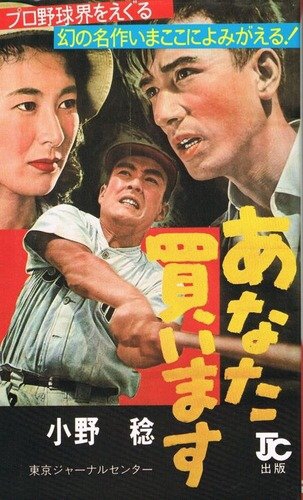
20140731_762129In I will Buy You (あなた買います, Anata Kaimasu, a provocative title if there ever was one), Kobayashi may have moved away from directly referencing the war but he’s still far from happy with the state of his nation. Taking what should be a light hearted topic of a much loved sport which is assumed to bring joy and happiness to a hard working nation, I Will Buy You exposes the veniality not only of the baseball industry but by implication the society as a whole.

Kishimoto works as a scout for a popular Tokyo baseball team. His job is to find the promising young players and charm them into accepting a contract before any of the other teams get to them. His first assignment doesn’t go well when he arrives at an ace pitcher’s home only to be told the subject in question is recovering from having lost a finger in a workplace accident. No major league career for him – Kishimoto heads home without even introducing himself. The next prospect is very exciting – a semi-well known college ball player who might be persuaded to turn pro. However, the student, Kurita, is “managed” by a benefactor, Kyuki (whose name literally means “ball spirit” in Japanese) who seems to be a difficult man to deal with. Nevertheless, Kishimoto is young, ambitious and determined to get Kurita on side by any means possible.

It’s just baseball, one might think but it’s almost as if we’re playing for souls. Everyone is lying, everyone is double crossing everybody else and everyone has their own interests at heart all the while swearing they only want the best for Kurita. Kurita has become a trophy, no one has even thought to ask him if he actually wants to keep playing baseball. He’s no no longer a person for them so much as a flag to be captured. This might actually work out quite well for Kurita himself who, it turns out, is far from the country bumpkin everyone has him pegged as. Though surrounded by carping relatives who are also all intent on exploiting his talent, the possibility of Kurita suddenly discovering the power to make his own decisions is a threat to everyone that they haven’t even considered yet.

Kyuki himself is the bad guy we’ve all been set up to be suspicious of but may actually turn out to be the most decent hustler in the picture. They say he spied for the Chinese during the war but is it a rumour you can really believe or just the jealous slurs of his various rivals? He himself says he taught Chinese girls to use the bayonet and carries an air of aloofness that makes him seem untrustworthy. He’s bankrolled Kurita’s education and taken on the position of a father to him over the last four years but how much of that is genuine feeling and how much financial investment? Kyuki is a married father with a family out of town but is sort of living with the older sister of Kurita’s girlfriend which is an awkward situation in itself. He also claims to have a serious gallstone problem which requires an operation though others claim he’s putting it on. Who is Kyuki, with his suspiciously apt name and hard nosed attitude can we trust him, or not?

I Will Buy You is a characteristically angry and cynical effort from Kobayashi and though it’s still a fairly early work carries some of his later technical prowess. Stripping the mask away from what is assumed to be a gentle pastime, the film lays bare the money hungry desperation of post-war Japan. Money ruins everything, even something as innocent as baseball. The Kurita from the end of the film is not the idealistic young student who came to Tokyo but a canny self-interested individual. Whether or not this transformation, and the accompanying transformation of Kishimoto whose eyes have been well and truly opened, is for the better or not maybe a matter of personal perspective but it’s not hard to guess where Kobayashi stands.


I Will Buy You is the second of four early films from Masaki Kobayashi available in Criterion’s Eclipse Series 38: Masaki Kobayashi Against the System DVD boxset.