Connected (保持通話, Benny Chan, 2008)

A kidnapped woman’s only hope is a distant stranger in Benny Chan’s intense thriller, Connected (保持通話). Inspired by 2004’s Cellular, Chan shifts the action to contemporary Hong Kong with all of its global anxieties but eventually insists that we are all in a sense connected and have a responsibility to each other in the face of corrupt authorities and an increasingly selfish society. In contrast to other techno thrillers, technology is not threat but cure enabling unlikely alliances and facilitating justice both legal and emotional as the heroes work together yet apart to unscramble the shady threat that follows them. 

Mainlander and top robotics engineer Grace Wong (Barbie Hsu) is having a fairly normal day dropping her daughter Tinker off at school before heading into work only to be blindsided by an oncoming truck and stolen away to a secret location. With no clue what’s going on she realises the landline in the shack where they’re keeping her is still connected but one of the goons smashes it before she can get through to anyone. Using her engineering skills she’s able to rewire the surviving bits but can only make random connections which is how she ends up getting through to conflicted debt collector Bob (Louis Koo) who has problems of his own as his son, raised by his sister after his wife’s death, is supposed to be emigrating to Australia this very day and will forever lose faith in his father for his constant disappointments if he doesn’t make it to the airport by 3pm. 

Bob’s buried goodness is immediately signalled by his discomfort with his job as he watches the more violent members of crew harass and intimidate a lone woman and her crying children in an ironic mirror of his son and Grace’s daughter both also in tears while pulled into the orbit of vicious outside forces. Though originally reluctant, assuming he’s on the receiving hand of a prank call, Bob soon comes to realise that Grace and also her daughter are in real danger and after an early attempt to enlist the police fails he is the only one who can save her. Nevertheless, he is torn between conflicting responsibilities, this one to a stranger and the other to his son who has entirely lost faith in him because of his broken promises and internalised shame over the nature of his job. He finds himself doing quite extraordinary things to keep both promises which further mark him out as a “good person”, such as firing a gun at the floor to get the attention of a bored shop clerk who’d been trolling him but then insisting on paying the full amount for his phone charger and not even stopping for the change. 

Even so, there’s further conflict on the horizon when it turns out the crooks, led by a spooky Mainlander, are carrying Interpol badges leaving a huge question mark about what’s really going on, who the good guys are in this situation and whose side everyone else is on. Unthinkable in the current cinematic climate, the spectre of police corruption raises its ugly head though despite having failed to respond when originally hailed wronged hero cop Fai (Nick Cheung) eventually jumps into action after noticing something suspicious enabling Bob to fulfil his heroic missions and followthrough on his promises. 

Filled dry black humour, Chan’s worldview is tinged with an irony that also makes its way into the extremely elaborate action sequences including a car chase that later plows through an entire truck of Pepsi Max, and a flirtatious boyfriend who swears to protect his lady love for all eternity only to run off at the first sign of danger. Yet there’s also an idealistic faith in human goodness in Bob and Fai’s refusal to back down in the face of injustice, each of them somewhat revitalised in their quests to rescue Grace whose engineering skills made the whole thing possible in the first place along with her determination of save herself and protect her family. It really is all connected, the intricate, slow burn mystery gradually revealing itself thanks to the growing connection between the heroes, each of them strangers but stepping up when needed unable to abandon someone in danger while refusing to allow corrupt authority to treat their homeland with such contempt.


Original trailer (Traditional Chinese / English subtitles)
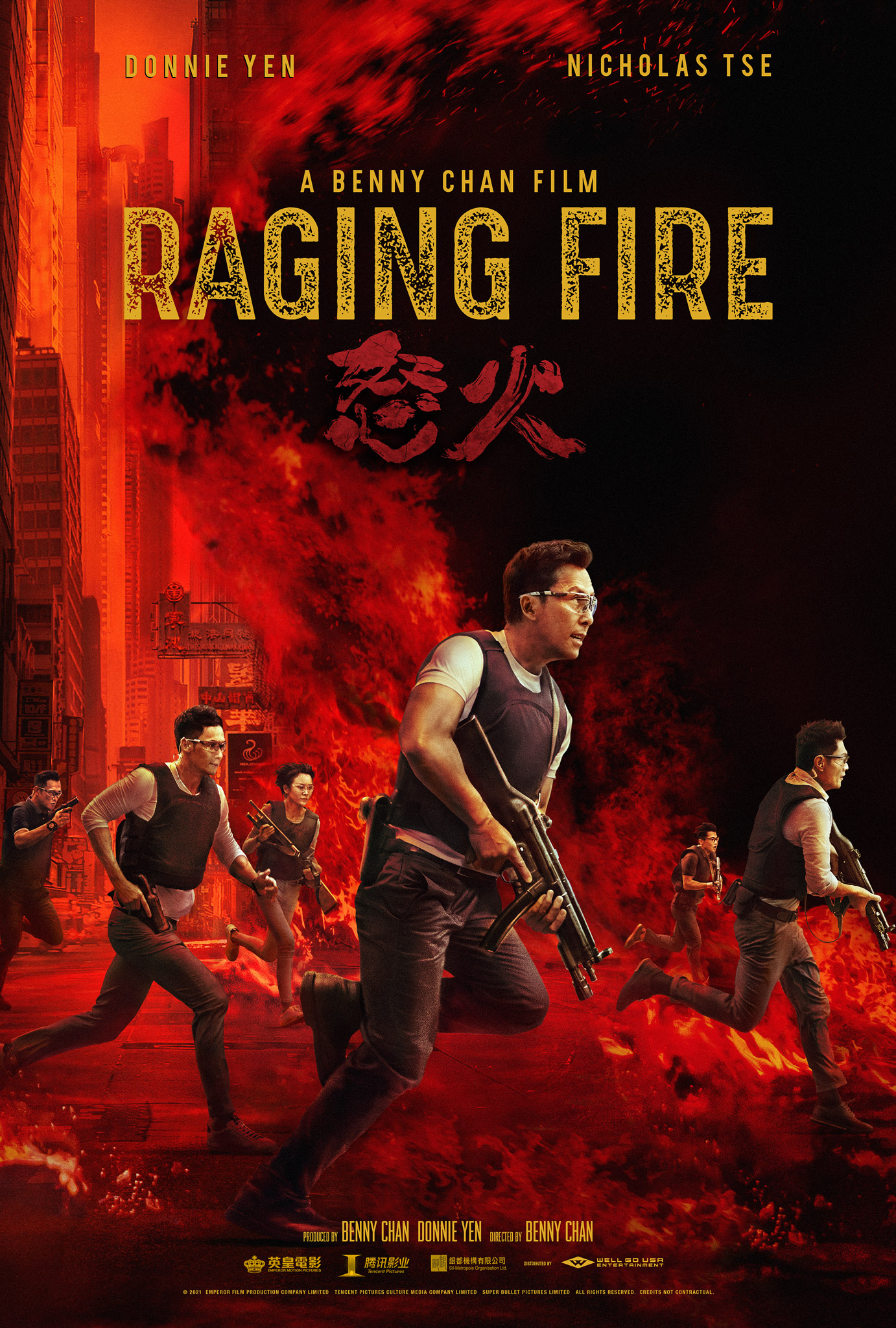
Raging Fire (怒火, Benny Chan, 2021)

“If you had chased Coke that day, would our destinies have been reversed?” a cop turned villain asks of his righteous colleague, but his friend has no answer for him. The final film from director Benny Chan who sadly passed away last year after being diagnosed with cancer while filming, Raging Fire (怒火) pits a disgruntled police officer wronged by the system against an incorruptible detective but suggests that the real villain is an increasingly corrupt society in which the rich and powerful have a direct line to justice. 

As the film opens, noble officer Cheung (Donnie Yen) is racing towards some kind of altercation in a shipyard but later wakes up next to his much younger and very pregnant wife (Qin Lan). After a years long operation, his team is about to take out a petty criminal involved with a previous investigation which resulted in fellow officers getting sent to prison for excessive use of force. After refusing to to help a wealthy businessman make his son’s drunken car accident go away, Cheung is taken off the case while the raid turns out to have been a trap leaving eight of his friends dead and many more injured. Through his investigations, Cheung begins to realise that his former colleague Ngo (Nicholas Tse), recently released from prison, may be responsible for the deaths of his friends in pursuing a vigilante revenge against the police force he feels betrayed him. 

“This society doesn’t reward good men” Ngo later insists, though his total and relatively sudden transformation from earnest cop to bloodthirsty psychopathic killer seems something of a stretch. Cheung aside, the Hong Kong police force is depicted as infinitely corrupt and working at the behest of the rich and powerful to further agendas not always in the interests of justice. The case which caused so much trouble related to the kidnapping of a prominent financier and the secretary he was canoodling with at the time, the financier’s wife having obeyed the kidnappers’ instructions not to call the police by ringing a government contact instead which is why the operation is covert. Ngo and his team were told to do whatever it took to extract information from a suspect who later wound up dead but were hung out to dry by the superior officer who ordered it. Not unreasonably they see themselves as victims of a corrupt system but care little who might get in the way of their vicious bid for revenge. 

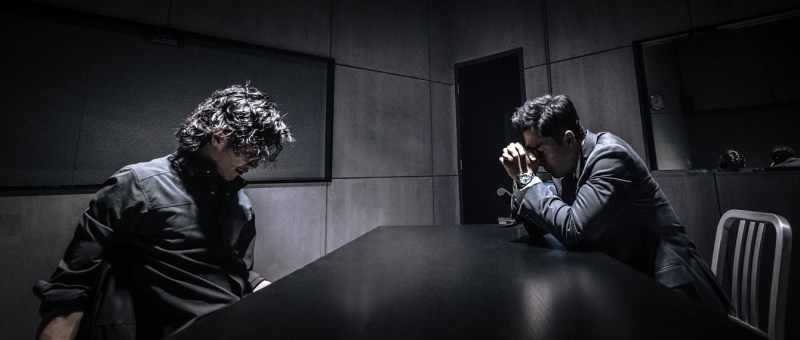
For his part, Chueng is also a thorn in the side of his colleagues because of his refusal to play along with the base level corruption all around him. Dragged to the meeting with the businessman by nervous colleague Beau (Patrick Tam), Cheung sips tea rather than the wine everyone else is drinking and eventually storms out making a point of paying for his exorbitantly priced beverage while refusing to be complicit with systemic corruption. So upright is he that he asks a passing driver if he has insurance before borrowing his car to chase down Ngo and when he himself is accused of breaking protocol the entire squad shows up to petition the disciplinary panel on his behalf. Ngo asks him if the situation would have been reversed had it been Cheung who had questioned the suspect that night, but of course it wouldn’t because Cheung would never have beaten a suspect to death in the first place. 

Chan places this debate front and centre by setting the final showdown in a church currently undergoing renovation, Ngo seemingly judged for his moral transgressions while Cheung meditates on the man he used to be in a bromance montage that laments the tragedy of Ngo’s fall from grace. The battle of wits between the two men, Ngo of course uniquely positioned to game the system he rails against, ends only in futility while the system which created him remains unchanged. Chan shoots with characteristic visual flare sending his compromised cops through a golden hellscape of the contemporary city veering between beautifully choreographed, high octane action sequences including a lengthy car chase through a highly populated area, and procedural thrills tinged with ambivalent social commentary in which justice itself has become commodified while police officers exceed their authority and bow to the rich and powerful. A throwback to classic Hong Kong action, Chan’s final film is a fitting finale for the career of a director taken far too soon. 


Raging Fire screened as part of this year’s New York Asian Film Festival and will be released in US cinemas on Aug, 13 courtesy of Well Go USA.

International trailer (English subtitles)