No Other Choice (어쩔수가없다, Park Chan-wook, 2025)

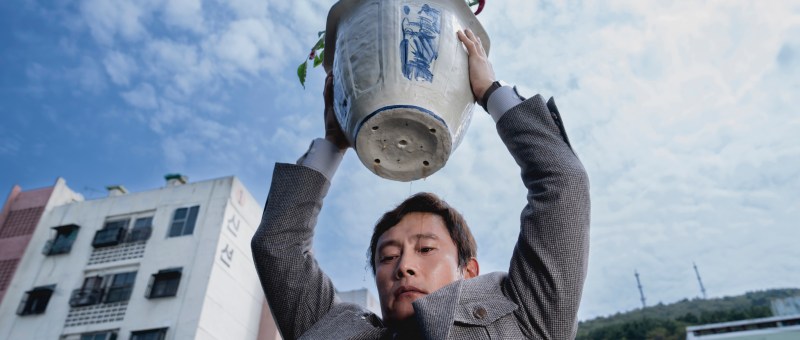
Most of the time, when someone says they had no choice, they’re paradoxically admitting that they had one, but they expect to understand the choice they’ve made because we would have done the same or can’t reasonably expect them to accept the consequences of the alternative. “No other choice,” on the other hand, is self-contradictory, clearly stating that a choice does indeed exist. Perhaps that’s why it seems so irritatingly disingenuous every time it’s said to Man-su (Lee Byung-hun), even if he eventually succumbs to its self-absolving qualities.

In any case, it’s this sense of powerlessness that’s at the centre of Park Chan-wook’s satirical drama as a middle-aged man finds himself suddenly exiled from the upper-middle-class lifestyle he’s worked so hard to build for himself when his company’s taken over by an American firm who have “no other choice” than to shed some staff. Man-su is blindsided by this corporate betrayal, attending self-help sessions that remind him there’s no such thing as jobs for life any more. Losing his job wasn’t his choice, but in some ways perhaps that makes it worse. 

What connects him with the other men in his position is that he’s obsessed with getting another job in the paper industry rather than exploring other options. All of these men are fixated on getting back what they feel has been taken from them. Not only is Man-su dead set on getting another job in paper, but on holding on to the family home from which he was displaced as a child and has only just managed to reclaim. To that extent, what he wants is a return to a past that doesn’t quite exist any more or exists only in his memory and is therefore unattainable.

Losing his job also leaves him displaced within his family as his sudden inability to keep them in the manner to which they’ve become accustomed eats away at his sense of masculinity. They’ve already had to exile the dogs, leaving his young daughter distraught, while his wife, Miri (Son Ye-jin), has started working again, further emphasising his failure as a provider. Witnessing one of the other men’s wives cheating on him with a much younger lover, Man-su too begins to fear that his wife no longer sees him as a man and will cheat on him too with someone who better fulfils the codes of masculinity. Yet it’s his stubborn male pride that undermines his positions much more than the unfortunate fact of having lost his job, which wasn’t after all something he had much control over. The wives are all much more pragmatic and come up with realistic solutions such as ruthless belt tightening and ceding a little ground by voluntarily giving up anything inessentials while encouraging their husbands to be a little more pragmatic and consider new directions rather stubbornly fixating on reclaiming the life they had before. 

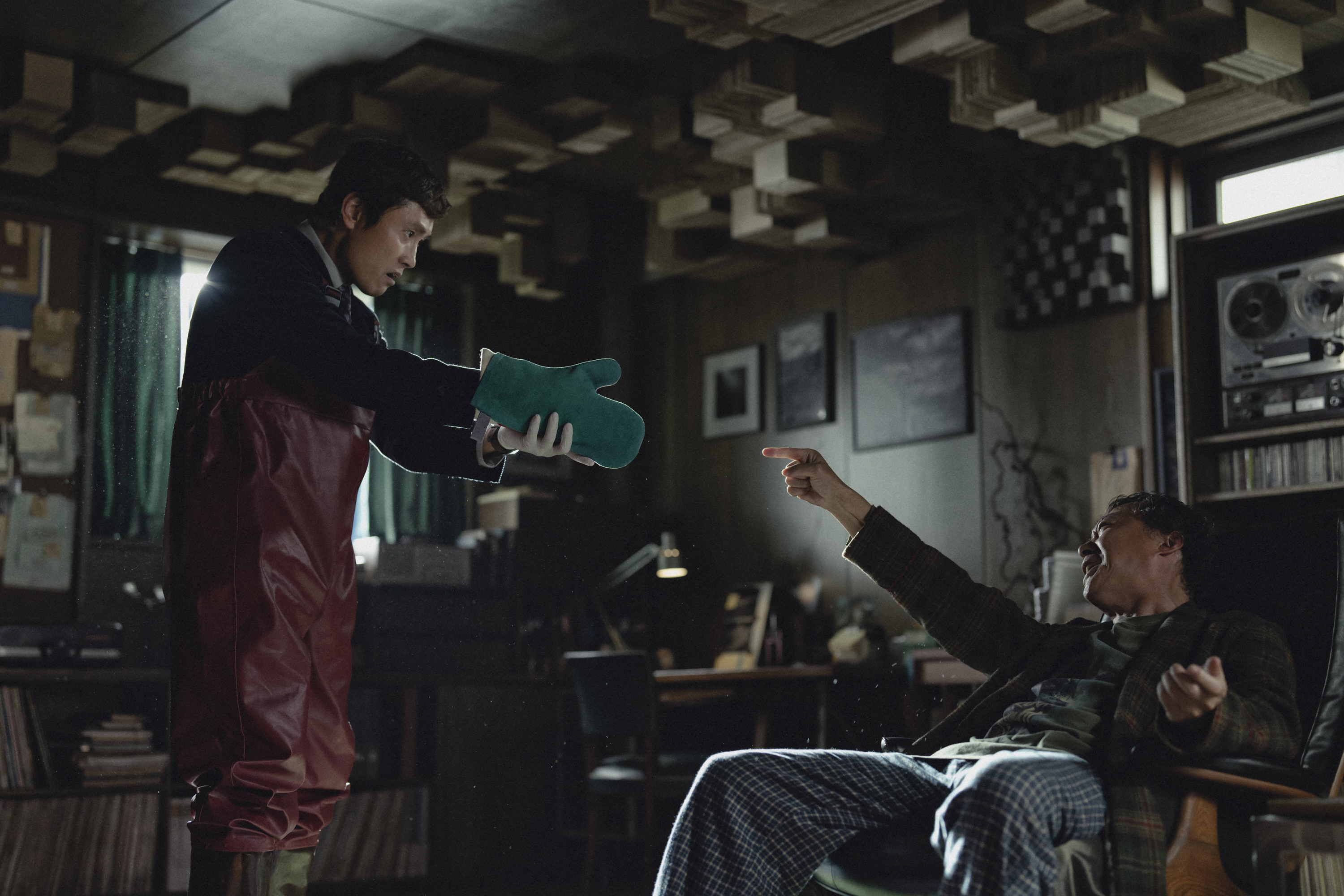
That might be Miri decides to just sort of go with it even after beginning to suspect that Man-su has something to do with the disappearance of his rivals. At least he’s being proactive, even if it’s not really the best way to go about it, and by burying a few bodies there, he’s basically made it impossible to sell the house which is one goal achieved. It’s not losing your job that’s the problem, it’s how you deal with it, one of the other men’s wives insists as even Man-su ironically berates him for not listening to any of his wife’s “sensible” suggestions. Then again, the fact Man-su is eventually offered a job training AI replace him invites the suggestion that he’s basically killing all the other workers in the hope of clinging on to the wheel as soon as possible. The managers state they had “no other choice” about that too, and are grinning with the blinkered vision that prevents them from realising there’ll be no need for managers when there’s no one manage. 

In any case, the fact that Man-su walks around for with toothache for a significant amount of time echoes the hero of Aimless Bullet and suggests that perhaps things aren’t all that much different in the Korea of today caught between deepening wealth inequality, exploitative working conditions, and employment precarity presented by the rise of AI and increasingly globalisation. There is something quite sad about the devaluing of these skills in that what Man-su and the other men share is reverence for paper, the beauty and texture of it, along with the craftsmanship and pride in their work that now seems to belong to a bygone era. It seems that the dog-eat-dog world of capitalism leaves Man-su with “no other choice” than to do what he did and leave others with no other choice but him, but all he’s really done is seal his own fate in a futile attempt to hold on to a past that is rapidly slipping away.


No Other Choice screens as part of this year’s BFI London Film Festival.

Trailer (English subtitles)
A Useful Ghost (ผีใช้ได้ค่ะ, Ratchapoom Boonbunchachoke, 2025)

Right at the beginning of Ratchapoom Boonbunchachoke’s A Useful Ghost (ผีใช้ได้ค่ะ, Phi Chaidai Kha), we see a man creating a classical-style relief that’s positioned in a tranquil spot surrounded by nature. It features people from all walks of life, a mother and her child, a monk, a scholar, a soldier, a labourer and so on, as well as a goat, and is later revealed to have the title “democracy monument”. But as soon as it’s put up, it’s brought violently down as developers move in to replace this oasis of peace with a modern shopping mall. 

The construction gives rise to more “dust” which is what’s polluting the country, directly linking rampant capitalism with the erosion of democracy. Even the home lived by the self-proclaimed “Academic Ladyboy” (Wisarut Homhuan) may one day be consumed as the traditional streets are replaced by yet more upscale shopping opportunities. In an effort to get rid of the dust that’s plaguing him, he buys a vacuum cleaner, but it turns out to be haunted and coughs in the middle of the night, spitting out all the dust he made it swallow. 

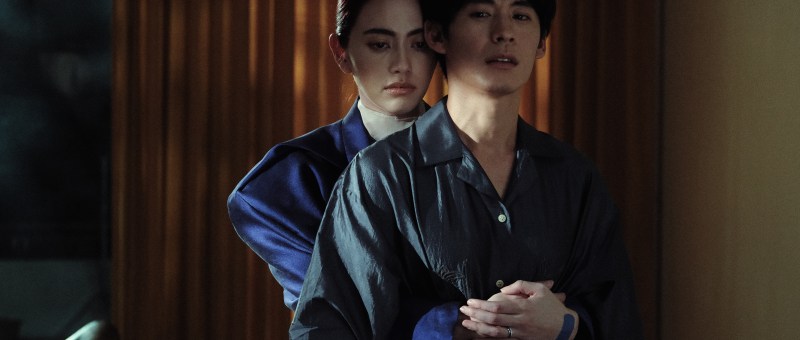
“Dust” is also a term that’s come to stand in for those exploited by this increasingly capitalistic society whose lives are afforded little value, such as factory worker Tok who died after being exposed to too much dust while working at a factory producing vacuum cleaners. Meanwhile, the factory owner’s son has just lost his pregnant wife, Nat (Davika Hoorne), to a respiratory illness caused by dust. Nat has also possessed a vacuum cleaner and reunites with her broken-hearted husband, March (Witsarut Himmarat), but finds herself increasingly compromised after sucking some of the dust out of a government minister’s eyes.

Nat’s desire to stay in the mortal realm longer than is proper is reminiscent of the classic ghost Nang Nak, but what she also becomes is a kind of class traitor increasingly involved with the oppressive regime and betraying her own people to ensure her personal survival. Government minister Dr Paul gets her in on his programme chasing ghosts through dreams and banishing them from people’s memories in order to erase their existence and history. When people refuse to give up their ghosts, he has them given electroshock therapy so that they forget them, as he once tried to do to March before Nat made herself useful to him. And so “dust” and “ghosts” have now become metaphors for those who resist as the souls killed not only during the 2010 massacre but Thammasat University massacre in 1976 rise again to make their presence felt. 

According to the Academic Ladyboy, that these ghosts came back at all is itself an act of resistance, as if these memories themselves could become reminders that resistance is possible and things weren’t always this way. He loathes Nat for the choices that she made in turning on her own, but she was also facing other kinds of oppression in never being accepted by her husband’s upperclass family who in themselves become a symbol of autocratic elitism. Her mother-in-law, Suman (Apasiri Nitibhon), who owns the factory and is unsympathetic towards Tok insisting his death was nothing to do with the working environment, submits herself to them too because like Nat she didn’t belong either and felt she had no other choice. Her eldest child Moss was taken away from her because she spoke a Northern dialect and they feared the child wouldn’t learn standard Thai. Now she tries to talk to her son’s Australian husband in Teochew, only for Moss to roll his eyes and say no one knows how to speak that outside Thailand. Just as they rejected Nat for being an outsider, they rejected Moss for being gay until he became useful to them.

The longer Nat stays beyond her allotted time, the more it corrupts her so on restoring her corporality she would betray even March, who has come to sympathise with the ghosts, in order to be allowed to stay and maintain her position. She’s the “useful ghost”, from a certain point a view, but from another, all the others are “useful” too in keeping the spirit of resistance alive. Quirky and surreal with its tales of haunted hoovers, obsessive bureaucracy, and factories where singing is randomly banned, not to mention truly awesome shoulder pads, Ratchapoom Boonbunchachoke’s deadpan absurdist drama is deadly serious where it counts right until its intensely cathartic conclusion.


A Useful Ghost screens as part of this year’s BFI London Film Festival.

Trailer (English subtitles)
The World of Love (세계의 주인, Yoon Ga-eun, 2025)

Lee Jooin (Seo Su-bin) is a cheerful young woman, always laughing and joking. She tells people she’s okay, though some of them think she shouldn’t be, as if she can’t be telling the truth or what happened to her can’t be all that bad if she’s otherwise unaffected by it now. It’s like they’re telling her that she has no right to be happy, but must continue to live in suffering to conform to their idea of what a traumatised person looks like, otherwise she must be making it up for attention. 

Put like that, it seems very unfair. But it’s true enough that director Yoon Ga-eun plays with our prejudices deliberately withholding whatever it is that happened in Jooin’s life until the truth of it gently unfolds and we witness the radiating effects it’s had on her family and those around her. We at first wonder if she might have done something bad she’s expected to atone for, especially with the talk of lawyers and court cases, the fact her friends and teachers seem to regard her as a compulsive liar, and her sometimes aggressive physicality that sees her rough house with the boys and repeatedly end up in altercations with classmate Su-ho (Kim Jeong-sik) whose sister Noori attends her mother’s daycare.

Later, we might wonder if Su-ho is carrying something difficult to bear too. His mother doesn’t seem to be around, and he’s stepped into a maternal role caring for his sister to a degree that may seem obsessive. He’s started a petition against a convicted child abuser being released back into their community and is fixated on getting the entire school to sign it, even though it’s not really anything to do with him and simply saying they don’t want him back here is not particularly helpful seeing as he’ll have to go somewhere. Su-ho thinks he’s doing a good thing, but Jooin refuses to sign because she doesn’t like it that he’s written that being a victim of sexual assault ruins people’s lives. She tries to explain to him why it’s offensive, that he’s robbing those who’ve experienced sexual violence of the right to assume agency and suggesting they must forever be defined by their victimhood. She resents his patriarchal attitude and insistence that someone’s life could be “ruined” beyond repair because of a traumatic event that occurred to them personally outside of the problematic framing Su-ho’s way of thinking lends it. Su-ho, however, does not really listen but merely forces her to sign the petition anyway to fit in with everyone else so he’ll get his unanimous numbers, not that it really matters. 

We might also start seeing some of Jooin’s behaviour as a trauma response. Her love of Taekwondo a means of self-protection, her prankster persona a way of rebelling against her sadness with aggressive cheerfulness, but in that we may not be much better than Su-ho. Perhaps she just likes Taekwondo and is a natural comedienne. Maybe she just doesn’t care for apples. Not everything in her life radiates from her trauma. Meanwhile, we catch sight of things in others that suggest they may be suffering too. When Jooin grabs her friend Yura’s arm, she pulls away as if it were injured, tugging at her sleeve as if trying to hide it. Someone keeps writing nasty notes questioning Jooin’s behaviour, which they find confusing, and her authenticity as if she might simply be playacting something which to them is real.

Not being believed is another aspect of Jooin’s trauma. Even when she tells the truth, others accuse her of lying. Other women around her experience something similar, asked why they accepted money from or did not cut of contact with a man they say abused them even if that man was a close family member. Jooin’s father has abandoned the family and does not reply to her messages, rejecting her because of his own sense of guilt, while her mother is doing the best she can but has taken to drink. She also has a younger brother, Hae-in, with a burgeoning career as a stage magician, who may at times get forgotten amid everyone else’s needs. As part of his act, he has a section where he asks the audience to write their fears and worries on a card so he can magic them all away. But as much as he’s been secretly protecting his sister, there’s no spell you can cast to make all of this disappear. Jooin, meanwhile, writes her vocation as “love” and is indeed surrounded by it. “You’ll never know who I am, but I’ll never forget you,” the note writer later signs off, thanking her for speaking out and making them feel a little less alone while simultaneously liberating Jooin from her sense of fear and isolation. “Lying makes it hurt more,” little Noori advises Jooin’s mother, while Jooin has at least unburdened herself and assumed control of the world around her.


The World of Love screens as part of this year’s BFI London Film Festival.

Trailer (English subtitles)

A Pale View of Hills (遠い山なみの光, Kei Ishikawa, 2025)

A young woman returns home at a moment of crisis, but finds herself with only more questions in an attempt to understand her mother and her decision to leave Nagasaki for the UK 30 years previously in Kei Ishikawa’s adaptation of Kazuo Ishiguro’s debut novel, A Pale View of Hills (遠い山なみの光, Toi yama-nami no Hikari). Set alternately in 1952 and 1982, the film positions the Greenham Common anti-nuclear protests as a point of connection between the two nations and the reason that Niki (Camilla Aiko) is currently so interested in her mother’s story seeing as there’s increased interest surrounding the atomic bomb, even if her editor keeps asking her about “Hiroshima”.

Another reason for Niki’s sudden return is that the editor is a married man Niki has been having an affair with. It seems she’s made a significant investment in the relationship by dropping out of university to work as a reporter, but despite saying he would, he has not left his wife and Niki suspects she may now be pregnant. All of which encourages her to investigate the relationship she has with her mother, Etsuko (Yo Yoshida / Suzu Hirose), and her late sister Keiko with whom she did not seem to get on, through tracing back her Japanese roots and trying to understand her familial history.

But what Etsuko, who is abruptly selling the family home, tells her is confusing and indistinct. Much of Etsuko’s story doesn’t line up, and we understand in part why later, but it seems almost as if the lacunas and contradictions are intentional and designed to hint at the ways we paper over cracks in our identities or create new mythologies for ourselves in an attempt to escape the traumatic past. Etsuko found a more literal escape in coming to the UK, but there’s something a little poignant about the way she says she thought there’d be more opportunities here and that Keiko would have had the chance to be anything she wanted which Japan would have denied her. Later she suggests that she always knew the UK wouldn’t be good for Keiko, but she came anyway. 

Now she’s selling the house, literally unpacking the past, Etsuko has begun dreaming about a woman she knew, Sachiko (Fumi Nikaido), and her daughter, Mariko, who lived near her in Nagasaki when she was pregnant with Keiko. Whereas Etsuko and her salaryman husband Jiro (Kohei Matsushita) live in a flat on a “danchi”, aspirational post-war housing estates for young families, Sachiko lives in a rundown shack across the way where the neighbours gossip about her for entertaining American soldiers who are still in the country post-Occupation because of the Korean War which is also what’s fuelling the economic recovery. Sachiko has met a man called Frank who says he’ll take her to America, but she doesn’t really believe him. 

On the one level, it seems that Etsuko and Sachiko are mirror images of each other yet they are in other ways alike, while their stories share several details in common. What unites them is that they both experienced the aftermath of the bomb, though Etsuko has been careful not to disclose the extent of her exposure and is now fearful of what effect it may have on the baby along with on her relationship with her husband who appears to share some of the prevailing social prejudice against those who were exposed to radiation. Jiro, meanwhile, is a distant workaholic who criticises Etsuko for not being more “motherly” and sees her as little more than a domestic servant. He has a damaged hand from his wartime service that seems to reflect his wounds, but still rolls in drunk occasionally singing war songs with his inconsiderate friends. 

When his father, Ogata (Tomokazu Miura), announces he’s coming to stay with them, Jiro is pleased to see him but rebuffs his request that he talk to an old school friend, Matsuda (Daichi Watanabe), about an article he published claiming that it’s a good thing that teachers like Ogata were let go after the war. Ogata evidently feels hard done by, but it’s also true that the cause of his son’s animosity towards him is that he was a card-carrying militarist who cheered when he left for the front and indoctrinated children with imperialist ideology in his job as a teacher. He is the past Japan must move on from, and a representative of the wartime generation by which the young of today feel betrayed. As Matsuda tells him, it’s a new dawn. Ogata has to change, and so does everyone else including Etsuko who may not be as happy in her marriage as others might assume and may well be seeking other paths towards self-fulfilment rather than allow herself to become another miserable, self-sacrificing housewife.

Even so, the contradictory message seems to be that perhaps you can’t actually move on from this past and Keiko, in particular, may have been changed by her exposure not to the bomb but it’s aftermath, the terrible things she heard and saw amid the wreckage and the stigma she faced afterwards. The artificiality of the Japanese sets might speak to the slipperiness of Etsuko’s memory, as if she were observing a film of herself rather than recalling real events or else reimagining them differently so they play out a little more cinematically, in comparison to the concrete reality of the Sussex bungalow which perfectly captures a lived-in Britishness of the early 1980s. In many ways, Niki might not have clarified very much at all, or perhaps begun to accept the idea that not knowing doesn’t matter in coming to understanding of her relationship with her mother and along with it of herself as she too decides it’s time for change.


A Pale View of Hills screens 16/18th October as part of this year’s BFI London Film Festival.

Trailer (English subtitles)