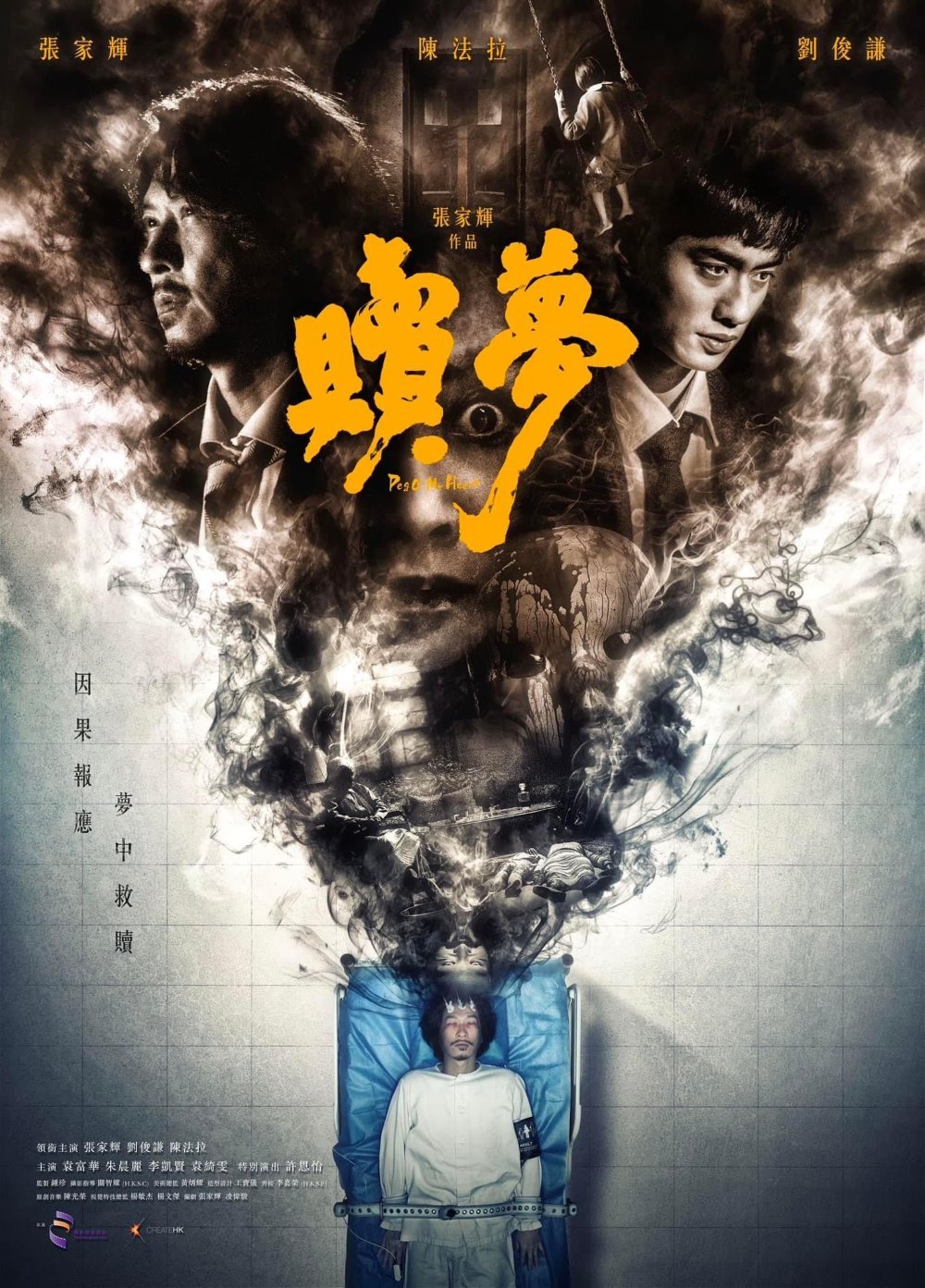
Peg O’ My Heart (贖夢, Nick Cheung Ka-Fai, 2024)

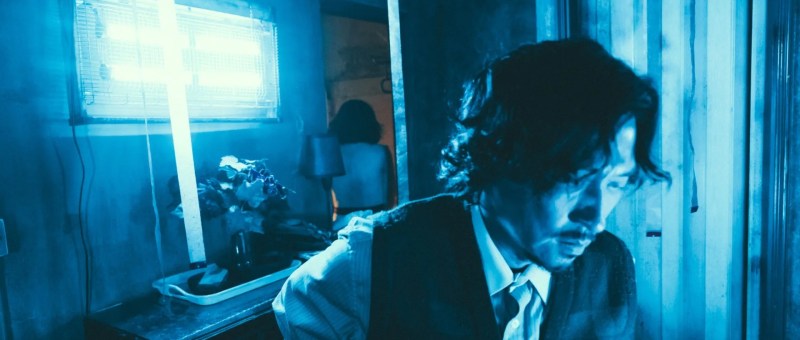
An insomniac taxi driver says he can’t sleep but he can’t wake up either. He finds himself plagued by bad dreams in an increasingly surreal Hong Kong that seems to exist more within the mind than the physical reality and populated by the orphaned ghosts of another era. Clearly inspired by the films of David Lynch with overt visual references to Lost Highway and Twin Peaks, Nick Cheung’s Peg O My Heart (贖夢) follows a maverick psychiatrist intent on actually treating his patients as he chases the taxi driver while in flight from his own trauma.

Dr. Man (Nicholas Cheung Ka-fai) is already in trouble for prying into the lives of his patients when his superiors, men in slick suits bickering in English, would rather he just get on with his job of prescribing pills. The first patient we see him treat is a teenage girl whose surreal dream sequence finds her on a swing in a room of blood while a giant baby doll looks on. Man notices an upturned doll’s head being used as a cup by one of her friends and begins to get a picture of what’s been going on. The apartment the girl lives in with her grandmother is cramped and grimy in the extreme despite the happiness banner on the door. The girl and her friends have taken to drugs to escape their own dissatisfying reality, but it led them to a dark place in which the boy abused the girl and left her with lasting trauma that blossomed into psychosis in much the same way’s Man’s own has. Nevertheless, in contrast to his bosses, he’s careful to remind her that she still has choices and it might not be the right time for her to have a child though he’ll help her whatever she decides.

In a strange way, it might be the taxi driver who’s responsible for her plight. In another life, Choi (Nicholas Cheung Ka-fai) was a high-flying financial analyst who could afford to give his wife a Mayfair flat on a whim, though you’d never guess it now. In those days, his hair was slicked back rather than long and wavy and his suit was finely buttoned rather than hanging loose. He wore glasses too, which he alarmingly no longer seems to do while driving. His eyes are red and puffy, his face pale like a ghost. On his return home, he and his wife have a number of strange rituals which make no kind of sense but hint at the extent that they have descended into a dream world, locked in by their guilt and the feeling that they are being tormented by a vengeful ghost. 

Then again, Choi’s heartless former colleagues describe him as being too sensitive for this line of work. They joke, a little misogynistically, that his wife was always the go-getter. Fiona (Fala Chen) was into stocks too, the pair of them playing a game of untold riches without any awareness of what it meant to gamble with other people’s money. His colleagues may have told him that’s exactly why it didn’t matter and it was silly to worry about it, but it seems Choi did worry, though the money distracted him from his moral quandary until the lack of it convinced him to betray an old friend with tragic and unforeseen consequences. 

Choi and Fiona are plagued by echoes of a single afternoon, one of sunlight and happiness that they unwittingly ruined with their insatiable greed. Dr. Man, meanwhile, says he has the same dream every night but can’t remember anything about it in the morning. That’s a contradictory statement in itself, though his loyal nurse Donna (Rebecca Zhu) doesn’t seem to have picked up on the holes in his story. In any case she introduces him to his previous boss, Vincent (Andy Lau Tak-wah), a former psychiatrist with an unexplained prosthetic arm, who has the power to enter other people’s dreams and seems to exist in more than one place at once, like the Mystery Man in Lost Highway. Exploring his dreamscape allows Man to reckon with his own trauma and subsequently learn to forgive and accept his father, though he may not, in fact, have faced himself fully or released his guilt even as he and Choi eventually share a similar fate. Are either of them awake, or still asleep? Did Man go through the mirror, or merely deeper inside it? The melancholy streets of contemporary Hong Kong take on a deathly hue trapping its traumatised denizens in an inescapable hell of guilt and regret from which they can never awake.


Trailer (English subtitles)
Project Gutenberg (無雙, Felix Chong, 2018)

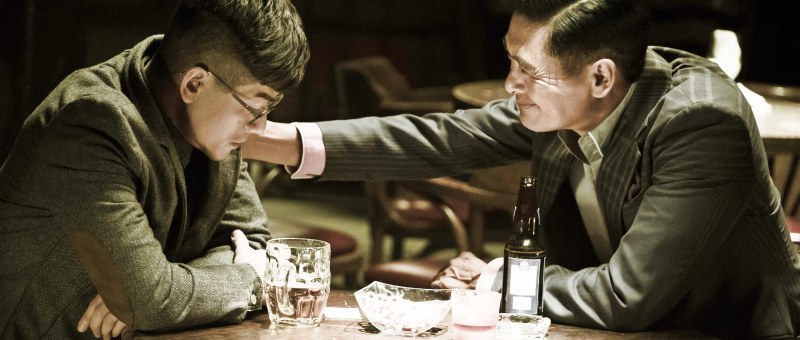
Project Gutenburg poster“Sometimes a fake can be better than the real thing” intones mild mannered counterfeiter Lee Man in Felix Chong’s cineliterate thriller Project Gutenberg (無雙) . At first glance, Project Gutenberg would seem to have nothing at all in common with the archival programme from which it takes its name but perhaps there is something in its continual questioning of whether a facsimile can replace an original. Chong plays with perception, narrative, and a human need for authenticity but most of all with the legacy of heroic bloodshed as a melancholy young man attempts to rewrite his own history with himself in the lead.

In the late ‘90s, Lee Man (Aaron Kwok) is languishing in a Thai jail from which he manages to get himself rescued by scraping blue powder off the walls and creating an expert forgery of a postage stamp to send a letter of help. Soon after he gets himself picked up by the Hong Kong police who want his help tracking down a notorious counterfeit currency trafficker known only as “Painter” (Chow Yun-fat). Lee is scared witless because Painter has a habit of ruthlessly hunting down associates who talk – something which is well known to HK police inspector Ho (Catherine Chau) who is after him because he killed her Canadian policeman boyfriend. Painter also murdered the fiancé of Lee’s old flame Yuen (Zhang Jingchu) who is the woman he sent the letter to and who has come to his rescue. Which is to say, the situation is much more emotionally complicated than one might expect.

Through flashback, Lee elaborates on how he came to get mixed up with crime. He and Yuen were living on love in 80s Vancouver trying to make it in the art world. While Yuen’s work began to gain traction, Lee’s was going nowhere. Technically proficient, his paintings were thought soulless and derivative but his talent for mimicry soon brings him to the attention of master forgers and thence to Painter who needs someone with expert skills for his next project – forging the US $100 bill.

Lee tells his tale with melancholy relish, dwelling on his days of youthful abandon with Yuen to the extent that Ho interrupts to declare herself disinterested, advising he skip the prologue and get to the bit where Painter shows up. Painter, a suave yet unpredictable criminal type, determines to help Lee become “the leading man” he knows he can be, but to be fair all anyone is ever interested in is the intensely charismatic Painter. As it turns out, there are more reasons for that than it might at first seem, but in the end Lee’s internalised feelings of inadequacy are still the fuel to his fire. Unable to find artistic success, forgery offers Lee the life of a skilful craftsman and he feels himself to have found his niche but in betraying his artistic integrity he also risks forever losing the woman he loves.

Painter has a weird obsession with Lee’s love life, assuring him that once the deal is done he will help him win back Yuen. “A man who gives up on love is destined to fail at everything” Painter tells him. Lee, however, repeatedly gives up on love. He refuses to fight, embraces his own sense of inferiority, and resolves to live on in misery falling ever deeper into Painter’s world of surrealist crime. Leaving aside Painter’s strangely homoerotic relationship with his protege, Lee’s life gets still more complicated when he becomes involved with a woman, Sau-ching (Joyce Feng), who falls in love with him in Thailand and, for complicated reasons, ends up with Yuen’s face thanks to plastic surgery and name thanks to a fake passport. Painter taunts him with a facsimile of his love but berates him for settling for a substitute while Sau-ching resents getting the Vertigo treatment from a man who refuses to let a failed love fade.

Almost offended by her betrayal of true love, Inspector Ho probes Yuen about her fiancé, asking if he was merely a “substitute” for Lee. Yuen asks if the next man Ho will fall in love with will merely be a “substitute” for her fallen colleague to which Ho fires back that there will never be anyone else because her love is “irreplaceable”. Yuen scoffs at her strangely naive romanticism and Ho does indeed appear to meet an echo of her former love in someone new carried once again on noirish cigarette smoke. If you can’t be with the one you love, love the one you’re with the old adage goes but it turns out that inauthentic romance is the hardest kind to bear.

Chong lets Lee’s retelling of his history play out like a heroic bloodshed movie in which Chow re-inhabits the classic characters of his youth. An unreliable narrator, the movie in Lee’s mind is one of honour and glory in which he still cannot allow himself to take the lead. Chong over eggs the pudding with a series of twists and reversals, undercutting all that’s gone before and muddying his message in the process but there’s no arguing with his high stakes style as he turns a simple crime story into an interrogation of authenticity and the power of personal myth making.


Screened as part of the 2018 London East Asia Film Festival.

Original trailer (English subtitles)