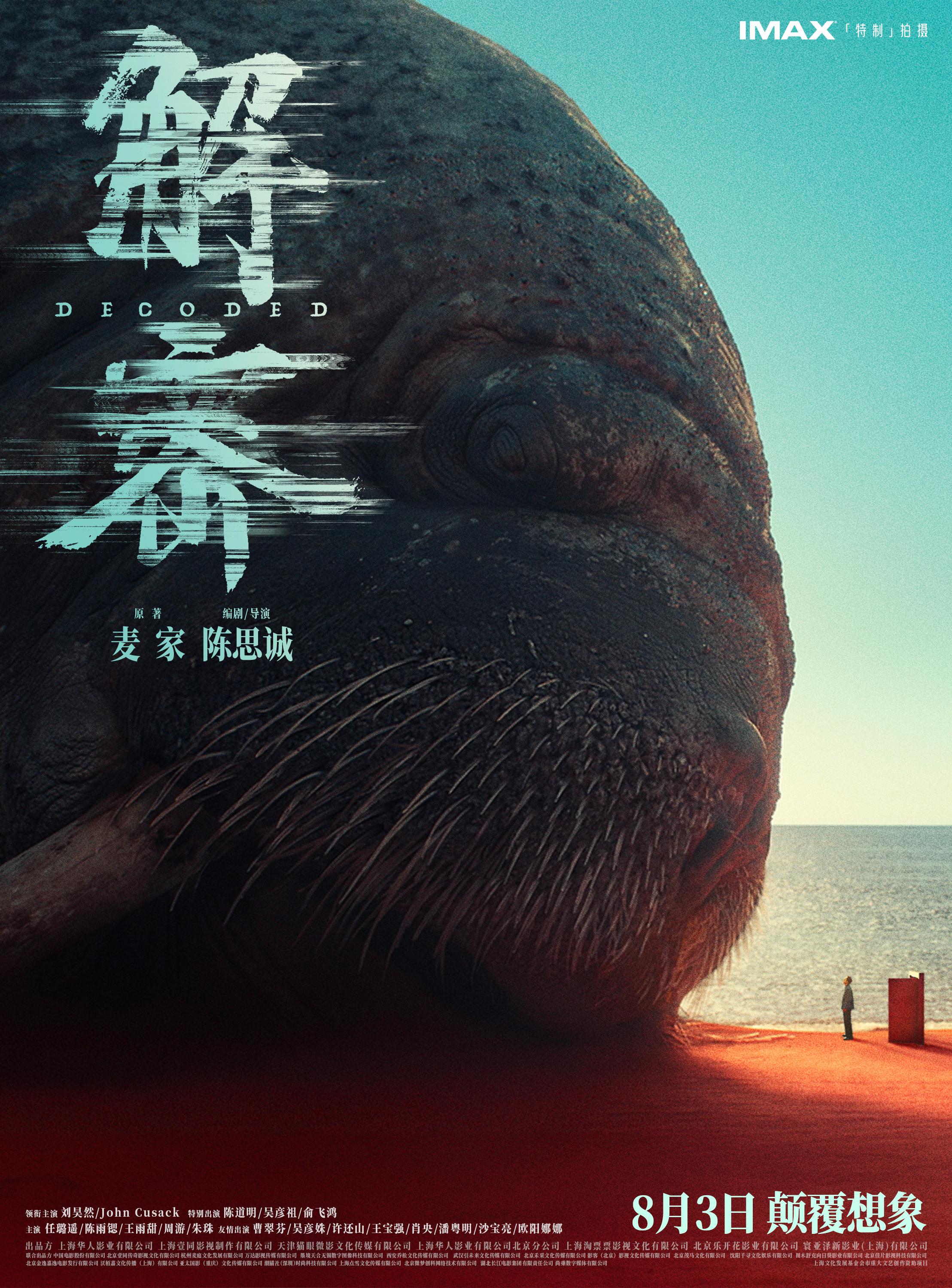
Decoded (解密, Chen Sicheng, 2024)

International geopolitics is reduced to a battle wits between two men, each in their way lonely exiles and perpetual outsiders in Chen Sicheng’s adaptation of the novel by Mai Jia, Decoded (解密, jiěmì). Originally an actor (and here making a meta self-cameo), Chen is best known as a director for the smash hit Detective Chinatown franchise which boasts both well-plotted mysteries and zany, lowbrow comedy. Decoded is a slightly different kettle of fish, displaying its own kind of whimsicality but also darker and stranger in its concentric enigmas.

The narrative’s timeline seems to be slightly hazy, but loosely follows an prodigious orphan born to a prominent family though his father, the black sheep, had already died before his mother too died in childbirth. A rather complicated set of circumstances led to Rong Jinzhen (Liu Haoran) being raised by an Austrian dream interpreter who for unexplained reasons kept him locked up in a small hut isolated from the world while teaching him all about dreams with the consequence that by the time the old man dies, 12-year-old Jinzhen is a strange boy with few social skills but a once-in-a-generation grasp of mathematics.

It’s this genius that sees him saved by distant relative Xiaolili (Daniel Wu) who was originally going to send him to an orphanage but decides adopt him instead. Jinzhen then gains early entry to university where he’s tutored by Liseiwicz, an exiled Polish professor who fled his homeland to escape persecution by the Nazis as a Jew. The film seemingly doesn’t mean to, but undermines this backstory through the casting of John Cusack who plays the part as all American and is not convincing as Polish man who ended up in China because he had nowhere else to go and is unable to return to his homeland thereby lessening the intended impact of his speeches about nationhood and patriotism which counter those Jinzheng has already been given by Xiaolili in addition to making him seem suspicious possibly long before she should. 

Nevertheless, this may also add to his sense of untrustworthiness and perhaps duplicitous treatment of Jinzheng which edges towards the exploitative in hoping to make use of his genius for his research into the evolution of computing. In the early days of the Chinese civil war, Liseiwicz is approached by agents from the PLA who want him to decode a telegram that may save thousands of lives. Liseiwicz claims he doesn’t want to get into politics though superficially supportive of the Communist cause only to later be exposed as a collaborator with the KMT on his return to the US where he designs encryption codes to be used between Chiang Kai-shek’s nationalists in Taiwan and the US troops backing him in the hope he’ll retake China and end Communism in Asia. 

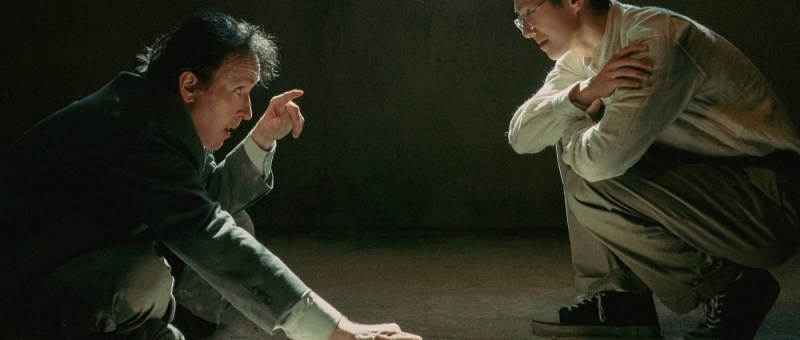
Of course, Jinzheng gets picked up by the CCP to work in their secret spy division in which he becomes a virtual prisoner forbidden from leaving the compound while expected to spend all of his time breaking codes such as those designed by Liseiwicz. In truth, it becomes a kind of game between the two but one that the guileless Jinzheng little understands. It takes it him an unreasonably long time to understand that Liseiwicz is just messing with his mind, sending him misinformation as a distraction intended to drive him mad culminating in dispatching a copy of the The Beatles’ I Am the Walrus in order both to disrupt his political consciousness with decadent Western pop music and drive him out of his mind as he struggles to understand how this nonsense verse about egg men and marine animals is supposed to relate to the code.

Then again, there is something a little subversive in the celebration of Jinzheng’s ability to think about the box, instantly understanding that the correct answer to the entrance test is not to waste his time taking it because it’s obvious they’ve already cracked the code concerned. The use of dream interpretation taught to him by his adoptive Austrian father maybe simply be an ability to work things out on a deeper level of consciousness, but it’s also left him with a fragile mental state already unable to discern dream from reality. The strain of constant codebreaking further pushes him towards madness while he perhaps loses sight of his original mission, only later coming to realise that Xiaolili’s vision of nationhood was the correct one after all.

Though Chen appears to have been influenced by Christopher Nolan in his use of oneiric imagery, he crafts a number of beautifully designed, whimsical dream sequences some which later become hellish or strange but reflect an innate innocence in Jinzheng while disclosing to him something of the real world which he had not understood. It’s ironic in a sense that he’s forever trying to decode the world around him, such as in taking instructions from his adopted sister/cousin Biyu (Chen Yusi) on how to know if girls are interested which he nevertheless slightly misunderstands. The film goes to some surprisingly dark places such as in a brief sequence which Biyu and her mother seemingly if potentially anachronistically fall victim to the Cultural Revolution while Jinzheng is the victim of several assassination attempts by KMT agents well into the ‘60s. Even so his story emerges as tragedy more than triumph, a fine mind broken by the society around him and used as an unwitting tool in the nation’s path to perfecting an atomic bomb having seemingly decoded everything but his place within the world.


International trailer (English subtitles)

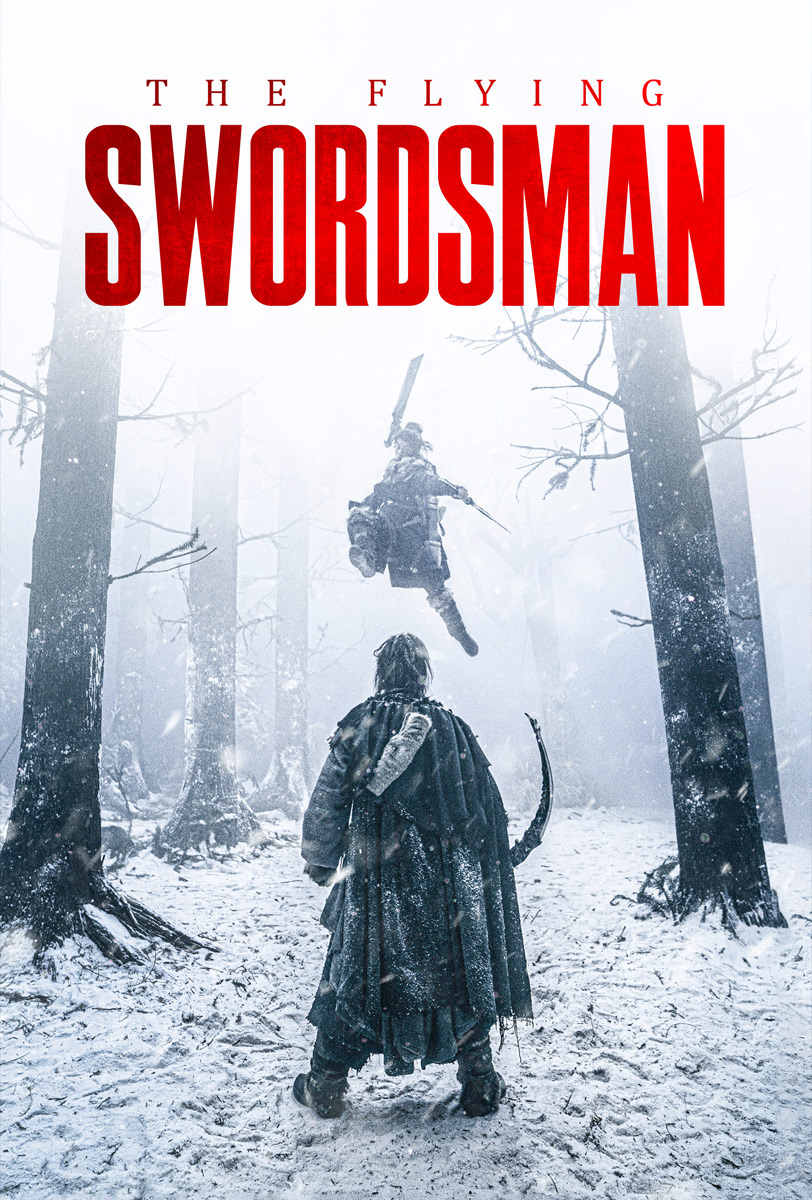
The Flying Swordsman (雪山飞狐之塞北宝藏, Qiao Lei, 2022)

Close to the conclusion of Qiao Lei’s The Flying Swordsman (雪山飞狐之塞北宝藏, xuěshān fēi hú zhī Sàiběi bǎozàng), the latest adaptation of Jin Yong’s classic wuxia novel Fox Volent of the Snowy Mountain, the villain is reminded that his quest for treasure is a headlong plunge into an abyss and it is indeed greed that eventually seals his fate. In any case, the karmic wheel is very much in motion as the sins of the past will soon catch up to him.

In a brief prologue, Lord Tian hopes to get his hands on some treasure buried deep beneath a land of cold and so engineers a duel between the treasure’s guardian Hu Yidao and the only swordsman who can match him. The two men end up killing each other, but largely due to the machinations of ambitious underling Baoshu (Chunyu Shanshan) who has poisoned their swords with arsenic. Additionally he’s massacred a local village, something of which the head of their group Tao Baisui (Raymond Lui Leung-wai) does not approve, but still didn’t get his hands on an iron box containing a map to the treasure nor the key needed to open it.

The box then turns up 10 years later but causes nothing other than chaos and discord among Baisui’s followers as they all jockey to get their hands on both the map and the key though the clever part of the plan is that no one has both at the same time ensuring the continuation of infighting and betrayal. The sad thing is that both Baisui and Baoshu are childless and have come to regard their underlings as children though they are quickly sacrificed during the internecine plotting. Gui Yu (Zhao Huawei), a mercenary picked up by Baoshu’s henchwoman Qingwen (Chen Yusi) after escaping enslavement at a coal mine, seems to vacillate, playing advantages against each side but also manipulated by both and left to die after being poisoned. Apparently each of the other eight villains has a special talent, though Gui Yu appears to have none and often claims to be doing only what he needs to survive which fair enough given the vagaries of the feudal era. 

This world is indeed quite grim, as we can see from the guy hacking up some suspicious looking meat on the way into the fort. An assassin is fond of asking if the target thinks villains never face retribution, hinting at the degree of hubris in Baoshu’s ambition and his lack of thought for the future or the various ways the karmic wheel may turn against him. His downfall is caused by greed, but then there’s also a degree of tenderness in his relationship with adopted daughter Qingwen who is often dismissed as a “little beauty” even if he at times seems willing to sacrifice her life for relatively little gain. 

In any case, the treasure becomes something of a MacGuffin, merely an unattainable object that drives the villains mad and turns them against each other or alternately can be used to manipulate them. In this supernaturally tinged world, the band come up against strange monsters including a pack of wild hyenas amid the freezing cold and otherwise have managed to keep their special powers more or less secret from each other despite their long association giving Qiao frequent opportunities for plot twists and unexpected returns. He adds to the mythological fantasy aesthetic through the forest-bound vistas of trees in bloom along with the endless snowscapes that reflect the moral and emotional emptiness of men like Baoshu. 

Karma does indeed come back to bite him, a victim of a poetic revenge destroyed by his own greed and immorality. Amid all the infighting there is a genuine degree of solidarity to be found at least among those robbed by the evils of feudalism and hoping to avenge themselves through tricking the gang into destroying itself. Qiao’s wire-heavy action sequences hint at a poetic beauty of wuxia martial arts even if close combat is necessarily brutal though mostly relying on trickery rather than simple skill with the sword. Told over a series of flashbacks, the tale eventually straightens itself out to reveal the tragic legacies that provoke the fate of all long after those who caused them have forgotten their dark deeds and believed themselves free from guilt or consequences.


The Flying Swordsman is released in the US on Digital and DVD on Jan. 9 courtesy of Well Go USA.

US trailer (English subtitles)

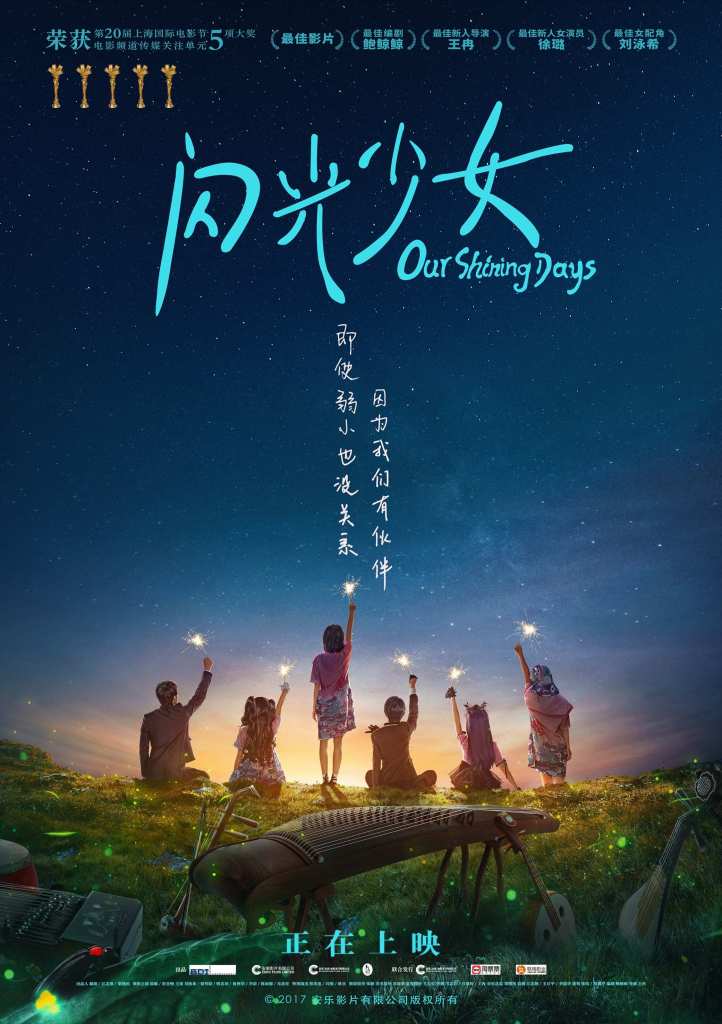
Our Shining Days (闪光少女, Wang Ran, 2017)

Doesn’t everyone deserve their time to shine? For the students at the music conservatoire at the centre of Our Shining Days (闪光少女, Shǎnguāng Shàonǚ), a glittering future may be difficult to imagine. Another in the recent series of Chinese youth comedies, Wang Ran’s debut may clearly be inspired by Japanese anime, but adds a noticeably patriotic beat in making its heroes devotees of traditional music facing off against the “pretentious” threat of European classical. 

The academy is strictly divided along class lines with the snooty classical kids pretty much ruling the roost. When an actual fight breaks out between factions, the conservative headmaster sides with the classical club and erects a series of prison-style gates to confine the folkists to their own corridors while also banning them from staying too late or eating in their rooms. Airy fairy nerd Chen Jing (Xu Lu) hadn’t previously cared about the folk vs classical drama, but is pulled into it when she falls for handsome pianist Wang Wen (Luo Mingjie). That’s why she naively volunteers to be a page turner for him at a big concert, not quite understanding she’s being made fun of. Determined to prove herself to him, she decides to form a traditional folk ensemble but finds it difficult to get recruits, ending up with a group of four otaku girls everyone else is scared of who only agree on the condition that she buys them all plastic model kits every week. 

A true underdog story, Our Shining Days makes heroes of its “losers” whose uncool tastes have seen them roundly rejected not only by their fellow students but also by their families. Chen Jing is a talented Yangqin player, but conflicted in her ambivalence towards traditional Chinese music. Internalising a sense of shame about her niche interest, she half convinces herself that she’s only learned yangqin because her parents made her and is not truly invested in the instrument, which is why she immediately assumes they’ll dissolve the band as soon as her mission of winning Wang’s heart is over. 

The otaku students, however, rediscover a love of the admittedly fantastical music, giving it a cool modern edge inspired by their love of anime and games. The otaku live in the “second dimension” and have already more or less othered themselves, but begin to actively enjoy being part of the band along with the communal pleasure of making music together. Meanwhile, the scruffy Chen Jing begins learning a little about life from the sacred otaku texts of her new friends, only to take their shojo manga-style advice a little too seriously in deciding to make a public confession to Wang which brutally backfires. Wang is planning to go abroad to study classical music, he’s not interested in lowly yangqin players. 

The class drama reaches a crescendo when the conservative headmaster announces that as of the following year the school will cease admitting students playing traditional instruments altogether. Spurred on by Chen Jing and the otaku girls, the oppressed folkists finally find the strength to resist, rising to prove there is a viable ensemble for folk instruments to counter the “sophisticated” classicists. The classicists adopt the motto “let my music be the soundtrack of war”,  but the folkists are all about team effort and peaceful co-existence. When the local inspector reminds the headmaster there is no conflict in music and expresses disapproval of the school’s prison-like environment, the folk ensemble, rather than trying to defeat the classicists, come up with a “better” solution in which they can work together so that folk music can still be heard as part of the big end of year concert. 

A cheerful coming of age tale which ends in the message that there’s a place for everyone and that those who are generous of spirit are the likeliest to prosper and be happy as they do, Our Shining Days also has its share of high school drama as the scruffy Chen Jing gradually progresses to towards a more mature elegance while her best friend Li (Peng Yuchang) gets the courage to confess his feelings in a much less ostentatious manner. Subtly patriotic in its suggestion that traditional folk music is “better” than the false sophistication of pretentious Western classical, the central messages are of love, acceptance, and authenticity, insisting there’s a place for everyone who comes with an equally egalitarian spirit. 


Currently available to stream in the UK (and possibly other territories) via Netflix

Singapore release trailer (English subtitles)