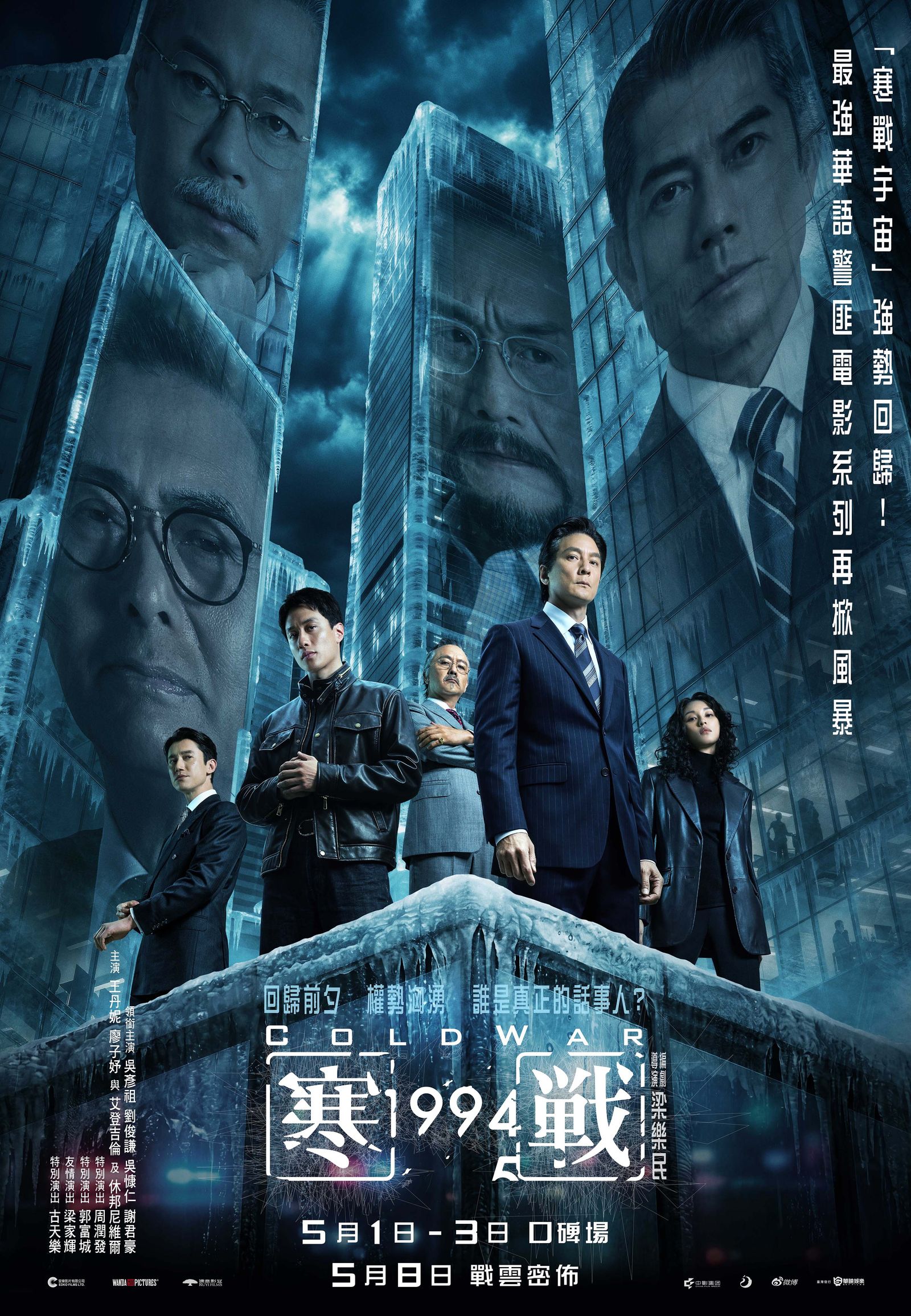
Cold War 1994 (寒戰1994, Leung Lok-Man, 2026)

A compromised policeman finds himself caught between conflicting sources of authority in Leung Lok-Man’s action thriller Cold War 1994 (寒戰1994). A kind of prequel to Leung’s Cold War series, the film opens shortly after the events of the second films in 2017 with MB Lee (Tony Leung Ka-fai) being kidnapped amid a possible return to power under a new government. The events echo a case from 20 years earlier in which a prominent industrialist was kidnapped by Triads at the behest of arch kingpin Peter Choi (Daniel Wu).

The irony is the MB Lee (Terrance Lau) of 1994 finds himself in the same position as his nation as the Handover inches ever closer. Caught between the police force, colonial authorities, and Choi, MB begins to look for new ways to protect his men in  the new post-Handover reality, which makes him an awkward stand-in for Hong Kong itself as something distinct from the twin colonial powers of Britain and China. Just the Handover has produced a power imbalance allowing Choi to rise, a change of leadership at the Lo Yuen Triad society has provided an excuse for Tiger to pursue “independence”, which he largely seems to have done through an ill-advised involvement with Choi. 

Tiger is responsible for the kidnapping of KF Wong, the brother-in-law of the influential businessman William Poon (Tse Kwan-ho). The Poons are old an old money family who may have made their fortune doing things not so differently from Triads, but have maintained their privilege through loyalty to the British. All of the Poons have distinctively British Western names and apparently frequent visitors to Downing Street. Now times are changing, however, William Poon no longer wants to do business with the colonial authorities, while KF Wong’s Victoria Redux plan essentially attempts to maintain the conditions of the colonial era. Though he saw him as a successor, perhaps KF Wong’s kidnapping works out pretty well for Poon.

Just as Tiger and MB Lee attempt to break free from parental legacies, William’s son Simon (Wu Kang-ren) burns with resentment that KF Wong has replaced him as the heir to the Poon group while it seems that Wong also married the woman that Simon had been in love with. He then is also looking for a kind of “independence” in escaping his father’s control and taking the family business for himself. Meanwhile, others assume that kidnapping Wong was a means of destabilising the Poon’s economic empire while they attempt to shore up their power in the post-Handover society. MB wants to find Wong not only because it was his case, but as a means of reclaiming a kind of order and clearing his name after the botched operation raises questions about his loyalty.

Loyalty is a question for everyone with the implication that there may be rewards for those “loyal” to the colonial authorities even after the Handover. The film positions the UK as an antagonist then and in the present day as evidenced by a giant spy satellite trained on the island. MB Lee is pursued and constrained by Special Branch and its British investigators who later take his entire team into custody. After the Wong operation ends in failure, MB is courted by British authorities who tell him that they see him as a possible future commissioner if he agrees to remain loyal to the British and advance UK interests even after the Handover. The British actors deliver their lines with docudrama-style realism otherwise at odds with the rest of the film, but adding to a sense of historical veracity to their machinations. Despite his later actions, MB apparently refuses but uses his leverage to free his men and carve out a niche for himself at the OCTB which is, presumably, the third way he intends to pursue in limited complicity as a means of protecting the people of Hong Kong. 

Back in 2017, police commissioner Lau (Aaron Kwok) and lawyer Kan (Chow Yun-fat) remain unconvinced fearing that MB’s file has been tampered with in an attempt to rewrite history while the contemporary city remains shrouded in fog. Much of the film is seemingly a set up for its sequel, but succeeds in sowing the seeds of mystery in probing the complex relationships between local elites and colonial authorities along with the shifting balances of power in the pre-Handover society while providing the impressive, high-octane action sequences the series is known for.


Trailer (Traditional Chinese / English subtitles)
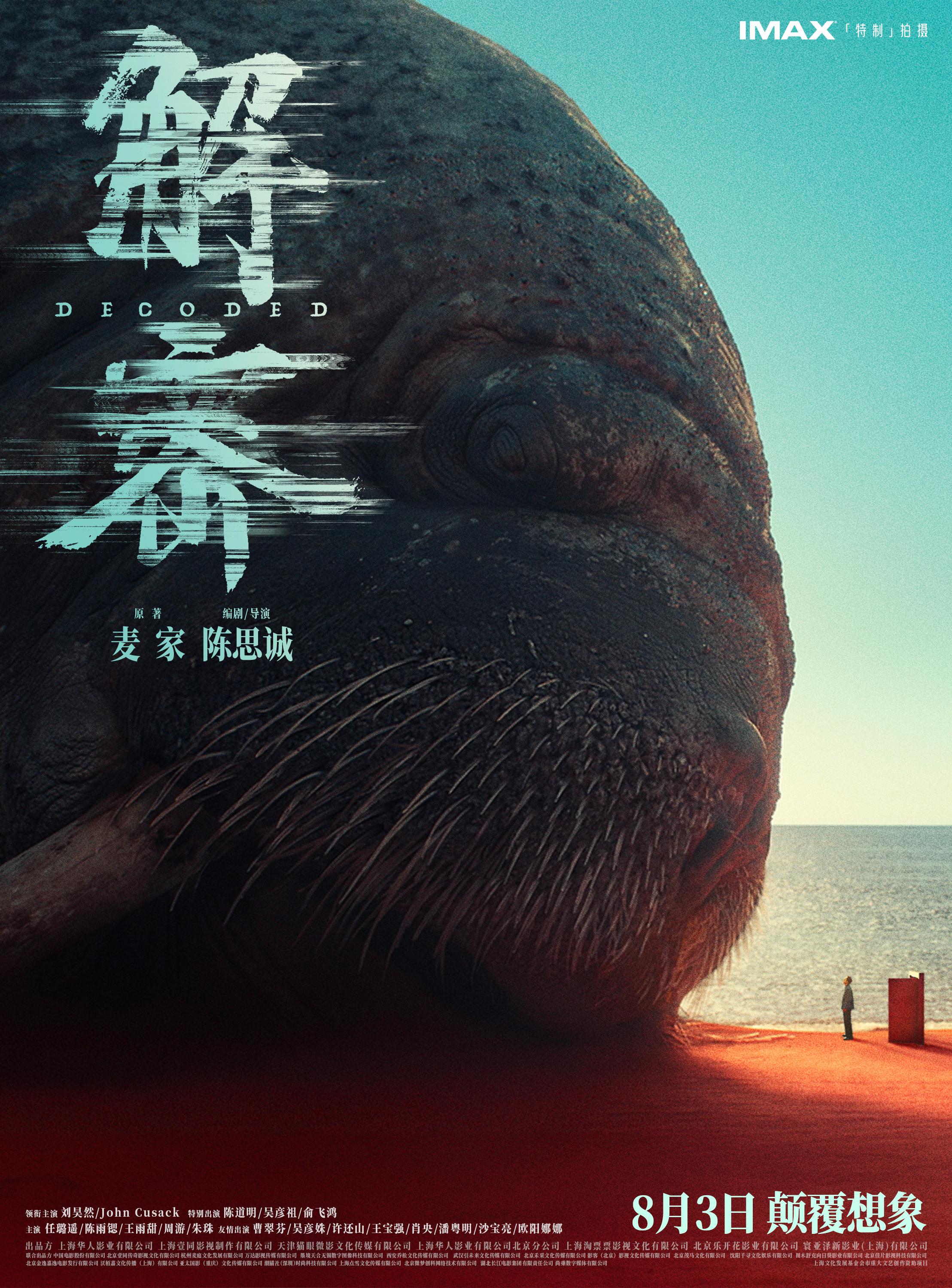
Decoded (解密, Chen Sicheng, 2024)

International geopolitics is reduced to a battle wits between two men, each in their way lonely exiles and perpetual outsiders in Chen Sicheng’s adaptation of the novel by Mai Jia, Decoded (解密, jiěmì). Originally an actor (and here making a meta self-cameo), Chen is best known as a director for the smash hit Detective Chinatown franchise which boasts both well-plotted mysteries and zany, lowbrow comedy. Decoded is a slightly different kettle of fish, displaying its own kind of whimsicality but also darker and stranger in its concentric enigmas.

The narrative’s timeline seems to be slightly hazy, but loosely follows an prodigious orphan born to a prominent family though his father, the black sheep, had already died before his mother too died in childbirth. A rather complicated set of circumstances led to Rong Jinzhen (Liu Haoran) being raised by an Austrian dream interpreter who for unexplained reasons kept him locked up in a small hut isolated from the world while teaching him all about dreams with the consequence that by the time the old man dies, 12-year-old Jinzhen is a strange boy with few social skills but a once-in-a-generation grasp of mathematics.

It’s this genius that sees him saved by distant relative Xiaolili (Daniel Wu) who was originally going to send him to an orphanage but decides adopt him instead. Jinzhen then gains early entry to university where he’s tutored by Liseiwicz, an exiled Polish professor who fled his homeland to escape persecution by the Nazis as a Jew. The film seemingly doesn’t mean to, but undermines this backstory through the casting of John Cusack who plays the part as all American and is not convincing as Polish man who ended up in China because he had nowhere else to go and is unable to return to his homeland thereby lessening the intended impact of his speeches about nationhood and patriotism which counter those Jinzheng has already been given by Xiaolili in addition to making him seem suspicious possibly long before she should. 

Nevertheless, this may also add to his sense of untrustworthiness and perhaps duplicitous treatment of Jinzheng which edges towards the exploitative in hoping to make use of his genius for his research into the evolution of computing. In the early days of the Chinese civil war, Liseiwicz is approached by agents from the PLA who want him to decode a telegram that may save thousands of lives. Liseiwicz claims he doesn’t want to get into politics though superficially supportive of the Communist cause only to later be exposed as a collaborator with the KMT on his return to the US where he designs encryption codes to be used between Chiang Kai-shek’s nationalists in Taiwan and the US troops backing him in the hope he’ll retake China and end Communism in Asia. 

Of course, Jinzheng gets picked up by the CCP to work in their secret spy division in which he becomes a virtual prisoner forbidden from leaving the compound while expected to spend all of his time breaking codes such as those designed by Liseiwicz. In truth, it becomes a kind of game between the two but one that the guileless Jinzheng little understands. It takes it him an unreasonably long time to understand that Liseiwicz is just messing with his mind, sending him misinformation as a distraction intended to drive him mad culminating in dispatching a copy of the The Beatles’ I Am the Walrus in order both to disrupt his political consciousness with decadent Western pop music and drive him out of his mind as he struggles to understand how this nonsense verse about egg men and marine animals is supposed to relate to the code.

Then again, there is something a little subversive in the celebration of Jinzheng’s ability to think about the box, instantly understanding that the correct answer to the entrance test is not to waste his time taking it because it’s obvious they’ve already cracked the code concerned. The use of dream interpretation taught to him by his adoptive Austrian father maybe simply be an ability to work things out on a deeper level of consciousness, but it’s also left him with a fragile mental state already unable to discern dream from reality. The strain of constant codebreaking further pushes him towards madness while he perhaps loses sight of his original mission, only later coming to realise that Xiaolili’s vision of nationhood was the correct one after all.

Though Chen appears to have been influenced by Christopher Nolan in his use of oneiric imagery, he crafts a number of beautifully designed, whimsical dream sequences some which later become hellish or strange but reflect an innate innocence in Jinzheng while disclosing to him something of the real world which he had not understood. It’s ironic in a sense that he’s forever trying to decode the world around him, such as in taking instructions from his adopted sister/cousin Biyu (Chen Yusi) on how to know if girls are interested which he nevertheless slightly misunderstands. The film goes to some surprisingly dark places such as in a brief sequence which Biyu and her mother seemingly if potentially anachronistically fall victim to the Cultural Revolution while Jinzheng is the victim of several assassination attempts by KMT agents well into the ‘60s. Even so his story emerges as tragedy more than triumph, a fine mind broken by the society around him and used as an unwitting tool in the nation’s path to perfecting an atomic bomb having seemingly decoded everything but his place within the world.


International trailer (English subtitles)

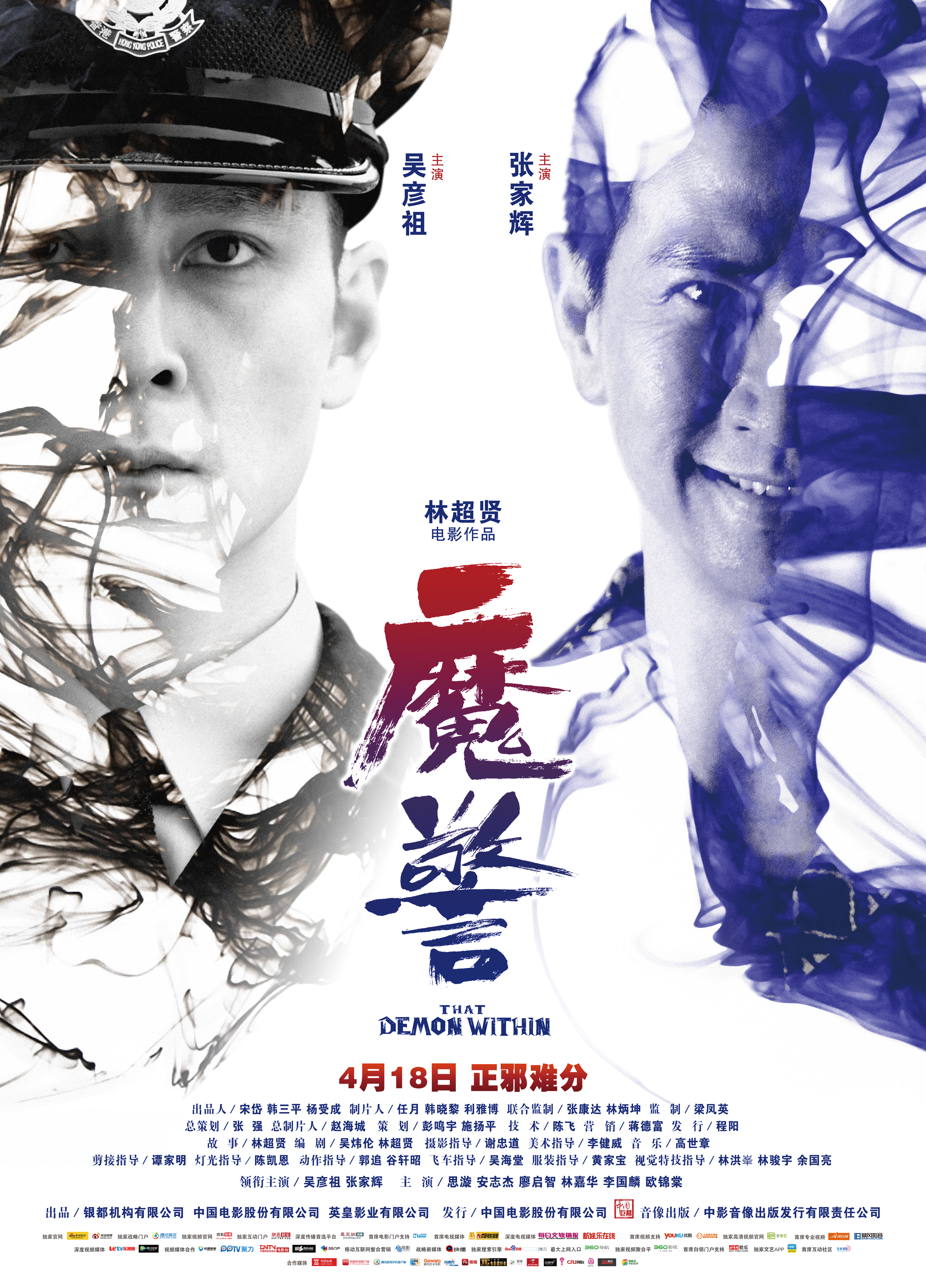
That Demon Within (魔警, Dante Lam, 2014)

“Every man has his own fear, and different ways of hiding it. But fear will never go away” according to the hero of Dante Lam’s That Demon Within (魔警), a twisty, metaphysical take on the futility of violence and inevitability of karmic justice. Hong Kong cinema has often held that cop and criminal are merely two sides of the same coin, but rarely has it taken its mistrust of authority and nihilistic cynicism to such great heights as in Lam’s B-movie-inflected psychological thriller.

The hero, Officer Wong (Daniel Wu Neh-Tsu), is a fearful man. Now 35 and a 17-year veteran of the Hong Kong police he’s still a lowly beat cop currently occupying the police box in the reception area of a less than busy hospital. He tells us, paradoxically, that he puts on the uniform because it makes him feel safe. His life begins to change, however, when he makes the selfless offer to give some of his own blood to a man who staggers in badly injured after a bike accident. What Wong didn’t know is that the man is Hon (Nick Cheung Ka-fai), a notorious local gangster known as the Demon King responsible for the deaths of two fellow officers during the escape which led to his accident. Wong gets a dressing down from the Inspector in charge, Pops (Dominic Lam Ka-wah), and is thereafter haunted by his ironic action of being a policeman who saved the life of a cop killer.

Of course, others might say Wong did the right thing so that Hon can face justice and in any case it would be wrong to deny someone lifesaving treatment because of a moral judgement, but Wong can’t see it that way and continues to punish himself (quite literally) for his “mistake”, remembering the authoritarian father who taught him that mistakes are a sin. It turns out that Wong’s career has floundered because of “personality issues”, those being that he’s a bit of a prig, overly serious and by the book when most his fellow officers are anything but. His new commanding officer is, as it turns out, an old academy classmate who perhaps remembers what those issues might be but doesn’t see why they should have disrupted his career to the extent that they have and actively wants to help him get over them with the aid of a hypnotherapy psychologist.

Wong, however, is like everyone else dealing with his own demons but his decision to face them by chasing down Hon who has escaped to presumably do even more crime proves increasingly problematic as his sense of reality begins to unravel. There is something quite ironic in the fact that Hon’s “gang” (well, bunch of guys he hired for the job) is based in a funeral home and mostly involved with the rituals of death which, whichever way you look at it, is particularly convenient for their side business. Lam’s Hong Kong is a grimy, film noir land of dread and violence, a shadowy hellscape where no one is safe from the fire of karmic retribution. Wong has been in hell all along, waiting for the flames to consume him, but is only just starting to notice that it’s beginning to get warm.

Overcome with rage, Wong’s world literally glows red around the edges while Lam shifts to a steady cam closeup on his final mental break in the face not only of tremendous grief but the sudden impossibility of redemption and the manifestation of his guilt. Becoming a policeman was to Wong a way to protect himself from himself, an ironic form of atonement for past transgression. The source of all his trauma is echoed in the present plague of low level thuggery that sees “repo men” splash grease and paint on the homes of mostly elderly poor people presumably to pressure them to move while a single act of (accidental) police brutality at a protest against forced eviction changed not only his life but those of several others forevermore, kickstarting a chain of karmic retribution that leads us right back into the flames. If Wong is “mad” it’s because the world made him that way. Treading firmly within the realms of the B-movie with its comicbook-style aesthetic, incongruous score, and pop psychology take on the legacy of trauma, Lam’s nihilistic psycho-supernatural thriller leaves no doubt that cop or criminal there’s a demon within us all looking for an excuse to raise hell in a land of fear and violence.


Currently available to stream on Netflix in the UK and possibly elsewhere.

Original trailer (English subtitles)