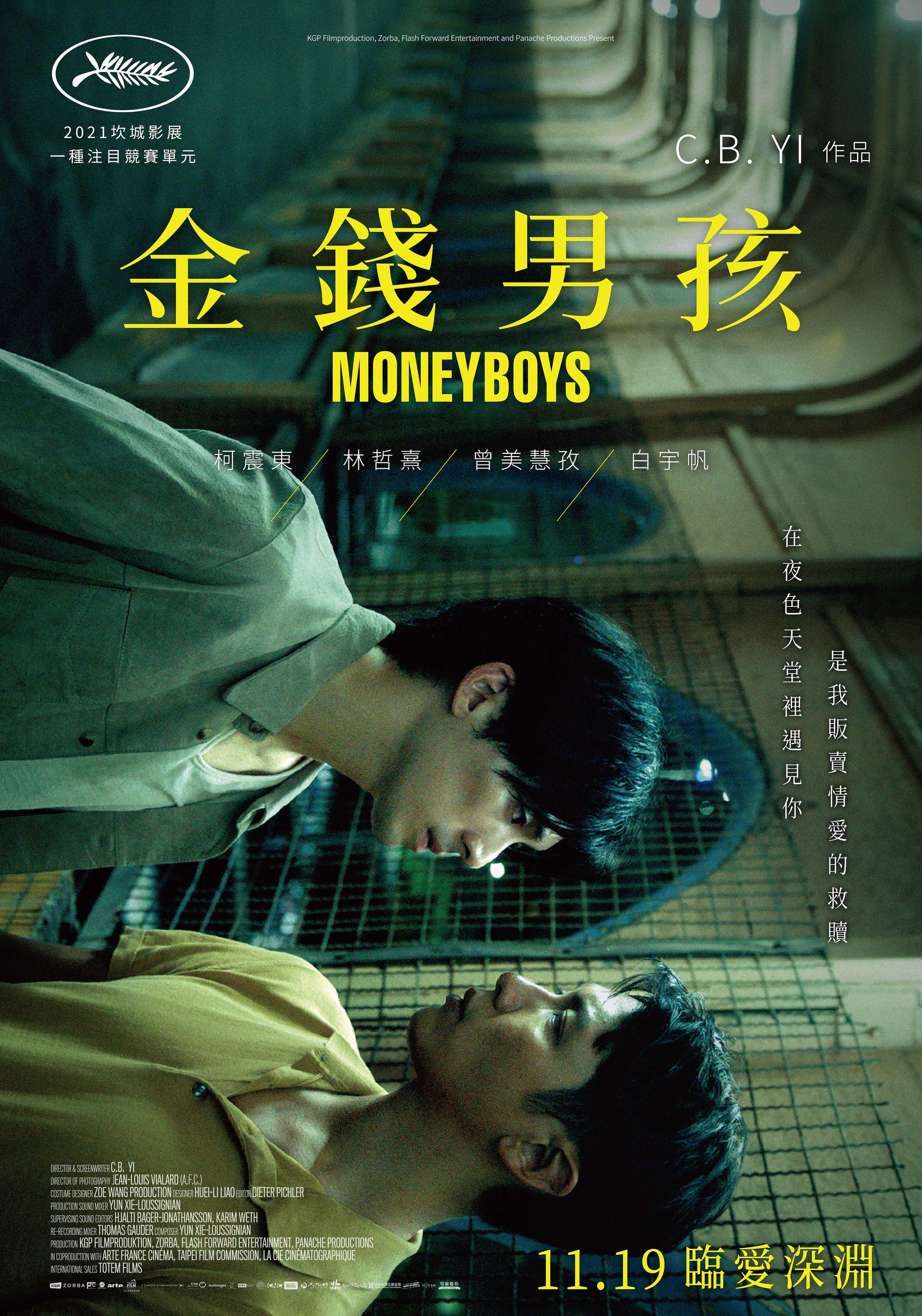
Moneyboys (金錢男孩, C.B. Yi, 2021)

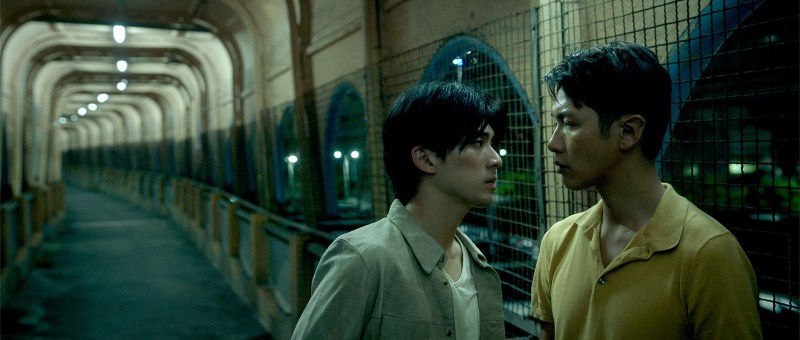
“Who doesn’t sell themselves to make money?” a young man asks in C.B. Yi’s melancholy mainland-set drama Moneyboys (金錢男孩, Jīnqián Nánhái) relating the story of a relative who worked as a tanner all his life, became ill from the effects of the chemicals, and died alone far from home. He may suggest that the exploitative nature of contemporary capitalism will eventually consume you, but it’s an older set of social codes that do for Fei (Kai Ko) who consumes himself in a pathological desire for self-sacrifice as if constantly trying to prove himself worthy of acceptance.

As we first meet Fei he introduces himself as “Jackson”, a naive country boy in the city seeking a means to support his struggling rural family which he finds in sex work. Through his job, he encounters the swaggering Xiaolai (JC Lin) who introduces himself as “Max” and takes him under his wing. Soon they fall head over heels in love, but Xiaolai fears Fei’s desperation and lack of judgment in his choice of client, an anxiety which is later borne out when Fei is badly beaten by a local gangster. Filled with rage, Xiaolai attacks him with a metal bar but ends up badly beaten himself and thereafter sought by the police. Not wanting any trouble, Fei skips town and five years later has started a new, apparently much more successful life, in another city. 

“You’re always living for others” he’s later told by a childhood friend, Long (Bai Yufan), whose long-term crush on him Fei seems to be wilfully ignoring, “the way you sacrifice yourself, you constantly hurt yourself and sometimes others too”. Fei’s self-sacrificing nature does indeed seem to have a masochist component as he wilfully puts himself in dangerous situations to get money to provide for his family. His family, however, reject him precisely because of the nature of the sacrifices he is making. Returning to his home town after being unjustly hassled by local police who attempt to entrap him by getting an undercover officer to pose as a client and searching his home for drugs, Fei is physically attacked by a belligerent uncle who can’t stop ranting about Fei’s marital status beginning by berating him that his family is embarrassed because he has no wife before revealing that they all know about “what you did in the city” and are shamed by it. His father barely looks at him, though his sister appears to know and encourages him to find the right person and hold on to them because life is long and she doesn’t want him to be lonely. 

Later, another woman reassures him that he is “someone who deserves love” though he struggles to accept it. He feels indebted to Xiaolai because he lost a leg for him, unable to move past the transactional nature of love to accept it from someone who wants only the same in return. Consumed by internalised shame he struggles to let go of outdated traditional social codes and unlike Long is unwilling to abandon them in order to live the life he wants. One of his sex worker friends in his new city eventually enters into a sham marriage with a woman who is fully aware of the realities and later pledges to move back to the country and raise a child as a conventional husband and father while tearfully explaining that six years with the gay community have been the best of his life. He too has made a sacrifice of himself for his family but is already torn apart with disappointment and resentment. 

Fei’s tragedy is that he tries to please everyone but himself, revelling in his self-sacrificing suffering and barely noticing when others are caught in the crossfire. Unable to let himself go, he is left only with the memory of the one time he was happy, which wasn’t the one he originally thought it was, and the simultaneous knowledge that he has lost It forever through his own thoughtlessness. Trapped in the past both by the traditional social codes and his thwarted romance with Xiaolai he envisions an ironically progressive compromise but is unable to see the selfishness in his desires perhaps for once putting himself first in failing to consider the feelings of those around him. A neon-lit vista of loneliness, C.B Yi’s melancholy tale of self-imprisonment and the commodification of love discovers only unhappiness in the midst of a repressive social culture defined by the twin poles of rampant consumerism and the filial imperative. 


Trailer (English subtitles)

The Fallen Bridge (断.桥, Li Yu, 2022)

Li Yu’s mystery thriller The Fallen Bridge (断.桥. duàn.qiáo) finds itself at a series of contradictions in the modern China and its film industry. The film was an unexpected box office success, though largely because it falls into a new category of boy band film in starring TFBoys’ Karry Wang locking in an audience of ardent fans much as Jackson Yee’s presence in Better Days had though it also plays into ongoing anti-corruption theme in recent cinema while simultaneously adopting a mildly positive stance towards whistleblowers if specifically within the field of construction.

It is of course an unescapable fact that hypercapitalistic working practices and ingrained corruption have led to numerous public safety failures with bridge collapses unfortunately a fairly common occurrence. This one is particularly problematic as a skeleton is discovered encased in the concrete during the cleanup effort. From the way it’s posed, it appears the man may have been buried alive. A preserved piece of paper found in a bag accompanying the skeleton states his intention to take his concerns to the head of the construction project that the structure is unsafe and should be entirely rebuilt. Of course, that would be incredibly expensive, embarrassing, and disadvantageous to others who have used the bridge as a way of forging connections with important people.

The bridge’s collapse is therefore also symbolic in pointing to the fracturing instability of these relationships along with that between college friends Zhu Fengzheng (Fan Wei), the project manager, and Wen Liang (Mo Chunlin), the would-be-whistleblower. Fengzheng has also been raising Liang’s daughter Xiaoyu (Ma Sichun) who was 12 at the time her father disappeared after seemingly being disowned by her mother who was under the impression he had runaway with his mistress. Now in her 20s and an architecture student, Xiaoyu becomes determined to learn the truth even as she begins to suspect Fengzheng who has otherwise become a second father to her and does at least seem to care for her as a daughter while his own son is apparently living in Australia. Teaming up with a fugitive, Meng Chao (Karry Wang), on the run for killing the man who raped his sister, she begins plotting her revenge while a police investigation into the bridge collapse and an additional suspicious death otherwise seems to flounder.

Though it may not mean to (as it seems unlikely to please the censors) the film gives tacit approval to vigilante violence in subtly suggesting that “official” justice is rendered impossible because of the complex networks of corruption that exist within the soceity. Meng Chao says the man who raped his sister was a judge which is why he had to kill him, while Xiaoyu seems to desire individual vengeance believing the police aren’t investigating properly but refusing to go to them with key evidence because she wants to kill her father’s killer herself. While carrying out their investigation, the pair end up adopting the wily daughter of another casualty of the villain’s greed and form an unlikely family unit marking them all out as good people who have been betrayed by the system which is itself corrupted by the nation’s headlong slide into irresponsible capitalism. 

Even so, revealing the villain so early weakens the suspense while their own motivations are left unexplored, assumed to be merely greed if perhaps also a wish to remain connected to influential people and be thought of as important at the cost of the lives of the general public (along with those of often exploited labourers) endangered by shoddy construction practices. It isn’t entirely clear how they intended to deal with the fallout of their machinations to cover up their past misdeeds, especially as the sub-standard work on the bridge has already been exposed though obviously could be blamed on others no longer around to defend themselves, but perhaps it all amounts to crazed self-preservation pitched against the righteousness of Xiaoyu and Meng Chao who are after all wronged parties in China’s deeply entrenched judicial inequality. Nevertheless, we get the inevitable title card (left untranslated in the overseas release) explaining that justice was served and a censor-pleasing ending that still in its way suggests the police are incapable of solving these crimes and that the petty corruptions of small-town life are otherwise impossible to prosecute. 


The Fallen Bridge streamed as part of the 18th Season of Asian Pop-Up Cinema.

Original trailer (English subtitles)

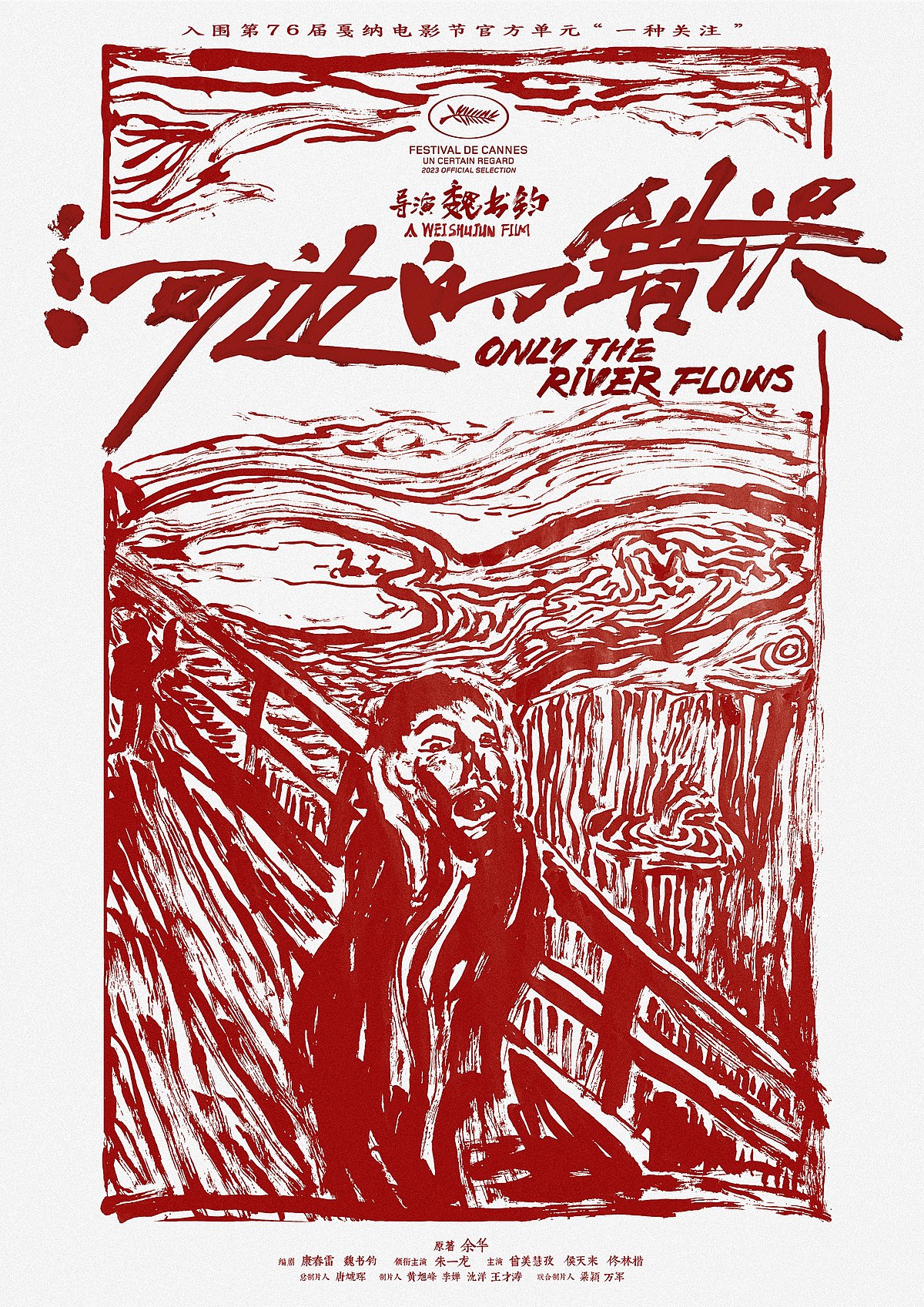
Only the River Flows (河边的错误, Wei Shujun, 2023)

Spoiler warning

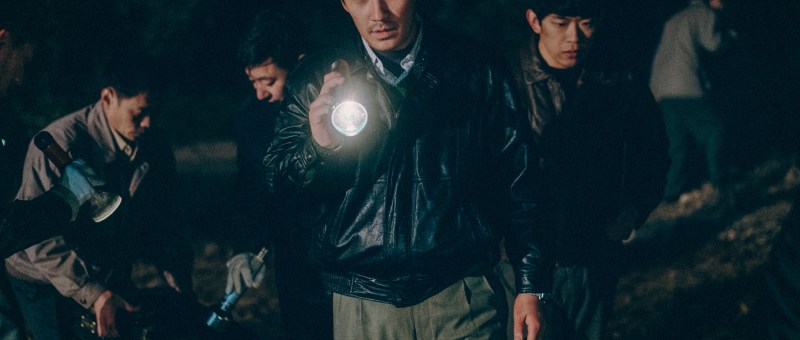
In the opening moments of Wei Shujun’s Only the River Flows (河边的错误, Hébiān de Cuòwù) children run through an abandoned building playing cops and robbers amid the ruins of a changing China. One could argue that detective Ma Zhe (Zhu Yilong) is little different from the boy who chases after the other children with a plastic toy gun in his hand and an apparent love of justice in his heart only to enter a room and find himself on the edge of precipice looking down on a digger several floors below already sweeping up the rubble while Ma and his police partner look on obliviously. 

Wei fully recreates the aesthetics of sixth generation cinema, filming on grainy 16mm with a score that immediately echoes the films of the 1990s. Yet this small town in southern China is also a noirish place full of dank corridors and crumbling buildings that reflect the slow death of the old factory system along with the accompanying anxiety and displacement. Ma Zhe is also somewhat displaced. As he’s first introduced it’s as the only plainclothes detective in a room full of policemen in military uniform. His genial boss sells a message of “collective glory” that sounds somewhat outdated and is continually undermined by the fact he seems to do little himself and in fact continually instructs Ma to close the case he is working on even if he isn’t really convinced that primary suspect really is the guilty party. 

Based on a novel by Yu Hua, the film’s Chinese title more accurately means “a mistake on the river bank” which could refer to the murder itself, a strange case of an apparently well liked old lady killed with a sharp object, or to an encounter Ma later has with the suspect who is referred to only as “The Madman”. Apparently adopted by the old woman, Granny Four (Cao Yang), to stave off loneliness after her husband’s death (presumably they had no children of their own) the Madman is middle-aged with some kind of learning difficulties and otherwise mute and docile never having displayed any signs of violence or volatility. Yet in his way Ma is also a “madman”, increasingly out of touch with objective reality and driven near out of his mind by his preoccupation with the case. 

Pushed past his limit, Ma feels himself stalked and eventually descends into a lengthy dream sequence in which he watches his recollections projected on a cinema screen only for the negative to dissolve in flames as if it were burning a hole in his memory. His own perceptions are not reliable as confirmed by the confusion surrounding a commendation he received at a previous posting that he can no longer find, while a friend he contacts says he can’t remember him every receiving it and would have been surprised if he had as back then Ma was drinking quite heavily. Overburdened by the case, he begins drinking again and is also filled with paternal anxiety while his pregnant wife spends her time to trying to construct the image of their family by completing a jigsaw puzzle featuring a picture of a mother and child. 

The couple are told, by a very unsympathetic doctor, that there is a small chance the baby may be born with a genetic abnormality that could result in cognitive impairment. While Ma leans towards an abortion (the one child policy in this era perhaps influencing his decision) his wife is determined to keep it, calling Ma a heartless man but also suggesting that the fate that has befallen him is some kind of karmic retribution. He feels the Madman in himself echoed in the fate that awaits his child and is unwilling to accept it, wondering what their life would be like with the world the way it is.

His sense of “madness” is centred in his individuality as the member of a collective and something that he finds echoed in the frustrating dead ends of his case. Several witnesses saw the body but did not report it, fearful of their own secrets being exposed. More deaths soon occur, not exactly related to the first but somehow as a result of it as if murder were catching and Ma is a point of infection bringing a hidden truth to light that accidentally exposes something others would have preferred remain private. Ma’s quest is to quell the madman within himself, as perhaps he does in once again putting on his uniform and joining the collective even if it means accepting their truth above his own or the doubts in his heart. A brief coda featuring Ma and his wife happily bathing their son in an atmosphere of warmth and comfort might suggest that order has been restored were it not for the unsettling look in the child’s eyes in the film’s final frame. Beguiling and mysterious, the film lends itself to multiple viewings in its consistently slippery realities and noirish sense of existential dread as Ma attempts to find himself amid the contradictions of ‘90s China in a land very much under construction. 


Only the River Flows screened as part of this year’s BFI London Film Festival and will be released in UK & Irish cinemas in spring 2024 courtesy of Picturehouse Entertainment.

International trailer (English subtitles)

The Wild Goose Lake (南方车站的聚会, Diao Yinan, 2019)

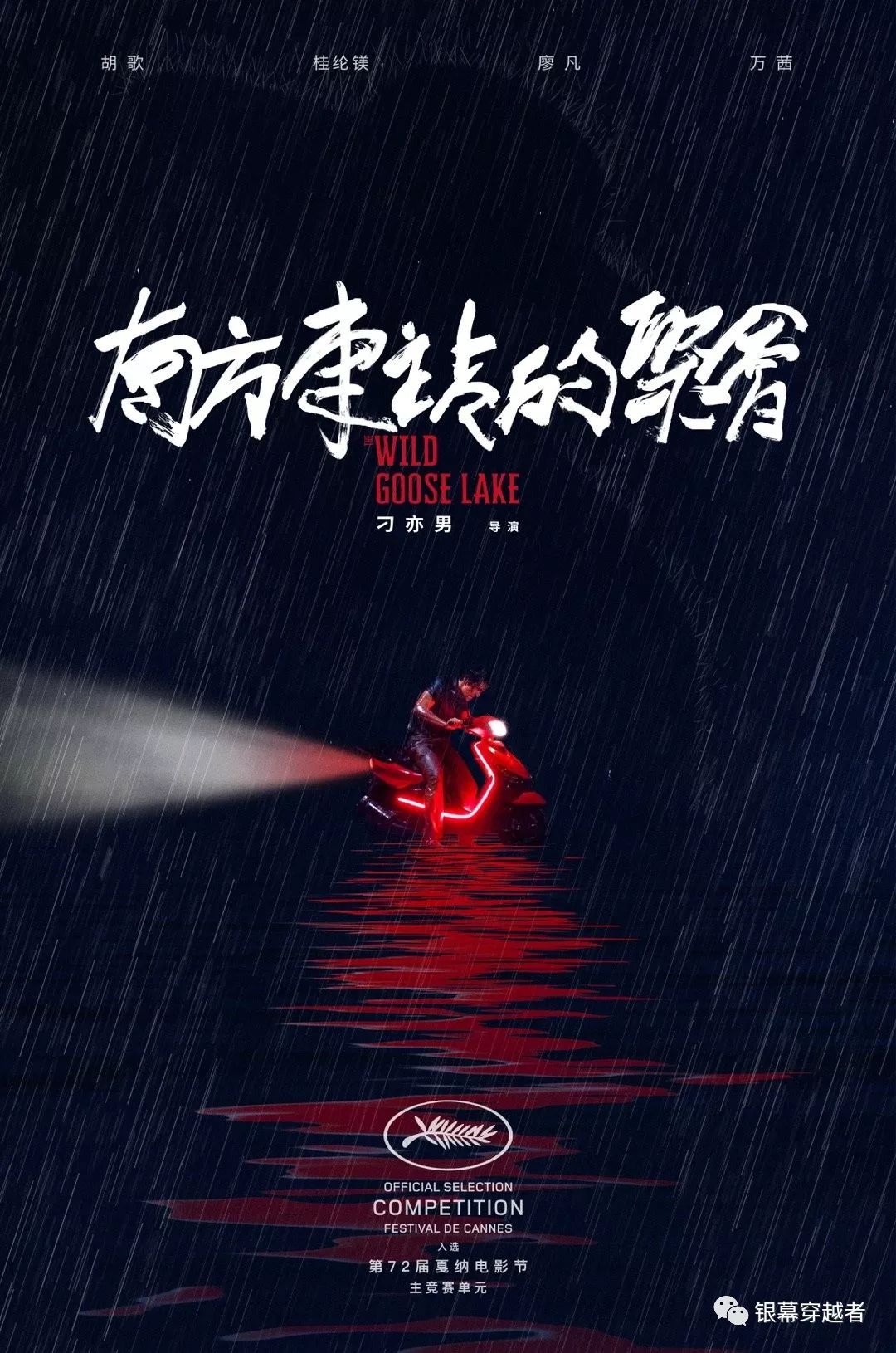
wild goose lake poster 1Chaos and desperation are about as far as it’s possible to get from the image of the modern China the nation’s cinema has been keen to project, but that’s exactly where we find ourselves in the murky world of The Wild Goose Lake (南方车站的聚会, Nánfāng Czhàn de Jùhuì). Diao Yinan’s Black Coal, Thin Ice followup finds the director in much the same territory only this time embracing the absurdity of existential flight as his twin heroes seek impossible escape in the garish neon of a provincial underworld.

Diao opens on the rain-drenched streets as sullen gangster Zhou Zenong (Hu Ge) waits impatiently for a rendezvous with his estranged wife Shujun (Wan Qian), only to be met by a stranger – “bathing beauty” Aiai (Gwei Lun-mei), who explains she won’t be coming. A lengthy flashback reveals that Zenong is currently on the run after getting embroiled in a dispute over turf assignments at some kind of gangster briefing session during in which one of his guys shot one of the Cat brothers’ men in the leg. To settle the matter, the boss proposes a good old-fashioned competition to see who can nick the most bikes in one night with the winner getting the prime spot, but Zenong doesn’t know he’s been set up and mistakenly kills a policeman after being attacked by Cat Eyes. Realising there’s no longer any way out for him, Zenong’s last hope is to keep the police at bay long enough to get back in touch with his wife and convince her to turn him in to the police so that she can claim the reward money.

Like many men of his generation, Zenong couldn’t find the kind of honest work that would allow him to provide for his family and so he left home. Too ashamed to own his no-good gangster ways, he stayed away for five years but all that’s on his mind is family and this is the only chance that he will ever have to provide for them. Shujun isn’t even really sure she wants anything to do with her absentee husband, but is dragged back into his orbit once again harassed by the police every step of the way.

In striking contrast to most Chinese crime dramas, these police are far from a force for order. Describing Wild Goose Lake as a lawless land, they have their very own briefing to formulate a plan to catch Zenong but aren’t averse to underhanded tactics like threatening Shujun and trying to undermine her attachment to her husband through a fabricated story about a pregnant girlfriend. The line between cop and thug isn’t so thick as you’d think it would be, and you can’t trust the police any more than brotherhood or honour amongst thieves.

Devoid of morality, Wild Goose Lake is indeed a chaotic place defined by shifting loyalties and unexpected betrayals. Fights break out without warning, plans change, and there are no safe spaces. Bumbling as they are, the police are everywhere watching everything and trying to blend in. Anyone might be a cop, or secretly working against you. Zenong is on the classic wrong man path, except that he’s the right man and he knows it. He might not have pulled the trigger if he knew it was a policeman he was firing at, but pull the trigger he did and now he’ll have to make peace with it. Trying to outrun the law only so long as to subvert it, he finds himself slipping past checkpoints distracted by pointless officiousness and consistently evading the net.

When Shujun is unable to make it to the rendezvous, Aiai offers to take her place by turning Zenong in and claiming the reward money to pass it on to Zenong’s wife (minus a small fee), meaning they will need to trust each other until the mission is completed. Aiai, a dejected young woman supplementing her income with casual sex work as one of the “bathing beauties” found at the lake, longs to escape her dead end existence, eventually telling the policeman she’d use the reward money to open a small store back in her hometown. Like Shujun, she lives in a fiercely patriarchal, unforgiving society  from which there is little sign of escape or independence. Yet, as afraid of everything Zenong represents as she eventually becomes, Aiai remains steadfast and true, keeping her promise and paving the way towards a brighter future for Shujun and her son away from the haphazard chaos of Wild Goose Lake. An absurdist fable drenched in neon, Diao’s conception of life on the margins of provincial China is as bleak as they come but eventually finds space for positivity on returning to a world more ordinary in which two women walk away from the traumatic past arm in arm and the law has to be content to let them go.


The Wild Goose Lake was screened as part of the 2019 London East Asia Film Festival.

International trailer (English captions)