731 (Zhao Linshan, 2025)

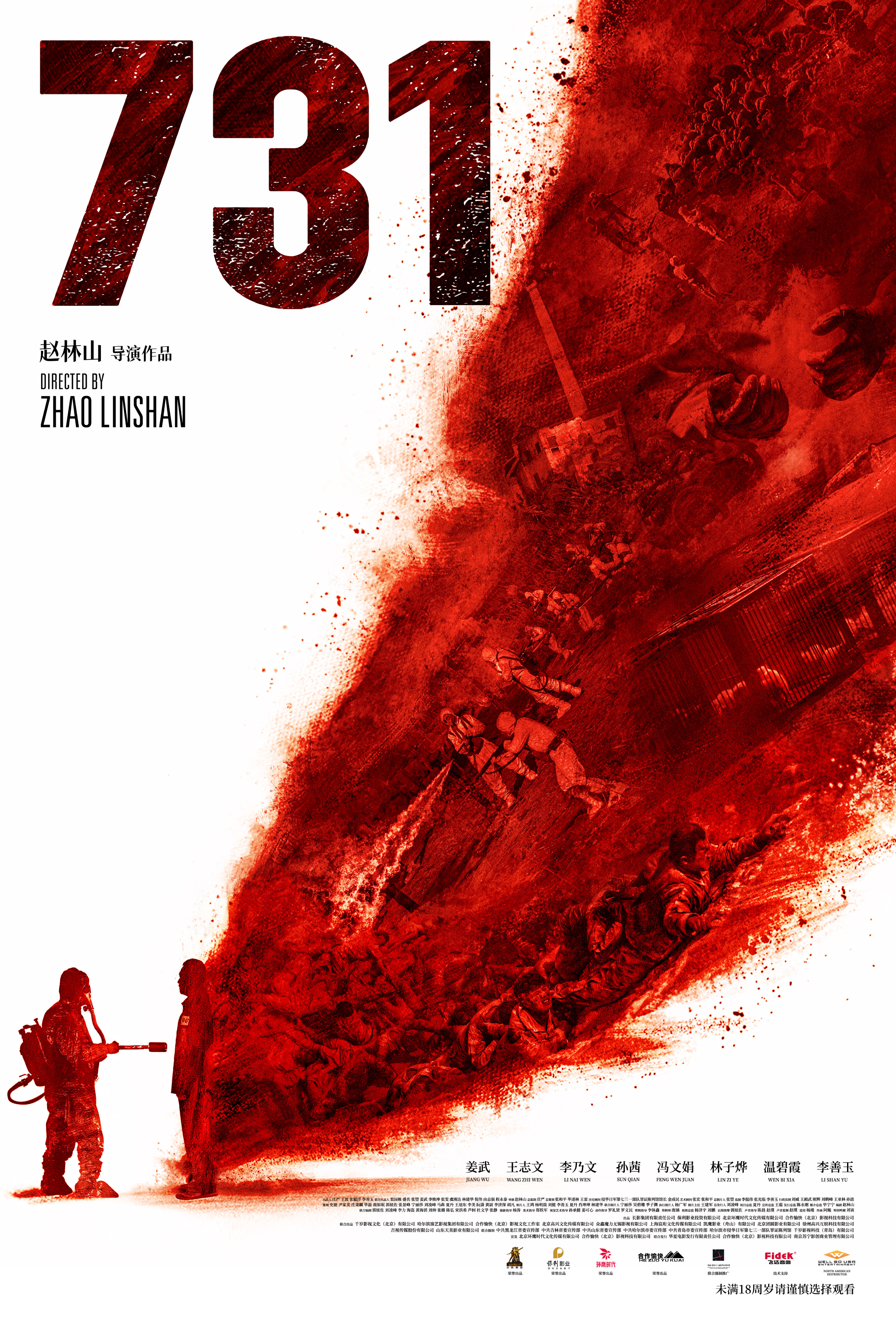
When Dead to Rights was released last year, there was outcry in some quarters that a horrific historical event was being misused for propaganda purposes to fuel hate against the Japanese. These claims were not unfounded, but if the film’s propaganda aims were subtle enough to fly over the heads of those with little knowledge of China and its history, the same cannot be said of 731 which is guilty of every charge levelled at Dead to Rights while simultaneously being a flippant examination of very real and heinous war crimes committed by Japan predominantly against the Chinese, but also Russians and prisoners from other parts of its empire.

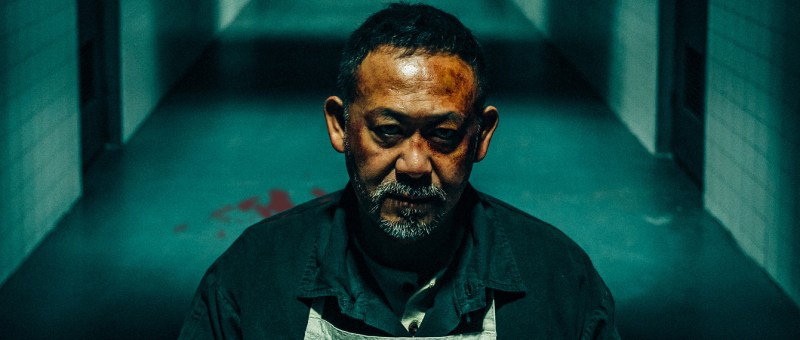
Those familiar with the subject matter may recall that there were no known survivors from Unit 731, a scientific unit conducting inhumane human experimentation such as vivisection, as the Japanese murdered all of the remaining prisoners and destroyed the facilities at the end of the war. The film may be based on reports of an escape attempt in the summer of 1945, but descends into nihilism as the hero is ultimately unable to live up to the reputation of the man from whom he’s stolen his identity. Wang Yongzhang (Jiang Wu) calls himself Wang Zicheng, supposedly responsible for leading another prison revolt and escape in the 1930s and thereafter becoming active in the resistance. Wang is, however, a pragmatic coward and quickly finds himself given the task of delivering food to the other prisoners, apparently because of his talent for languages which includes Russian and Korean as well Japanese and Mandarin, though he is not supposed to talk to any of them aside from repeating slogans. In any case, he’s content to go along with the Japanese guards in order to preserve his life up to the point that he discovers what’s really going on at Unit 731 and realises that his predecessor was the man he first met on his arrival and has now been murdered.

The atmosphere, however, is decidedly odd with its moments of misplaced humour and takes on an almost squid game-esque aesthetic as announcements are made by a little girl stating that the prisoners have been brought here because they are “sick” and will be “free” when they are”cured”. Obviously, the Japanese officers have different definitions of “cured” and “free” than would usually be assumed, just as they refer to the prisoners as “logs” in their records which obviously means that they are fully aware what they are doing is wrong and they’ll have to face the consequences when all this comes to light. Prisoners are bizarrely made to follow an oiran procession to be “freed”, while many of the staff members dress in formal kimonos rather than military uniforms. The building itself is labyrinthine in design and aesthetically well designed, while the insistence on cleanliness, so they can be sure their biological weapons work as opposed to prisoners just dying of concentration camp diseases, ensures everything sparkles with science fiction sheen. 

On the other hand, the partial suggestion is that these people are “sick” because they’re culturally Chinese, and need to get better by becoming good Japanese citizens who accept the Emperor’s benevolence which is why they make the children read announcements. But at the same time, no one’s getting out of here anyway, and there’s no real explanation for the children’s strange role in the apothecary. Ahistorically, there’s a female Japanese officer who seems to have a hangup about maternity and sleeps next to a pregnant prisoner. She also speaks incredibly bad Japanese to the extent that another character questions where she’s from, but no further point is made aside from her generalised sadism. That the film is so gory in some places almost ends up giving these very real, heinous crimes a camp quality while focusing not on the people being flayed alive or frozen and having their limbs smashed, but the weird room of foetuses in jars. Ishii, meanwhile, the head of the project, seems very interested in the baby of a Chinese doctor who otherwise embarrassed them by being able to figure out how to cure the plague they were developing as a biological weapon with traditional medicine ingredients.

The whole thing makes very little sense, but is really only leading up to sentences like “how could there be Japanese in heaven?” while the film ends with footage of people attending an exhibition on Japanese war crimes along with a pointed reminder that most of the key personnel involved with Unit 731 were never prosecuted because the Americans granted them immunity in exchange for their research. It seems to be suggesting there is again an existential threat, and that there will be “no survivors” this time either if China does not assert itself. Nevertheless, in doing so, it sells a rather surprising message for a propaganda film in making its hero a failure, a man who in the end could not lead his fellow countrymen to freedom but only to death in direct contrast to the resolution usually found in films like this which is included only in the final title card stating that the Chinese people finally put paid to 14 years of Japanese aggression and scored a win for the global anti-fascist movement, which at least seems a little ironic in the light of contemporary authoritarianism. Completely baffling on several levels, the film seems to undercut itself at every opportunity and lands somewhere in the realms of nihilistic fairytale and bizarre fever dream.


731 is available on Digital in the US courtesy of Well Go USA.

Trailer (English subtitles)

The Fallen Bridge (断.桥, Li Yu, 2022)

Li Yu’s mystery thriller The Fallen Bridge (断.桥. duàn.qiáo) finds itself at a series of contradictions in the modern China and its film industry. The film was an unexpected box office success, though largely because it falls into a new category of boy band film in starring TFBoys’ Karry Wang locking in an audience of ardent fans much as Jackson Yee’s presence in Better Days had though it also plays into ongoing anti-corruption theme in recent cinema while simultaneously adopting a mildly positive stance towards whistleblowers if specifically within the field of construction.

It is of course an unescapable fact that hypercapitalistic working practices and ingrained corruption have led to numerous public safety failures with bridge collapses unfortunately a fairly common occurrence. This one is particularly problematic as a skeleton is discovered encased in the concrete during the cleanup effort. From the way it’s posed, it appears the man may have been buried alive. A preserved piece of paper found in a bag accompanying the skeleton states his intention to take his concerns to the head of the construction project that the structure is unsafe and should be entirely rebuilt. Of course, that would be incredibly expensive, embarrassing, and disadvantageous to others who have used the bridge as a way of forging connections with important people.

The bridge’s collapse is therefore also symbolic in pointing to the fracturing instability of these relationships along with that between college friends Zhu Fengzheng (Fan Wei), the project manager, and Wen Liang (Mo Chunlin), the would-be-whistleblower. Fengzheng has also been raising Liang’s daughter Xiaoyu (Ma Sichun) who was 12 at the time her father disappeared after seemingly being disowned by her mother who was under the impression he had runaway with his mistress. Now in her 20s and an architecture student, Xiaoyu becomes determined to learn the truth even as she begins to suspect Fengzheng who has otherwise become a second father to her and does at least seem to care for her as a daughter while his own son is apparently living in Australia. Teaming up with a fugitive, Meng Chao (Karry Wang), on the run for killing the man who raped his sister, she begins plotting her revenge while a police investigation into the bridge collapse and an additional suspicious death otherwise seems to flounder.

Though it may not mean to (as it seems unlikely to please the censors) the film gives tacit approval to vigilante violence in subtly suggesting that “official” justice is rendered impossible because of the complex networks of corruption that exist within the soceity. Meng Chao says the man who raped his sister was a judge which is why he had to kill him, while Xiaoyu seems to desire individual vengeance believing the police aren’t investigating properly but refusing to go to them with key evidence because she wants to kill her father’s killer herself. While carrying out their investigation, the pair end up adopting the wily daughter of another casualty of the villain’s greed and form an unlikely family unit marking them all out as good people who have been betrayed by the system which is itself corrupted by the nation’s headlong slide into irresponsible capitalism. 

Even so, revealing the villain so early weakens the suspense while their own motivations are left unexplored, assumed to be merely greed if perhaps also a wish to remain connected to influential people and be thought of as important at the cost of the lives of the general public (along with those of often exploited labourers) endangered by shoddy construction practices. It isn’t entirely clear how they intended to deal with the fallout of their machinations to cover up their past misdeeds, especially as the sub-standard work on the bridge has already been exposed though obviously could be blamed on others no longer around to defend themselves, but perhaps it all amounts to crazed self-preservation pitched against the righteousness of Xiaoyu and Meng Chao who are after all wronged parties in China’s deeply entrenched judicial inequality. Nevertheless, we get the inevitable title card (left untranslated in the overseas release) explaining that justice was served and a censor-pleasing ending that still in its way suggests the police are incapable of solving these crimes and that the petty corruptions of small-town life are otherwise impossible to prosecute. 


The Fallen Bridge streamed as part of the 18th Season of Asian Pop-Up Cinema.

Original trailer (English subtitles)

Fish and Elephant (今年夏天, Li Yu, 2001)

513cslBr5wL

The first narrative feature from former documentarian and TV presenter Li Yu, Fish and Elephant (今年夏天, Jīn Nián Xià Tiān) is touted as the first film from mainland China to explicitly deal with lesbian life in modern Beijing. Necessarily shot under the radar to get around China’s strict censorship requirements, the film almost disappeared after “getting lost” on return from the Venice Film Festival (where a mishap with missing reels apparently led to a less than stellar reception though Li did eventually pick up an award) but went on to feature in a number of international festivals even if not quite welcomed at home. Imperfect and somewhat clumsy in execution, Fish and Elephant is nevertheless as whimsical as its title might suggest if only in its ironically abstracted need for detachment.

Xiaoqun is approaching 30 and unmarried. Despite her mother’s pleas and the needling of relatives Xiaoqun has no desire to marry. She supports herself well enough as an elephant keeper at the zoo and lives alone in a small apartment. A desire for independence is not the only reason Xiaoqun chooses to remain single – she is gay. Unable to state this fact openly, Xiaoqun is often forced to attend various blind dates set up by her mother who emotionally blackmails her by bursting into tears on the phone. Nevertheless, she eventually develops a flirtation with a young woman, Xiaoling, who owns her own clothing store at the market. Before long the women have moved in together and established an easy domesticity only for Xiaoqun’s mother to turn up unannounced determined to see her daughter wed. As if that weren’t enough, Xiaoqun’s long lost ex, Junjun, also arrives without warning apparently on the run from the police for “bank robbing”.

Perhaps because of the need to shoot covertly, Li’s script is structurally threadbare involving several large narrative jumps but the quality of unseen incompleteness plays into the film’s central theme in that the lives of women like Xiaoqun and Xiaoling are often invisible and hidden from view. We observe the two women’s courtship obliquely and in stages as they flirt (tentatively), wait for each other, are frustrated by exes, and finally come to a kind of agreement framed against the turquoise of of Xiaoqun’s bedroom wall which makes the pair look uncomfortably like the goldfish trapped inside her aquarium. Even this is unspoken and uncertain, hands tentatively grasped in trying to confirm that the situation has been read correctly until it is quite literally sealed with a kiss.

Xiaoqun, at least, is not so afraid to tell people what she is, only they never seem to believe her. Her uncle, berating her for turning down all the suitors he finds and reminding her that it’s the “proper thing” for women to marry and bear children, asks her what the problem is, to which Xiaoqun replies that she’s told him plenty of times before – she’s “no interest in men”. The uncle cannot process this information and offers to find a therapist to help with Xiaoqun’s supposed “issues”. Similarly, she decides to tell it straight to one of her dates – “I don’t like men, I like women”, but he refuses to listen. It seems he’s familiar with the concept, but doesn’t really believe in it and assumes Xiaoqun is trying to skip out on the date without giving him a proper chance by saying something outrageous.

Each time Xiaoqun calmly explains her life choices, everyone just ignores her. Either they simply don’t understand or refuse to accept that her sexuality is a good enough “excuse” for refusing to conform to the social order. Not until she finally attempts to come out to her mother does Xiaoqun actually say “I am gay” and then only very quickly followed directly by an explicit explanation of what she means. Unfortunately her mother still can’t quite get it, the language and cultural gap too vast to bridge. Like the young person’s pop song she’s always listening to, it’s not that she doesn’t understand, it’s just that the world is moving so fast.   

Eventually Xiaoqun’s mother starts to come round and considers going against the social order by marrying again herself despite her supposedly inappropriate age. Marriage, however, seems an unhappy business all round and none of the men we are introduced to are particularly appealing. The men in Xiaoling’s shop bark at their girlfriends and criticise the slutty clothes, or try to harass Xiaoling into dropping the price while her boyfriend hovers in the background and places a territorial hand on her shoulder almost as if he knew why she just gave a quite massive discount on an expensive shirt to the woman currently trying it on for size. Xiaoqun’s mother is divorced, her father having left the family (and an apparently unhappy marriage) for another woman. Yet everyone seems intent on railroading the two women into this culturally demanded alleyway of misery.

For the most part, Xiaoqun and Xiaoling are content to simply ignore the world around them and live peacefully together like two fish in a bowl. Conspiratorially linking hands under the table as Xiaoqun’s mum reels off her marriage spiel and leaning in close to light one cigarette from another, they perhaps take pleasure in mocking the social order directly under her nose while worrying what the fall out might be should the truth be discovered. The relationship is threatened not particularly by the marriage plots, but by the presence of Junjun who places a wedge between the verbally uncommunicative lovers and another burden of secrecy on the already burdened Xiaoqun.

Li concludes by splitting the narrative into its three component strands, opting for a perhaps unwise slide into absurdity as Junjun embarks on a last stand though it does provide an opportunity for another (accidentally?) misogynistic/homophobic remark from a police officer. The film ends on a wedding, at which Xiaoqun and Xiaoling are conspicuously absent despite being expected and as a couple. Perhaps they are just “busy” having recently recovered from their momentary romantic drama, but their failure to appear also reinforces their committed isolation in which they are content (for good or ill) to hide themselves away, existing only for each other.


US release trailer (English subtitles, NSFW)