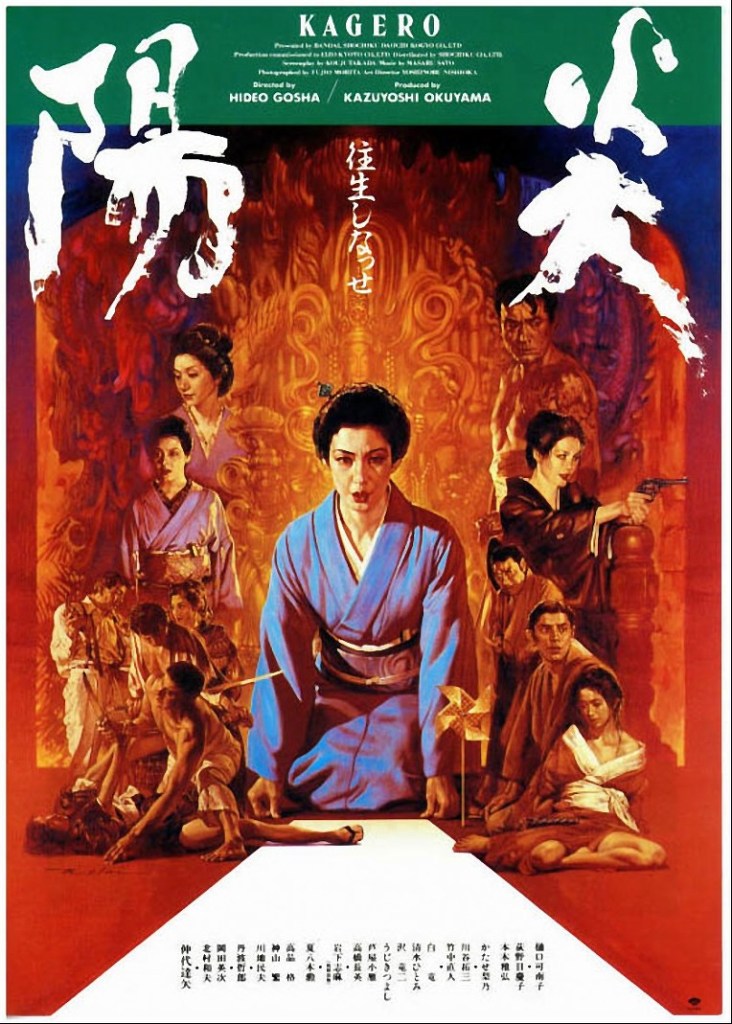
 Hideo Gosha had something of a turbulent career, beginning with a series of films about male chivalry and the way that men work out all their personal issues through violence, but owing to the changing nature of cinematic tastes, he found himself at a loose end towards the end of the ‘70s. Things picked up for him in the ‘80s but the altered times brought with them a slightly different approach as Gosha’s films took on an increasingly female focus in which he reflected on how the themes he explored so fully with his male characters might also affect women. In part prompted by his divorce which apparently gave him the view that women were just as capable of deviousness as men are, and by a renewed relationship with his daughter, Gosha overcame the problem of his chanbara stars ageing beyond his demands of them by allowing his actresses to lead.
Heat Wave (陽炎, Kagero), which was to be the director’s penultimate feature, is a homage to late ‘70s gangster movies with a significant nod to Toei’s Red Peony Gangster series. Set in 1928, the action follows cool as ice professional itinerant gambler Rin Jojima (Kanako Higuchi) whose high stakes life becomes even more complicated when she accidentally runs into her adopted little brother, apparently on the hook to some petty gangsters. Dropping her commitments to help him out of his sticky situation and recover the family restaurant, Rin comes face to face with the yakuza who killed her father in a gambling dispute more than twenty years previously but vengeance is just one of many items on her to do list.
The title Heat Wave was apparently selected for the film to imply that Gosha was back on top form and ready to burn the screen with thrilling action but when producers saw his rushes they knew that their hopes were a little misplaced. Gosha was already seriously ill and was not able to direct with the fire of his youth. Heat Wave is undoubtedly a slow burn as Rin figures out the terrain and designs her campaign with the opposing side coming up with a counter plan, but the gradual acceleration begins to pay off in the film’s elaborate smoke and flames finale as Rin takes a bundle of dynamite to the disputed territory and then fights her way out with sword and pistol aided by an unlikely ally. Downbeat but leaving room for the hoped for sequels, Heat Wave is very much in the mindset of Gosha’s heyday in which, as Rin laments, the good die young and the bad guys win.
In keeping with many gambling films much of the action is taken up with tense games of hanafuda which may prove confusing to the uninitiated and are not particularly engaging in any case, though Gosha does not overly rely on the game to fill the screen. This may be early Showa, but save for the trains the action could almost be taking place a hundred years previously. Rin may have an unusual degree of autonomy as an unmarried woman travelling alone and earning her money through back alley gambling but her world is still a traditional one in which the honour of the game is supposed to matter, even if it is ignored by the unscrupulous who would be prepared to undercut their rivals away from the gaming table by attacking their friends and allies. Rin gains and then loses, reduced to an endgame she never wanted to play and which she fully intends to win by destroying herself only to be saved by her greatest rival.
Gosha’s reputation for vulgarity was not quite unjustified, even if perhaps overstated. Rin apparently inhabits the male world of her profession in a full way as an odd scene in which she’s taken to an inn to watch a live lesbian sex show seems to demonstrate though there is no dramatic purpose to its inclusion save to emphasise Rin’s impassive poise. Though nudity is otherwise kept to a minimum, Rin’s yakuza tattoos are on full show as a clear indication of her position in the underworld. The appearance of such extensive tattooing on female gangsters is a rare sight and Gosha does his best to make the most of its transgressive qualities.
When the producers realised Gosha was not as filled with intensity as they’d hoped, they hatched on the idea of attaching a hard rock song to the end to give the film more edge (apparently much to the consternation of the composer). This might explain the strange entry to the credits sequence which is accompanied by a very up to the minute burst of synthesiser music accompanied by computer graphics loading the faces of the stars across the screen in strips. Perhaps meant to bring the ‘70s inspired action into the present day the sudden entry of the modern world is jarring to say the least though perhaps it kept viewers in their seats long enough to enjoy the post credits sting of Rin giving it her best “you shall perish”, presumably to whet appetites for a sequel. Even if not quite as impressive as some of Gosha’s previous work, Heat Wave makes up for its flaws in its exciting finale which brings all of his choreographical and aesthetic abilities to their zenith as Rin basks in both victory and defeat with the legacy of the good people who took her in burning all around her.
Selection of scenes from the the film (no subtitles)
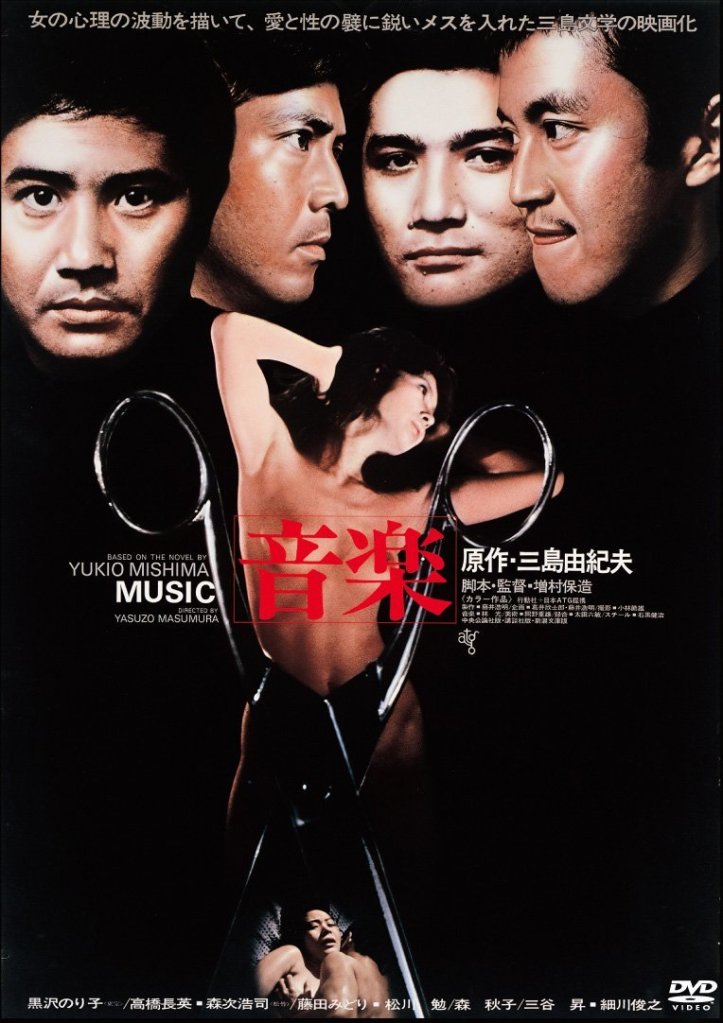 If the under seen yet massively influential director Yasuzo Masumura had one recurrent concern throughout his career, passion, and particularly female passion, is the axis around which much of his later work turns. Masumura might have begun with the refreshingly innocent love story
  Windows on Worlds