A Fine, Windy Day (바람 불어 좋은 날, Lee Jang-ho, 1980)

Lee Jang-ho returned to filmmaking after a short hiatus having been temporarily banned for the possession of marijuana in 1980 with a fresh new approach focussing on the social issues of the day as Korea found itself in the midst of confusion following the assassination of president Park Chung-hee. Though many hoped for a new era of long-awaited democratisation, those hopes were soon dashed by another military coup and the continuation of oppressive dictatorship under Chun Doo-hwan. During his time away from the film industry, Lee had run a bar with his mother and it was there that he became more acquainted with the struggles of ordinary people.

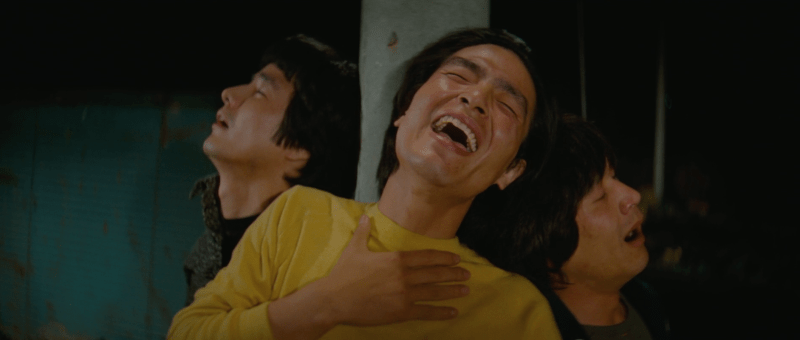
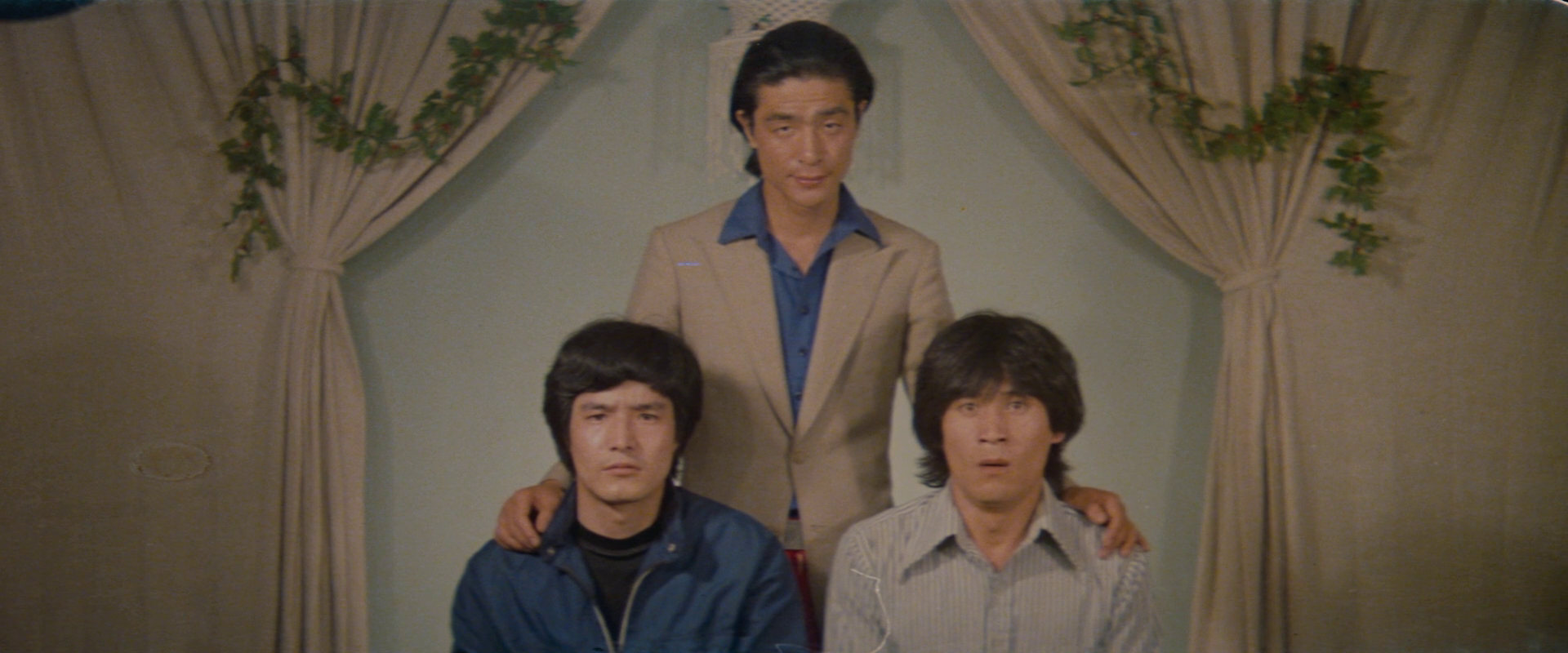
Adapted from a novel by Choi In-name, A Fine, Windy Day (바람 불어 좋은 날, Barambuleo Joheun Nal) follows three young men who have migrated from the countryside to Seoul in wider movement of urban migration. The sister of one of the men who later joins them remarks that there are no young people left in the countryside and her brother agrees that there is no longer any future in farming. Yet as the opening of the film makes clear in its idealised vision of pastoral life, it is really the expansion of the cities which has displaced the men and destroyed the natural habitats they once inhabited. The film often aligns the three with stray dogs who’ve come scavenging in the city because they can no longer survive in their rural hometowns. 

“It’s as if I’ve been taking a beating for two years straight from some invisible person” delivery boy Deokbae (Ahn Sung-ki) remarks during the film’s conclusion of his life in Seoul which does indeed seem to have been one long and bloody battle that had forced him into submission. As he tells equally naive country boy Suntae, he never stuttered before he came to the city but is now cowed and anxious all too aware of how the native Seoulites treat men like him. Daughter of a wealthy family, Myung-hee (Yu Ji-in) drives her own car around town, knocking over school children and not even bothering to stop until challenged by Deokbae for ruining the food he was currently in the middle of delivering. He later gets a telling off from his boss and his pay docked while she wraps her expensive scarf around his neck and promises to send compensation money to the restaurant where he works. 

Deokbae knows that Myung-hee is merely playing with him, her strangely childish glee like a little boy pulling the wings off a fly, yet he continues to associate with her. She laughs at him when he sits on the floor instead of the sofa after she ordered from the restaurant to get him to come to her house, and then tries to kiss him before becoming angry and pushing him away. Her posh friends later invade the restaurant and are drunk and rowdy, refusing to leave until a fight develops and they’re all carted off to the police.

But it’s only one of several degradations the men suffer at the hands of a new aristocracy not so different from the feudal elite. Chunsik (Lee Yeong-ho) works at a hairdresser’s where he is smitten with the pretty stylish Miss Yu (Kim Bo-yeon) who is being more or less sold by her ambitious boss and thereafter coerced into a compensated relationship with a sleazy businessman, Mr Kim, who was himself once a country boy but got rich quick through property speculation having cheated the old man who appeared in the film’s opening out of his ancestral land which has since been turned into the half-built slum inhabited by the three men. He is about to open a new shopping centre where the barber hopes to gain a prime position thanks to providing access to Miss Yu. The old man rails around the town demanding the return of his land, decrying that heaven will punish Mr Kim for what he’s done, and finally commits suicide in the newly completed building almost as it he were cursing it. 

The old man’s body is laid out on the last remaining stretched field where a shamanistic funeral song plays as a lament for the now ruined pastoral idyll which has been taken from each of the men and replaced with internecine capitalism in which wealth comes at the exchange of humanity. At the Chinese restaurant where Deokbae works, the wife of the dying boss had been carrying on an affair with the manager whom she hopes to marry once her husband has gone, while he expects to take over the shop though as is later revealed he is already married with children and technically performing a long con on her. The third man, Gilnam (Kim Seong-chan), works in a motel while saving money to open a hotel of his own but unwisely gives his savings to his girlfriend who runs off with them leaving him with nothing. He is then drafted for military service, receiving another blow from the contemporary Korea.

The man who spars with Deokbae who takes up boxing after his altercation with the rich kids is also wearing a shirt that reads “Korea” on the back and we watch as he is mercilessly beaten but this time refusing to give up reflecting only that he’s learned how to take a hit which is it seems the only way to survive in the Seoul of the early 1980s. The tone that Lee lands on is however one of playful irony, particularly in the meta-quality of the closing narration along with its victory in defeat motif as Deokbae acknowledges the need to roll with the punches which is also a subversive admission of the futility of his situation in which it is simply impossible to resist the system. A lighthearted but also melancholy chronicle of the feudal legacy repurposed for a capitalist era the film encapsulates itself in its bizarre disco scene as a confused Deokbae dances like a shaman, forever a country boy lost in an increasingly soulless and capitalistic society.


The Last Witness (최후의 증인, Lee Doo-yong, 1980)

Last Witness Restoration posterThe Last Witness (최후의 증인, Choehuui jeungin), a pregnant title if there ever was one, begins with a melancholy voice over by way of a warning. It tells us that the path we are about to embark on will be a dark one but strikes a more optimistic note in affirming that 1980 was the year old evils were cleared away and, the narrator hopes, such darkness will have been left behind in the approaching new decade. Sadly this will not come to pass. The Last Witness is adapted from a novel by Kim Seong-jong which was published in 1974 but Lee Doo-yong filmed his adaptation in 1979 during the brief surge of hope for a brighter future following the assassination of dictator Park Chung-hee which ended with the military coup staged by general Chun Doo-hwan placing the country under martial law. A detective is assigned a case, but his investigation takes him on a long, soul searching journey into the recent past in which he finds countless crimes, betrayals, and proofs of human cruelty which ultimately destroy his ability to believe in the better, brighter future which has been promised yet denied.

Oh (Hah Myung-joong), a recently widowed, strung out police detective is handed a case by his sympathetic boss which seems to have been buried. A brewery owner, Young Dalsoo (Lee Dae-keun), has been murdered whilst fishing at a river and there appear to be few clues save that the woman he was living with was apparently not his legal wife. Oh’s preliminary enquiries all point back to an incident 20 years previously when Young was the youth leader in the village and supposedly helped to capture/kill a squad of rebel communist guerrilla fighters who had been hiding on Mt. Jirisan. 

Lee structures the tale to mimic Oh’s investigation; we follow him as he follows leads, jumping back to the 1950s and then forward again the world of 1980. The war becomes a corrupting and dividing line but Lee is bold in his tenet that the wounds did not heal after the truce. The villainy and greed continued, women were used and abused, men were cheated and betrayed. Justice no longer existed and the system continued to be bent to the will of the powerful rather than used for the defence of the weak.

It’s no surprise that Lee had such trouble with the censors. The version of the film restored by the Korean Film Archive runs 154 minutes (the first cut apparently ran 158) but for its original release the mandated cuts took it down to 120, leaving an already complex narrative near incomprehensible. Aside from the scenes of rape and violence, the censors took issue with the depiction of judicial corruption and particularly with its manipulation to facilitate sexual coercion of a defenceless young woman.

The woman at the centre of the storm is Son Jihye (Jeong Yun-hui) – the daughter of a wealthy man who nevertheless became a commander of a communist guerrilla unit during the war. When General Son went into the mountains he took his daughter with him, but realising he was on the losing side, and resenting orders he believed would result in nothing more than martyrdom, Son lost faith in “communism” and was murdered by his own men in an act of mutiny. Before he died he entrusted a treasure map marking the spot he buried his ancestral wealth to a fellow officer with the instruction to look after his daughter and make sure she gets her inheritance. The soldier failed to keep his promise. Jihye is raped and then gang raped, rescued by a sweet and simple man, Bau (Choi Bool-am), whom she later marries, and then forced to become the mistress of an official who also raped her. Jihye and Bau are the innocents chewed up by the system, good people pushed into a corner by the politics of others and then let down by a society so riddled with corruption that it can no longer command any degree of faith from its continually oppressed people.

The Korea of 1980 is being attacked through the legacy of 1950 but whether in concession to the censors or no, the communists do not come off well either. Son, described as an eccentric, is clearly a misguided madman who has betrayed his class on a superficial level, saving his own wealth for a rainy day, but he is allowed a semi-noble death in finally renouncing communism as a cruel, ambitious underlying has him brutally executed by bloody, violent bayonets while his daughter watches from behind a nearby bush. Once Son is dead the madness sets in as the guerrillas hide out beneath a primary school, listening to small children sing happy songs while they tie up and rape a terrified teenage girl having abandoned all concessions to morality and their supposedly noble cause.

If the communists were bad what came later was worse. Interviewing a witness, Oh is keenly aware that the man is telling him only a part of the truth, leaving out a painful detail but leaving in just enough for a skilled investigator to understand. It is this act of selective silence that Oh has come to challenge, exposing the whole sordid story of his nation across two decades of war, trauma, economic recovery and political oppression. Oh cannot resist meting out a little justice of his own in reciting the man’s hidden truth back to him, forcing him to confront the ugliness of his of youth and the guilt that he has long been repressing. Unable to prosecute him for his crimes, Oh hopes that the man will be punished “emotionally” by his words but his actions have far more severe consequences than he ever could have anticipated.

What Oh finds when he solves the crime is a long history of rape, secrecy, betrayal, selfishness, and the misappropriation of law by the powerful to oppress the powerless. It all goes back to the mountain and the war, a young woman robbed and violated, her protector imprisoned, and a legacy of pain which will come back to haunt those responsible but bring only ruin and anguish to its original victims. The question of the “last witness” remains unsolved – will these be the last witnesses to an era of fear and impotence now that the bright future is on its way, or is Oh the last witness, deciding to take his terrible knowledge with him to a better place? Then again the film itself stands as a testament to its times, butchered by censors but carrying forth its own hidden truths only to deliver them 30 years later than expected. Lee’s powerful murder mystery is an investigation into the death of a nation about to be reborn which makes its grim yet inevitable conclusion all the more painful in its brutal negation of a long buried hope.


Screening as part of the London Korean Film Festival 2017 at Regent Street Cinema on November 4th, 2pm.

The Last Witness is also available on all regions dual format DVD & blu-ray courtesy of the Korean Film Archive. In addition to English subtitles on the main feature, the blu-ray disc also includes subtitles for the commentary track by Park Chan-wook and film critic Kim Young-jin, while The DVD includes subtitles for the commentary track by Kim and Lee Doo-yong as well as an additional commentary by director of Kilimanjaro/The Shameless Oh Seung-uk and journalist Ju Sung-chul.

The accompanying booklet is fully bilingual and includes essays by Kim Young-jin, Ju Sungchul (Editor of Korean film magazine Cine 21), and Inuhiko Yomota (film critic – the booklet also includes the original, untranslated essay in Japanese), as well as a note on the restoration from the KOFA conservation centre.

(Not currently available on the Korean Film Archive’s YouTube Channel)

Original trailer (Restored, English subtitles)