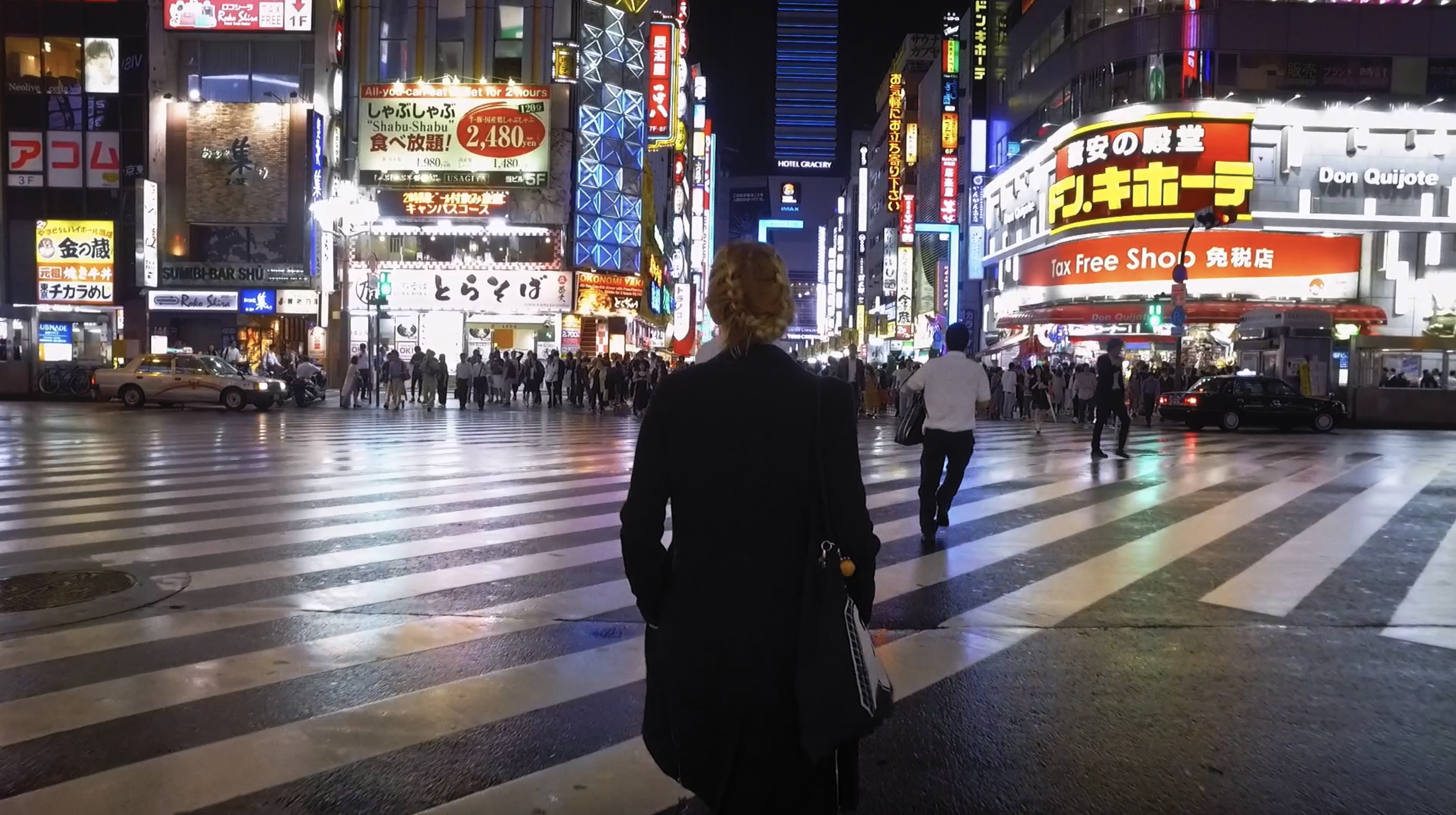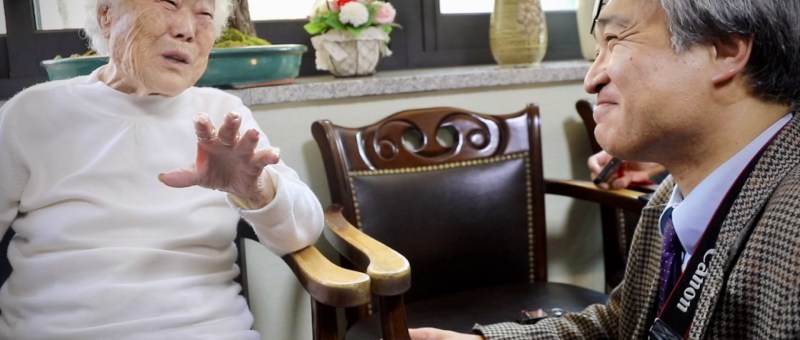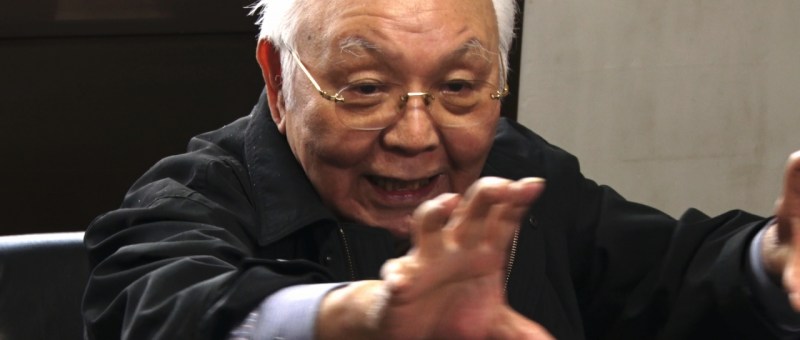
Paper City (Adrian Francis, 2021)

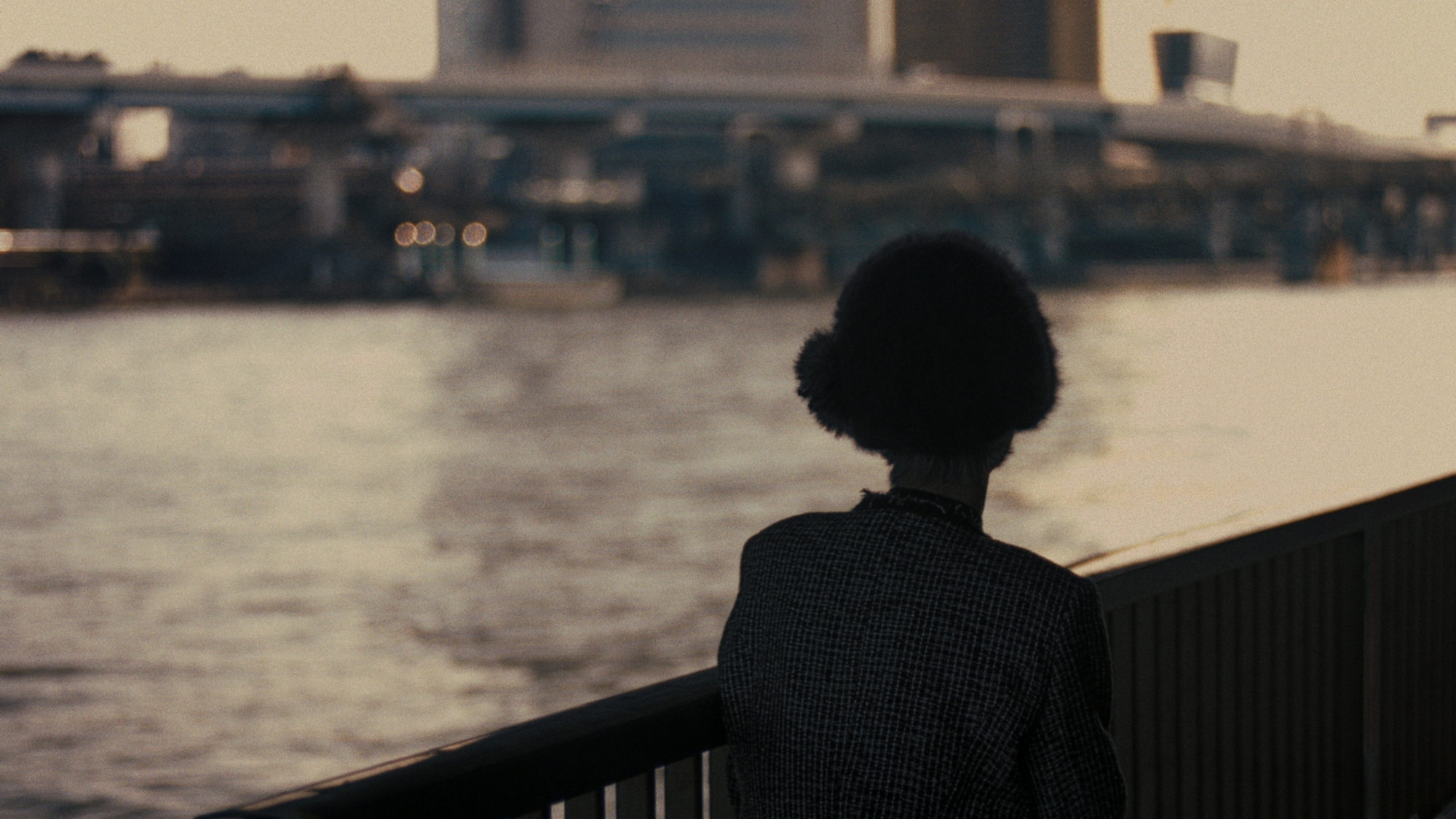
In March 1945, the firebombing of Tokyo killed 100,000 civilians and devastated 16 square miles of the city yet 70 years later those who survived have yet to be acknowledged by their government which has made no investigation or attempt to assist those who lost everything to the fires. Adrian Francis’ documentary Paper City follows a series of now elderly men and women who experienced the tragedy first hand and worry that the lessons of the past are being lost especially with the increasingly nationalistic mindset of the current government which seems hellbent on remilitarisation and the end of the pacifist constitution. 

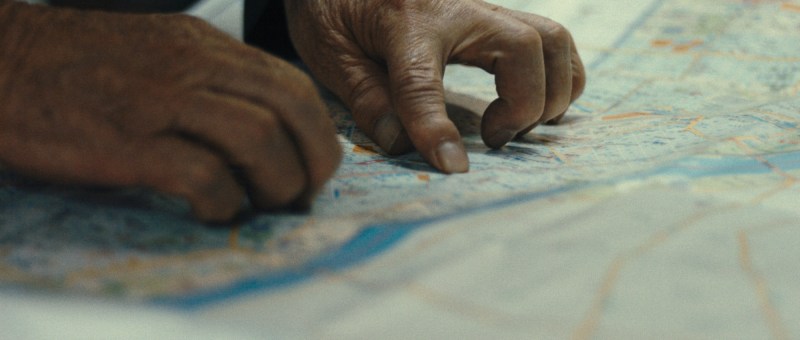
One of the chief concerns of the survivors is that there is no dedicated memorial to those died in the bombing. The remains of some victims are housed behind the memorial to the victims of the 1923 Great Kanto Earthquake, hidden away and out of sight. Survivors cite the example of other nations such as Germany in which the government has acknowledged its role in the harm caused to civilians through warfare and has acted to protect those who lost their homes, livelihoods, and families because of it. In Japan they feel ignored and forgotten, particularly aggrieved because government policy at the time exacerbated the problem in that they were instructed to stay and fight the fires rather than to evacuate the city. Many had been lulled into a false sense of security believing that as the areas they lived in were residential and had no military facilities they would not be targeted little knowing that the bombing would be indiscriminate with no intention to spare civilian life. 

As one elderly man puts it, they lost everything. Only a child himself as many of these now elderly people were, he lost not only his closest family members but his home and community along with any means they may have had to support themselves economically leaving them little more than destitute beggars in the ashes of a ruined city yet the government did nothing to help them. The Morishita district is one of few that made an attempt to record the names of the victims, those who were confirmed dead and those who were assumed so whose bodies were never found, holding a memorial service for them every year. Meanwhile another man only 14 at the time recalls being drafted to help clear up bodies using firemen’s hooks to pull them from the local river and now all these years later still unable to forget the face of a young mother with a child on her back whose hands still held tight to her hair. Another recalls seeing bodies piled up in a local park and disposed of en masse without dignity or identity as if they had never existed at all. 

What they fear most is being forgotten, that with the city entirely rebuilt no one even remembers anymore that it was once burnt to the ground. They petition the government for official recognition while protesting the injustice of war and the Abe administration’s determination to abandon the pacifist constitution. Protesting outside the Diet, they are ironically heckled by a nationalist counter protest who insist that the Japanese state is not at fault and the protestors should be taking their concerns to the American embassy instead. A kind of hopelessness sometimes falls over them, believing that the prospect of change is slim while the current iteration of the LDP remains in government while knowing that a change of government is also itself all but impossible. 

In any case, they know that their time is running short and they will need new voices to carry their message to the next generation to ensure that the firebombing of Tokyo is never forgotten. They share their harrowing stories of rivers on fire and blood red skies as a warning to the living while honouring the souls of the dead pausing for a moment to admire the figure of a wounded tree still standing tall reaching for the sky, in its way also a monument to endurance. Mainly observational in style with some direct interviews, Francis’ documentary captures the sense of desperation in the older generation that their suffering must not be in vain hoping that their message will get through and that one day there will be no more cities of ash or lonely children left behind to mourn them. 


Paper City streamed as part of this year’s Nippon Connection.

Original trailer (English subtitles)

Salaryman (サラリーマン, Allegra Pacheco, 2021)

The concept of the salaryman is deeply associated with Japan and with a particular way of working but is also in its own way troubling in its implications about the relationships between the employed and the employer in the contemporary society. Allegra Pacheco’s documentary Salaryman (サラリーマン) explores this culturally specific phenomenon along with its radiating effects on the wider society and the attitudes of younger workers who are beginning to turn their backs on the duplicities of the salaryman dream.

Originally from Latin America, Pacheco was first struck by the ubiquitous sight of drunk men in suits asleep on the streets of the nighttime city. The phenomenon has become so commonplace that few would remark on it or even really notice, yet to an outsider such as Pacheco it appeared strange. After all in few other cities would it be possible to fall asleep in a public place and wake up unharmed in full possession of one’s belongings. What she discovers through talking to several salarymen is a story of continual erasure in which the “corporate cattle” as one brands himself are left with no other acceptable outlets to relieve workplace stress born of an oppressive and bullying culture than excessive drinking often as part of the semi-compulsory nomikai afterwork drinking sessions. Having missed the last train, these men often have no other option than to simply wait until the morning when rather than returning home they replace their shirt at a convenience store and head straight back into the office.

These excessive working practices of course take a toll on the family when men rarely arrive home before 10pm if at all and leave early for the morning commute with little opportunity to interact with their wives and children. Pacheco then follows one working mother who is more or less left to handle the entirety of childrearing alone in her husband’s continual absence having to work taking her son to daycare and picking him up into her own working day along with the housework and cooking her own dinner. Meanwhile Pacheco also turns her attention to the phenomenon of the Office Lady or “OL” which is not exactly a salarywoman but separate category of worker treated almost like corporate domestic staff. Such women are often looked down on by the society around them which views the job solely as a stopgap for those looking to leave the workforce on marriage to become a traditional housewife. 

The presence of the OL may reinforce the idea of the corporate entity as a patriarchal authority in which the female executive or salarywoman is not regarded as an equal in what is often regarded as a homosocial society. One commentator describes the self-image of the salaryman as a contemporary samurai who owes ultimate loyalty to his company prioritising his corporate family over the social. Another reason salarymen can be found scattered over the city another expert argues is that they simply fear going home to a less certain environment in which familial bonds may have begun to fray under the strain of their workplace stress. Though Japan actually has well placed labour law designed to protect employees from exploitation it is not well enforced partly because of the nature of the relationship between workers and employers that prevents employees from speaking up about workplace bullying or injustice. 

These bonds between the employed and the employer are largely founded on the post-war promises of the era of rising prosperity in which companies offered jobs for life along with a tacit agreement to look after employees and their families which encouraged the already collectivist mindset that allowed workers to believe they were working towards a common goal of rebuilding the nation and ensuring economic prosperity for all. Such bargains however largely fell apart after the collapse of the Bubble Economy leaving the present generation with all of the stress and few of the rewards their parents may have enjoyed. Pacheco interviews the mother of Matsuri Takahashi who sadly took her own life in exhaustion born of the exploitative working environment at a top advertising firm with a reputation as a “black company” regularly ignoring standard employment law in the knowledge that they are unlikely to be challenged for breaking it. Other young people similarly cite burnout and the fear of karoshi or death from overwork as reasons they decided to leave the corporate world but even they do not necessarily find fault with the system only point out that it suits some better than others and was no good for them.

Then again according to a man who organises the extreme commute as an ironic sporting contest, the pandemic may have issued a wakeup call to the ranks of salarymen realising how nice it is not to have to cram themselves into a rush hour train or miss their kids’ bedtimes because they can’t get out of a nomikai. According to him the salarymen and women of tomorrow will demand the right to work when and where they want less likely to conform to outdated ways of doing business or wilfully participate in a system of widespread exploitation when offered no guarantees of future employment by a company who may try to silence them if they speak up and is just as likely to casually discard them at the first sign of trouble. His belief that this working revolution may usher in a new age of mutual compassion may seem naive or idealistic but it seems there’s hope for the salaryman yet that he may finally discover the means to free himself from an oppressive and exploitative working culture. 


Salaryman streamed as part of this year’s Nippon Connection.

Original trailer (English subtitles)

I Go Gaga, Welcome Home Mom (ぼけますから、よろしくお願いします。~おかえりお母さん~, Naoko Nobutomo, 2022)

Naoko Nobutomo’s documentary feature debut I Go Gaga, My Dear proved an unexpected hit on its 2018 release striking a chord with many middle-aged and younger people facing similar issues to the director while preoccupied about how best to care for their ageing relatives. Her 2022 followup I Go Gaga, Welcome Home Mom (ぼけますから、よろしくお願いします。~おかえりお母さん~, Bokemasukara Yoroshiku Onegaishimasu -Okaeri Okasan-) once again follows her parents though this time witnessing her mother’s gradual decline and eventual hospitalisation along with her equally ageing father left alone at home. 

Nobutomo does retread some of the same ground reusing footage from the previous documentary to fill in gaps in her mother’s story giving a brief overview of life and marriage before the first signs of the Alzheimer’s with which she would later be diagnosed would appear. It is however also rawer, including several scenes of Fumiko in extreme distress calling out for a knife in order to end her life in a moment of frightening lucidity or walking around the house asking “what’s wrong with me?” 

The couple had hoped to stay in their home taking care of each other but as Fumiko’s condition declines that becomes increasingly impossible until she finally suffers a stroke and is hospitalised. Naoko frequently talks to her father Yoshinori about returning home to help him care for her but her offer is always refused. They tell her not to worry about them and to do the things she wants to do while she can but Naoko continues to worry. Explaining that her parents had married at a late age by the standards of the time and never expected to have any children, she recounts that she was raised in an extremely loving home and that sense of love and devotion is still very much evident between the elderly couple who continue to love and care for each other deeply. 

But then Yoshinori is also ageing, approaching his 100th birthday, and taking care of his wife takes an obvious physical toll. After Fumiko is hospitalised, he walks for an hour everyday to visit her while even carrying the shopping home from the local store is far from easy. Meanwhile he too undergoes physical therapy hoping to build up his strength for when Fumiko eventually returns home. Though in generally good health, at times he too struggles suffering a nasty fall during heavy rain on his way home from the dentist and later hospitalised with a hernia. His daily visits to Fumiko seem to keep him going, but even these come to an end during the COVID-19 pandemic during which hospital visits are restricted leaving Fumiko, bedridden having suffered a second stroke, all alone with nothing to do. 

The presence of COVD-19 is also reflected in the funeral, an incredibly small affair populated by people wearing masks. Fumiko’s condition caused her to worry about her quality of life while a poignant visit to her home reduces her to tears before she’s transferred to hospital for longterm care. In her voice over Naoko explains that she’s been spending more time in Kure with her father, but evidently does not wish to intrude on his independence as far as she can help it while he becomes an accidental local celebrity given the documentary’s success. Fumiko too had been looking forward to seeing it, a treasured pamphlet lying next to her bed, but was ultimately unable to because of her ill health. 

Like its predecessor, I Go Gaga: Welcome Home, Mom tells a heartwarming study of an elderly couple doing their best to care for each other though later turns in a poignant direction as Naoko and her father begin to process the possibility that Fumiko will not return home something very painful for Yoshinori who is evidently suffering himself extremely worried about the thought of losing his wife. Yet life in a sense goes on, Yoshinori edging his way to his 100th birthday and pledging to live until 120 before heading to a diner for the hamburger steak he’d been craving. He even gets an award from the local mayor in celebration of his centenary. Ending on a poignant note, Nobutomo switches back to older footage of happier days in which her parents go about their ordinary lives filled with precious memories never to return. 


I Go Gaga, Welcome Home Mom streamed as part of this year’s Nippon Connection.

Original trailer (no subtitles)

Target (標的, Shinji Nishijima, 2021)

In the early 1980s, the well respected left-leaning national newspaper the Asahi Shimbun ran a series of articles based on accounts by author Seiji Yoshida of his involvement in wartime atrocities which brought the “comfort woman” issue into the mainstream consciousness for the first time. Unfortunately, however, Yoshida’s reputation was tarnished when it was revealed that much of his “autobiographical” writing had been heavily embellished or simply made up. The discrediting of Yoshida’s testimony handed an easy win to the resurgent right that allowed them to cast doubt on Japan’s history of wartime sex slavery.

In 1991, the truth became much harder to deny when former comfort woman Kim Hak-sun came forward to tell her story publicly. Asahi Shimbun journalist Takashi Uemura wrote an article based on a taped recording of her testimony shortly before her own press conference but soon found himself the prime target for nationalist trolls who harassed not only the Asahi Shimbun but Uemura himself along with members of his family. In 2014 more than 20 years since the article was published, they once again swarmed when it was revealed that Uemura had accepted a part-time teaching position at woman’s university which was later rescinded because of the continued “bashing” both he and the institution received which included several death threats. 

Shinji Nishijima’s sometimes unfocussed documentary Target (標的, Hyoteki) is concerned less with the comfort woman issue itself than the scandal’s place in an ongoing culture war which has been quietly intensifying since the late 90s with the foundation of ultra-nationalist lobby group Nippon Kaigi in 1997 which is coincidentally the year that Kim Hak-sun passed away without seeing justice. Many other papers had run similar articles based on Kim’s taped testimony using the same terminology which reflects that used by Kim, yet only the Asahi Shimbun and Uemura himself were singled out as “traitors” to Japan and in the view of some more extreme commenters deserving of the death penalty. The article was branded a “fabrication” which is a serious accusation to make of a journalist at a major newspaper though in actuality the charges that are levelled at him concern only potential “inaccuracies” in his writing regarding use of terminology and the omission that Kim had trained as a kisaeng (the Korean equivalent of the geisha) which was revealed during her press conference but not included in the taped testimony while the journalist who later attacks Uemura relies on the same tired arguments insisting that there was no forced recruitment and the women at the comfort stations were established sex workers employed locally or trafficked by family members and middlemen. 

The argument put forward by the documentary suggests that Uemura was a convenient target because his wife was Korean and his mother-in-law was the head of the Association for the Pacific War Victims though the true target was the Asahi Shimbun which had long been a bugbear for nationalists because of its liberal democratic outlook. Part way through the documentary, Uemura visits the grave of a journalist who was murdered after penning an expose of police mistreatment of the Korean community in Osaka who had begun resisting fingerprinting on the grounds that it was discriminatory. The implication is that this is a campaign to silence the press and one which has proved increasingly effective with outlets largely choosing to self censor unwilling to upset the government and lose their access by addressing topics that might be thought taboo such as Japan’s wartime past. Meanwhile under the Abe administration there was a concerted campaign to revise school history textbooks to erase the concept of comfort women altogether along with other mentions of wartime atrocity. 

Suing the journalist who branded him a “fabricator” for defamation Uemura explains that his aim is not so much to vindicate himself and the story but challenge encroachments on free speech in an increasingly authoritarian society. Though the courts agree he has been “defamed” they find no “illegality” while upholding the conservative view that denies the existence of comfort women. As it later transpires the journalist who had attacked him in the press had previously written a similar article herself and had largely based her current views on those of a prominent conservative university professor without bothering to interview either Uemura or any of the surviving Korean comfort women in person ironically including several “inaccuracies” in her own writing owing to some fairly shoddy journalism and lack of familiarity with the source material. In any case, as someone puts it the most important thing is to record an accurate version of the truth so that nothing like this happens again while halting the erosion of democratic freedoms through creeping authoritarianism.


Target streamed as part of this year’s Nippon Connection.

International trailer (English subtitles)
YU-GEKI~side story of “Love’s Twisting Path”~ (遊撃 -「多十郎殉愛記」外伝-,Tatsuya Matsubara, 2021)

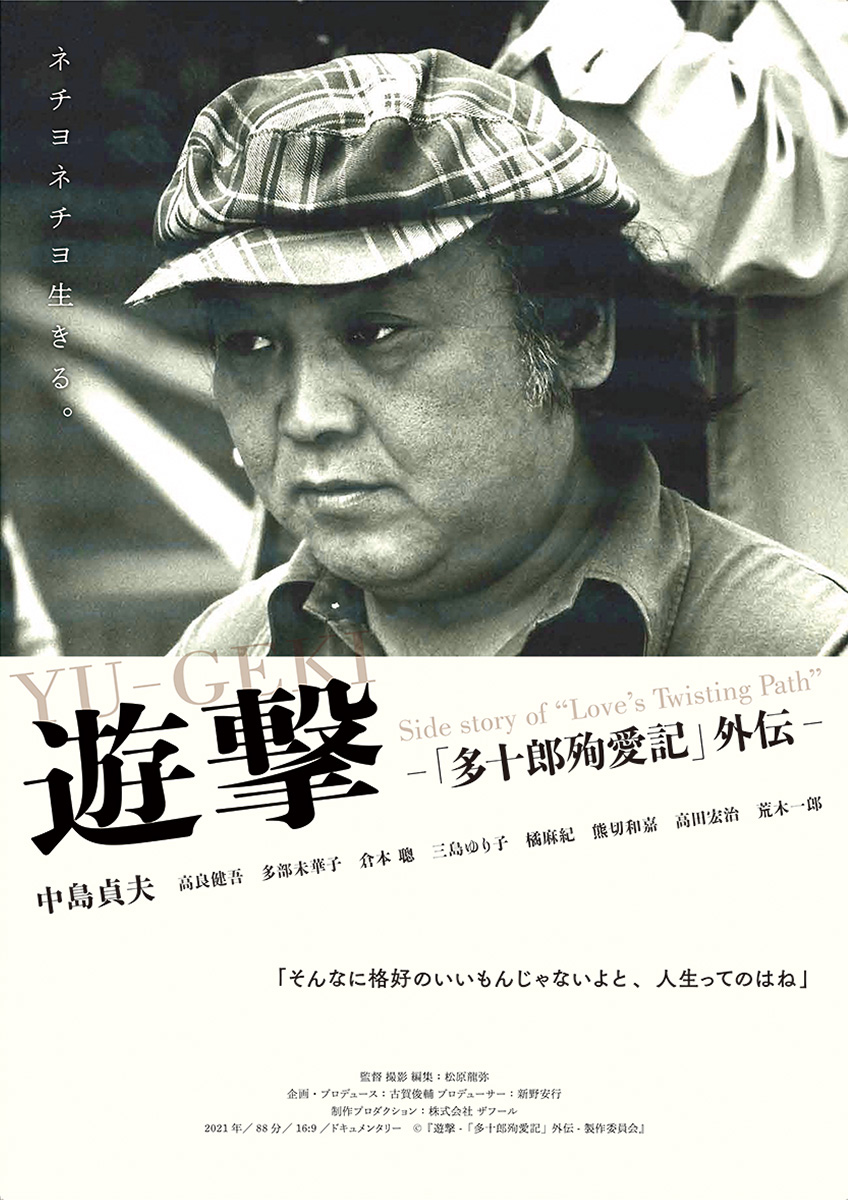
At the age of 83 and not having made a narrative film in over 20 years, Sadao Nakajima decided to step back into the director’s chair in 2019 with a classic chambara in Love’s Twisting Path, an old-fashioned samurai drama taking place in the turbulent years of the Bakumatsu at the end of the Edo era. More than just a behind the scenes documentary, Tatsuya Matsubara’s YU-GEKI~side story of “Love’s Twisting Path”~ (遊撃 -「多十郎殉愛記」外伝-, Yu-Geki -Tajuro Junai-ki Gaiden-) explores the film’s production but also reflects on the director’s long career and the changing trends of the Japanese film industry. 

Changing times do seem to be Nakajima’s primary motivation, wanting to pay tribute to Toei’s Kyoto studios once home to its mainline of period pieces produced for the big and small screens. These days, however, such productions are few and far between. Of course, Japan continues to produce historical dramas in large numbers but they tend to be just that with swordplay a secondary concern. Nakajima had wanted to resurrect this dying sector of the industry in part because he felt sorry for the specialist performers who can no longer support themselves with samurai movies alone.

Paradoxically this becomes a secondary problem for the production team as the pool of actors with training in stage combat becomes ever smaller, Nakajima forced to hire early career trainees while star Kengo Kora puts in overtime vigorously training to master the sword skills needed to seem convincing as a jidaigeki lead. Along with the decline of classic chambara, itself perhaps an expression of studio system as it existed before the 1970s, goes all the skills that accompany it from swordsmen to costumiers and makeup artists who know how to work on period features giving rise to the worry that the expert techniques honed over lifetimes will eventually be lost. 

Aside from the problems securing their creative team, Nakajima also runs into funding difficulties with backers unwilling to invest given the director’s age and poor health worrying that he may not be able to complete the project. Ironically this places further pressure on the production as Nakajima is forced to shorten the script and shooting time packing in as much as humanly possible per day. A young production assistant is beginning to feel bad about having to explain to him that so many things just aren’t possible while he too grows frustrated wandering around the mountains looking for a particular temple he remembers from his time at the studio but unable to remember exactly where it was or how to find it. Meanwhile he’s ably assisted by his former pupils including Kazuyoshi Kumakiri (Mukoku, Antenna, Sketches of Kaitan City) who acts as his AD along with Nobuhiro Yamashita (Linda Linda Linda, Over the Fence, Hard Core) who also visits the set

It’s the presence of these pupils that Nakajima eventually hints makes his life worth living others suggesting that so many people wanting to learn from him gives him a sense of purpose and validation. Love’s Twisting Path was intended to be his final film, but asked if he’d have an idea for any more he likens himself to an elderly Musashi Miyamoto, the legendary swordsman, who became withered with age but faced a constant stream of young challengers each excited to fight him while he too saw it as a way to prove to the world that he still existed. 

Despite the tremendous effort put into its production, Love’s Twisting Path did not do as well as Nakajima had hoped at the box office leading him to blame himself wondering if he was too focussed on his own interests and understandably deflated having invested so much into the project hoping to kickstart a revival of classic jidaigeki that would revitalise the old Toei lot. Then again this feeling of not quite having lived up to his aspirations might contribute to a sense of wanting to try again with another film if only it had not been for the advent of the global pandemic. Journeying through his career history, Matsubara finds Nakajima a contrary figure, rebellious and frustrated even then in the barriers erected between himself and his art ,the films he wanted to make shot down by studio execs while he tries his best to inject a characteristic sense of reality into a series of programme pictures, contemporary yakuza films, action dramas, and finally chambara which he claims never to have liked in the first place. In the end it’s all about love, Nakajima’s son insists seeing something of his father’s romanticism in his films but also his deep love of cinema and of the riches to be found in the artistic legacy of the Kyoto studios. 


YU-GEKI~side story of “Love’s Twisting Path”~ screened as part of Osaka Asian Film Festival 2022.

Original trailer (no subtitles)

The Ark (方舟, Wei Dan, 2020)

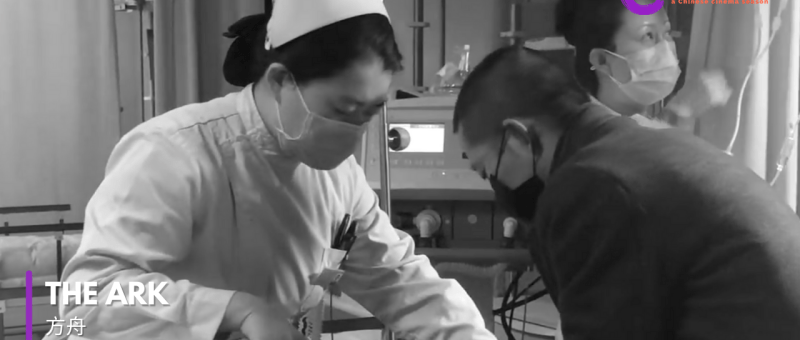
Something that often gets forgotten in the midst of the pandemic is that people continued to suffer from other illnesses and ailments some they may have been ultimately unable to receive treatment for. Wei Dan’s sometimes harrowing documentary The Ark (方舟, fāngzhōu) revolves around an elderly woman, Xihua, who is hospitalised with a wasting disease in spring 2020 just as the pandemic takes hold and is cared for largely by her children and grandchildren as they try to figure out what’s best for her while coming to terms with the idea that their mother and grandmother may not be able to overcome this final illness. 

Shot in a dispassionate black and white and a claustrophobic 1:1 frame, Wei captures Xihua’s obvious sense of confusion and distress. A brain haemorrhage some years previously apparently left her unable to speak meaning that she is unable to communicate her pain to her caregivers while her family try to explain to the medical staff what her condition is showing them her legs almost entirely wasted away. While the family do their best to care for her themselves, patiently emptying her bedpan and analysing its contents, they also express suspicion and frustration with the medical establishment repeatedly stating that they worry their mother is not getting proper care because the doctors are after bribes all the time with other patients bringing in expensive gifts to curry favour. 

Meanwhile, money in particular begins to press on the mind of Xihua’s oldest son who is obviously in a degree of mental distress unable to bear the thought that his mother might die because he cannot get the money together to pay for her treatment while simultaneously worrying that maybe all he’s doing is selfishly prolonging her suffering. When it’s suggested that an operation may alleviate Xihua’s symptoms, he finds himself ringing people he hasn’t spoken to in years most of them perhaps understandably sympathetic but unwilling or unable to help. The directness of this approach places an additional strain on his marriage as his wife feels embarrassed to see him begging around for money and thereby exposing the fact they don’t have any. Meanwhile she also worries about the financial stability of their own family, at one point snapping at him that they should pull the kids out of school and tell them their futures are ruined. In a heated moment, she even mentions leaving him reopening old wounds in complaining that she feels as if nothing she does is ever good enough and her husband is no good to her. 

When Xihua passes away after having had an operation to remove a sizeable gallstone that had been causing an obstruction in her bowel, the sense of discord only increases as it becomes apparent that some members of the family, which is largely Christian, are extremely religious and offended by the idea of any kind of traditional rites being performed believing it would upset God. Briefly expanding to 16:9, Wei cuts away from the heated arguments to find Xihua’s grieving son weeping over the body feeling as if all his efforts were in vain while trying to comfort himself that at least she is no longer suffering. 

The family’s distress runs parallel with the expansion of the pandemic though the hospital itself seems to be running more or less as normal save for the odd man in a hazmat suit disinfecting the waiting room even as the family describe a quarantine centre on the television in Xihua’s room as an “ark”. Compounding the worries of Xihua’s son, he’s about to lose his job while one of the grandchildren also complains that his clothing business is struggling and he’s thinking about opening a dry cleaner’s instead. Someone unironically advises him to think about investing in elder care which he suggests is about to become a growth industry thanks to China’s ageing population and the adverse effects of the One Child Policy which has left a generation unable to care for all their elderly relatives, not to mention their own children, at once. Though quietly harrowing, Wei’s film nevertheless finds a degree of serenity in its final stretches as the children return to their family home and its myriad memories throwing this private tragedy in stark relief amid so many other losses in age of fear and suffering. 


The Ark streamed as part of Odyssey: a Chinese Cinema Season.

Original trailer (English subtitles)

Asia is One (アジアはひとつ, NDU, 1973)

“They came to beat us into a splendid Japanese future, to conquer us” according to an interview in a small Taiwanese mountain village towards the end of the Nihon Documentarist Union’s Asia is One (アジアはひとつ, Asia wa Hitotsu). Having documented Okinawa on the brink of its reversion to Japanese sovereignty, the collective return to examine more widely its legacies of oppression and exploitation under Japanese imperialism venturing first to its smaller islands and then all the way out to Taiwan from which many migrant workers had come to work in harsh conditions in Okinawan mines during the colonial era. 

One man describes himself as having been tricked in coming to the Marusan mine in 1933 in the mistaken belief he could work there for six months and then return home. “I thought it would be better to die than live there” he goes on, originally too afraid to attempt escape having seen others rounded up and punished but later managing to get away by blowing up a boat. A Japanese man who worked at the Noda mine in Iriomote, meanwhile, reveals that they were refused days off and sick workers were often cast out. Many simply died because they could not afford to pay for medical attention. Workers were paid in company script which could be spent only on the compound, the mine owners fearing workers would abscond if they were paid in cash. By his reckoning, however, the Taiwanese workers had it better because they were working on a contract basis and could get a better rate of pay. A third man, Masuda, meanwhile describes long days and early mornings, being unable to eat if they didn’t have money for the canteen, and the watchmen locking their bedroom doors at night to prevent them escaping. The conditions were so bad that one man took his own life by blowing himself up with dynamite tied around his waist. 

Even so, the second man then living in a nursing home, does not blame the mine owner, Mr. Noda, describing him simply as a “capitalist” and remarking that he was often kind and generous giving workers money for medical treatment etc, blaming instead the foreman. “It’s the people working under the capitalists who are bad” he explains, bearing out the extent to which oppressed people will often oppress others like them in order to feel less oppressed but also letting the system off the hook in failing to acknowledge that if Mr Noda had really been good and kind he could have improved conditions in the mine while still remaining “a capitalist”. Hsieh King-Fu, known as Dr. Seh, whose father worked as a doctor at the mines recalls a mass outbreak of malaria among the Taiwanese migrant workers leading to a shortage of morphine. Having bought supplies from a local pharmacy himself a rumour later circulated he was injecting them deliberately to get them addicted so he could drag them away so endemic had the sense of betrayal and exploitation become. 

Meanwhile since the reversion the islands have been fostering deeper connections with Taiwan which is after all geographically closer than the Japanese mainland. An older man explains that he’s instilling Taiwanese agricultural techniques in the local population and has successfully been cultivating pineapples on the island for the last 40 years. Fishermen too remark on how much easier it is to trade with Taiwan rather than the mainland because it’s simply closer meaning they can also trade live fish with a longer shelf life. Meanwhile an official details a potential agreement between the Ryukyu government and Taiwan to recruit workers developing new ties independently from those of mainland Japan. 

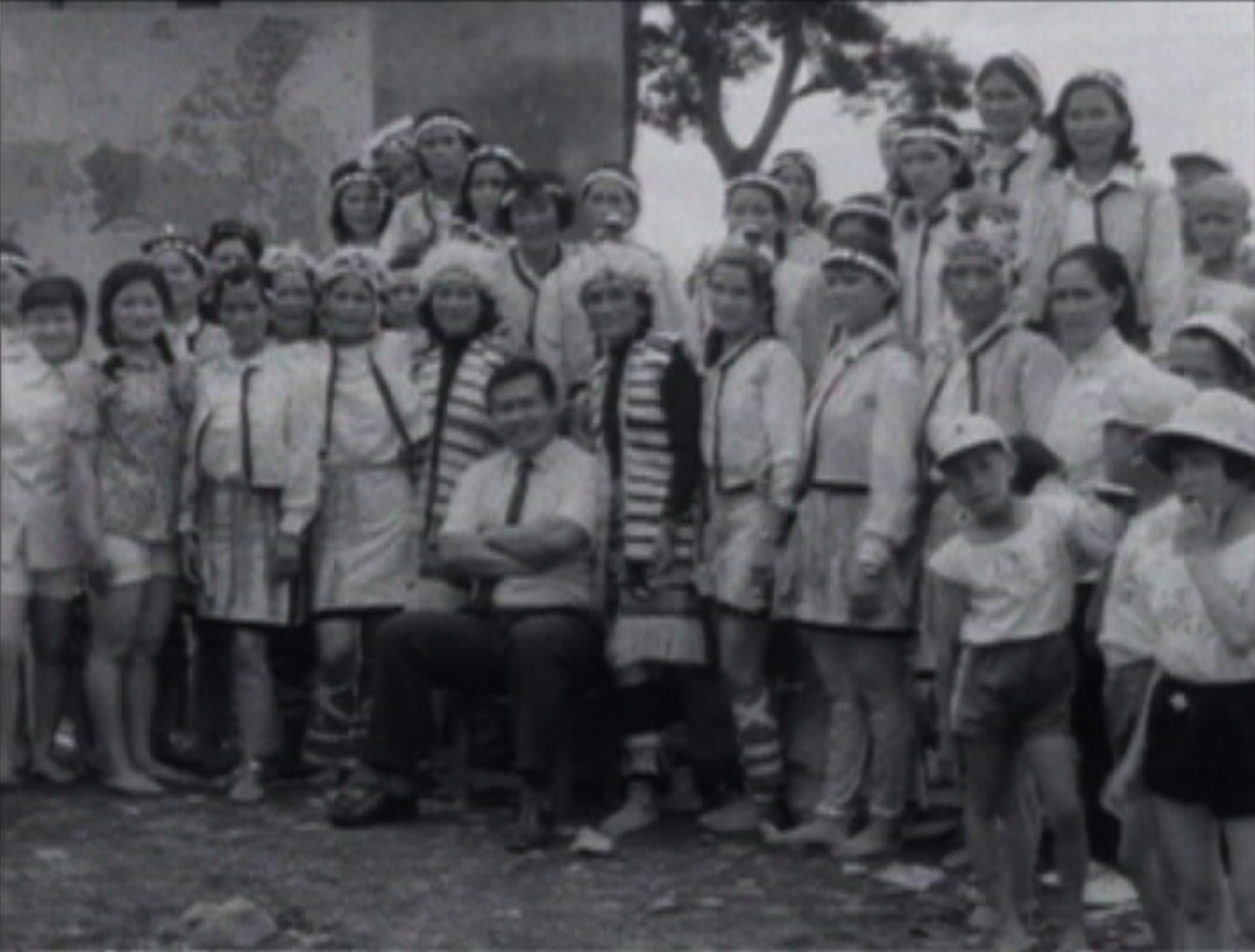
Yet in travelling to Taiwan itself, the documentary collective encounter surprising reactions to the legacy of Japanese colonialism in a small village inhabited by the indigenous Atayal community who still play the Japanese national anthem every day at noon. Many of them can still speak fluent Japanese having been forced to learn it during the colonial era and have almost a fondness for Japanese rule. “We owe everything to Japan” one woman states, uncomfortably grateful for her “civilisation” and thankful that the Japanese educated them out of some of their more “barbaric” customs such as the admittedly oppressive practice of beheading. Like the Korean man who obtained three names during his travels through the Japanese empire, many of the villagers have names in their indigenous language, names in Mandarin, and names in Japanese. “I’m still terrified of imperialism and oppression” one man admits though adding “I guess imperialism is different now” in lamenting that the emperor has never visited him but observing that he looked “free” on his last tour to Taiwan before going on to talk about a seal he received from the emperor after executing prisoners, by beheading, as a conscript soldier during the war. Asia may indeed be one if ironically, united in the destructive legacy of Japanese imperialism, but perhaps also finding new ways to repair itself which take less account of concepts such as sovereignty, diplomatic recognition, or man-made borders. 


Asia is One streams worldwide (excl. Taiwan and Japan) until June 3 as part of Japan Society New York’s Visions of Okinawa: Cinematic Reflections.

Motoshinkakarannu (沖縄エロス外伝 モトシンカカランヌー, NDU, 1971)

Active between 1968 and 1973, the Nihon Documentarist Union or NDU was a collective of documentary filmmakers emerging from the then declining student movement and “Zenkyoto” struggle committees whose members were often university drop outs disillusioned with the system. The group’s 1971 documentary Motoshinkakarannu (沖縄エロス外伝 モトシンカカランヌー, Okinawa Eros Gaiden: Motoshinkakarannu), shot in black and white and using asynchronous sound, takes its name from a word in the Okinawan language used to describe a business which can be started without seed money, effectively an ironic euphemism for sex work. Visiting the islands immediately prior to their return to Japan, the collective examines among other things a legacy of exploitation along with the effects of economic dependency on one or another colonising force. 

“How come Okinawa changes so much?” a street singer asks playing a sanshin while reflecting on the islands’ complicated history. An old lady born in 1889, the tail end of the Meiji era, reflects on cultural change when speaking of the tattoos on her hands which she’d so wanted as a child believing not to have them was not to be accepted as a woman and therefore unable to marry. But tattoos are taboo in Japan and the practice was eventually banned by the police leaving her stigmatised in her own community and forced to wear gloves in order to hide the markings of her culture. “Now in the contemporary society you can’t get married if you have a tattoo. Things can change 180 like that” she adds reflecting on the rapid changes which have taken place within her lifetime in which even ancient traditions can be abruptly ended by outside forces. 

Meanwhile, another woman prepares to adjust her currency exchange business once Okinawa reverts to Japan and the American presence decreases. While some are in favour of the reversion more because they want the Americans to leave than actively desire to return to Japanese sovreignity, others wonder what the effect will be on the local economy given that workers are already being laid off from jobs on American bases. The documentary captures several labour protests held outside military facilities by anxious workers. “Okinawa is sacrificed again under military control” one leader insists while another later adds “for 20 years Okinawa was denied normal employment opportunities due to its militaristic colonisation” each emphasising the unanswered questions in the reversion agreement of what is supposed to happen to these now redundant workers, where will new jobs be coming from and what are they supposed to do until they arrive? Many of the protestors are extensively masked appearing somewhat like the invisible man with their heads wrapped in fabric and sunglasses covering their eyes presumably because they fear negative consequences from their employers if they’re caught at the demonstration.

The documentary team muddy the waters a little by challenging one man that as he’s a cook he could easily find new work, but as he points out it’s not just about him and he believes the labour movement will be beneficial to the islands’ future. Many feel betrayed that the local Okinawan police force continues to protect the interests of the Americans in attempting to suppress their protests, but conversely there is also anxiety regarding new industrial investment from Japan with the CEO of Toyo Oil, directly labeled a war criminal in the embedded subtitles, trying to argue that he is an environmentalist and would not go ahead with the plant if it were to produce pollution. Such worries are perhaps at the forefront of the minds of ordinary Okinawans given the numerous mainland scandals of the postwar era such as the Minamata disease and Yokkaichi asthma among many others, while an old man’s hand-painted sign also protests that the oil refinery is to exist on land stolen from local farmers. The anxiety seems to be as the camera pans ominously across a new industrial zone that Okinawa will become a dumping ground for problematic industries the mainland isn’t willing to place on its own soil, the people of Okinawa once again sacrificed for Japan’s gain. 

Then again others are worrying about a collapse in the local sex industry which they suggest caters almost entirely to American personnel. The documentary collective spend some time with a collection of American servicemen who discuss with them the US civil rights movement, but also appear to have a more regressive view of the sex industry than many in Okinawa making what seems to be a moral judgement as one flat out refuses to believe the women have no choice but to pursue sex work claiming they’ve chosen an “easy” solution to their problems rather than taking a more nuanced view of the economic realities of the islands and the complex networks of exploitation which support them. Then again as Akemi, the sex worker with whom the documentary opened, hints perhaps the filmmakers are no different. “They’re filming me because they want to show “Motoshinkakarannu”. They don’t know what it is, but they want to use the title.”


Motoshinkakarannu streams worldwide (excl. Taiwan and Japan) until June 3 as part of Japan Society New York’s Visions of Okinawa: Cinematic Reflections.

Cane Fire (Anthony Banua-Simon, 2020)

At the climax of Lois Weber’s 1934 film White Heat, now assumed lost, a Hawaiian woman betrayed by the owner of a sugar plantation sets fire to his cane fields in revenge and retribution. Exploring the gulf between the Hawaii of golden age Hollywood and its contemporary reality, director Anthony Banua-Simon’s impassioned documentary suggests that another Cane Fire is only a matter of time as the local population find themselves pushed to the margins of their own society, which has the highest cost of living in the US, owing to the ongoing effects of contemporary colonialism as wealthy non-residents price local families out of affordable housing while disrupting service provision and the local economy. 

Banua-Simon’s great-grandfather Alberto was one of many young men who came to the Hawaiian island of Kauaʻi in the 1920s as a migrant worker from the Philippines only to discover little more than exploitation and hardship. Migrant communities from China, Japan, and other areas of Asia were pitted against each other to avoid the threat of worker solidarity while Alberto was demoted to ditch digging after becoming involved with unionisation. Ironically enough, Alberto later returned to the Philippines along with the machinery from the then shuttered plantation intended to be reassembled in his home country to make of use of even cheaper labour. Banua-Simon’s quest begins as one of tracing his great-grandfather’s image through searching for footage of White Heat in which he had performed as an extra only to be confronted with the essential ironies of its misuse which echoes into the Hollywood pictures of 1950s and ‘60s presenting the island as a tropical paradise playground for mainland holidaymakers. 

In conversations with older men, Banua-Simon uncovers a series of stories similar to his great-grandfather’s of migrant workers being recruited to play the part of native people often forced to pose with spears while wearing an imagined representation of traditional dress. A discussion with entertainer Larry Rivera reveals that many of the legends he read out while performing a “traditional” torch ceremony at the famed Coco Palms hotel were in fact made up by its owner while the native population were in essence forced to perform a bastardised fabrication of their culture for oblivious tourists. 

Once a source of Hollywood glamour frequented by stars such as Elvis Presley and Bing Crosby, the Coco Palms hotel has been in a state of disuse following extensive damage during a a 1992 hurricane and has become a source of tension between local community groups who believe the land should be returned to the Hawaiian people and the developers who intended to restore it to its former “glory”. With the island’s transition from an agrarian economy based on the cultivation of sugar cane and pineapple to one dominated largely by tourism has come an uncomfortable nostalgia for old-fashioned imperialist exploitation with expansive holiday homes often marketed as “plantation-style” houses while those who continued living in the much less “elegant” housing offered to workers are at constant risk of eviction knowing that it will not be possible to find affordable accommodation anywhere on the island especially as many of them are now elderly. 

Even those who have managed to find work with the tourist resorts report similar levels of exploitation in the gradual erosion of workers’ rights fought for by men like Banua-Simon’s great-uncle Henry who stayed behind when Alberto returned to the Philippines and laments that though born and raised on Hawaii he does not feel Hawaiian. He is confused and angry that they do not teach the long-suppressed Hawaiian language in schools, nor do they teach the islands’ history or of the overthrow of the Hawaiian Kingdom and its subsequent annexation. “Something’s wrong there” he adds in conclusion, displaying a gift for understatement. 

In an irony that seems especially cruel one of the few paths towards homeownership available to the local population lies in a scheme in which families are basically expected to physically build the house themselves during the off hours they don’t actually have because they have to work all the time. The land for the scheme is in fact owned by one of the big five sugar companies which now seems to run pretty much everything on the island even though sugar is no longer a dominant force in the local economy. The houses also closely resemble those constructed for the plantation workers, which Banua-Simon demonstrates with some well-placed stock footage, only the owners now work mainly in the service industry as waitstaff at the various resorts. Given all of these stressors, it isn’t surprising that a union official voices the opinion that another cane fire cannot be far off as the local community is pushed to breaking point in this completely unsustainable environment of contemporary colonialism. 


Cane Fire screens in US cinemas from May 20 courtesy of Cinema Guild.

Original trailer

Boundary: Flaming Feminist Action (바운더리, Yun Ga-hyun, 2021)

Over the last few years it had seemed that feminism was beginning to take root in Korea with mass protests against the use of spy cams leading to a broader discussion of women’s rights in the still patriarchal nation with further social movements such as Escape the Corset highlighting persistent societal misogyny. Yet with the recent election of conservative president Yoon Suk-yeol who had run on an explicitly anti-feminist ticket hopes for real progress have been dashed. In her documentary filmed before Yoon’s victory, Boundary: Flaming Feminist Action (바운더리, Boundary), director Yun Ga-hyun looks back at the last four years as she and her friends reflect on the nature of their activism, what they’ve achieved and what they hope to in the future. 

As Yun and her fellow activists relate, Flaming Feminist Action came together as an extension of the labour movement formed the wake of the 2016 Gangnam Station Toilet Murder Case in which a woman was killed by a male stranger who claimed he did it because women had rejected him. Female solidarity is indeed central to the movement, the first Reclaim the Night-style protest which we witness insistent that a safe space for women is a safe space for everyone while reminding each other that they are not alone but stand together in pursuit of change. 

The group also takes part in symposia in which they attempt to educate each other offering the kind of sex education not found in schools in order to give women back the agency over their own bodies in the knowledge that to exercise it can in itself become a political act. As such, we also see the group challenging traditional gender norms by symbolically shaving their heads and holding a body hair competition in challenging traditional beauty standards. One of the women reveals that her brother was so scandalised by her decision to cut her hair that he refused, perhaps jokingly, to let her back into the house. Meanwhile they also take aim at more widely held traditional values such as in their “Free the Nipple” event in which they went bare chested protesting the restrictive and discriminatory policies of social media platforms such as Facebook which routinely block imagery featuring female nudity tagging it as pornography. Similarly the women’s public protest is frustrated by the police force who immediately move in with blankets when they remove their shirts citing public obscenity laws while the women argue that the law is absurd while men aren’t challenged for walking around shirtless. 

As Yun herself reveals in her own to camera interview, some members of the group have been arrested several times while she has also been threatened with violence and one commentator on the Blue House website petitioned to have them all rounded up and executed. At the street safety protest, she also revealed that she’d received violent and misogynistic messages online and had reported them to police but they refused to do anything because the messenger had then blocked her meaning she could not ascertain his identity while he went on to troll other other feminist activists in the same way. Then again, there is also division within the movement, Yun explaining that she’d also been criticised for giving an individual interview at a protest which was against the movement’s policy while her support for gender fluid and non-binary people as well as trans women and other members of the LGBTQ+ community joining the protests was also a source of conflict.  

Nevertheless, the women also draw strength for all that they’ve achieved even if acknowledging there is a long way to go. Yun herself attempts to run for political office working with a new party dedicated to the advancement of women’s rights having given up on the idea of influencing mainstream parties from the inside. Others come to the conclusion that the clearest path to societal change lies in education while generating a sense of female solidarity that offers support to women facing deeper social issues such as domestic and/or sexualised violence along with workplace harassment and discrimination. “The way to win is just to endure” one of the women reflects while Yun too echoes that at the very least she never gave up even in the most difficult of moments as she prepares to move into a new stage of her life in activism. 


Boundary: Flaming Feminist Action screened as part of Osaka Asian Film Festival 2022

Original trailer (no subtitles)