Ping Pong: The Triumph (中国乒乓之绝地反击, Deng Chao & Yu Baimei, 2023)

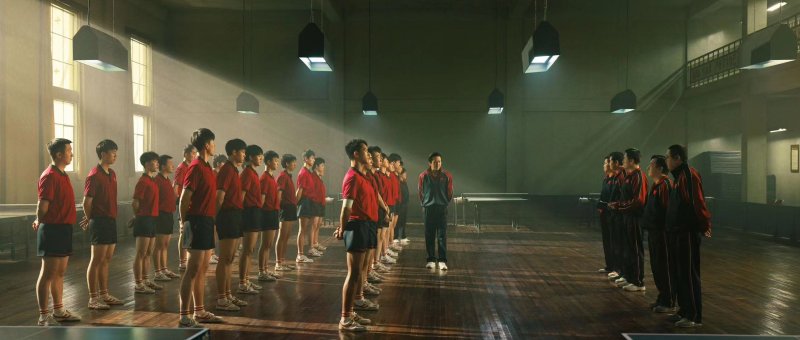
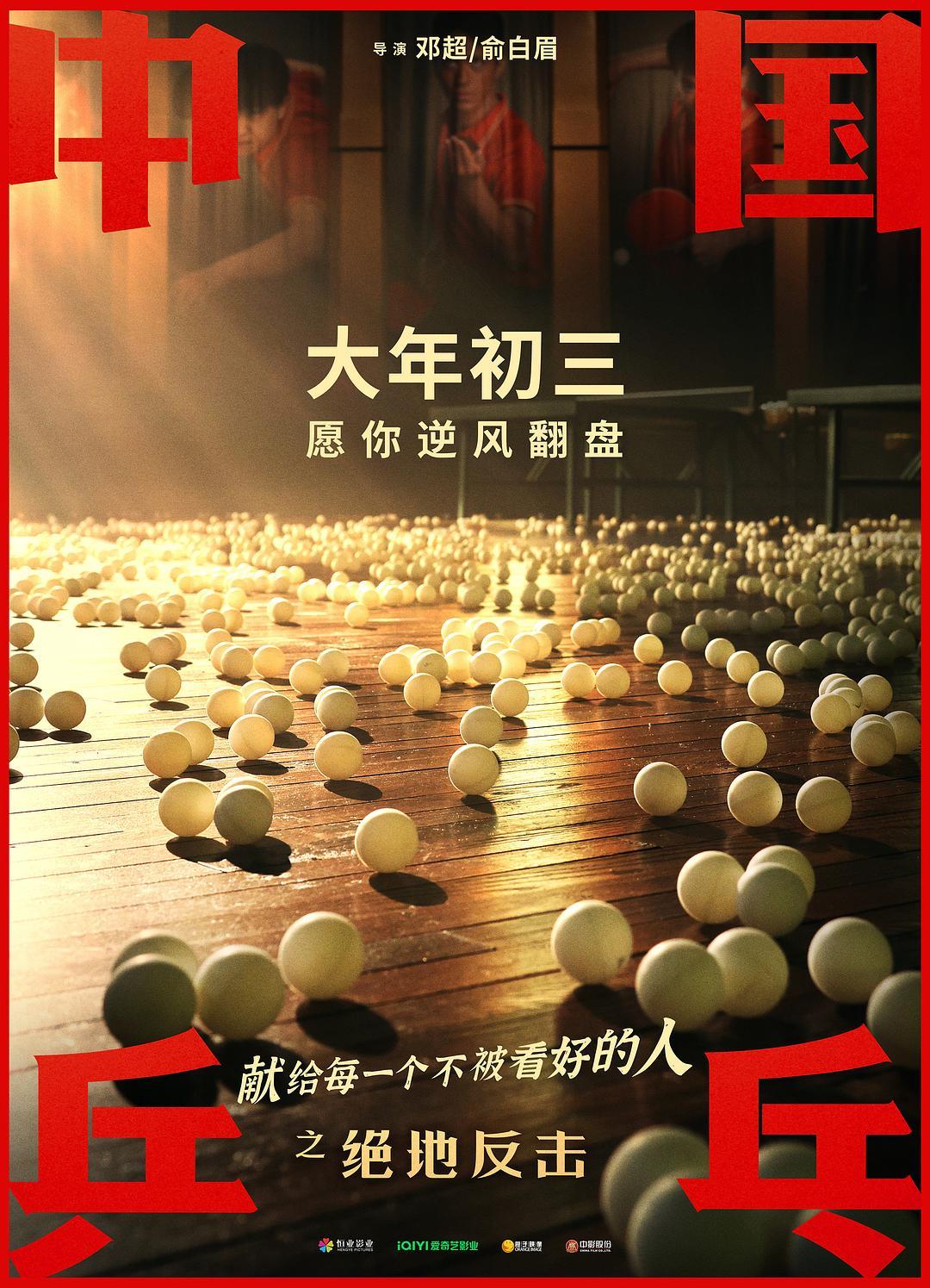
A changing China tries to recapture its sense of possibility by regaining its reputation as a ping pong powerhouse in Deng Chao and Yu Baimei’s rousing table tennis drama, Ping Pong: The Triumph (中国乒乓之绝地反击, Zhōngguó Pīngpāng zhī Juédì Fǎnjī). China can lose at any other sport, but not ping pong according to one aggrieved player making a dramatic return to the national team and echoing a sense of resurgent energy even as embattled coach Dai (Deng Chao) struggles to convince those around him that China can prevail. 

As the film begins, Dai is an exile living in Rome and training the Italian national team. He has fully acclimatised to the comparatively relaxed Italian society, is dressed in a stylish tailored suit and wool overcoat, and has a fashionable European haircut. But to some, including it seems an institutionally racist police force, he’ll always be an other as he discovers on trying to report a mugging but ending up getting arrested himself and questioned by a cop who doesn’t like it that he’s wearing an expensive watch. With his wife heavily pregnant, Dai decides to return home to China but is offered only an assistant coaching job and given a pokey flat that doesn’t even have its own bathroom in contrast to the spacious house the family were living in in Rome while the Chinese national team flounders in an ongoing decline. 

Dai’s fortunes in Italy play into the persistent message of contemporary mainstream Chinese cinema that there are no safe places for the Chinese citizen outside of China and that the only solution is to return home as soon as possible, while it’s also clear that his Westernisation is portrayed as a kind of bourgeois decadence that must eventually be corrected. On return to China, Dai continues to dress in his Italian suit rather than the team tracksuits worn by the other coaches until he’s fully reassimilated into the team and he’s even at one point criticised for spending too much time on his hair that could better be spent on training. Nevertheless, as he later points out they’re being beaten by European teams who are often trained by Chinese coaches who like him decided to chase their fortunes abroad in the confusions of early ‘90s China. 

A lengthy sequence near the film’s beginning suggests that the Chinese players feel the game has been taken away from them unfairly, that though they did not invent ping pong, it has become so integral to the Chinese identity that its loss strikes at the heart of the nation’s vision of itself. Afraid of China’s success, international nations conspired to effect the restriction in trade of a special kind of glue China used for paddles while modifying the rules so that they were more in favour of taller European players rather than small and speedy Chinese sportsmen whose techniques are no longer a fit for the contemporary game. Dai’s battle is partly to force change among traditionalists and convince them that China needs to up its game to meet international competition if it is to reclaim its sporting crown. 

It’s tempting to read the film as an allegory for China’s current economic ambitions if also a look back to a time of defeat in which the nation righted itself and became champions once again through unity, hard work, and faith in the future. The message is rammed home in the final pep talk Dai gives to a nervous player whose wealthy family disapprove of his choices and regard him as an embarrassment, reminding him that while their Swedish rivals took time out for holidays, sleeping, and eating breakfast they trained every minute of every day and he should learn to trust in that when faced with the seemingly insurmountable mountain of the European champion. Another player is told that he could lose the use of his arm if he continues playing but does so anyway (and is later fine), while it’s clear that Dai has made sacrifices which have strained his familial relationships in spending so much time away from his wife and young son. 

There’s also a subtle current of less palatable national unity in Dai’s wife’s claim that their son is slow to speak not only because his father is away so often but that he’s surrounded by too many different dialects and it’s impeding his development, making an uncomfortable argument for the primacy of standard Beijing-accented Mandarin. Nevertheless, the message is fairly clear in the frequent cut backs to young children watching the games and once again seeing China on the world stage, gaining a new sense of possibility for their own lives in the vicarious success of sporting championship. Deng and Yu shoot the matches with breathless intensity and an unexpected immediacy as the ball seems to barrel through the camera, and at one point takes the place of the star on the Chinese flag. “Chinese are the most diligent” Dai reminds his player, certain that they will get there in the end through sheer force of will, hard work, personal sacrifice for the national good, and above all togetherness as they battle seemingly insurmountable odds to reclaim their sporting crown and with it a national identity.


Ping-Pong: The Triumph screens in Chicago March 25 as part of the 16th season of Asian Pop-Up Cinema.

Original trailer (Simplified Chinese / English subtitles)

My People, My Country (我和我的祖国, Chen Kaige, Zhang Yibai, Guan Hu, Xue Xiaolu, Xu Zheng, Ning Hao, Wen Muye, 2019)

My People My COuntry poster 3Oct. 1, 2019 marks the 70th anniversary of the People’s Republic of China. Supervised by Chen Kaige, My People, My Country (我和我的祖国, Wǒ hé Wǒ dě Zǔguó) presents seven short films by seven directors featuring several notable historical events from the past 70 years though not quite one for every decade (perhaps for obvious reasons). Though different in tone, what each of the segments has in common is the desire to root these national events in the personal as they were experienced by ordinary people rather than how the history books might have chosen to record them.

Told in roughly chronological order, the film opens with the founding of the Republic as comedian Huang Bo plays an eccentric engineer charged with ensuring the operation of an automatic flag pole doesn’t embarrass Chairman Mao at the big moment. In the context of the film as a whole which is fond of flags, this is rather odd because every other flag in the film is raised by hand usually by a soldier taking the responsibility extremely seriously. Yet the point is less the flag itself than the symbolic pulling together of the community to find a solution to a problem. Realising the metal on the stopper is too brittle, the engineers put out an appeal for more with seemingly the entire town turning up with everything from rusty spoons to grandma’s necklace and even a set of gold bars!

This same sense of personal sacrifice for the greater good works its way into almost all of the segments beginning with the story of China’s first atom bomb in the ‘60s for which a pure hearted engineer (Zhang Yi) first of all sacrifices his one true love and then the remainder of his life when he exposes himself to dangerous radiation all in the name of science, while in the film’s most charming episode a young boy is devastated to realise his crush is moving abroad and has to choose between chasing after her and fixing up a TV aerial so his village can see China beat the US at volleyball during the ’84 Olympics. Visions of flag waving glory eventually convince him where his duty lies, but his sacrifice is later rewarded twice over as he becomes a little local hero even if temporarily heartbroken in the way only a small boy can be.

Then again, some people are just a little self-centred like the hero (Ge You) of Ning Hao’s Welcome to Beijing who keeps trying to reconnect with his earnest teenage son only to end up connecting with a fatherless young boy during the 2008 Beijing Olympics. Chen Kaige’s sequence, meanwhile, is inspired by the story of two earthbound astronauts but similarly finds two roguish, orphaned young men connecting with a patient father figure who is able to bring them “home” by showing them a space miracle in the middle of the desert, and in the final and perhaps most directly propagandistic sequence, a tomboyish fighter pilot eventually overcomes her resentment at being relegated to a supporting role to rejoice in her colleagues’ success. Despite the overly militaristic jingoism of the parades with their obvious showcasing of China’s military power, Wen Muye’s “One for All” is in its own sense surprisingly progressive in its advancement of gender equality and mildly subversive LGBT positive themes were it not for a shoehorned in scene featuring a milquetoast “boyfriend”.

Sensitivity is not, however, very much in evidence in the sequence relating to the extremely topical issue of the Hong Kong handover. Out of touch at best, the constant references to the continuing reunification of the One China are likely to prove controversial though admittedly those they would most upset are unlikely to want to sit through a 2.5hr propaganda epic celebrating the achievements of Chinese communism. Nevertheless, it is a little galling to see the “return” to China so warmly embraced by the people of Hong Kong given current events in the city. This perhaps ill-judged sequence is the most overt piece of direct propaganda included in the otherwise unexpectedly subtle series which, despite the flag waving and eventual tank parade, tries to put the spotlight back on ordinary people living ordinary lives through the history of modern China. Of course, that necessarily also means that it leaves a lot out, deliberately refusing to engage with the less celebratory elements of China’s recent history, even as it closes with the fiercely patriotic song of the title performed by some of the ordinary heroes who have inspired its various tales of everyday heroism.


Original trailer featuring Faye Wong’s cover of the well known patriotic anthem from 1985 (no subtitles)

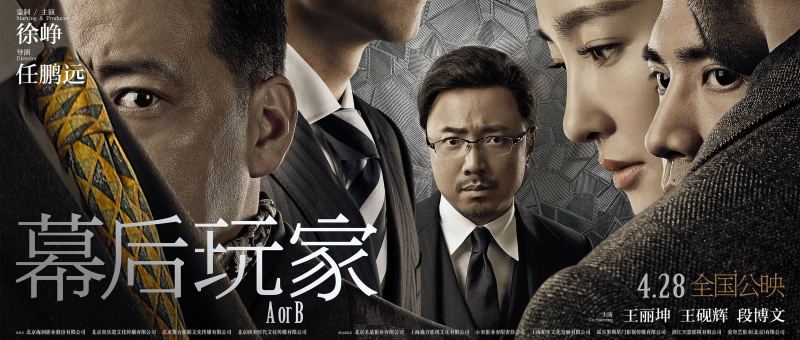
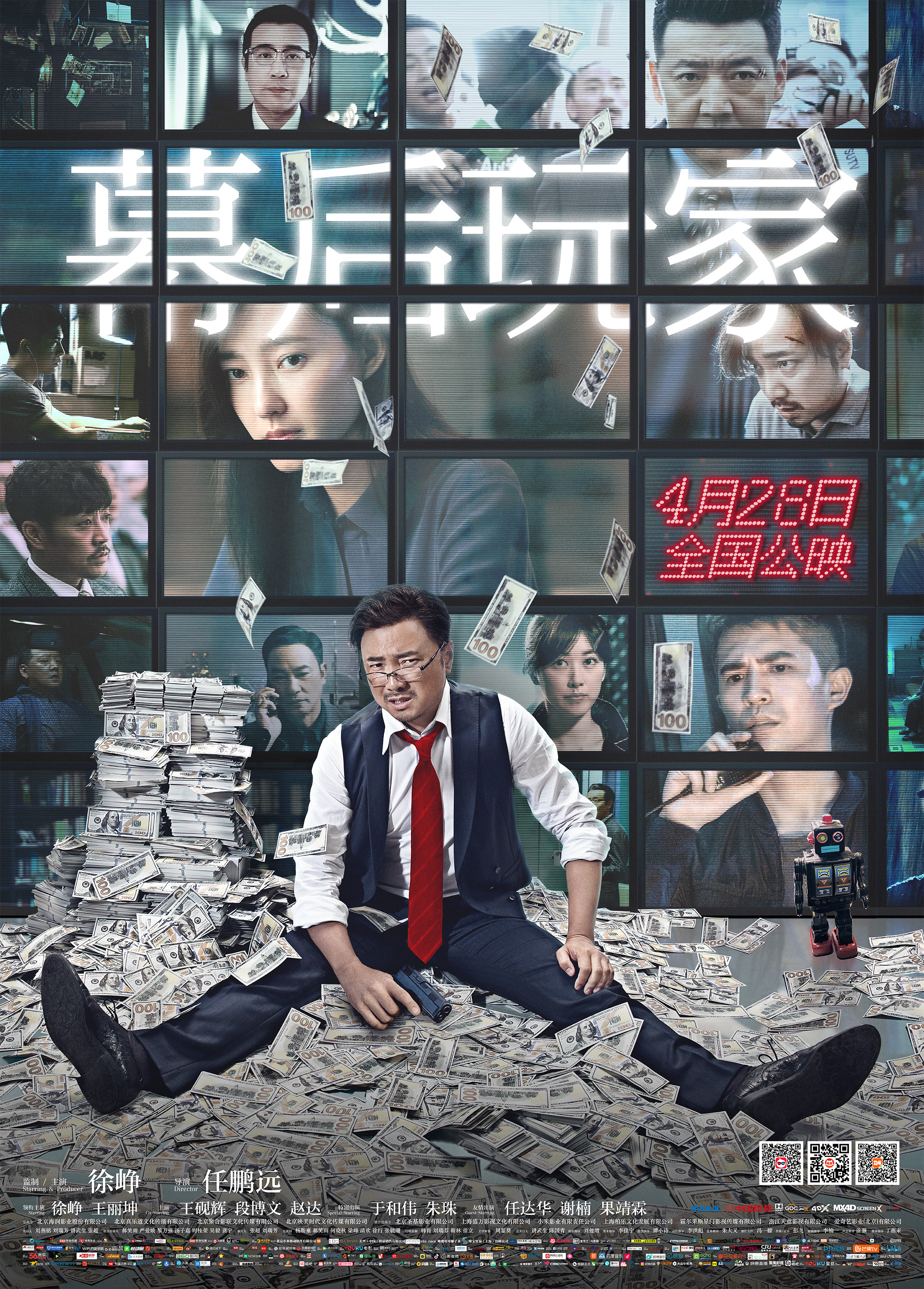
A or B (幕后玩家, Ren Pengyuan, 2018)

A or B poster 2It’s difficult not to read every film that comes out of the Mainland as a comment on modern China but there does seem to be a persistent need to address the rapid changes engulfing the increasingly prosperous society through the medium of cinema. A or B (幕后玩家, Mùhòu Wánjiā) is the latest in a long line of thrillers to ask if the pursuit of economic success has resulted in the decline of traditional morality. Life is, according to a mysterious voice on the other end of a walkie talkie, a series of choices – A or B, you or me. When someone says they have no choice, what they usually mean is that they have chosen me over you and expect the decision to be understood because if the situation were reversed, you would have done the same.

Corrupt financial billionaire Zhong Xiaonian (Xu Zheng) has been content to justify himself with this excuse. Having ousted his predecessor through blackmail and manipulation, he rose to be the head of a vast corporate empire while Zeng (Simon Yam), his former boss, committed suicide, a ruined and humiliated figure reduced to abject despair by Zhong’s campaign of malicious finagling. Despite his vast wealth, Zhong’s appetite for success remains unsatisfied while his wife Simeng (Wang Likun), disgusted by his ongoing descent into avaricious amorality, threatens to leave rather than watch him destroy himself.

With a number of schemes in operation, Zhong returns home drunk one evening to find his wife gone, collapsing into a restless drunken stupor. When he wakes up he discovers that he is now trapped inside his mansion – the windows have been boarded up and all the doors locked. Finding a walkie talkie in a box, Zhong is messaged by a mysterious voice who tells him that every morning at 9.30 (just as the financial news begins) he will be given a binary choice. Zhong must choose A or B or his kidnapper will set both in motion.

A or B is a complex kidnap thriller, but it’s also the story of a marriage and a metaphor for the compromises of modernity. Zhong, once an ambitious youngster from a humble background, claims he set himself on the road to ruin in pursuit of a “good life” on behalf of his wife. His wife, however, has a wildly different view of a “good life” to that of her husband. Simeng sacrificed her journalistic ambitious of becoming a war photographer to shift into technology in order to better understand Zhong only to be forced to give that up too when her discoveries of his duplicities began to alarm her. What Simeng wanted was less the huge mansion and expensive jewellery than a stable life of ordinary comfort with a loving and attentive husband who strived to understand her in the way she tried to understand him – something Zhong has completely failed to realise in his male drive to get ahead. Simeng threatens to leave, not because Zhong’s increasing moral depravity has killed her love for him, but that through leaving (and taking a number of his shares with her) she may be able to wake him up and put a stop to his headlong descent into amoral criminality.

Zhong has indeed fallen quite far as his first few A or B choices make clear. It doesn’t take him long to decide to throw a lifelong friend under the bus rather than further damage his business enterprise, only latterly making a frantic appeal to his captor to find out what happened to him. Confronted by the very real and often tragic consequences of his “choices” Zhong is forced into a reconsideration of the last decade of his life. Rather than ruminate, his first instinct is for action and so he sets about trying to escape his makeshift cage little knowing that his captor may have factored his ingenuity in to their original plan. He cannot however escape his final responsibility for becoming the man he is and faces the ultimate binary choice – to continue as he is and slide further down the road to ruin, or turn himself in to the police admitting his wrongdoing and pledging to start again on a more comfortable moral footing.

The identity of the kidnapper and their motives may be fairly easy to guess, but director Ren Pengyuan keeps the tension high as Zhong – played by comedy star Xu Zheng flexing his dramatic muscles, battles himself while trying to bridge the gap between the man he’d like to be and the one he has become. Fiercely critical of the empty materialism that has begun to define modern success, A or B insists that there is a choice to be made when it comes to deciding what gets sacrificed in the quest for prosperity. Zhong at least seems to have rediscovered what is important, reaffirming his commitment to an honest, if simpler, life warmed by the humble pleasure of wanton soup delivered by loving hands.


A or B opens in selected UK cinemas on 4th May courtesy of Cine Asia – check out the official website to find out where it’s playing near you.

Original trailer (English subtitles)