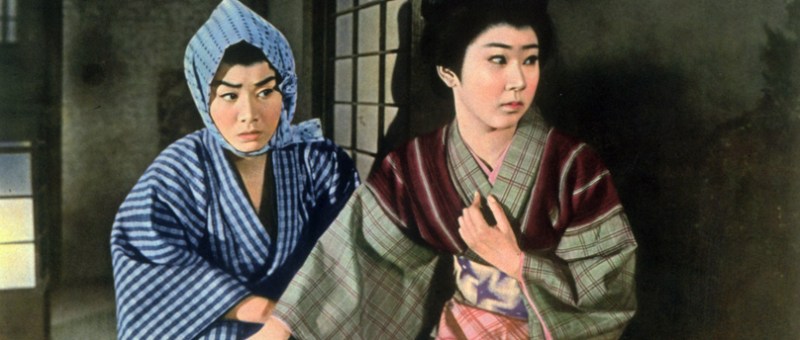
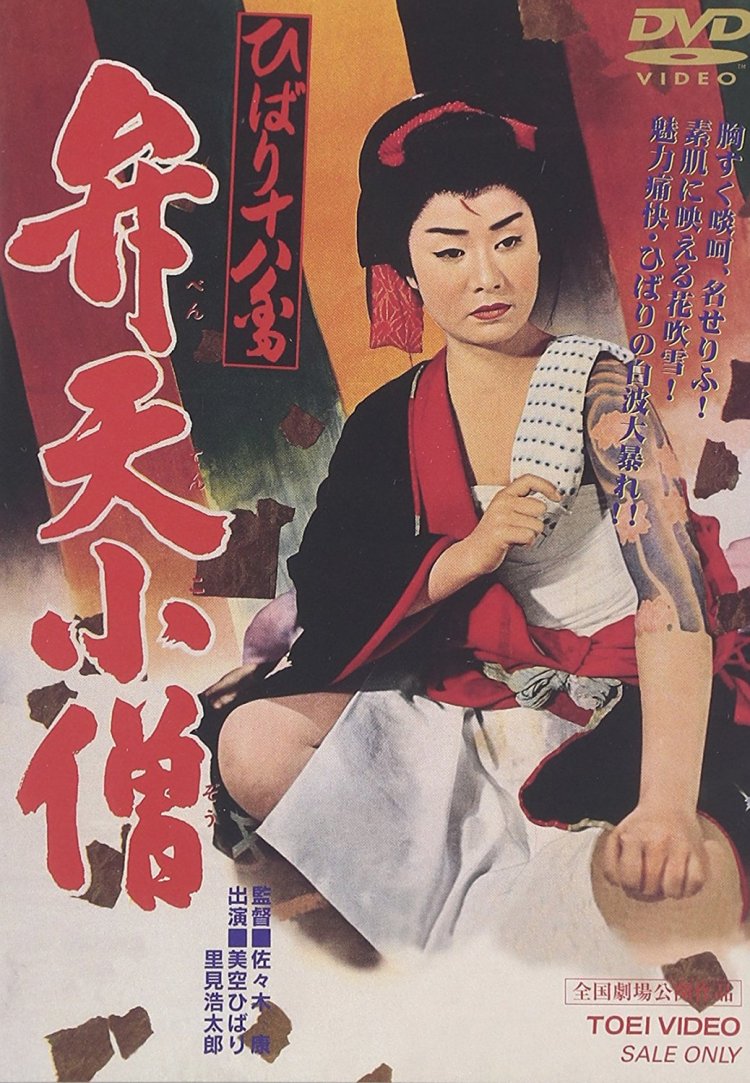
 Starting out as a child actress, Hibari Misora was one of the biggest singing and acting stars of the post-war period whose songs are often pointed to as embodiments of the era’s melancholy yet determined spirit. Though it’s her singing career which has perhaps had the most historical impact, Misora made an immense number of films most of them in ’50s and ‘60s, many typical star vehicles of the time – silly comedies and softer musicals, usually finding an opportunity or two for a song even in straight drama. Hibari Ohako: Benten Kozo (ひばり十八番 弁天小僧), released in 1960 for Toei, is very much of this mould and showcases another somewhat interesting facet of Misora’s career in her readiness to play ambiguous gender roles.
Based on the well known kabuki play, Benten Kozo, which had also been adapted two years previously in a version starring male actor Raizo Ichikawa, Sasaki’s film stars Hibari Misora in the title role – a 13 year old boy who was given up at birth to be raised in a temple which specialises in performing Noh theatre. Kikunosuke (Hibari Misora) is their star, but there’s a dark side to temple performing companies in that they’re dependent on donations and it’s accepted practice to allow wealthy patrons to do whatever they like with the talent, no matter their age or gender. Kikunosuke knows this and isn’t having any of it. Pushed into a room with a lecherous, overly made-up older woman, Kikunosuke balks at the old monk’s attempts to pimp him out and tries to leave, much to the monk’s disappointment.
Unfortunately, just as Kikunosuke is leaving, a thief arrives to steal the money meant for the monk and kills the old woman in the process. Kikunosuke kills the thief but is accused of killing the old woman too and is forced on the run. Tracking down his birth mother, Ofuji (Mitsuko Miura), Kiku thinks he’s found a home but is betrayed, at which point he adopts the name “Benten Kozo” (lit. “Benten Kid” where Benten is the name of the goddess at the temple where he was raised) and joins a gang of Robin Hood-style outlaw thieves.
Like many period films of the time, Benten Kozo revolves around exposing the corruption of the samurai order. In this case, it’s a salt scam – the samurai elders have been stockpiling salt to push the price up, endangering the lives of ordinary people for their own financial gain and thinking nothing of it. The thieves, led by later Lone Wolf and Cub star Tomisaburo Wakayama, are dedicated to robbing the rich to feed the poor but they also aim to expose those in power for the reckless bullies they really are. Benten Kozo joins the “Shiranami Five Alliance” both out of self preservation and out of genuine sympathy with their cause, eventually encountering the same corrupt monk who turned a blind eye to his attempted molestation when he intervenes to save a woman forced into prostitution to pay her father’s debt whom the monk was attempting to rape.
Benten Kozo listens to the woman’s story and decides to give her his savings (which he no longer wants after being betrayed by his mother for whom he’d been saving the money) to pay off her family debt. In fact the pair met earlier when Benten Kozo was on the run and she helped him hide from the authorities. The woman, like several in the film, falls for Benten Kozo’s androgynous charms though he remains resolutely noble and indifferent. Benten Kozo would originally have been played by a male actor on the kabuki stage which did not allow female performers. The “onnagata” or actors who specialised in playing women were often effeminate younger men or boys much like Benten Kozo himself who plays these skills to the max throughout the film.
Hibari Misora, with her low, husky voice, effortlessly switches between the elegant upperclass women Benten Kozo impersonates on stage and in service of the gang’s scams, and the rough and ready dialect of a street ruffian. In a shocking display of bravado, Benten Kozo drops the top of his kimono to show his off his tattoos proving once and for all that he’s no lady but still his appeal lingers perhaps precisely because of his gender ambiguity.
Benten Kozo is not a musical but finds two occasions for Misora to sing – once as Benten Kozo takes off on the road, and the other at the end as he paddles a boat away back to his new found friends. The film ends with a giant mass brawl and also provides ample scope for Misora to escape across roof tops and fight off the unjust but it’s otherwise fairly straightforward fare and not exactly among the singer’s most memorable outings. It is however generally entertaining and interesting enough in its central theme of woman playing man playing woman to warrant attention from more than just diehard Misora fans.
Hibari Misora singing Benten Kozo in concert some years later.
 Windows on Worlds