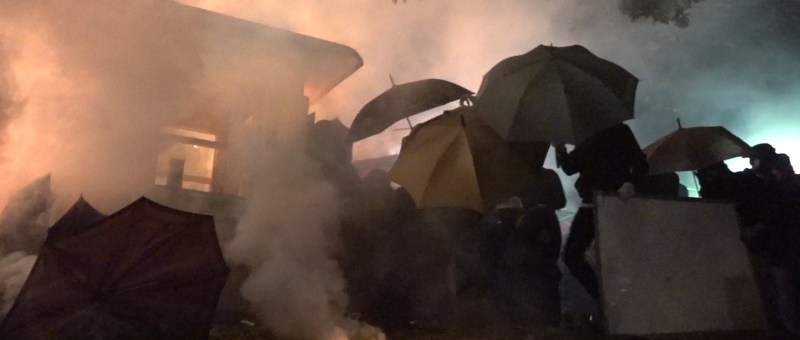

“Fight pragmatically for the impossible” is the advice from Chan Kin-man, cofounder of Hong Kong’s Occupy Central Campaign, in Evans Chan’s follow-up to his 2016 documentary Raise the Umbrellas, We Have Boots (我們有雨靴). Part of a projected trilogy which began with To Liv(e) in1991 examining Hong Kong in the aftermath off Tiananmen Square and may never now, the director fears, be completed, the sprawling two-hour doc runs through six turbulent years of Hong Kong protest, dissecting the failures of the Umbrella Movement and implications of the passing of the National Security Law in the midst of a global pandemic in June 2020.
Evans Chan opens with a faintly ridiculous propaganda video which outlines what the film describes as “Chinese exceptionalism” in that China can feel fairly smug about itself as it did not rely on exploitation, colonial massacre, or slavery to become prosperous nor has it submitted itself to Western democracy. The narrator of the video appears to view the people of Hong Kong as brainwashed foster children turned against their homeland by the “fake news” of international propaganda seeking to portray it as a source only of authoritarian oppression and, in fact, growing up to become “time bombs” posing a threat to Mainland security. In an ironic cut, Chan then drops us directly into a traumatic raid on a subway station in which we witness extreme and random police brutality directed against ordinary citizens.
Yet Chan is not sparing of the Movement either, directly documenting concerns among the protestors at the Umbrella Movement five years after the fact as they complain of over centralisation, that their “democratic” movement did not practice what it preached when the main platform acted like a command centre and refused to listen to other points of view including those advocating for violent action. Meanwhile the more militant arm of protest movement finds it increasingly difficult to escape criticisms of entrenched xenophobia in its openly anti-Mainland stance, describing Chinese migrants as “smugglers and looters” in reference to a trend accusing frequent visitors from the Mainland trafficking supposedly safer commodities such as baby milk which had been the subject of scandals owing to lax safety standards. The same group also objects to Mainland women dancing in the streets as an affront to local Hong Kong culture, adopting the Sanskrit “Cina” to refer to the country while viewing those coming from wider China as “colonisers” rather than migrants hellbent on undermining the traditional culture of the island.
Nevertheless, Chan also makes plain the various levels of Kafka-esque obfuscation the opposition faces in its goal of gaining universal suffrage and true democracy for Hong Kong. Young councillors are abruptly disqualified after “misusing” their swearing-in speeches by flying flags which state Hong Kong is not China or otherwise badmouthing the Mainland or political process. Unable to find appropriate offences to discourage the ringleaders, they come up with nebulous charges such as “incitement to incite public nuisance” which are essentially meaningless not to mention counter-productive save that they prevent those who receive custodial sentences from standing for further political office.
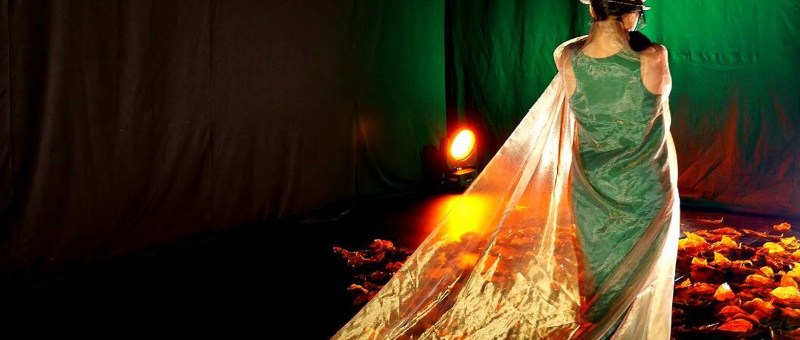
One young man appears only in full protest gear clad in black head to toe, presumably keen to maintain his anonymity as he details his role as a frontline protestor. We’re reminded that China essentially disappeared five booksellers from Causeway Bay for the crime of selling problematic books, only one of whom later resurfaced explaining he’d been held on the Mainland against his will. The leaders of the movement fully expect to pay with their freedom and, according to Chan Kin-man at least who turns down the opportunity of exile abroad, view participation in their trials as facet of their resistance. “Being young is a crime,” the anonymous protestor laments. His generation don’t expect to have money, they don’t expect to have children, in short they do not expect to have a future, all they have is resistance. While the international press holds up Hong Kong as a bastion against incremental authoritarianism in an age of democratic recession, China describes the Be Water protests as “riots” and continues to target prominent protest leaders driving some into exile. With a mix of stock footage, talking heads interviews, and experimental dramatisations, Chan spins a melancholy picture of a Hong Kong facing the crushing despair of the Security Law, but as the poem which inspired the film’s title reminds us, they have umbrellas, they have boots, they have each other and so the fight is not yet over.
Trailer (English subtitles)
 Windows on Worlds