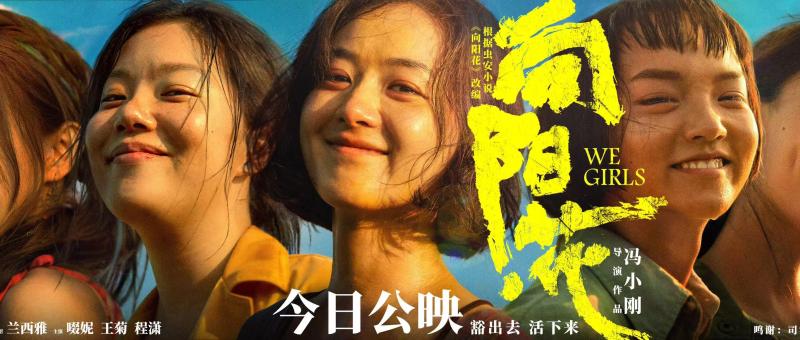
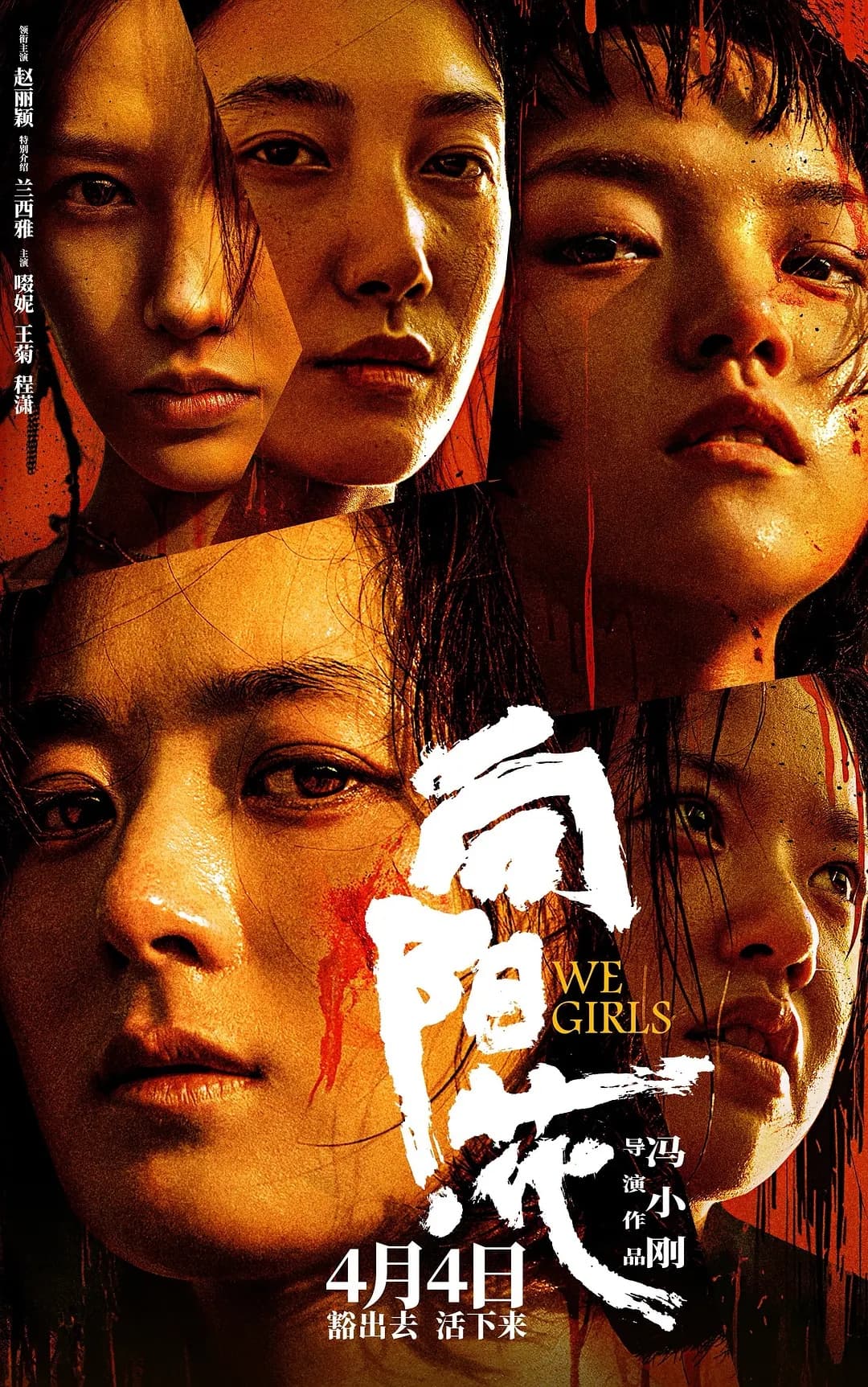
We Girls (向阳·花, Feng Xiaogang, 2025)

Feng Xiaogang’s films often straddle and awkward line in which it’s not entirely clear whether he’s deliberately being subversive or only unwittingly. The surprising thing about We Girls (向阳·花, Xiàngyáng·huā) is, however, its contradictory attitudes towards the modern China of which one would not otherwise assume the censors would approve. Nevertheless, the true goal appears to be paying tribute to the prison and probation service which is thoughtful and compassionate, geared towards helping these unfortunate young women who’ve made “poor choices” to reform and become responsible members of society. 

But like many films of this nature, the problem is that the society the prison authorities want these women to “reform” into doesn’t exist. The onus is all on the women to change, while no attempts have been made to address the circumstances that led to them being sent to prison which are also the same circumstances they will be returning to. The women don’t appear to receive any additional education or learn any new skills while inside, and when they get out it’s impossible to find a mainstream job that will hire a woman with a criminal record. Consequently, they are forced into short-term, casual labour which is often exploitative while male employers withhold pay to extract sexual favours. 

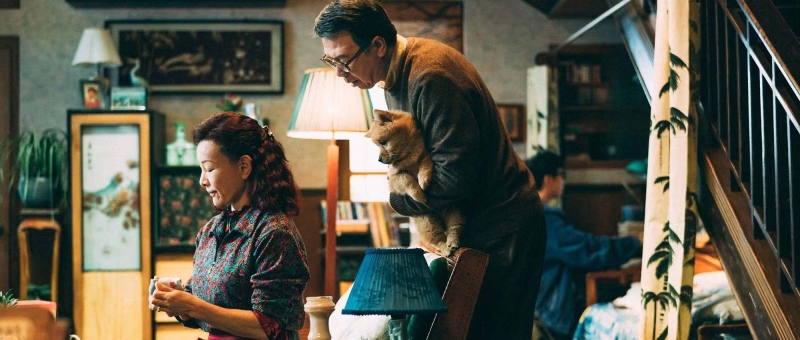
Aside from praise for the police force, the film is also a celebration of female solidarity and it’s clear that their biggest enemy is entrenched misogyny and the patriarchal society. Yuexing (Zhao Liying) is forced into a marriage with a man who couldn’t work because of a physical disability. As he resented their daughter and gave her no help with childcare, Yuexing felt responsible when the baby experienced hearing loss after contracting meningitis and was determined to save for a cochlear implant. To earn more money, she became a cam girl but was caught and sent to prison for two years for obscenity. Mao Amei (Cheng Xiao), meanwhile, is an 18-year-old deaf-mute orphan exploited by criminal gang who are sort of like her “family” but force her to steal for them. 

Having learned a little sign language for her daughter, Yuxing becomes Mao Amei’s interpreter in prison, but the pair find things on the outside much more difficult than in. Apparently illiterate and unable to speak, Mao Amei cannot rent a place to stay and is caught breaking into an abandoned car. The police take pity and let her go, but also take most of the money she was given on her release. Yuexing, meanwhile, discovers her husband abandoned their daughter who is now in an orphanage but is unable to reclaim her without a stable income and permanent address. She finds a job as a hotel maid, but is falsely accused of thievery by a wealthy businessman on a power trip and subsequently fired for concealing her previous conviction. Realistically, the women have little option but to fall into criminality because there really are no other options. 

Still, they’re supported by a network of female solidarity from sympathetic corrections officer Deng Hong (Chuai Ni), herself a foundling raised by a policeman, to another young girl sent to prison for reselling exotic animals off the internet. Orphanhood is a persistent theme with China’s longtime child trafficking problem ticking away in the background. The gang of thieves is eventually exposed as running a baby farm to make up for the decline in their traditional line of work thanks to digitalisation. Yuexing is faced with an impossible decision when she discovers that a wealthy couple are keen to adopt her daughter and are prepared to buy her a cochlear implant right away, knowing that it would be wrong to deny her this “better life” but also that her child has been taken away from her because of her socio-economic marginalisation and husband’s indifference. 

It’s only thanks to the found family that emerges between the women because of their shared experiences that they are able to find a way through, while small acts of “foolish” kindness are later repaid in kind. To that extent, the resolution falls into the realms of fantasy as the women are saved by a deus ex machina rather than through finding a place for themselves within the contemporary society and “reforming” themselves in the way the prison service insists. In the end, they are only able to free themselves through an act of violence that comes with additional, though bearable, costs and grants them the possibility of making a new life for themselves if one spiritually and geographically still on the margins of the contemporary society.


Trailer (Simplified Chinese / English subtitles)

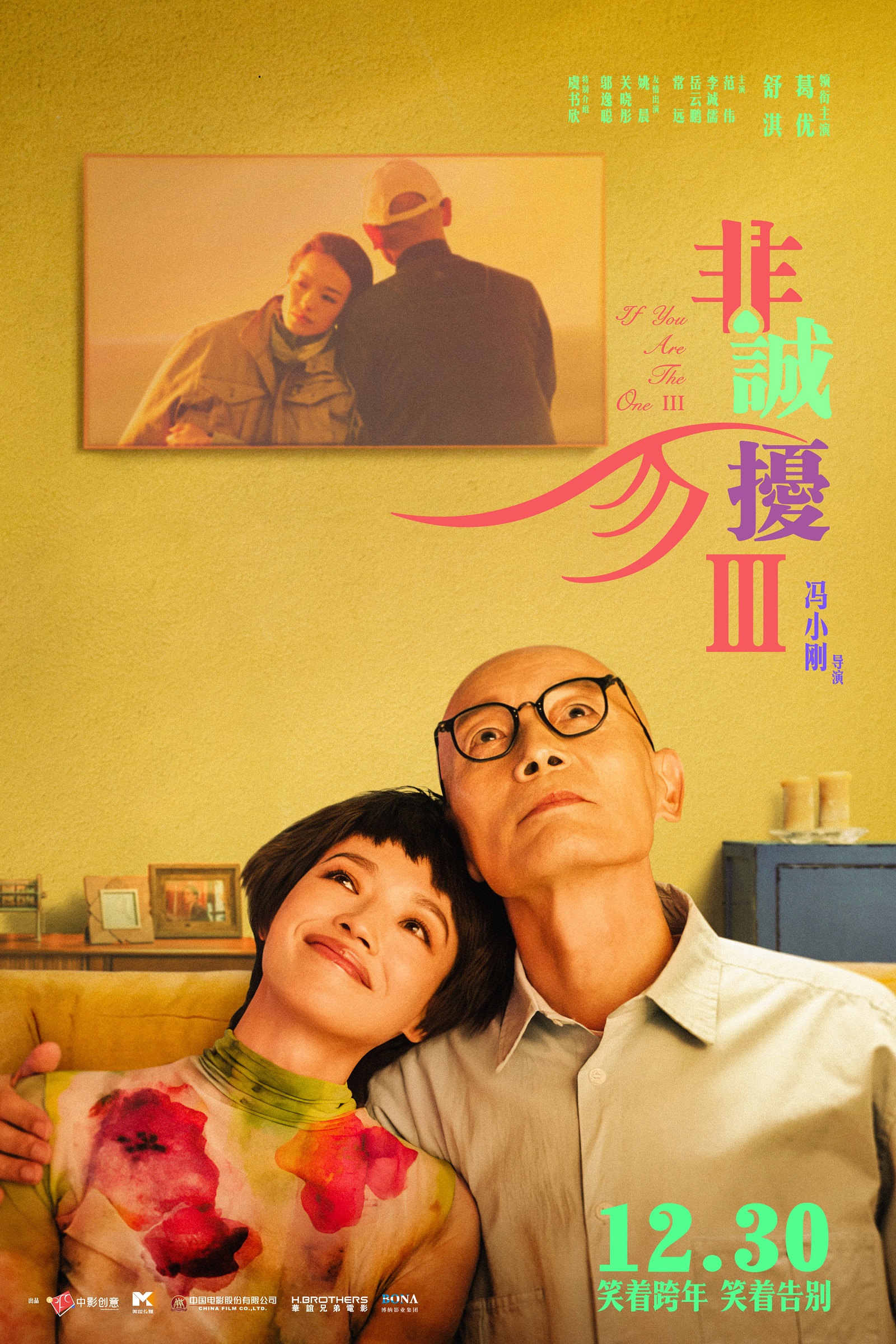
If You Are the One 3 (非诚勿扰3, Feng Xiaogang, 2023)

It’s been 15 years since the release of Feng Xiaogang’s If You Are the One, a phenomenally popular romantic dramedy in which a seemingly mismatched pair of lovelorn souls attempt to build on the spark of connection. A sequel was released in 2010 that turned a little more wistful in meditating on the brevity of life and its circular qualities, but returning all these years later Feng ventures in a surreal direction setting the film, as the sequel promised, in 2030 as Qin Fen (Ge Yu) approaches his 70th birthday in a colourful vision of an AI future.

Qin Fen still lives in the same house as he did in If You Are the One 2 only it’s had a complete redesign. Before it was cluttered and traditional, a comforting cabin overlooking the beautiful Chinese countryside but now it’s fairly minimalist and heavily stylised in a bold colour scheme that echoes the fashions of the mid-20th century. We learn that he has not seen Xiaoxaio (Shu Qi) for 10 years since she abruptly took off with a bunch on cult-like international rubbish collectors but has been patiently waiting for her return. His old friend Lao Fan (Fan Wei) who has launched a successful company selling uncannily real AI robots gifts him one that looks just like Xiaoxaio though it of course lacks her sarcastic character and is programmed to obey him totally which is how he thought he wanted but of course is nothing like the real Xiaoxiao.

At this point, the film seems to open a dialogue about the nature of love and the realities of marriage. Can the lonely Qin Fen be satisfied by this ersatz recreation of the woman he loved, or will it only cause him more pain? The answer seems to be a little of both, especially as she cannot eat or drink with him let alone sleep in the same bed. Meanwhile, unbeknownst to him the real Xiaxiao has returned but is too nervous to approach him having been out of contact for a decade, only now getting bored with rubbish collecting which is being taken over by AI robots anyway. Disguising herself as a upgraded version of the robot, she attempts to figure out how he really feels about her in a strange echo of the trial marriage from the previous film wondering if he’ll be able to figure out which version of her is “real” and which a fantasy of his own projections.

Then again, set largely within this futuristic cabin, now a little more surrounded by other similar dwellings, we might start to wonder if something else of going on and this place doesn’t quite exist in the way we think it does as if Qin Fen were literally living inside a memory. Having jumped on an additional eight years, the timelines and details do not always mesh exactly with a reappearance of Xiangshan’s daughter who should be around 30 but appears more like a sullen college student in the company of Xiangshan’s second wife, Mango (Yao Chen), who was not her mother nor raising her but apparently continued caring for her mother-in-law after her ex-husband’s death. Small splinters in the reality encourage us to doubt it, as if they corrupted files in Qin Fen’s ageing memory.

Feng presumably doubts our memory too, inserting frequent flashbacks to footage from the other movies whenever one of the returning cast allude to them in addition to providing a lengthy recap at the beginning of the film. Playing out a bit like a greatest hits compilation, the flashbacks prove unnecessarily clumsy and largely disrupt the flow of the ongoing drama while perhaps helping to fill in the blanks for those jumping in to part three without having seen one or two given that it has been fifteen years since the first film’s release. A little surprisingly given the tightening censorship regulations, Feng was able to continue the sympathetically presented running gag of Qi Fen’s male admirer, now having undergone a K-pop makeover and looking even younger, who also finds himself contemplating the nature of love after commissioning a Qin Fen robot to cure his own lovelorn desires.

A nod to the present day is given in a Lunar New Year movie-style epilogue (though the film was released around Western New Year) in which Shu Qi and Ge Yu play themselves dressed in matching outfits and nostalgically look back reflecting that young couples who came to see If You Are the One in 2008 might have teenage kids of their own or at least fond memories of an old love that wasn’t to be. Just at the end at they drop in the words that marriage is a commitment worth its weight in gold which feels like an approved message tackling the historically low rates of young people getting married. Nevertheless, it’s a cute and quirky way to bring the series to a close following the surreal absurdity of the two hours which preceded it.


International trailer (Simplified Chinese / English subtitles)
Hachiko (忠犬八公, Xu Ang, 2023)

The heartrending tale of a faithful dog who continued to wait for his late owner at a cable car station becomes a poignant symbol for a left behind China in Xu’s Ang’s reimagining of the 1987 Japanese film scripted by Kaneto Shindo, Hachiko (忠犬八公, zhōng quǎn bā gōng). Xu keeps the original title which translates as “faithful dog Hachiko” (Hachiko comprising of the characters for “eight” and “public” which when used in names conveys a note of nobility), but changes the puppy’s name to “Batong” which means “eight dots” and is taken from a mahjong title he naughtily runs off with after being taken in by kindhearted professor Chen Jingxiu (played by film director Feng Xiaogang).

The film opens, however, in the present day with Jingxiu’s wife (Joan Chen) and son (Bai Jugang) returning to Chongqing after many years living in Beijing and remarking on how much the city has changed. These days the cable car system across the Yangtze is a nostalgic tourist attraction with crossing the river increasingly easy thanks to a widescale bridge project. Jingxiu was a professor of engineering working on infrastructure projects, but despite the allure of progress the opening scenes suggest a quiet note of melancholy that runs underneath with constant references to the Three Gorges Dam project which led to mass displacement throughout the region as traditional villages were sunk beneath the reservoir. 

It’s in one of these villages that Jingxiu finds Batong, an abandoned puppy left behind when the village was evacuated. He brings him home with him despite knowing that his wife has an aversion to dogs owing to having been bitten as a child, and attempts to hide him from the rest of the family later suggesting that he’s just waiting to find a suitable owner to rehome him but clearly having no intention of doing so. The callousness with which some people treat animals is fully brought home when Jingxiu’s wife gives Batong away to a man who clearly intends to sell him for dog meat with Jingxiu managing to rescue him in the nick of time. 

In some ways, the professor and dog bond precisely because they are outsiders neither of whom is actually from Chonqing. Jingxiu’s family members often tease him for still not understanding the local dialect despite having lived there for decades while he often seems as if he feels out of place in his own home. When he’s asked to give up the dog, Jingxiu refuses insisting that some of their habits such as his wife’s obsession with mahjong, his son’s newfangled internet career, and his daughter’s grungy boyfriend, annoy him but he respects their right to be happy and would never try to stop them from doing something they love so he’s putting his foot down and Batong stays. This sense of solidarity binds them tightly to each other which might be why Batong often escapes in the morning to chase Jingxiu to the cable car, later returning in the afternoon to welcome him home. 

There is something undeniably poignant in Batong’s waiting at the station for someone who’ll never return in part because the cable car itself has become somewhat obsolete despite having been completed only in the mid-1980s. Jingxiu dies of a heart attack on a boat on the Yangtze circling the site of the dam, disappearing amid its landscape as so many others also did. He left on the train but did not return by it, and so Batong is unable to understand his absence or grasp the concept of death. Displaced himself, the lost dog becomes a melancholy stray trapped in another China and longing for the return to something that no longer exists. 

Jingxiu’s house is soon pulled down too, exiling his wife to the modern metropolis of Beijing now a displaced person herself as these traditional spaces are gradually erased in the name of progress. Batong makes his home in the ruins, continuing to wait like a lonely ghost in the rapidly changing city. Undeniably moving in its unabashed sentimentality in which Batong is finally reunited with Jingxiu as they board the cable car together, the film is also a poignant tribute to man’s best friend and a plea to end animal cruelty, ending with a heartfelt message encouraging the adoption of stray dogs many of whom like Batong are simply looking for a place to belong. 


Hachiko screened in UK cinemas courtesy of CMC.

International trailer (English subtitles)

Only Cloud Knows (只有芸知道, Feng Xiaogang, 2019)

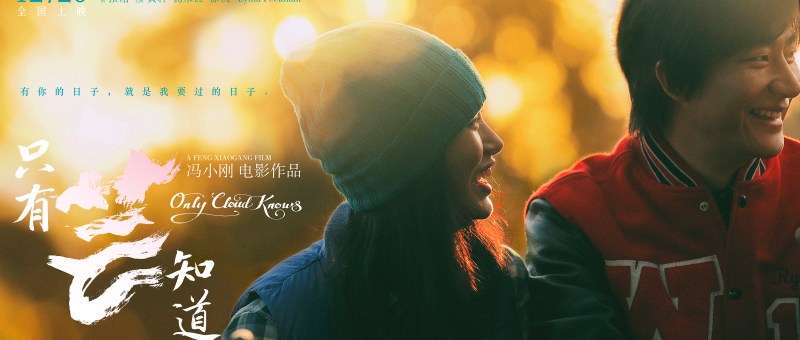
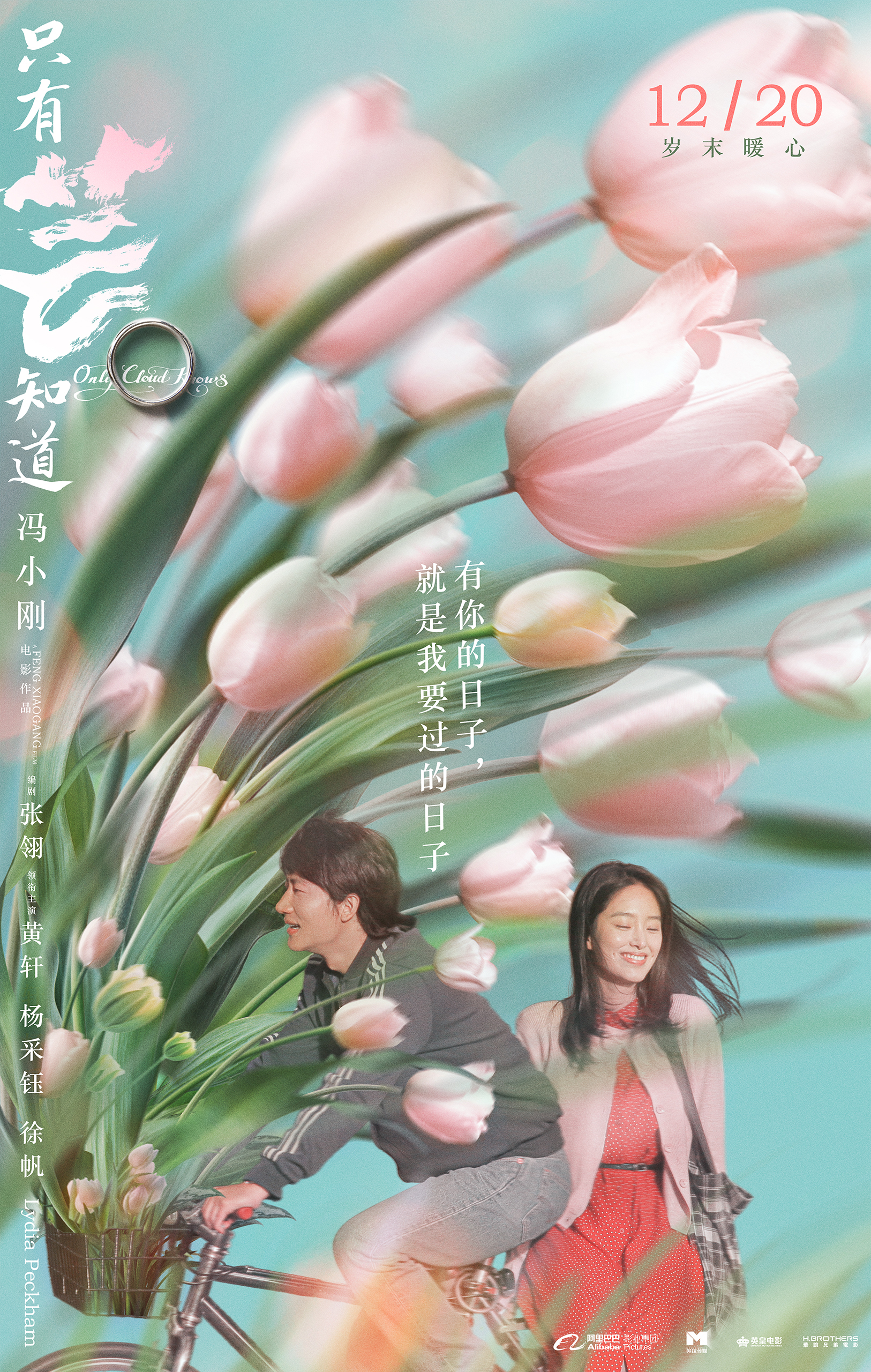
930161b9ca654d4cac056b550c6d0542If contemporary Chinese cinema has one message, it’s come home to China. Feng Xiaogang, however, has never been keen to go with the flow for all of his occasionally problematic affection for the nation as it was before the ‘80s reforms. A co-production with New Zealand, unabashed romantic tearjerker Only Cloud Knows (只有芸知道, Z Yǒu Yún Zdào) seems primed to speak directly to the diaspora audience, asking if perhaps the meaning of the word “home” has changed, less place than people and, therefore, infinitely portable.

In the present day, recently widowed Dongfeng/Simon (Huang Xuan) prepares to say goodbye to his late wife, Yun/Jennifer (Yang Caiyu), by travelling back through their long years together facing many ups and downs as they strove to make a life for themselves in the laidback greenery of the New Zealand countryside. Dongfeng travels first to the small town where they started a humble restaurant, cooking the kind of food Westerners expect rather than the authentic Chinese dishes they fear no one will try, and using their English names “for convenience”. While there they employ a friendly waitress, Melinda (Lydia Peckham), who is something of a free spirit saving up money to travel to distant lands, touring Asia and Africa.

Though they are blissfully happy, life is not without its difficulties. Working so hard to make the restaurant a success leaves them with time for little else and wondering if they’ve perhaps lost sight of something important. Dongfeng no longer plays his flute, and Yun worries that he’s sacrificed a part of himself to provide for her, becoming a slightly different person in the process. Obsessed with blue whales, Yun craves protection and security, the kind of things many associate with a building a stable home, but she also yearns for freedom and for something more than ordinary happiness. Minor resentment creeps in born of that central contradiction. Dongfeng wants to give Yun the kind of security he assumes she needs by betting everything on the restaurant, but all she really wants is him.

Nevertheless, protection and security were the things which attracted her to Dongfeng in the first place as symbolised by her obsession with blue whales. Somewhat improbably, his hotheaded decision to start a fight with a man who cut them up in a carpark and then insulted Yun only endears him to her further and also gets him a commendation from a local policeman who even tells him he might be cut out for life on the force, but to ease back on the violence because New Zealand is a peaceful place. There are things, however, that one cannot be protected from and as much as fate gives it also takes away. Yun craves protection because she feels insecure in an existential sense, convinced that she is “unlucky” and originally reluctant to agree to Dongfeng’s proposal in fear that she is destined to make him unhappy.

Sadly, that prediction eventually proves correct though through no fault of her own. Lucky in love, the couple face their share of hardships from an inability to start a family to losing beloved pets and dealing with illness, but there’s no joy without sadness and if your time together is shorter perhaps it is equally sweet. In his opening monologue, Dongfeng muses, quoting poetry, that time moved slower in the past and there was only enough of it to love one person before telling us that his life has been about one woman. Only Cloud Knows is the story of how he learned to say goodbye, but also of a 20-year love that endures to transcend time.

Apparently inspired by the true life love story of one Feng’s friends and collaborators, Only Cloud Knows has a rare kind of authenticity in its deeply felt romance which somehow seems all the more real for its clichéd genesis. Foreshadowings of partings echo throughout, reminding us that all love ends one way or another and it’s the ones left behind who mind it most, but rather than dwell on the maudlin, Feng shows that life goes on even in the midst of heartbreak. Houses change hands, old owners with teary eyes making space for bright-eyed youngsters full of hope for the future, while those who are leaving bequeath their unlived years to those they love with hopeful generosity. What Dongfeng discovers is that home is where the heart is, even if the heart is forever in the past.


Currently on limited release in US/UK cinemas courtesy of China Lion.

Original trailer (English subtitles)

Youth (芳华, Feng Xiaogang, 2017)

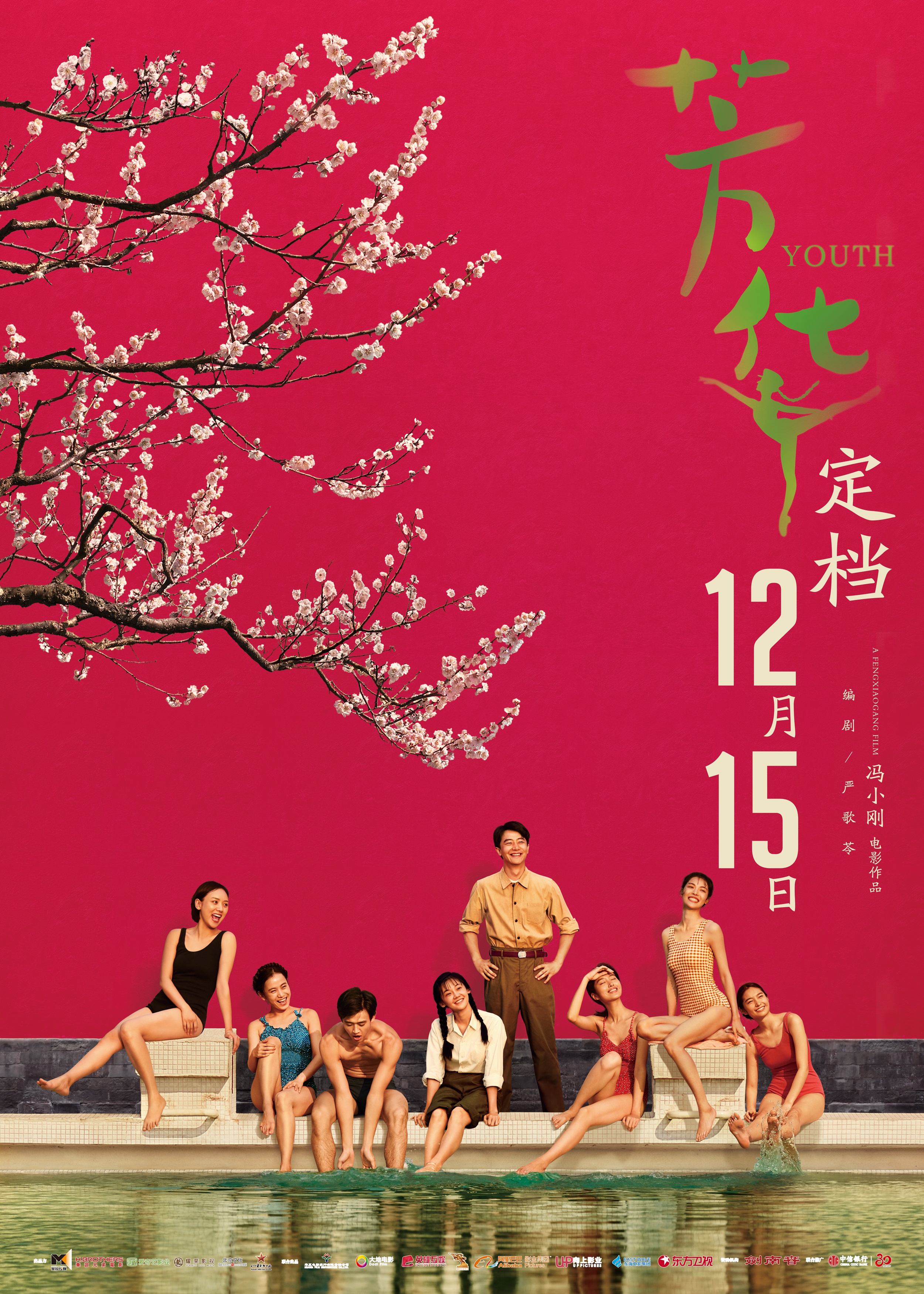
youth posterOn the surface of things, one might be forgiven for thinking that Feng Xiaogang, “China’s Spielberg” – the director of such fluffy hits as If You Are the One and the prestige picture The Banquet, might not be the one to look to for nuanced takes on the state of his nation but, as he proved with the irony filled I am Not Madame Bovary, there has always been a persistent resistance in his superficially crowd-pleasing filmography. The exact nature and extent of that resistance is however harder to assess. Youth (芳华, Fāng huá), Feng’s latest historically probing epic, made headlines when its mainland release was blocked at short notice immediately before its international premiere at the Toronto International Film Festival and in some respects it’s easy to see why it may have raised an eyebrow or two at the censor’s board. A literal story of “youth” and the various ways that the concept becomes romanticised even when one’s own coming of age took place in otherwise difficult times, Feng’s film is also the story of modern China, baptised in the fire of the Cultural Revolution only to finally succumb to the consumerist one 15 years later.

Narrated by bystander Suizi (Zhong Chuxi), later a successful author apparently looking back on her own “youth” with a writerly eye, the tale begins in the early 1970s with two pillars of the arts division of the People’s Liberation Army. Suizi informs us the the protagonists of this story are Lui Feng (Huang Xuan) – a model soldier, and Xiaoping (Miao Miao) – a poor girl mercilessly tormented by everyone throughout her entire life. Xiaoping’s birth father has long been languishing in a re-education camp but as she’s taken her step-father’s name, Liu Feng assures her that he’s kept her bad class background off her record and will make sure no one else knows about it.

Performing propaganda ballets, the arts division is at its zenith at the height of the Cultural Revolution. The troop as a whole enjoys extreme privilege – they are well fed and cared for, evade the dangerous front line work many other members of the armed forces are subject to, and receive the respect due to them as the embodiment of a revolutionary ideal. They are, however, still guilty of the various hypocrisies coded into the system. Though many of the dancers have family members with “bad class backgrounds”, undergoing re-education or otherwise better not mentioned, the top guys and girls are the ones with parents high up in the party who use their untouchable status to paper over cracks in their own development with inherited superiority.

Lui Feng is perhaps an aberration. Nicknamed “Lei Feng” – a mythical figure created for propaganda purposes to embody the “ideal” revolutionary soldier in his selfless dedication to his comrades and communist virtues, Lui Feng is indeed a model party member whose goodness and kindness know no bounds. Unlike Lei Feng, however, he is a real man of flesh and blood not some far off and untouchable god. Having sanctified him in this way, the collective has effectively raised Lui Feng up to an unfair and unattainable ideal and is then “betrayed” on realising that Lui Feng is a man with a man’s hopes and desires. Lui Feng’s transgression is inappropriate to be sure but also somehow innocent in its naivety and his counter betrayal by the system to which he has dedicated his life all the more difficult to bear because of the unfair deification his better qualities have earned him.

Xiaoping meanwhile, who expected only betrayal, betrays the system through passive resistance in resentment of the way it has treated her friend. “Abandoned” by the collective which is the arts troop, Xiaoping exiles herself from a society she thinks has little need of her yet she then continues to serve it fully as a frontline nurse. The “youthful” idealism of Lui Feng and Xiaoping is tested as they find themselves caught up in a far off war while their former comrades dance around with wooden swords on a painted stage. Wounded in body and mind, the pair continue onwards even as their nation conspires to leave them behind.

Shifting into the ‘90s and then the 21st century, Feng’s messages become muddier and harder to grasp. In one sense what is celebrated is “youth” itself which, in this case, happened to take place against the backdrop of terrible events (albeit it ones from which many of the protagonists save Lui Feng and Xiaoping were largely shielded) enabling the growth of a generational family destroyed by a change in the political wind. It is however hard not to infer that everything was better during the turbulent ‘70s in which the delusion of innocence, if not its actual existence, was easier to bear than the soulless march into the future of Coca-Cola signs, Transformers toys and fathers who never come home because they’re too busy making money. Feng’s heroes are the ones who exiled themselves from the reality of China as a modern economic superpower, holding fast to their innate senses of honour and justice, yet in this Feng does to them exactly what he criticises his society for doing – he makes them martyrs, mythologises them as embodiments of revolutionary ideals, a pair of real life Lei Fengs all over again. In telling a story of how the revolution betrays and is betrayed, Feng makes the heroes emerge damaged but unbroken, chaste children trapped by the “innocence” of the pre-capitalist age, but whether their survival is victory or defeat remains unclear. 


Youth is currently screening at selected cinemas across the UK courtesy of CineAsia.

UK release trailer (English subtitles)

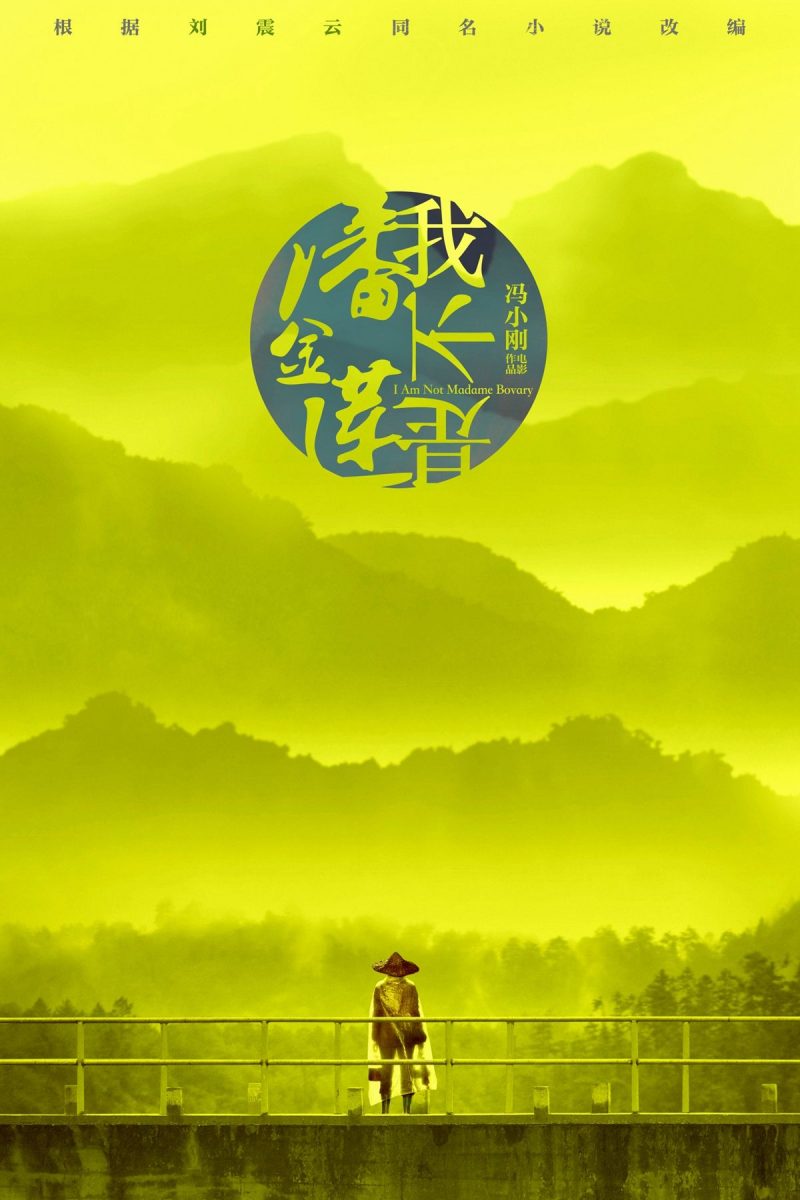
I am Not Madame Bovary (我不是潘金莲, Feng Xiaogang, 2017)

I-Am-Not-Madame-Bovary-posterFeng Xiaogang, often likened to the “Chinese Spielberg”, has spent much of his career creating giant box office hits and crowd pleasing pop culture phenomenons from World Without Thieves to Cell Phone and You Are the One. Looking at his later career which includes such “patriotic” fare as Aftershock, Assembly, and Back to 1942 it would be easy to think that he’s in the pocket of the censors board. Nevertheless, there’s a thin strain of resistance ever-present in his work which is fully brought out in the biting satire, I am not Madame Bovary (我不是潘金莲, Wǒ Búshì Pān Jīnlián).
Truth be told, the adopted Western title is mostly unhelpful as the film’s heroine, Liu Xuelian (Fan Bingbing), is no romantic girl chasing a lovelorn dream to escape from the stultifying boredom of provincial bourgeois society, but a wronged peasant woman intent on reclaiming her dignity from a world expressly set up to keep people like her in their place. Feng begins the movie with a brief narrative voice over to set the scene in which he shows us a traditional Chinese painting depicting the famous “Pan Jinlian” whose name has become synonymous with romantic betrayal. More Thérèse Raquin than Madame Bovary, Pan Jinlian conspired with her lover to kill her husband rather than becoming consumed by an eternal stream of romantic betrayals.

Xuelian has, however, been betrayed. She and her husband faked a divorce so that he could get a fancy apartment the government gives to separated people where they could live together after remarrying sometime later. Only, Xuelian’s husband tricked her – the divorce was real and he married someone else instead. Not only that, he’s publicly damaged her reputation by branding her a “Pan Jinlian” and suggesting she’s a fallen woman who was not a virgin when they married. Understandably upset, Xuelian wants the law to answer for her by cancelling her husband’s duplicitous divorce and clearing her name of any wrongdoing.

Xuelian’s case is thrown out of the local courts, but she doesn’t stop there, she musters all of her resources and takes her complaint all the way to Beijing. Rightfully angry, her rage carries her far beyond the realms a peasant woman of limited education would expect to roam always in search of someone who will listen to her grievances. When no one will, Xuelian resorts to extreme yet peaceful measures, making a spectacle of herself by holding up large signs and stopping petty officials in their fancy government cars. Eventually Liu Xuelian becomes an embarrassment to her governmental protectors, a symbol of wrongs they have no time to right. These men in suits aren’t interested in her suffering, but she makes them look bad and puts a stain on their impressive political careers. Thus they need to solve the Liu Xuelian problem one way or another – something which involves more personal manipulation than well-meaning compromise.

Bureaucratic corruption is an ongoing theme in Chinese cinema, albeit a subtle one when the censors get their way, but the ongoing frustration of needing, on the one hand, to work within a system which actively embraces its corruption, and on the other that of necessarily being seen to disapprove of it can prove a challenging task. Xuelian’s struggles may lean towards pettiness and her original attempt to subvert the law for personal gain is never something which thought worthy of remark, but her personal outrage at being treated so unfairly and then so easily ignored is likely to strike a chord with many finding themselves in a similar situation with local institutions who consistently place their own gain above their duty to protect the good men and women of China.

A low-key feminist tale, Xuelian’s quest also highlights the plight of the lone woman in Chinese society. Tricked by unscrupulous men, she’s left to fend for herself with the full expectation that she will fail and be forced to throw herself on male mercy. Xuelian does not fail. What she wants is recognition of her right to a dignified life. The purpose of getting her divorce cancelled is not getting her husband back but for the right to divorce him properly and refute his allegations of adultery once and for all. Xuelian wants her good name back, and then she wants to make a life for herself freed from all of this finagling. She’s done the unthinkable – a petty peasant woman has rattled Beijing and threatened the state entire. Making oneself ridiculous has become a powerful political weapon. All of this self-assertion and refusal to backdown with one’s tail between one’s legs might just be catching.

Adding to his slightly absurdist air, Feng frames the tale through the old-fashioned device of an iris. Intended to recall the traditional scroll paintings which opened the film, the iris also implies a kind of stagnation in Xuelian’s surroundings. Her movements are impeded, her world is small, and she’s always caught within a literal circle of gossip and awkward, embarrassing scenes. Moving into the city, Feng switches to a square instead – this world is ordered and straightened but it’s still one of enforced rigidity, offering more physical movement but demanding adherence to its strict political rules. Only approaching the end does something more like widescreen with its expansive vistas appear, suggesting either that a degree of freedom has been found or the need to comply with the forces at be rejected but Xuelian’s “satisfaction” or lack of it is perhaps not worth the ten years of strife spent as a petty thorn in the government’s side. Perhaps this is Feng’s most subversive piece of advice, that true freedom is found only in refusing to play their game. They can call you Pan Jinlian all they please, but you don’t need to answer them.


I am not Madame Bovary was screened as part of the 19th Udine Far East Film Festival.

Original trailer (English subtitles)

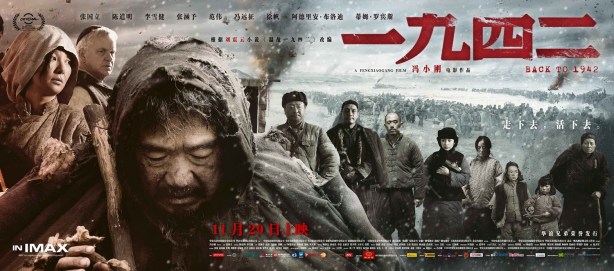
Back to 1942 (一九四二, Feng Xiaogang, 2012)

back-to-1942-poster08Review of this (slightly stodgy) war time starvation drama up at UK Anime Network.


Feng Xiaogang might not exactly be a household name in the West but at home he’s one of China’s most bankable directors. Dubbed the Chinese Spielberg (perhaps a little reductively) he made his name with a series of crowd pleasing comedy films that had audiences queuing ‘round the block in expectation. In recent years, he’s moved away from the comedy genre in favour of big budget, Hollywood style dramas centred around historical events like the 1976 Tangshan Earthquake in Aftershock or the Civil War themed Assembly. Back to 1942 sees him step back even further in time to one of China’s great hidden tragedies, the great Henan famine of 1942.

In 1942 China was in a precarious political position as it faced the ongoing Japanese incursion and came under increasing pressure to align itself with Japan’s enemies as part of the wider global conflict. A serious drought could not have come at a worse time as ever dwindling resources were pulled in several directions at once. The story here concerns the landlord, Fan, who had originally a sizeable grain store set aside to feed his family and retainers. However, after his village is raided by bandits he too is forced to travel westwards in hope of finding better supplies. Along with his wife, pregnant daughter-in-law, daughter and servant as well as another family from the village he faces increasing hardship as he tries to find food to survive. Meanwhile an American journalist employed by TIME magazine has got wind of the story and is trying to get something done about it but to no avail. The government has the war effort as its top priority – what does it matter if a few peasants die as long as the army remains well fed.

Politically speaking, you can get away with talking about ‘unpleasant’ historical events assuming that they happened before the communist revolution. The finger here is pointed quite squarely at Chang Kai-shek and his nationalist government who are portrayed not only as unfeeling and self interested but also as ineffectual when it comes to the business of conducting war with the Japanese. Indeed, at once point Chang suggests simply ceding Henan to the Japanese rather go to the expense of defending this barren stretch of land. Though it is clear he is aware of the extent of the famine, he does little about it until eventually sending “emergency supplies” to “the disaster area” to try and alleviate the damage to his reputation and diplomatic relations with other powers when news of the famine finally reaches them after the conflict. Though the local governor appears genuinely concerned and does his best to get help for the starving people (even if it’s only to alleviate the ridiculous burdens placed on them to supply grain for the army even though there is none) he is hamstrung by the top heavy hierarchical system.

No help is going to come from the government for Fan and his family. They might have been bigwigs once but now they’re in the same boat as everyone else – forced on a virtual death march through the arid land desperately trying to find anywhere that will yield to them the resources to survive. Bodies litter the landscape as the weaker succumb to starvation, donkeys and pack horses are eaten and finally wives and children are bought and sold in the hope of surviving a few hours more. Make no bones about it, Back to 1942 is almost two and a half hours of pure misery as one tragic yet inevitable event follows on the next. Unfortunately, Feng has laid the gloom on a little thick in this understandably bleak tale. The tone never wavers and somehow the constant nature of its sorrows fail to engage as they take on a sadly predictable air. Despite the obvious potential of the story, there’s precious little actual drama and the performances fail to capture the audience’s sympathies as Fan & Co. forced into increasingly degrading acts trying to ensure their own survival.

However, Back to 1942 was an expensive production and you can see all of that money on screen as the battle and action sequences rival those of any Hollywood blockbuster. Whatever reservations there may be with the plotting, it always looks good and you could never accuse it of skimping out on its production design. The only minor criticism may be that the performances of non-Chinese actors feel significantly under rehearsed with Tim Robbins’ priest being the obvious example as he struggles with a strange accent and unclear position in the narrative. Adrien Brody fares better as the idealistic reporter but still fails to convince. The film doesn’t quite seem to know where to put itself when it comes both to the role of religion and of other powers active in China at this time and though neither of those ideas are at the forefront of this film, they muddy the waters in ways other than intended by the filmmaker.
An often beautifully photographed film Back to 1942 is also a cold one and given its depressing subject matter something of a chore. The famine that struck the Henan region in 1942 and subsequent (non) reaction to it from the powers at be is indeed something that should be addressed and brought to light in the modern world but perhaps it doesn’t need to be in such a blunt fashion. The film is long, and wearing but ultimately fails to connect with the viewer in a non cynical way making its drawn out proceedings a little on the tedious side for most viewers. Those with a taste for sentimental melodramas with high production values may find a lot to enjoy with Back to 1942 but those who prefer a more nuanced drama will likely leave disappointed.