Blank Canvas: My So-Called Artist’s Journey (かくかくしかじか, Kazuaki Seki, 2025) [Fantasia 2025]

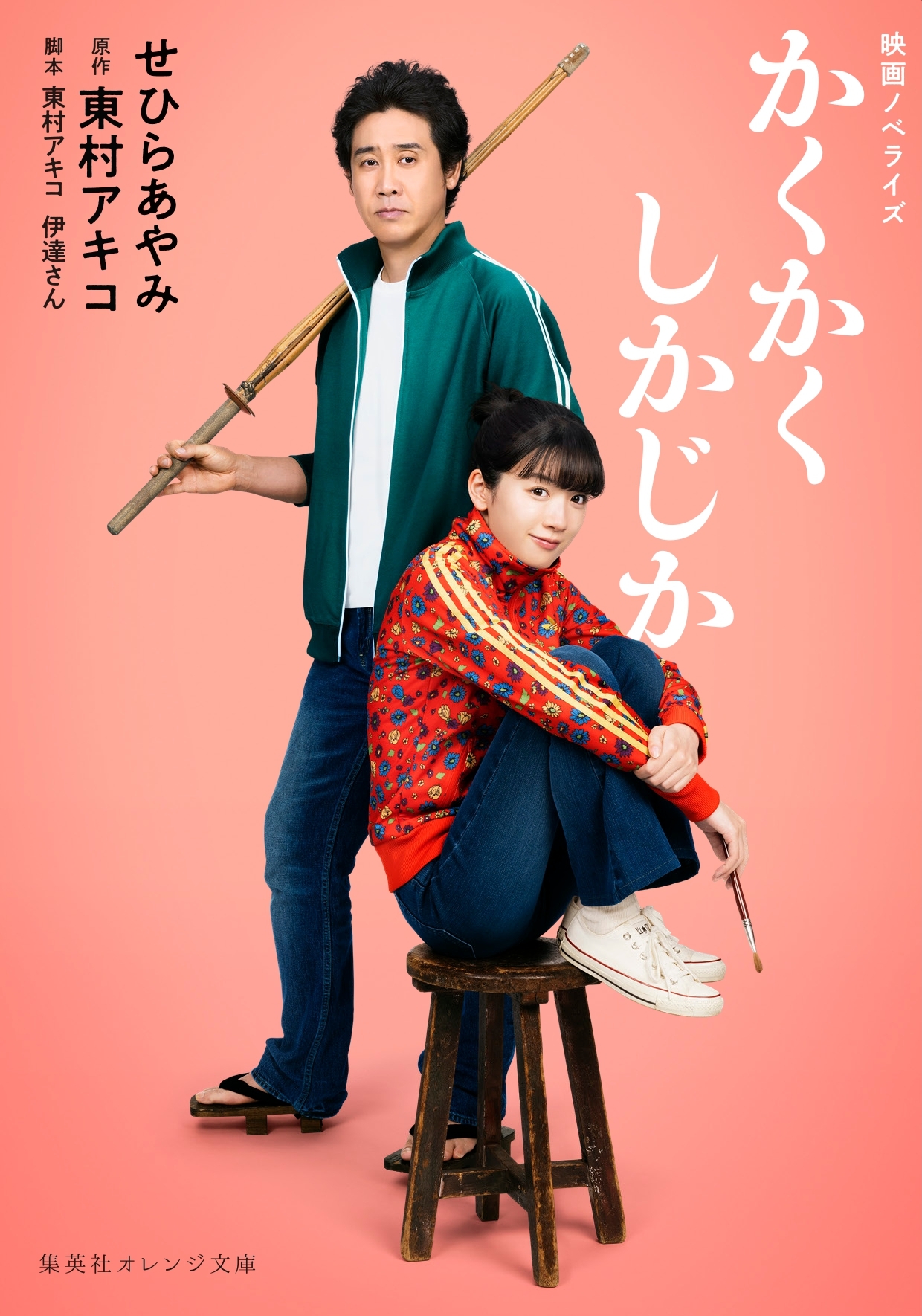
“Just draw,” Akiko’s (Mei Nagano) eccentric, hardline yet tenderhearted mentor Hidaka (Yo Oizumi) is fond of yelling at her as if telling Akiko to get over herself and stop both over and under thinking her approach to art. Though he may lament that his teaching methods don’t have much of an effect on his pupils because they need “more encouragement,” the older Akiko can see how well he taught her and also that she may have failed him, if understandably, in her single-minded pursuit of her dream of becoming a mangaka.

Of course, we know that she eventually achieved it and has become a prize-winning manga artist, though she describes herself as being far from the upstanding and talented figure others may assume her to be. Nevertheless, it’s one of Hidaka’s principles that becomes her guiding light as he constantly reminds her to “just draw” and that her skills rust while she slacks off. Slacking off maybe something the teenage Akiko was used was to doing. Committed to her dream, Akiko sees no need to study and is always reading manga even in class. She’s been led to believe that she’s talented, so sees no need to work at anything and has an inflated sense of her own importance. While her overly supportive parents and school art teacher tell her she’s a genius, only Hidaka is willing to pull her up and yell at her to do better. Though his manner may be harsh, what Akiko comes to understand is that he genuinely cares about his pupils and is only trying to help them fulfil their potential. 

To that extent, it’s really Akiko who a “blank canvas”. Though she thought she had a goal she was moving towards, the truth was that she wasn’t moving at all, while an overconfidence in her abilities has caused them to become stagnant. Hidaka goes on the attack, waving around a bamboo sword and roundly telling her that her work isn’t good enough. But he does so because he knows she has real potentional that she isn’t tapping. Despite her seeming smugness, she lacks the clarity and conviction to push herself and is contented with being “good enough” without really thinking things through like the fact she’ll also need good academic grades to go to art school no matter how good an artist she may be. 

But on the other hand, Hidaka is also a little old-fashioned and is convinced that Akiko’s dream is to become a classical painter like him. He keeps pushing her paint every day, while she feels afraid to tell him that her dream is really manga in case he runs it down as a vulgar art. He does indeed do something similar by approving of her career as a sideline that will pay the bills so she has more time to paint in the assumption that’s her ultimate goal. She may have a point when she accuses him of pushing his own dream on his pupils, but it’s really more like he is so devoted to painting that he can’t imagine why someone with Akiko’s talent wouldn’t want to be painting every second of every day. 

As he said, there are things that last through time. He’s learned to see the beauty in everything, while Akiko is still bound up with the superficial. She finds herself torn by the practical. Her well-meaning parents force her to get a regular job in a call centre which she hates though it spurs her on to kick start her manga career so he’ll have a justification for quitting it. Her school friend points out to her that she’s spreading herself too thin. She can’t carry on with her office job and the school and still have time for manga, so perhaps it’s time she made a choice and finally concentrate on what it is she really wants to do. But that also means betraying Hidaka and to an extent abandoning him even if it’s in the interests of her own personal and professional growth. Meanwhile, she meets another similar mentor figure in her manga editor who, ironically, gives her much the same advice to keep on drawing because, at the end of the day, it’s basic technique that sets a true artist apart from a talented amateur. You have to know the rules before you can break them, but at the same time if you don’t paint, the canvas will remain forever blank. This is really Hidaka’s final lesson. Just draw. The rest will take care of itself.


Blank Canvas: My So-Called Artist’s Journey screened as part of this year’s Fantasia International Film Festival.

Trailer (no subtitles)

Intimate Stranger (親密な他人, Mayu Nakamura, 2022)

“This society pampers men too much, no matter their age” according to a middle-aged woman searching for her missing son, yet in many ways it’s the primacy of the mother and maternal neglect that drive Mayu Nakamura’s eerie psychological chiller, Intimate Stranger (親密な他人, Shinmitsuna Tanin). Perhaps in some ways, that’s what a mother and a son should become, of course close and loving yet each with their own lives unknown to one another but for Mrs Ishikawa those boundaries have perhaps become corrupt in her overwhelming need to embody the maternal ideal. 

Mrs Ishikawa (Asuka Kurosawa) lives alone and is searching for her grown-up son, Shinpei, who went missing a year ago. She has a job in shop selling baby clothes and accessories but is described by other staff members as a bit strange though they continue to invite her to afterwork gatherings knowing she won’t come. One day she gets a call from a young man, Yuji (Fuju Kamio), who says he has information about Shinpei but in reality is part of a gang running “ore ore” scams who are also looking for him because he previously worked with them. Yuji’s purpose in approaching Mrs Ishikawa is to get info out of her, but she’s a little bit ahead of him and manages to plant the seeds of a dark seduction. 

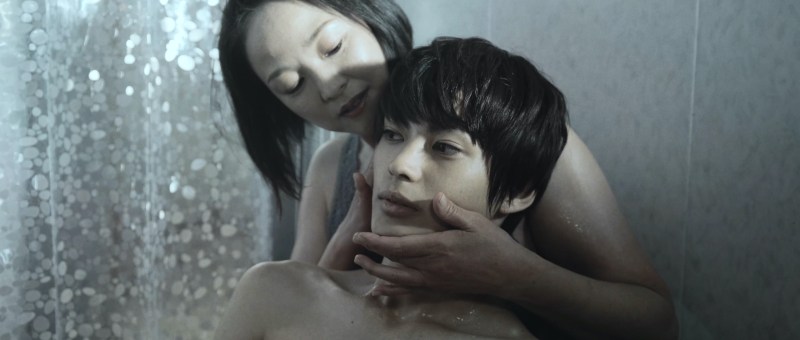
Seduced is what Yuji eventually is in a discomforting mix of the erotic and the maternal. Casting shades of Vertigo, Mrs Ishikawa persuades him to move into her apartment, sleep in Shinpei’s room, and wear his clothes keeping him a virtual prisoner while forcing him into the role of her surrogate son. As we later discover, Yuji was a teenage runaway seemingly abandoned by his mother and craves maternal affection but is ashamed of admitting and fearful of accepting it all of which would make him ideal prey for a woman like Mrs Ishikawa who at all rates seems to need a son to feel herself complete. 

At the shop where she works, Mrs Ishikawa transgressively sniffs and fondles clothes for newborn infants while at one point driven to distraction by a crying child temporarily separated from its mother to the point that she inappropriately picks it up. She appears to be totally consumed by the maternal image and to that extent or else because of some previous trauma becomes extremely hostile when confronted with her sexuality. Her horror on being picked up by a gigalo when expecting to meet a man with info about Shinpei might be understandable, but the glee on her face after slashing a man with a straight razor when he attempted to attack her is less so while Yuji’s eventual confusion about the nature of their connection highlights the discomforting intersection of the maternal and the erotic. 

We have to wonder if Shinpei simply decided to escape the grasp of an overbearing mother who could not bear to accept that her son was now a man, or if Yuji’s suspicions that he may have met a darker fate are more than mere reflections of his own fear of maternal connection. Yet like story of the bluebird of happiness that Shinpei was apparently fond of telling, perhaps each of them for a time found what they needed in the other only to lose it again on identifying the darkness that underlines their relationship. 

Listening to a report on the news, Mrs Ishikawa explains that “ore ore” scams only happen in Japan because nowhere else would a parent drop everything and run cash in hand when told a grownup son is in financial trouble which might in a sense be unfair save for the urgency, similar scams circulate via text and messaging apps in many countries. Yet the scam hints at this same level of disconnection, that the often elderly targets cannot tell that it is not their son or grandson’s voice on the phone nor realise that the information they’re being given does not make sense so estranged have families become. The coronavirus pandemic meanwhile only makes the scammers’ job easier given the loneliness of enforced isolation coupled with generalised masking which decreases the level of intimacy on both sides dehumanising the target while allowing the scammer to further conceal their identity. 

Mrs Ishikawa is in a sense wearing a permanent mask, consumed by the maternal ideal and unable to conceive of herself as anything outside of a mother. There is something unsettling and vampiric in her need as she at one point sucks blood from her finger and wields her razor with dangerous affection when offering Yuji the closest shave he’ll ever have but also a deep sadness that like the bluebird of happiness that which she most wants is always going to fly away from her one way or another. The uncanniness of the desaturated colour palate adds a further note of dread to the noirish tale of a young man seduced by Oedipal desire and drawn as much towards death as love.


Intimate Stranger screened as part of this year’s New York Asian Film Festival.

Original trailer (no subtitles)

Images: © Siglo/Omphalos Pictures

What She Likes (彼女が好きなものは, Shogo Kusano, 2021)

“Distance keeps us safe” according to the hero of Shogo Kusano’s LGBTQ+ teen drama What She Likes (彼女が好きなものは, Kanojo no Sukina Mono wa) ironically commenting on the nature of “social distancing” in the age of corona along with his own sense of alienation. Though in comparison to other recent similarly themed features Kusano’s film may in some senses seem behind the times in its BL filter, it has its heart firmly in the right place as the hero and several of his friends attempt to find a place for themselves within the contemporary society which for various reasons they fear will not accept them. 

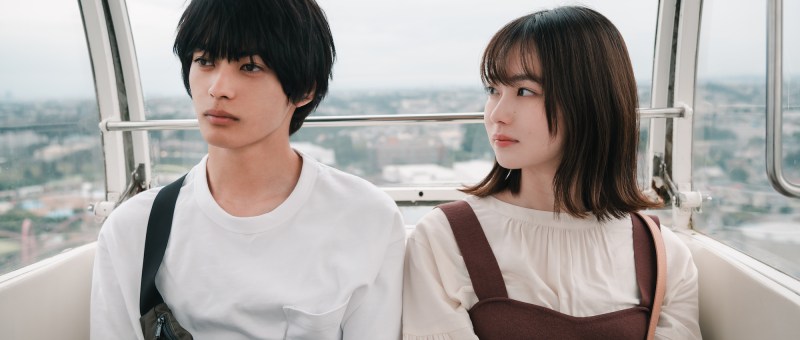
In high schooler Jun’s (Fuju Kamio) case, his sense of alienation is born of his internalised homophobia in which all he wants is to have a conventional heteronormative life within the confines of the traditional family with a wife, children, and grandchildren. Part of this may stem from a secondary source of marginalisation in that he comes from a single parent family which is itself still frowned upon by some as evidenced by the mild discomfort experienced by his new friend Sae (Anna Yamada) when he explains to her why he always eats cafeteria food rather than bringing a homemade bento. Sae’s source of internalised shame, meanwhile, is that she is a fujoshi or obsessive fan of boys love manga which revolve around romances between men but are aimed at an audience of young straight women rather than the LGBTQ+ community. 

Based on the novel by Naoto Asahara, what the film attempts to do is examine the gap between the BL fantasy and the reality of being gay in contemporary Japan. Sae is ashamed of her love of BL and ironically paranoid that Jun will expose her secret after running into him at a bookshop, explaining that she was shunned in middle school when her friends found out she enjoyed reading gay love stories which they viewed as “creepy”. Meanwhile, she has a complicated view of homosexuality off the page which is not always completely supportive. Both she and Jun continue to use a world that many would consider to be a homophobic slur to describe men who love men, Jun at times using the word against himself while simultaneously denying the identity. The first conclusion that he comes to is that Sae does not really like him but only the romanticised gay ideals from the fantasy world of BL which as is later pointed out are often set among a largely gay milieu or even in a world where everyone is gay. 

Sae refers to this space as the BL Planet, but Jun’s desire to go there is also a reflection of his internalised homophobia in that on the BL Planet he’d obviously be just like everyone else. He’s fond of repeating a sentence they learned in science class about a simplified world with zero friction which he later claims to reject unwilling to erase complication for superficial harmony but this is exactly what he’s doing in attempting to erase a part of himself in order to better conform to a heteronormative society. He beats himself up for not being able to have “normal” sex after half-heartedly agreeing to date Sae while engaging in physical intimacy with a much older man who is married with a child. Jun’s lover Makoto (Tsubasa Imai) later explains that his marriage is one of convenience born of the same kind of internalised homophobia experienced by Jun though he obviously loves his wife and child if in a different way while the inappropriateness of his relationship with a teenage boy is never raised by anyone.

Jun is taken to task by a brash classmate, Ono (Ryota Miura), for his irresponsibility in dating Sae knowing that he has no romantic interest in her hinting that perhaps not that much has changed in the last 10 or 15 years both men convincing themselves that heteronormative relationships are the only valid markers of success. Then again when Jun is accidentally outed his classmates are given a crash course in LGBTQ+ relations most of them expressing support and the conviction that society needs to become more accepting of diversity though it has to be said they were less than understanding before, particularly the boys who found Jun’s presence a challenge to their masculinity. 

Teenage boys they all are, but even infinitely sympathetic straight best friend Ryohei (Oshiro Maeda) engages in crude, misogynistic banter with their classmates forcing Jun to play along pretending to be a connoisseur of heterosexual pornography. Probably some or even most of the other boys are also lying in an act of performative masculinity but the pretence only adds to Jun’s internalised sense of otherness and belief that he is in some way broken continually asking not only why he was born like this but why anyone is. After receiving an alarming message from an online mentor, he is pushed towards a dark place in becoming convinced that the world has no place for him only to belatedly come to an acceptance of his identity as mediated through Sae’s concurrent epiphanies realising that without friction there is no progress and discovering liberation in authenticity. Despite a few mixed messages and a bizarre subplot about a hairdresser who is not himself gay but nevertheless obsessed with gay people to the extent that he thinks he can spot them in public places through codified signs and the look in their eyes, Kusano’s teen coming-of-age drama has its heart in the right place in its gentle plea for a more inclusive, joyfully diverse society. 


What She Likes screens at Genesis Cinema on 28th May as part of this year’s Queer East.

Original trailer (English subtitles)