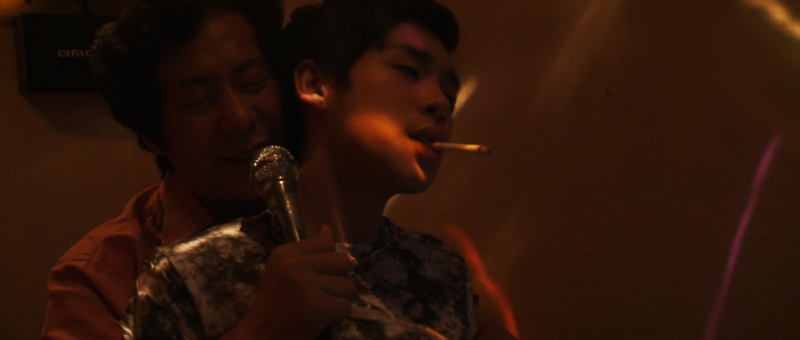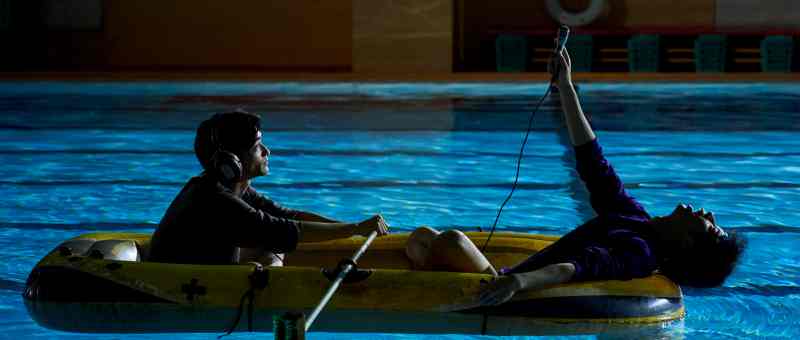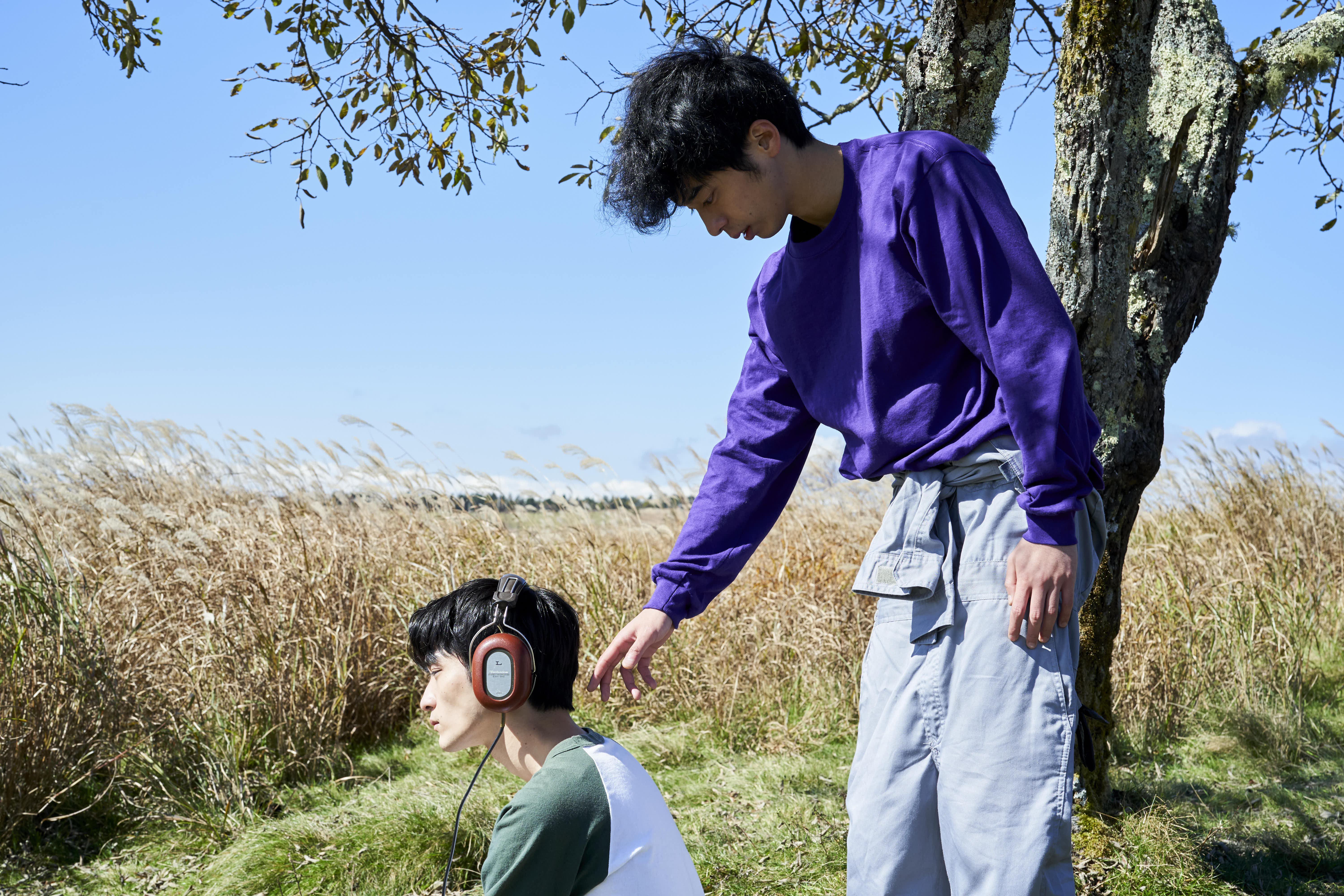
The Cornered Mouse Dreams of Cheese (窮鼠はチーズの夢を見る, Isao Yukisada, 2020)

It’s quite a potent image somehow, a mouse caught in a trap unable to reach out and touch the cheese they’ve risked their life for yet continuing to dream of it as if nothing else really existed. Perhaps love is much the same, at least according to a young woman who warns against falling in love too deeply worrying that in the end you won’t be able to keep it together and so will fall apart. Adapted from a popular Boys Love manga by Setona Mizushiro, Isao Yukisada’s The Cornered Mouse Dreams of Cheese (窮鼠はチーズの夢を見る, Kyuso Wa Chizu No Yume Wo Miru) is in someways in dialogue with his earlier tale of triangulated love between two women Luxurious Bone, if sharing some of that film’s perhaps outdated attitudes towards sexuality. 

The titular mouse is office worker Kyoichi (Tadayoshi Ohkura) who is halfheartedly having an affair with a colleague seemingly just because he can. Unbeknownst to him, his wife has hired a private detective who just happens to be an old friend from university, Wataru (Ryo Narita). Wataru warns him that he’s got pictures of him and his mistress but agrees not to tell his wife, if Kyoichi agrees to accompany him to a hotel for some low level intimacy. The abruptness of the overture seems to hint that the two men had some kind of history in university but this appears not to be the case and Kyoichi continues to struggle with his sexuality partly it seems out of a degree of self-loathing that convinces him he’s not the sort of person anyone should love.

In Luxurious Bone, the problem had been that the two women could not quite accept the validity of their desire for each other and instead ended up having vicarious sex with the same guy. Something similar occurs between Kyoichi and Wataru each in their own way unable to accept the way they feel. Kyoichi repeatedly states that he doesn’t want to cause someone else pain but in fact hurts everyone around him because of his own inability to reckon with his feelings. He continues to womanise, but eventually asks Wataru to move into the grey industrial bachelor pad he gets when his marriage breaks down while keeping him at arm’s length. Wataru is jealous in a direct sense, resenting Kyoichi’s various girlfriends, but also on deeper level lacking faith in his homosexuality or at least ability to accept it fearing he will always in the end choose to be with a woman. 

Both men are imprisoned by an internalised homophobia, Kyoichi most obviously in rejecting his desire for Wataru. “A straight guy can’t handle it” he tells him in an ironic choice of words, earlier having told him that guys like him belonged “in another world”. The film seems to present Kyoichi’s sexuality as a binary choice, men or women, precluding the idea that he might simply be bisexual while inviting the inference that his womanising is an attempt to mask his latent homosexuality and that he is in fact living a lie in betrayal of himself in denying his desire for Wataru. But then Wataru is consumed by insecurity, as if on some level believing he is inherently inferior to a woman and that Kyoichi will always “choose” to be straight while simultaneously certain that he does in fact return his feelings. He tells him that his problem is that he passively accepts love from others but in the end doesn’t trust it and continues to look for it in the next person who shows any interest in him, but it seems Wataru doesn’t have much faith in love either pulling away just as Kyoichi draws closer and unable to accept the validity of his love for him. 

The film maintains some of the more frustrating aspects of BL literature in that it never really considers why Kyoichi rejects his same sex desire nor does it address what the potential complications of his life maybe if he were fully to accept his sexuality and attempt to live openly with Wataru. On the other hand, it perhaps lessons the impact of the darker elements of the interplay between the two men in which Wataru effectively stalks Kyoichi and then blackmails and bullies him into sex which the film justifies on the basis that Kyoichi must on some level want to be liberated from his repressed desire while Kyoichi in turn manipulates and tortures Wataru through his womanising and reluctance to enter a full sexual relationship even while living together. The film’s ambiguous closing scene in which Kyoichi sits on Wataru’s stool and places his yellow ashtray, looking oddly like a wedge of cheese, on his grey coffee table the only splash of colour in his exquisitely decorated yet desolate grey room may also uncomfortably hint that their love is always impossible because it is a love between two men rather than accepting that the only barriers to it lie in internalised homophobia and emotional vulnerability. Even so it is a fairly touching love story of a man learning to accept his sexuality even if in the end it leads to a re-imprisonment rather than a liberation. 


Original trailer (English subtitles)
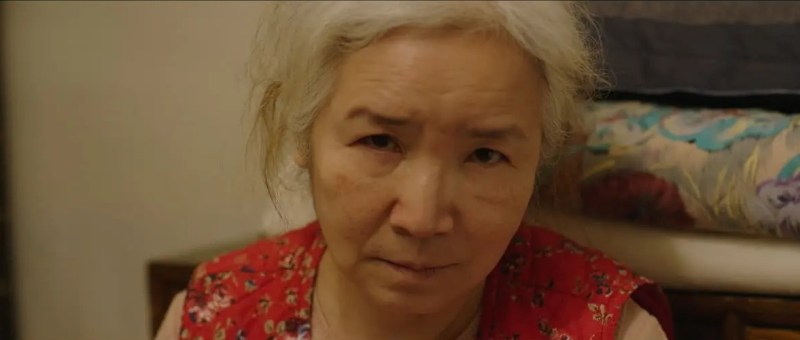
Stateless Things (줄탁동시, Kim Kyung-Mook, 2011)

“We looked everywhere for a place for us to stay, but we could not find it anywhere” one of the twin heroes of Kim Kyung-mook’s indie drama Stateless Things (줄탁동시, Jooltak Dongshi) confesses. As the title suggests, Kim’s eventually surrealist drama follows those who no longer have a home and are instead condemned to wander the margins of an unforgiving city. Finding only loneliness and exploitation they long for an escape and perhaps find one if only in a moment of eclipse. 

Shooting in a more naturalistic, documentary style, Kim first focusses on the figure of Jun (Paul Lee), a young North Korean refugee who lost his mother in the crossing and his father to another woman in Busan. He works in a petrol station but is treated with disdain by his boss who has his eye on his female colleague, Soon-hee (Kim Sae-Byuk), who is a member of the Korean minority in China where most of her family reside. Though originally hostile towards each other, each wary of their mutual isolation and concurrent vulnerability, the pair later bond in a shared resentment of their boss who exploits Jun physically for his labour and seeks to exploit Soon-hee sexually. After each saving the other from the nefarious boss, the pair have no choice but to go on the run taking in a series of tourist spots while looking for another place to settle. 

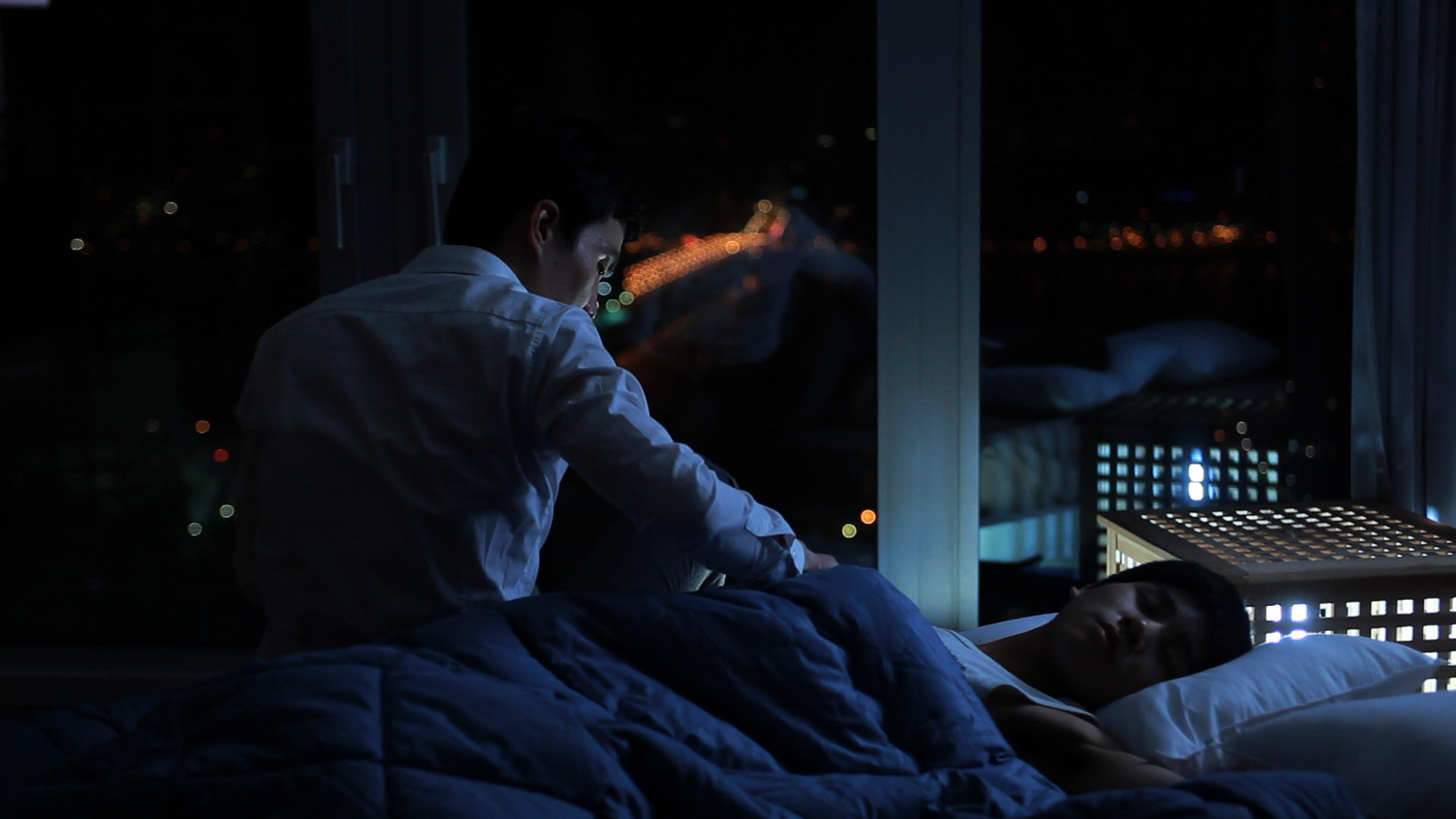
Meanwhile, across town, a young gay man, Hyun (Yeom Hyun-Joon), is a virtual prisoner in the home of his wealthy, married and closeted lover. He looks out across the midnight city and dances sadly alone in a luxury apartment in the sky while occasionally venturing out to meet other men, mostly older, who similarly only intend to exploit his body. “You have nowhere to go.” the exasperated Sung-woo/Sung-hoon (Lim Hyung-Guk) insists, thrown into jealous anxiety on visiting the flat and finding Hyun absent, yet he cannot really offer him a “home” and is all too aware of the transactional nature of their relationship. Though Hyun is also in a sense “stateless”, he has a power over Sung-woo and is able to wield his youth and beauty like a weapon if one he may not fully be able to control. In any case, he too is excluded from the mainstream society by virtue of his sexuality and socio-economic background. 

When Soon-hee and Jun visit a temple, he remarks on the incongruity of seeing a painting that features both a sun and a moon. She explains a folktale to him in which sun and moon are embodiments of siblings who climbed a rope into the sky to escape a hungry tiger. In his diary, Hyun also envisages a pair of twins one opening a door with his right hand as the other closes it with his left. In the surrealist sequence which closes the film, after a title card that appears 90 minutes in, the two men blur into one another as if they shared the same soul in an almost literal eclipse of the self. Kim nevertheless characterises them as sun and moon who cannot ordinarily share the same space. Jun occupies a world of street level sunniness until the light finally begins to dim leaving him alone in a dusky, rain-soaked city. Hyun meanwhile lives by night in his high rise apartment, a prisoner of luxury who flirts with danger for a sense of escape. 

Then again we might ask if Jun and Hyun are two sides of one whole, a sun and moon protecting the king who finds himself an exile. Kim shifts to scenes of emptiness, rooms without presence and streets without life as if the two men were ghosts of themselves hovering above a rootless Seoul, the sense of eeriness only deepened by Kim’s lengthy takes as he follows Jun walking a lonely path towards nowhere in particular because in the end he too has nowhere to go. Departing from the realism with which the film opened, the final sequence gives way to a kind of rebirth if only one of wandering that leaves its heroes at the mercy of a society continually unwilling to recognise their personhood. 


Stateless Things screened as part of this year’s Queer East .

Trailer (English subtitles)

King and the Clown (왕의 남자, Lee Joon-ik, 2005)

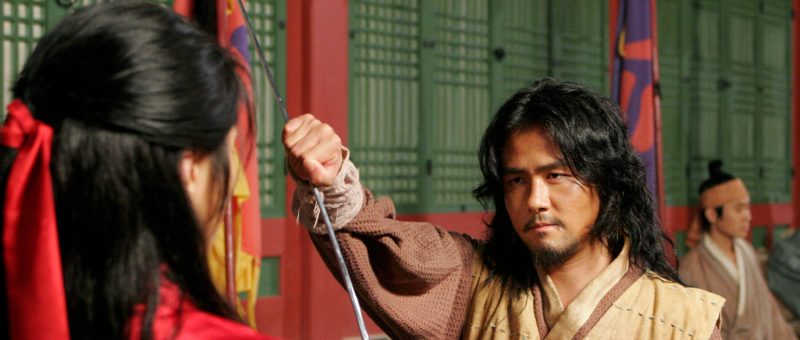
The feudal order conspires against everyone from minstrel to king in Lee Joon-ik’s Shakespearean historical epic, King and the Clown (왕의 남자, Wang-ui Namja). The Korean title might translate to the equally ambiguous “The King’s Man”, but in any case invites the question of who it is that is the “king” and who the “clown” though in practice it might not matter because their roles are to a degree interchangeable. Nevertheless, a minstrel’s attempt to transgress class boundaries eventually leads to tragedy but also perhaps defiance in his seizing of the little freedom that is given to him. 

The oppressiveness of the system is emphasised in the opening text which explains the historical background and reveals that the king of this story was considered a tyrant, though also thought to be sensitive and intelligent, while permanently damaged by the early death of his mother who was forced to take her own life because of machinations in the court. The King (Jung Jin-young) himself rails at the system complaining that he has no real power and is largely unable to overrule the advice of his courtiers who remain loyal to his late father and simultaneously force him to obey the rule of a man who is already dead. In this internecine feudal society, not even the king is free. 

This might in a sense explain his tyranny, borne both of an anxiety over the precarity of his rule (the text also reveals that he was deposed by his courtiers shortly after the film concludes) and is otherwise engaged in a kind of frustrated boundary pushing. At heart, he is a wounded and petulant child. His eventual decision to participate in the clown show put on by Jang-saeng (Kam Woo-sung) and his troupe of jesters hints at his mental instability and growing inability to discern reality from fantasy, or to a point perhaps there is no true “reality” for a king and so the distinction no longer matters as there is no real difference for him between a man “dying” in a play and dying for real. 

For Jang-saeng, however, there is a difference. He and his brother-in-arms Gong-gil (Lee Joon-gi) are technically on the run after Gong-gil ended up killing their manager to defend Jang-saeng who had tried to protect him from exploitation in being pimped out as a male sex worker to earn extra money for the company. It’s Jang-saeng who hits on the lucrative opportunities of satire after teaming up with three other minstrels in the capital and hearing tales of the King’s scandalous sex life. This obviously gets him into hot water with the authorities, though Jang-saeng talks himself out of trouble by convincing conflicted courtier Cheo-seon (Jang Hang-seon) to allow them to perform before the King who actively enjoys being mocked and brings the clowns into the palace to entertain him at his pleasure causing a further rift with his conservative courtiers who do not enjoy having their dirty dealings exposed through bawdy street theatre. 

The repeated visual motif of the tightrope emphasises the fine line Jang-saeng is walking as a commoner in the court. Cheo-seon had hoped their performance would show the King the extent of the corruption among his courtiers, but the results leave Jang-seong conflicted as he sees men die as a result of his comedy while failing in his primary goal of protecting Gong-gil from exploitation as he quickly becomes a favourite of the King again endangering their position as they become a target for the King’s mistress (Kang Sung-yeon), a former sex worker who had like them used her natural gifts to transgress the boundaries of class. Cheo-seon complains that it’s the King’s “lust for a boy” which has corrupted the court, while Jang-seong’s resentment may otherwise be unwarranted as Gong-gil appears to like and pity the King and may have come to his own decision about advancing his fortunes despite Jang-seong’s assertion that there are some things that should not be sold.  

But as Jang-seong comes to realise, all around the tightrope is an abyss. “Never knew a fool who knew his place” Jang-seong wrote in one of his plays and that is in someways his tragedy, that he dared to challenge the social order but in the end could not overcome it and neither could the King. Even so he may find a kind of freedom in seeking escape from a cruel and oppressive society in the only way that is available to him. “The world’s but a stage. Kingly is he who struts for a while, then exits in style” Jang-seong exclaims, a “sightless fool” who finally knows where he stands.


King and the Clown screened as part of this year’s Queer East .

Trailer (English subtitles)

About Us But Not About Us (Jun Robles Lana, 2022)

A lunchtime conversation between two men provokes a series of confrontations in Jun Robles Lana’s pressing psychological drama About Us But Not About Us. There is indeed more going on than it seems, prompting a number of questions about who it is that’s really in control along with the subjective quality of memory and personal myth making. After all as the younger of the men later says, nothing compares to our fictional counterparts both those we create for ourselves and those born of the projections of of others. 

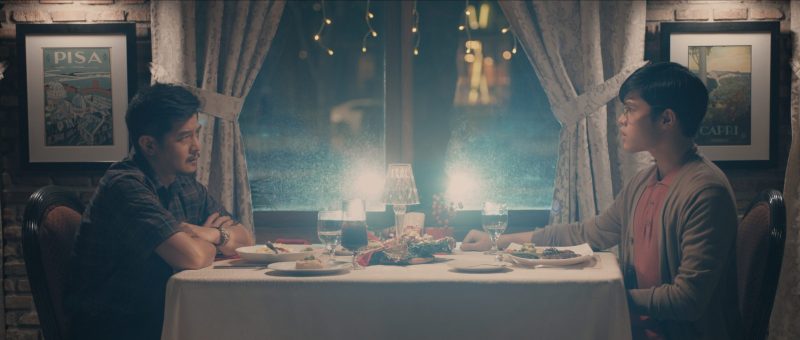
40-year-old professor Eric (Romnick Sarmenta) takes a look at the bags under his eyes in the mirror of his classic Beetle as he arrives at a restaurant for a lunch meeting with a student and gently applies moisturiser to his eyes before heading inside. It’s a small moment that hints at his insecurity about his age and also that he may have more interest in the student, Lance (Elijah Canlas), than he later claims. Lance is already waiting, perky and preppy in his neutral beige outfit and non-threatening haircut. The purpose of the meeting seems to be so that Lance can return the keys to Eric’s spare flat where he had being staying to escape an abusive stepfather. Lance no longer feels comfortable being there, in part because he’s afraid false rumours that there may be something inappropriate going on between them could cause problems for them both at the university, but also because he worries that his presence may have contributed to the suicide of Eric’s late partner Marcus, a leading light of English-language literature in the Philippines. 

Marcus had known about Eric’s interest in Lance but warned him about becoming too involved seeing as he is a teacher and Lance his student not to mention that he is also 20 years older and even if he’s done nothing wrong others may read his well-meaning attempts to help as “inappropriate”. But then we start to wonder, is Lance really as helpless as he claims to be? It seems strange that a 22-year-old man would need this kind of rescuing, perhaps as some have suggested he’s constructed an image of himself as vulnerable so that Eric will feel compelled to help him. Despite his seeming meekness, Lance does appear to be ambitious yet insecure smarting from an offhand comment of Marcus’ that he may in the end lack the necessary talent to be accounted a writer. 

In a theatrical conceit, Lana realises the projected images each has of the other to segue into recreations of previous meetings in which either Eric or Lance plays the role of the absent Marcus whose views are recounted only in the book he had written shortly before he died, his first in Filipino, or filtered through the memories and intentions of the other two men who of course may not be entirely honest in their recollections. Eric insists the problems that may or may not have existed between himself and Marcus were not not really “about” Lance. He claims to have been unhappy and emotionally neglected for years if also still in love, while later conceding that the book is both about and not about them in its retelling of a “trashy” love triangle as an intensely literary potboiler. 

That the book is in Filipino rather than English may hint at a further desire for “authenticity”, as may Lance’s desire to transfer from the English department to that in his native language. Yet neither man is really being “authentic”, not entirely able to reclaim themselves from the image projected onto them by others. The battle for control shifts uneasily between them, Eric assuming he has the upper hand by virtue of his age and position all while Lance may be cynically manipulating him, playing on his latent desire while fluffing his ego in appearing as a lost young man in need of help and guidance. Even so, a possibly imagined conversation with Marcus later suggests that Eric enjoys the subversion and is at heart a masochist who actively seeks to be controlled, perhaps he knows what the game is after all. Lana ends on a note of ambiguity in which it seems there is a choice to be made between sustaining a fiction and rejecting it but then again “sometimes feelings are more important than the truth.”


About Us But Not About Us screened as part of this year’s Queer East .

Original trailer (English subtitles)

Anemone: A Fairy Tale for No Kids (아네모네, Jung Ha-yong, 2021)

“Betrayal is betrayal” according to a jaded grandmother (Park Hye-jin) reading a children’s story that’s clearly not for children to a curious little girl in Jung Ha-yong’s extremely dark comedy, Anemone: A Fairytale for No Kids (아네모네, Anemone). Later someone asks what the difference is between treachery and betrayal before conceding there might not be any, but whatever betrayal is there’s certainly a lot of it going around as a winning lottery ticket causes discord between an otherwise unhappy couple, their friends, relatives, and just about everyone else. 

As the grandmother relates reading to the little girl, Yongja is a wife and mother of one who once had an illustrious career as a martial artist and is now an aspiring children’s author. Her husband, meanwhile, is a no-good layabout and the family is in constant financial difficulty dependent on Yongja’s part-time job in the kitchen of a bar. When she has a dream about winning lottery numbers, she writes them down and tells her husband to buy a ticket before going to work. Hearing the draw on the radio, she realises she’s won and abruptly walks out on her job getting into a physical altercation with her boss as she goes, but on arriving home her husband seems confused. Eventually he admits he forgot all about buying a ticket but Yongja doesn’t believe him and is convinced that he’s stashed it somewhere and plans to keep the money for himself.  

That would obviously be quite a big betrayal, but maybe not all that difficult to understand given the relationship dynamics in play between the obviously unhappy couple. Sending their daughter to her grandmother’s, Yongja goes to great lengths torturing her husband, making him wear a nappy and trying him to a rocking horse, in an effort to get him to reveal what he’s done with the ticket only to threaten murder suicide when he continues to say he can’t give her what he never bought. Just as we’re starting to feel sorry for him, and to be honest the constant “did you or did you not buy the ticket” conversation goes on for an incredibly long time, the husband manages to escape, expanding the search for the ticket across the wider area while Yongja ropes in her gangster brother and his dodgy friend to come to her aid. 

The ticket appears to have exposed the cracks within the family unit which are largely attributed somewhat uncomfortably to a misalignment of gender roles in which the husband is feckless and useless while Yongja essentially bullies him and is consumed by a sense of resentment that she is forced to shoulder the financial burden of supporting the family. The words the grandma reads from the picture book are often at odds with the reality, presenting Yongja as having achieved success with her children’s books but showing her dismissed by an editor who ironically points out the story’s not suitable for children. The grandmother further explains that poor people buy lottery tickets because it’s their one source of hope for a better life, no longer believing they have any possibility of improving their circumstances independently, which is perhaps the case for Yongja who hopes the money can help them fix their “train wreck of a family” for a happier future. 

Then again it may be the ticket that betrays them in proving so elusive. Because of the ticket, Yongja is forced to realise that she doesn’t trust her husband and that she is right not to because he is indeed keeping something from her. Other people she can’t trust include her brother’s shady friend while he is also a liability preventing her from calling the police because there’s a warrant out on his name. The problem is that everyone wants the ticket from themselves, except perhaps for Yongja who had obviously intended to use the money for the family as a whole though it seems unlikely that a simple injection of cash could fix these toxic relationships or restore their happy home if that is ever what it was. Fairy tales are often dark and this is no exception though the reason a child shouldn’t read it is not because it’s crude or violent but simply because it would crush their tiny spirit with the overwhelming disappointment of life. 


Anemone: A Fairy Tale for No Kids screened as part of the 2022 Yubari International Fantastic Film Festival.

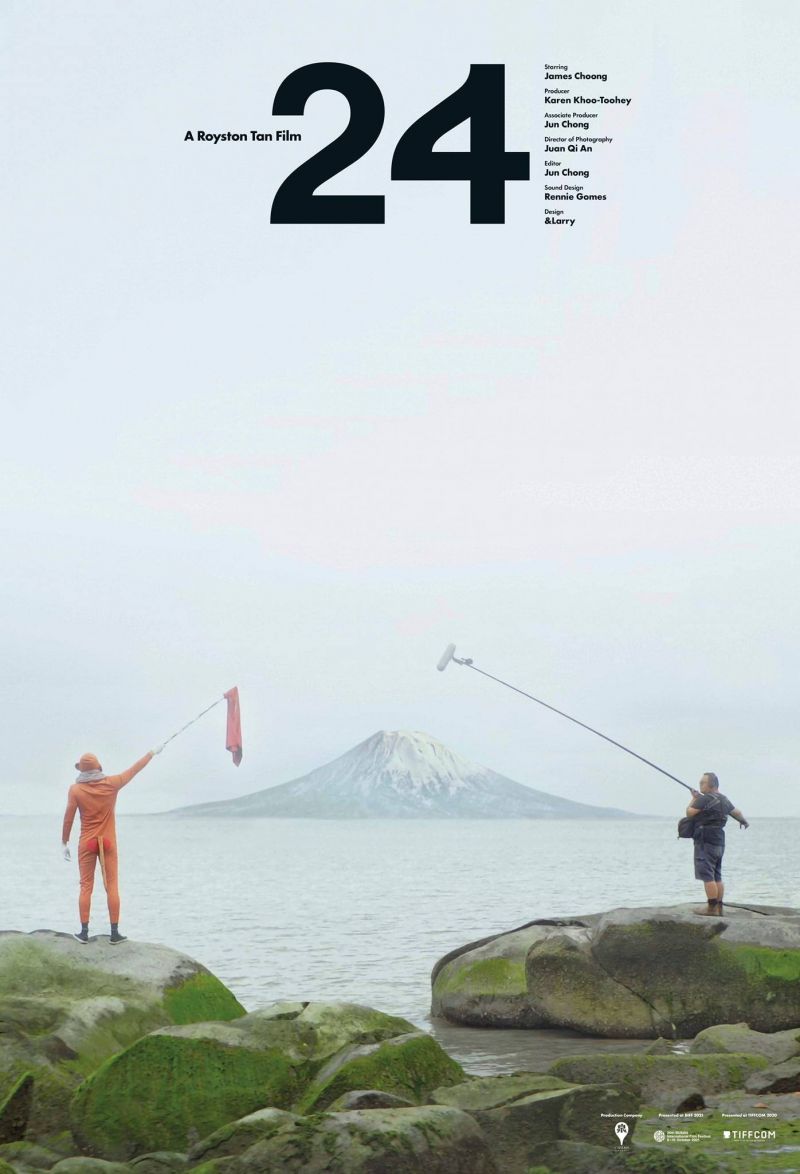
24 (Royston Tan, 2021)

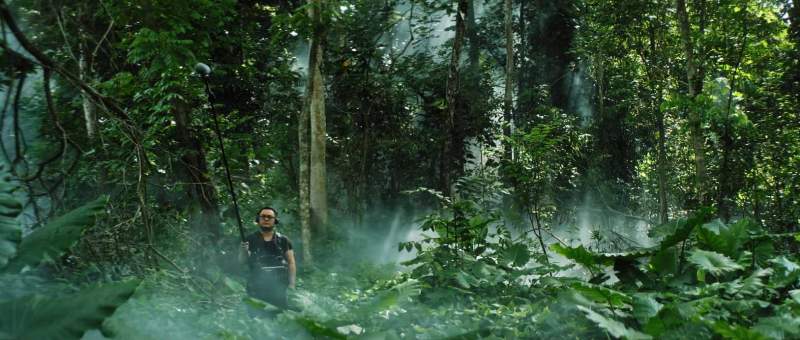
A recently deceased boom operator (James Choong) cleaves himself away from the world through sound in Roystan Tan’s strangely moving meditation on mortality, 24. There are of course 24 frames to a second, but there are also 24 hours in a day and a continuous sequence of days that add up to a life much in the same way expanding sequences of 24 frames result in a film. Divided into 24 vignettes most of which find the sound man invisible, darting about capturing diegetic sound of people discussing life and death or else of nature as he takes stock of the world he’s leaving, the film presents a composite mosaic of human existence. “But now we live in separate worlds” a prince from an opera sadly laments as much like the sound man he prepares for eternal exile, vowing to return even as his bereaved family vow that “stories of his life will be remembered”.

In any case, the first place we find the sound man is on the set of a gay porn film, an act of minor provocation against the conservative atmosphere of the Singaporean film industry. He then appears on a rooftop overlooking the city and on to the middle of a verdant forest where he’s later enveloped in mist. His passage seems random and etherial but also with some kind of hidden direction. He picks up fights behind the walls that hint at societal discord while offering silent comfort to those who appear to be in some kind of despair, a young woman performing an emotional dubbing script pleading with her elderly father to remember her much as the sound man hopes someone will remember him. 

An affable cemetery caretaker advises him to visit his family, for children soon grow up while two women look for clothes for dead, offerings they can burn to make the afterlife a little more bearable. The sound man records a traditional Chinese opera about a family grieving a son perhaps still unprepared to confront his own before witnessing a poignant scene of a little boy calling out for his father as his distraught mother bathes him. Only the child, the grave digger, and later a mortician to whom the sound man makes his only sound seem to be able to see him. But then isn’t the sound man always invisible to us? His boom entering the frame is greeted with embarrassment, we aren’t supposed to see him but we know he’s there. Without him this world would be silent. His boom brings sound into focus and allows those whose voices are often ignored to be heard. A bemused expression on his face, the sound man rides in a truck full of migrant workers who are also now in a separate world from their families vowing one day to return. 

Then again he listens to a trio of men bicker about the rising cost of weddings and childbirth lamenting that everything costs money even life and death, as it seems. He watches as his family prepare to burn offerings for him, arguing with each other as they lay them out, as if they had all gone on a picnic to celebrate a birthday rather than seeking to mark the passing of a man who died too young. Standing in the corner at his own funeral he shakes while silently sobbing as friends and relatives file past his grieving wife. Meanwhile, his former director visits a taoist priest to find out if he’s doing OK in the afterlife, regretting that he never got to invite him to his new house and wondering if he might have visited in the form of a butterfly who flew in shortly after he arrived. The priest rattles his tools and speaks in an incomprehensible language translated by his assistant, the irony being that the sound man is right there only he can’t see him. On his travels the sound man encounters fear and loneliness and pain, but also kindness and tranquility and knows that he was loved and that there are those who will remember him who we never see. A poignant voyage through a life in 24 frames, Royston Tan’s haunting drama casts its deadpan hero on a wandering journey towards an inevitable conclusion leaving him an exile from the world of the living but also an observer of everything it means to be alive in all of its noisy extremities.


24 screened as part of this year’s Five Flavours Film Festival and is available to stream in Poland until 4th December.

Original trailer (dialogue free)

#LookAtMe (Ken Kwek, 2022)

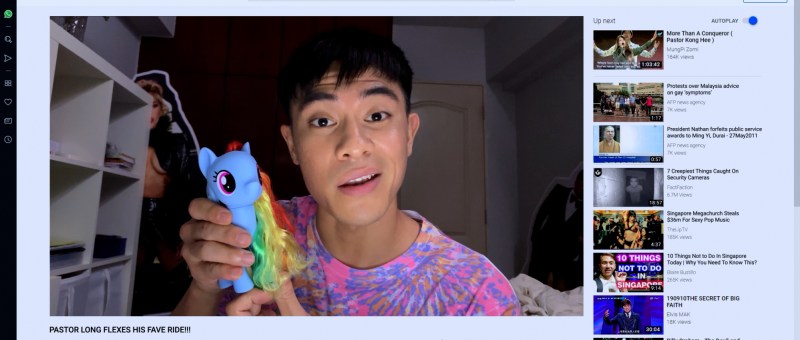
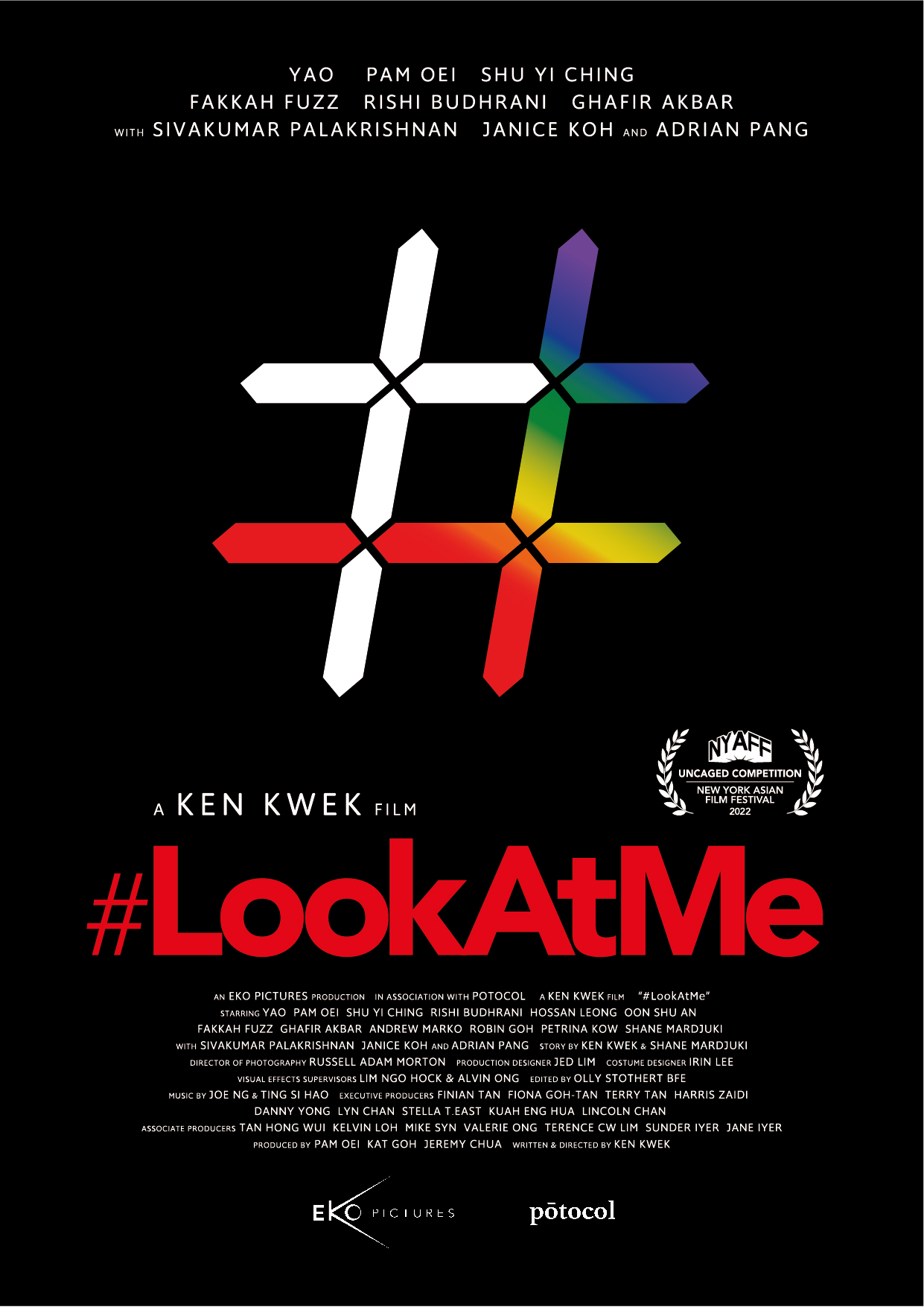
The unequal authoritarianism of contemporary Singapore conspires against an aspiring YouTuber in Ken Kwek’s surreal drama #LookatMe. Opening with a title card explaining that 2015 prominent activists have jailed for breaking arbitrary laws relating to obscenity and illegal assembly, the film throws its progressive hero into a kafkaesque quest for justice after he’s arrested for publishing a video mocking a homophobic religious figure simultaneously asking why it’s alright for a pastor to spout hate speech but illegal to challenge him and pitting the hero’s desire for fame against that for genuine social change. 

Sean (Yao) does indeed want fame, running an unsuccessful YouTube channel while alternating between mocking more successful stars and emulating them by playing cruel pranks on his understanding mother in the hope of going viral. His life changes when his girlfriend Mia (Shu Yi Ching), whose parents are religious, invites him, and his gay twin brother Ricky (also Yao), to attend an evening service at her church in an attempt to curry favour. The church turns out to be of the evangelical variety, opening with a Christian rock performance before showman pastor Josiah (Adrian Pang) arrives on stage and embarks on a homophobic rant insisting that he has no problem with gay people but is dead against them overturning Singapore’s colonial era law criminalising homosexual sex. Ricky is obviously upset, unsure why Mia whom he assumed to be progressive would have invited him to such an event, and leaves abruptly upsetting Mia’s father in the process. 

Sean is so outraged by the whole thing that after noticing that Josiah gets a lot more hits than he does with his hate speech, he makes a video mocking his messaging and satirically accusing him of bestiality which eventually goes viral but also gets him arrested after the church’s many followers ring the local police en masse. Sean can’t understand why he’s in trouble with the law for publicly insulting a religious leader while Pastor Josiah is seemingly free to spread dangerous and hateful ideas with no fear of challenge or dissent. Banned from social media, he’s picked up again for making an apology video and is then eventually sent to prison for 18 months while facing a defamation trial in his absence. 

Even his new cellmates can’t quite believe he’s been put away for something as ridiculous as a YouTube video yet his plight exemplifies the authoritarianism of the contemporary society in which there is no guarantee of free speech nor safe path to protesting injustice. Ricky is later arrested too for “illegal assembly” when he and three friends hold up a banner protesting the case because four people outside together is apparently prohibited by law. As he points out, how are you supposed to hold up a giant banner with only three people? Sean tried to stand up for Ricky, and Ricky does the same for Sean deciding to come completely out of the closet as an LGBTQ+ activist with the support of their mother Nancy (Pam Oei) as they fight for justice but then faces random violence on the streets from homophobic vigilantes while she is later fired from the primary school where she works after refusing to sign an apology or renounce her political views. 

The film takes aim at social hypocrisy as Sean is sexually abused by the prison warden while inside, and the pastor seeks to preserve his business interests calmly telling Nancy that he bears her no grudge but won’t drop his defamation suit because he has to protect the Church from similar forms of attack. He says this while lounging around on his yacht while servants bring him drinks, clearly incredibly wealthy from the proceeds of his religious life which whichever way you look at it is not a good look. In any case the film’s ironic conclusion which vindicates Sean and the place of video in social protest cannot but seem a little flippant in its implications which reduce the pastor to the position of hypocritical villain while Ricky’s conversion to Christianity feels like too much of a concession even if making clear that it is not religiosity that is being demonised only those like Josiah who would seek to profit from hate and repression. Nevertheless, Kwek presents an alternately heartwarming and harrowing vision of a close family torn apart by outdated and irrational laws and in the end left only with violence as a potential motivator for change. 


#LookAtMe screened as part of this year’s New York Asian Film Festival.

NYAFF trailer (English subtitles)
Backlight (逆光, Ren Sudo, 2021)

©2021 『逆光』 FILM
©2021 『逆光』 FILM

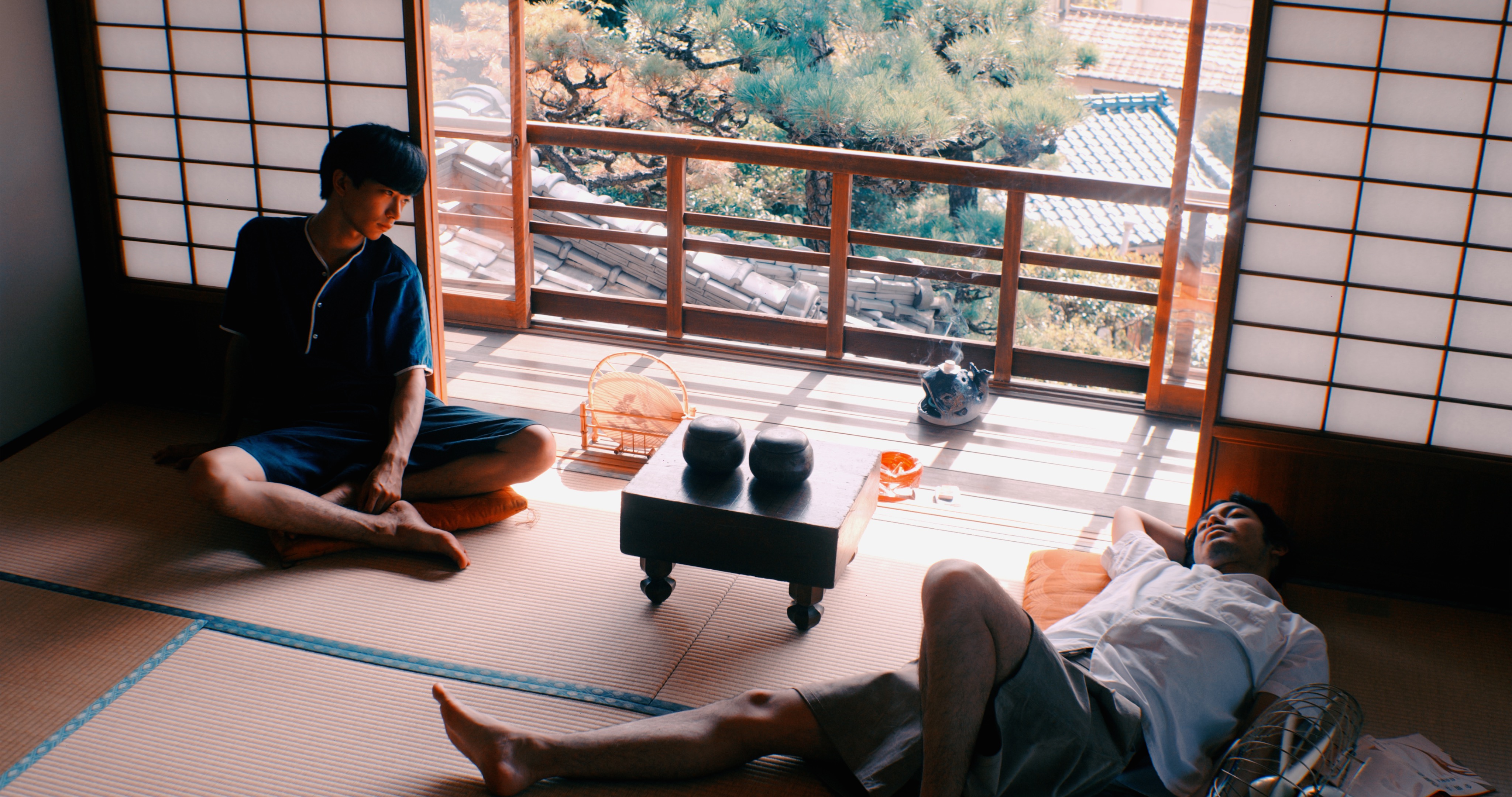
An aloof young man brings a friend back from college but struggles to convey to him his true feelings in the Onomichi of the 1970s in actor Ren Sudo’s directorial debut, Backlight (逆光, Gyakko). This may partly be because he himself is uncomfortable in his childhood home while the object of his affection seemingly takes to it though as someone else later hints perhaps in the end he is only toying with him as a pleasant summer diversion that will eventually draw to a close. 

Sudo opens the film with a series of black and white slides of Onomichi in the 70s accompanied by a cheerful voiceover in opposition to the film’s subsequent gloominess describing the area for tourists and in particular its cable car. Finally the slides give way to clumsy shots of Yoshioka (Haya Nakazaki), university friend of Akira (Ren Sudo), and a copy of Yukio Mishima’s College of Unchasteness. Akira has invited Yoshioka to stay with him at his family home in Onomichi for a week over the summer, but it’s fairly odd behaviour to invite someone somewhere and then spend the whole time telling them how awful it is and that you can’t wait to leave. 

Evidently the son of wealthy parents who for whatever reason are not around, Akira is a fairly unsympathetic figure who seems to have been harbouring resentment towards Onomichi ever since his family moved to the area from Tokyo when he as a child. He views it as dull and backward and seems to have only contempt for those who live there such as childhood friend Fumie (Eriko Tomiyama) whom he blanks in the street as like the cable cars of the opening he passes her in the company of Yoshioka. Realising he is back, she arrives at his home to return some books he’d lent her but even on encountering her there Akira treats Fumie disdainfully and is quite embarrassingly rude in front of his new friend explaining that he lent the books so that a simple country girl like her wouldn’t fall behind the times while contemptuously assuming that she won’t actually have read them. 

These misogynistic attitudes seem prevalent in the local community which is in any case unusually obsessed with Mishima. Another local intellectual describes College of Unchasteness, which Akira has not actually read, as “silly prose for women” a phrase Akira later echoes, while making a cynical comment as to its content suggesting that a woman’s ultimate pleasure lies in being murdered by a man she may have been manipulating. Unable to voice their desires directly there may be a degree of manipulation going on, Akira silently courting Yoshioka who may indeed be toying with him in the way that he may have been toying with Fumie who has since come to know of his sexuality. In any case he seems to be uncertain of Yoshioka’s receptiveness, crassly suggesting Fumie invite another girl, Miko (Akira Kikoshi), who seems strange and otherworldly, with the rationale that it would be a problem if she were too pretty and by implication insulting Fumie too in the process. Miko meanwhile is evidently upset by the lewd conversation while later prompted to leave the party after a political debate breaks out about nuclear arms. Perhaps it’s not surprising for a party that seems to be populated by Mishima devotees but even if their support for re-armament is a facet of their anti-Americanism it is curiously at odds with the times again upsetting Miko whose mother is a survivor of the atomic bomb having lost all her family. 

Even so the closing scenes turn back to Mishima and doomed romance in a description of love as a political act in which love that does not transgress, is not considered shameful or taboo, is not really love at all. Akira may have found the courage to overcome his fear of rejection, but it seems has not been altogether successful in love. Playing with the light, the brightness of the beaches, murkiness of the room occupied by Yoshioka, and that of the fire ominously reflected on Akira’s face, Sudo adds a note of wistful nostalgia expressed in the song sung by Miko that perhaps presents this “heartbreaking” summer with a sentimentality it does not quite appear to have even as Akira seems to come to an accommodation with himself, Fumie, and Onomichi amid the confusing summer heat. 


Backlight streamed as part of this year’s Nippon Connection.

Original trailer (no subtitles)

Images: ©2021 『逆光』 FILM

Let Me Hear It Barefoot (裸足で鳴らしてみせろ, Riho Kudo, 2021)

“I can touch it if I reach out” one of the heroes of Riho Kudo’s second feature Let Me Hear It Barefoot (裸足で鳴らしてみせろ, Hadashi de Narashite Misero) claims as he narrates a fantasy trip to Iguazu Falls, but his tragedy is that he can not reach out and neither can his friend or really anyone in this suffocating enclave of moribund small-town Japan. As in her debut Orphan’s Blues, Kudo finds her heroes trapped with a space of artificial nostalgia and yearning for escape while in constant dialogue with Wong Kar-Wai’s melancholy romance Happy Together as the two young men process their frustrated desires not only for each other but for an end to the loneliness that defines each of their lives. 

Naomi (Shion Sasaki) is lonely in part because he feels trapped. Having dropped out of university he’s working in his father’s (Masahiro Komoto) recycling depot while his best friend and high school sweetheart Sakuko is about to move to Canada. He first catches sight of the enigmatic Maki (Tamari Suwa) at the local pool after trying to learn to swim to effect change in his life and later bonds with him along with a mysterious old woman, Midori (Jun Fubuki), who has lost her sight and claims to have travelled the world in her youth. What the boys later discover is that Midori had not been entirely honest in that her travels had been vicarious, related to her by a third party long since departed whom she did not want to forget. Following a health scare she tries to give Maki her savings telling him to travel the world in her stead but he soon discovers that she was sadly mistaken about amount she’d put away. Lacking the heart to tell her, Maki decides to use an old tape recorder to fake trips to famous places ironically mirroring her final confession that her friend had never travelled either but made all the stories up for her benefit. 

The tape recorder conceit of course directly recalls Happy Together as does the final destination of the Iguazu Falls while hinting at the unattainable freedom each of the young men yearns for as mediated by their desire to travel the world. “We can go anytime” Maki tries to convince Naomi in his mounting desperation though each of them on some level knows they will never leave nor escape their sense of loneliness. Maki describes himself as feeling as if he is trapped within a magnetic field, surrounded by people but unable to touch them. A man permanently at odds with his environment, Naomi feels the same but their feelings for each other are complex and confusing. In a repeated motif one reaches out to touch the other but suddenly pulls back, their repressed desire expressed only through increasingly intense play fighting until one is finally unable to go on with the subterfuge and unsuccessfully attempts to address their unresolved romantic tension. 

Much of their courtship occurs in Naomi’s converted garage bedsit, a space filled with unwanted relics of the past from countless VHS and discarded books to TVs and radios. The garage is his literal safe space, Naomi explaining to Maki that he feels the urge to collect things out of a sense of security that they are safe here even if they disappear from the outside world. “Memories will stay” Maki reminds him, but that’s not good enough for Naomi who ironically can only trust the things that he can touch. Preoccupied with a sense of loss he is unable to move forward, cannot take hold of himself or his desires wishing to preserve the past at all costs while Maki has learnt to live in the moment able to let go but adrift in the present. 

“We may not even be alive tomorrow” Naomi wails in desperation, feeling as if he’s running out of time while boxed in by his equally lonely, disappointed father as a vision of his future self worn down by small-town life and a persistent sense of futility. The two men are forever divided, literal glass standing between them in the closing scenes in which they can no longer touch even if they wished it. Small-town life is it seems the place dreams go to die as symbolised in Sakuko’s eventual defeated return, Naomi left only with resignation to the life he had rejected in an acceptance of the failure of his unfulfilled desires. “I don’t want to forget” he claims echoing Midori’s explanation for her mysterious tattoo while left only with the ironic words of Maki’s cassette tape in their melancholy echo of the romantic impossibilities of Happy Together, “we need to start over”. 


Let Me Hear It Barefoot streamed as part of this year’s Nippon Connection.

Images: (c)PFF Partners

What She Likes (彼女が好きなものは, Shogo Kusano, 2021)

“Distance keeps us safe” according to the hero of Shogo Kusano’s LGBTQ+ teen drama What She Likes (彼女が好きなものは, Kanojo no Sukina Mono wa) ironically commenting on the nature of “social distancing” in the age of corona along with his own sense of alienation. Though in comparison to other recent similarly themed features Kusano’s film may in some senses seem behind the times in its BL filter, it has its heart firmly in the right place as the hero and several of his friends attempt to find a place for themselves within the contemporary society which for various reasons they fear will not accept them. 

In high schooler Jun’s (Fuju Kamio) case, his sense of alienation is born of his internalised homophobia in which all he wants is to have a conventional heteronormative life within the confines of the traditional family with a wife, children, and grandchildren. Part of this may stem from a secondary source of marginalisation in that he comes from a single parent family which is itself still frowned upon by some as evidenced by the mild discomfort experienced by his new friend Sae (Anna Yamada) when he explains to her why he always eats cafeteria food rather than bringing a homemade bento. Sae’s source of internalised shame, meanwhile, is that she is a fujoshi or obsessive fan of boys love manga which revolve around romances between men but are aimed at an audience of young straight women rather than the LGBTQ+ community. 

Based on the novel by Naoto Asahara, what the film attempts to do is examine the gap between the BL fantasy and the reality of being gay in contemporary Japan. Sae is ashamed of her love of BL and ironically paranoid that Jun will expose her secret after running into him at a bookshop, explaining that she was shunned in middle school when her friends found out she enjoyed reading gay love stories which they viewed as “creepy”. Meanwhile, she has a complicated view of homosexuality off the page which is not always completely supportive. Both she and Jun continue to use a world that many would consider to be a homophobic slur to describe men who love men, Jun at times using the word against himself while simultaneously denying the identity. The first conclusion that he comes to is that Sae does not really like him but only the romanticised gay ideals from the fantasy world of BL which as is later pointed out are often set among a largely gay milieu or even in a world where everyone is gay. 

Sae refers to this space as the BL Planet, but Jun’s desire to go there is also a reflection of his internalised homophobia in that on the BL Planet he’d obviously be just like everyone else. He’s fond of repeating a sentence they learned in science class about a simplified world with zero friction which he later claims to reject unwilling to erase complication for superficial harmony but this is exactly what he’s doing in attempting to erase a part of himself in order to better conform to a heteronormative society. He beats himself up for not being able to have “normal” sex after half-heartedly agreeing to date Sae while engaging in physical intimacy with a much older man who is married with a child. Jun’s lover Makoto (Tsubasa Imai) later explains that his marriage is one of convenience born of the same kind of internalised homophobia experienced by Jun though he obviously loves his wife and child if in a different way while the inappropriateness of his relationship with a teenage boy is never raised by anyone.

Jun is taken to task by a brash classmate, Ono (Ryota Miura), for his irresponsibility in dating Sae knowing that he has no romantic interest in her hinting that perhaps not that much has changed in the last 10 or 15 years both men convincing themselves that heteronormative relationships are the only valid markers of success. Then again when Jun is accidentally outed his classmates are given a crash course in LGBTQ+ relations most of them expressing support and the conviction that society needs to become more accepting of diversity though it has to be said they were less than understanding before, particularly the boys who found Jun’s presence a challenge to their masculinity. 

Teenage boys they all are, but even infinitely sympathetic straight best friend Ryohei (Oshiro Maeda) engages in crude, misogynistic banter with their classmates forcing Jun to play along pretending to be a connoisseur of heterosexual pornography. Probably some or even most of the other boys are also lying in an act of performative masculinity but the pretence only adds to Jun’s internalised sense of otherness and belief that he is in some way broken continually asking not only why he was born like this but why anyone is. After receiving an alarming message from an online mentor, he is pushed towards a dark place in becoming convinced that the world has no place for him only to belatedly come to an acceptance of his identity as mediated through Sae’s concurrent epiphanies realising that without friction there is no progress and discovering liberation in authenticity. Despite a few mixed messages and a bizarre subplot about a hairdresser who is not himself gay but nevertheless obsessed with gay people to the extent that he thinks he can spot them in public places through codified signs and the look in their eyes, Kusano’s teen coming-of-age drama has its heart in the right place in its gentle plea for a more inclusive, joyfully diverse society. 


What She Likes screens at Genesis Cinema on 28th May as part of this year’s Queer East.

Original trailer (English subtitles)