Da Capo (다시 만난 날들, Shim Chan-yang, 2020)

Do what you love and never work a day in your life is what everyone says, but turning your passion into a job can be a soul-destroying process. The hero of Shim Chan-yang’s Da Capo (다시 만난 날들, Dasi Mannan Naldeul) is beginning to wonder if it’s all worth it and whether the reason he’s not getting ahead is his own pig headedness or the increasingly soulless music industry apparently only interested in “catchy tunes” and “simple love songs”. Feeling maudlin he’s beginning to dwell on what it was he loved about music in the first place and realising perhaps it wasn’t about the tunes after all. 

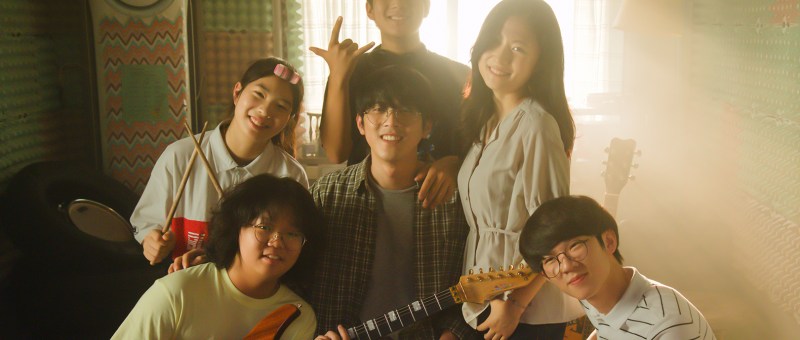
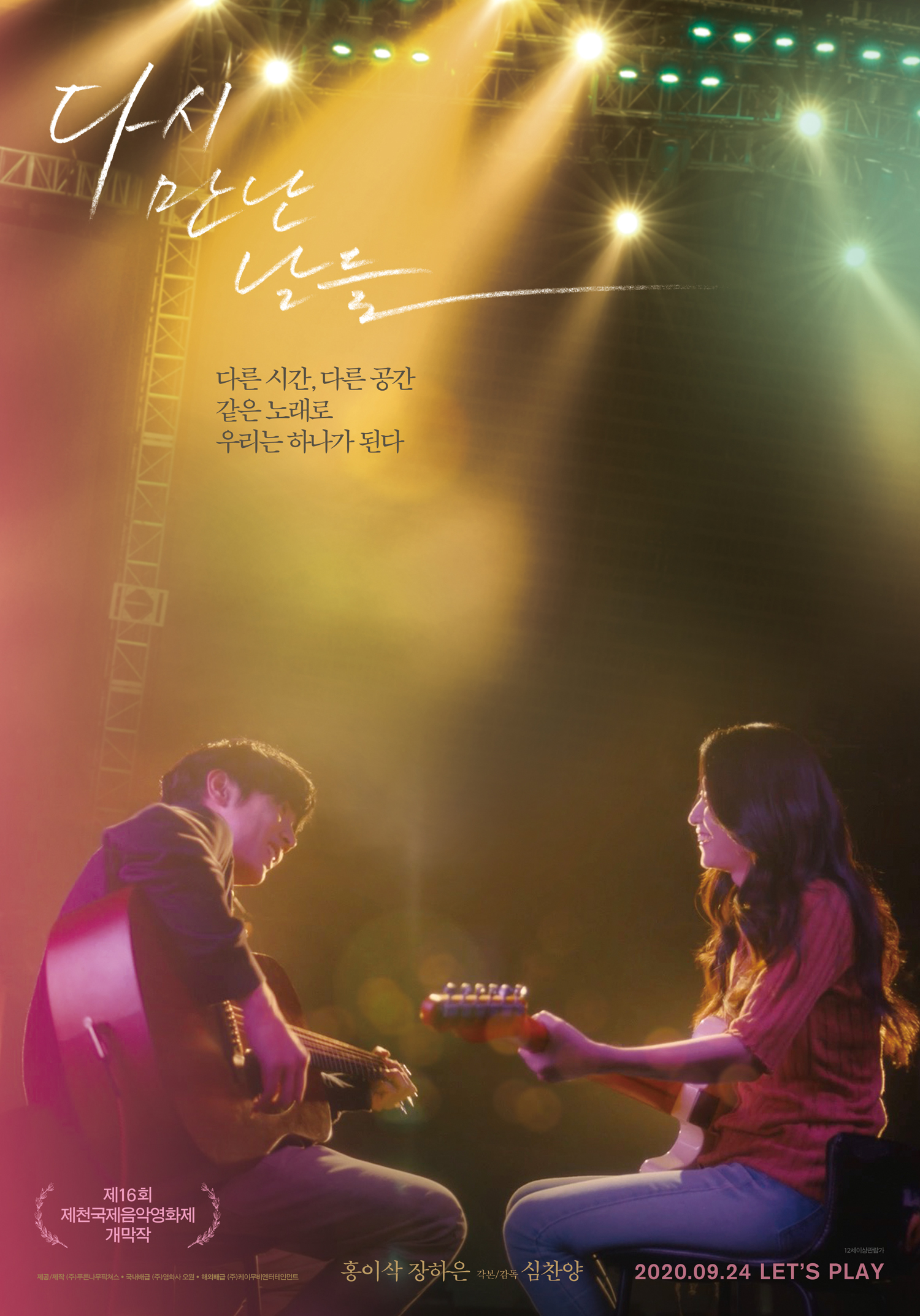
Approaching 30, Tae-il (Isaac Hong) has recently returned from abroad and is currently slogging it out as a singer-songwriter in Seoul. Handed a potential opportunity in a card from a powerful A&R woman best known for managing a top idol, he ponders trying to write a generic pop song but keeps stumbling over a simple lyric about the sea thinking back on his days in a high school band and the friends he may never see again. Taking a visit back to his home town for inspiration brings him into contact with former bandmate Ji-won (Jang Ha-eun) now working as a guitar teacher at her uncle’s music academy, and a collection of nerdy yet passionate kids hoping to hit no. 1 on the Billboard charts with their innovative fusion of nu-metal, post-grunge, and traditional Korean instrumentation (to be added at a later date). 

Though perhaps harbouring a little resentment over Tae-il’s apparently abrupt departure overseas, Ji-won allows him to stay on her sofa while helping him figure out how to finish his simple pop song, a plaintive ballad about lost love and regret. Secretly, he may be looking down on her a little, thinking she’s failed in someway slumming it as a guitar teacher in their old home town but unlike him Ji-won has maintained her passion for music while honing all her skills. She later reveals that she once had a recording contract but eventually decided against it, having realised it wasn’t all about the music and apparently not wanting the rubbish that goes with chart success. Tae-il, however, isn’t so sure especially after the song they wrote together is optioned by the A&R woman though attending the meeting means breaking a promise to the kids he helped to mentor to be there for them at their big concert. 

Like Ji-won, the kids are all full of the joy of music even if they’ve slightly contradictory ideas, lead singer Deok-ho (Seo Young-jae) simultaneously penning grisly death metal lyrics yet wanting mainstream acclaim. Deok-ho apparently decided rock was his thing because the girl he liked liked it, but now she likes hip hop and an older, thuggish sort of boy. He doesn’t take kindly to Tae-il’s taking their metal beat and reconfiguring it as coffeeshop lo-fi, but eventually comes round and takes his advice about authentic songwriting, allowing each of his buddies the chance to shine in putting the track together as a team. 

Meanwhile, Tae-il finds himself relegated to the back of a music video in a garish New Wave outfit, standing in front of an inflatable flamingo, and handed a guitar with no strings in a pointed piece of symbolism especially as he realises they’ve added a rap section just to spice it up a bit. Observing the kids at the beginning of their musical journey and thinking back on his days in a high school band he begins to realise that what he liked about making music was the excitement of collaboration and the gentle camaraderie of after-jam dinners. Perhaps Ji-won has it right and all the rubbish isn’t worth it when you can just stay home and make music with your friends without caring too much about pleasing the commercial aspirations of A&R execs looking for the distinctive generic. Not quite a romance and surprisingly uninterested in the band’s concert journey, Shim’s soulful drama allows its two old friends the space to find new equilibrium brokered by their shared love of music while gleefully ceding ground to the eager youngsters as they too bond through common endeavour discovering the pure joy of creative connection and emotional harmonies. 


Da Capo streamed as part of the Glasgow Film Festival.

Original trailer (English subtitles)
Glasgow Film Festival to Screen Third Murder, Mary and the Witch’s Flower

The Third Murder still 2The Glasgow Film Festival returns from 21st February to 4th March 2018 bringing the latest in world cinema to Scottish screens. East Asian offerings are not quite as plentiful as in previous years but the festival will see Scottish premieres of the latest from Hirokazu Koreeda, the hotly anticipated first movie from Studio Ponoc, and the new restoration of a Chinese classic.

Attack on Titan : The Roar of Awakening

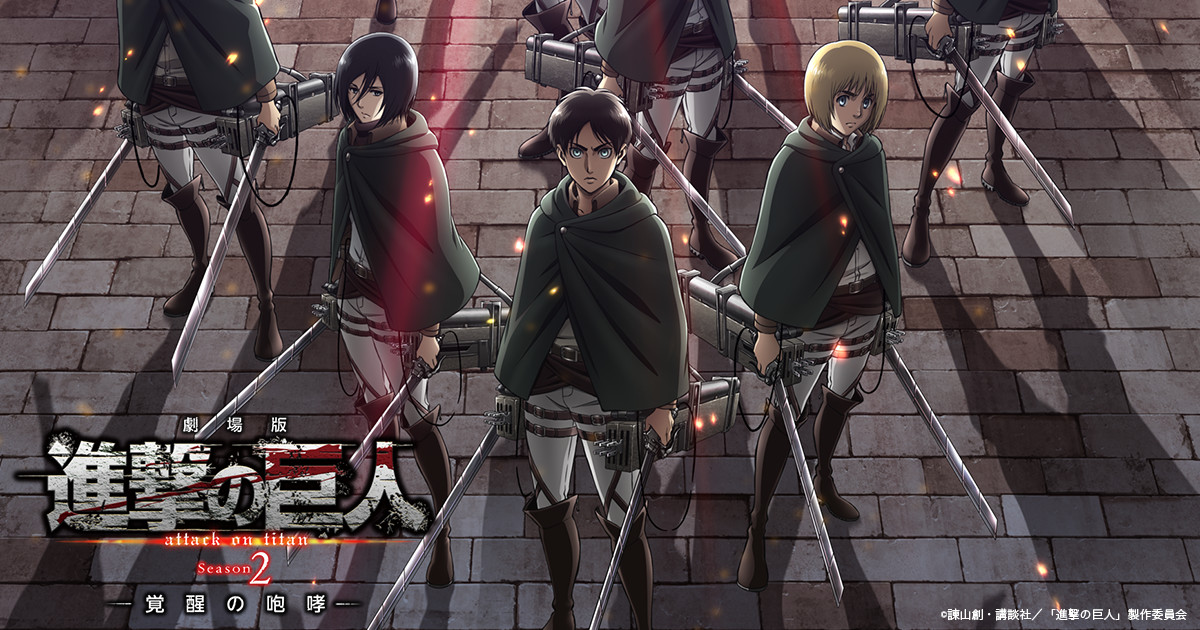
Attack on Titan - The Roar of AwakeningManga and anime phenomenon Attack on Titan has been taking the world by storm over the last couple of years, even packing in a pair of disappointing live action movies. The Roar of Awakening is a “compilation movie” of the TV anime’s second season which is to say it re-edits the 11 half hour episodes into one two hour movie. If you don’t know anything about Attack on Titan, this probably isn’t the best place to start but in short the series takes place in a fictional European city where humanity has taken to living behind giant walls to protect themselves from man eating giants known as Titans. The screening of The Roar of Awakening will take place in an immersive secret location accompanied by various other events over approx. 6hrs.
Picked up for UK distribution by Anime Limited.

https://www.youtube.com/watch?v=Og8hy5b7mf4

Junk Head

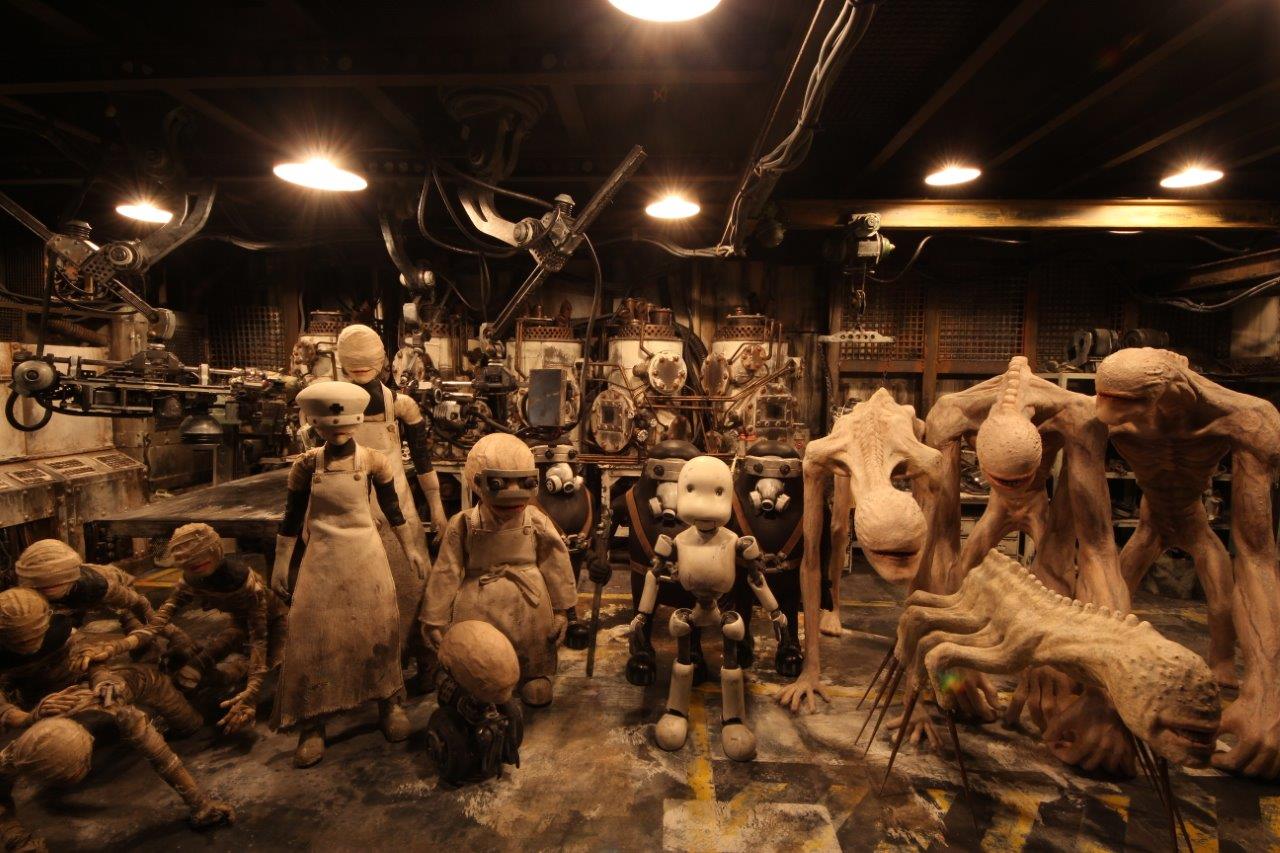
junk head still 1Takahide Hori’s beautifully designed stop-motion animation follows the adventures of a robot “God” as he (?) descends the various levels of underground existence looking for a cure for humanity’s ongoing decline… Review.
Legend of the Mountain

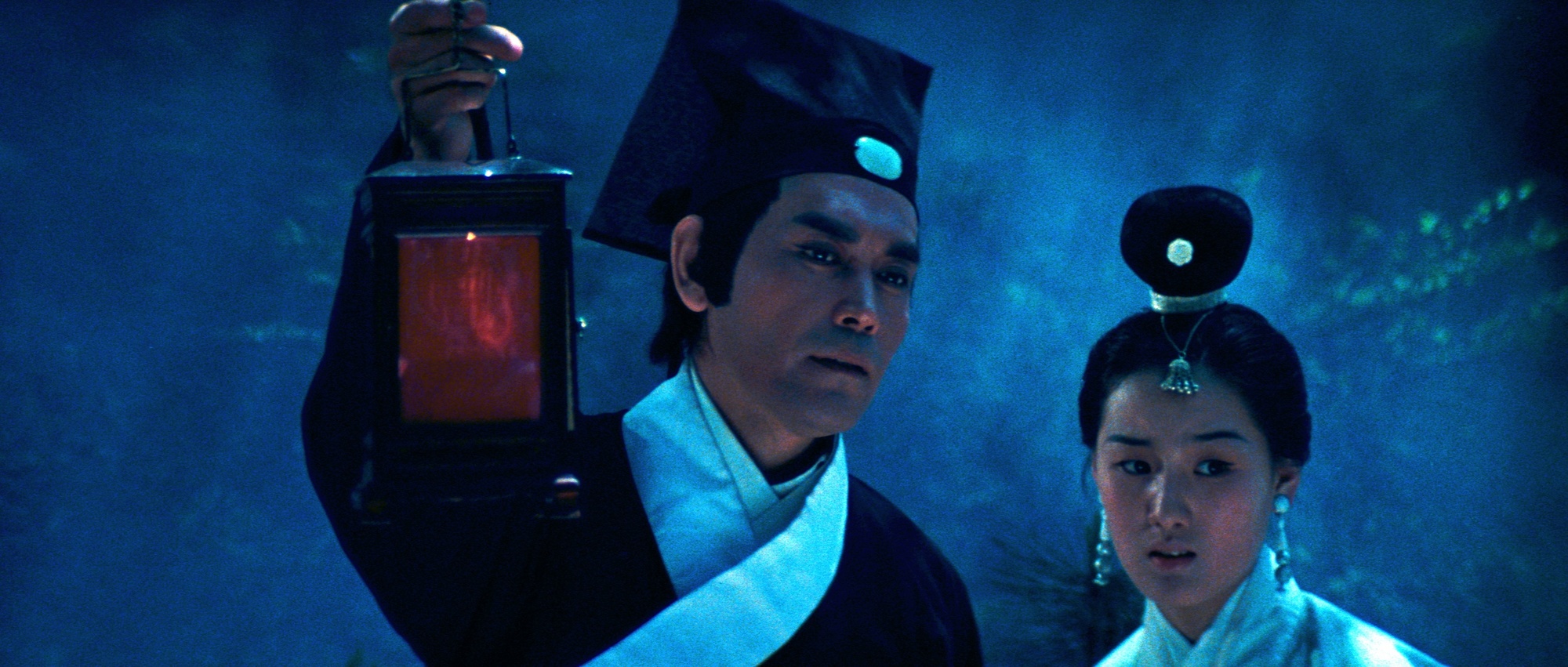
legend of the mountain still 1Recently restored by the Taiwan Film Institute, King Hu’s Legend of the Mountain follows a Sung Dynasty scholar tasked with translating a set of Buddhist scriptures which are said to have power over the spirits of the dead. To do so he travels to an isolated monastery in the mountains where he is assailed by the forces of evil who want to steal the scriptures for themselves…

Distributed in the UK by Eureka Entertainment.

Let’s Decorate the Promised Flowers in the Farewell Morning – Maquia: When the Promised Flower Blooms

Maquia still 1Note: Glasgow Film Festival appears to be screening the film under a literal translation, according to the film’s UK distributor Anime Limited, the official English language title is Maquia: When the Promised Flower Blooms.
Animated by P.A. Works, Maquia is the directorial debut from screenwriter Mari Okada (Anthem of the Heart) and follows the titular heroine – a young girl from a mysterious village where people live for hundreds of years and maintain their teenage appearances for life. Forced to leave her village, the girl finds an abandoned baby boy and decides to raise him but while she remains forever young he grows older by the day…

Picked up for UK distribution by Anime Limited.

Marlina the Murderer in Four Acts

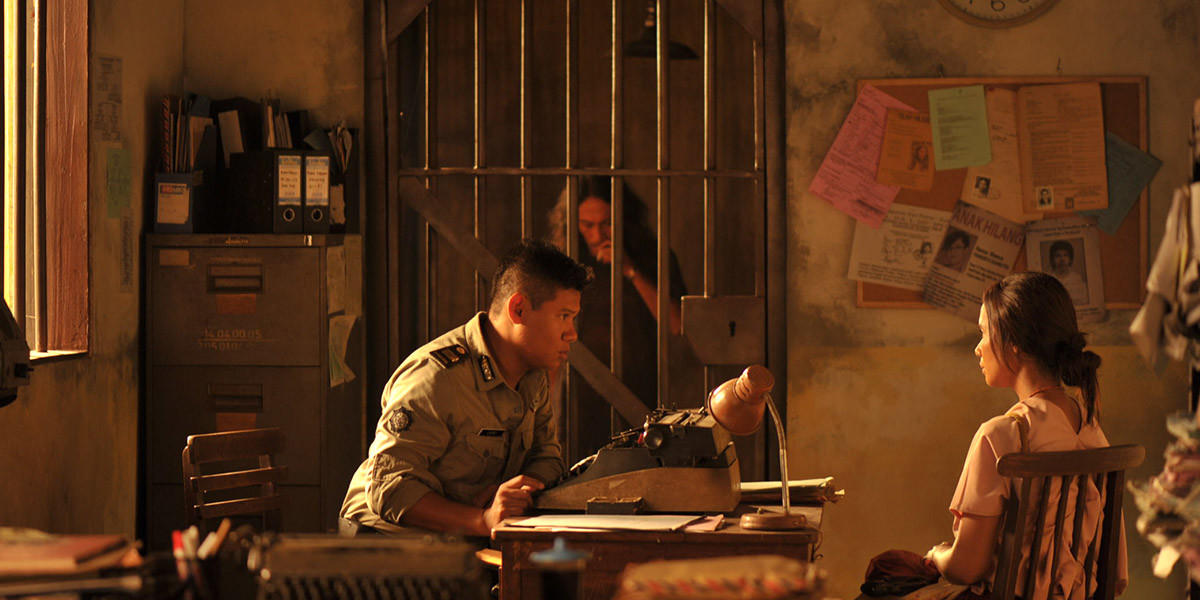
marlina the murderer in four acts still oneA feisty widow takes to the road in search of vengeance after her ranch is raided and she is attacked by bandits in this festival favourite Eastern western from Indonesia.


https://www.youtube.com/watch?v=GBou-JfWz54

Mary and the Witch’s Flower 
mary and the witch's flower still 1

When Marnie Was There director Hiromasa Yonebayashi adapts yet another classic English children’s book – Mary Stewart’s The Little Broomstick, as the first venture for would be Ghibli successors, Studio Ponoc.

Distributed by Altitude Films, Mary and the Witch’s Flower will be screened both dubbed and subbed.

The Seen and Unseen

the seen and the unseen still 1The second film from Kamila Andini, The Seen and Unseen follows one half of a pair of twins as she deals with the deteriorating health of her brother…
The Third Murder

third murder horizontal poster

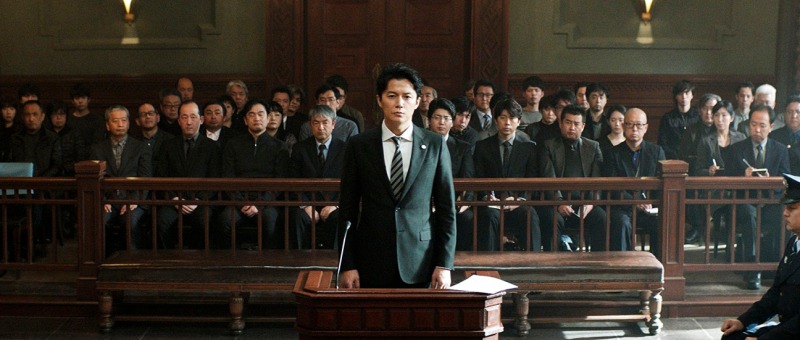
Hirokazu Koreeda makes a rare detour from the family drama for a high stakes legal thriller in which a veteran lawyer takes on the seemingly impossible task of defending a murder suspect who has already served time for violent crime and freely confesses his guilt, but the more the lawyer looks into the case the less confident he feels that his client is telling the truth.

Picked up for UK Distribution by Arrow Films.

Vampire Clay

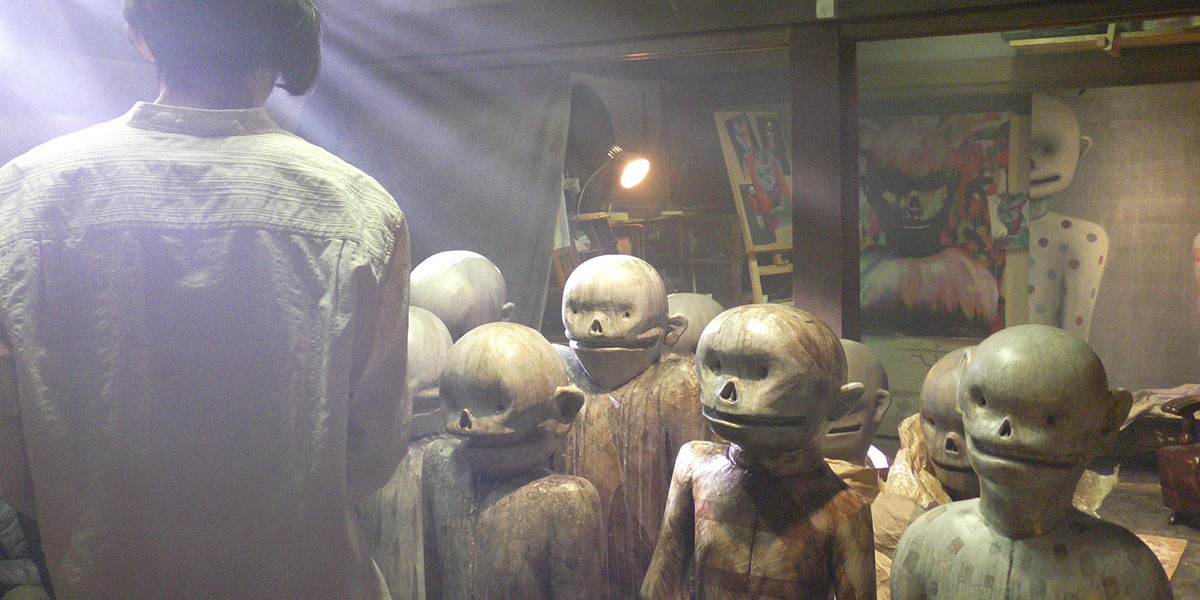
vampire clay still 1The debut feature from SFX makeup artist Soichi Umezawa, B-movie horror Vampire Clay takes place in an isolated art school in which the students start going mysteriously missing…could cursed clay really be to blame?
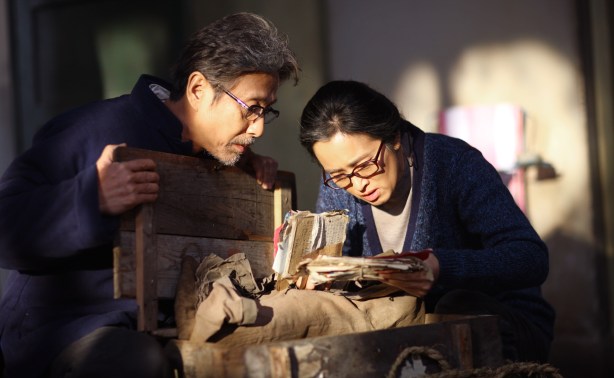

Glasgow Film Festival takes place from 21st February to 4th March at Glasgow Film Theatre. You can find the complete programme as well as full details for all the films, screening times, and ticketing information on the official website, and you can also keep up with all the latest news via the festival’s Facebook Page, Twitter account, and Instagram Channel.

Coming Home (UK Anime Network Review)

coming-home-film-decembre-2014-sortieZhang Yimou’s latest reviewed at UK Anime Network


Dealing with the recent past in mainstream Chinese film can be a difficult business. While you may be able to get away with making a comment on the present through looking at the pre-communist past, raising the spectres of some of the darker episodes in the post Mao Zedong China is, at best, taboo. That Zhang Yimou, more recently moving into the mainstream as one of China’s most bankable directors both abroad and domestically, has been able to make a film about the suffering endured by countless citizens during The Cultural Revolution is therefore a little surprising. However, Coming Home is far from an examination of the period’s horrors but rather a metaphor for modern China reframed as a melodrama of deep love and marital happiness frustrated by historical circumstance.

Based on The Criminal Lu Yanshi a book by Yan Geling, the central story focuses on the trio of Lu – a professor sent for “re-education” at the beginning of The Cultural Revolution, his wife Feng and their daughter Dandan. The first part of the film sees Dandan attending a ballet school and hoping to gain the lead in the upcoming propaganda ballet Red Detachment of Women. However, despite being the most talented dancer she learns she will not be chosen for a leading role because of her father’s disgrace – a situation further complicated because it transpires her father has escaped from the camp and may be trying to return home. Despite the warnings and the obvious danger, Feng is desperate to see her husband again though Dandan, who was just an infant when her father was taken away, is angry and resentful. Lu’s attempt to return ends in recapture and it’s not until the end of The Cultural Revoltion years later that he’s finally able to come home. However, Feng now suffers from mild dementia and refuses to recognise this much older version of the man she’s been waiting for all this time. Every fifth day of the month she goes to the station to wait for her husband completely unaware that he has already returned.

It’s the second half of the story that occupies the bulk of the running time as Lu’s original escape attempt becomes more or less a prologue to the main story. Having returned home, Lu tries to reawaken his wife’s dormant memories by reminding her of their shared past. Feng can take care of herself day to day though she forgets things and muddles up timescales, but is unable to acknowledge Lu as her husband. Along with the remorseful Dandan who only now understands exactly what her parents have been through, he tries to remind her of happier times by reading her letters or playing the piano as he used to do. In someways the political circumstances take a back seat here as Feng’s dementia could easily be solely of natural causes (though the film strongly suggests a blow to the head during Lu’s escape attempt and subsequent traumas maybe a partial cause of her memory loss) and Lu the loving husband trying to keep their past alive. However, the situation is further complicated as the couple have now been separated for over twenty years with no contact at all. There was immense suffering on both sides with Lu desperate to see his wife and daughter again but never knowing if he would, and his wife making great sacrifices to try and protect him in the hope that he would survive and one day return home.

The film never really goes into what Lu did, other than his having been a professor which might have been enough on its own, or probe into very much detail about his life being re-educated. Bar a final reveal and a general feeling of melancholy, it doesn’t much delve into Feng’s life other than her devotion in waiting for Lu. In fact, it sort of leaves The Cultural Revolution to one side as much as it can. However, its ambiguity is almost an analogy for the way modern China wishes to think about its past – both remembering and not at the same time. Lu endures all, suffers all only to return to a world where he doesn’t quite exist. Patiently, he tries to undo this painful knot of memory that has paralysed his wife’s brain so that he might regain something of what he’s lost but the more he tries to show her the less she seems to see. She can only recognise him as the man he is now, a kindly neighbour, and not as the man that was taken from her all those years ago and for whom she still waits. There are those like Lu who are desperately trying to reconcile the past with the present so they can move forward but there are also those like Feng who are unable to come to terms with everything they’ve suffered and accept the now for what is. The result being a kind of numb limbo which leaves everybody waiting at the station for a train which will never arrive.

Coming Home probably goes as far it’s allowed to go, but that still isn’t terribly far. As a film about China’s turbulent recent history, it’s a start but doesn’t begin to approach some of those darker themes with any kind of depth. That said, it’s really much more of an old fashioned melodrama about a faithful husband who comes home to his devoted wife after many years of enforced separation only to find that, far from having “forgotten” him, she can’t forget the him that was taken away long enough to recognise that he’s come home. Fans of romantic drama will find a lot more to like than those hoping for a hard hitting examination of horrors The Cultural Revolution but Coming Home does do what it promises in a typically polished style. A little bit stuffy and noticeably restrained, Coming Home is not exactly a late career masterpiece from the director of Raise the Red Lantern, but it does at least open a few doors.


Exit (迴光奏鳴曲, Chienn Hsiang, 2014)

exit 1Review of this existential character drama from Taiwan up at UK Anime Network. This one was screened at BFI London Film Festival but now it’s at Glasgow too and will be getting a further UK release courtesy of relatively new distributor Facet Films in April!


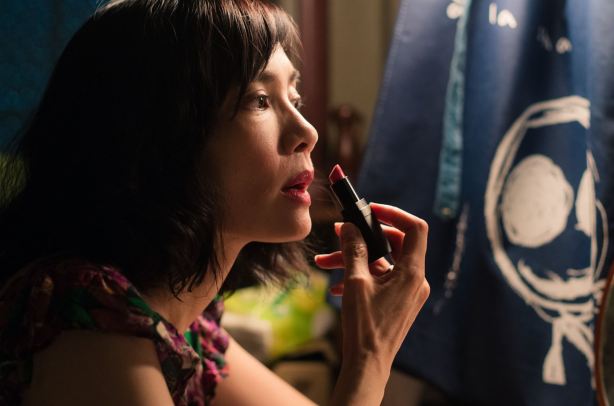
Sometimes it’s the little things that wear you out; stretching over years, becoming almost invisible until a surge of troubles washes over you and leaves you gasping for air in stormy seas. So it is for Ling, an ordinary, middle aged Taiwanese woman who finds herself alone with her husband working in Shanghai (constantly incommunicado even via telephone) and a teenage daughter, Mei Mei, who’s not very interested in spending quality time with her mother when she’s suddenly made redundant from her job as a seamstress at a factory and also discovers she’s heading into the menopause. Ling has also become the de facto carer for her mother-in-law who’s in hospital (not that her mother-in-law seems to appreciate it very much) where she becomes increasingly fascinated by a badly injured man in the bed opposite who has no family to visit him or take care of his daily needs. In a gesture of kindness, Ling begins by trying to ease some of his discomfort by mopping his brow and dripping water on his parched lips but soon transitions to bed baths. This purely physical relationship with a blinded stranger begins to reawaken something in Ling but will it be enough to save her from life’s disappointments?

Exit is the feature debut from director Chienn Hsiang, an award winning Taiwanese cinematographer (Blue Gate Crossing) and stars frequent Tsai Ming-liang collaborator Chen Shiang-Chyi in the leading role. Unfolding slowly with minimal, naturalistic dialogue the shadow of Tsai looms large (not that that’s ever a bad thing) but Chienn handles this extended moment of existential crisis with a steady hand and interesting compositional choices. Occasionally, his metaphors feel a little overplayed – the sticking lock on Ling’s front door for example and her general trouble with blocked exits are nice ideas but call attention to themselves a little too readily. That said, Chen’s central performance keeps the film well anchored in its everyday mundanity and ordinary despair whilst also ensuring Ling maintains the audience’s sympathies.

At heart, Exit is an intense character study of one woman’s struggles in modern Taiwan as she finds herself caught between several different transitionary moments. Everybody in Taiwan, it seems, is on their way to China. Ling has already lost her husband who never takes her calls any more, she’s just lost her job because the factory owner’s sons are all obsessed with the idea of the mainland – all everyone ever seems to talk about is leaving, there’s no more work here. She lives alone in a pretty run down apartment where the wallpaper is peeling off the walls (she reseals it with sellotape) and she’s plagued by amorous noisy neighbours next door. Her only ray of sunshine is the dance club run by a former work colleague which, aside from also providing a bit of income in the form of costuming and repairs, is the only thing that seems to catch Ling’s attention.

That and the mysterious stranger in the hospital with his strange and terrible injuries. Ling’s encounters with the blind man take on an oddly intimate, sensual quality but as soon as his eye bandages come off she becomes shy or possibly ashamed. Likewise, having made herself a nice new dress and wearing the new shoes suggested by her dance club owning friend Ling goes for a rare night out only to catch sight of her daughter. Once again conflicted, Ling removes her make-up in haste ready to confront Mei Mei (who also rejects her telephone calls) only to discover the girl and her boyfriend have already left leaving only a vague air of shame and discontent behind them.

Exit is a nuanced and engaging snapshot of a moment of crisis in an ordinary woman’s life. It may be true that we all lead lives of quiet desperation but Ling’s troubles are, sadly, of the relatable kind. Trapped in a rapidly changing city and isolated by its social circumstances and cultural constraints it isn’t surprising that Ling’s frustrations finally come to a head but like everyone else Ling has to find a way to go on living and watching her getting back to herself becomes an intensely moving experience.


Uzumasa Limelight (太秦ライムライト, Ken Ochiai, 2014)

tumblr_nfxugkn3kO1seecgzo1_1280Another one from The Glasgow Film Festival (which starts today!), Uzumasa Limelight reviewed at UK Anime Network.


Once upon a time, Japanese network television was dominated by Jidaigeki or samurai dramas filled with tales of glorious battles and petty vendettas. Of course, they had their stars – the guys on the posters looking mean with their swords held high, but they couldn’t have run without the “kirareyaku” or the guys whose sole job it is to get killed by the star of the show over and over again. However, times have changed and samurai dramas aren’t as popular as they used to be. Consequently, there’s not so much work to go around and it’s hard to make a living getting by on ordinary “extra” work in modern day dramas when you’re used to the comparatively more active chanbara world. The days of the once famous Uzumasa studios as the capital of period drama in Japan are coming to a close, yet perhaps it’s just time for the older generation to step out of the limelight so that the young ones can enjoy its glow.

Inspired by Charlie Chaplin’s Limelight – the story of a once famous washed up clown who finds a new lease on life after saving a young dancer from suicide, Uzumasa Limelight is a poignant tale of the transient nature of art as it evolves from one generation to the next. In a bit of smart casting, the leading role of the veteran kirareyaku, Kamiyama, is played by a real life master – Seizo Fukumoto who has been dying on screen for over fifty years and takes on a leading role here for the first time! After falling over in the street he encounters a young, hopeful actress just leaving an audition. Satsuki (played by world champion martial artist Chihiro Yamamoto in her first dramatic role), it turns out is fascinated by the kirareyuki craft and becomes intent on training under Kamiyama despite being warned there are generally very few of these sorts of roles available for women. Nevertheless, Kamiyama begins to pass on some of his skill and before long Satsuki herself has begins to step into the limelight.

Things have certainly changed a lot since Kamiyama began working back in the glory days of the TV chanbara serial. A new producer has come in and a series which had run for over forty years has been cancelled to make way for a new show – still a period drama but more modern and up to the minute. It’s going to star a handsome idol from a top dance group – one who refuses to wear the bald cap so they have to put him in a ridiculous helmet with a giant fur train. He also can’t use a real sword so all the fights will be done with cut off green sticks and replaced with CGI blades. The new producer doesn’t care about skill or experience, he just wants handsome faces to pull in the youth viewers – old guys like Kamiyama are totally out of luck! Who wants to see some random old guy when you could just pull in a few idols to wave a little stick around and fall over on queue? It’s a shame, but it’s the way of the world. Old soldiers fall but new faces rise in their place. There may be scant respect for craft, but the art form carries on – it changes and evolves from one generation to the next but the spirit remains.

In this way, Uzamasa Limelight feels very Japanese in that it sets up the conflict between a perceived decline in values in modern movie making – what was once an art is now a (fairly ridiculous) business, whilst simultaneously accepting the transient nature of all things. Kamiyama accepts his time has passed, he barely fights it and when he decides it’s time to go he does so with dignity. He passes his skills onto his young protege and watches her use them to become a star in the new artistic world whilst retiring to the sidelines, content to have played his part to the best of his ability. Uzumasa Limelight is a beautiful, poignant tribute to the bit players of countless movies whose performances are little appreciated but without whom an entire industry would not have been able to function. Imbued with a gentle melancholy, Uzumasa Limelight also offers not a little hope for the younger generation who will pick up where their forebears left off and create something, if not necessarily better, then at least different.


On a side note, this is a really well made trailer!

Pale Moon (紙の月, Daihachi Yoshida, 2014)

Pale-Moon_MainDaihachi Yoshida’s last venture into human dynamics, The Kirishima Thing, took the high school environment as a microcosm for society as a whole. In some senses painting on a large canvas by illuminating the inner lives of these teenagers acting as both individuals and as members of a group, The Kirishima Thing was equal parts ensemble character drama and probing social commentary. Pale Moon (紙の月, Kami no Tsuki) is no different in this regard although it focuses more tightly on one individual and shifts age groups from turbulent adolescence to middle aged desperation. Set in 1994 just after the bubble burst, this gleefully cheeky (im)morality tale takes another sideways glance at the social norms of contemporary Japan.

Rika (Rie Miyazawa) is a demure woman in her early forties. A childless former housewife, she’s recently moved from a part time position at a bank to a full time job where she works as a kind of personal banking assistant visiting wealthy clients at home to discuss their financial needs and physically depositing their money in the bank for them. Efficient, reserved, reliable – Rika is the perfect employee, that is until one day she spends some of a client’s money because there isn’t quite enough in her purse. She takes the money straight out of an ATM and replaces it right away, of course, but a line has been crossed. It’s a quick step from a gentle misappropriation of funds to a series of interestingly decorated hotel rooms with a boy half your age, embezzlement on a grand scale, blackmail, bank fraud – the list goes on. How did it ever come to this? Yet, it’s the strangest thing – Rika has never felt more alive.

Money – it’s the life blood of capitalism. It makes the world go round and drives people crazy as they try to amass even more little bits of paper with numbers written on them. It’s fake, an illusion that we’ve all bought into – no more real than a paper moon (to go by the film’s original Japanese title), though we continue to set all of our hopes afloat on its surface. When Rika finally convinces her financially challenged young lover to accept her (stolen) money, she tries to convince him that nothing will change but, of course, it does. The dynamics fluctuate and money gets in the way, the toxicity of debt starts to eat away at any genuine connection that may have existed. The irony is, Rika is one of those people who steals in order to give away. It sounds selfless, even altruistic, but is in fact the most intensely selfish action that can be taken. “It’s better to give than to receive” goes the mantra of the nuns of the Catholic school where young Rika was educated, but they also council that charity should never have anything to do with your own gratification. This is the lesson that Rika finds so hard to learn, it feels so good to give – how can it be wrong to take?

It’s easy to say that the world has changed a lot in the intervening twenty years between now and the time the bulk of the action takes place, but maybe it hasn’t. The first thing that strikes you is how extraordinarily sexist Rika’s world is. It’s not long before she’s being asked questions about her marital status whilst being made to feel uncomfortable, alone in the home of her elderly male client. Then at the office her boss praises her efforts whilst sadly lamenting that women have more “tools” at their disposal than men do, which is both insultingly crude and a put down of her skills and hard work. Rika only gets her permanent position because another woman, an employee of nineteen years standing, has been forced out through a campaign of constructive dismissal because the big wigs don’t like paying higher salaries to older female workers but they won’t promote them past a certain level either. Her younger colleagues make fun of their “spinster” supervisor, Sumi (Satomi Kobayashi), who, only a generation older, had to make a clear cut choice between work and family and having chosen a career now sees the rug being pulled out from under her with the standard “transfer to head office” game plan in place to force her into retirement.

Rika’s home life offers a similar level of hope for the future. Her husband is probably well meaning, but totally insensitive and the marriage is at best unfulfilling. He pooh-poohs his wife’s thriftiness and her new “hobby” at the bank, totally failing to understand her motivation. At one point he announces he’s being transferred abroad so she’ll have to give her notice – it never occurs to him she may not wish to go, let alone that she’d refuse over something so trivial as her own job. It’s little surprise then that she’d so quickly fall for a handsome and attentive stranger. An “amour fou”, an old story but no less potent than it ever was.

Rika knows none of it’s real – that her temporary crime fuelled reprieve can’t go on forever, but that only makes her feel more free. In one telling episode, Rika is talking to a granny she’s in the process of swindling and remarks on her beautiful new necklace. What a shame it’s fake, Rika says, but the old lady replies that she knows it’s only imitation but she doesn’t care – it’s pretty, she likes it and she’s happy. That perhaps is the answer. Rika saw her chance and she took it. That takes some courage and whatever the moral outrage one might feel, there’s something undeniably admirable, even exciting, about Rika’s dramatic escape from the constraints of conventional social behaviour.


Pale Moon is receiving its UK Premier at the Glasgow Film Festival on 19th February so if you’re in the Glasgow area be sure to check it out!