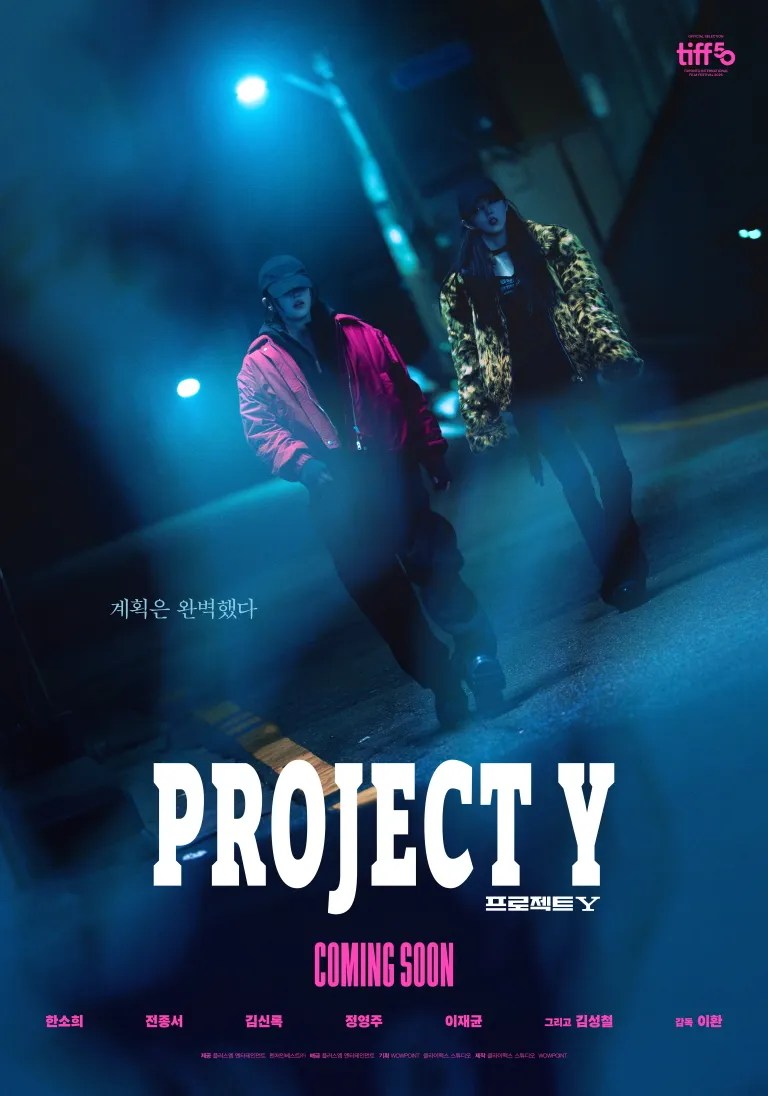
Project Y (프로젝트 Y, Lee Hwan, 2025)

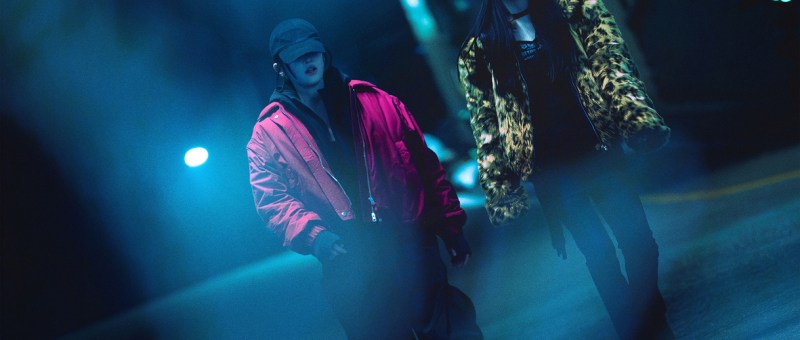
The opening sequence of Lee Hwan’s Project Y (프로젝트 Y) seems to echo the iconic intro of Millennium Mambo as two women look back over their shoulders as they traverse a seemingly endless tunnel. Later we realise that the tunnel is their passage out of the underworld of the red light district towards escape and liberation, not only from patriarchal control and their impossible lives, but from a generational legacy of abuse and entrapment.

Indeed, Ga-young (Kim Shin-rok) the adoptive mother of Mi-sun (Han So-hee) and birth mother of Do-kyung (Jeon Jong-seo), is fond of asking who is saving who when we’re all the same, and insisting that your life is yours to save. It’s a message the girls have taken to heart, yet they remain devoted to each other in a relationship that also appears to be romantic or perhaps has already transcended romance in the depth of their connection. Mi-sun has been working as a karaoke bar hostess for a number of years while Do-kyung works as her driver and occasional courier for various shady types. They plan to leave the red light district now Mi-sun has saved enough money to buy a florist’s from its retiring owner along with a downpayment on a apartment, but it turns out half the girls in the red light district have been scammed by a dodgy estate agent at the behest of local kingpin Blackjack (Kim Sung-cheol).

It seems that Blackjack may have done this deliberately in a nefarious plot to increase the girls’ debts and prevent them from leaving. Blackjack’s callousness is signalled early on when he tells the girls’ manager to get rid of a drooping plant if she can’t manage it and space the others out to disguise the gap. But on the flip side, Blackjack has a young and very silly wife who has got into host clubs and has been spending all his money on a young man who is openly exploiting her. Though the men are ostensibly in the same position as the women, they still have a greater power in preying on female loneliness while the women, by contrast, may be indulging in this behaviour precisely because it gives them an illusion of control they ordinarily don’t have a patriarchal society. Blackjack’s wife throws expensive gifts at her favourite host in an attempt to persuade him to enter a deeper relationship while blabbing her husband’s secrets. The host doesn’t seem to have realised it might be a bad idea to be messing around with Blackjack’s wife, while stealing his secret stash is going to annoy him even more and Blackjack’s not the sort of man you want to be annoyed with you.

Blackjack watches a video of a dog drowning in a tarpit while he works out, and this particular tarpit acts as a kind of vortex drawing all the greed in the red-light district towards it. Hearing about the plot to rob Blackjack, the girls decide to rob him first and blame it on a local hoodlum. But after retrieving a bag with the exact amount they lost, discover a stash of gold bars. It’s taking them too that damages the integrity of their quest and sets them on a course towards a direct confrontation with Blackjack as they try their hardest to escape the red light district for good.

The implication seems to be that if they take the money, they’ll never really be free because it stemmed from the source of their exploitation. This might in a way be what Ga-young is trying to teach the girls in her otherwise hard to read behaviour, sacrificing herself to save them from their poor decision to cross Blackjack while trying to catapult them free of the red-light district though she knows she herself can never leave. Slick and stylish, Lee’s noir stays just on the right side of realism despite its recurrent grimness and larger than life characters such as the Blackjack’s icy female enforcer Bull and captures both girls’ desire for a “normal life” of working in the day and sleeping at night, along with the cheerful solidarity of the hostesses as they band together to take revenge on Blackjack and finally free themselves from this world of constant betrayal and exploitation.


Project Y screened as part of this year’s LEAFF.

International trailer (English subtitles)
Heavy Snow (폭설, Yun Su-ik, 2023)

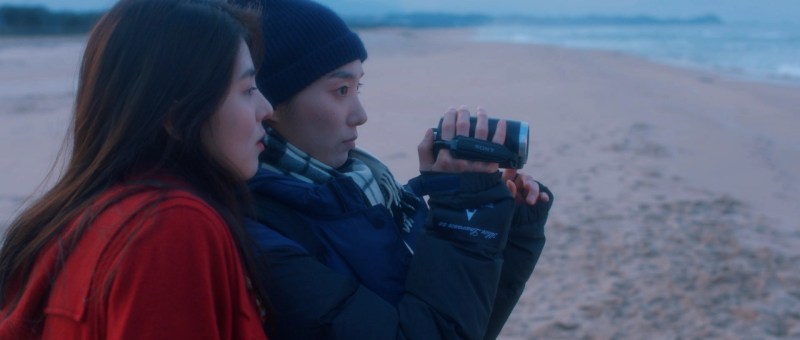
“It’s obvious it was a romance, why did you pretend it wasn’t?” one wounded woman asks another while their connection seems to be frustrated by internalised shame and conflicting desires. Yun Su-ik’s frosty drama Heavy Snow (폭설, pokseol) does indeed seem to suggest that their love for each other can only exist in a kind of otherworld, eventually segueing into a metaphysical realm which simultaneously implies that this isn’t actually a romance but self-reflection and interrogation as a tomboyish actress searches for herself inside her various roles.

Indeed, Su-an (Han Hae-in) views Seol (Han So-hee) with a kind of awe which might be understandable given that Seol is a TV drama superstar improbably transferring to her rural arts school for a break from the world of showbiz. Or as Seol would later imply, because she’s become too difficult to manage and is rebelling against the emptiness of her ostensibly glamorous life through increasing acts of reckless self-harm. Su-an might wonder if that’s all her flirtation is, an attempt to flaunt a taboo while otherwise puzzled and jealous as to why someone like Seol would actually be interested in her. 

Yet Su-an’s interest is also in part idolisation, attracted to Seol because she fears she is everything she wants to be but isn’t, beautiful and talented. But Seol seems to doubt she’s either of those things while otherwise superficially confident in her sexuality and drawn to Su-an because of her ordinariness. Experiencing a moment of identity crisis, she’s looking for herself outside the frame yet also perhaps like Su-an caught in moment of self-idolisation. Noticing one of the giant billboards of her face that the litter the city she briefly touches it before walking away as if attracted to an image of herself she recognises and doesn’t. 

Yet it seems it’s less the awkwardness of too much intimacy that causes Su-an to pull away when Seol kisses her than shame. She tells Seol that she thinks it isn’t right, and perhaps goes on to regret that decision while continually pining for an idealised teenage love. The two women in a sense trade places. Years later Su-an is a famous TV actress, having in a way taken over the image of Seol, while Seol is evidently no longer acting but a depressed and defeated figure still resentful of Su-an’s rejection. The effects of their shifting fame deepen the gap between them with the teenage Su-an further nervous in her relationship with Seol knowing the danger that her celebrity presents. There is a suggestion that their creative desires conflict with the romantic, that they feel they cannot embrace their sexuality freely and remain in the entertainment industry because of the intense pressures a conservative society places on prominent people to be shining examples of moral purity. Each of them appear to become worn out by the demands of their fame, Su-an turning to drugs in attempt to mask her depression while the teenage Seol ponders quitting acting to become more her authentic self.

In the dreamlike third act which commences at the sea, a touchstone for each of the women connected to the innocence of their teenage romance, may suggest that in looking for Seol Su-an is really looking for herself or perhaps simply to recapture the person she was at the beginning of everything. At odds with each other, the two women become marooned in a snowbound land with no one else around. Finally repairing their relationship, it seems that they can only embrace their love in this barren place where no one else exists to judge them. The implication maybe that as Seol says the things Su-an wants to say to Seol she really wants to say to herself in a desire for self-acceptance, but equally that we can’t be sure that any of this “real” rather than dream or wishfulment.  In any case all that remains is a painful longing either for an unrealised love or the elusive self. 

Hinting at the pressures of the contemporary society, the unrealistic expectations placed on those in entertainment industry and outward social conservatism the film never less presents its central romance with an evenhanded poignancy even in its continuing impossibility as the two women continue to look for the self in each other but seemingly struggling to see past the hollow images of their own self-projections.


Original trailer (no subtitles)

Heavy Snow screened as part of this year’s BFI Flare.