Pilot (파일럿, Kim Han-gyul, 2024)

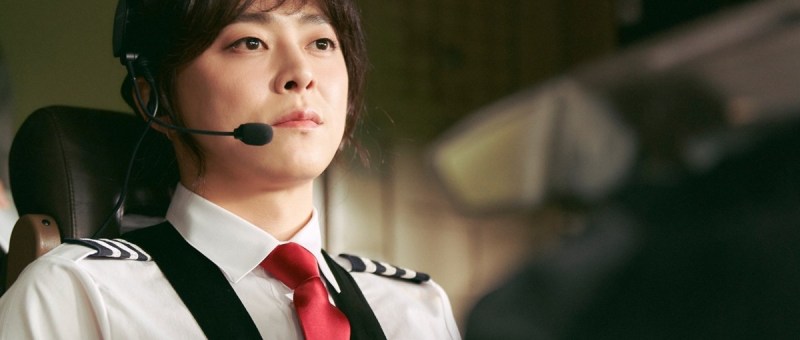
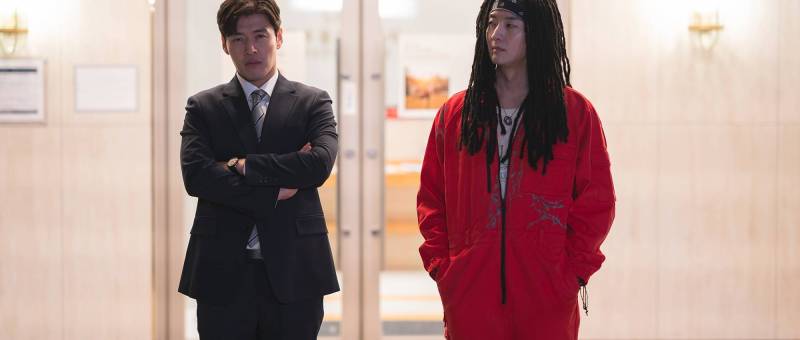
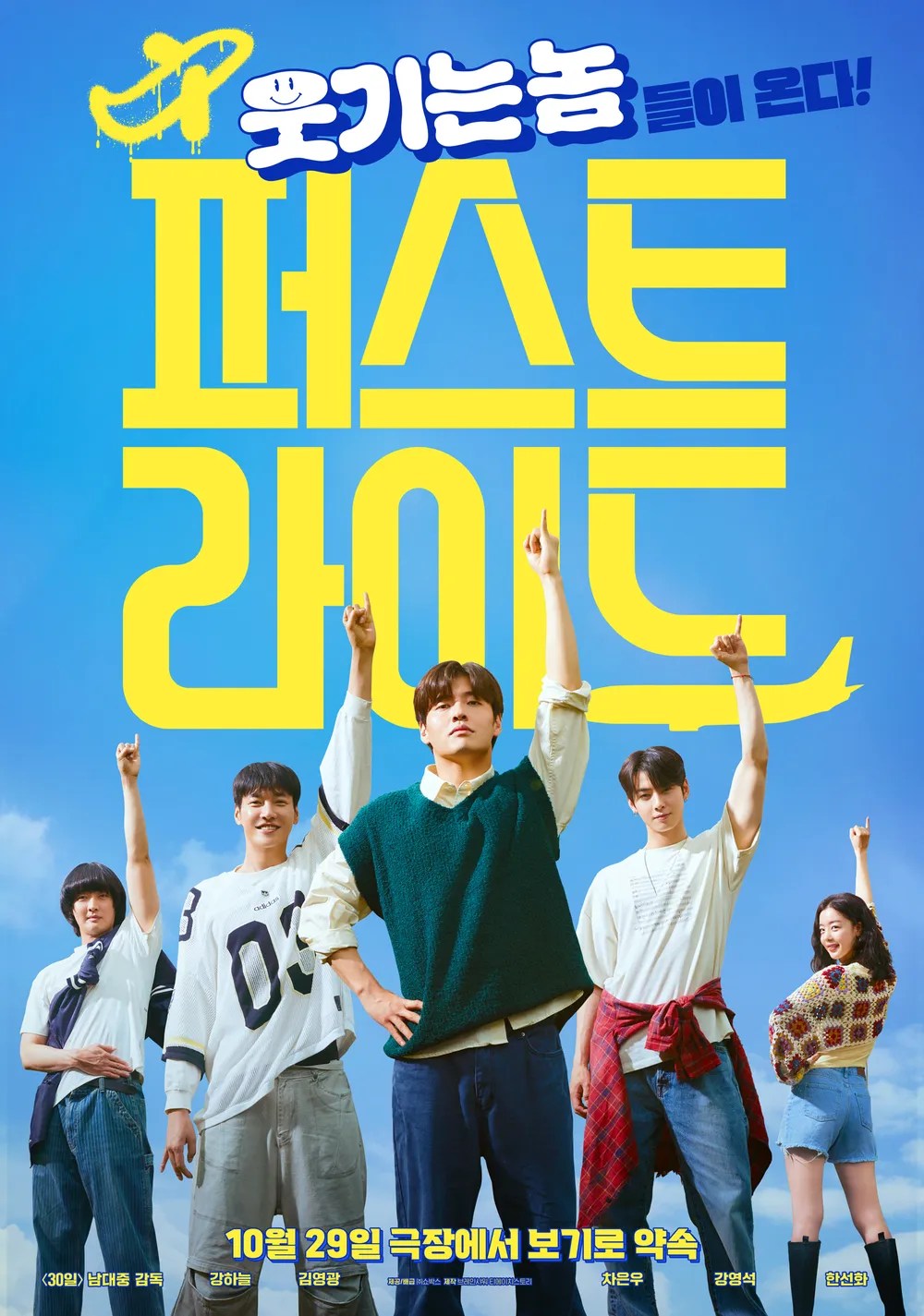
“You can’t say things like that anymore,” the men of Pilot (파일럿) are fond of chuckling but still they think them and on a baseline level are unable to understand what’s wrong with what they see as merely offering a compliment. Adapted from the 2012 Swedish film Cockpit, Kim Han-gyul’s non-romcom takes its cues from films like Tootsie and Mrs Doubtfire to explore the inherent sexism and misogyny at the heart of contemporary Korean society if perhaps problematically doing so through the means of a male redemption story.

In any case, Han Jung-woo (Jo Jung-suk) is mindless more than anything else later claiming that sometimes it’s better “to say yes and go with the flow” than risk creating unpleasantness. Seemingly excelling at everything, he graduated top his class at the Korean Air Force Academy and was fought over by several large airlines becoming a minor celebrity and apparent pilot influencer. But behind the scenes, he’s somewhat false and self-involved as evidenced by his attempt to show off a video of himself tearfully paying tribute to his mother for raising him and his sister alone but refusing to answer a telephone call from her at the same time. His celebrity fame comes back to bite him when a video of team dinner in which he rejected his boss’ comment about the new intake of stewardesses not being pretty enough by referring to them as a beautiful bouquet is leaked online. The clip goes viral with his boss getting the brunt of the abuse and while he is not visible many are able to identify him by his voice. The airline soon goes bust and unsurprisingly no one else is willing to hire him. 

The issue is that neither his boss nor Jung-woo understand what was wrong with what they said. They just parrot back that what they said was nice so they can’t see the problem with it but fail to understand that their comments are demeaning because they belittle women’s talents and reduce them to objects for male appreciation. Hyun-seok (Shin Seung-ho), who attended the Air Force Academy with Jung-woo, gets him an interview at his airline but it’s run by a female CEO (Seo Jae-hee) who happens to be the sister of his old boss and is apparently on a mission to make her company more egalitarian by having at least 50% female pilots so she’s only hiring women. Nevertheless, she also asks sexist questions at the interview looking closely at a female candidate’s age and asking her if she is married or in a relationship, whether she intends to have children and when. The female candidate fires back a pre-prepared speech that she’s uninterested in marriage and is not planning to have her eggs frozen or anything like that so she can devote herself fully to the job. 

Hyun-seok expresses sympathy, echoing Jung-woo’s earlier comment that all that matters in flying is skill and people should be hired for their merits not their gender. But it’s impossible not to read into his words that he thinks women are inherently not as capable as men and wouldn’t be getting the job at all if it weren’t for this affirmative action, which is to say it’s all about gender after all and only men are suited to the job. He says as much later on when the plane he’s piloting runs into trouble while he’s unwittingly co-piloted by Jung-woo in his female persona Jung-mi, having posed as a woman in order to pass the interview. “Men should step up during times of emergency, not women,” he screams while losing the plot as the plane plunges and refusing to hand over the controls to his female co-pilot until Jung-woo takes them by force. 

Despite being slightly younger and believing himself to be a modern man, Hyun-seok is still incredibly sexist and openly flirts with Jung-mi to the point of sexual harassment even while she bluntly tells him that she isn’t interested. Jung-woo had been flattered and overjoyed the first time someone called him “miss” on the street and alluded to his unconventional, broad-shouldered beauty but quickly discovers that that gets old and becomes aware of how “annoying” or even scary some men can be in their entitled treatment of women, and by extension the various ways in which his own treatment of women may not have been appropriate. Becoming Jung-mi allows him to become himself, rediscovering his love of flying no longer so hung up on the external validation of internet fame and more interested in and considerate of those around him in the absence of the kind of toxic masculinity that infects men like Hyun-seok.

Though his wife divorces him when he loses his job if more because of his persistent emotional neglect than disappointment or financial worry, he becomes more aware of and sympathetic towards his son who, just as he had says yes and goes with the flow by saying a toy aeroplane was fine despite having been engrossed in the Barbie aisle seconds before but presumably afraid of disappointing his father if he told him he’d rather have a doll instead. Nevertheless, the film strangely refuses to engage with ideas of gender and sexuality and becoming Jung-mi does not really unlock Jung-woo’s femininity even if it evidently makes him a better and more considerate person, while his sometime love interest Seul-gi (Lee Ju-myoung) is more or less queer coded and her attempts to stand up for herself as a woman and an equal are not always well respected by the film. Even so the betrayal of CEO Noh who is revealed to be a ruthless businesswomen perfectly willing to exploit other women and throw them under the bus if necessary highlights the ways in which entrenched patriarchy pits women against each other. 

Thus the underlying misogyny of the present society is fully exposed, if ironically by a man experiencing what it is really like to live as a woman which is to be ignored and disrespected, judged by appealingness to men and obedient temperament while skills go undervalued or worse are viewed as a threat to often fragile masculinity. Though the film largely avoids making Jung-woo’s cross-dressing a joke in itself, it does find humour in the absurdity of the demands of performative femininity in a rigid and conformist society in which a woman is rarely permitted to sit in the cockpit of her own life.


International trailer (Simplified Chinese & English subtitles)

A Letter from Kyoto (교토에서 온 편지, Kim Min-ju, 2022)

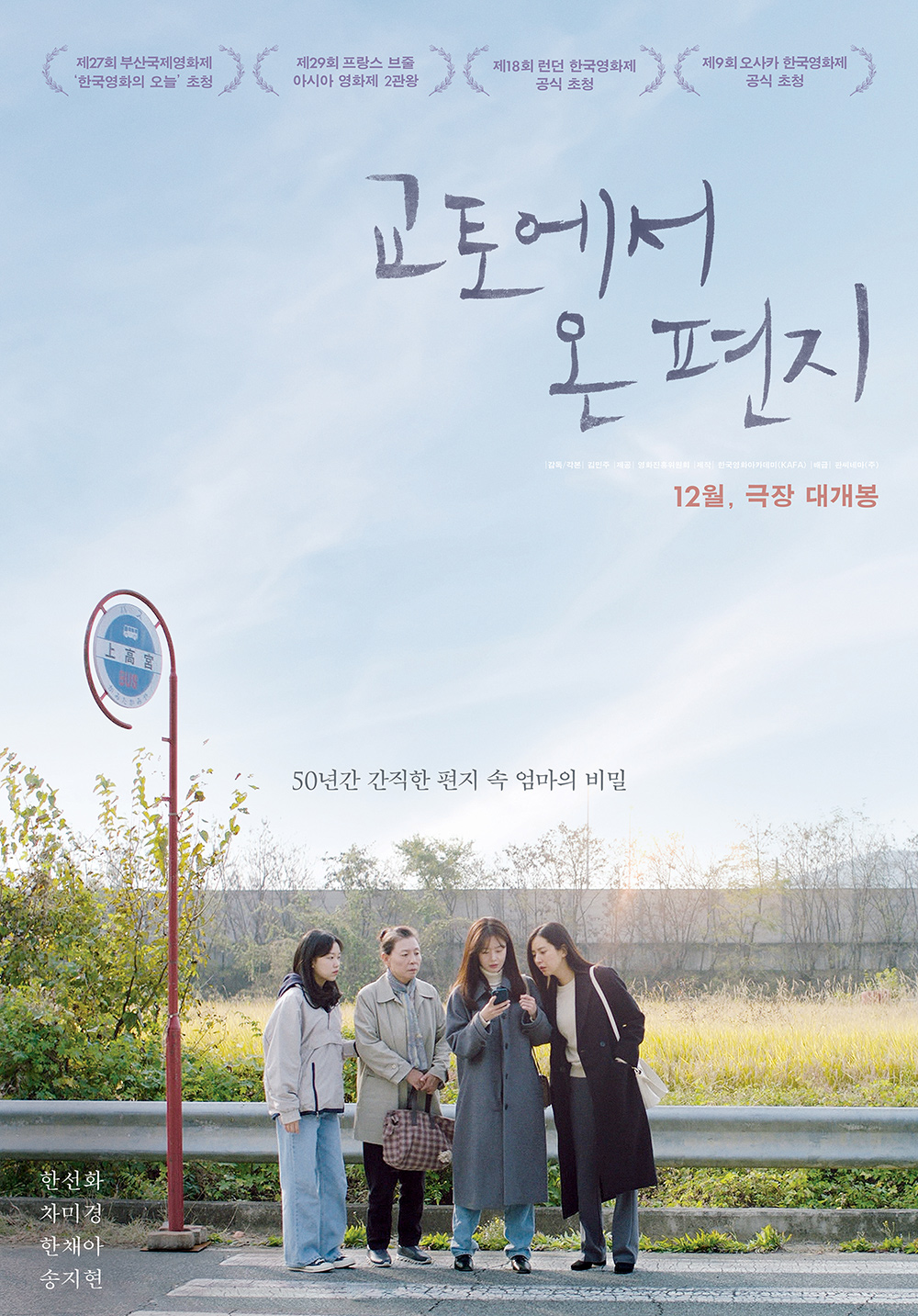
A disillusioned young woman returns to her hometown in search of healing but finds it in a state of disrepair in the fracturing relationship between her two sisters, one approaching middle age and the other yet to graduate high school, and her ageing mother entering the first stages of dementia in Kim Min-ju’s poignant debut feature A Letter From Kyoto (교토에서 온 편지, Gyoto-eseo on Pyeonji). As the title implies partly a story of dislocation, seeking both an escape from and return to the safety and comfort of a hometown, the film explores the destructive effects of secrecy and miscommunication between those who ought to share a greater intimacy.

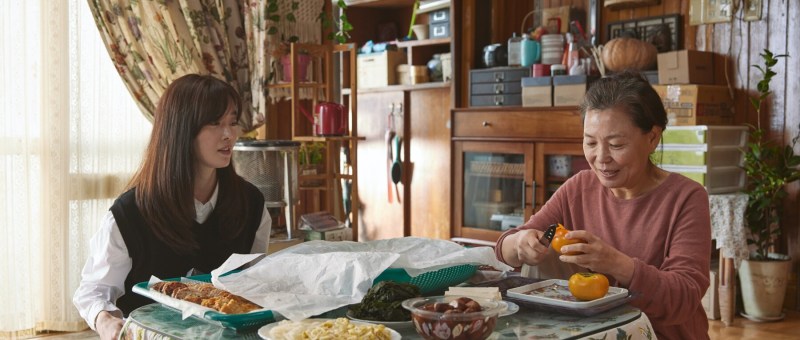
Hye-young (Han Sun-hwa) couldn’t wait to get out of Yeongdo and has been living in Seoul for the past several years with the aspiration of becoming a writer but has been earning her living working for a TV station making educational programmes. It’s clear that something has gone wrong for her in her sudden and unannounced visit home, though she only explains that she’s taking break. Meanwhile, she begins to notice that her mother, Hwa-ja (Cha Mi-kyung), has become forgetful and easily confused. Not only is she overstocking her fridge with multiple purchases of persimmons but habitually picking up the leftover kimchi from the kitchen where she works despite reminders from her otherwise sympathetic boss not to. 

The ages of the three sisters, like those of the Chekhov play marooned in the provinces, seem to be representative of the passage of a life. The youngest, Hye-joo (Song Ji-hyun), is boisterous and full of dreams keeping her hopes of becoming a hip hop dancer a secret on remembering all the fuss surrounding Hye-young’s announcement that she wanted to become a writer. Oldest sister Hye-jin (Han Chae-ah) by contrast is cynical and worldweary. She supports the family with her job in a mid-range handbag shop where she once dated the manager only he decided to break up with her because she didn’t want to leave Busan and had no interest in money. 

Hye-jin later tells unexpected love interest Polish sailor Piotr that she has never been abroad perhaps because she’s in a sense afraid to leave while constrained by her sense of duty owing to being the older sister, mildly resentful of Hye-young for abandoning them and shifting all of the burden onto her. A sense of displacement floats around the family home in part because of Hwa-ja’s childhood past, born in Japan and then brought to Korea by her Korean father without her Japanese mother’s knowledge. The film’s title comes from a series of letters the daughters find that are written in Japanese, a language that Hwa-ja claims to have forgotten though is perhaps slowly returned to her as they begin to translate in an attempt to retrace and reclaim the past that been hidden from them.

Though she recounts a fear of discrimination because of her Japanese ancestry, Hwa-ja had never particularly hidden her past answering Hye-young’s questions as to why she never mentioned it with the reasonable reply that she never asked. A sense of secrecy and miscommunication continues to divide the sisters with Hye-young reluctant to discuss the reasons behind her desire to return home, Hye-joo keeping her dancing dreams a secret, and Hye-jin not saying much at all in her disappointment and resentment. It frustrated Hye-young that her mother never throws anything away, but to her it would be like throwing away a part of her past self and another act of forgetting aside from that she no longer has any control over.

Yet the film seems to suggest that Hwa-ja need not remember everything when her daughters can remember it for her, adopting her orphaned memories into their own stories while she too is able to make a kind of peace with the past on reclaiming the memories of her own mother that were otherwise lost to her through linguistic and geographical displacement. Exposing the secrets and repairing the fracturing past frees each of the sisters to follow a path that more suits them, accepting that there’s a time to leave your hometown, and a time to return, whether or not or one eventually decides to stay. Poignant and somewhat elegiac, the film eventually celebrates maternal and sisterly connections extending beyond the immediate family in the presence of Hwa-ja’s staunchly loyal childhood friend along with a sense of serenity in rootedness to a particular place that represents a home.


A Letter from Kyoto screened as part of this year’s London Korean Film Festival.

Trailer (no subtitles)

Director’s Intention (영화의 거리, Kim Min-geun, 2021)

A location scout struggles with memory and landscape when reuniting with a former love in Kim Min-geun’s indie drama, Director’s Intention (영화의 거리, yeonghwaui geoli). The director’s intention is something she’s trying to tease out in trying to find the places that best reflect his feelings, but in doing so she’s also forced to confront herself, her regrets about the past, and her true feelings about her city and her place within it. 

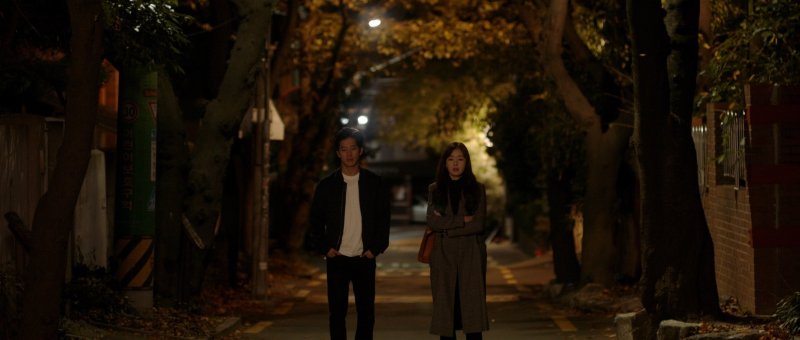
Longtime movie-obsessive Sun-hwa (Lee Sun-hwa) has been working as a location scout in her home city of Busan for quite some time and while moderately successful has not yet hit the big time. Her boss is excited to call her back to the city for a big new job he thinks could even lead to some Hollywood connections, but Sun-hwa isn’t sure she wants to take it because the director, Do-young (Lee Wan), turns out to be an old flame who broke her heart by leaving her behind to chase movie success in Seoul. 

It’s Sun-hwa’s firm opinion that Busan is as good as anywhere else and that filmmaking shouldn’t be limited to a small elite in the capital. She couldn’t understand why Do-young was so keen to leave and was determined to stay making films with those she loves in a place she loves. She accuses him of selfishness, but it is perhaps on another level simply afraid to leave the security of the familiar for the promise of the new, while he is too quick to abandon the old insisting that there are better opportunities to be had elsewhere. At the end of the day what they have is contradictory perspectives that cause each of them a crisis of faith in the relationship, he because she won’t leave with him and she because he won’t stay. “He cared more about his dreams, I cared more about my life” Sun-hwa later explains, justifying her desire to stay and build something on firmer foundations rather than take a gamble on an unlikely success. 

Sun-hwa prides herself on being able to match the emotions from the scene she’s given to a particular place to help the director express his feelings onscreen, but Do-young seems to reject each of her choices simply walking away from each location as in someway unsuitable. She offers him only barbed comments which seem to confuse the other members of the film crew who presumably have no clue what’s going on or of the couple’s former relationship while he says barely anything leaving the question open as to whether he’s here to rekindle an old romance or simply to memorialise it in film. Sun-hwa meanwhile needles him by deliberately selecting painful places filled with their shared memories sure to provoke something if not necessarily the effect Do-young was hoping for. Then again, his key criteria for a pivotal, unwritten scene is that it should look nice but feel empty. 

In any case, as Sun-hwa says there are no places you only see in the movies. Every location has its own story to tell, but can also play host to the stories of others. In the opening scenes, Sun-hwa holds a notebook and surveys a river ominously containing abandoned boots and clothing. She is mistaken for a detective by a panicked local who has in a sense created his own story from what he sees only to be relieved on discovering it to be an illusion. No horrific crime has disrupted the tranquility of this peaceful, rural scene. The only thing that matters is that it’s the right place for the right director and perhaps at the right time. Wander around and you might just find what you’re looking for while in having a firm destination you might ending up missing the perfect spot and never reach what you thought you were searching for. Then again, even if a place no longer exists the feelings surrounding it survive and can perhaps be salvaged even if not quite the same as they once were as Sun-hwa discovers in revisiting her past to scout locations that will either bring an old story to an end or begin it anew.


Director’s Intention in Chicago on Sept. 25 as part of the 15th season of Asian Pop-Up Cinema.

International trailer (English subtitles)

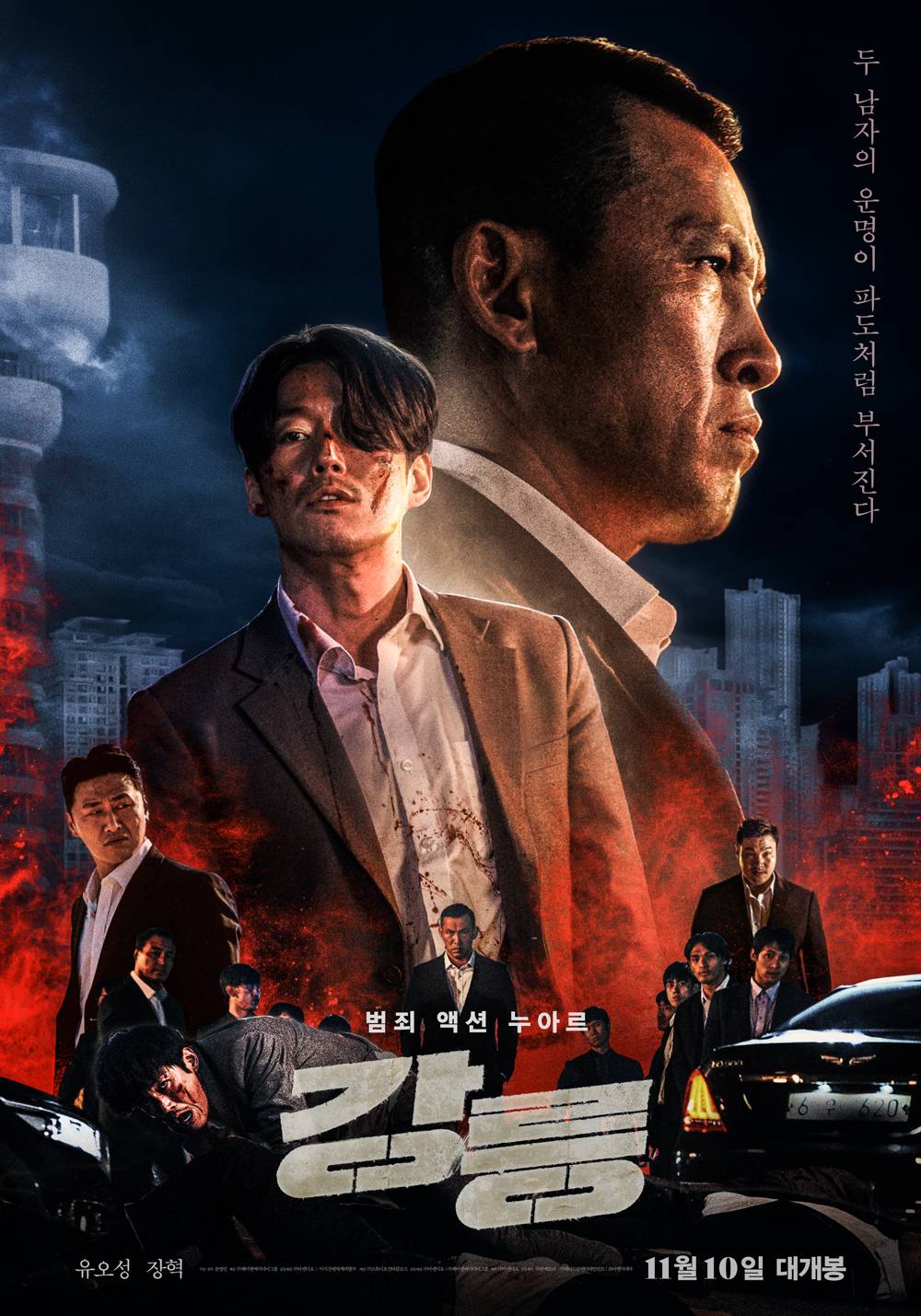
Tomb of the River (강릉, Yoon Young-bin, 2021)

“Why did you turn this place into hell?” a reformed gangster asks his defeated enemy only to be told that nobody made the world this way, it is just is. In any case, Yoon Young-bin’s purgatorial gangster epic Tomb of the River (강릉, Gangneung) finds itself in a world of conflicting moral values in which organised crime has become increasingly legitimised conducted by men in sharp suits sitting in elegant surroundings but no less thuggish, violent, and immoral than it ever was. 

The two opposing forces are hippyish middle-aged enforcer Gil-suk (Yu Oh-seong) whose boss has adopted an anti-violence philosophy, and the psychotic Min-suk (Jang Hyuk) whom we first meet as the only survivor of a smuggling boat massacre hiding in the hold eating the dead bodies of his comrades whom he may or may not have killed himself. The battle ground is a new casino resort in the previously peaceful rural backwater of Gangneung shortly to host the upcoming 2018 Winter Olympics. Gil-suk’s ageing boss decides to hand him the reins of the business but he objects out of old-fashioned gangster etiquette because the complex is technically located in an area handled by his colleague Chung-sub (Lee Hyun-kyun) who is currently in the boss’ bad books after a group of young people were found passed out having taken drugs in one of the karaoke rooms he manages. 

Gil-suk is perhaps a representative of disingenuous contemporary corporatised gangsters who still operate like thugs but do so with a veneer of elegance, his now elderly boss having achieved a state of zen in giving him small pieces of wisdom such as “don’t fight. If you fight you suffer whether you win or lose”. Gil-suk later echoes him when he tells his friend to leave Min-suk alone and that rather than fighting they should share a meal with him sometime instead acknowledging that his gang members’ lives seem to have been hard. But his compassion is as it turns out, misplaced, Min-suk is not the sort of man who can be befriended or softened with kindness for he is the personification of humanity’s baser instincts in unbridled selfishness and destructive desire. 

“I did it to survive” his underlings often justify themselves, believing they have no other option than to behave the way they do while Min-suk exploits the venality and misfortune of others as a kind of get out of jail free card promising to wipe their debts if they take the fall for his crimes. Sooner or later everyone betrays everyone else for reasons of greed or self-preservation, even Gil-suk eventually pulled towards the dark side while his policeman friend (Park Sung-geun) attempts to save him from himself. “What other choice did I have?”, he asks, but to conform to the dubious morality of the world around him. He criticises the police for a lack of action, but watches and does nothing as Min-suk carves up his entire squad of foot soldiers while patiently making his way towards him. 

The irony is that Gil-suk had been the good gangster, never wanting more than he needed and always happy to share. He is confused by the betrayal of his closest friends because he cannot understand their motivation. He had always thought of the resort as “ours” never considering that it could be “mine” while his friend tells him he should take it all because if he doesn’t someone else will. To prove his point Gil-suk tries to broker a peaceful solution by offering to share control with Min-suk in a process of appeasement, suggesting he take the club while he keeps the casino and they split the profits between them before eventually deciding to surrender it entirely in order to curry favour with an even shadier corporate gangster whose polite interest in the resort he’d previously rebuffed. 

Taking on spiritual dimensions in its gloomy backgrounds, battles fought under the light of a full moon, and the snow falling over the living and the dead in the melancholy final sequence Yoon’s hellish tale seems to take place in a gangster purgatory in which as Gil-suk finally announces romance really is dead, in its place only internecine violence and the intense desire to survive by any means possible mortal anxiety provoking only preemptive greed and cruelty. As Min-suk suggests “only death will end things” but everyone here is in a sense already dead only trapped in the eternal limbo of the gangster mentality. 


Tomb of the River streamed/screened as part of this year’s Udine Far East Film Festival.

International trailer (English subtitles)