Samurai Fury (室町無頼, Yu Irie, 2025)

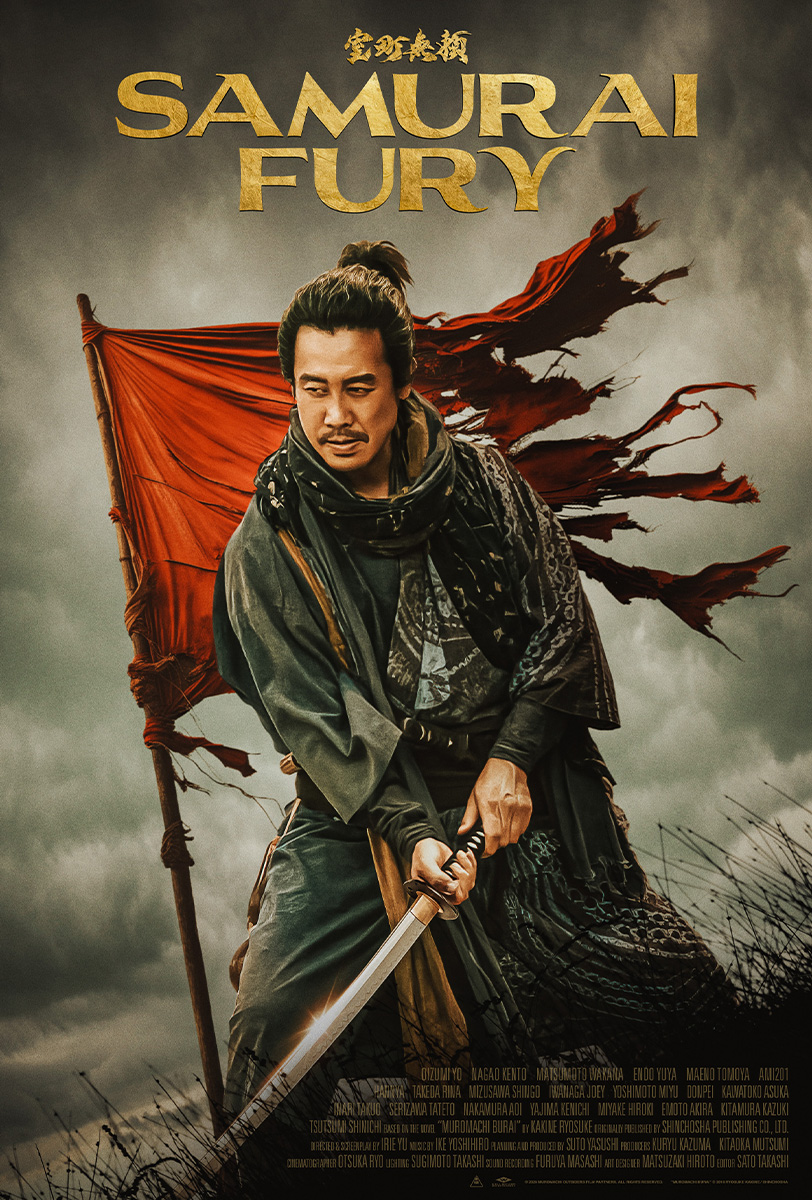
Retitled Samurai Fury (室町無頼, Muromachi Burai) for it’s US release, Yu Irie’s Muromachi Outsiders is indeed a tale of righteous anger though like many jidaigeki the rage is directed towards the corrupt samurai class and wielded by a ronin with a noble heart. Based on a novel by Ryosuke Kakine, it recounts a rebellion that took place five years before the Onin War that would lead to the end the Ashikaga Shogunate and initiate the Sengoku or warring states period that lasted until the Tokugawa era began. 

The cause is, really, the incompetent government of shogun Ashikaga Yoshimasa (Aoi Nakamura) who is largely seen here gazing out at his view from the palace in Kyoto which he is obsessed with rebuilding. Meanwhile, famine has taken hold following a period of drought that ended with a typhoon and flooding of the river Kamo, and the starvation has also led to a plague. Between the lack of food and disease, 82,000 people will die, but the government doesn’t really do anything because they don’t think the lives of peasants are all that important. This is of course very shortsighted because someone has to plant all that rice that gets delivered to the palace and they can’t do that if they’re too busy starving to death. In the opening sequences, peasants are whipped and beaten as they transport a giant rock for the shogun’s new garden, though when it gets there he doesn’t like it. Meanwhile, a giant pile of bodies in approximately the same shape is dumped at the edge of the river where they’re burning the dead.

The farmers are forced to take such onerous jobs for extra money because they can’t produce enough to pay their taxes which the samurai keep putting up. To make up the shortfall, they have to take out loans from usurious monks who seize their property or take their wives and daughters when they can’t pay. A young man pressed into working for debt collectors from the temple is told to kill a man who owed them money but hits the barrel beside him instead and exposes him for keeping his seed grain without which he won’t be able to plant more rice but they’re going to take that anyway which means that in the end everyone is going to starve. A village favoured by the hero, Hyoe (Yo Oizumi), is also subject raids from disenfranchised ronin who’ve taken to banditry to survive. 

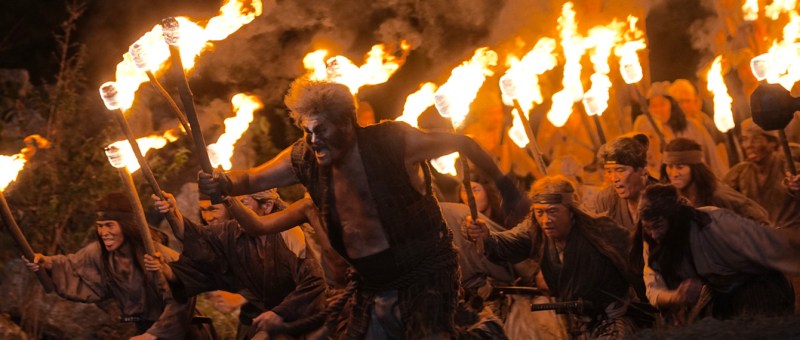
Hyoe is also a ronin, but in his life of wandering he’s found a kind of freedom even as he straddles an awkward line, sometimes working with an old friend from the same clan, Doken (Shinichi Tsutsumi), who has turned the other way and is now the security chief for the government in Kyoto with his own gang of bandit dent collectors. Hyoe’s role is, ostensibly, to stop peasant uprisings, which he does, but mostly because he knows they’re pointless and the farmers armed with little more than hoes and stolen armour will simply be massacred, but he’s also secretly plotting a giant rebellion of his own, harnassing the forces of the ronin and the fed up peasants to storm the capital, burn the debt agreements, and rescue the women taken in lieu of payment. 

But to do so means he’ll have to betray his oldest friend and that he likely won’t survive. Still he thinks someone’s got to do something about this rotten world and sees a better one beyond it if only they can throw off the yoke of the samurai class that thinks peasants are the same bugs to squeezed dry under their boots. That’s perhaps why he trains a young successor, knowing that can’t remake the world with just this one assault on the mechanisms of government and that even if they get rid of the drunken fool Lord Nawa (Kazuki Kitamura), someone not all that different will pop up in his place. “Tax is supposed to improve people lives,” one of the revolters screams at a young soldier, not pay for a new wing at the palace, though it’s a lesson the young shogun seems incapable of learning even as the city burns all around him. 

Taking a leaf out of The Betrayal’s book, the climax is a lengthy action sequence in which Hyoe’s apprentice Saizo (Kento Nagao) takes on half the Kyoto garrison single-handed armed only with his staff. Though the themes are common enough for jidaigeki, though in truth jidaigeki mainly refers to films set in the Edo era under the Tokugawa peace, Irie modernises the way battle is depicted to incorporate wuxia-style wirework and rooftop chases along with martial arts training sequences for the young Saizo who learns the way of the warrior from a cackling old man with a long white beard (Akira Emoto) who has also taken in a young Korean woman (Rina Takeda) who was sold to a brothel by her father in just another one of the injustices of the era but has now become a badass archer and another of Hyoe’s righteous avengers. Solidarity is it seems the best weapon, along with biding your time and knowing when to retreat because this is a war that’s never really won but only held back while the powers that be never really learn.


Samurai Fury is released Digitally in the US Oct. 7 courtesy of Well Go USA.

Trailer (English subtitles)
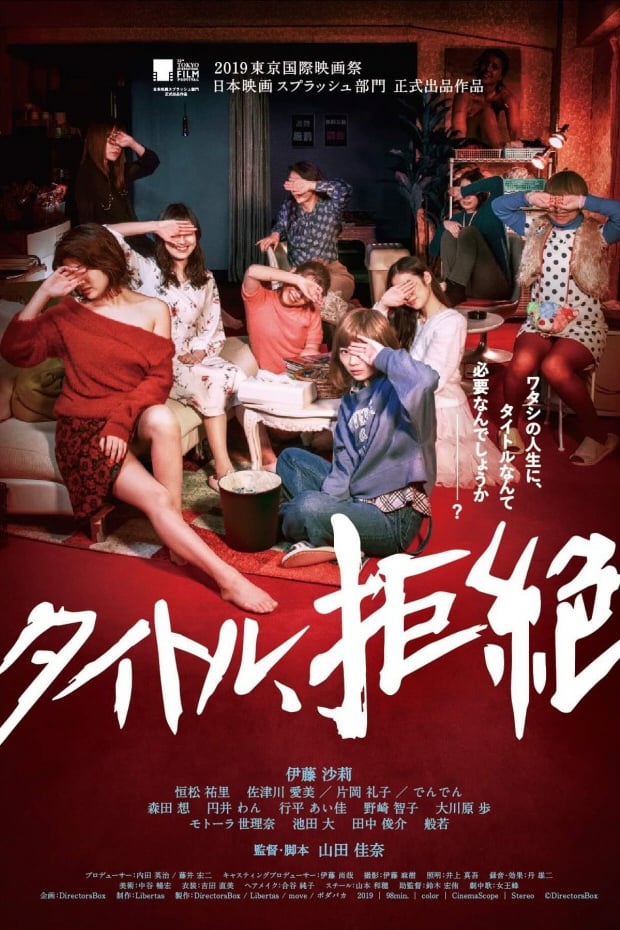
Life: Untitled (タイトル、拒絶, Kana Yamada, 2019)

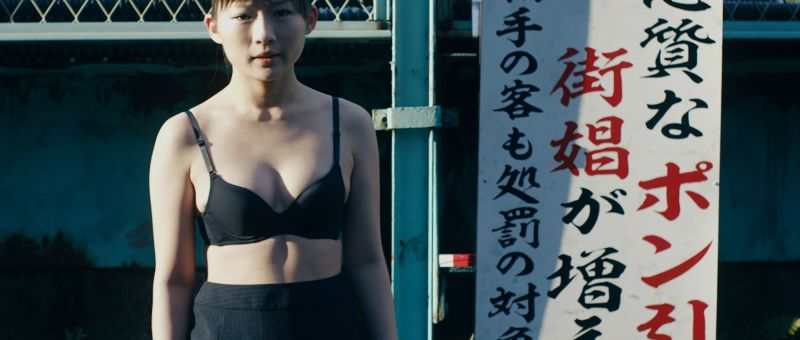
“Killing is easy. Revive me instead!” The heroine of Kana Yamada’s Life Untitled (タイトル、拒絶, Title: Kyozetsu) exclaims during a climactic argument, trying to find meaning in a life of ceaseless transaction. Adapting her own play, Yamada sets her tale of existential disappointment in an apartment used as an HQ for a group of call girls, each with their own problems but trying to live as best they can within the compromising environment of a patriarchal society which offers them little in the way of hope for a less depressing future. 

According to the agency’s top girl Riyu (Tomoko Nozaki) “everyone here is a failure of society”. Asking herself whether her painfully “ordinary” life was worth much of anything, Kano (Sairi Ito) resolved to become the hare rather than the tortoise, put on her recruit suit and submitted her CV to “Crazy Bunny”, a “delivery” company offering services only hinted at on the menu. Discovering that sex work was something she couldn’t handle, she managed to switch sides, becoming part of the management team taking “orders” and dispatching other women to various love hotels in the surrounding area, which means of course that she is privy to most of the interoffice drama even if she has little knowledge of these women’s external lives beyond that which they offer up freely as part of their work. 

The women who work at the agency, if you can call it that, are a varied bunch almost as if Yamashita, the thuggish boss running the operation on behalf of an older man (Denden), has made an effort to cater to all tastes. Three of the ladies gossip about ridiculous clients and their excuses for not wanting to use protection (including a fake medical certificate), while openly taking potshots at an older woman, Shiho (Reiko Kataoka), who has been selected as a substitute for the in demand Mahiru (Yuri Tsunematsu). Older women are cheaper they giggle, though the oldest of them, Atsuko (Aimi Satsukawa), is not so young herself and perhaps aware that she’s reaching a crisis point as she ages of out of the “most desirable” demographic. Kano thinks of Mahiru as the office’s hare in comparison to her patient tortoise, an embodiment of faceless desire wanted by all known by none. 

Mahiru too is well aware of her appeal and an expert in manipulating it. She loves money, she says, because she wants to use it to “buy someone’s life to burn the garbage inside me”, later vowing to “buy a person who can serve me for life”.  Carrying the burden of childhood trauma and sexualised from an early age, Mahiru is distrustful of relationships not based on transaction but perhaps craving something deeper while darkly yearning to burn the city of Tokyo to the ground. As it happens she is not the only one yearning to raze this society for the various ways in which it condemns women like her to a kind of underclass while men continue to live by a double standard that allows them to “buy” female bodies but resents the women who “sell” them. 

Another young woman, Kyoko (Kokoro Morita), finds this out to her cost in her difficult romance with the agency’s driver Ryota (Syunsuke Tanaka) with whom she slept for free while they were both drunk. She claims to understand him, that they are really both alike, soft people trying to look hard in order to survive in a cruel society. But he rejects her, asking who’d want to date a “hooker” like her, echoing Riyu’s words that she is “utterly worthless” by virtue of her life in sex work. Kyoko may be right and he likes her too, but he can’t let go of the idea that there is something “humiliating” about being romantically involved with a woman who has sex with men for money. 

Yamashita, meanwhile, is breaking all the rules of the trade by having sex with the girls he runs sometimes paying but perhaps sometimes not, wielding his position of power for sexual gratification before finally unmasking himself in describing the women as “garbage waiting to be thrown away”, disposable merchandise to be used and discarded once no longer useful to men like him. Kano might have been under no illusions as to Yamashita’s character, but the depths of his callousness surprise her. She’d developed a fondness for his underling, Hagio. (Hagio), who seemed sensitive and kind but turns out to have more than she’d expected in common with the girls while continuing to engage in the double standard, insisting that those who pay for sex are stupid, deluded for falling in love with those who only want money. 

Kano thought her “ordinary” life was “pathetic” and wanted to know if a “tortoise” like her could become the protagonist of her own story only to remain on the sidelines, a patient observer of these women’s lives while not quite as conflicted as you might expect her to be in her complicity with their exploitation. “A woman who ran away wouldn’t understand” Riyu fires back on being pushed for her refusal to entertain an unpleasant client, and perhaps it’s true, she wouldn’t because she works for the other side. She decides that perhaps it’s alright for her life not to have a “title”, meandering aimlessly without clear purpose but continuing all the same while the women take their particular kinds of revenge against a misogynistic and oppressive society ruled by male violence. Fully taking the play off the stage, Yamada depicts the lives of sex workers with a melancholy empathy quietly enraged at the society which forced them into lives they may not have asked for or wanted but discriminates against them simply for doing a job which is in essence like any other. “It’s not my fault” a high school girl instantly answers when questioned by a policeman, and you know, it really isn’t. 


Life: Untitled is available to stream in the US until July 30 as part of this year’s Japan Cuts.

Original trailer (English subtitles)