Escape from Mogadishu (모가디슈, Ryoo Seung-wan, 2021)

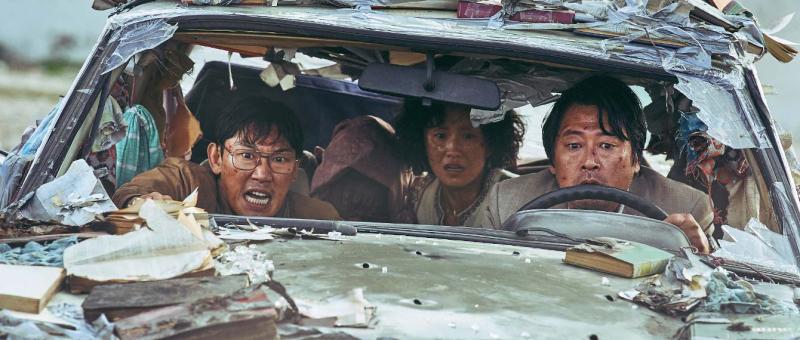
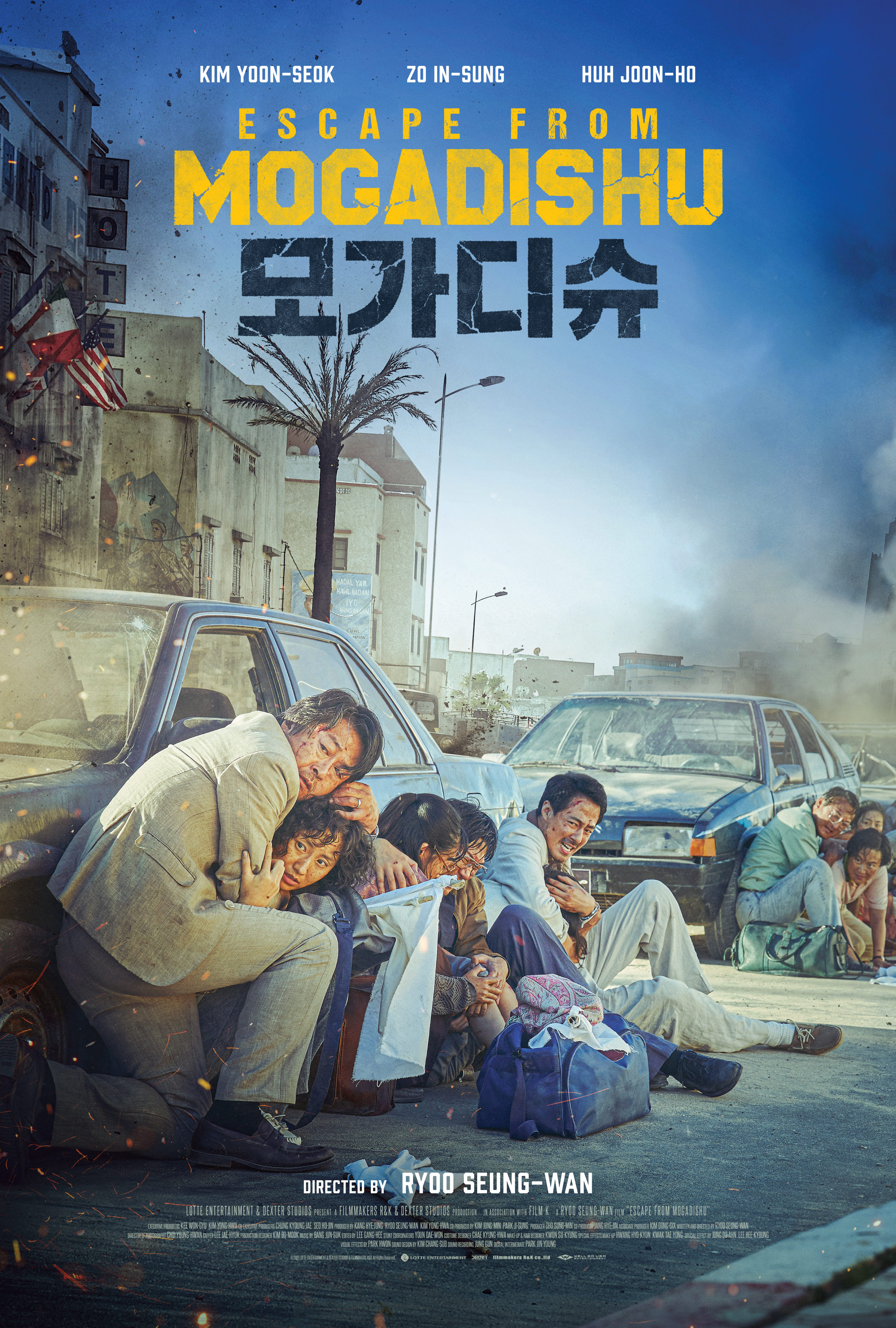
“You think we can accomplish more together?” the North Korean ambassador incredulously asks of the South, realising that if they’re to escape their desperate situation they will temporarily have to put ideology aside. Ryoo Seung-wan’s latest big budget action drama Escape from Mogadishu (모가디슈, Mogadishu) finds the diplomatic staff of a newly democratic South Korea ironically caught up in another nation’s much less peaceful revolution while perhaps confronted by the duplicities of their globalising ambitions even as they realise the North may already have the upper hand when it comes to cultivating relationships with authoritarian regimes. 

As the opening title cards explain, having successfully transitioned into democracy and fresh from its Olympic success the South Korea of 1991 was keen to claim its place on the global stage by joining the UN. Knowing that African votes are important in the process, the ambassador to Somalia, Han (Kim Yoon-seok), is determined to ensure he has that of President Barre in the bag before he finishes out his term. Unfortunately, his attempts are frustrated firstly by a lack of cultural knowledge in his home nation as witnessed by the inappropriate gifts they’ve prepared for the president which include expensive alcohol despite the fact Somalia is a muslim nation, and secondly by the North Koreans who seem to have cultivated a closer relationship with the ruling regime and are keen to ensure South Korea does not get its seat at the UN. 

Meanwhile, it becomes increasingly clear that there is unrest in the country with rebel forces intent on deposing the despotic regime of a military dictator and installing full democracy. The circumstances are in a sense ironic, the rebels and the ordinary citizens who later stage an uprising are only doing the same thing South Korea itself has recently done only they are of course doing it in a much less defensible way with widespread violence culminating in an entrenched civil war. The staff at the embassy therefore find themselves in a difficult position. “At home they turn innocent students into communist spies, think they can’t do that here?” a conflicted staff member advises uncertain as to what to do on realising they may unwittingly be harbouring a rebel soldier while diplomatically unable to declare a clear side. All they can think to do is play a tape from their welcome event describing themselves as friends of the Somalian people in the hope of deflecting rebels’ the anger. 

Nevertheless, the rebels have declared all foreign presences as their enemies for their tacit support of Barre’s regime. Han is certainly guilty of that in cosying up to the government in the hope of winning their vote, while the North Koreans fare little better despite being accused of secretly trafficking weapons to the rebel army while the rebels complain that foreign aid has only been used to facilitate Barre’s ongoing oppression. When the North Korean Embassy is destroyed and the Chinese have already left, the North Koreans are left with no choice other than the unthinkable, asking the South for help. The South, however, is conflicted. If they let them in they’re in danger of breaking the National Security Law and in any case they aren’t sure they can trust the North. “I hear they’re trained to kill with their bare hands” one of the ladies exclaims even doubting the children. But if they refuse to open the gate it means certain death for those who are, if not their fellow countrymen, then in a sense fellow Koreans. 

Based in historical fact, Ryoo’s high tension drama is in essence a division film which makes a strong case for the united Korean family even as the two sides remain somewhat distanced despite making the practical decision to trust each other in order to survive and escape. To do so they each have to make unpalatable political decisions, the South Koreans allowing others to believe the Northerners intend to defect in the hope of additional help from their own side and the wider diplomatic community. Given the opportunity to leave alone, Han nevertheless insists on making space for the North Koreans too unwilling to simply leave them behind. The North Koreans, meanwhile, reveal the reasons they could not defect even if they wanted to in that many of them have been forced to leave children behind in Pyongyang as hostages to ensure their continued obedience to the regime. Han may have gained a degree of enlightenment in realising there are sometimes “two truths” but there’s also an undeniable poignancy on realising that however much they’ve shared, the two men will never again be able to acknowledge each other in public, escaping Mogadishu but forever divided. Shooting in Morocco, Ryoo fully recreates the terror and desperation of being trapped in an unpredictable, rapidly devolving situation while allowing his divided Koreans to find a sense of commonality as they band together in order to escape someone else’s civil war.


Escape from Mogadishu opens this year’s New York Asian Film Festival on Aug. 6 and will thereafter screen at cinemas across the US courtesy of Well Go USA

International trailer (English subtitles)
Forbidden Dream (천문: 하늘에 묻는다, Hur Jin-ho, 2019)

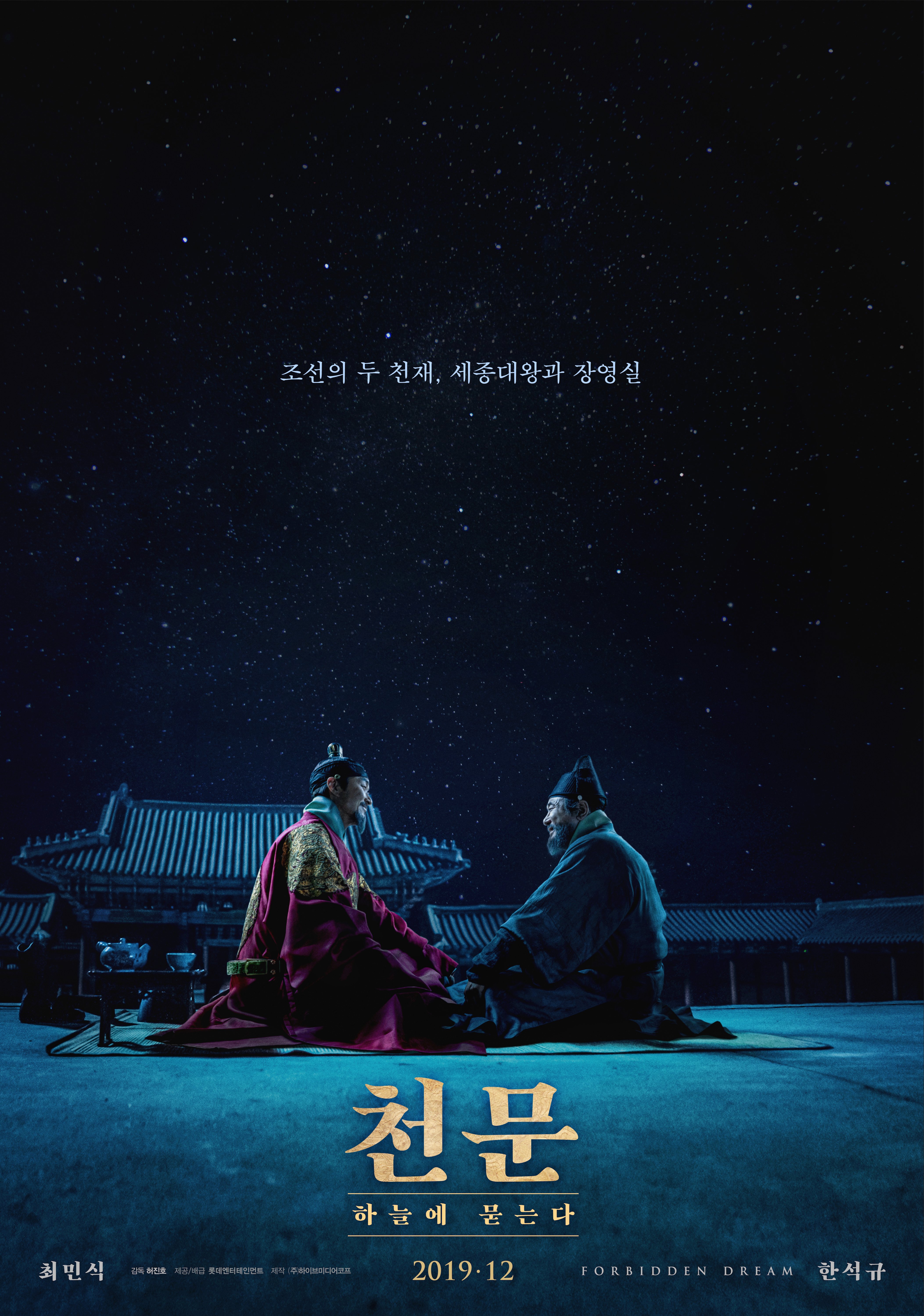
Technology is a great motivator for social change, which is one reason why there are those who would prefer to shut it down before it exists, afraid of the threat it poses to their own power and status. Best known for tearjerking romantic melodrama, Hur Jin-ho follows historical epic The Last Princess with a quietly nationalistic journey back to the Joseon era in which calls for greater sovereignty perhaps incongruously go hand in hand with progressive politics which see the good king Sejong (Han Suk-kyu) agitate for greater social equality through the democratisation of knowledge. This is his “Forbidden Dream” (천문: 하늘에 묻는다, Cheonmun: haneul-e mudneunda), the existence of a “fair” society in which anyone can read, write and learn regardless of the social class into which they were born.

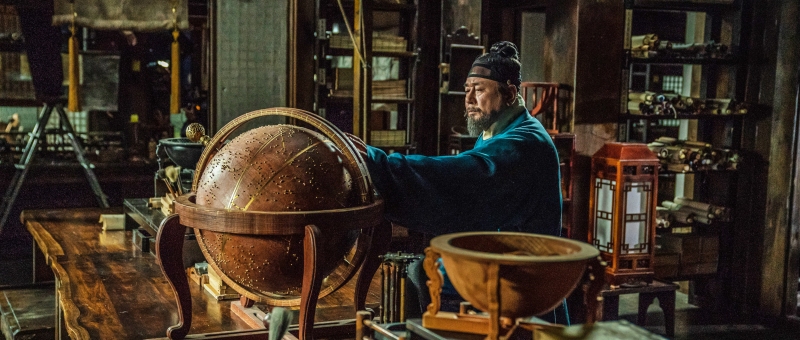
Apparently inspired by the mysterious disappearance of legendary court inventor Jang Yeong-sil (Choi Min-sik) from the annals despite his close friendship with the king, Hur sets his tale in the 1440s during which time Korea is a tributary of the Ming. The problem with that is that though Korea remains a sovreign nation and Sejong its king, the Ming have positioned themselves as the culturally superior arbiters of knowledge. Facing persistent famines, Sejong is convinced that the key to agricultural prosperity lies in getting rid of the Ming almanac and using their own time zone which is better suited to the Korean Peninsula and will allow their farmers to make the best use of their land. The Ming, predictably, do not like his idea and are forever sending envoys to tell him to stop trying to “improve” on their technology. Nevertheless, he persists which is how he comes to meet Jang Yeong-sil, a technological genius whose innate talent has brought him to the palace despite the fact that he was born a slave. 

In Yeong-sil, the perhaps lonely king Sejong discovers a kindred spirit, the two men quickly, and transgressively, speaking as equals when it comes to developing their new technology. Giddy as schoolboys, they work on their inventions together for the betterment of the people, beginning with building a water clock to better indicate the time when the sun goes down. Sejong frees Yeong-sil and makes him a “5th rank scientist”, gifting him the clothes of a gentleman, but his open hearted egalitarianism sets him at odds with his ambitious courtiers who resent being forced to share their space with a former slave, puffed up on their feudal privileges that convince them advancement is a matter of name and intrigue. 

Just as Hur suggested in The Last Princess that the courtiers sold their country out because of an internalised sense that Korea was small and backward and could not stand alone, so Sejong’s ministers begin to abandon him and turn their fealty to the Ming. Sejong believes in Korean independence, certain that only by standing free can the country prosper and the people be happy. Others however fear Sejong’s “forbidden dream” of a more equal society knowing that it necessarily means a lessening of their own power and the privilege they feel themselves entitled to. Besides timekeeping, Sejong has also been working on a new alphabet which will further set them apart from the culture of the Ming. The ability to read and write using Chinese characters which Sejong feels are not perhaps well suited to Korean has hitherto been reserved for the elite. Sejong’s alphabet which will eventually become the Hangul still in use today removes the barriers to knowledge which ensure the rule of the few can never be challenged while also reinforcing the idea of a cultural Koreanness which is valid in its own right, equal to that of the Ming, and obviously a better fit for his people who will then be able to create glorious inventions of their own. 

Hangul is the “something eternal that no country can take away” that Sejong dreamed of as his legacy, but it’s also the thing that costs him his transgressive friendship with Yeong-sil as his courtiers reject his internal challenge to the social order, favouring the feudal certainties of the Ming over his revolutionary kingship. Undeniably homoerotic in the depths of its sincerity, the attachment of the two men, a slave and a king, is embodiment of Sejong’s forbidden dream as a symbol of a better world where all are free to innovate. “Class does not matter” he tells Yeong-sil as they stare up at the stars, “what matters is that we look at the same sky and share the same dream”. That better world, however, will be a long time coming, Yeong-sil a martyr punished for his class transgression but making a personal sacrifice on behalf of the king who was also his friend so he can bring about his forbidden dream of an independent Korea powered by cutting edge technology created by men like him with fine minds from all walks of life. Well, perhaps there’s still some work to do, but you get there in the end. Anchored by the magnetic performances of its two veteran leads, Forbidden Dream does not entirely escape the pitfalls of the Joseon-era drama with its palace intrigue and complex interpersonal politics, but is at its best when celebrating the intense friendship of two men united by the desire to innovate even if that innovation is not always convenient for the world in which they live.


Forbidden Dream streamed as part of this year’s New York Asian Film Festival.

International trailer (English subtitles)
Images: © 2020 LOTTE ENTERTAINMENT All Rights Reserved.

Default (국가부도의 날, Choi Kook-hee, 2018)

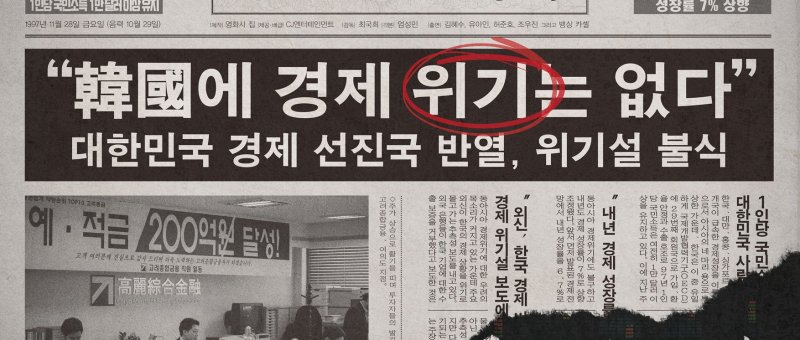
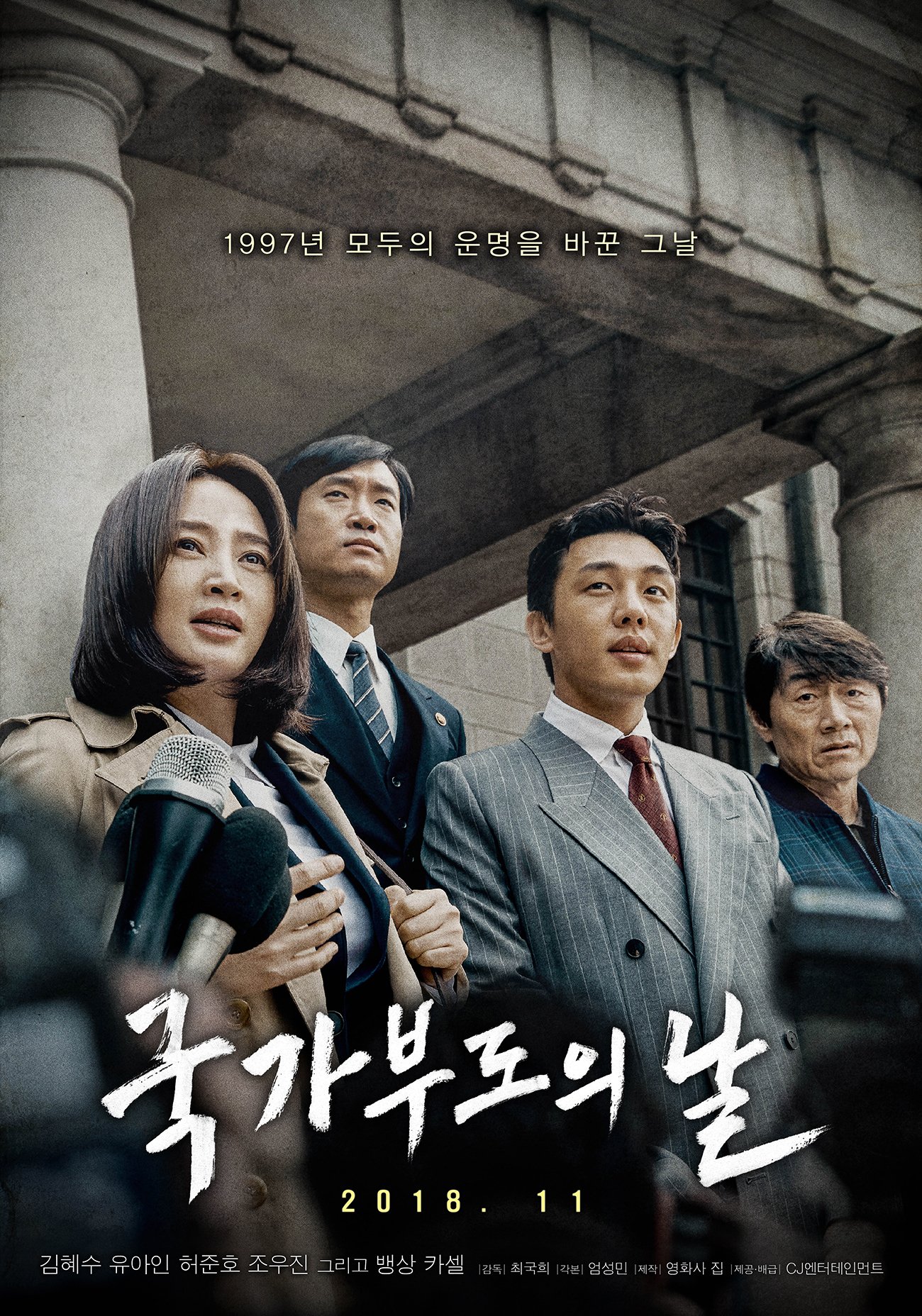
Default poster 1The Korean economic miracle came to an abrupt halt in 1997. In an event the media labelled “the day of national humiliation”, the Korean government went to the IMF for a bailout in order to avoid bankruptcy. So, what went wrong? Choi Kook-hee’s Default (국가부도의 날, Gukga-budo-eui Nal) looks back at the fateful seven days before the country would go bust, asking serious questions about why it found itself in this position and why it chose to opt for external assistance rather than fix its own problems. The answer is, as always, a mix of disaster capitalism, incompetency, and a healthy disinterest in the lives of the less well off.

As if to signal its hubris, the Korea of 1997 is busy celebrating its accession to the OECD and emergence on the world stage as a major player, escaping post-war austerity once and for all. Young Koreans have embraced consumerism with gusto. Luxury goods and foreign travel are becoming increasingly popular with the government insisting everything is on the up and up. However, listeners to Son Sook’s Woman’s Era are telling a different story – cafes not getting customers, businesses going under, people not getting paid. With the Asian Financial Crisis mounting, the Korean Won is being hit hard and the government does not have the reserves to cover its debts. A high ranking Bank of Korea official, Si-hyun (Kim Hye-soo), has concluded that the nation has one week to find a solution before everything comes to a grinding halt.

Meanwhile, self-interested merchant banker Yoon (Yoo Ah-in) has come to the same conclusion on his own but his aims are very different. Where Shi-hyun sees crisis, Yoon sees opportunity. He quits his job and starts calling up wealthy clients with an innovative pitch. Explaining to them that the country is about to go bust, he outlines a plan to short the government which will make them a lot of money though at the expense of those without who will be hung out to dry when it all goes to hell.

As Yoon tells his investors, the trouble is that the entirety of the modern Korean Economy is built on lies. An underling is tasked with explaining the crisis to the president in simple terms, only for Si-hyun to grimly suggest he tell him “we spent borrowed money like it was water hoping to get an extension and here we are”. Factory owner Gap-soo (Heo Joon-ho) is excited to receive a large order from a major department store, but put off when he realises that they intend to pay him with a promissory note. The department store CEO belittles his concerns, implying that he can’t be much of a player if he doesn’t know that’s how business is done these days. Gap-soo’s partner is all for it and so they sign, but when banks go bust promissory notes become worthless and they need ready cash to pay their staff and suppliers.

Si-hyun tries to make the case for saving the economy to protect the working classes but her advice falls on deaf ears. Often the only woman in the room, Si-hyun is dismissed as a “secretary” while the all male officials make a point of talking to her male assistant and accusing her of being “sentimental” when she points out that people will starve if they put their plan into action. The conclusion that she gradually comes to is that the crisis is an elaborate game being played by elites for their own gain at the expense of ordinary men and women all across the country. Odious finance ministers prioritise saving the Chaebols, warning their friends and cronies, while deliberately running down the clock so the country will have no other option than running to the IMF full in the knowledge that an IMF bailout comes with considerable strings which will vastly constrain their sovereignty and economic freedom – effectively handing control over to the Americans who will use it as an excuse to extend their own business interests by insisting on destructive labour reforms which will devastate the working classes.

Si-hyun’s exasperation leaves her making a last ditch effort to get the government to see sense only for the IMF negotiator (Vincent Cassel) to make her removal another of his red lines, her plain speaking instantly deemed “inappropriate”. Meanwhile, Yoon’s headlong descent into amoral profiteering begins to prick at his conscience even as he tries to justify his actions to himself. 20 years later, it might seem as if the crisis is over but its effects are very much still felt. Gap-soo’s factory may have survived, but it’s running on exploited foreign labour while the Chaebols continue to run rampant over the increasingly unequal Korean economy. None of the problems have been solved and another crisis is always on the horizon. Tense and infuriating, Default is a story of moral as well as financial bankruptcy which places the blame firmly on systemic corruption and the undue influence of self-interested elites while acknowledging that little has changed in the last 20 years leaving the little guy very much at the mercy of capricious Chaebol politics.


Default was screened as part of the 2019 Udine Far East Film Festival. It will also be screened as the next teaser for the upcoming London Korean Film Festival on 20th May at Regent Street Cinema, 7pm.

International trailer (English subtitles)