Tazza: The Song of Beelzebub (타짜: 벨제붑의 노래, Choi Kook-hee, 2026)

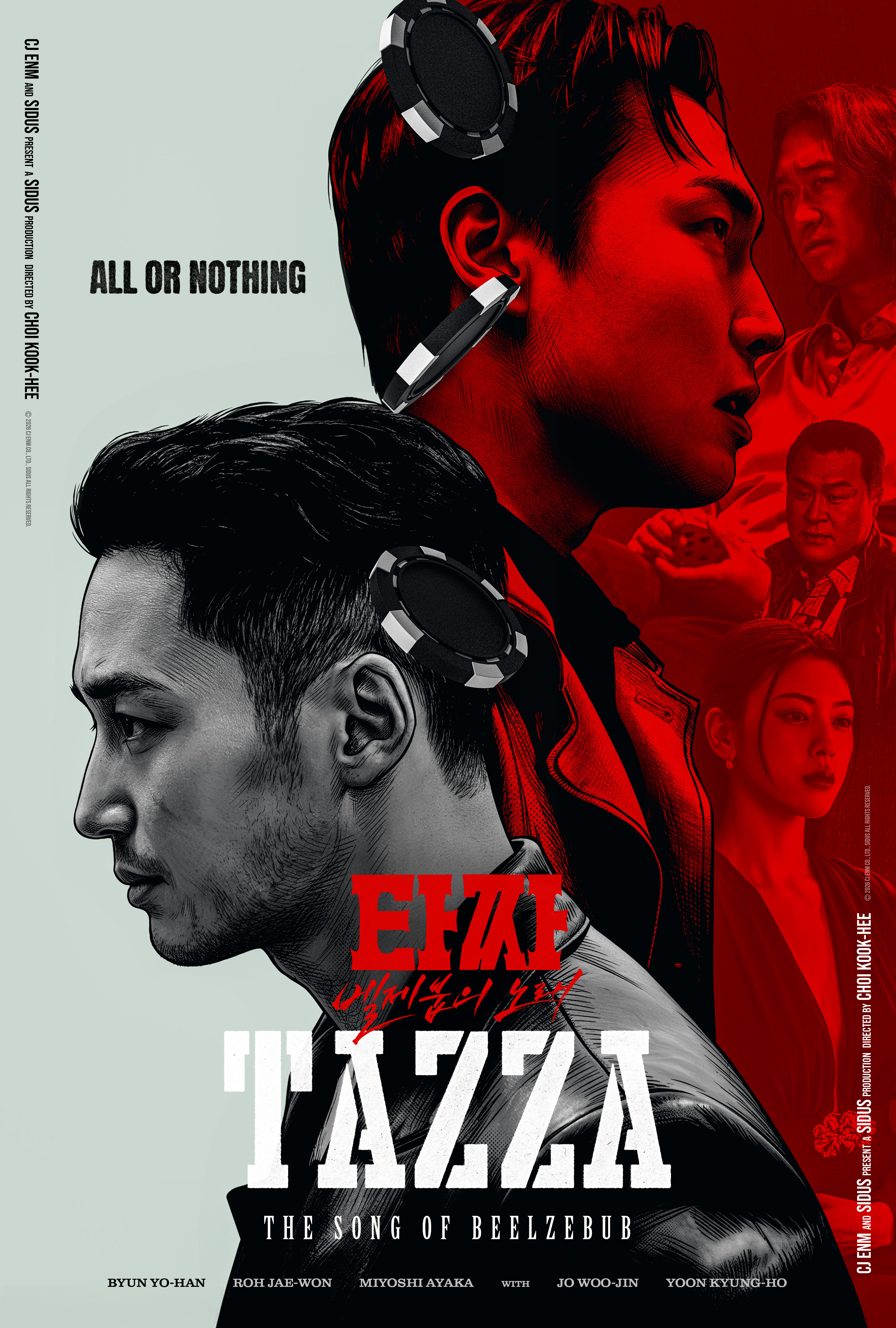
“Luck” is a funny thing. You might think you’ve come out on top, only to realise that perhaps you haven’t been quite so lucky after all. Choi Kook-hee’s Tazza: The Song of Beelzebub (타짜: 벨제붑의 노래, Tazza: Beelzebubui Norae) is the latest instalment in the thematic series that began with 2006 manwha adaptation Tazza: The High Rollers, though otherwise a stand-alone tale. This time around, gambling is more a means of revenge as two men, who are in effect two sides of the same coin, find their roles constantly reversed.

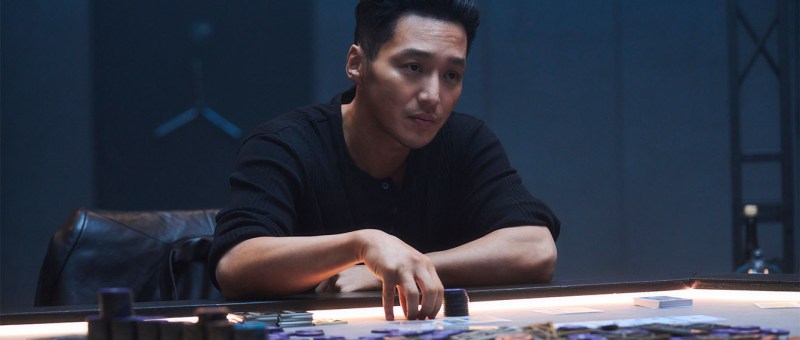
Indeed ParkTae (Roh Jae-Won) characterises them as Beelzebub and Lucifer vying for control with Beelzebub the apparent loser. He and JangTae (Byun Yo-Han), who each share the name Taeyoung, met in high school and became friends, though ParkTae came to resent JangTae for apparently having charmed luck in which everything seemed to go his way and he always came out on top. The boys develop a shared love of gambling, but ParkTae is experiencing a difficult home life in which his mother is a religious fanatic who seems to have an alcohol problem. She regularly beats him with a crucifix and refers to him as the antichrist, which perhaps fuels his characterisation of himself as Lucifer. JangTae, meanwhile, has lost both his parents but shares a warm familial environment with his older sister Tae-hee (Lim Se-Mi). They later take in ParkTae too, but he soon develops unreturned feelings for Tae-hee that see him almost long to push JangTae out of the next.

Filled with self-loathing, ParkTae sees himself as unlucky and feels hard done by, resentful of the ease with which JangTae seems to live his life and what he sees as the way JangTae’s “luck” often ends up making him look foolish. ParkTae seems to be the more the rational side of the crypto casino business the guys start together while JangTae is readier to make decisions on gut instinct. JangTae later asks him if it wasn’t ParkTae who was the lucky one all along. He was smart, talented, and had people who loved him, though he was too consumed with resentment  to notice. While the guileless JangTae only offered him support and friendship, ParkTae dreamed of ruling alone and taking the entire prize for himself. 

That might be why he sets up a honeytrap with the help of Korean American lobbyist Linda Park (Stephanie Lee) who’s supposedly agreed to give them the lowdown on how to clear the way for a physical casino in Vietnam. JangTae has to bet his life on the toss of coin where both sides spell death only to find himself lucky once again when it somehow ends up standing on edge. Taken in by a former card sharp hiding out in Vietnam (Jo Woo-Jin), JangTae is co-opted into another battle for revenge in which a young woman (Ayaka Miyoshi) plots against the man who shot her father (Tsuyoshi Ihara) who foolishly bet his life after getting too into a poker game. The lure of odds seems to drive men mad with each begging for just one more game to turn it all around. It is, however, a battle of wits as much as anything else in which the pair engage in a kind of psychological warfare over the gaming table.

As JangTae says, maybe ParkTae was always luckier than he was. He just isn’t able to see why a particular outcome benefits him while fixating on winning or being a conventional success. ParkTae wants to knock JangTae off his perch to satisfy his ego, but cannot shake his inferiority complex and attributes all his shortcomings to his unluckiness rather than accept the consequences of his own actions. As JangTae’s mentor taught him, the luckiest man at the table is the one who knows when to walk away. That’s something that seems to have eluded ParkTae who doesn’t know when to quit when he’s ahead. Rather, he fixates on his chosen income unable to see clear where real “luck” lies. In any case, the dynamics between the two men are continually in shift as they find themselves quite literally staking their lives on the cards while wondering whether either of them has the courage to see things through. In the end, the real winner maybe the one who knows when it’s time to call it quits, rather than allow themselves to be manipulated by the constant allure of the odds.


Tazza: The Song of Beelzebub opens in US cinemas October 16 courtesy of Well Go USA.

Trailer (English subtitles)
Default (국가부도의 날, Choi Kook-hee, 2018)

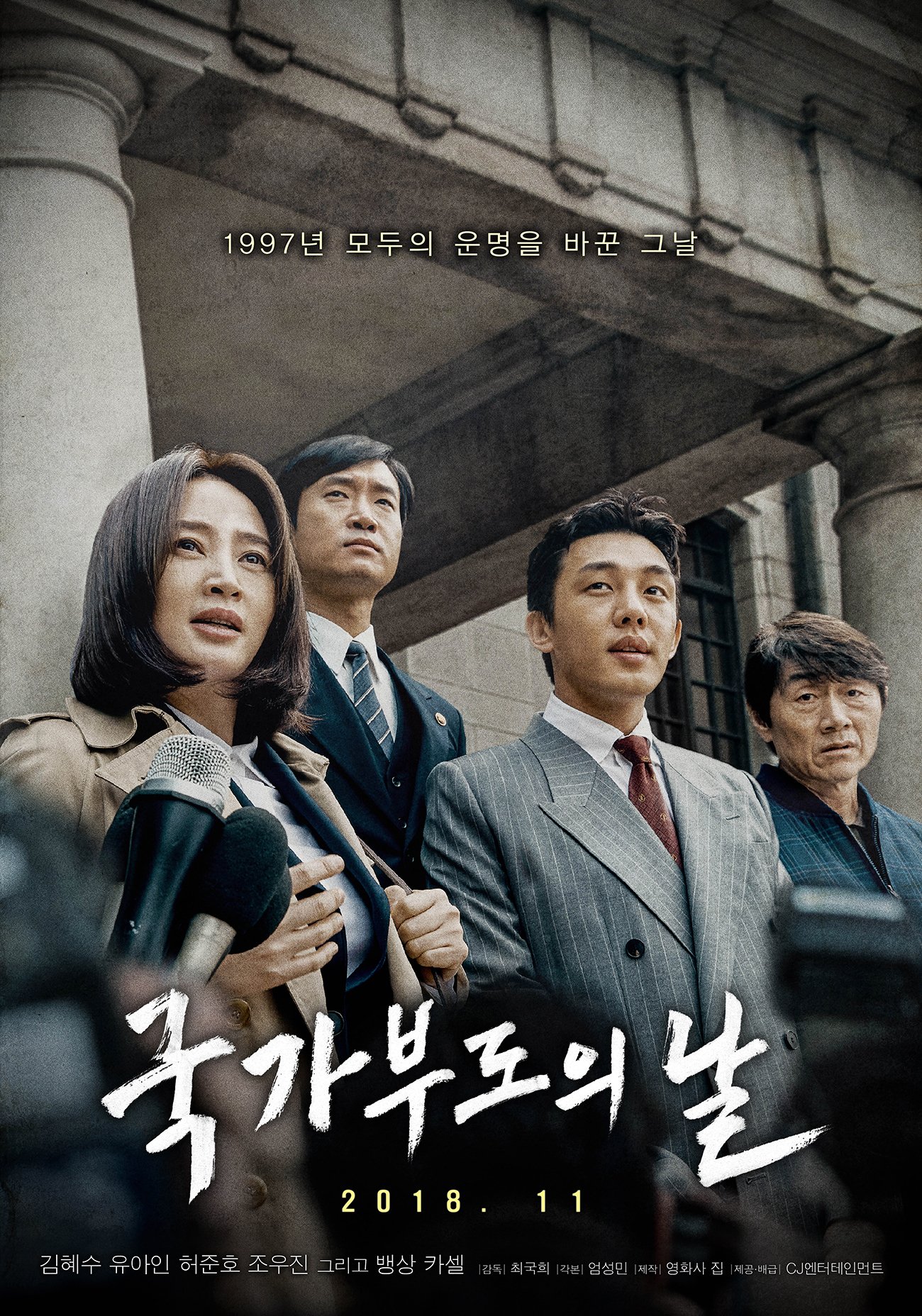
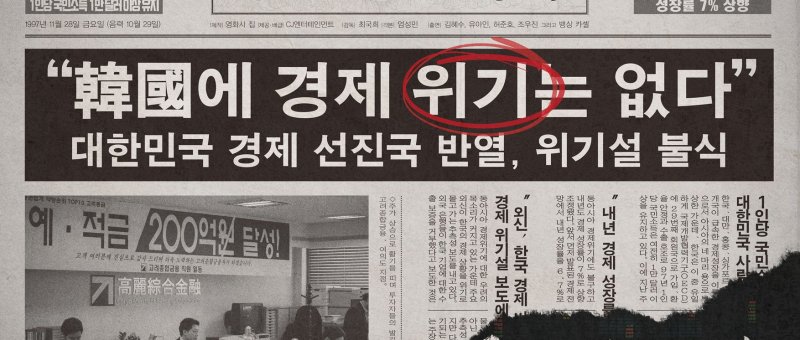
Default poster 1The Korean economic miracle came to an abrupt halt in 1997. In an event the media labelled “the day of national humiliation”, the Korean government went to the IMF for a bailout in order to avoid bankruptcy. So, what went wrong? Choi Kook-hee’s Default (국가부도의 날, Gukga-budo-eui Nal) looks back at the fateful seven days before the country would go bust, asking serious questions about why it found itself in this position and why it chose to opt for external assistance rather than fix its own problems. The answer is, as always, a mix of disaster capitalism, incompetency, and a healthy disinterest in the lives of the less well off.

As if to signal its hubris, the Korea of 1997 is busy celebrating its accession to the OECD and emergence on the world stage as a major player, escaping post-war austerity once and for all. Young Koreans have embraced consumerism with gusto. Luxury goods and foreign travel are becoming increasingly popular with the government insisting everything is on the up and up. However, listeners to Son Sook’s Woman’s Era are telling a different story – cafes not getting customers, businesses going under, people not getting paid. With the Asian Financial Crisis mounting, the Korean Won is being hit hard and the government does not have the reserves to cover its debts. A high ranking Bank of Korea official, Si-hyun (Kim Hye-soo), has concluded that the nation has one week to find a solution before everything comes to a grinding halt.

Meanwhile, self-interested merchant banker Yoon (Yoo Ah-in) has come to the same conclusion on his own but his aims are very different. Where Shi-hyun sees crisis, Yoon sees opportunity. He quits his job and starts calling up wealthy clients with an innovative pitch. Explaining to them that the country is about to go bust, he outlines a plan to short the government which will make them a lot of money though at the expense of those without who will be hung out to dry when it all goes to hell.

As Yoon tells his investors, the trouble is that the entirety of the modern Korean Economy is built on lies. An underling is tasked with explaining the crisis to the president in simple terms, only for Si-hyun to grimly suggest he tell him “we spent borrowed money like it was water hoping to get an extension and here we are”. Factory owner Gap-soo (Heo Joon-ho) is excited to receive a large order from a major department store, but put off when he realises that they intend to pay him with a promissory note. The department store CEO belittles his concerns, implying that he can’t be much of a player if he doesn’t know that’s how business is done these days. Gap-soo’s partner is all for it and so they sign, but when banks go bust promissory notes become worthless and they need ready cash to pay their staff and suppliers.

Si-hyun tries to make the case for saving the economy to protect the working classes but her advice falls on deaf ears. Often the only woman in the room, Si-hyun is dismissed as a “secretary” while the all male officials make a point of talking to her male assistant and accusing her of being “sentimental” when she points out that people will starve if they put their plan into action. The conclusion that she gradually comes to is that the crisis is an elaborate game being played by elites for their own gain at the expense of ordinary men and women all across the country. Odious finance ministers prioritise saving the Chaebols, warning their friends and cronies, while deliberately running down the clock so the country will have no other option than running to the IMF full in the knowledge that an IMF bailout comes with considerable strings which will vastly constrain their sovereignty and economic freedom – effectively handing control over to the Americans who will use it as an excuse to extend their own business interests by insisting on destructive labour reforms which will devastate the working classes.

Si-hyun’s exasperation leaves her making a last ditch effort to get the government to see sense only for the IMF negotiator (Vincent Cassel) to make her removal another of his red lines, her plain speaking instantly deemed “inappropriate”. Meanwhile, Yoon’s headlong descent into amoral profiteering begins to prick at his conscience even as he tries to justify his actions to himself. 20 years later, it might seem as if the crisis is over but its effects are very much still felt. Gap-soo’s factory may have survived, but it’s running on exploited foreign labour while the Chaebols continue to run rampant over the increasingly unequal Korean economy. None of the problems have been solved and another crisis is always on the horizon. Tense and infuriating, Default is a story of moral as well as financial bankruptcy which places the blame firmly on systemic corruption and the undue influence of self-interested elites while acknowledging that little has changed in the last 20 years leaving the little guy very much at the mercy of capricious Chaebol politics.


Default was screened as part of the 2019 Udine Far East Film Festival. It will also be screened as the next teaser for the upcoming London Korean Film Festival on 20th May at Regent Street Cinema, 7pm.

International trailer (English subtitles)