The Whole Family Works (はたらく一家, Mikio Naruse, 1939)

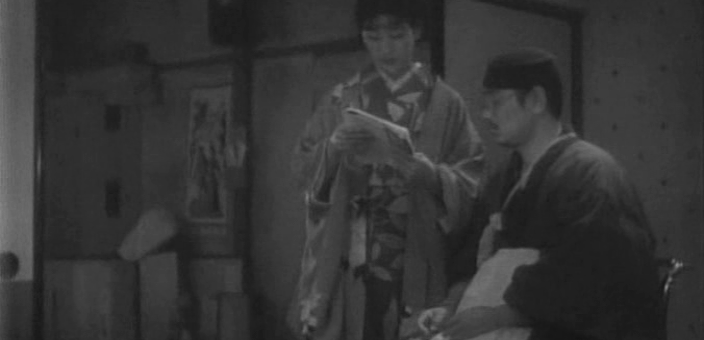
A young man becomes fed up with the constraints placed on his life and asks for the opportunity to improve his circumstances, but knows that to do so will leave his family at a disadvantage, at least in the short term. Is his request selfish, or are his parents selfish for exploiting the labour of their children and thereby impeding their progress in the world? As in many of Naruse’s films, the great enemy is poverty, but as the wise teacher Mr Washio says, the solution would be easy if Ishimura had a drinking problem or Kiichi were lazy but the situation is too complicated for such a simple adjudication.

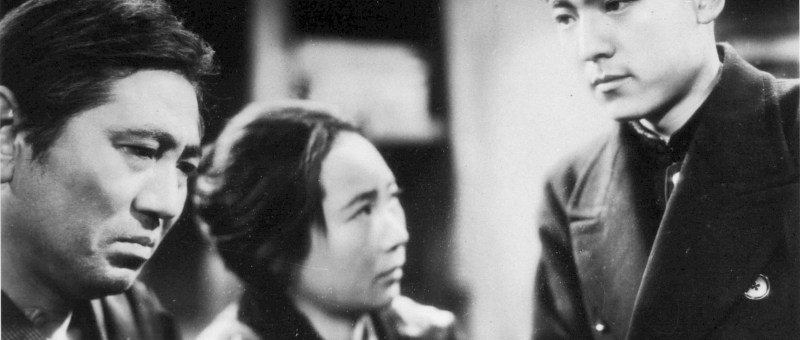
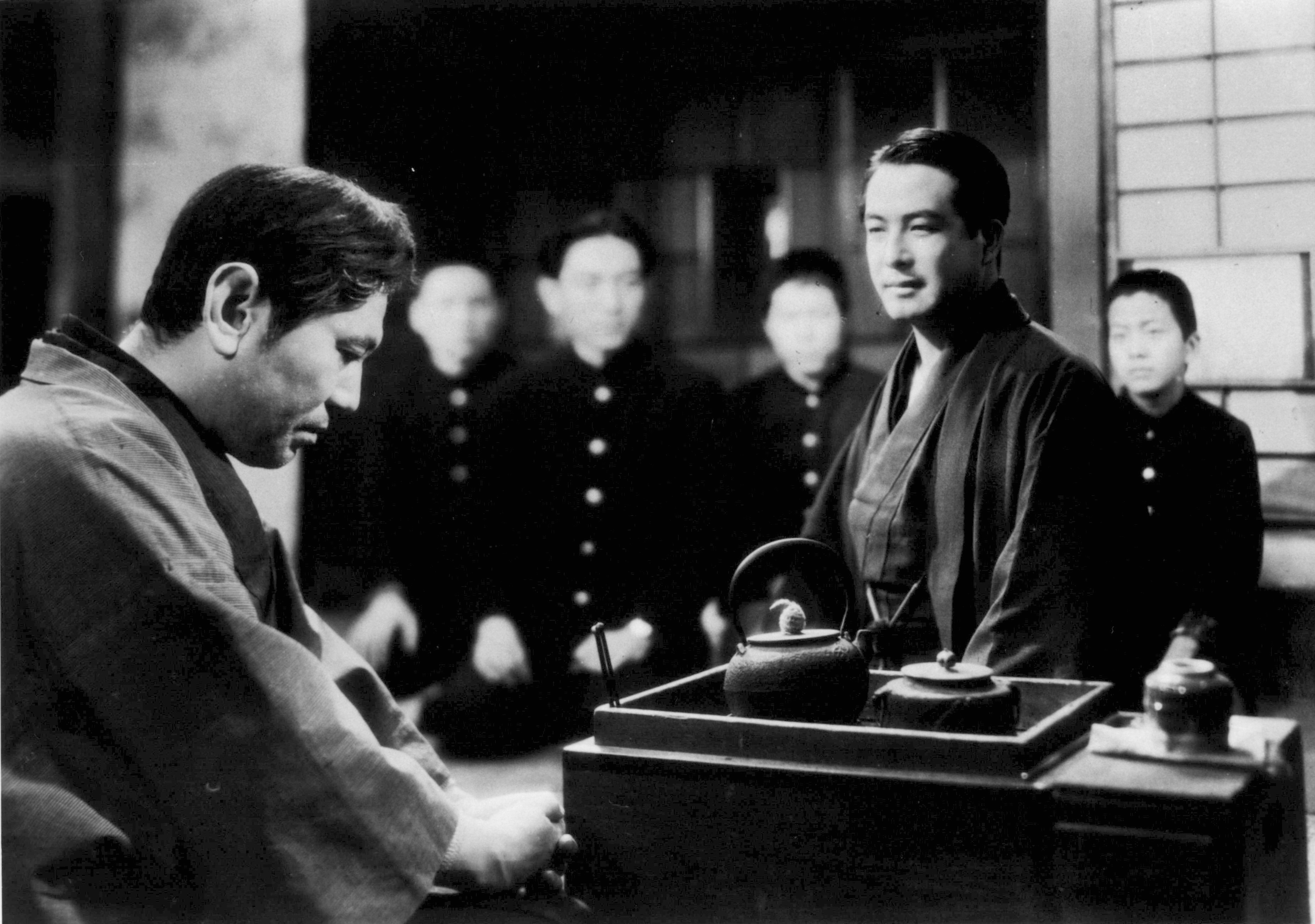
Ishimura (Musei Tokugawa) has a job, but his wages are low and he has nine children to support along with elderly parents who are also still working. Fourth son Eisaku (Takeshi Hirata) tells his mother (Noriko Honma) that he doesn’t want to go to the factory and would like to carry on to middle school with his friends, but she tells him he’s being selfish and childish and that all his brothers began working after primary school. Perhaps because the burden disproportionally falls on her, it’s the mother who is most acutely obsessed with money and the most controlling of her children. Ishimura is more of a soft touch and genuinely sorry that he can’t really agree to oldest son Kiichi’s (Akira Ubukata) request to take five years off to study because the family can’t survive without his wages.

But Kiichi’s problem is that he’s trapped in a dead-end job. There’s no possibility of advancement and his wages won’t ever change. He could work there 50 years and never be able to support a family of his own. His idea is that he wants to become an electrician which he believes will be a steady occupation that will pay enough to allow him to take care of his parents when they’re old and also get married. He thinks if he doesn’t do something now, he’ll be trapped in this life forever and never escape his parents’ yoke. Nevertheless, he worries about whether his desire is “filial” or not and feels a tremendous amount of guilt and frustration that sends him to drink.

Ishimura also knows that if he agrees to Kiichi’s request, he’ll have to say yes to the others too. All the boys have dreams of their own with young Noboru (Seikichi Minami) even hoping to become a lawyer, while Genji (Kaoru Ito) and his younger brother Kokichi (Seiichiro Bando) are intent on joining the armed forces which is perhaps a nod to the rising militarism of the age. Scenes of imagined warfare leave a less aspirational vision of the military, though there hints of it throughout the boys’ lives through magazines and children’s literature such as the book Mr Washio gives to Eisaku. The household becomes a kind of microcosm of a totalitarian regime that controls the boys’ lives and futures, causing them to form a conspiratorial faction talking over their mutual dissatisfaction in the coffeehouse opposite run by Genji’s old school friend Mitsuko (Sumie Tsubaki) who has a crush on Kiichi. Eisaku has been patiently saving his allowance, but his mother finds out and so he blows the whole lot taking his brothers out for dinner rather than allow her to “borrow” any more of his money to which she feels herself entitled.

It’s the entitlement that’s the point. The parents expect the children to work without giving them any choice and thereby deny them the opportunity of working towards their own futures. Kiichi sees the big picture and wants to improve his circumstances, but does so because he wants to work for his family. He doesn’t intend to abandon them and chase his own success, he just wants to be able to provide for himself and at least have enough to eat. Mr Washio says he won’t tell him what to do, but also that there’s no rush, which seems like an intrusion from the censor’s board to reinforce the importance of filial piety over individualistic desire but also doesn’t deny that Kiichi has a point and as a grown man a right to freedom and independence. Nevertheless, there’s a subversive tension in the confrontation scene as the family sits in silence as the clock ticks away on the wall and the rain beats down outside. The brothers roll around in exuberance upstairs, while their defeated parents can only look up in resignation to their broken authority as the children’s revolution begins to take hold.


The Whole Family Works screened at Metrograph as part of Mikio Naruse: The World Betrays Us – Part II.
Morning’s Tree-Lined Street (朝の並木路, Mikio Naruse, 1936)

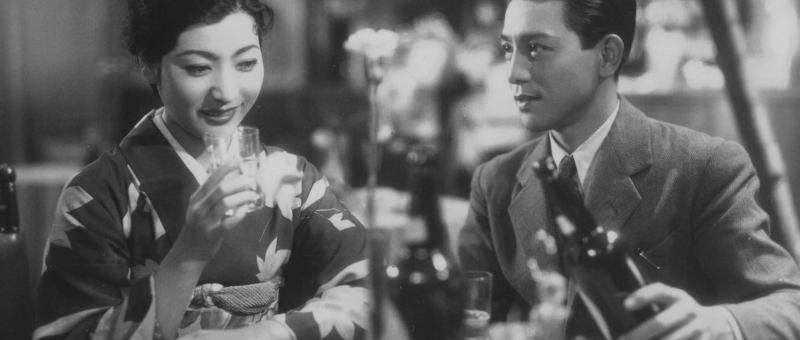
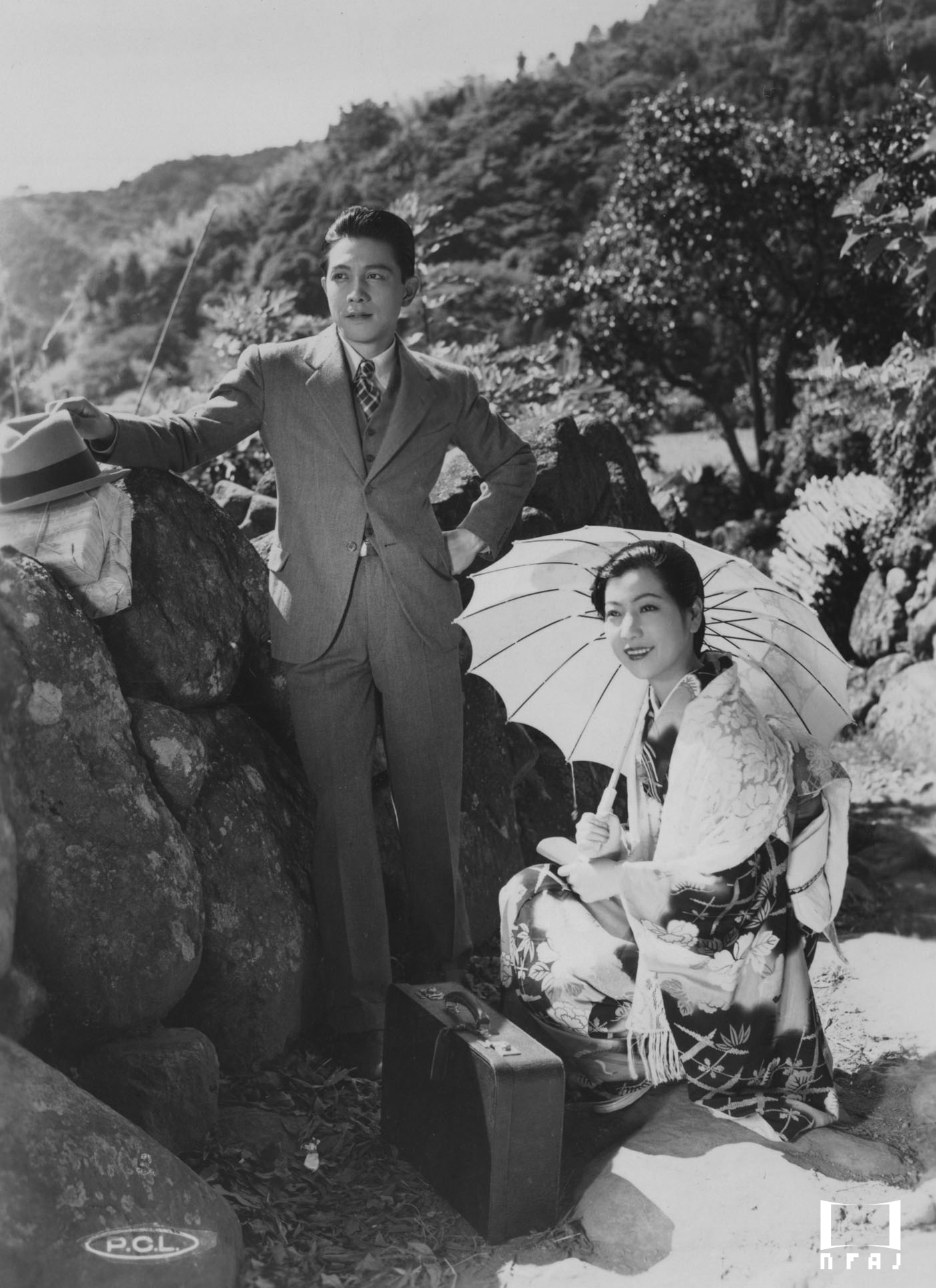
A country girl comes to the city in search of a more glamorous life but largely finds only disillusionment and disappointment in Naruse’s 1936 drama Morning’s Tree-lined Street (朝の並木路, Ashita no Namikimichi). Naruse depicts Chiyo’s (Sachiko Chiba) spiritual journey literally as she takes the bus from her rural hometown all wide-eyed wonder and then arrives in the city to be bothered by a homeless man and then walk into a less salubrious area of the city with only her friend’s address to go on. 

In her hometown, everyone thinks Hisako (Ranko Akagi) works in a big office in Marunouchi, but in reality she’s now working in a hostess bar under the name “Shigeko.” Nevertheless, despite a degree of shame in her circumstances, Hisako doesn’t reject Chiyo and isn’t angry that she’s come and found out her secret. She talks her landlady, Okada, into letting her stay but discourages her from working in the bar. The current economic depression is evident in the fact that the bar isn’t doing so well and never has many customers, yet the “help wanted’ sign keeps going up and down outside. There’s even a running gag that the cook makes a permanent version so they won’t waste so much paper, only he spells “hostess” wrong, so they have to take it down anyway. 

The help wanted sign is a harbinger of doom for Chiyo who, it seems, is being drawn towards this kind of life. As Hisako had told her, it’s impossible for a country girl to find a job when there are already so many “desperate” people in Tokyo, and at the grand old age of 22 Chiyo is worried that she’s simply too old to find employment. By the standards of the time, she may be considered on the older side not to be married, and indeed Hisako tells her she’d be better off to go home and find a husband, but Chiyo wants both more and to find a grand romance. She romanticises an idea of poverty believing that she could be happy with a man she truly loved even if they had no money. Hisako doesn’t disillusion her, but may be inwardly rolling her eyes at her naivety. She has a boyfriend already, but he’s no good. He keeps turning up and pestering her for money which might be one reason Hisako can’t escape the life of a bar girl.

It is indeed money that gets in the way everyone’s relationships. Hisako reads in the paper about a salaryman who embezzled money to spend at a hostess bar and then died in a double suicide with one of the women who worked there. The dark fantasy the bar represents echoes the wider despair in the society coloured by economic depression and broken dreams in which the fantasy version of Ogawa admits that his life was without hope or joy. Chiyo gets close to a nice young man who comes into the bar who tries but fails to find her a legit job in an office in attempt to save her from becoming a bar girl. In the end, she gives in and becomes one. Ogawa says he thinks no less of her, but begins coming to the bar more often and appears to be spending beyond his means even while Chiyo warns him not to waste his money. 

What happens next turns out to be a cinematic fantasy informed by Chiyo’s naive desires in which Ogawa agrees to marry her but has already ruined himself by embezzling public funds and later asks her to die with him while she pleads that as long as they have love poverty is nothing to fear. In many ways, the dream shatters her illusions and confronts her with the stark reality of her life in playing out a best/worst scenario in which Ogawa is so deeply in love with her that willingly walks to his destruction, which is at least preferable to the truth, which is as Hisako says that a man may seem honest and sincere but will turn out to be a coward or else he’ll cheat on you.

Unable to find employment nor rely on men, the women have only each other and the solidarity of those like Mrs Okada her running a small bar in this rundown corner of the city where dreams go to die. Chiyo takes to her new life a little more than to her liking. She turns to Hisako and asks if she looks like a bad girl, fearful that it’s already changed her and it’s no longer possible to go back to being the innocent country girl who wanted a bigger life in the city. Her conviction might be brought home to her by the fact that Ogawa is promoted and sent out of Tokyo but doesn’t ask her to come with him, only leave his address in case she ever feels like writing. But at the same time it spurs her into a flurry of false positivity, committing herself to the job search despite knowing that it’s almost certainly futile. Throwing his note into the river and letting it flow away, she both sees through the naivety of her dream of escape through romance and also resigns herself to the life of a bar girl, like Hisako with nowhere else to go and no possibility of return only the vague and far off hope of salvation through employment.


Morning’s Tree-Lined Street screens 21st June at New York’s Metrograph as part of Mikio Naruse: The World Betrays Us – Part II.
Images: Collection of National Film Archive of Japan.

Sincerity (まごころ, Mikio Naruse, 1939)

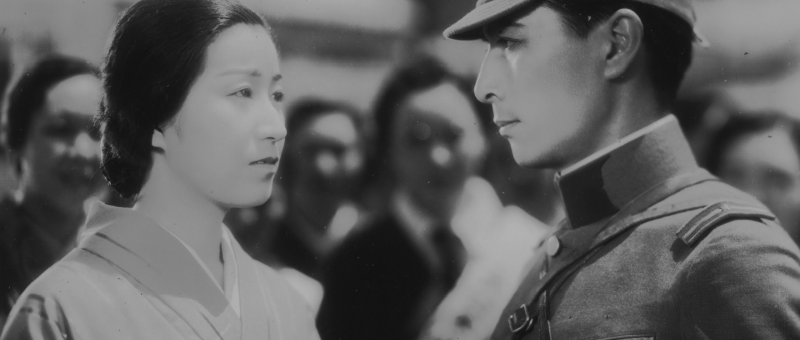
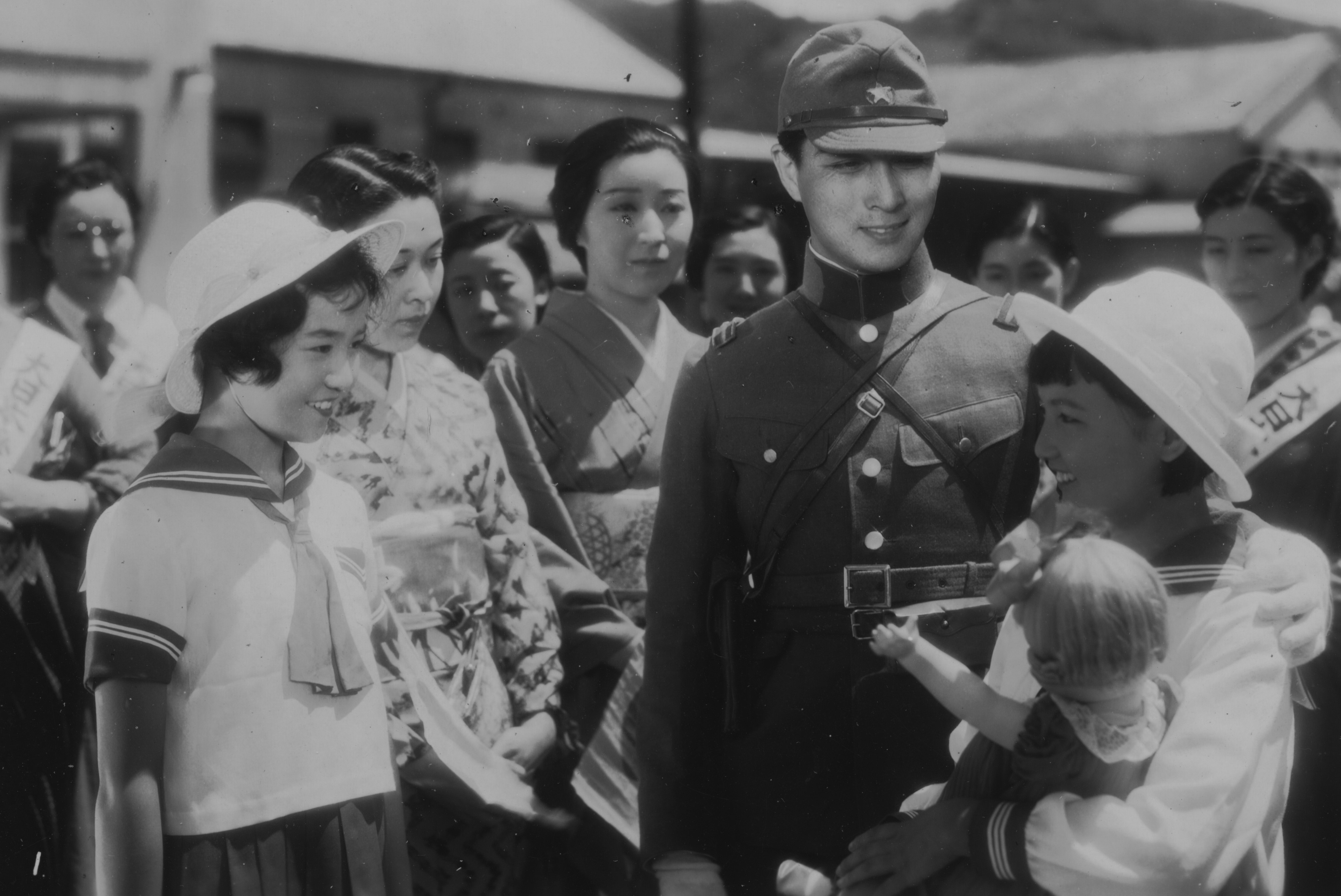
When the daughter of a poor family leapfrogs that of a rich one to be named top of the class, it exposes a series of hypocrisies and contradictions within the militarist order in Mikio Naruse’s 1939 drama, Sincerity (まごころ, Magokoro). The film opens, however, with a parade led by the Patriotic Women’s Association seeing young men off war. The group is led by Mrs Asada (Sachiko Murase), the mother of the rich girl, Nobuko (Etchan), who is busy giving orders to the other women regarding the air defence watch and sweet potato market which seems very forward thinking for the time period.

But in other ways it’s Mrs Asada who comes in for the greatest criticism as her bossiness and involvement with patriotic activity is depicted as a kind of displacement activity to mitigate her sense of uselessness and unhappiness in her marriage to arch militarist Kei (Minoru Takada) whom she fears is still hung up on his old girlfriend, Tsuta (Takako Irie), who is also the mother of Tomiko (Teruko Kato), the poor girl and apparent model student who has just displaced Nobuko as the cleverest girl in the class. Through Mrs Asada is rightly concerned that Nobuko has dropped a whole 10 places, Kei is not bothered by it at all because she is physically robust and healthy, which are the two most important qualities from a militarist perspective, leaving aside the fact that many wouldn’t regard a woman’s academic success as particularly important. Indeed, Kei is dismissive of his wife. Mrs Asada suggests that he finds her “stupid” and that their daughter is “stupid” by extension while Tsuta’s is clever and earnest because Tsuta is the same. He tells her that a child’s education is the mother’s responsibility and it’s probably her fault for busying herself outside of the home with her wartime activities with the implication that she’s been neglecting her child and that’s why her grades have fallen.

This point seems contradictory seeing that even at this stage, the nation expects women to serve their country in ways other than dedicating themselves to their families which is a responsibility secondary to that they owe to the emperor. Nevertheless, the implication remains that she’s doing it for the wrong reasons because what she enjoys is the status it gives her and the power of being in charge. Unlike Tsuta who has no husband, Mrs Asada’s family is wealthy with servants to take care of the domestic work so has nothing to do all day, while it’s also clear that the marriage is more or less dead and Kei does not particularly care for her, which he later admits, though partly because he has already rededicated himself to the nation in eagerly anticipating his call-up letter. When he’s first introduced, Kei is admiring a sword he’s having made ready for when he gets his papers to enlist as an officer. 

It’s a remark about Kei’s call-up that first sets alarm bells off in Tomiko in noticing the sadness it provokes in her mother, itself a little transgressive from a propaganda perspective. The grades situation doesn’t affect the girls’ friendship in the slightest, though this sudden reckoning with the past does begin to place a wedge between them not only in a growing awareness of their class differences but an awkwardness about the complicated situation between their parents which they are not well equipped to fully understand. Tsuta first tries to tell Nobuko the truth, but it upsets her so much that she lies instead and says that it’s true she knew Kei in the past but only as an acquaintance not a romantic partner. Nevertheless, the fact that she called him “Kei” rather than “Keikichi” or whatever his surname was before he married into Mrs Asada’s family suggests a great degree of intimacy which is something Tomiko seems to pick up on. 

There’s a persistent implication that Kei may be the father of both girls, which further reinforces the idea that their contrasting characters are a product of the way their mothers have raised them. Nobuko is described as self-involved and lazy, characteristics which reflect her privileged upbringing and sense of entitlement. Mrs Asada tries to talk to her new teacher, Mr Iwata, but his opinion is that Nobuko was most likely coasting and is struggling now because the work is more difficult and she hasn’t learned how to study or developed a consciousness that results are born of what you put into them. She, and her mother, simply expect to come top because it’s what a girl of her status deserves. Her displacement is a discomforting inversion of the social order. In this, the film both undercuts and reinforces militarist ideology in stressing the importance of hard work for all while doing so at the expense of a reverence for feudalistic ideas of class hierarchy. 

It’s this class divide that is transgressed when Kei sends the present of an expensive French doll to Tomiko after she and her mother come to Nobuko’s rescue when she cuts her foot on some sharp rocks while the girls’ are playing together at the river. The gift seems rather extravagant for the relatively minor act of kindness Tomiko and her mother performed which accidentally reunited Tsuta and Kei though neither of them say very much and while Tsuta seems to look at him longingly, Kei appears indifferent. Nevertheless, the grandmother suggests the doll reflects Kei’s sincere heart with the implication that it reflects his continuing attachment to Tsuta. Tsuta wants to refuse it, but realises she can’t because Mrs Asada likely doesn’t know and her finding out would just cause more trouble, though it’s a painful reminder of her romantic disappointment. 

Tomiko ends up sending it back herself with a note for Nobuko explaining everything. Nobuko then limps off with her injured foot to return the doll to Tomiko and tell her none of that matters, she wants her to have the doll anyway. The doll then becomes a symbol of the sisterhood between the girls and the erasure of the class boundary between them. Tomiko can be seen holding the doll when they join the parade to send Kei off to war, while Tsuta and Mrs Asada also smooth out the misunderstandings between them to celebrate Kei’s mobilisation together. The message here is more that old differences must now be put aside so that everyone can serve the nation together rather than selfishly fixating on personal drama such as wounded pride or romantic heartbreak. Even so, Naruse slightly undercuts the patriotic conclusion with the hint of sadness on Tsuta’s face before she recomposes herself to smile at Mrs Asada and reinforce the sense of solidarity between them, while what we’re left with is the memories of the idyllic countryside setting and sense of pastoral serenity along with the sincerity of the relationship of the two girls which is rooted not in patriotism but genuine friendship that cares nothing for the divisions of social class or the rigidities of the adult world.


Sincerity screens at Japan Society New York May 10 as part of Mikio Naruse: The World Betrays Us – Part I.

Images: Collection of National Film Archive of Japan

Mother (おかあさん, Mikio Naruse, 1952)

The hahamono or mother movie is a mainstay of post-war cinema, obsessed as it is with self-sacrificing maternity. Mikio Naruse, however, is not a name you’d expect to see associating itself with the genre and his 1952 film Mother (おかあさん, Okaasan), adapted from a child’s essay, is indeed subtly subversive, transgressively questioning the institution of motherhood itself while ostensibly remaining faithful to genre norms even as it makes an accidental villain of its teenage heroine who closes the film plaintively praying for her mother’s happiness having not so long ago shut down perhaps her only real hope of achieving it. 

The Fukuhara family ran a successful laundry before the war, but these days father Ryosuke (Masao Mishima) works at a factory and is nicknamed Papa Popeye by his kids because of his finely tuned muscles born of a lifetime training the iron. Matriarch Masako (Kinuyo Tanaka) and 18-year-old daughter Toshiko (Kyoko Kagawa), our narrator, help the family finances by running street food stalls, while oldest son Susumu (Akihiko Katayama) has become ill with a lung complaint caused by poor conditions at the wool factory where he was working. In addition to youngest daughter Chako who is still in school, the family has also taken in little Tetsu (Takashi Ito) the son of Masako’s sister Noriko (Chieko Nakakita) who is now a widow recently repatriated from Manchuria. 

Like many films of the occupation period, the family at the centre of Mother is determined to rebuild, pinning all their hopes on being able to renovate their home in order to be able to reopen the laundry. The war is very much a background presence but its influence is still deeply felt not least in the ruins and devastation glimpsed around the house and the constant references to loss and widowhood which seem to plague Masako, so many women having lost sons and husbands in the conflict. The tragedy is that Masako will eventually in one sense or another lose all her children by the end of the picture, Susumu succumbing to his illness after having discharged himself from hospital out of guilt and loneliness missing his mother, Chako eventually taken in by wealthier relatives who lost their son in the war, Tetsu soon to be retrieved by his mother, and Toshiko herself clearly heading towards marriage with the cheerful and surprisingly progressive baker Shinjiro (Eiji Okada) with whom she has become close. 

Perhaps surprisingly Toshiko seems remarkably immature for her age, her voiceover taken as it is from a child’s essay has a slightly stilted quality that nevertheless makes plain her poor grasp of the adult world and most particularly the reality of her mother’s life. Masako later tells us that she started working at 14 and continued until she married at not so much older than Toshiko is now despite later stating that Toshiko is too young to marry only to find her self shocked when confronted by the sight of her in a wedding dress stifling a brief wave of despair that her daughter may soon be a wife. Originally complaining about not being able to take dressmaking classes like some of the other girls, Toshiko belatedly swears to help support the family firstly to prevent Chako going to stay with relatives and secondly because her boyfriend inadvertently gives her the impression there’s truth in a local rumour that her mother plans to remarry following her husband’s death from overwork and poverty with a friend of their father’s who’s been helping them out in the shop, “Uncle POW” Mr. Kimura (Daisuke Kato). 

Shinjiro is quick to tell her that she’s being unreasonable. In the modern world parents shouldn’t be expected to sacrifice their personal desires for their children, her mother is also a woman and has the right to pursue happiness in marrying again if she chooses. On the other hand, there is nothing particularly concrete between Masako and Mr. Kimura besides a genial domesticity, the rumour is partly local wishful thinking in knowing that remarriage is sensible economic choice and the pair seem well suited. Toshiko objects strongly to the idea out of fear, jealousy, and outdated moralising resenting her mother for betraying her father’s memory but also fearing further changes in her familial relationships in an already uncertain world. 

In this her otherwise saccharine closing monologue in which she looks on as her mother plays with Tetsu and wonders if she’s really “happy” achieves its final irony, transgressively undercutting the primacy of the self-sacrificing mother to question the ideology of motherhood itself when it requires women to sacrifice their lives and desires in service of an ideal of “family”. Nevertheless, Mother is among the most ostensibly cheerful of Narusean dramas in the gentle comedy and naturalistic depiction of a warm and loving family committed to compassion, kindness, and mutual support as pathways towards a better post-war future.  


Mother is currently available to stream in the US via Criterion Channel

Five Men in a Circus (サーカス五人組, Mikio Naruse, 1935)

“Life is a journey” according to the melancholy heroine of Mikio Naruse’s Five Men in a Circus (サーカス五人組, Circus Goningumi), one of the director’s early anti-comedies in which a collection of itinerant performers find not so much hope for the future as accommodation with despair. Though the Japan of 1935 was not perhaps as straitened as the nation was to become, an all pervasive sense of hopelessness traps these travelling players in perpetual motion, burdened by the unattainability of their dreams as they find themselves continually moving forward while standing still. 

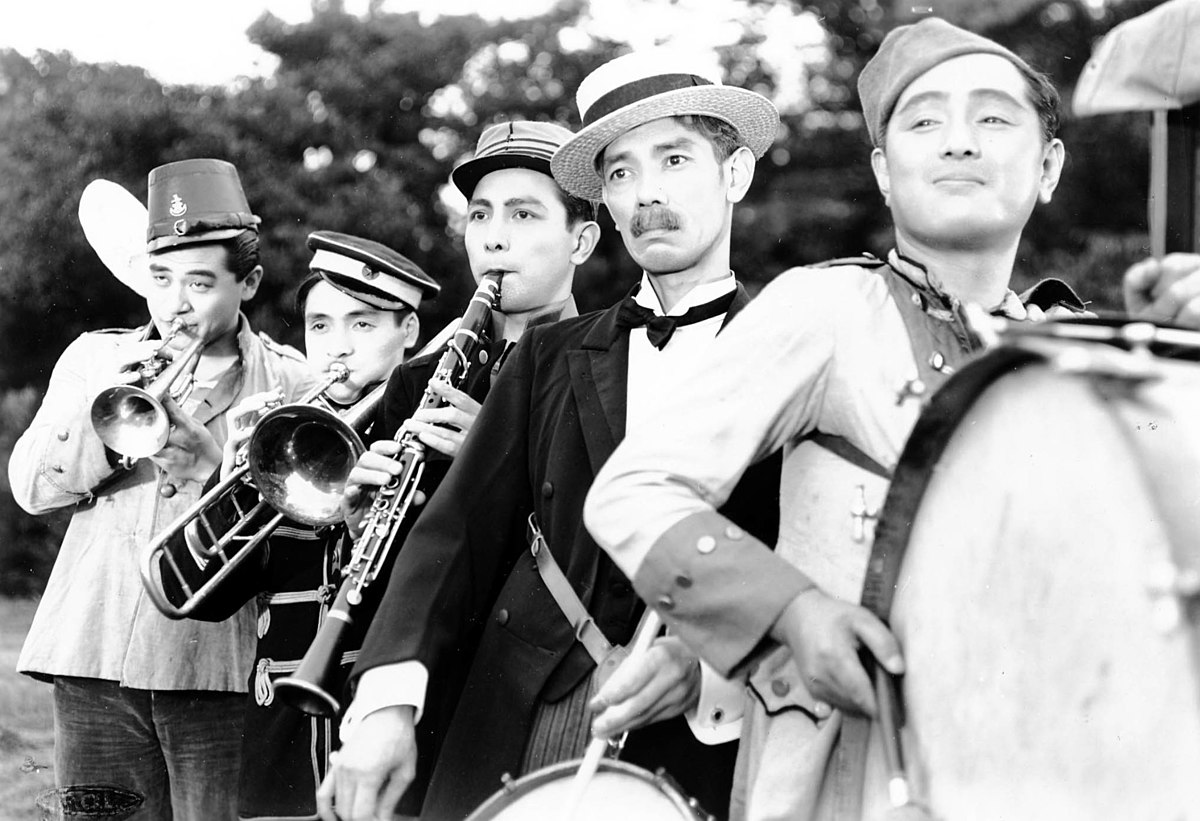
The five men of the title are an itinerant jinta brass band, though to tell the truth not a very good one. They were supposed to be on their way to play at a primary school sports day, only when they get there they’re told the event has been postponed to the following spring. After having wasted the afternoon killing time playing on the monkey bars and children’s slide, they decide to give a little concert anyway, not that anyone’s listening and there’s no real chance of getting paid. It’s in the next town, however, that they make a series of serendipitous meetings connected with a travelling circus which is currently undergoing a crisis as the entire male company has gone on strike against the boss’ tyrannical management style in a subversive dig at rising authoritarianism. 

All things considered, the circus seems to be doing pretty well for itself. It has a sizeable company with several accomplished performers and appears to be drawing good audiences. The boss (Sadao Maruyama) dresses in fancy outfits and there doesn’t seem to be much anxiety over hunger or any sign of the usual worries with which films about itinerant performers are usually concerned, all of which is in direct contrast to the jinta guys whose ragged appearance and habit of pinching yukata from the various inns on their route make plain their relative poverty. “None of us do jinta because we like it” the oldest of the players Seiroku (Ko Mihashi) points out, a woman behind in the bar him echoing that no one becomes a hostess because they like it either. None of these men had a burning desire to be in a band, they simply ended up there and now they can’t get out. Young orphan Kokichi (Heihachiro Okawa), however, dreams of going to Tokyo to study the violin carrying around a record of Western classical music to refresh his soul while worrying that his jinta life is corrupting him.  

Kokichi’s earnestness finds a fan and a mirror in Chiyoko (Masako Tsutsumi), the older daughter of the circus master who claims that she has long since given up hope of a better life even as she continues to dream her small dream of living in an ordinary house with a man she loves. Trapped by filial duty to her cruel father, Chiyoko actively encourages the escape of her younger sister Sumiko (Ryuko Umezono) who is in love with the ringmaster Kunio (Koji Kaga) though their father won’t let them marry. Kunio is also the instigator of the strike which is currently engulfing the circus, placing a strain on Sumiko’s conflicted loyalties as she struggles with her desire to leave the intinerant life behind. 

After the band is taken on as ringers to replace the striking musicians they also find themselves required to perform on stage, with varying degrees of success. Kokichi pleads to be given a chance to perform with a violin, even foregoing his pay as he’s warned the target audience is unlikely to find much to entertain them in a violin recital. His inexpert playing is roundly rejected by the baying mob who quickly begin throwing their rubbish at him until he’s forced to leave the stage in a moment of pure and crushing tragedy. Chiyoko tries to comfort him that she at least enjoyed the performance, but her words fail to cheer him more than superficially. He knows he’ll never go to Tokyo, or be anything more than a jinta player with only false hope to sustain him in the same way that Seiroku realises he’ll never never make peace with his past when he’s slyly conned by a 10-year-old girl he half suspected was the baby he abandoned out of economic desperation following the death of his wife. 

Yet it is in a sense romance that eventually eventually brokers resolution in the eventual implosion of Sumiko’s conflicted desires which cause her to “fall” from the trapeze, a moment of crisis daringly filmed through the use of double exposure superimposing Sumiko’s face over her POV of the men fighting in the ring. This narrowly averted tragedy apparently awakens something in her father who, she tells Kunio, only became cruel when their mother left, forcing him to relent and agree to be nicer to his employees while approving his daughter’s marriage. Yet romance cannot solve everything, and the only other romantic resolution we discover is in the roguish Torakichi (Hiroshi Uruki) who relents and accepts a woman he callously seduced and abandoned but who followed him because of the strength of a woman’s “passion”. Though we can see a connection has arisen between Chiyoko and Kokichi, it is not one which can be fulfilled, fate is pulling them in different directions. Forever a jinta player, he is pulled on to the next gig, the camera pulling back tragically from the bereaved Chiyoko, rooted to the spot as she watches her last hope walk away from her. “Life is a journey” she offers as a note of grim resignation, while knowing she’s going nowhere at all.


The Girl in the Rumor (噂の娘, Mikio Naruse, 1935)

vlcsnap-2019-12-21-23h50m32s752The world was changing in 1935, but not everyone was swept away by the fickle tides of modernity. The heroine of Naruse’s 1935 drama The Girl in the Rumor (噂の娘, Uwasa no Musume) is like many of his leading ladies betrayed by the world in which she lives, yet she’s also an encapsulation of the conflicts of the age, at once fiercely traditional and personally progressive while her “modern girl” sister is as selfish and judgemental as any of the bright young things who serve as extreme examples of the risks of Western individualism.

Kunie (Sachiko Chiba), an unmarried young woman, works in her family’s sake shop which is currently struggling to make ends meet. While the guys in the barbers opposite complain that the place has gone downhill since grandpa’s days, the old man himself has begun to worry that there’s something not quite right about their produce. In order to keep the shop going, there’s some talk that Kunie may marry the son of a wealthy family, but her father Kenkichi (Ko Mihashi) is against the idea. He married into his wife’s family and the marriage was intensely unhappy so he is mindful that the same fate doesn’t befall his daughter. His wife now long dead, Kenkichi is free to be more open about his longstanding affair with a bar owner, Oyo (Toshiko Ito), which produced a daughter, Kimiko (Ryuko Umezono), who was raised by Kenkichi and his legal wife and has no idea her birth was illegitimate. Kimiko, unlike her sister, has become a “modern girl”, dressing in Western fashions, listening to jazz, and staying out late going to parties. The trouble starts when Kunie decides to take her sister with her to the omiai for moral support and it becomes obvious that Sato (Heihachiro Okawa) is a bit of a “modern boy” who has lots more in common with the vivacious Kimiko and decides to break protocol by telling the go-between that he’d rather have her instead.

This move comes as a total blindside to the girls’ uncle who arranged the meeting. “The marriage proposal’s turned into something really weird” he tells Kenkichi over the phone while the two men try to work out what the best course of action is. The uncle seems to think it might be a good move to carry on the negotiations with Kimiko instead, after all Kunie is basically running the store so it would be more convenient to keep her around. Kenkichi is unconvinced. He knows Kimiko doesn’t really approve of all this old fashioned arranged marriage business, and to be honest he doesn’t seem to like her much so isn’t keen on talking to her about it but can’t rely on his usual trick of getting Kunie to do it because he doesn’t want to hurt her feelings by letting her know that Sato doesn’t fancy her and has asked her sister out instead.

Kimiko certainly is a “modern girl” and superficially proto-feminist. She mocks her sister’s traditionalism and criticises her for blaming “their” mother for the failure of their parents’ marriage, thinking that she is simply unable to move past the patriarchal mindset and used to blaming everything on the woman. Little knowing that Oyu is her mother, she rejects Kunie’s plan to have her come and live with them as new maternal presence, claiming that she has only contempt for mistresses and thereby exposing herself as being, ironically enough, more judgemental than her superficially conventional sister. Kunie may be “traditional” in her outlook, but she is also empathetic and understanding. It seems her mother may not have been an easy woman, and what she most wants is to repair her family by bringing Oyo into the fold in her “rightful” place at her father’s side. Despite her insistence on her own freedom, however, Kimiko is childishly moralistic, directing her anger with an oppressive system back on the people constrained by it. Yes Kenichi’s life is one of socially condoned hypocrisy, but there’s no point in blaming him or Oyo for trying to find happiness where they can.

Blame them she does, however, and her sister with them. Kimiko meets Sato by chance and starts dating him in the non-serious manner of young people of the time only for the Satos to become worried and again push the idea of a marriage. Having been spotted with Sato in the street by Kunie, Kimiko’s confession is cruel and cutting, delivered almost with glee as she reveals that her uncle and father have been avoiding telling her that Sato turned her down because he liked her sister more. Kunie had professed that she wasn’t all that bothered about the marriage because she had become convinced that she “couldn’t have a happy marriage anyway”, but her tears suggest a deeper hurt than having her hopes for the business dashed and being wounded by her sister’s callousness. Nevertheless, she wants nothing but her sister’s happiness and so if she seriously wanted to marry Sato for the “right” reasons, she would of course support her.

Kimiko however remains selfish and implacable. Kenkichi, hoping to teach her a lesson, brings Oyo into the home and reveals to Kimiko that she is a mistress’ daughter. It does not go well. Kimiko refuses to engage with Oyo, while Kenkichi also asks for an apology on behalf of Kunie who has only ever tried to protect both Kimiko and Oyo by trying to reunite their family, but Kimiko leaves in a huff shouting that she has no need of mothers or fathers or families or anything else. A rapprochement is brokered between the women only when Kenikichi is made to pay for his failure as a patriarch. It turns out grandpa was right after all, he’d been tampering with the sake and now the police want a word with him. With the arrival of Oyo, tacitly accepted by Kimiko’s final return to the home, the family is in some senses restored but also broken. The gossips in the barbers across the way lament the end of the Nadaya Sake store, callously speculating on what will replace it, while all Kunie can do is look on in consternation and disappointment.


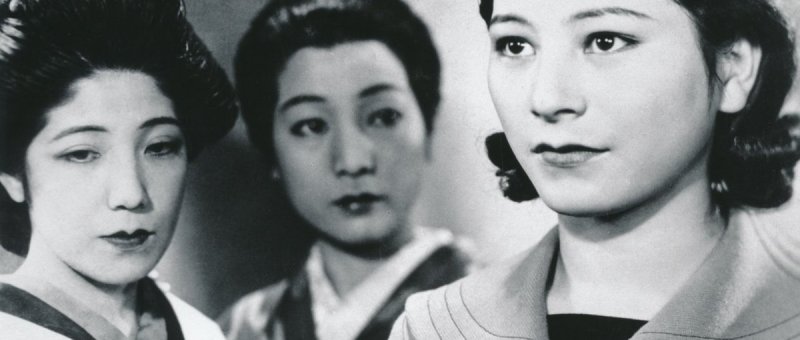
Three Sisters with Maiden Hearts (乙女ごころ三人姉妹, Mikio Naruse, 1935)

Three sisters with maiden heart title card“From the youngest age, I have thought that the world we live in betrays us” Mikio Naruse is often quoted as saying, and it’s certainly an idea which informs much of his filmmaking. 1935’s Three Sisters with Maiden Hearts (乙女ごころ三人姉妹, Otome-gokoro  Sannin-shimai), adapted from a short story by Yasunari Kawabata, is indeed a tale of the world’s cruelty as its saintly heroine attempts to escape her austere mother’s icy grip through kindness alone but finds her efforts frustrated by the world in which she lives.

Osome (Masako Tsutsumi) is the middle of three sisters raised by a cold woman (Chitose Hayashi) who forced her daughters to earn their keep by playing the shamisen on the streets of Asakusa. Oldest daughter Oren (Chikako Hosokawa) left the family some time ago after falling in love with a salaryman and hasn’t been heard from since, and while Osome is still expected to ply her trade, youngest daughter Chieko (Ryuko Umezono) has been spared, becoming a “modern girl” currently working as a dancer in a revue. Unbeknownst to her family, Chieko has also got a boyfriend – the handsome and seemingly quite wealthy Aoyama (Heihachiro Okawa) who runs into Osome by chance in the street and offers her a handkerchief to help fix her broken geta. This is not the story of a love triangle, however, so much as cruel fate accidentally bringing the sisters back together through a shared destiny.

While Chieko idly muses that it might have been better if her mother had opted for group suicide (joking with her lover about dying together as was apparently a fad at the time), Osome tearfully asks her to “please accept us as we are” but her pleas largely fall on deaf ears. Having taken in a series of apprentices, Osome’s mother continues to treat them cruelly, berating them for not picking up the shamisen, and insisting on “discipline” when she discovers one of the girls has had the temerity to buy a magazine with some of the money she herself has earned. Osome, in a characteristic act of kindness, insists she bought the magazine as a morale booster only to receive her mother’s scorn. “I put so much effort into raising you, but you still haven’t become people who’ll give an honest day’s work” she complains, commodifying them once again. “You don’t know how much easier it would be to go out and earn money myself”, she adds unconvincingly, telling her daughter she can always leave if she doesn’t like it despite having irritatedly complained about Chieko’s increasingly late return home and the possibility she may leave just like Oren did.

As Osome tells us, she and her sister were forced to play the shamisen in unsavoury Asakusa from only eight years old. As they got older, Osome was worried about the attention Oren seemed to be getting from “rough” men in the streets. Eventually Oren stopped carrying her shamisen at all and fell in with a bad crowd, only escaping when she met her husband Kosugi (Osamu Takizawa). Kosugi, however, is ill with TB and finding it difficult to hold down a job. Increasingly jealous and paranoid, he is afraid Oren will hook up with her old gangster friends and fall back into bad habits. Meanwhile, Osome is still playing her shamisen and putting up with rough treatment from the drunken clientele who sometimes try to manhandle her or make unreasonable requests. An irritated bar owner eventually knocks on a record to drown her out as if signalling her impending obsolesce.

Nevertheless, the older two sisters have largely remained traditional. Oren’s fall into the gangster underworld is signalled by a sighting of her in Western clothes, looking like a well to do young lady as Osome puts it, but once with Kosugi she soon reverts to kimono and fully embraces the role of a conventional housewife supporting her husband with all her strength. Chieko, however, is a “modern girl”, dancing in a nightclub revue and dressing exclusively in Western fashions. Some horrible boys who make a point of singing the rather vulgar song back at the girls through the window yell “modern girl” at her in the street, indicating just how shocking and unconventional her appearance was back in 1935 even in the backstreets of Asakusa. Nevertheless, Chieko appears to have found a satisfying romance with a “modern boy” in Aoyama who dresses in suits and seems to have a bit of money but is undeterred by a possible class difference and just as nice as his potential sister-in-law.

Despite Osome’s attempts to reunite the sisters, fate conspires against her. Oren hooks back up with her lowlife friends who use her in a plot to extort Aoyama while she remains completely unaware that she’s targeting her sister’s young man. Osome tries to tries to stop them but is stabbed by thugs in the process and, figuring out what’s happened, keeps Aoyama and Chieko away from the station where she has arranged to bid Oren goodbye on the last train out of Ueno. Poignantly, Oren seems happy that her sister has found someone nice, saying that she’d have liked to meet him still unaware she already has. The sisters know they likely won’t meet again, and Osome is content only in knowing that in theory at least she has saved the memory of the bond they once shared through preventing Oren’s involvement in the incident with Aoyama from coming to light.

Osome’s kindness is her undoing. Her world betrays her, she is simply too good, too pure-hearted to be able to survive in it. The three sisters struggle to overcome neglectful parenting, but their mother has at least survived if unhappily, suggesting the world is kinder to those whose hearts are colder. Oren and Chieko go their separate ways, into the past (on a train) and the future (by car), but Osome remains stubbornly in the waiting room with only the inevitable awaiting her.


The Actress and the Poet (女優と詩人, Mikio Naruse, 1935)

Actress and the Poet title cardAmong the directors most closely associated with the golden age of Japanese cinema, Mikio Naruse is not usually remembered for his sense of humour but his pre-war work often saw him making uncomfortable forays into the shomin-geki comedy. The Actress and the Poet (女優と詩人, Joyu to shijin), Naruse’s second film after leaving Shochiku for P.C.L, is among the more successful but also tinged with characteristic irony that says this is funny because it’s not funny at all.

The generic shomin-geki setup finds us in a small community of suburban houses where mild-mannered poet Geppu (Hiroshi Uruki) lives with his successful actress wife Chieko (Sachiko Chiba). Amusingly enough, and in a motif which will be repeated, the film opens with an high impact scene of a woman screaming after being threatened with a knife, but thankfully it turns out that Chieko and her friends are simply rehearsing for a play. The actors dispatch Geppu to fetch them some cigarettes, which brings him into contact with his no good “friend” Nose (Kamatari Fujiwara), a struggling writer who is absolutely sure his latest work is going to win a big prize which is why it’s not a big problem that he’s so behind on his rent that he’s been coming and going through the upstairs window so he doesn’t attract the attention of his landlady.

When we first meet Geppu he’s wearing a pinny and cheerfully hanging up the washing. A young man passes by on a bicycle and seems surprised, asking if he himself really did all that laundry to which Geppu somewhat improbably replies that it’s all second nature when you’ve been in the army. Even though this is obviously a very “normal” day for Geppu, the questions keep coming. Ohama (Haruko Toda), the nosy woman from next-door, remarks that everyone in the neighbourhood loves Geppu because he’s just so nice but he’s also become a hot topic with the ladies at the bathhouse because no one’s quite sure what it is he “does”. In the modern parlance, Geppu is a basically househusband who dabbles in “poetry”, or as Ohama later explains “songs for children”.

In this fiercely modern environment, it’s Chieko who wields the financial power while her husband appears not to mind trailing behind. She wears kimono but often with luxurious furs which might lead to us ask why they live in this modest suburban house rather than in the bright lights of the city, but even so the marriage appears to be a happy and progressively equal one. In fact, as we later discover, there’s never been a cross word between Geppu and his wife, which is a problem because Chieko’s latest role involves a marital tiff and she’s struggling to get to grips with it because she doesn’t know what it’s like to fall out with your spouse. To figure it out she gets Geppu to read lines with her in a situation which eventually repeats in their real life when Nose bamboozles Geppu into letting him stay in the upstairs room rent free, leading to an almost identical fight watched calmly by Nose and Ohama who think they’ve got ringside seats to a play they could never afford to see.

Nose’s intervention unbalances the couple’s relationship in that it forces Geppu to reassert his masculinity. “A promise between men is a serious thing”, Geppu affirms “I can’t just go back on it because my wife says no”. Chieko reminds him, however, that this is technically her house – she pays all the bills, while his “writing” career is good only for the odd box of sponge cake. She doesn’t like it, perhaps understandably, that he’s “invited” a ne’er do well to come and live with them without even bothering to talk to her about it. She tries to put her foot down, but Geppu remains as irritatingly passive as ever only slightly putout to have his subjugated status suddenly used against him.

Naruse ends the picture with a comic sequence in which Chieko sees the light. Thanks to her real life argument with her husband, she’s figured out how to perfect her performance but she’s apparently so method that she also begins to embrace her role as a conventional wife off stage too. Rather than Geppu letting her sleep in and cooking the breakfast himself, this time it’s Geppu wrapped up in a futon while Chieko chops veg downstairs. Nevertheless, there is a minor irony in this moment of domestic bliss in that it directly follows the news that the nice young couple who just moved in across the road have committed double suicide because of his embezzlement and subsequent debts. Neatly underlining the consumerist trends of the age, the couple wanted to die in their own home even if it was only “theirs” for a few moments. Meanwhile, Ohama and her insurance salesman husband are busy having a blazing row next-door which just goes to show that old-fashioned marriages aren’t so happy either.

Chieko superficially plays the conventional wife, engaging in a little role-play with her husband while Nose listens on from the stairwell, but theirs remains a very modern marriage in which she is free to fulfil herself outside the home and her husband is seemingly unbothered (to a point at least) by the mild censure of the local ladies who both love him for his niceness and perhaps dislike him for it too. Naruse undercuts the conventionally “happy” ending in which traditional gender roles are restored and the family rebalanced by ending on a note of irony as the home of Ohama, a traditional wife dominating her henpecked husband in a comic yet socially accepted fashion, is thrown into violent discord while all is peaceful in the decidedly modern house of Geppu.


Wife! Be Like a Rose! (妻よ薔薇のやうに, Mikio Naruse, 1935)

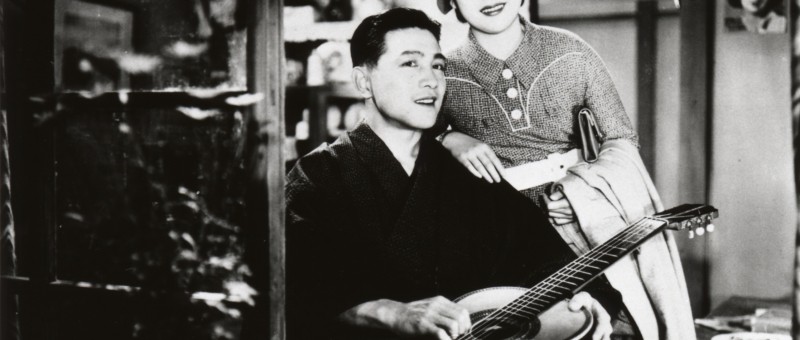
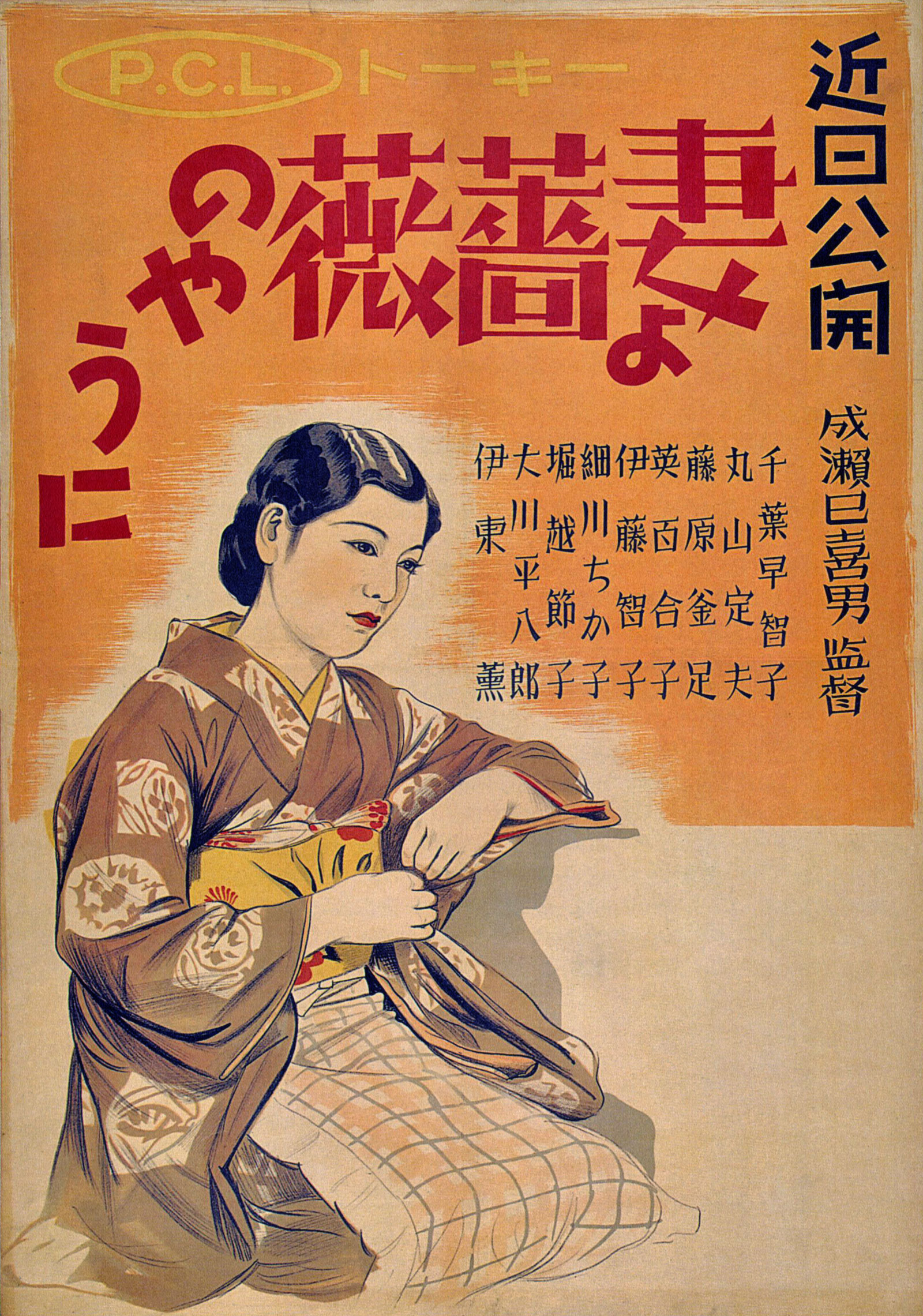
Wife be like a rose posterIt’s tempting to view the cinema of the 1930s as a gloomy affair, facilitating the rise of militarism and increasingly at mercy of the censors, but the early sound era was nothing if not playful and generously open to international influences. It was also often surprisingly progressive, evidencing the fact that pre-war Japan was also changing or, at least, that there was an appetite for change especially among the young. Mikio Naruse’s delightfully charming (perhaps uncharacteristically so) comedy, Wife! Be Like a Rose! (妻よ薔薇のやうに, Tsuma yo bara no yo ni) dramatises just this change as its modern girl heroine tries to process the definitive end of her parents’ relationship as she prepares to marry.

Kimiko (Sachiko Chiba) has a job in an office which is more or less supporting herself and her mother seeing as her father, Shunsaku (Sadao Maruyama), left the family over 15 years previously and has been living with former geisha with whom he has two other children. Despite his long absence, Kimiko’s mother Etsuko (Toshiko Ito) has continued to pine for her absent husband and makes a little money on the side writing sad love poems for the newspapers. A request to stand as a go between at a wedding, traditionally a role only performed by married women, forces Etsuko to accept that she has been abandoned but the snag is that Kimiko and her boyfriend Seiji (Heihachiro Okawa) want to get married themselves and so his father wants to meet Kimiko’s dad which is obviously a problem.

Despite her “modern girl” appearance, Kimiko has some quite old fashioned ideas. She looks down on her maudlin mother, believing that she’s brought her apparent romantic heartbreak on herself through being a bad wife. Etsuko never seemed very interested in Shunsaku when he was around and never did any of the little wifely things Kimiko thinks a wife ought to do like vacuous chat and helping her husband change out of his work clothes. Kimiko thinks a good wife “acts childish and cajoling, or jealous sometimes, or motherly and protective”, believing that Etsuko knows this and has the ability to play the part of the ideal spouse but refuses to and therefore has only herself to blame. Kimiko’s uncle (Kamatari Fujiwara), however, corrects her. He piles the blame on the irresponsible Shunsaku who ran out on a wife and daughter to shack up with geisha.

Shunsaku, meanwhile, may be irresponsible in one sense, but perhaps it’s equally irresponsible to stay in an unhappy marriage. Now a gold prospector in the mountains, he is poor and unsuccessful but has built a happy family home with a kindly wife and two sweet children. Kimiko’s desire to drag him back to the city is partly practical in that she needs him to be her father so she can marry Seiji, but there’s also a part of her that thinks that her father’s transgression must be corrected by forcing him to resume his paternal role. Unlike Etsuko, however, Oyuki (Yuriko Hanabusa) is the classically “good” wife and Kimiko can’t deny she’s good for her father. Seeing him in the mountains and remembering him at home, Kimiko begins to realise that it would be wrong to take him away from his new family even if she thinks she has the better claim, especially when she finds out that it’s Oyuki who’s been sending her mother maintenance cheques every month for the past few years.

In fact, Oyuki feels so guilty about stealing Shunsaku away that she’s been putting money aside to pay for Kimiko’s wedding/education while keeping her own daughter home from school. Far from the gold digger Kimiko had assumed her to be, she’s been the one supporting the feckless Shunsaku as he pursues his get rich quick dream of gold prospecting. Realising that the pair of them “act in perfect harmony”, Kimiko comes to the conclusion that her father belongs in the mountains but finds her resolve wavering after returning to civilisation. She begins to wish he’d stay and hatches a plan to get her parents back together only to see how out of sync they are after 15 years apart. They swap pleasantries like strangers, and the mild-mannered Shunsaku visibly shrinks in the presence of the shrewish Etsuko who allows her pride to ruin any attempt at reconciliation.

What the modern girl Kimiko discovers is that sometimes things don’t work out like they’re supposed to, and that’s OK. Though it is in one sense a “happy” ending in that it obeys a justice born of human feeling, it’s also a melancholy moment of defeat both for the lovelorn Etsuko who has, as Kimiko says “lost”, and the now resigned Kimiko who harbours a degree of contempt towards her mother for not fighting harder for love. Standing at a crossroads of modernity, Kimiko looks both forward and back. She vows to be a “good wife” but her foundations have been shaken. Is this tragedy, or farce? She asks herself. It’s almost impossible to say.


Tochuken Kumoemon (桃中軒雲右衛門, Mikio Naruse, 1936)

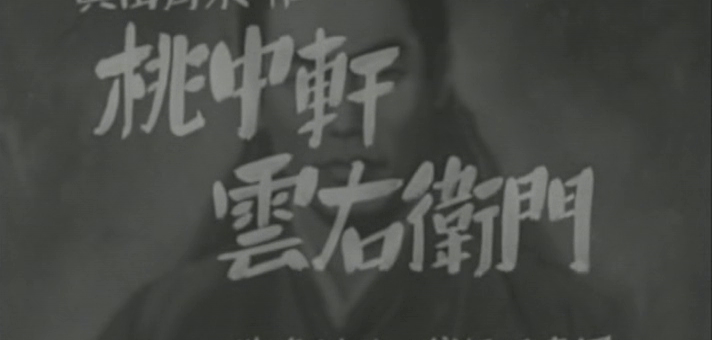
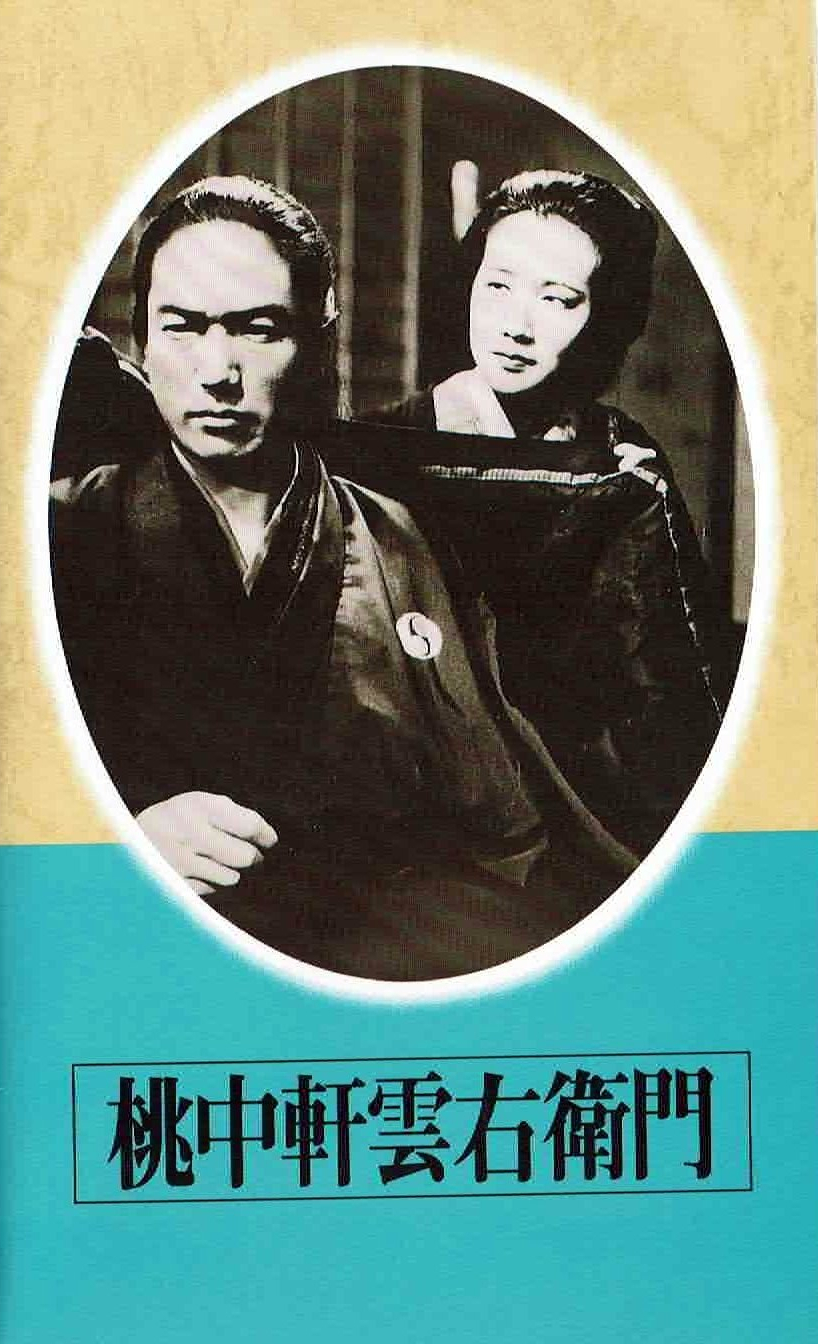
Tochuzen KazoemonIt’s an age old question, but does being a great artist give you the right to treat other people terribly? Hopefully, most people would say no, it does not. Most “great artists”, however, may have a different opinion. The hero of Mikio Naruse’s 1936 biopic Tochuken Kumoemon (桃中軒雲右衛門, AKA Man of the House) is very much of the opinion that inflicting suffering on others, and thereby vicariously suffering himself (but not really because who cares about them), is the source of all his supposedly “great art”.

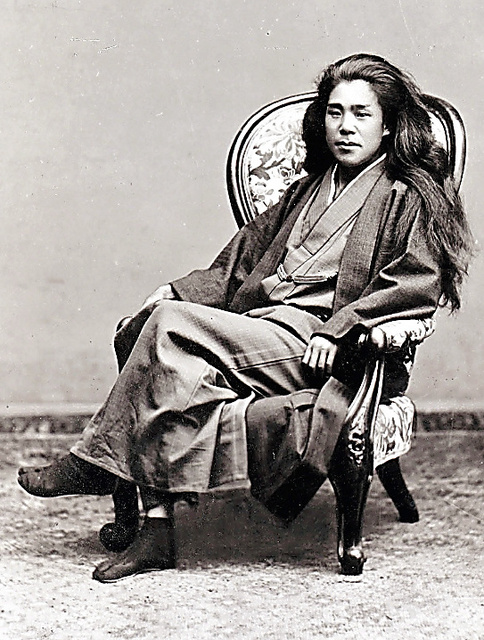
Tochuken Kumoemon was in fact a real person who died twenty years before the film’s release and had his heyday as a renowned yet scandal ridden performer of “rokyoku” in late Meiji. To brings things full circle and explain why perhaps his life was fit for cinematic exploration in the politically fraught atmosphere of 1936, it’s helpful to remember that Tochuken Kumoemon’s performances of such patriotic fare as the 47 Ronin helped to rouse nationalist sentiment during the Russo-Japanese conflict. “Rokyoku”, also known as “naniwabushi”, is a traditional art of narrative singing accompanied by shamisen which found favour with the militarists for its essential Japaneseness and hearty rustic vulgarity.

In any case, we meet Tochuken Kumoemon (Ryunosuke Tsukigata) on a train drawing closer to his planned return to Tokyo after having been forced to flee it eight years previously because of a sex scandal which led him to separate from his first wife, leaving a son, Sentaro (Kaoru Ito), behind, and marry Otsuma (Chikako Hosokawa) – his shamisen player with whom he is currently travelling. The troupe are supposed to be breaking their journey at Kozu, but for reasons unexplained, Tochuken Kumoemon decides to get off the train at Shizuoka and promptly disappears without a word to anyone. 

The disappearance is problematic on several levels, the first being that the stop was only engineered to allow Tochuken Kumoemon to visit his estranged son Sentaro. Some in the group posit that Tochuken Kumoemon has come down with a rare case of stage fright seeing as this Tokyo show will be his biggest to date, while others assume he is embarrassed to go back to the city because of the scandals which previously engulfed him there, and some believe he is simply conflicted about visiting the son he abandoned to run off with another woman.

Anyone who knows him, however, might be better placed to realise that the great Tochuken Kumoemon rarely has a reason for doing anything save that it pleased him to do so at the time. Nevertheless, what we discover about him as he tours the inns of Kozu throwing his money about like some crazed libertine, is that he apparently liked his life better when he was poor but is bravely suffering under the burdens of wealth “for his art”. In fact everything in Tochuken Kumoemon’s life is “for his art”, including the thoughts and feelings of those closest to him.

Tochuken Kumoemon’s story may be intended as a kind of militarist parable about a man who devoted everything of himself to a particular ideal, in his case art but for the militarists perhaps country. The major problem here is that Tochuken Kumoemon never particularly suffers himself, grinning broadly throughout, but forces others to suffer on his behalf while he extracts from them qualities he can use to enhance his performance. Pain may be good for art, but it’s rarely good for life, and most would find themselves questioning why it is those around him remain contented to suffer solely to facilitate Tochuken Kumoemon’s artistic fulfilment.

Loyal wife Otsuma begins to reconsider, bravely challenging Tochuken Kumoemon on the inauthenticity of his performances which, though growing in popularity, she feels to be increasingly hollow. She remembers the early days of their courtship which were apparently marked by a fierce competitive rivalry which proved artistically beneficial to them both before spilling over into other kinds of offstage passion which now appears to have cooled. Otsuma, now weakened as she finds herself succumbing to the later stages of consumption, something Tochuken Kumoemon refuses to acknowledge, fears that she is now unable to inspire him with her playing which is why he’s been up to his old tricks consorting with geishas. Claiming that Otsuma wouldn’t care about his affairs because she’s an artist too and will therefore “understand”, Tochuken Kumoemon has taken up with a pretty little thing, Chidori (Sachiko Chiba), from whom he intends to steal “youth and innocence” for his performances, little caring what he might leave behind.

For Tochuken Kumoemon everything is simply fuel for art and so he’s excused himself from the need to treat others with respect or kindness. Sentaro, his rejected son, rejects this aspect of his father’s philosophy, immediately bonding with his kindly step-mother and resenting his absent father’s treatment of her. In “raising” his son, Tochuken Kumoemon bangs on about traditionally “militarist” values of manliness, explaining that he is imperfect because he is a “great artist” and that his life has been full of problems but that he has overcome them with strength and perseverance. He tells his son that “weakness is the worst thing in a man”, but appears primed to hit the roof on learning that Sentaro may be expelled from school for fighting with his schoolmates because they mocked his unconventional family setup. Worst of all he casts his son away as one of the many who unfairly demand “perfection” from him even though he is an artist and cannot be expected to abide by the rules of “normal people”.

Meanwhile, Otsuma lies dying in a hospital. Tochuken Kumoemon won’t see her because he refuses to view her as “just a woman”, preferring to remember her as “a woman who lived only for art”. The subtext being for “his” art, rather than her own. He betrays himself when he admits that he “doesn’t want to be any more sad” than he is now, simply refusing to deal with the unpleasantness and personal suffering of facing the fact that someone important to you is in pain and will soon be gone. Yet despite a brief rebellion after an ill-advised gift from Chidori, Otsuma eventually agrees to sacrifice herself for Tochuken Kumoemon’s art, to die “quietly” as an artist and not as a woman. 

It’s only at this point that Tochuken Kumoemon decides to embrace the romance of the moment, finally travelling to her deathbed in order to sing a song. If Tochuken Kumoemon is a militarist hero, he’s not a particularly sympathetic one. He remains monstrously self-involved, hypocritical, an emotional coward who uses the suffering of others for his own ends with only the justification of the primacy of his art. Naruse undercuts the propaganda potential of the piece by painting his patriotic singer as a ridiculous prig who embodies the militarists’ coldness towards the thoughts and feelings of their fellow humans but displays none of their supposedly romantic heroism in his empty swagger and well worn platitudes. Is naniwabushi really worth all this pain? No. Someone needs to tell Tochuken Kumoemon he’s not as important as he thinks he is. And while they’re at it, they could have a word with the militarists, too.


The real Tochuken Kumoemon

Real TOCHUKEN KUMOEMON