The Guard From Underground (地獄の警備員, Kiyoshi Kurosawa, 1992)

Ever feel like your job is trying to kill you? Released at the tail end of the Bubble era, Kiyoshi Kurosawa’s The Guard from Underground (地獄の警備員, Jigoku no Keibin) positions an office building as an industrial hell complete with a demon living in the basement but grimly suggests it’s just one of many hazards to be aware of for a woman in the corporate environment. Then again, the hellish guard himself has a sorrowful look in his eyes that speaks of true loneliness and might evoke pity if only in the fatalistic inevitability of his office-bound killing spree. 

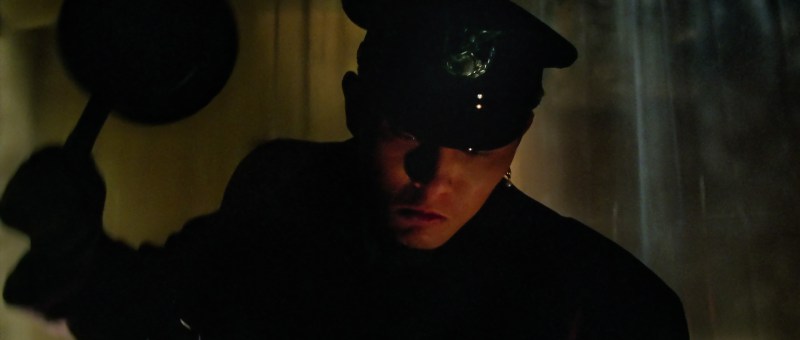
It has to be said, Akebono Trading should have another look at its hiring procedures through in any case there’s something odd about this building which feels more like an abandoned hospital than a place of business while we might also wonder why we’re seeing signs for cargo depots and engine rooms and staff getting locked in the filing room is apparently not an uncommon occurrence. The new security guard has the same name as a former sumo wrester acquitted of the murders of his stablemate and lover on the grounds of temporary insanity, Fujimaru (Yutaka Matsushige), and is himself a hulking presence, tall but of medium build so who knows if it’s really the same guy or just the office rumour mill going into overdrive.  

Meanwhile, the other new recruit is a refined young woman, Akiko (Makiko Kuno), who’s been brought on as an art expert to help a new division recently diverted into prospecting with art sales to assess what is and isn’t a fair market price for a priceless piece of art. As Akiko admits, she’s not well placed to give that information because her background is in curation so she’s not particularly well versed in the collector market but presumably the job pays a bit better than the museums sector so she’s trying to do her best. Her new boss, Kurume (Ren Osugi), is a bit of a weirdo (like all the other men in the building) and crassly remarks that paintings like women have no value if there’s no buyer while she struggles to understand what the point of her job is. Meanwhile we’re left to wonder if Section 12 is actually a real department at all or a shady enterprise set up to help the enigmatic boss, Hyodo (Hatsunori Hasegawa), improve his investment portfolio which will probably serve him well when the bubble finally bursts. 

It’s tempting to read Fujimaru as a personification of corporate culture slowly picking off the employees and largely doing so by means of the building itself, electrocuting them by forcing their hand on the circuit breaker, bashing one inside a locker, or otherwise using his security guard’s truncheon to bludgeon them to death. To begin with, it seems as if he’s developed a fondness for Akiko and while that may be true in the same way King Kong develops a fondness for Fay Wray, it soon becomes clear that he isn’t in fact trying to protect her by taking out all the skeevy guys but seemingly killing for no reason. He looks a painting of Goya’s Saturn Devouring His Son with fascination, again hinting at his nature as the personification of capitalistic corporatism devouring the employees who might one day overthrow him, yet also lends the guard an eerie, mystical quality suggesting he merely enjoys the act of carnage though he does not actually eat anyone (that we see). More than that he seems almost like Frankenstein’s Monster, somehow lonely in identifying his otherness as he eventually confesses to Akiko remarking that “desolate time” flows through him unlike her “kind”. As he leaves, he pleads not to be forgotten. 

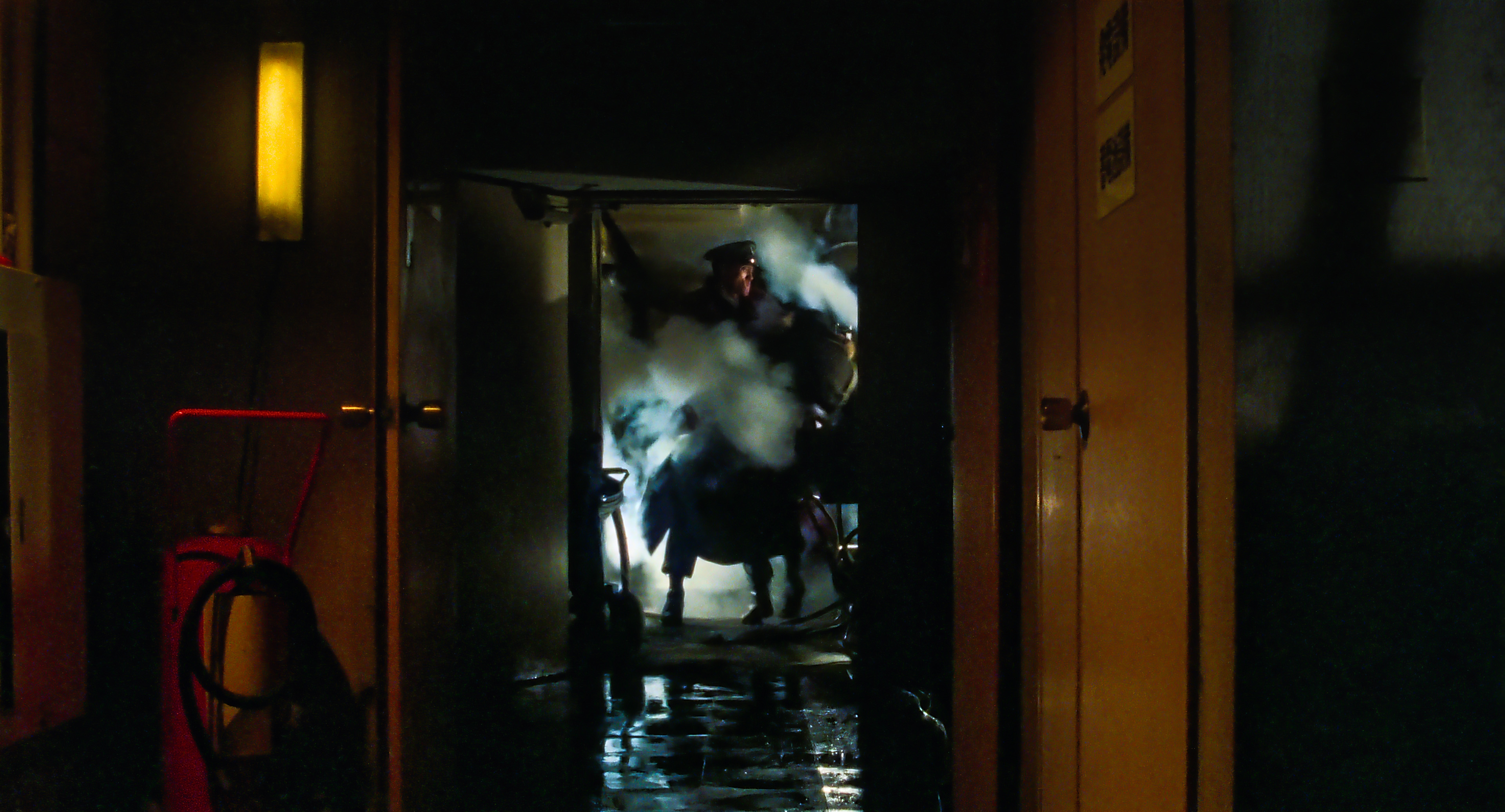
Akiko defeats him by refusing to believe his story and declaring herself disinterested in his truth possibly stood in good stead by the constant necessity of evading the attentions of the men around her such as those of Kurume who starts off giving paternalistic advice about looking after her parents and the preferential savings rates on post office accounts before randomly taking off his trousers. Anticipating his later career, Kurosawa makes the office a place of lurking dread and anxious eeriness only deepened by its industrial aesthetics along with the tiny windows leaking apocalyptic lighting from the oblivious outside world now cut off except for the new/old teletype text and ironic benefits of international time zones. “Traffic’s hell this time of day” a taxi driver chirpily advises, ironically delivering his passenger straight into its fiery depths. 


The Guard From Underground is released in the UK on blu-ray on 25th September courtesy of Third Window Films.

Trailer (English subtitles)

Ringu (リング, Hideo Nakata, 1998)

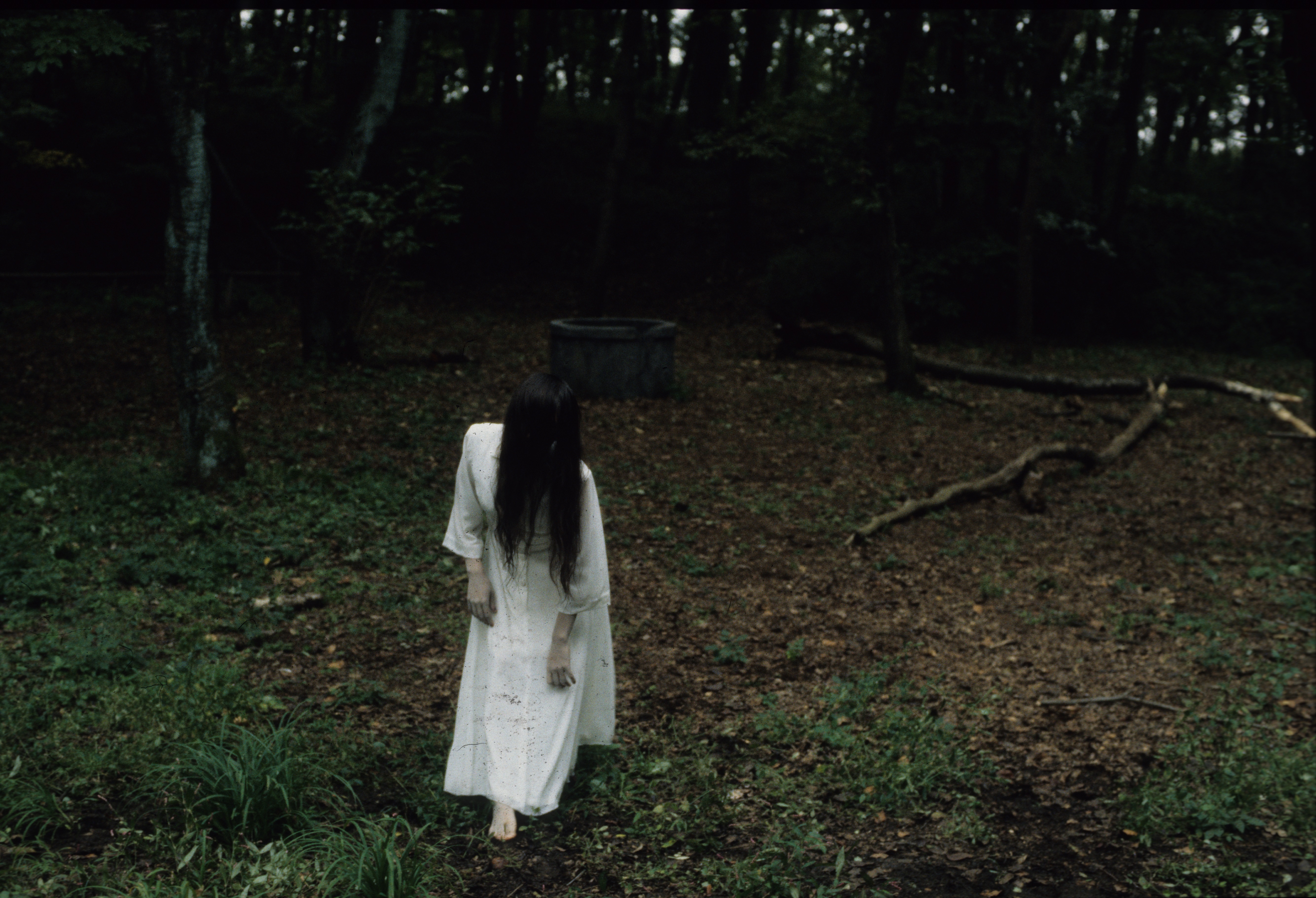
As the investigative duo at the centre of Hideo Nakata’s eerie supernatural horror Ringu (リング) begin to unlock the mystery of Sadako, we’re told that a strange woman who may have had some kind of psychic powers was loathed by those around her in part because of her habit of sitting and staring at the sea. Nakata opens the film with waves and often returns to them as if suggesting in this millennial horror that what we fear is a transmission we cannot see. In the end there may not be so much difference between the magic of an analogue TV broadcast and a message from another plane. 

In any case, perhaps the central message is that one should pay more attention to the words of those whose warnings are often dismissed on the grounds of their age and gender. Journalist Reiko (Nanako Matsushima), for example, doesn’t seem too invested in a video she’s making about a cursed video related by a trio of high school girls in a cafe who explain that they don’t personally know anyone who’s died after watching it but have been reliably informed by friends of friends who apparently do. As will later be discovered, the girls actually give Reiko crucial information but for whatever reason she does not remember it until coming to the same conclusion herself. In any case, it’s not until her own niece, Tomoko (Yuko Takeuchi), dies in mysterious circumstances that Reiko starts to wonder if this is more than a spooky story elevating the chain letter to new technological heights.

According to the urban legend, if you watch the cursed tape you’ll immediately get a phone call telling you you’ll die in seven days. The supernatural entity now synonymous with the film, Sadako, is manipulating these still analogue waves for herself. Sending her messages via television and telephone she is a literal ghost of the airwaves and as Reiko’s ex-husband Ryuji later puts it radiating her sense of rage in her own mistreatment, insisting that her story be known and that those who refuse to acknowledge it should not be allowed to survive. Just as Reiko should have listened to the high school girls, someone should have listened to Sadako and because they didn’t others now have no choice. 

In a sense Sadako represents this nascent fear of technological advancement. When Reiko answers her flip phone, it’s a reminder that there’s no escape from unwanted communication even if you can in theory try to switch it off. The girl with Tomoko when she died was driven out of her mind and now won’t venture anywhere near a television, as if you could escape Sadako’s wrath by merely keeping your distance from the portal. The two teenagers who died around the same time as Tomoko were in a car in the middle of nowhere, but cars have radios which receive radio waves. Sadako travels through the air, invisible until she chooses not to be. She may only have a direct line, but it is in one sense a call for help she’s issuing only in the very inefficient manner of a vengeful ghost whose rage has become indiscriminate or at least directed towards the society that wronged her and everyone in it rather than a single guilty party. 

In a certain sense, you can cure the curse only by spreading it. If everyone everywhere suddenly understood, learned Sadako’s painful history, then the curse would wither and die with no new hosts to go to which is perhaps what Sadako wants. Yet it leaves Reiko with a dilemma, knowing that to save the lives of those closest to her she may have to ask someone else to risk their life or even expose them without their consent. Throughout the film she’s been depicted as an imperfect mother, divorced and often leaving her small son Yoichi to fend for himself at home while the boy at one point walks past his own father in the street and does not seem to recognise him so absent had he been in his life. Through their shared quest to undo the curse, the pair in a sense reclaim their parental roles and repair their familial ties in working together to save their son’s life in contrast to the parental figures surrounding Sadako who may have done the reverse. Sadako frightens us because of her transgressive qualities, quite literally transgressing the barriers between ourselves and the stories we tell by crawling out of them and finding us here, on the other side of the screen, where we thought we were safe to remind us not to look away and to listen to those whose voices are all too often ignored. 


Ringu screens at Japan Society New York on Oct. 7 as part of the Monthly Classics series.

20th anniversary trailer (English subtitles)