
Come and Go (COME & GO カム・アンド・ゴー, Lim Kah-Wai, 2020)

Japanese cinema has not always been willing to contend with contentious social issues such as immigration. More recently, however, indie filmmakers in particular have been keen to critique the nation’s attitudes towards those who’ve come to make their home there. Like Akio Fujimoto’s Along the Sea, Lim Kah Wai’s Come and Go (カム・アンド・ゴー) explores the lives of those who’ve come to Japan, in this case Osaka, in search of a better life but have mostly encountered exploitation and prejudice while marginalised Japanese residents apparently fare little better. 

Lim weaves his disparate tale around the discovery of a skeleton in a rundown part of town which is later found to belong to an elderly woman apparently reported missing six months previously. The comings and goings that we witness are an interconnected series of movements between a quartet of South Korean sex workers apparently trying their luck in Osaka because of an economic downturn at home, a tour group of wealthy Chinese tourists mainly interested in shopping, their guide, a Malaysian businessman in town for a presentation about tourism, a lost Japanese woman failing to make it as a hostess, an Okinawan porn producer literally pulling women off the street and embarrassing them into taking part in his videos, a Taiwanese sex tourist, a Vietnamese man on a “Technical Trainee” scheme but trapped in exploitative factory work, a student from Burma sexually harassed at the second of her part-time jobs, a Nepali refugee dreaming of opening a restaurant of his own, the Japanese teacher he is having an affair with, her husband the policeman, a middle-aged Japanese man embarking on a career as a rent-an-uncle, and a man being exploited while working in a car park who also seems to be mixed up with gangsters.   

Osaka it seems is a busy place. Mr Lee, the man travelling with the Korean sex workers, harps on about the “Osaka dream” as if the city held some special allure but pretty much everyone is struggling, either exploiting or exploited by others. Like the three women of Along the Sea, Nam came to Osaka on the technical trainee programme but is treated badly by his unsympathetic boss who refuses to give him permission to return to Vietnam temporarily to visit his mother who has been taken ill. Nam too attempts to run away, contacting a Vietnamese friend who runs a restaurant for advice where he’s told to convert his technical trainee visa to a student one by enrolling in a language school so he can “come and go” as he pleases. This is the same language school where Yoshiko, the policeman’s wife currently having an affair with Nepali Refugee Musoun, works. We can see that her classes are barely attended, and when she asks her boss about apparently fake names on the roster, she’s told to make her attendance figures look better on paper. It’s clear that not everything is on the level at the school, the headmaster explaining to Nam he needs to pay a hefty fee to enrol but that’s OK because they can help him find a part-time job in return for a hefty part of his salary. Later picked up by the police, Nam runs into another Vietnamese guy who also left his technical trainee programme but now regrets it, claiming he was cheated by false promises and one of his friends even took his own life as a result. 

Working at the same factory but as a part-timer, Burmese student Mimi finds something similar as she’s sexually harassed by the skeevy middle-aged boss at her second part-time job at a supermarket. While the men are forced to deal with labour exploitation and physical violence, the women are also subject to ingrained patriarchal values as evidenced by the preoccupation with sex and pornography among many of the male visitors such as sex tourist Xiao Kang who idly plays with sex toys in a store while lining up for an autograph from an AV actress, or the collection of sleazy Chinese businessmen demanding to be set up with authentic Japanese porn stars. The problem there is that porn producer Ryuji is deep in debt to yakuza loan sharks and has no women on his books, eventually brokering an unconvincing deal with Chinese tour guide Cheung and the South Korean pimp Lee to pass off the Korean sex workers as Japanese porn stars assuming that the Chinese won’t notice the difference because one woman’s as good as another. Meanwhile, conservative Malaysian family man William finds himself extremely uncomfortable when forced to conduct business in a hostess bar which his contact keeps insisting is how business gets done in Japan while unwilling to change his behaviour to accommodate his guest which is in itself ironic as William is there to advise them on boosting tourism from Malaysia through cultural awareness. 

While well-meaning protestors take to the streets to hold an anti-discrimination rally, Kenji fairly points out that they preach acceptance for the international community but ignore mixed-ethnicity citizens like himself, something fully borne out by their rather defensive and somewhat prejudiced conversation when he leaves to use the bathroom. The police conference regarding the skeleton ends with the policeman lamenting that the modern society has become selfish and indifferent to the feelings of others placing wealth and convenience above community which is how an old woman’s body went undiscovered so long and apparently became mixed up in a complicated real estate scam. Even the Japanese rent-an-uncle is forging time-limited, compensated relationships with strangers while his own son ironically tries to convince him to retire to Malaysia so he can get his hands on the house. These people are all connected even if they don’t know it, all victims of the same oppressive system as the city moves all around them increasingly indifferent to their existence.


Trailer (English subtitles)

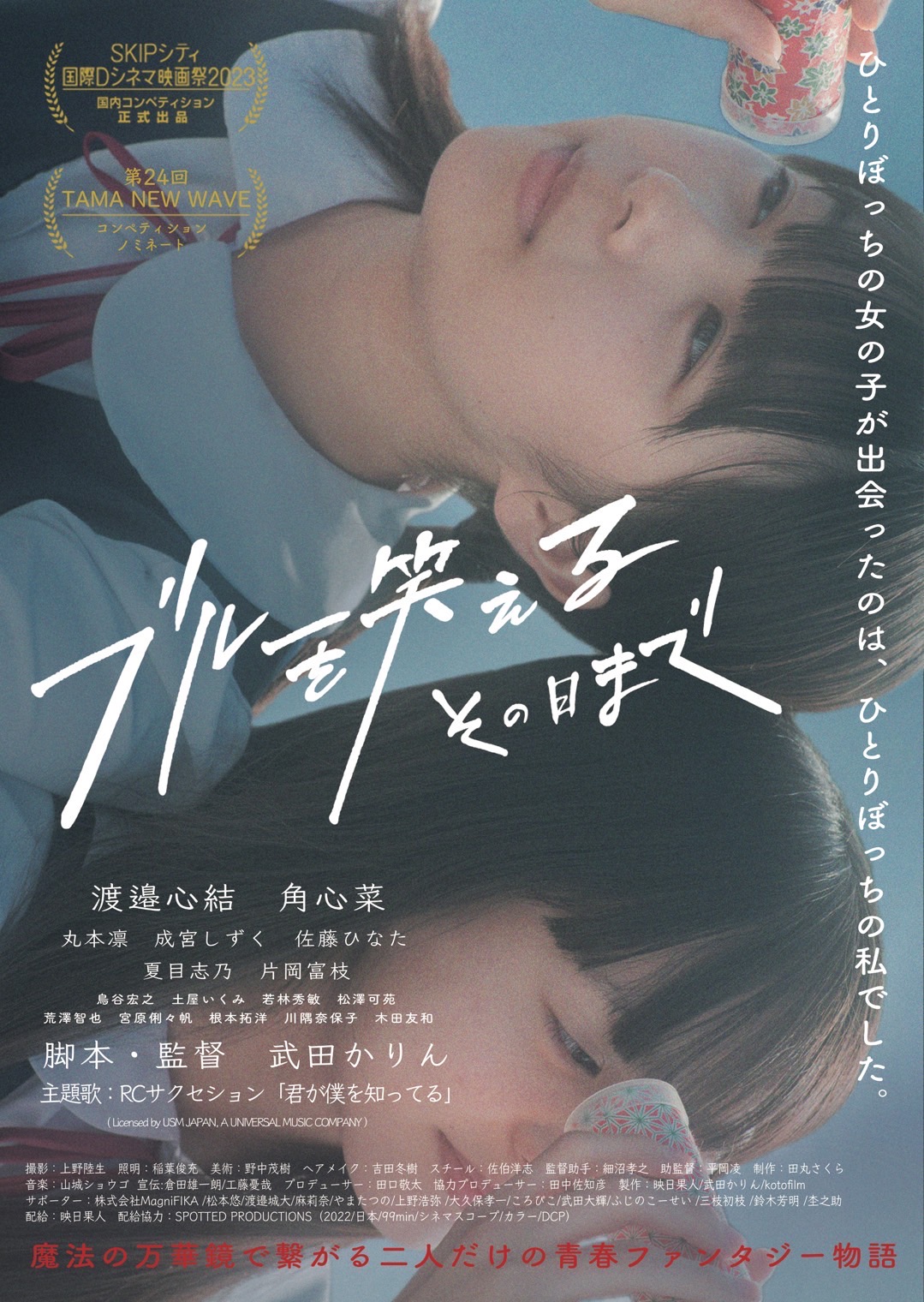
Till the Day I Can Laugh about My Blues (ブルーを笑えるその日まで, Karin Takeda, 2023)

A lonely, isolated young woman finds refuge in a new friendship only to worry it won’t survive summer’s end in Karin Takeda’s gentle adolescent drama, Till the Day I can Laugh About My Blues (ブルーを笑えるその日まで, Blue Wo Waraeru Sono Hi Made). Opening with a title card reading “to you and me back in the days,” the film has an autobiographical sensibility and boundless empathy for the kids who feel they don’t fit in, that no one notices them, and their lives will never we worth living.

You can tell that Ayako (Miyu Watanabe) is depressed by her opening dialogue, “I don’t like this weather,” said to perfectly blue skies. She says everything in her life is blue, and is so shy that she literally can’t speak. Her class are reading Night on the Galactic Railroad, and though she spends the entire time reading the line that she’s figured out is hers is put off when another student heckles her because of her quiet voice and just stands there gripping the paper while her teacher prompts her with the previous line. He then just moves on to the next student, but more out exasperation than empathy, doing nothing much else to help her. 

It’s not clear if Ayako was always this way or if something led to her becoming withdrawn but the other kids evidently regard her as weird while her former best friend Yuri (Rin Marumoto) has joined up with two popular girls who appear to be bullying her. Ayoko’s parents aren’t much help either, unfairly comparing her to her sister who wants to be a doctor all of which only makes Ayako feel even more useless and inadequate. It’s only when a mysterious old lady gifts her a kaleidoscope that Ayako’s outlook starts to improve and she befriends a another young girl she meets on the rooftop of the school who has a kaleidoscope too.

In discussing the passage of Night on the Galactic Railroad, which is about a friendship between two boys which ends abruptly in tragedy, a teacher asks what the milky way is made of before explaining that if you look at it through a microscope it’s full of tiny stars. Ayako too begins to see tiny stars while looking through the kaleidoscope, refracting her world and beginning to see the beauty of the light between the trees even if she’s cautioned that the patterns are pretty because you never see the same one twice. In any case, Ayako finds a kindred spirit in Aina (Sumi Kokona) but also suspects she may actually be the ghost of a girl who took her own life by jumping off the roof of the school, so their friendship can’t last past the start of the new term.

Like Giovanni in the story, Ayako has to figure out how to go on alone not just without Aina but in her complicated relationship with Yuri too who tells her she doesn’t like and hanging out with mean girls Natsumi and Nao but still joins in when they make fun of her. Some gentle words from a librarian who knows what’s she going through all too well remind her of the point of the story, that the boys still go on travelling together as Campanella still exists in Giovanni’s heart. But before all that she still ponders blowing it all to hell, saving the school goldfish but otherwise letting the place burn while wondering if she’ll ever be able to grow up. 

Shot with an etherial whimsicality, Takeda shoots Ayako’s world in shades of loneliness in which her literal inability to speak is almost a reaction to the fact no one listens. Pondering the fate of a goldfish that died because of another student’s neglect she laments that no one’s kind to you until die, a comment that later seems ironic but echoes her sense of alienation. She thinks her friendship with Aina is like a dream, but like she says not necessarily one they need to wake up from because whichever way you look at it their friendship is “real”, saving each of them and giving them strength to survive until the day they can laugh about their blues smiling at a memory rather than feeling sad and alone while looking for the tiny stars hidden in the fabric of the universe.


Till the Day I Can Laugh about My Blues screened as part of this year’s Camera Japan.

Original trailer (no subtitles)

Godzilla Minus One (ゴジラ-1.0, Takashi Yamazaki, 2023)

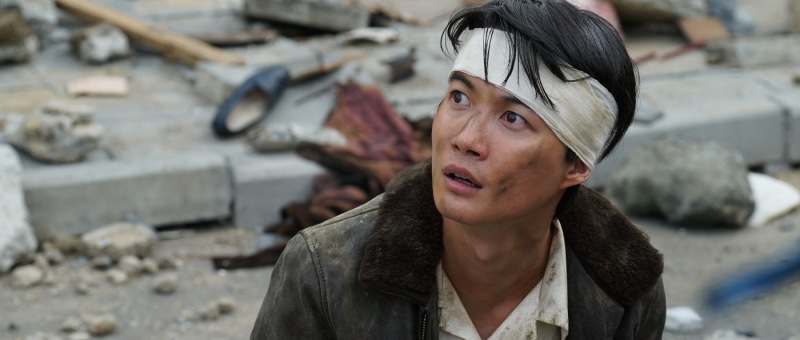
When Godzilla emerges from the waves in Takashi Yamazaki’s entry into the classic tokusatsu series Godzilla Minus One (ゴジラ-1.0), he does so as an embodiment of wartime trauma most particularly that of the hero, Koichi (Ryunosuke Kamiki), a kamikaze pilot who failed die. Some might call his actions cowardice, returning to base siting engine trouble rather than doing what others regard as his duty, though the film implies it’s simply a consequence of his natural desire to live, a desire which the tenets of militarism which in essence a death cult insisted he must suppress. 

But for Koichi as he’s fond of saying the war never ends. He’s trapped in a purgatorial cycle of survivor’s guilt and internalised shame, feeling as if he has no right to a future because of the future that was robbed from other men like him because of his refusal to sacrifice his life. When he first encounters Godzilla on a small island outpost, he is ordered back into his plane to fire its guns at him but freezes while the rest of the men, bar one, are killed. Tachibana (Munetaka Aoki), a mechanic who had already branded Koichi a treacherous coward, gives him a packet of photographs belonging to the dead men each featuring the families they were denied the opportunity to return to. Photographs on an altar become a motif for him, though he has none for his parents who were killed when their house was destroyed by the aerial bombing of Tokyo. A surviving neighbour similarly blames him, directly aligning Koichi’s act of selfish cowardice with the razing of the city.

The return of Godzilla is literal manifestation of his war trauma which he must finally confront in order to move into the new post-war future that’s built on peace and solidarity rather than acrimony and resentment for the wartime past. But then again, the film situates itself in a fantasy post-war Tokyo in which the Occupation is barely felt and the government, which mainly consisted of former militarists, is also absent. Both the US and the Japanese authorities refuse to do anything about Godzilla because of various geopolitical implications making this a problem that the people must face themselves, though they largely do so through attempting to repurpose rather than reject the militarist past. Noda (Hidetaka Yoshioka), a scientist who worked on weapons production during the war, gives a rousing speech in which he explains that this time they will not pointlessly sacrifice their lives but instead fight to live in a better world which is all very well but perhaps mere sophistry when the end result is the same. 

Called back by their old commander, many men say they will not risk their lives or abandon their families once again because they have learned their lessons but others are convinced by the message that they must face Godzilla if they’re ever to be free of their wartime past. Koichi wants vengeance against Godzilla but also to avenge himself by doing what he could not do before. The film seems to suggest that this time it’s different because he has a choice. No one has ordered him to die, and he is free to choose whether to do so or not which is also the choice of being consumed by his war trauma or overcoming it to begin a new life in the post-war Tokyo that Godzilla has just destroyed. 

Despite the desperation and acrimony he returns to, Koichi maintains his humanity bonding with a young woman, Noriko (Minami Hamabe), who agreed to take care of another woman’s child. Even the neighbour, Sumiko (Sakura Ando), who first rejected Koichi and is suspicious of Noriko, willingly gives up her own rice supply for the baby proving that in the end people are good and will help each other even if that seems somewhat naive amid the realities of life in the post-war city ridden with starvation and disease. In any case, it’s this solidarity that eventually saves them, Godzilla challenged less by a pair of large boats than a flotilla of small ones united by the desire to finally end this war. Like Yamazaki’s previous wartime dramas The Eternal Zero and The Great War of Archimedes, the film espouses a lowkey nationalism mired in a nostalgia for a mythologised Japan but as usual excels in terms of production design and visual spectacle as the iconic monster looms large over a city trapped between the wartime past and a post-war future that can only be claimed by a direct confrontation with the lingering trauma of militarist folly.


Godzilla Minus One opens in UK cinemas 15th December courtesy of All the Anime.

International trailer (English subtitles)

Grown-ups (わたし達はおとな, Takuya Kato, 2022)

“You’re a grown-up. If something’s wrong you gotta handle it” the passive aggressively condescending hero of Takuya Kato’s Grown-ups (わたし達はおとな, Watashitachi wa Otona) chastises, but what even really is being “grown-up” when you find yourself in a situation which is emotionally difficult and will define the future course of your life. Shot in a claustrophobic 4:3 and told in a non-linear fashion, Kato’s intense drama lays bare the inequalities of a patriarchal society in which in a sense there are no real grown-ups because no one is ever comfortable enough with anyone else to be able to speak their real feelings honestly. 

This becomes a particular problem for college student Yumi (Mai Kiryu) who discovers that she is pregnant but is uncertain as to who the father might be having had a one night stand during the time her live-in boyfriend Naoya (Kisetsu Fujiwara) had broken up with her. Yumi immediately tells Naoya that there’s a chance the baby isn’t his, but remains otherwise reticent unwilling to talk about what might have happened while filled with an internal panic. Naoya thinks he’s being grown-up about the situation by deciding to accept responsibility given the probability that he is the father but despite pledging that he would accept the baby even if it turned out he wasn’t can’t stop trying to pressure Yumi into a DNA test for peace of mind. 

The irony is that even Naoya, who was Yumi’s first sexual partner, refused to wear a condom and joked about contraception before making her go on the pill when he moved in with her. Later we learn that the one night stand violated her consent by again refusing to wear a condom and ignoring her objections, later joking about it that the chances of conception are incredibly small while making it clear that men in general don’t consider pregnancy as something that happens to them and because, as one of Yumi’s friends puts it, they only chase “innocent” girls they don’t seem to worry about the possibility of contracting an STI. Meanwhile, Yumi is constantly stalked by a fellow student she briefly dated who presents her with a memory book of their relationship and is always creepily hanging around waiting to give her gifts, but all her friends can seem to talk about is boyfriends implying that a bad boyfriend might be better than none. 

Yet Yumi seems to have intimacy issues that run even deeper, for some reason not even telling Naoya that her mother has passed away leaving him to think she has run away from their problems by returning home just when he’s ready to tell her his decision about their future. When her father asks about boyfriends she brushes the question off though perhaps partly because she’s not quite sure about her relationship status with Naoya or what she’s going to do about the baby. She calls her friend to hear a friendly voice after hearing her mother has died but gets little sympathy, the same friend later abruptly hanging up on her after getting a boyfriend of her own while knowing of Yumi’s romantic troubles. 

Then again, it’s hard to know whether Naoya was really interested in her or in her lovely duplex apartment. When they started dating he was still living with his ex and it’s obvious that Yumi fully conforms to the feminine ideal taking care of all the domestic tasks while it isn’t even clear if Naoya is contributing in any way to the household. The film both begins and ends with Yumi making breakfast, firstly toasting the last slice of bread for Naoya while suffering with what turns out to be morning sickness, and finally making herself something to eat in the early light of dawn. Naoya says he’s give up on his dreams of working in theatre to get a regular job, again conforming to an outdated patriarchal ideal, but of course resents it particularly because he doubts the child is his while Yumi isn’t really sure she wants to go through with it either for some of the same reasons but is swayed by Naoya’s determination to make all their decisions for them unable to say out loud that she might not be ready to become a mother. 

Naoya is always trying to be grown-up about everything, but more often than not his understanding approach is partway towards passive aggressive control in insisting that Yumi is being childish in her anxiety and confusion while simultaneously avoiding having to admit that he isn’t really ready either. Early in their relationship he breaks up with her by simply returning her apartment key and refusing to elaborate, failing to treat her with respect or maturity and once again leaving her to deal with the fallout of their relationship all alone. Then again, Yumi’s determination to convince him that green peas are good may signal that the relationship was always doomed when they couldn’t even reach a grown-up understanding over something as trivial as taste in veg. A raw examination of what it is to be young and faced with a decision that will define the rest of your life, Kato’s naturalistic drama perhaps suggests that it never really gets any easier to say how you really feel when you feel that someone is judging you all the way. 


Grown-ups screens at Lincoln Center 23d July as part of this year’s New York Asian Film Festival.

Original trailer (no subtitles)

Images: ©2022“Grown-ups” Production Committee

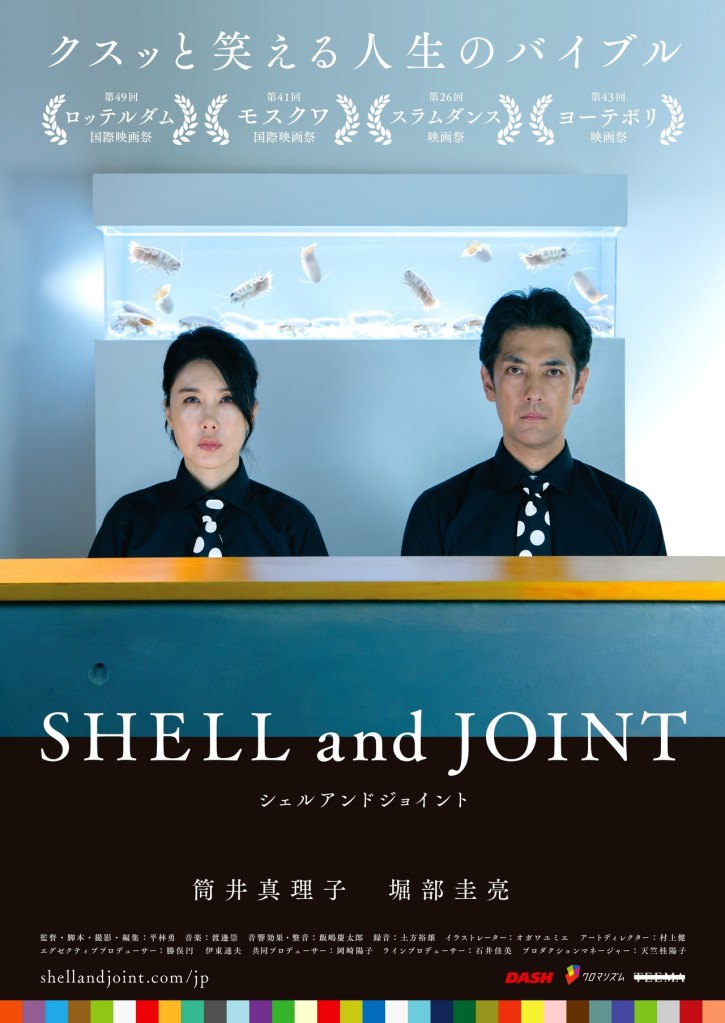
Shell and Joint (Isamu Hirabayashi, 2019)

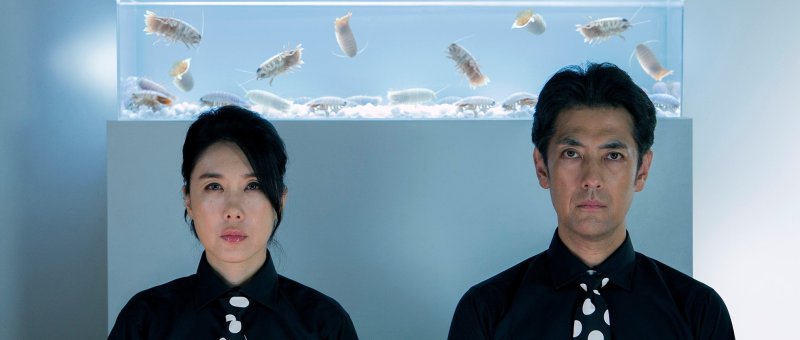
A capsule hotel is a contradictory space, a hub for compartmentalised pods which are nevertheless joined to form one greater whole. The people who frequent them are usually looking for confined private spaces as if cocooning themselves before emerging as something new, or at least renewed, yet the hotel at the centre of Isamu Hirabayashi’s Shell and Joint is slightly different, a noticeably upscale take on convenience with its stylishly modernist design and well appointed spaces from showering facilities to saunas. It is also, it seems, at the nexus of life and death as its bored receptionists, childhood friends, debate what it is to live and what it is to die. 

Sakamoto (Mariko Tsutsui), the female receptionist, has considered suicide many times but continues to survive. She attributes her death urge not to existential despair but to brain-altering bacteria and is certain that a vaccine will eventually be found for suicidal impulses. While her deskmate Nitobe (Keisuke Horibe) is struck by the miracle of existence, Sakamoto thinks his tendency to adopt a cosmic perspective is a just a way of dealing with his fear of death in rejecting its immediacy. Her suicide attempts are not a way of affirming her existence and she has no desire to become something just to prove she exists, nor does she see the point in needing to achieve. Just as in her bacterial theory, she rejects her own agency and represents a kind of continuous passivity that is, ironically, the quality Nitobe had admired in the accidentally acquired beauty of the pseudoscorpion. 

This essential divide is mirrored in the various conversations between women which recur throughout the film and mostly revolve around their exasperation with the often selfish immediacy of the male sex drive. The creepy “mad scientist” starts inappropriate conversations about sperm counts and his colleague’s impending marriage, offering to loan him some of his apparently prime stock to vicariously father a child with the man’s “cute” fiancée who, in a later conversation with another female researcher, expresses her ambivalence towards the marriage, like Sakamoto passively going with the flow, because men are like caterpillars permanently stuck in the malting phase. Her colleague agrees and offers her “men are idiots” theory which is immediately proved by the male scientists failing to move a box through a doorway. 

A middle-aged woman, meanwhile, recounts the process of breaking up with her five boyfriends who span the acceptable age range from vital, inexperienced teenager to passionate old age through the solipsistic, insecure self-obsessed middle-aged man but her greatest thrill lies in the negation of the physical, remarking that “ultimately eroticism is all mental” while suggesting the ephiphany has made her life worth living. On the other hand, a young man is terrorised in a sauna by a strange guy claiming that he is actually a cicada and simultaneously confiding in him about the strength of his erection along with the obsession it provokes to find a suitable hole in which to insert it. 

“What’s the deal with leaving offspring?” another of the women asks, seemingly over the idea of reproduction. The constant obsession with crustacea culminates in a butoh dance sequence in which lobsters spill their eggs down the stairs of an empty building (much to the consternation of an OL sitting below and, eventually, the security team) while other strange guests tell stories of women who underwent immaculate conception only to be drawn to the water where hundreds of tiny crab-like creatures made a temporary exit. The urge to reproduce, however, necessarily returns us to death and the idea of composition. The melancholy story of a Finnish woman drawn to the hotel because of its similarity to a beehive meditates on the sorrow of those left behind while a fly and a mite mourn their cockroach friend by wondering what happens to his dream now that he has died only to realise that because he told them about it, it now lives on with them. Nitobe wonders what the corruption of the body in death means for the soul and for human dignity, while the images Hirabayashi leaves us with are of a corpse slowly suppurating until only a scattered skeleton remains. Such is life, he seems to say. Life is itself surreal, something which Hirabayashi captures in his absurdist skits of the variously living as they pass through the strange hotel and then, presumably, make their exits towards who knows what in the great cycle of existence.


Shell and Joint streamed as part of this year’s online Nippon Connection Film Festival. Viewers in the US will also be able to catch it streaming as part of this year’s Japan Cuts!

International trailer (dialogue free)