Hunter Brothers (獵人兄弟, Su Hung-en, 2024)

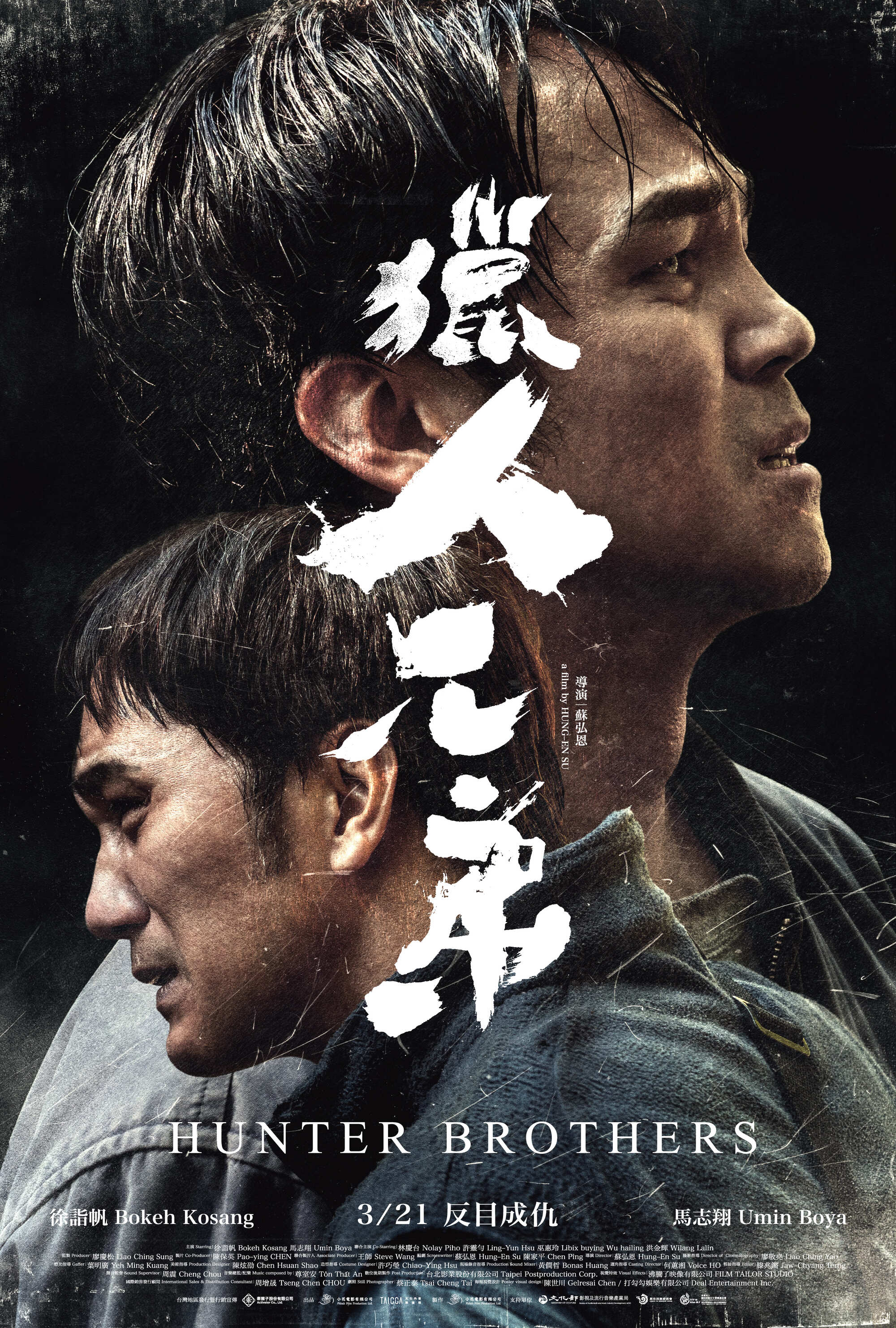
Two brothers find themselves on opposite sides of tradition and modernity as they descend into a state of warfare over the future of the ancestral hunting grounds in Su Hung-en’s familial drama, Hunter Brothers (獵人兄弟). Exploring the complicated position of the indigenous community marginalised by an increasingly capitalistic urbanity the film also critiques contemporary visions of masculinity in the wider society as the brothers each try to find new ways of defining themselves amid changing notions of manly success.

In the opening scenes of the film, Teymu celebrates the fact that his son, Yuci, has become a doctor because now he will never have to do manual labour and will have a more comfortable standard of living. But in private, Teymu seems upset. He feels as if he has failed the ancestors because in the eyes of their community, Yuci is not a proper man. Many people tell him that he is “not cut out to be a hunter,” and he has no desire to be one anyway, but still suffers from a serious inferiority complex and wounded male pride. To find some kind of answer, Teymu forces Yuci against the wishes of his mother to accompany him to the mountains for one last hunting trip to prove himself by killing a wild boar and finally validating Teymu’s own fractured sense of masculinity that his son is indeed a “proper man.”

It’s during this trip that Teymu is killed in mysterious circumstances. Yuci’s brother Siring ends up going to prison for the crime, but unlike him had been more of the son his father wanted. Yuci had been clever and studious, but Siring is more of a traditional mountain man who lives for the hunt and has a very unreconstructed sense of masculinity. But he also loved and understood his brother, knowing this life wasn’t for him and trying to protect him from their father who was in other ways a failure. Teymu drank and was violent, objecting to his wife’s attempts to stop him taking Yuci to the mountain by threatening her and using incredibly offensive language. Yuci’s reaction against this traditional society is also towards his father and everything he represented. But this traditional world is the only one a man like Siring can live in. He has no real qualifications or other skills and cannot survive outside of their community. On his release from prison, Yuci is keen for him to get a job and against his return to hunting, but it soon becomes clear that isn’t a way that Siring can live.

In that respect, they represent opposing polls. Yuci is the modern man of science, a doctor, while Siring is a man of the forests and mountains, Then again, Yuci is a devout Christian and his religion also seemingly a challenge to traditional indigenous practices though also alien to the mainstream society. The boys’ mother is living with dementia and those around them tell Siring that she has most likely been cursed by the ancestors who are angry with them for doing something “dishonest” which might be why she starts insisting Yuci go to the police and that they made a bad decision that should be put right. Yuci, for his part, does not appear to feel guilt for the role he may have played but is anxious that the life he’s built for himself in which is accorded a man by his career success, marriage, and fathering a son, may now crumble if Siring will not fall into line.

Tensions come to a head when Yuci decides to sell their ancestral hunting grounds which are earmarked for a development that would destroy the mountain altogether. Siring obviously objects, this world is the only one he can live in, but can do little about it. He resists his brother’s modernity and becomes estranged from him, but they are both in their way exiles and neither of them can fully live in this society. The natural affection they hold for each other as brothers is not enough to bridge this divide and merely leaves each of them lonely and alone, mired in futility and unable to move forward in any meaningful way. The ebb and flow of their lives is reflected in the way they are alternately called by their indigenous names and Mandarin equivalents, each of them living in two worlds but never really at home in either while fever divided from themselves.


Hunter Brothers screens in Chicago 29th March as part of the 19th edition of Asian Pop-Up Cinema.

Trailer (Traditional Chinese / English subtitles)
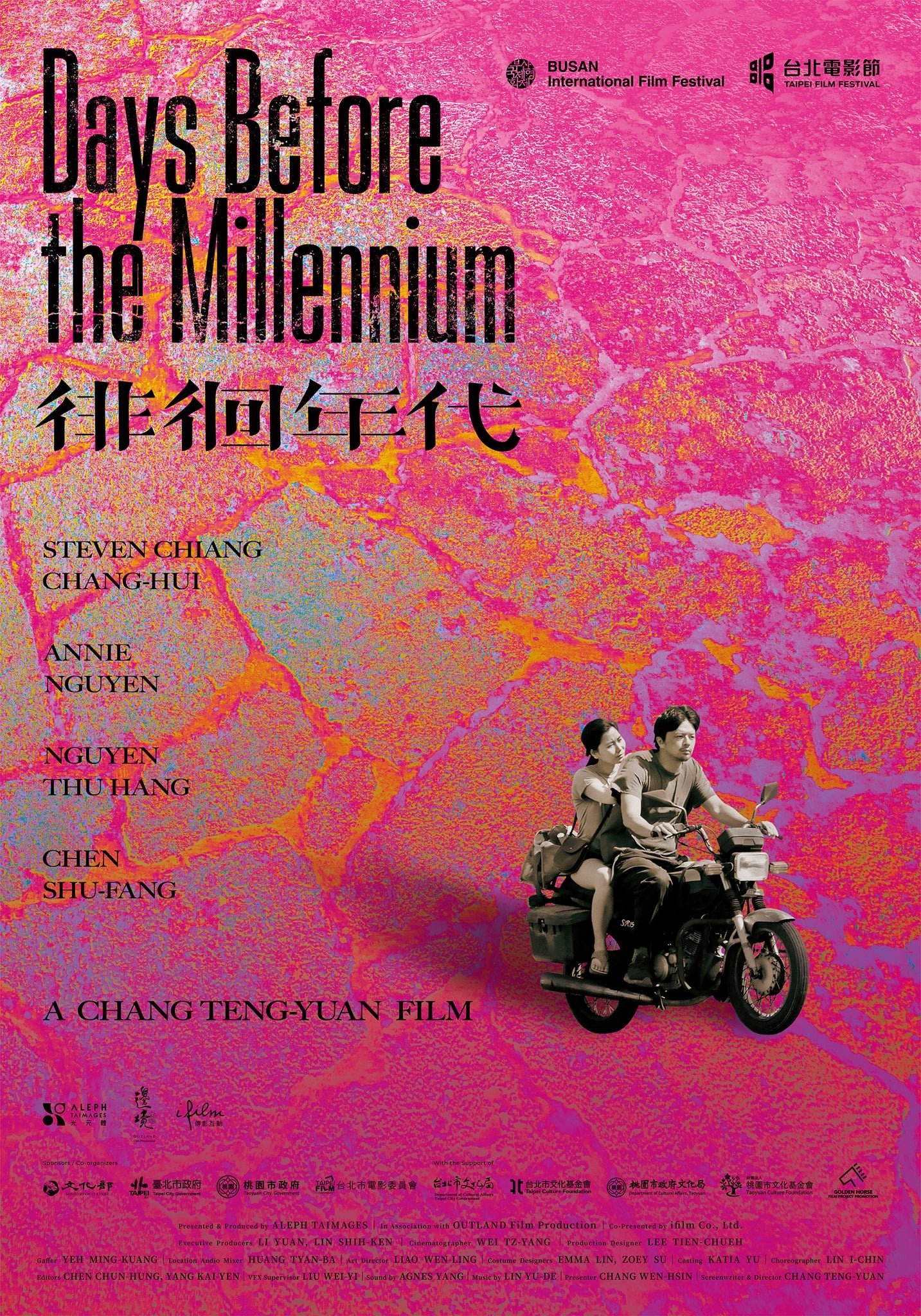
Days Before the Millennium (徘徊年代, Chang Teng-Yuan, 2021)

Perhaps deceptively titled, Chang Teng-Yuan’s bifurcated epic traverses the millennial divide in the company of two Vietnamese women each with very different stories but eventually agreeing “your generation or mine things were not easy for us” as they share their stories of migration amid the changing fortunes of Taiwan-Vietnam relations. Beginning in the mid-90s, Days Before the Millennium (徘徊年代, Páihuái Niándài) finds a mail order bride dreaming of a better life on an “island of riches” but soon finding herself trapped by an overbearing mother-in-law and violent husband, while another woman two decades later arrives happily married for love and well educated but often frustrated in her attempts to help those like herself struggling to adapt to a changing society. 

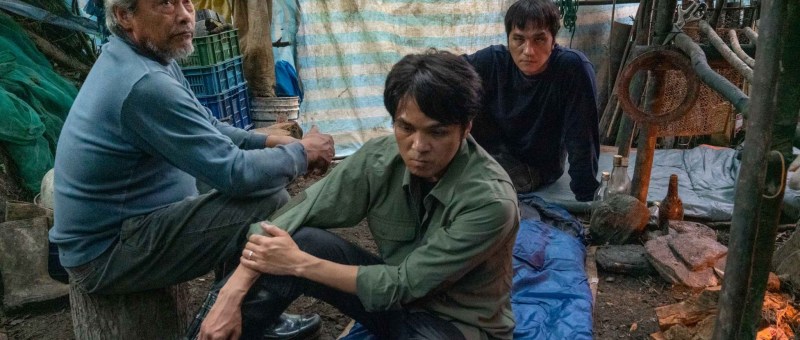
As Tue (Annie Nguyen) puts it, she exchanged her youth for a future of hope in Taiwan escaping a childhood of war for a more peaceful existence abroad. At the time she arrives, however, Taiwan is not so peaceful as relations with Mainland China continue to decline with many fearing military escalation. Meanwhile, the “mysterious man” to whom she was to be married, is a sullen construction worker filled with a sense of impossibility. Ming (Chiang Chang-Hui) patiently lays one brick on top of another attempting to build his home but finds himself under the watchful eyes of a couple of “surveyors” with eyes on his land. Alone in their van, the two men often debate the modern society the one decrying increasing globalisation while looking down on women like Tue complaining that half the town is now Vietnamese, “polluted”, as if they think they’re losing something even as they attempt to snatch Ming’s land out from under him to build, one assumes, some of the half-completed apartment blocks “private investigator” Lan (Nguyen Thu Hang) drives past 20 years later. 

Tue’s attempts to reclaim some of her agency through opening a small business selling street food only further irritate the already frustrated Ming whose internalised rage eventually turns violent while his mother (Chen Shu-fang) looks on saying nothing, later berating Tue for not having fulfilled the role for which she was desired pointing suggestively at an empty crib which seems to have been in the corner ever since she came. It’s at this point that her marginalisation intersects with that of women born on the island as her Vietnamese friend attempts to get her help by talking to the local police in the light of new legislation recently passed against domestic violence. Though the officer is sympathetic he can do little for her seeing as she has no material evidence while Tue blames herself and is otherwise trapped knowing that leaving her husband before completing her period of residency means potential deportation. Later doing just that she finds solidarity first at a buddhist temple and then a woman’s refuge, but even that is later disrupted by natural disaster.  

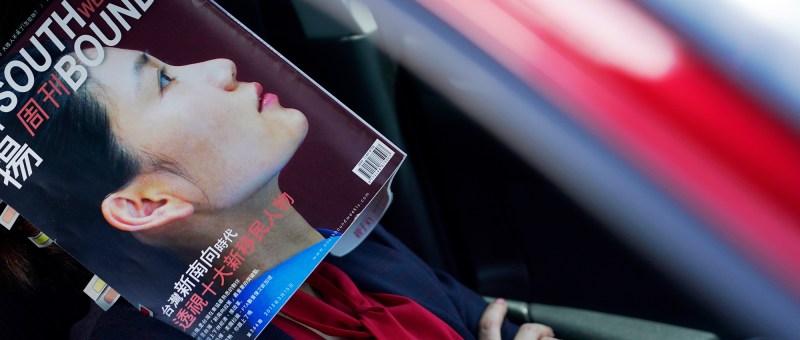
Tue’s story becomes a source of inspiration 20 years later for recent immigrant Lan, Chang transitioning to the post-millennial city during a storm which seems to narrow the screen now in a boxy 4:3 rather than the strangely oppressive widescreen with which the film opened. Unlike Tue, Lan has a degree in Chinese and an extensive resume having apparently met and married her Taiwanese husband in Vietnam. She applied for a position at a detective agency, the same agency which once offered to “help” Tue “fight for her rights” but didn’t really want to rent her an apartment, because she wants to help other women like herself in inter-cultural marriages find better solutions to domestic friction but finds her goals at odds with those of her capitalistic boss. Perhaps for these reasons, her first job does not go to plan as she accompanies a Vietnamese mail order bride on a mission to spy on the husband she suspects of having an affair, failing to stop her confronting him after discovering that he is a closeted homosexual who married her to please his parents but now feels guilty and conflicted in his treatment of her. 

This is of course another marginalisation, but one that Lan is ill-equipped to process while the woman she hoped to help is, as Tue once was, faced only with her broken dreams for better life in Taiwan. The Vietnamese news remarks on Taiwan’s geopolitical positioning as a delegation is awkwardly asked to leave an international conference because of Mainland pressure, while it also seems that a Taiwanese factory is responsible for a toxic waste spill that has damaged local fishing stocks and caused widespread illness in Vietnam. When Lan and Tue eventually meet they talk of the changing fortunes of their nations, Lan explaining that the port town where she’s from is now a bustling big city, the Vietnamese economy now much improved while Taiwan’s is falling behind. 20 years between them their fortunes are entirely different, even so they each agree things have not always been easy if differing ways. Nevertheless, their mutual sense of solidarity and desire to improve the circumstances of those like them offers a ray of hope in what might otherwise seem a difficult and hopeless future, Chang’s sometimes experimental, etherial tale of historical echoes and awkward symmetry finally allowing each of its heroines the sense of the better future of which they once dreamed. 


Days Before the Millennium screened as part of this year’s San Diego Asian Film Festival

Original trailer (dialogue free)