Organ Child (器子, Chieh Shueh Bin, 2024)

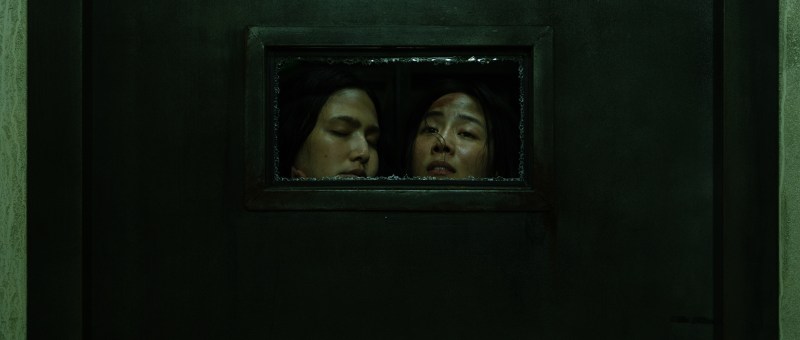
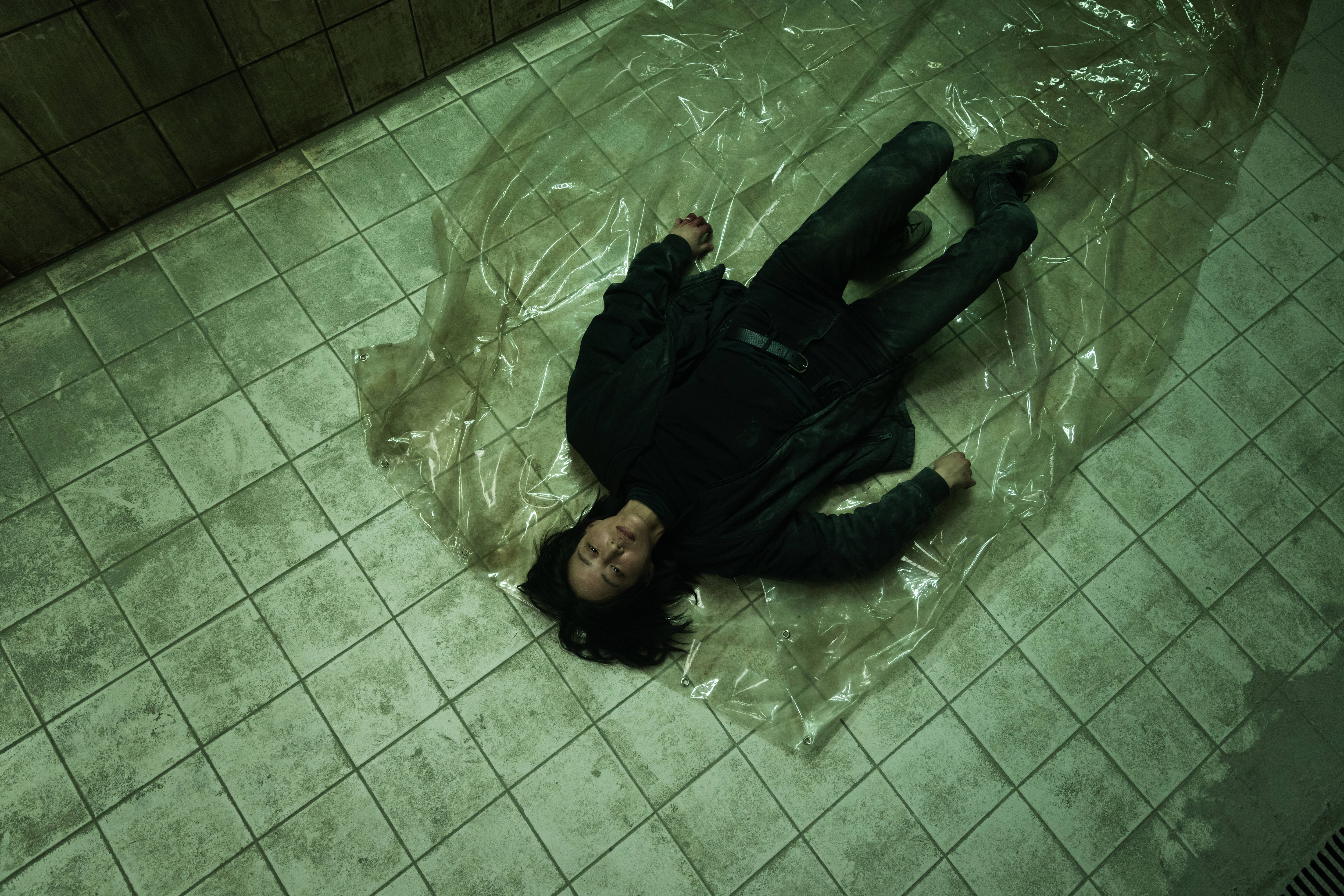
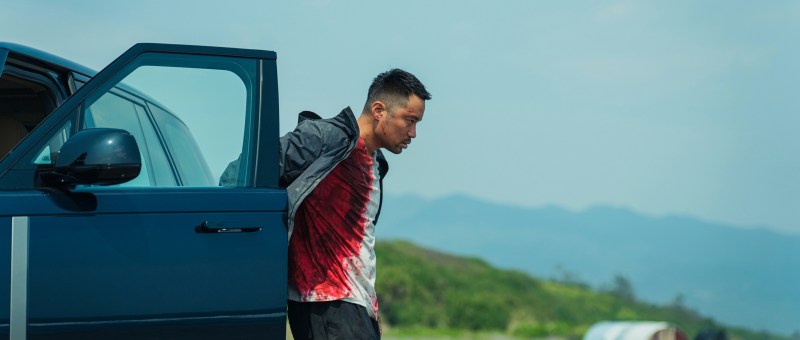
How far would a father go for his daughter? There’s an ironic duality at the centre of Organ Child (器子, qìzǐ) in that the vengeful man at its centre and the man he is chasing are basically the same and may have made the same choices were the situation reversed. Nevertheless, a terrible and morally indefensible crime has taken place which will lead to many more of the same as bereaved father Qi-mao (Joseph Chang Hsiao-chuan) stealthily tracks down all those who stole his newborn daughter and sold her to an organ trafficking ring. 

The film is keen to paint Qi-mao as a figure of uncompromised fatherhood through his association with a group of orphaned boys. Working as a baseball coach at the orphanage, he becomes a surrogate father to them and provides a familial environment as he and his wife frequently invite the boys for dinner. When his daughter is born, she automatically gets a whole baseball team of overprotective brothers, but that doesn’t stop her being snatched one day when her mother turns her back for an instant to pick up her bottle. The more Qi-mao searches for his daughter, the more he becomes convinced that she was stolen to order and the hospital is somehow involved. After getting too close to the truth, he’s framed for murder and sent to prison for 18 years during which he plans his bloody revenge.

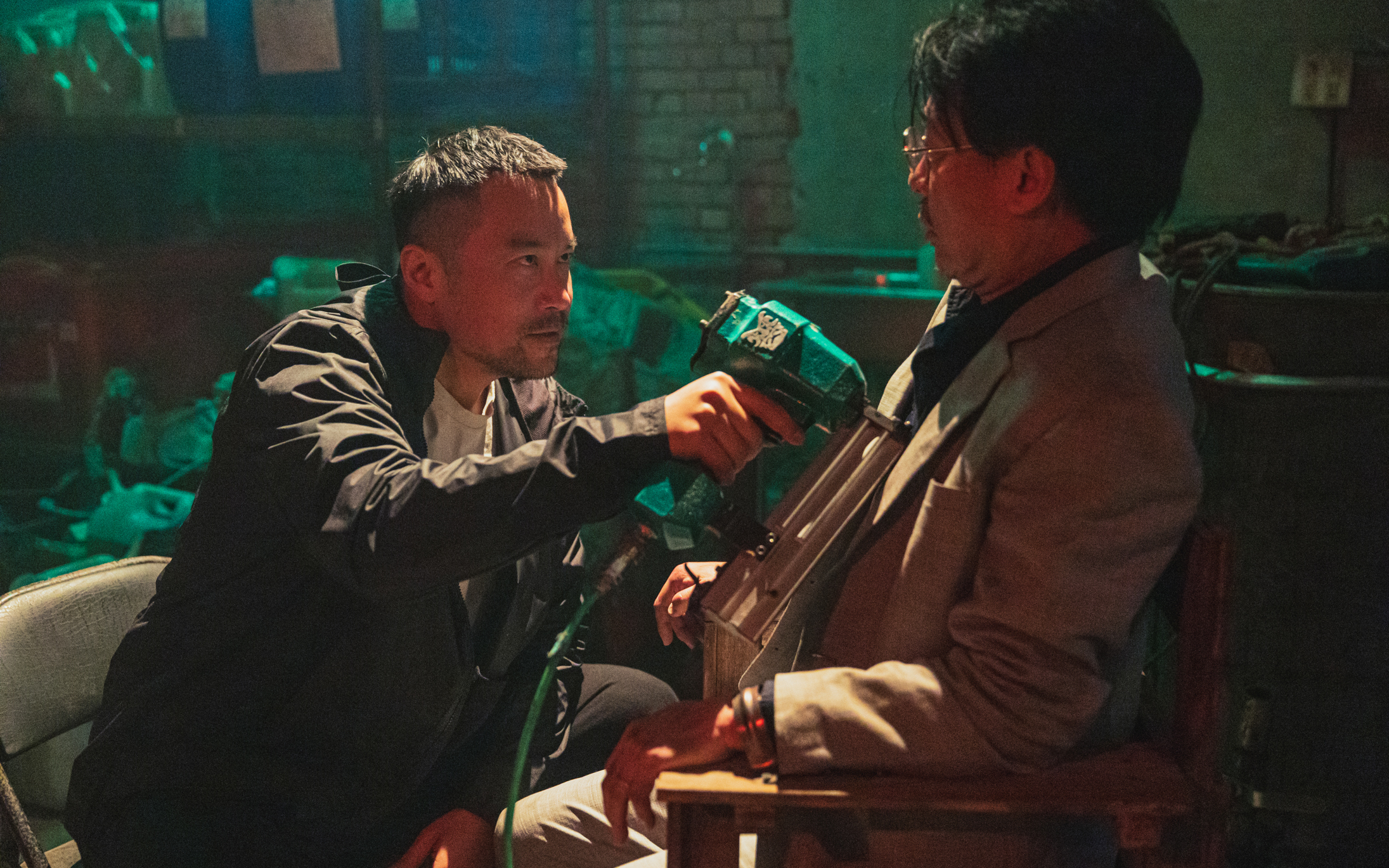
What he uncovers is a vast ring of human trafficking run through the dark web in which rich people can buy poor ones and harvest their organs to save those they love rather than waiting for a good candidate to present themselves. This is apparently what filthy rich businessman Xu did when his newborn daughter needed a heart, so Qi-mao is led to believe his daughter must be dead but is after answers and the location of her body more than to expose the network which appears deeply entrenched among the elite because it so very lucrative. Yet if Qi-mao is going to all this trouble now, perhaps he may have done the same as Xu if the situation were reversed. He appears blasé about putting other people’s children in danger while torturing their parents to get to the truth even if as it turns out he may not have actually intended to harm them. Just like him desperate to save their child, the parents largely give in when they are threatened and promise to tell him everything he wants to know if only he let them go. 

But there is something quite insidious in Xu’s plan given that it may be one thing to buy a living body off a website and never have to think about the person whose life will sacrificed, but quite another to be prepared to kill someone that trusts and loves you. Xu uses his money to employ a poor yet oblivious family while collaborating with a hospital to fake medical records and manipulate his daughter Qiao who thinks the biggest problem in her life is her forbidden romance with the son of one of their servants, again echoing the class divide that makes Xu think he can do what he likes with those he feels to be lesser than himself. The real “family” turns out to be that created by the orphans which is then spread to the younger generation who are eventually freed from their parents’ corruption and the boundaries of class to live in a freer world less bound by capitalistic imperative than simple solidarity. 

But for all that, Qi-mao is orphaned too in realising that even if his daughter were alive and he could still save her, she likely wouldn’t accept the man he’s become. Qi-mao is man of rage and vengeance. He brutally tortures those connected with his daughter’s disappearance and commits acts of heinous violence that render him unable to return to mainstream society despite his position as an idealised father figure to the orphan boys. A subplot about sexual abuse at the orphanage is under explored, but hints at the institutionalised corruption in which the powerless can be exploited by those in power when no one cares enough to stop them. Qi-mao may not really care that much about opposing the system, but certainly does about the boys and his missing daughter as he wades into hell in search of answers but also retribution. 

Organ Child screens 27th July as part of this year’s New York Asian Film Festival.


Trailer (English subtitles)
Eye of the Storm (疫起, Lin Chun-Yang, 2023)

In the early days of the pandemic, Taiwan was thought of as kind of safe haven which had largely managed to keep the disease a bay allowing many to live their lives more or less normally while much of the rest of the world contended with intermittent lockdowns of varying severity. The reasons for their success are said to lie in their experience during the SARS crisis of 2003. 

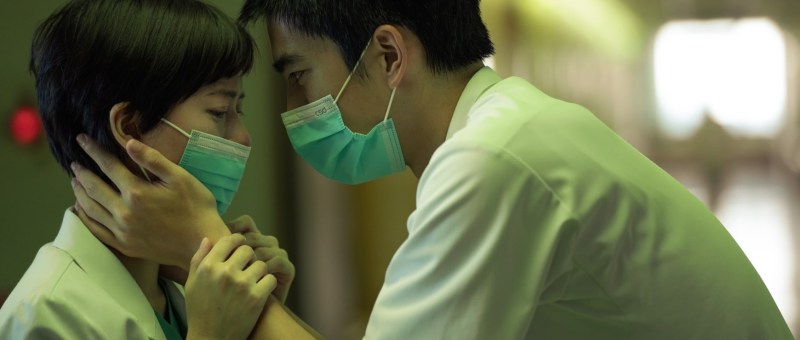
To that extent, there’s a kind of eeriness in Lin Chung-Yang’s poignant drama Eye of the Storm (疫起, yì qǐ) in watching the early days of this present pandemic play out 20 years earlier as medical personnel attempt to deal with a new illness about which they know almost nothing save that it appears to have a frighteningly high mortality rate. As the film opens, self-involved surgeon Xia (Wang Po-chieh) is clocking off a few minutes early in an attempt to make it to his daughter’s birthday party, rudely brushing off the complaints of warmhearted male nurse Tai-he (Tseng Ching-hua) and dismissing requests from his colleagues. Leaving in a taxi, however, he’s soon called back to deal with an emergency operation and becomes trapped when the hospital is placed into lockdown after the report of a possible SARS case. 

Unlike so many dramas centring on frontline healthcare workers during the COVID-19 pandemic, :Lin does not necessarily portray the medical staff in the best light. As the suspected case was being treated in B Wing it is the first to be shut down and some of the doctors and nurses start a protest refusing to treat patients with SARS resentful that they’ve been locked up with the disease. Meanwhile, in A Wing some of the nurses also go on strike holing themselves up in the rec room and refusing to come out. As Tai-he had been helping out in B-Wing, he is quickly rejected by his peers and exiled there despite having no symptoms while the nursing staff otherwise know that they maybe condemning him to death in sending him to the frontline battle against the disease.

Also on the frontline is journalist Yu-zhong (Hsueh Shih-ling) who snuck into the hospital after a tip off and is determined to let the people know by capturing the chaotic scenes at the hospital first hand. He and Xia eventually end up going through old records to figure out how the virus took hold while Xia mainly spends his time hiding in a storage cupboard and trying not to come into contact with anyone who might have SARS which is not very doctorly. Though originally desperate to get out of the hospital, Xia’s mindset begins to change when he sees how bad things are in B Wing after being charged with transporting food supplies while he later comes to realise that he may bear some responsibility in the rather cavalier treatment of a patient he recently operated on.

Then again, perhaps there is something also a little on the nose in the constant references to the disease’s origins in China while it’s the hospitals choice to use a Mainland construction firm that directly leads to the infection. In any case, Xia eventually beggins to come around realising that it’s selfish of him to refuse to help when the hospital is already so short staffed with some medical personnel on strike and others already falling ill and even dying. Lin lends the tunnel connecting the two wings an eerie quality in the ominous opening and closing of its oversize doors, as if Xia were really descending into hell dressed in a makeshift hazmat suit of yellow overalls. 

Xia had appeared to be a narcissistic surgeon with little interest in his patients. Criticised by Tai-he he clapped back that it’s the nurse’s job to care for them, not his, while continuing to keep his distance and fixating on being allowed to leave the hospital before beginning to empathise with the sick. Yet many other medical staff react in a similar way, overwhelmed by the fear and chaos of the situation while resentful in feeling that they’ve been unfairly imprisoned only later coming to accept the situation and returning to caring for the patients as best they can. Eerily echoing our present times, Lin’s poignant drama eventually finds a kind of serenity even among so much panic in quiet moments of small victories and human solidarity.


Eye of the Storm screened as part of this year’s New York Asian Film Festival.

Netflix trailer (English subtitles)

The Abandoned (查無此心, Tseng Ying-ting, 2022)

Just about everyone in Tseng Ying-ting’s psychological thriller The Abandoned (查無此心, Chá wú cǐ xīn) has been in some way left behind. The title most obviously refers to the body of a murdered woman unceremoniously dumped in a local river though as we later discover she wasn’t so much abandoned as returned, but the investigating officer is also battling her grief in feeling abandoned by her husband who took his own life and it could as well apply to the liminal status of migrant workers in Taiwan who have been largely abandoned by a society that is increasingly dependent on their labour. 

As policewoman Wu Jie (Janine Chang Chun-ning) points out to rookie Wei-shin, if she found a body she’d obviously call the police but if you can’t call the police because you’re afraid they’ll deport you you might have no other option than to make it go away. But the strange thing is that Waree’s body was left where it would be found and Jie will later claim that it is in a sense Waree who “saved” her by unwittingly frustrating her attempt to take her own life while consumed by grief and guilt over her husband’s death. Later it seems as if the killer of these women, each of whom has their heart and ring finger removed, intended to send the bodies back to their exploitative employers making a grim a point while leaving them with an impossible choice knowing that they can’t very well go to the police and risk undermining their entire business enterprise which relies on the labour of workers of who’ve either left the positions the visas they were granted were originally for or never had any in the first place.

Waree’s former boyfriend You-sheng (Ethan Juan) is left with just such a dilemma when the body of another woman, Yeti, is delivered to their factory calming the worried workers while secretly burying her himself in the mountains little knowing that a similar fate has befallen Waree whom he’s been looking for ever since she dropped out of contact as has her sister Saipin, also an undocumented worker from Thailand. The killer seems to target these women because he knows it’s unlikely anyone will look for them though they also have personal motives in their own sense of abandonment, resentful in feeling as if they’ve been deceived in love while unable to see how the other party may have felt trapped and exploited while their passport was held captive depriving them of the free choice to leave. 

As it turns out, the person who left Waree’s body in the water did it because they were worried she wouldn’t be able to return home, not wanting her to be disappeared in the way their employer might have wished her death hushed up like so many other anonymous workers whose families never hear of them again but at least acknowledged. Wu Jie is also unable to return home, mostly sleeping in the car directly below the bloodstained bullet hole under which her husband shot himself. Her boss ironically tells that if her heart remains in the car she’ll never escape, echoing the missing hearts of the murdered women taken as grim trophies by the heartless killer. 

Ironically enough, to solve the case Wu Jie must regain the desire to live finally facing her abandonment along with her grief and guilt for her inability to save her husband while working with the conflicted You-sheng who similarly feels both abandoned and guilty in the failure of his relationship with Waree whom he was reluctant to marry and might have saved if he had. Tseng aptly demonstrates the precarious position of undocumented migrant workers in Taiwan who are often exploited by their employers and rendered invisible by a society which largely treats them with disdain while left vulnerable to crime and violence in being unable to turn to the authorities for help. He also hints at a degree of misogyny present in the police force as Jie is at one point asked to leave the case as the higher ups don’t like the idea of two women working together while Jie simultaneously feels pressured to stay knowing that the situation is too complicated for an earnest rookie to manage on her own. Exploring the grimy underbelly of an otherwise prosperous nation, the film has only sympathy for those have in one way another been abandoned and can see little prospect of escape from their fear and loneliness. 


The Abandoned screens July 26 as part of this year’s New York Asian Film Festival.

Original trailer (Traditional Chinese / English subtitles)

Images: @Renaissance Films Limited. Love Me Tender Production Company