Bad Education (黑的教育, Kai Ko, 2022)

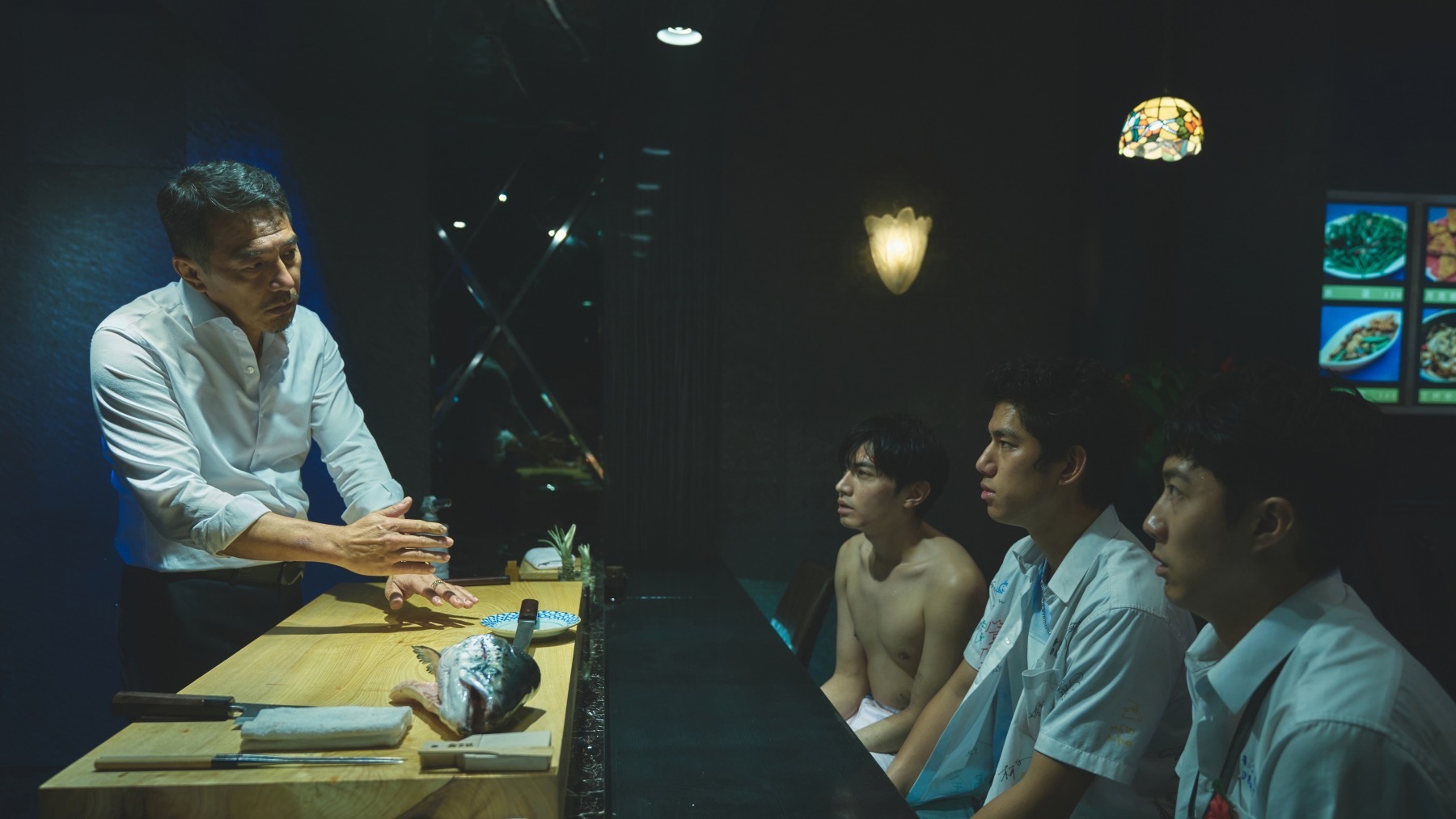
According to a jaded policeman in Kai Ko’s directorial debut Bad Education (黑的教育, Hēi de Jiàoyù), only 10% of people are good and 10% bad with 80% somewhere in the middle depending on the circumstances. As another person puts, even bad people have principles and in an odd way it’s a sadistic gangster who becomes a moral authority teaching the trio at the film’s centre a few valuable lessons in just how far south something can go when you allow yourself to be swayed by peer pressure and adolescent bravado. 

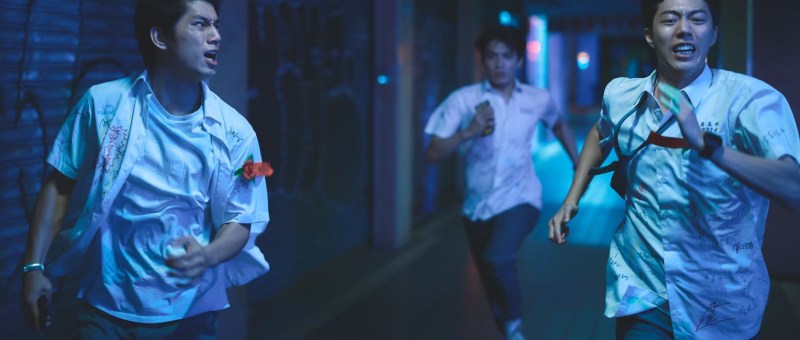
Perhaps intended as a graduation prank, Chang (Berant Zhu) suggests he and his friends Han (Edison Song) and Wang (Kent Tsai) exchange otherwise unspeakable secrets to cement their ongoing friendship through the threat of blackmail and exposure. Chang tells a frankly disgusting story that he raped and impregnated a young woman with learning difficulties while Han claims that he bludgeoned a homeless man to death but no one noticed. The only one to be going on to university, Wang does not have any particularly dark secrets to share. All he can come up with is that he once read his father’s texts and found out he’s having an affair, while otherwise confessing to having stolen the answer sheet to a test. As expected, Chang and Han don’t like his answers and begin to threaten him, pushing Wang back towards the edge of the roof as if they meant to kill him so wouldn’t spill the beans. 

Chan and Han were of course bullshitting, they haven’t done anything of the sort, but they manage to persuade Wang that he’ll have to do something similar to complete the pact. They challenge him to throw paint at a gangster which turns out to be an incredibly bad mistake though to be fair to them, Chan and Han may not have expected Wang to actually do it. It’s only then that they start to realise they aren’t children any more. Actions will have consequences and even if, as Mr. Hsing (Leon Dai) the gangster boss later says, they haven’t done “anything wrong” they’ve gone about everything in the wrong way and will eventually have to pay. Chan looks up at him pleadingly and answers like a child that he’s sorry and won’t do it again, but Mr. Hsing points out that whether he does it again or not is of no interest to him. It’s not what this is about. 

What it’s about is perhaps a different kind of “graduation”, leaving the innocence and naivety of childhood behind for the cynicism of adulthood and the moral greyness of grownup society. Then again, they weren’t all that innocent to begin with that they could come up with heinous crimes to confess and imagine that their friendship would survive it. The policeman says that 80% of people could go either way in most situations, himself included it seems, painting a fairly bleak picture of the contemporary society. Chased through the city by Hsing’s foot soldiers, Chan and Wang end up stealing a taxi from a taxi driver who had just raped the young woman passed out drunk in his car though no one makes much of an effort to help her as each remains fixated on their personal goals such as escaping and fleeing the city. 

In the opening scenes, a lobster had been plucked from a tank and had its legs cut off in a moment of foreshadowing while customers in Mr Hsing’s seafood restaurant with greasy mouths suck on shrimp whose corpses they soon spit out and discard. Something quite similar happens to the boys as the cracks in their friendship are further exposed. Even back on the rooftop, they’d reflected on the class difference between them with Wang, whose father owns a factory he is expected to take over, the only one going to college, while Chan jokes about becoming his driver and Han remarks that he’d like to drive a Maserati (one stands across from him as he’s viciously beaten in his underwear by Hsing’s goons). 

Figuring out they have no underworld connections, Hsing asks for money and the boys immediately look to rich kid Wang only he refuses because it’s too embarrassing to ask his dad for that amount of cash. Engaged in some kind of sadistic power play, Hsing tries to get them to cut each other’s pinkies off with the guys each turning on and blaming each other. Chan too tries to argue that they came back to save Han so he owes them (only they didn’t), while later blaming Wang for going ahead with the dare rather than himself for setting up this stupid prank as a means of having something to remember in their old age. Later he admits his insecurity, uncertain of his own future and frightened that his friends will leave him behind but it’s already too late. Wang ironically fulfils the pact, his graduate rosette fluttering as he does so as if to remind us that he’s now “graduated” from childhood innocence, but ironically destroys rather than cements the boys’ friendship with one chaotic night of violence and terror. Incredibly dark with moments of bleak humour, Bad Education offers a lesson in retribution and the costs of peer pressure and bravado and leaves each of its heroes changed, if not slightly broken, by the realities of a duplicitous adulthood. 


Bad Education screened as part of this year’s New York Asian Film Festival

Teaser trailer (Traditional Chinese / English subtitles)
Mama Boy (初戀慢半拍, Arvin Chen, 2022)

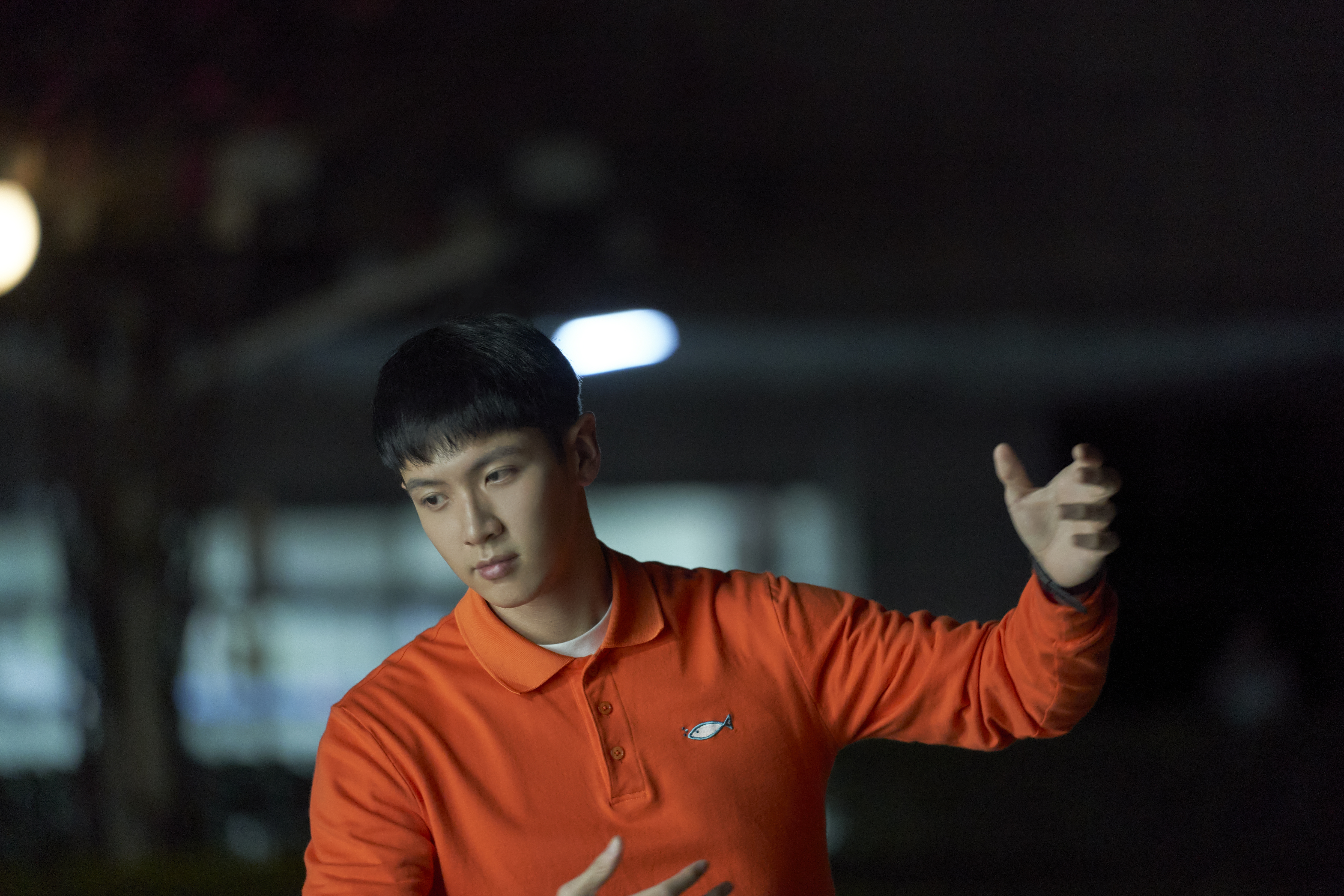
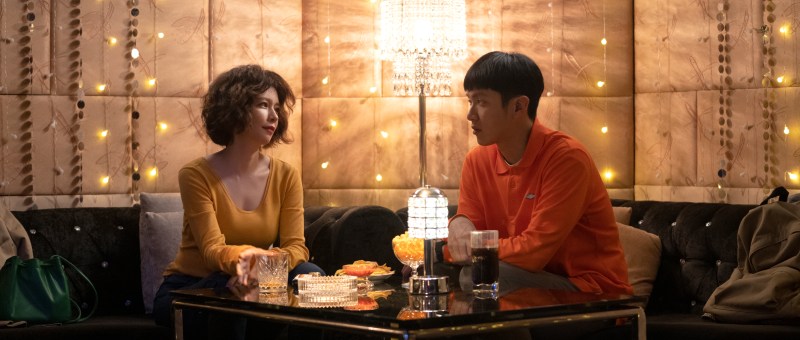
A diffident young man gets a few lessons in love after falling for a middle-aged madam in Arvin Chen’s charming romantic dramedy, Mama Boy (初戀慢半拍, chūliàn mànbànpāi). The English-language title at least is a kind of pun, the awkward hero both described as a mother’s boy and falling for the mama of a hotel providing sexual services, but also hints at the awkwardness involved in his attempt to assert his independence at the comparatively late age of 30 by choosing to spend time with a mother the polar opposite of his own. 

Xiao-hong’s (Kai Ko) mother Meiling (Yu Tzu-yu) describes him as “shy”, though the mother of one of the girls she attempts to set him up with less charitably brands him “not normal”. Not normal is closer to the way Xiao-hong thinks of himself, wishing his mother would stop with the blind dates knowing that in his awkwardness he ends up making women feel uncomfortable and has no idea how to talk to them. His sleazy cousin/boss at the tropical fish shop where he works, insists on taking him to an exclusive brothel where he is instantly captivated by the middle-aged madam, Sister Lele (Vivian Hsu). Too shy to say anything, he continues returning to the hotel and hiring a sex worker to sit blankly in the room solely for the opportunity of exchanging a few words with her. 

The two of them are in a sense in similar positions, a mother frustrated by a wayward son, and a son frustrated by his possessive mother. Some of Xiao-hong’s attraction at least is maternal in seeking a freer parental hand. Unlike his mother, Lele boosts his confidence by making him believe that he’s alright and girls are going to like him, while taking him to cosy nightspots and teaching him the basics of romance. She meanwhile admires him as an ideal son the polar opposite of her own. Weijie (Fandy Fan) only contacts her to ask for money (his father no longer answers his calls) and seems to be involved in several dodgy get rich quick schemes the latest of which is selling knock off wine while he’s also got himself in trouble with loansharks. 

There is something a little uncomfortable in the contrast presented between the two women, the prim and proper mum Meiling raising a sweet, polite child like Xiao-hong who nevertheless lacks several important life skills because of her overparenting, while the child raised by former sex worker Lele is a no good two bit wise guy. Lele certainly seems to see Xiao-hong as a symbol of her failed maternity believing that his mother must have raised him well while she blames herself for her son’s failings feeling as if she couldn’t give Weijie the attention he deserved because she was a single mother who had to work to support him. 

Meanwhile they are also each lonely, Xiao-hong shy and isolated and Lele spending her nights drinking alone in bars being chatted up by sleazy men. Spending time together they develop a tentative bond of love and affection only to find their connection interrupted by Weijie and Meiling each of whom obviously disapprove. Meiling has a suitor of her own in a retired police academy professor she rejects out of a sense of repressive properness but eventually warms to after feeling she needs police assistance to reclaim her son from Lele realising that he’s stopped picking her up from work in order to give Lele lifts instead. 

Despite the romantic themes, both women are essentially reduced to the maternal through their experiences with good son Xiao-hong, Lele trying to patch things up with the wayward Weijie while Meiling realises that she’s overstepped the mark and and will have to let go a little to let Xiao-hong live his life or risk turning him into a perpetual mother’s boy who’ll be all alone once she’s gone. Xiao-hong meanwhile begins to gain confidence, asserting himself as an individual free of his mother’s control now no longer so diffident in talking to women thanks to the patient ministrations of Lele. With its quirky production design and fairytale atmosphere Chen’s tale of first love delayed is also one of unexpected connection and mutual acceptance that perhaps missteps in effectively negating the relationship at its centre but nevertheless has only sympathy for its lovelorn hero. 


Mama Boy screened as part of this year’s New York Asian Film Festival.

Original trailer (English subtitles)

Images: © 2022 Filmagic Pictures Co.

The Great Buddha+ (大佛普拉斯, Huang Hsin-yao, 2017)

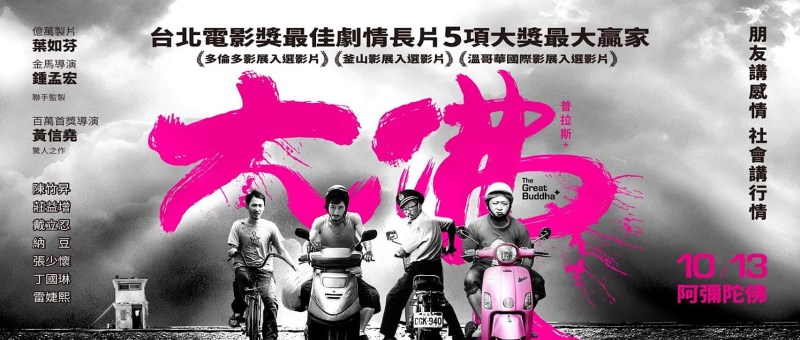
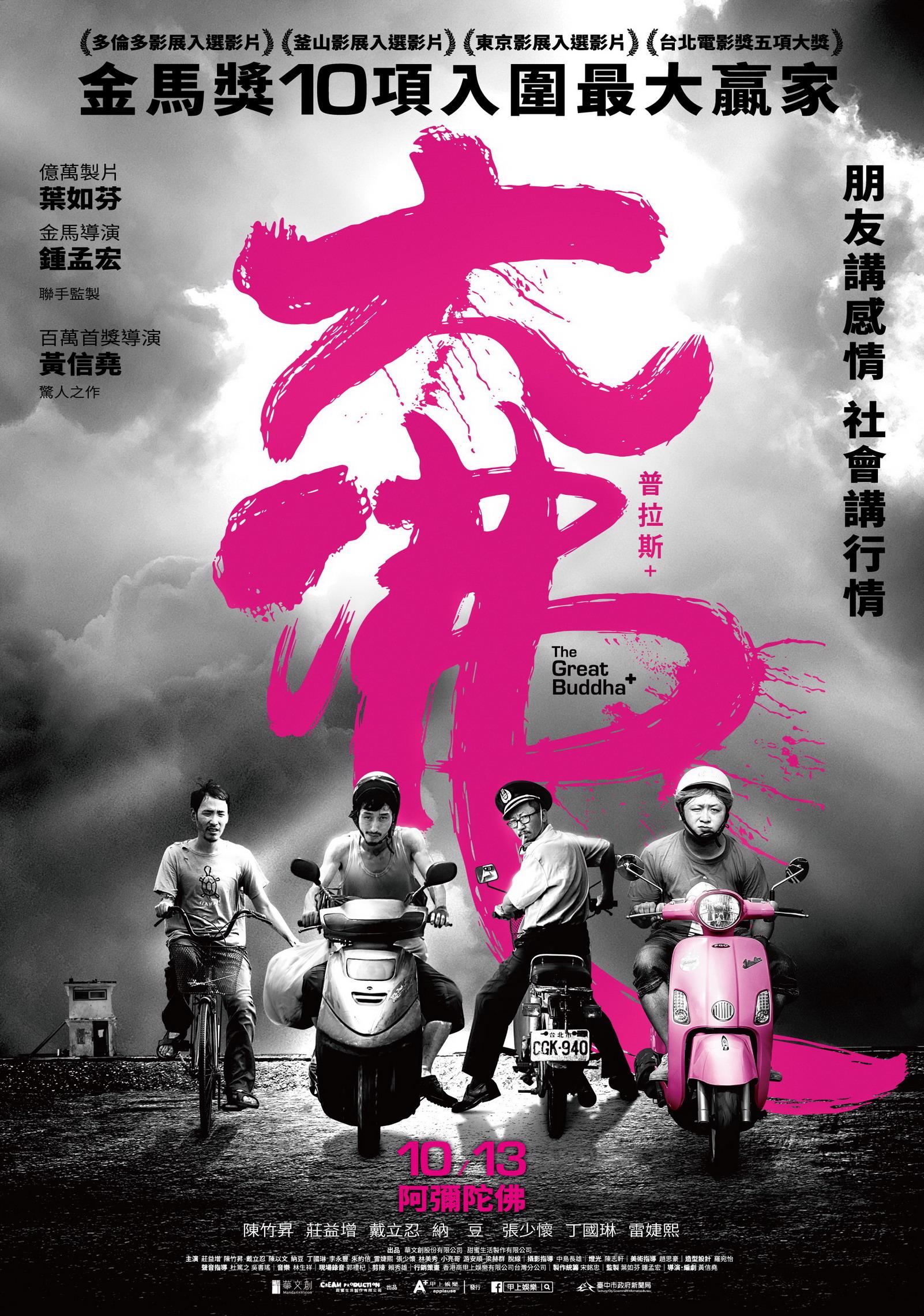
Great Buddha + posterFor some, the good life always seems a little out of reach, as if they showed up late to the great buffet of life and now all that’s left is a few soggy pastries and the salad someone’s aunt brings every year that no one really likes. Still, even if you know this is all there is, it doesn’t have to be so bad so long as you have good friends and something to do every day. The “heroes” of documentarian Huang Hsin-yao’s fiction feature debut The Great Buddha+ (大佛普拉斯, Dà fó pǔ lā sī) are exactly this sort – men in late middle age who’ve never quite grown up but have eased into a perpetual boyhood safe in the knowledge that there’s nowhere left for them to grow up to.

“Pickle” (Cres Chuang) is something of a holy fool. His major preoccupation in life is his elderly mother whose increasing medical bills he is continually worrying about paying. He’s taken to banging a drum in a local marching band with a big line in funerals for extra money at which he is terrible but seeing as there’s no one else his job is probably safe for the minute. His “occupation” is nightwatchman at a factory owned by “Kevin” (Leon Dai) – a renowned sculptor working on a giant Buddha statue. Nothing ever happens at the factory at night so no one is very bothered what Pickle does there, which is mostly being “entertained” by his “best friend” Belly Button (Bamboo Chen). Belly Button doesn’t really have a job but earns money through collecting recyclables and selling them on. Looking for a new source of vicarious fun, Belly Button talks Pickle into stealing the SD card from the dash cam on Kevin’s fancy car so they can enjoy riding along with him in their very own private sim. This turns out to be more fun than expected because Kevin is also a womaniser with a thing for car sex even if the cam only captures the audio of his exploits. Nevertheless, the guys inevitably end up seeing something they shouldn’t.

Huang shoots in black and white but switches to vibrant colour for the dash cam footage, somehow implying that nothing is quite so real to guys like Pickle and Belly Button as a fantasy vision of someone else’s glamorous life. After all, if it’s not online it didn’t really happen. Trapped in the gutter of small town life, both men have either failed to move on from or wilfully regressed into a perpetual adolescence in which they waste their days idly on pointless pursuits – leafing through ancient porn mags, gossiping, and eating half frozen curries from half-filled Tupperware boxes. A mild mannered man, Pickle is so innocent that he never quite understands Belly Button’s lewd jokes while Belly Button, who is picked on and belittled by everyone else in town, takes delight in being able to boss him around.

Together the pair of them can only marvel at a man like Kevin with his wealth and talent which allows him to gain the thing they want the most – female company. Kevin, however, is not quite as marvellous as they might assume him to be even if they remain in awe of his caddish treatment of women while perhaps feeling sorry for those unfortunate enough to fall in love with him. In tight with the local bigwigs, Kevin is simply one link in a long chain of bureaucratic corruption in which business is done in the bathhouse surrounded by floozies. Kevin never explicitly lets on whether he knows that Pickle and Belly Button have stumbled on his secret, but their lives begin to change all the same. Their easy nights in the security cabin have gone for good and they feel themselves under threat in a chilling reminder of how easily a little guy can disappear or fall victim to an accident after asking too many questions about a vain and powerful man with money.

Meanwhile, Pickle is left worrying what’ll happen to his mum if he falls out with Kevin. Even if he wanted to speak out about a great injustice, he’d be putting his mother in the firing line. Then again, after a brief visit to Belly Button’s home in which he cocoons himself inside a mini UFO filled with the prizes he’s won from UFO grabber games (he says it’s like “therapy”), Pickle is forced to wonder how well he even knew him – his only friend. As Huang puts it in his melancholy voice over, we might have put men on the moon, but we’ll never be able to explore the universe of other peoples’ hearts.

Huang’s deadpan commentary is among the film’s strongest assets with its New Wave associations and determination to wring wry humour out of the increasingly hopeless world inhabited by Pickle, Belly Button, and their similarly disenfranchised friends. Filled with meta humour and a deep sadness masked by resignation to the futility of life, The Great Buddha+ is a beautifully lensed lament for the little guy just trying to survive in a land of hollow Buddhas and venial charlatans.


Screened as part of the 2018 London East Asia Film Festival.

Original trailer (English subtitles)