Drawing Closer (余命一年の僕が、余命半年の君と出会った話。, Takahiro Miki, 2024)

Takahiro Miki has made a name for himself as a purveyor of sad romances. Often his protagonists are divided by conflicting timelines, social taboos, or some other fantastical circumstance, though Drawing Closer (余命一年の僕が、余命半年の君と出会った話。, Yomei Ichinen no Boku ga, Yomei Hantoshi no Kimi to Deatta Hanashi) quite clearly harks back to the jun-ai or “pure love” boom in its focus on young love and terminal illness. Based on the novel by Ao Morita, the film nevertheless succumbs to some of genres most problematic tendencies as the heroine essentially becomes little more than a means for the hero’s path towards finding purpose in life.

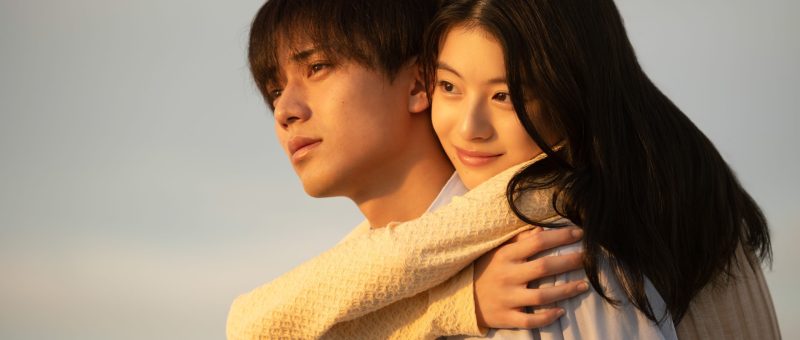
17-year-old Akito (Ren Nagase) is told that he has a tumour on his heart and only a year at most to live. Though he begins to feel as if his life is pointless, he finds new strength after running into Haruna (Natsuki Deguchi) who has only six months yet to him seems full of life. Later, Haruna says he was actually wrong and she felt completely hopeless too so actually she really wanted to die right away rather than pointlessly hang round for another six months with nothing to do and no one to talk to. But in any case, Akito decides that he’s going to make his remaining life’s purpose making Haruna happy which admittedly he does actually do by visiting her every day and bringing flowers once a week.

But outside of that, we never really hear that much from Haruna other than when she’s telling Akito something inspirational and he seems to more or less fill in the blanks on his own. Thus he makes what could have been a fairly rash and disastrous decision to bring a former friend, Ayaka (Mayuu Yokota), with whom Haruna had fallen out after the middle-school graduation ceremony that she was unable to go to because of her illness. Luckily he had correctly deduced that Haruna pushed her friend away because she thought their friendship was holding her back and Ayaka should be free to embrace her high school life making new friends who can do all the regular teenage things like going to karaoke or hanging out at the mall. Akito is doing something similar by not telling his other friends that he’s ill while also keeping it from Haruna in the hope that they can just be normal teens without the baggage of their illnesses. 

The film never shies away from the isolating qualities of what it’s like to live with a serious health condition. Both teens just want to be treated normally while others often pull away from them or are overly solicitous after finding out that they’re ill but at the same time, it’s all life lessons for Akito rather a genuine expression of Haruna’s feelings. We only experience them as he experiences them and so really she’s denied any opportunity to express herself authentically. Rather tritely, it’s she who teaches Akito how to live again in urging him that he should hang in there and continue to pursue his artistic dreams on behalf of them both. Meanwhile, she encourages him to pursue a romantic relationship with Ayaka, in that way ensuring that neither of them will be lonely when she’s gone and pushing them towards enjoying life to its fullest.

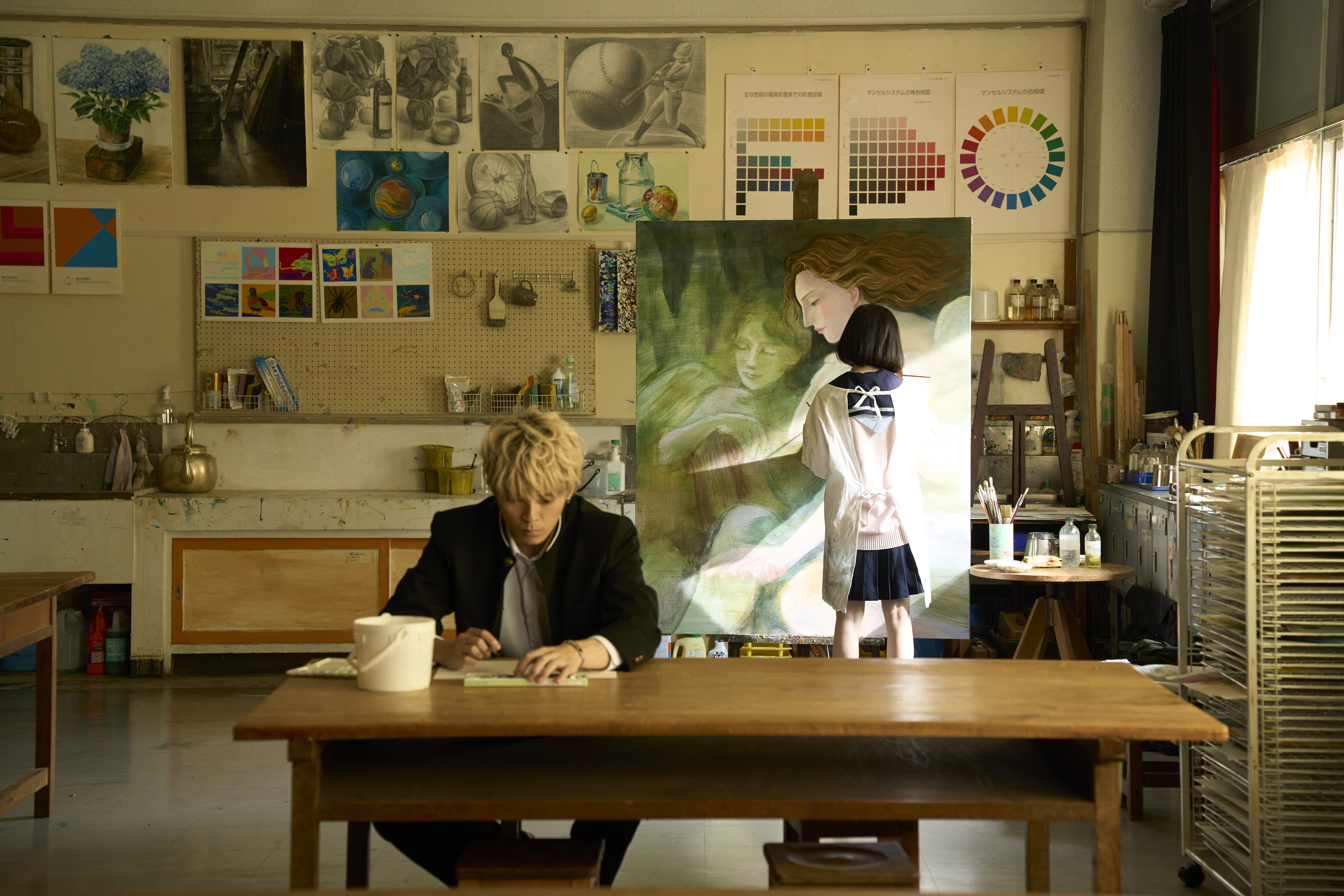
Nevertheless, due to its unbalanced quality and general earnestness the film never really achieves the kind of emotional impact that it’s aiming for nor the sense of poignancy familiar from Miki’s other work. Perhaps taking its cues from similarly themed television drama, the production values are on the lower side and Miki’s visual flair is largely absent though this perhaps helps to express a sense of hopelessness only broken by beautiful colours of Haruna’s artwork. Haruna had used drawing as means of escaping from the reality of her condition, but in the end even this becomes about Akito with her mother declaring that in the end she drew for him rather than for herself. Even so, there is something uplifting in Akito’s rediscovery of art as a purpose for life that convinces him that his remaining time isn’t meaningless while also allowing him to discover the desire to live even if his time is running out.


Trailer (English subtitles)
Blue Period (ブルーピリオド, Kentaro Hagiwara, 2024)

An ennui-ridden teen finds the world opening up to him after he discovers the power of art yet fears he can’t live up to his new epiphany in Kentaro Hagiwara’s adaptation of the manga by Tsubasa Yamaguchi, Blue Period (ブルーピリオド). Less about art itself, the film presents its hero with the cowardice of conformity, challenging him above all to know himself and wield his selfhood like a weapon in a world that can at times be unforgiving.

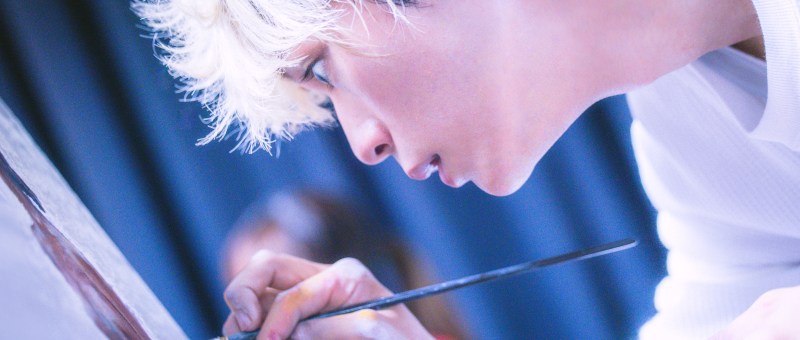
Even so, Yatora (Gordon Maeda) is a model student who gets good grades and is known for being well-mannered but secretly he’s filled with emptiness and has largely been just going through the motions. In his opening voice over, he relates that he does what he has to do, but declares himself unfulfilled and directionless. Unexpectedly captivated by a fellow student’s painting, he’s confronted by the power of art and the freedom it offers vowing to get into prestigious art school Tokyo University of the Arts.

The constraints he feels are partly economic in that his parents can’t afford a private university so he has to do his best to get into a public arts school while his mother seems dead against the idea of him going into the arts because it doesn’t put food on the table. Yatora parrots back similar lines describing art school as a pointless waste of time but is quickly taken to task by fellow student Yuka (Fumiya Takahashi) who challenges his tendency towards conformity and needles him into independent thoughts and action.

Yuka is also contrained by conservative social codes in that she dresses in a female uniform though many still call her by her male name, Ryuji. Though the pair have a rather spiky relationship, it’s Yuka’s attempts to challenge him that bounce Yatora towards discovering his true self which as it happens is done through embracing his least palatable elements. As Yuki correctly observes, his good boy persona and tendency towards hard work are just masks for his inner insecurity.

Yet as he’s also told, art isn’t just about talent but requires passion and tenacity which in its way makes it a perfect fit for Yatora’s hard-working nature as he buckles down to become a promising artist in the run up to his high school exams. As he later reflects, others may be more talented than him but they can’t make the things that he makes because the point is they come from himself. His early pieces are criticied for their superficiality, that he only sees what’s directly in front him rather than learning to see the world in other, more unique ways and engage with it on an individual level but through his artistic journey he discovers new ways of seeing along with his true self in all its complexity. 

His newfound desire to follow his heart places him at odds with prevailing social codes which favour the sensible though it also spurs others on to do the same, one of his best friends deciding to become a pastry chef rather than get a regular salaryman job hinting at a greater desire for personal fulfilment among the young. Often poetic in his imagery such the sparks that fly from Yatora’s nascent artwork or the comforting blue of the Shibuya twilight that becomes his safe space, Hagiwara sometimes paints Yatora’s quest like a shonen manga with a series of bosses to beat in Yatora’s various rivals and challenges most which teach him something about himself that spurs him on to continue chasing his artistic dreams while the exams themselves are also mental exercises of strategy and thinking outside the box to unlock a particular kind of self-expression. There is something quite refreshing, however, in the fact that Yatora’s only real rival is himself in his ongoing quest for skills and self-knowledge, earnestly applying himself to master his craft eager only for the places his artistry will take him both mentally and physically and no longer so dissatisfied with the world around him but filled with a new curiosity and the confidence in himself to continue exploring it.


Blue Period screened in New York as part of this year’s JAPAN CUTS.

Original trailer (English subtitles)