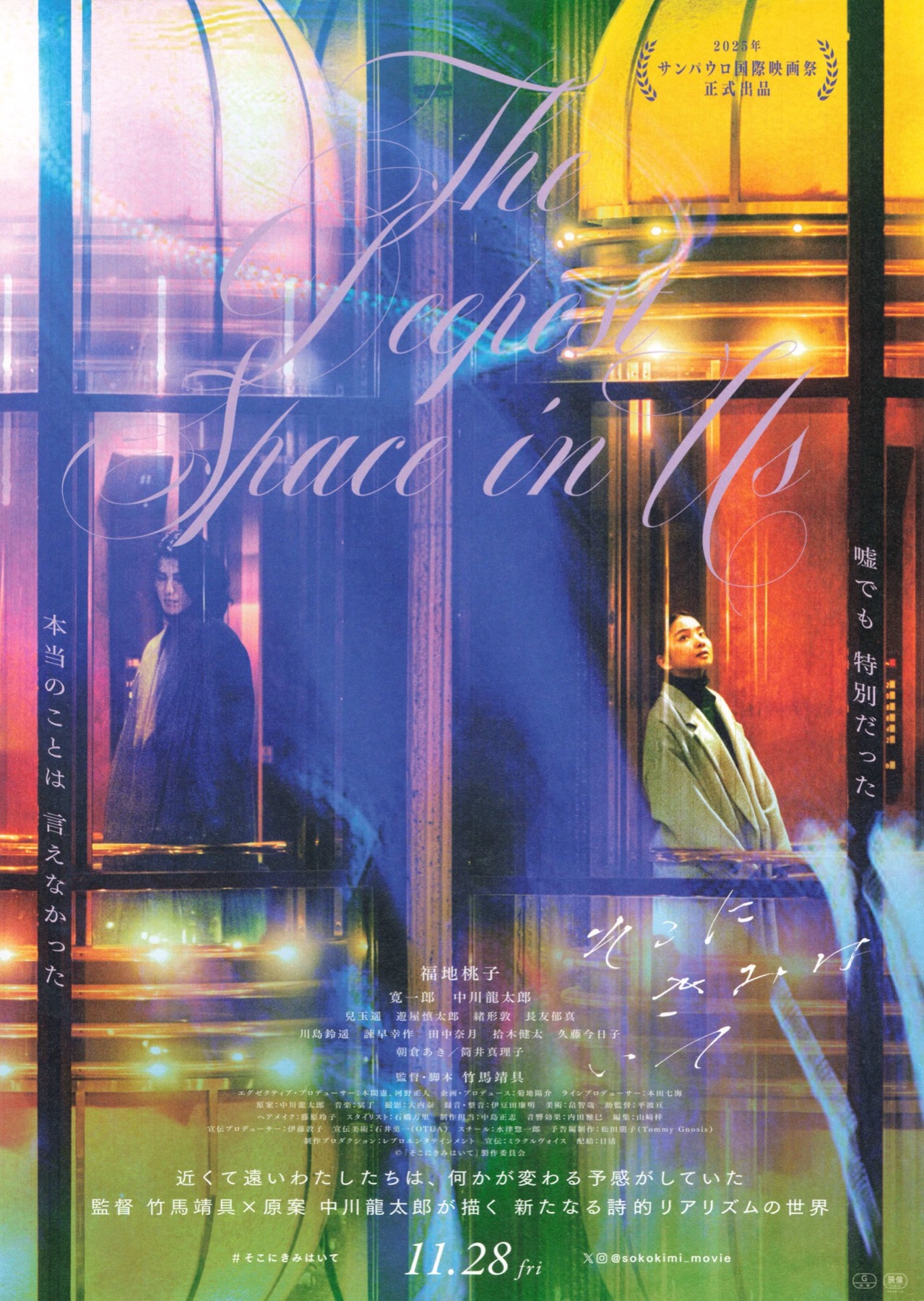
The Deepest Space in Us (そこにきみはいて, Yasutomo Chikuma, 2025)

The dress code at Kaori’s office doesn’t seem to be all that formal, but for some reason she alone looks like she’s going to a funeral. As it turns out, there’s a reason for that, but it also reflects the way that her job makes her feel dead inside and how she’s made to feel by a judgemental society that refuses to accept her as she is but punishes and excludes her for living outside of its expected norms and social codes.

Kaori (Momoko Fukuchi) doesn’t usually attend the team’s after work drinking parties, but is dragged along this time only to sit impassively ignoring everyone until a couple of drunk guys press her for her first love story and then ask a series of invasive questions about what kind of guys are her type. There are obviously a lot of assumptions in play here, and their obsessive probing borders on harassment. Kaori eventually gets up and leaves, but is chased by one of the guys who tries to ask her out. She tells him directly that she’s not interested because she doesn’t experience sexual attraction or desire, but that’s like a red flag to a bull for a certain sort of guy and this one laughs in her face after tearing her shirt as she tries to get away. People simply don’t believe her when she tells them, or else they conclude that there’s something wrong her that needs to be cured. She too feels as if she’s “not normal”, and is pressured by a society in which it’s still marriage and children that are the benchmarks of social success for a woman.

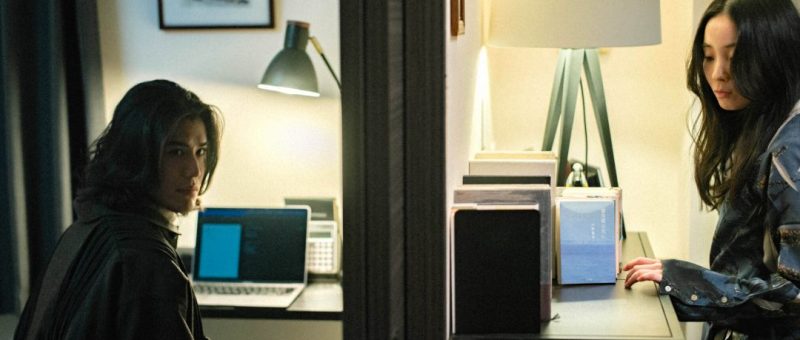
That’s one reason she bonds so easily with Takeru (Kanichiro), the lawyer who handled the probate for her estranged late mother’s estate which Kaori declined to inherit. Takeru tells her that he has something he wants to reject too, and it’s true enough that, to begin with, Kaori may be trying to reject her asexuality. She tries to initiate sex with Takeru in order to overcome it, but it isn’t something that either of them can go through with. Though he tells her that he has someone he can’t forget much as he’d like to, Takeru does not disclose that he is gay because of the intense shame he feels about his sexuality. Kaori evidently had a difficult childhood with a mother who was physically abusive towards her and thereafter raised in foster homes, while Takeru’s conservative mother (Mariko Tsutsui) seems to have instilled in him the same anxieties that plague Kaori in expecting him to marry and have children. Takeru’s former lover, Shingo (film director Ryutaro Nakagawa), has married a woman he doesn’t seem to like for convenience’s sake. Ten years after he and Takeru parted, Shingo is now a successful novelist writing populist fare that he secretly hates himself for knowing he’s writing for others and not himself. 

They all, in their way, attempt bury their true selves to achieve social success through heteronormative marriages, but Takeru and Kaori slowly discover that whatever joy they may have found in their mutual decision to overcome their self-loathing in a platonic union, it won’t work. They each at different times end up in the same hotel room with a hookup date staring a black mark on a wall that comes to represent an internal void. Realising that he will not be able to reject his homosexuality nor get over the grief and sense of loss he feels in Shingo’s rejection, Takeru eventually takes his own life. Struggling to understand why, Kaori ends up on a strange road trip with Shingo in which it’s never quite clear whether she fully realises he is Takeru’s former lover, or has already figured everything out and is trying to help him accept himself as a means of atoning for being unable to help Takeru do the same.

Her trip also strangely brings her into contact with a woman from her office who once claimed to hate her, but has now come to apologise while also looking, like Kaori, for some kind of acceptance and recognition. She says that she too hates herself, sure that men are only ever interested in sex and never in her. Eventually making a pass at Kaori, she admits that for some reason she is only able to be honest with her rather than her friends, family, or lovers. Nevertheless, though Kaori rejects her romantic advances, this simple act of unburdening and watching the sunrise together in silence seems to clear the air and grant both women a kind of peace.

Besides her sexual identity, Kaori seems to have a degree of trouble in dealing with people that suggests neurodivergence, but also longs for acceptance and companionship. While processing Takeru’s death and leading Shingo towards an acceptance of himself, she too learns to embrace her authentic identity and refuses to hide or run away from who she really is to please others rather than herself. Holding a mirror up to a repressed society, she achieves a kind of freedom in self-acceptance, which she then begins to extend to Shingo who once admitted that he ran away from love out of fear, and only now has the courage to face himself and the terrible delayed grief of having lost something precious that can never be reclaimed.


The Deepest Space in Us screened as part of this year’s BFI Flare.

Trailer (English subtitles)
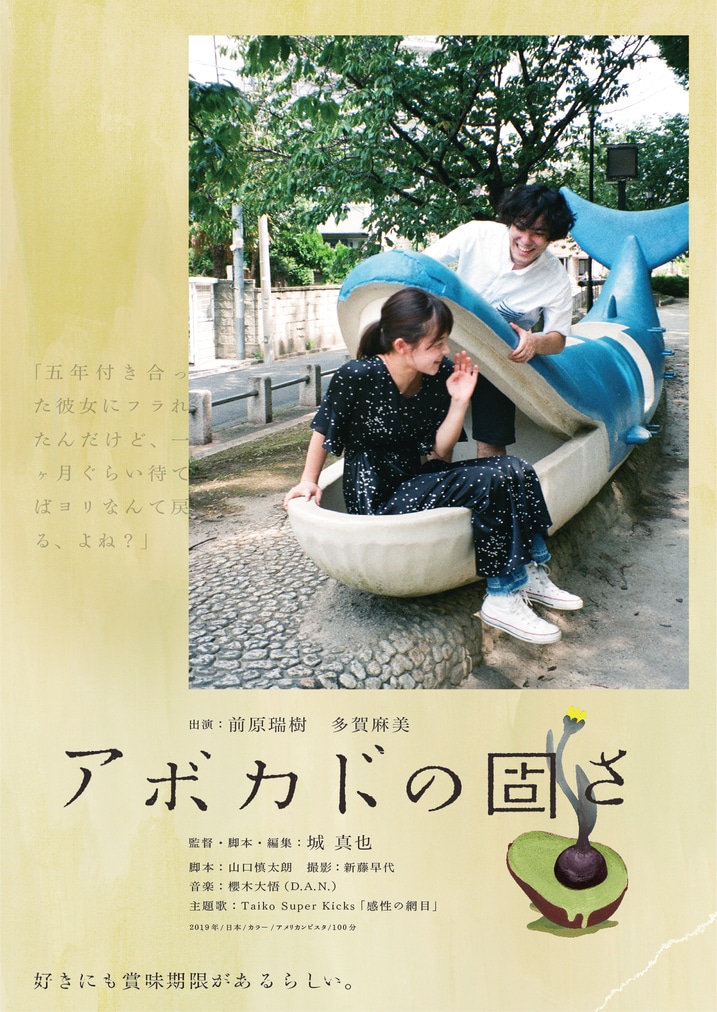
The Hardness of Avocado (アボカドの固さ, Masaya Jo, 2019)

“Reality might be bitter, but at least your coffee is sweet” according to the “gloomy” voiceover performed by aspiring actor Mizuki Maehara in Masaya Jo’s The Hardness of Avocado (アボカドの固さ, Avocado no Katasa). In many ways a tale of quarter-life inertia and youthful denial, Jo’s indie drama finds its struggling hero looking for the sweet spot, trying to grab the avocado at the opportune moment between rock hard and squishy mess but floundering in world which seems both continually confusing and perhaps inherently unfair. 

At 24, Mizuki (Mizuki Maehara) is a jobbing actor living with his sister (Zuru Onodera) in a small apartment. He’s been in a committed relationship with Shimi (Asami Taga) for the last five years and is already thinking about moving in together, asking her to help him pick out a sofa-bed after their date to the movies where she fell asleep and he ended up meeting a fan who recognised him from a previous film. Shimi, however, seems irritated, eventually answering Mizuki’s well meaning question about what she’d most like to do right now with the answer “break up”. In a pattern which will be repeated, Mizuki reacts somewhat petulantly, walking off with a “fine then” only to end up regretting it later. Unable to accept that Shimi is really ready to move on, he decides to give her (and himself) one month before, he assumes, they’ll get back together having each grown as people during their time apart. 

This baseless optimism and mild sense of self-centred entitlement are perhaps the very things that Mizuki is supposed to be outgrowing even as he struggles to get over Shimi. Having dated for five years, Mizuki took his relationship for granted, assuming it was settled and destined to go on forever. Shimi’s declaration comes as a complete surprise, shocking in its abruptness though we can see that she seems irritated by him and that it may be more than a temporary bad mood. She tells him that she needs “freedom” and time to herself, but it seems equally likely that, from her point of view, the relationship has simply run its course. Looking through his mementos, Mizuki finds a 20th birthday card from Shimi that promised she’d always be around to encourage him, but relationships entered in adolescence rarely survive the demands of adulthood and she, it seems, is after something more while all Mizuki seems to want is more of the same. 

Moping about the city, he engages in borderline misogynistic banter with his friends, occasionally irritating even them in his resentment towards a nerdy guy who has finally got a girlfriend. He finds himself applying for a job in a convenience store to make ends meet between auditions seated next to a pair of students who roll their eyes, mocking him for his lack of success as a man in his mid-20s still part-timing just like them. Meanwhile, he develops an unwise fondness for a woman he meets on a shoot, chatting her up at the afterparty but saying the quiet part out loud as he confesses his plan to have a fling while fully believing he’ll be getting back together with Shimi when the month is up. Despite the fact she has also told him she has a boyfriend, he suddenly declares his love to her, once again petulantly put out by her irritation as she points out how inappropriate he’s been seeing as all he’s done is talk about Shimi.

Shimi’s mother (Kumi Hyodo) can’t understand why she’d break up with someone as “nice” as Mizuki, and Mizuki is indeed “nice” if obviously imperfect, an earnest sort of man working hard to achieve his dreams, but she apparently wanted something less superficial, a more ”passionate and loving relationship” now that she’s outgrown adolescent romance. Mizuki is once again surprised when she brushes off his romantic overture, petulantly walking home while beginning to accept that something has indeed changed. Finally fastening the screws on his new chair (in lieu of the bed) he begins to regain some solo stability, a little more self-sufficient at least even if he still has some some growth to achieve on his own. A whimsical tale of millennial malaise and self-centred male entitlement, The Hardness of Avocado is a gentle advocation for learning to let go when something’s past its best while accepting that sometimes all you can do is set yourself right and start again. 


The Hardness of Avocado screened as part of Camera Japan 2020.

Original trailer (no subtitles)

colorless (猿楽町で会いましょう, Takashi Koyama, 2019)

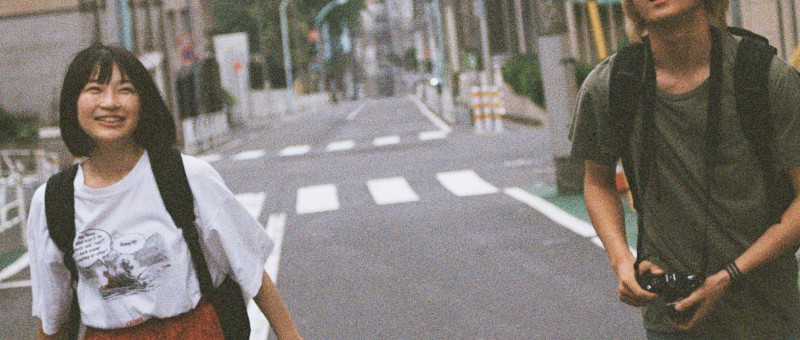
“I think I could capture the real you” a photographer pleads of a subject he has become obsessed with, little knowing the deeply problematic implications of his statement. Shot with a photographer’s eye, Takashi Koyama’s colorless (猿楽町で会いましょう, Sarugakucho de Aimasho), paints its heroes as just that, wandering zombies of modern day Tokyo as estranged from themselves as they are from others, but even as it attempts to draw similarities between their mutual lifelessness cannot help but reflect a misogynistic world view in which the conflicted heroine remains little more than an empty shell, a blank canvas onto which various men project their inner desires leaving her essentially robbed of an identity by an exploitative society. 

When we first meet aspiring freelance photographer Shu (Daichi Kaneko), he is in much the same position, kept waiting by an arrogant magazine editor who has stepped out of the office despite having arranged an appointment to look over his portfolio. When he eventually arrives, Kasamura (Kenta Maeno) rudely dismisses his work, claiming that the selection of photos he’s assembled doesn’t make sense in that it gives no clear indication of his style or intent and aside from that his shots are cold and lifeless. He attributes this lack of passion to the likelihood that Shu has never truly been in love, something which turns out to be true though as we later discover Kasamura is also a cold and cynical man who proudly proclaims the same of himself. Nevertheless, he hooks Shu up with a side job shooting publicity shots for an acquaintance, Yuka (Ruka Ishikawa), hoping to become a “reader’s model” as a path to fame. 

For whatever reason, Yuka seems to incite in him the passion which Kasamura claimed was missing in his work, becoming both muse and object of desire. She describes herself as colourless and wonders if there is a “her” that can be captured, while Shu assures her that he feels much the same but fails to appreciate the various ways in which he is attempting to colour her with his camera, filled with nothing but jealous anxiety when confronted by the possibility that she exists outside of the image he has created of her. The incongruities between what she tells him of herself, his own self created vision, and the evidence presented to him by others bring out an unpleasantly chauvinistic side of him which he perhaps does not even like in himself, abruptly attempting to stop her leaving his apartment without consenting to sex by threatening to withhold the data for the pictures he took, breaking into her phone to check her messages, and later feeling humiliated in realising that she may have hidden from him a prior (or current) life in sex work.

Yuka, meanwhile, remains a cipher. Unexpectedly interviewed as part of an audition she is asked to describe herself but can only reply in terms of the way others see her, answering only that she is often said to have a sunny disposition. We see her parrot back lines she’s heard from one man to another in an attempt to please him, as if wilfully erasing her essential identity to better conform to male desires in an attempt to keep herself safe but also perhaps betraying that she has few words of her own to offer. Yet in private we see a much less complimentary side of her in which she is petty and jealous, resentful of a friend’s success while she seems to get nowhere and, the film uncomfortably insists, willing to use men by exploiting their desire for her which is in essence a desire for a colourlessness they can dye with their own self projected ideals. 

Yuka claims that she does not want to know who she really is, perhaps afraid to know or realising that there really is no value in knowing because her existence is defined by male desire. Her tragedy may be that she isn’t cynical enough, unable to manipulate men to the same extent as her more successful friend, still longing to be known and loved for who she is even while insisting that she does not exist and wilfully misrepresenting herself to those around her out of embarrassment and dissatisfaction with her life. The story she tells in her interview implies a lasting trauma of male abuse which has caused a rupture in her sense of self, unable to grasp an identity other than that granted by others, but still we’re largely left with Shu’s resentment in his inability to “capture” that which cannot be captured in his desire to possess not only Yuka’s body but her image by replacing it with that of his own creation. A dark and cynical take on modern romance, colorless leaves its heroes much where it found them, floundering in an inherently patriarchal society itself devoid of the colour they each desire. 


colorless streamed as part of this year’s Udine Far East Film Festival.

International trailer (English subtitles)