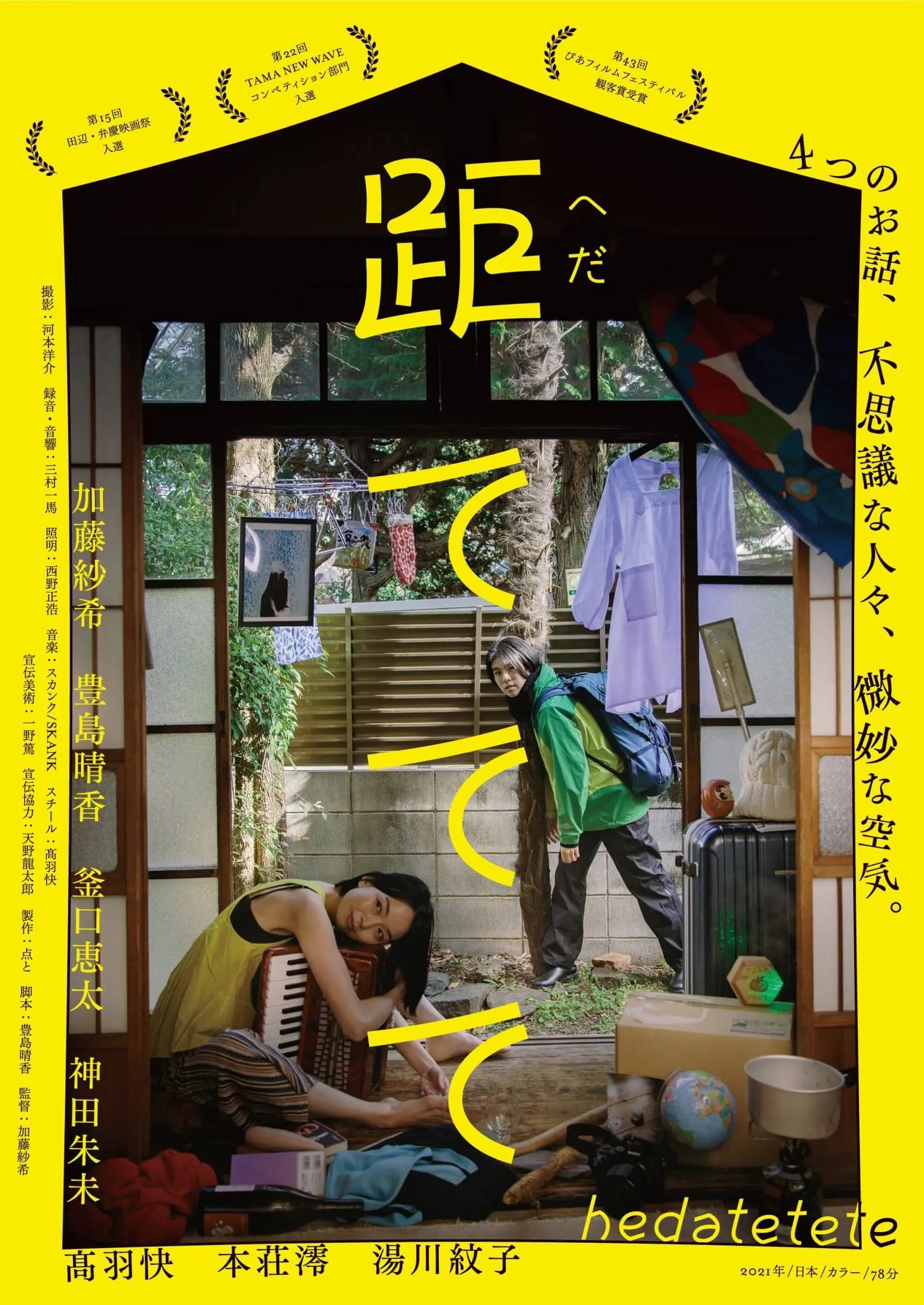
The 12th Suspect (열두 번째 용의자, Ko Myoung-sung, 2019)

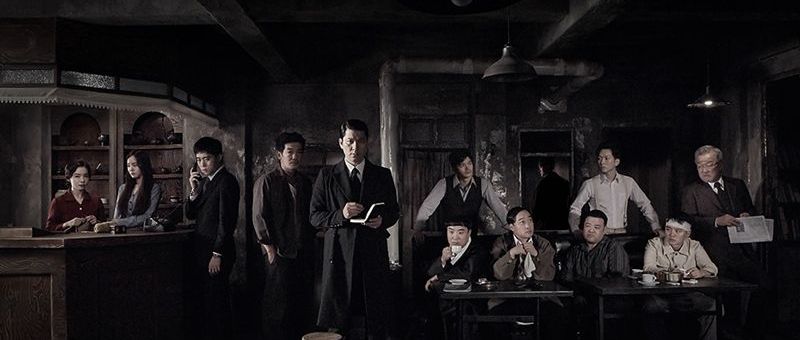
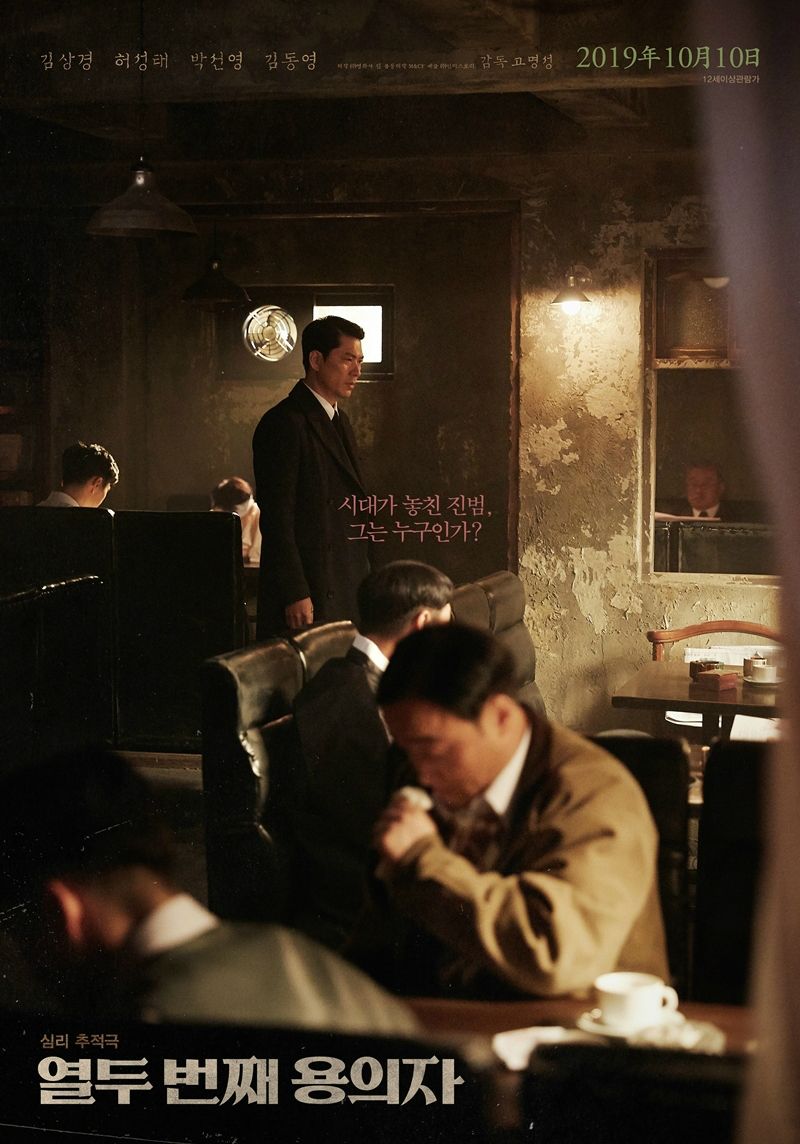
An inspector calls on a small group of artists in the immediate aftermath of the Korean War in Ko Myoung-sung’s taut psychological thriller, The 12th Suspect (열두 번째 용의자, Yeoldu beonjjae Yonguija). Set almost entirely within a tiny tea house, Ko’s steely drama lays bare the contradictions of the new society in slide towards authoritarianism which is itself a product of the failure to deal with the legacy of the colonial past while preoccupied about the “communist” threat in the quite literally divided nation. 

The Oriental Teahouse is home to a collection of poets, painters, and Bohemians seeking refuge from the everyday difficulties of life in the post-war city. Their peaceful idyll is rocked by the revelations that one of their number, Doo-hwan, died on a mountain the previous evening most likely murdered. As it turns out, no one seems to have liked Doo-hwan very much. He was “hateful and ignorant” not to mention a bad poet though many are sceptical of the story wondering if he might simply have had an accident. In any case, the newcomer to the cafe turns out to be a policeman, Ki-chae (Kim Sang-kyung), who confirms that Doo-hwan died of a gunshot wound and sets about asking a series of increasingly intense questions about his relations with the cafe’s denizens. 

To begin with, Ki-chae seems to be a Columbo-like avuncular detective, polite and sympathetic in his questioning until revealing his true purpose at which he turns into something of a firebreathing demon with a very particular vision of “justice”, hunting down “communist spies” in order to keep the South safe. As the murder weapon appears to be a Soviet-issue pistol, he assumes the killer(s) may be linked to the North accusing one of the patrons of having aided and abetted a cousin who was on the other side while throwing a book on Stalin at a university professor who desperately tries to explain that he’s had it since studying in Russia in his youth when times were different. 

Meanwhile, the policeman’s authoritarian sense of justice is gradually exposed as a kind of fascim born of his experiences under Japanese colonial rule. Doo-hwan may have died because of his actions during in the war when he collaborated with Japanese officers agreeing to send young men from his village as conscript soldiers to die for Japan on the frontlines or else as exploited slave labour in the coal mines. Ki-chae is hiding his own dark past while his quest for justice is riddled with corruption masked as patriotism as he vows to wipe out the “communist” threat in order to build a more secure Korea. “The existence of communists is a great misfortune to this country and also a danger” he adds before descending into a violent rage stamping on the face of his interviewee. 

His almost hysterical anti-communism is manifested in a general hatred for the kind of people who frequent the Oriental Teahouse, firstly taking them to task for their lifestyles in a time of chaos and privation while later viewing them as cowardly shirkers evading their duty to go to war. “I won’t let you ruin our country” he snarls while simultaneously embarking on an ill thought through argument that the communists are unfairly benefitting from the dire economic situation to “provoke good people”. He justifies his actions in insisting that everything he does is in order to prevent another “horrible war” while continuing to intimidate them into some kind of confession. His questioning reveals the petty jealousies and minor tensions between the artists along with the unreliability of their testimony while eventually exposing their small acts of resistance, cafe owner Suk-hyeon (Heo Sung-tae) determined to stand up to authoritarianism rather than forever be oppressed by it though others it seems are frightened enough by the potential dangers of rebellion to consider turning on their friends and allies. Locked in the tiny cafe with two soldiers blocking the exit, the artists are cornered and terrified as Ki-chae pits one against the other while all around them the prognosis looks bleak in a society in which men like Ki-chae wield ultimate power controlling the future through burying the past.


Original trailer (English subtitles)

Drive Into Night (夜を走る, Dai Sako, 2022)

Small-town futility leads to tragedy when two frustrated scrapyard workers attempt to cover up a crime in Dai Sako’s dark psychological drama Drive into Night (夜を走る, Yoru wo Hashiru). Oppressive in its atmosphere, the film situates itself in a world of constant humiliations where life is cheap and reputation everything. Its heroes seek escape from their disappointing existences through consumerism and extra-marital affairs, but no longer see much of a future for themselves while even the dissatisfying present seems to be ebbing away from them. 

Asked what makes his life fun, Akimoto (Tomomitsu Adachi) replies “not much”. A classic mild-mannered guy, he’s regarded as the office dogsbody and at the beck and call of his abusive manager, Hongo (Tsutomu Takahashi). When a new female sales representative, Risa (Ran Tamai), visits the yard, Hongo runs Akimoto down in front of her apologising for having such a useless employee who does nothing other than drive around all day. His sense of masculinity is also wounded by an older colleague who tries to sell he and his friend Taniguchi (Reo Tamaoki) some kind of aphrodisiac but reflects that Akimoto is too “tame” to ever make use of it, while even Taniguchi needles him about being a 40-year-old man who’s never had a girlfriend and still lives at home with his parents. In many ways he’s the classic “nice guy”, but there’s also something a little dark about him that makes it seem as if he may snap any moment. That may have been what happened when he and Taniguchi went to a bar with Risa shortly after she’d been coaxed into a works drink with Hongo. Something obviously went dreadfully wrong in the night, because Risa is soon reported missing and both Akimoto and Taniguchi begin behaving oddly. 

It is true enough that both men, and many of their colleagues, also consider themselves to be on the scrap heap. Akimoto is tempted to quit his job to put distance between himself and the scrapyard but reflects that he’s unlikely to find another job even if quitting so suddenly might arouse suspicion as Taniguchi warns him. Meanwhile, he knows the yard is in trouble. They have him running round doing cold calls but returning empty handed, while office workers are constantly fielding calls about unpaid invoices. His irritation is palpable when he spots the boss, Miyake, leaving one morning soon after he arrives, loading expensive golf clubs into his fancy car. Hongo bullies him, but later says he does it out of respect because Akimoto is the only one who bothers to do his job properly. But then again even Hongo concedes that hard work gets you nowhere. Most of his paycheques go on child support and he often sleeps in his car in the car park. The only reason he’s not been fired is that he has a personal connection to Miyake.

Even so, this fairly tenuous relationship does not really explain why Miyake goes to such great lengths to protect Hongo when he becomes the prime suspect in Risa’s disappearance and is framed by Taniguchi and a guilty Akimoto. It may be in a way that he really does think of the company as a kind of family, as perhaps do the loan sharks who keep calling them after Akimoto ends up in debt having joined a weird cult encourages him to think there is nothing wrong with him and the fault is all with an unaccepting world. The cult leader tells him that he is “full of anger”, which perhaps he is. This being in the immediate aftermath of the coronavirus pandemic, Akimoto is often questioned about still wearing a mask long after most people have abandoned them and part of the reason is as an attempt to hide his true self. After joining the cult he takes it off, but soon adopts another disguise in dressing in Risa’s clothes as his mental state continues to decline. 

Taniguchi meanwhile makes an effort to continue with his “normal” life which includes visiting his mistress. Unbeknownst to him, his wife Misaki (Nahana) is also having an affair with the consequence that neither of them is able to fully devote themselves to their young daughter Ayano who eventually ends up in a potentially dangerous situation because of her parents’ various transgressions. Nevertheless, despite discovering that her husband may have been involved in a murder it’s Misaki who decides that he has to “protect our family” above all else. Amid all of this, Risa becomes almost literally lost before later being unceremoniously dumped like so much scrap. After framing Hongo, Taniguchi tries to convince Akimoto that Risa isn’t their problem anymore as they each struggle to hang on to the previously disappointing realities they had been so desperate to escape. 

It has to be said that aside from the misogyny of its worldview, there is also an uncomfortable quality in the film’s characterisation of a shady Chinese businessman who of course knows how to get rid of bodies along with the fact his chief associate is Korean-Japanese gangster. Though the film’s strongest character may in fact be the Filipina bar hostess, Gina (Rosa Yamamoto), on whom Akimoto fixes most of his hopes who defiantly tells the cult leader that she’s happy with her life and has no reason to join his organisation, Akimoto exposes himself by telling her she’s wrong because he doesn’t see why a “foreigner”, “a woman”, who works in a “dirty” bar, could be happy or averse to being “saved” by him. Still he insists that he hasn’t “changed”, it’s the world that’s changed around him. Taniguchi later says something similar, and they each may have a point. In any case, this world is largely one of resentment and futility in which there is no release. Sako captures the drudgery of his protagonists lives with crushing naturalism but also perhaps little sympathy.


Original trailer (no subtitles)

ROLL (Daichi Murase, 2020)

“Change the world!” a stranger yells, perhaps ironically, from a passing pickup truck as the hero of Daichi Murase’s debut feature Roll, pelting hell for leather to rescue a trapped a soul. An unconventional coming-of-age tale, Murase’s experimental drama follows a young man from innocence to experience as he becomes determined to discover the secrets of an earlier age while discovering also that genies don’t go back inside their bottles and in fact may prefer to expire in the light of the sun rather than survive an eternity of vicarious darkness. 

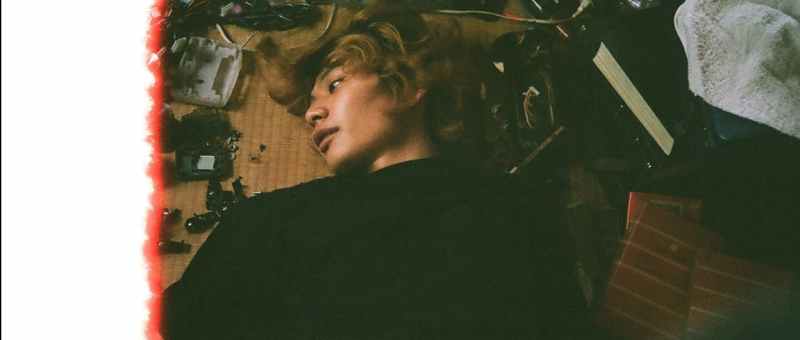
The hero, Yoshihiro is a strange and aloof young man as we gather from the first scenes which find him alone in his room while his dormmates engage in drunken socialising. Yoshihiro’s chief obsession seems to be with disassembling abandoned gadgets into their component parts, sleeping surrounded by neatly grouped collections of various nuts and bolts. His understanding boss at his part-time job as a removal man often allows him to keep bits of interesting junk that would otherwise be disposed of and it’s during one particular house clearance that he makes an unexpected discovery on being charged with investigating a possible haunting of an external annexe. Removing the chains which block the door and wandering inside, he’s confronted by a series of television screens featuring calming scenes of water and then by a frightening apparition. Looking a little like Oogie Boogie, a young woman in a white hazmat suit and black goggles eventually reveals herself and gifts him a strange device of a kind he has never seen before. 

The device, which turns out to be an 8mm camera as his bespectacled roommate reveals to him, sparks a sense of curiosity about the world he did not appear to have in his constant need for disassembly. Yet while his new friend takes him to a worryingly abusive filmset (the director slaps and then randomly licks the face of his leading man) for advice later suggesting they use it to make movies along the themes of “Mushroom, Explosion Festival!”, or “Psychopath Signal”, Yoshihiro is equally preoccupied with mysterious young woman who appears to be being kept captive by her father afraid to let her experience the light of the sun. As ignorant youngsters, the pair are unsure whether Nazuna’s father is earnest in his overprotectiveness and the outside world really is toxic to her, or merely selfish and possessive wishing to keep her locked up forever a secret to himself alone. 

Nazuna, as the young woman is called, of course turns out to be a metaphor for film something which is destroyed on exposure to the light. Strangely, Yoshihiro’s friend mistakenly tells him that the camera needs to be opened once a day to let the air in, apparently little knowing it will erase whatever is inside. A kind of fairytale of enlightenment, Yoshihiro becomes a kind of promethean rescuer literally busting Nazuna out of her jail in an attempt to free her just as he tries to steal the arcane knowledge of analogue technology from a generation apparently unwilling to teach him. She perhaps knows how dangerous her journey may be, but chooses to go anyway insisting that she doesn’t want to grow up which is perhaps to be overburdened with sophistication. Yet does her desire to see the ocean for real negate the idea of truth in celluloid, implying that some things can only be fully experienced by venturing out into the world for oneself, or make the case for it in Yoshihiro’s clumsy filming of her moment of rebellious defiance towards the curse of obsolescence? 

Making full use of the technology himself, Murase shifts from digital into 8mm and then into 16 for the pair’s final adventure as they transition through a tunnel into another world, emerging on the other side perhaps somehow changed. Yet even so, burdened by his ignorance, Yoshihiro fails to bring the message home with him discovering nothing but a blank screen in place of an essential truth. Less about films and medium than perpetual motion, Murase’s enigmatic fable rolls its way towards an inventible conclusion as its hero edges his way towards maturity having discovered an appetite for connection in place of deconstruction. 


Original trailer (no subtitles)
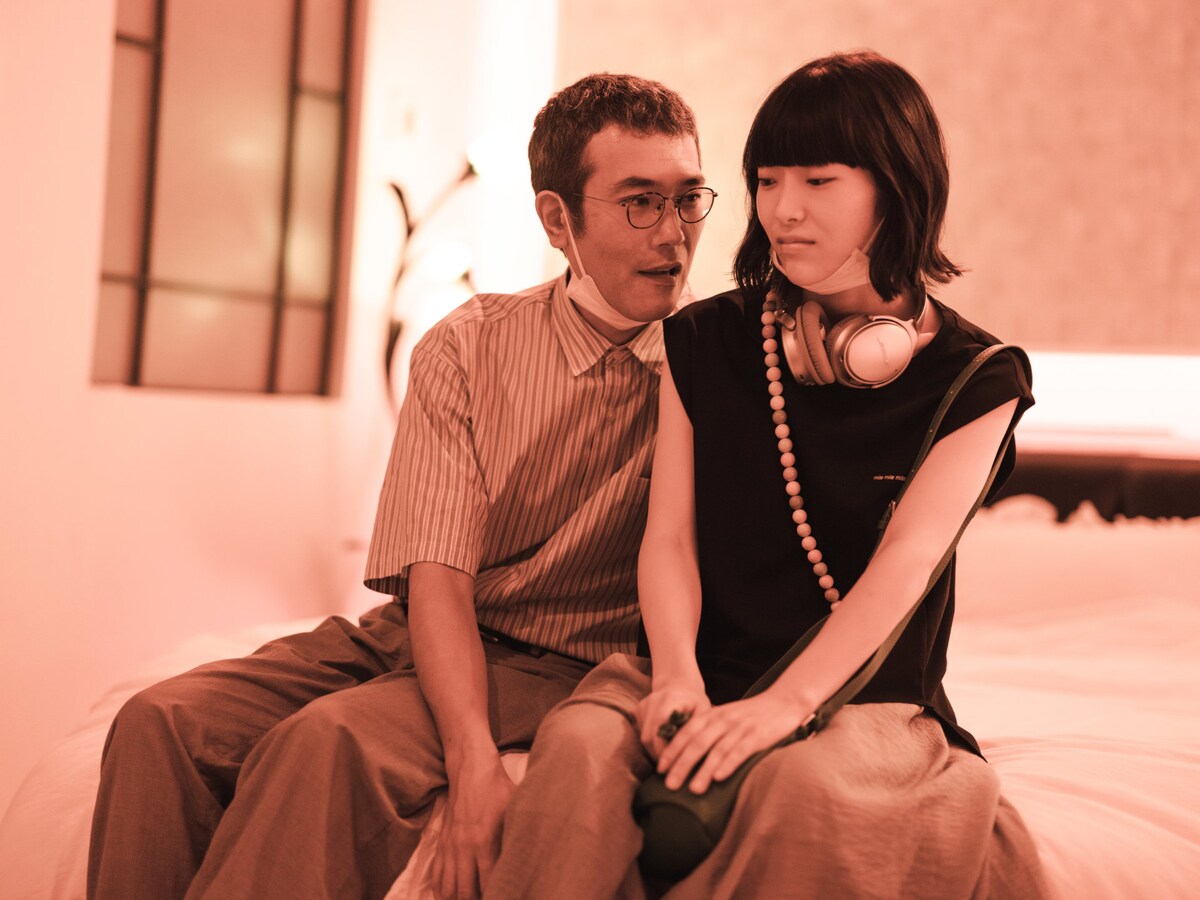
During the Rains (つゆのあとさき, Shinpei Yamazaki, 2024)

At several points during Shinpei Yamasaki’s indie drama During the Rains (つゆのあとさき, Tsuyu no Atosaki) we encounter someone whose life has been disrupted by the economic effects of the coronavirus pandemic. The danger is, of course, that the pandemic itself becomes the problem which is also a way of glossing over all the problems that existed before and will likely survive whatever kind of sickness they encounter. Chief among those problems and impacting the lives of the women at the film’s centre is problematic men and the generalised disregard for women.

It seems that Kotone was working in hostess bar that closed because of the pandemic while her no good boyfriend ran off with a necklace a customer had given her. Left with nowhere to go she’s noticed on the street by Kaede, a young woman who promises her a room in a love hotel but does so in order to recruit her for a threesome. Sometime later Kotone is working in a “cafe” where young women sit behind a glass window in numbered booths for male customers pick out and select though she also has a “daddy”, Kiyooka, who pays the lease on her flat and would be annoyed to discover she was still frequenting the cafe.

It’s the at the cafe that she meets Sakura, a naive young college student who was pushed into sex work when the place she was working before closed down because of the pandemic. Kotone at one point snaps back at her that she wouldn’t even be at the cafe if it weren’t for the pandemic as if suggesting she were in some way better than the other girls after she reacted with horror to Konone’s plan to find a “hardcore daddy” who’ll pay more for the right to break a few bones and cause other kinds of harm.

This might be ironic in a sense as Sakura is a Christian who carries around bible verses to calm herself down including the ones about turning the other cheek and blessing those who persecute you which don’t seem to be particularly good advice for the situations she finds herself in especially as the lesson she’s learned from them is that you should accept whatever abuse comes your way without complaining. Ironically that might be what Kotone has been doing in her almost total indifference to her circumstances. The Roomba in her apartment gets stuck in her hallway and shuffles in confusion between the walls after constantly butting its head unable to find a way out. Yet according to Kiyooka what separates Kotone and Sakura is that Sakura seems desperate in a way Kotone does not which is a quality he appreciates presumably because it gives him more control over her, something he knows he doesn’t have over Kotone who point black tells him she has no strong feelings about whether he dumps her or not after he discovers she’s still seeing other men and engaging in casual sex work.

The lollipops she’s always sucking on give Kotone a slightly childish edge as perhaps does her moodiness but she’s also cynical beyond her years and seemingly living the way she does almost as an act of self harm. She’s being relentlessly trolled by someone who accuses her of having a sexually transmitted disease while even the other girls at the cafe resent her, ironically calling her a slut and other misogyinistic insults. Later she’s even knocked down some stairs by a previous client who is resentful that she doesn’t really remember him while another of her regulars, Yata, paws at her insultingly as if feeling himself entitled to her body. Another customer whose wife and daughter left him after his business failed asks her why she does this, adding that he’s worried about his daughter which seems to be an incredibly ironic comment given the situation.

Even the girls at the cafe complain that they’re getting les work because of the influx of women showing up there after being pushed towards sex work out of desperation, but it’s almost as if the film would like to believe the pandemic was the problem rather than attitudes society has towards these women and indeed all women. Nevertheless, through her growing friendship with Sakura and an unexpected tragedy Kotone comes to realise that she can perhaps change her circumstances and does not necessarily have to continue turning the other cheek to a society that had largely turned its back on her.


Nothingness (無, Kim Gap Sik, 2024)

What are we without our violent impulses? In Kim Gap Sik’s sci-fi-inflected noir Nothingness (無, 무, Mu), a shady corporation has produced a new drug that inhibits the tendency for violence with those unwilling to take it exiled to the “City of Dreams”. But what does it mean to live with inhibition, and can we really call ourselves free if we are prevented from acting on our baser instincts?

At least, it seems to be slowly eating away at former policeman Young-il (Kim Yeong-taek) who has been placed on suspension and forced to take drug R-3 after dispatching violent serial killer and former childhood friend Jong-ha (Hwang Sung-woo). Young-il is now in a relationship with Jong-ha’s former girlfriend Yeon-jeong (Shim Areum-byul) but lives a depressed and aimless life devoid of purpose or meaning. Dangling the prospect of reinstatement, his former partner informs him that Jong-ha’s DNA has been found at a crime scene hinting that he is alive and has escaped from the City of Dreams to return to Seoul to enact his revenge.

Through his investigations,Young-il comes to discover that Jong-ha is part of a group that apparently intends to cast the world into “nothingness”. Jong-ha claims that he is now someone who has no name, hometown, or nationality and has transgressed the borders of what is considered to be a meaningful life. Young-il meanwhile struggles with himself, gravitating towards suicide while his doctor ignores his complaints. Resentful that he has been unfairly cast out of the police force he obsesses over the idea of reinstatement in part as a bridge to a happier life with Yeon-jeong but also finds himself conflicted.

After all, he’s told Jong-ha wants to “turn the world into nothingness”, but arguably so do those who invented R-3, reducing him to a zombie-like state of numbness and despair out of fear that he may at some point commit an act of violence. The creator of R-3, for whom Yeon-jeong works, explains that the people have traded freedom for security though she is becoming convinced that what he cares about is lining his own pockets indifferent to the side effects of his wonder drug including the suicidal ideation that plagues Young-il. Young-il suggests taking a trip back to their hometown, but Yeon-jeong is against it, certain that everything there has changed. A fugitive from City of Dreams he encounters tells him those like him who refuse to take the drug have lost their hometowns or perhaps never really had one in this harsh and judgemental world from which they have already been exiled for insisting on their freedom over the enforced authoritarianism that revokes their power to resist. 

The man also warns him that his former partner and other officers routinely collect protection money in the area and if he’s reinstated as a policeman he probably he will too robbing him of a position of righteousness in his quest to neutralise serial killer Jong-ha who is now targeting employees of the company that manufactures R-3. Accusing her boss of wanting to turn the world into obedient dogs, Yeon-jeong begins to reconsider her commitment to her work pleased by the “violent” sight of a child stomping in the park and no longer able to go along with the kind of side effects that plague Young-il or the wilful suppression of human nature.

As the threat of a nuclear strike hovers in the background, Kim conjures a sense of existential dread caught between those attaining a zen-like sate of emptiness and those like Young-il unable to escape their own despair. Seemingly inspired by Blade Runner and classic noir cinema, Kim uses voiceover and a jazz synth score to bring out the neo noir themes while often filming in an intense darkness that echoes the murkiness of the world inhabited by Young-il, a lost soul searching for himself in a world of decreasing autonomy. Meanwhile, his mirror image Jong-ha takes on an almost mythical quality as an embodiment of nothingness and destructive nihilism that in itself becomes means of resisting a corrupt society. Making the most of its modest budget, Kim’s elegantly lensed noir presents a bleak vision of a near future world coloured only by despair and emptiness in which there is no freedom or safety and as Young-il is reminded cares little for men like him.


Original trailer (no subtitles)
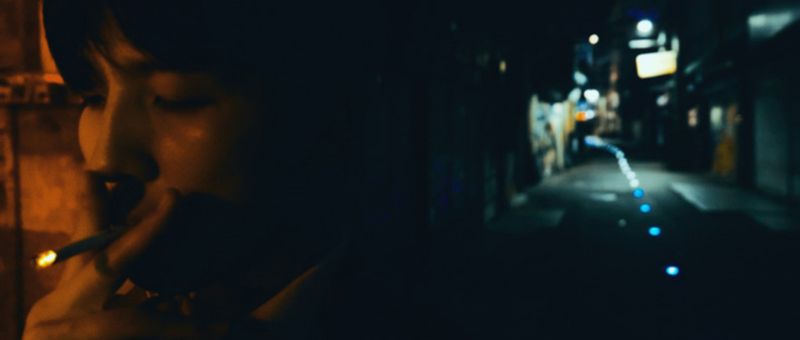
Inch Forward (走れない人の走り方, Su Yu-Chun, 2023)

Why does everything always go wrong just when it was about to go right? Everything has fallen into place for director Kiriko’s upcoming indie film but suddenly she finds herself experiencing a series of crises that are perhaps a bit of a wakeup call teaching her a few things about herself as well as the process of filmmaking. The latest film to tackle the perils of the independent movie scene, Inch Forward (走れない人の走り方, Hashirenai hito no Hashiri-kata) never shies away from the difficulties involved but does suggest they can be overcome with humility and a willingness to get creative.

Part of the problem is Kiriko’s difficulty in making decisions and lack of clarity over her role as a director. Her producer, Takimoto, tries to keep her grounded by pointing out places where the script will be difficult to film and dealing with the actors, but also tells her that she should have a better idea of the message she intends her film to carry and be prepared to answer questions about the script from her cast members. But Kiriko says she doesn’t really intend the film to have a message and thinks creating a character is an actor’s job not a director’s. Whenever Takimoto asks her to reconsider something, Kiriko childishly answers that she’ll think about it probably without really intending to.

But her irresponsible behaviour causes problems for others, particularly when she messes up the company car during a bit of unauthorised location hunting, or fails to shut the front door properly allowing her pregnant roommate’s pet cat to escape and thereby sending her into an early labour. It’s only after these series of crises that Kiriko begins to understand that she needs to make amends and be more considerate in future if she wants to continue receiving help and support from those around her. After all, you can’t make a film all on your own.

Ironically enough she describes her film as like a road movie but on foot about people going to the same place over and over again. Even one of her crew members asks her why it is indie filmmakers like to end at the sea hinting at her screenplay being slightly cliché even as she tries to think her way out of the problem. At a particularly low point, she has a vision of the film being taken away from her as her (all male) crew members and Takimoto remark on how useless she is and vow to take over their section from her. She also has an obsession with her horoscope which is usually a little negative further deepening her lack of confidence and general sense of despair. 

“Don’t worry, just believe in yourself and move forward’” one of her horoscope ads advises and it might indeed by good advice for an indie filmmaker. Learning to be a little more considerate of those around her, she begins to benefit from their help and advice rather than rejecting it in her own insecurity. Despite all of the constraints her friend tells her that she should make something authentic, what she actually wants to do rather than cynically doing what seems the most advantageous, but what’s really important is a sense of balance. As Takimoto told her, she needs to learn to prioritise rather than expect to get everything she wants and be realistic about what’s achievable while still aiming for the film she wants to make. 

Then again in the cinema scenes which bookend the film Su implies that the audience weren’t particularly impressed or perhaps confused by her road movie that doesn’t go anywhere. One audience member was so deeply asleep they had to be woken by an usher. Nevertheless, to overcome her problems Kiriko has to take the lead in more ways than one asserting control over her project but also prepared to work with others, listen to their suggestions, and make firm decisions as they inch forward towards their goal. Warm and quirky, Su’s lighthearted dramedy never shies away from the difficulties of indie filmmaking but finally resolves that it is possible to overcome them with a little mutual respect and solidarity between those on the other side of the screen.


Inch Forward screened as part of this year’s Osaka Asian Film Festival.

Original trailer (no subtitles)
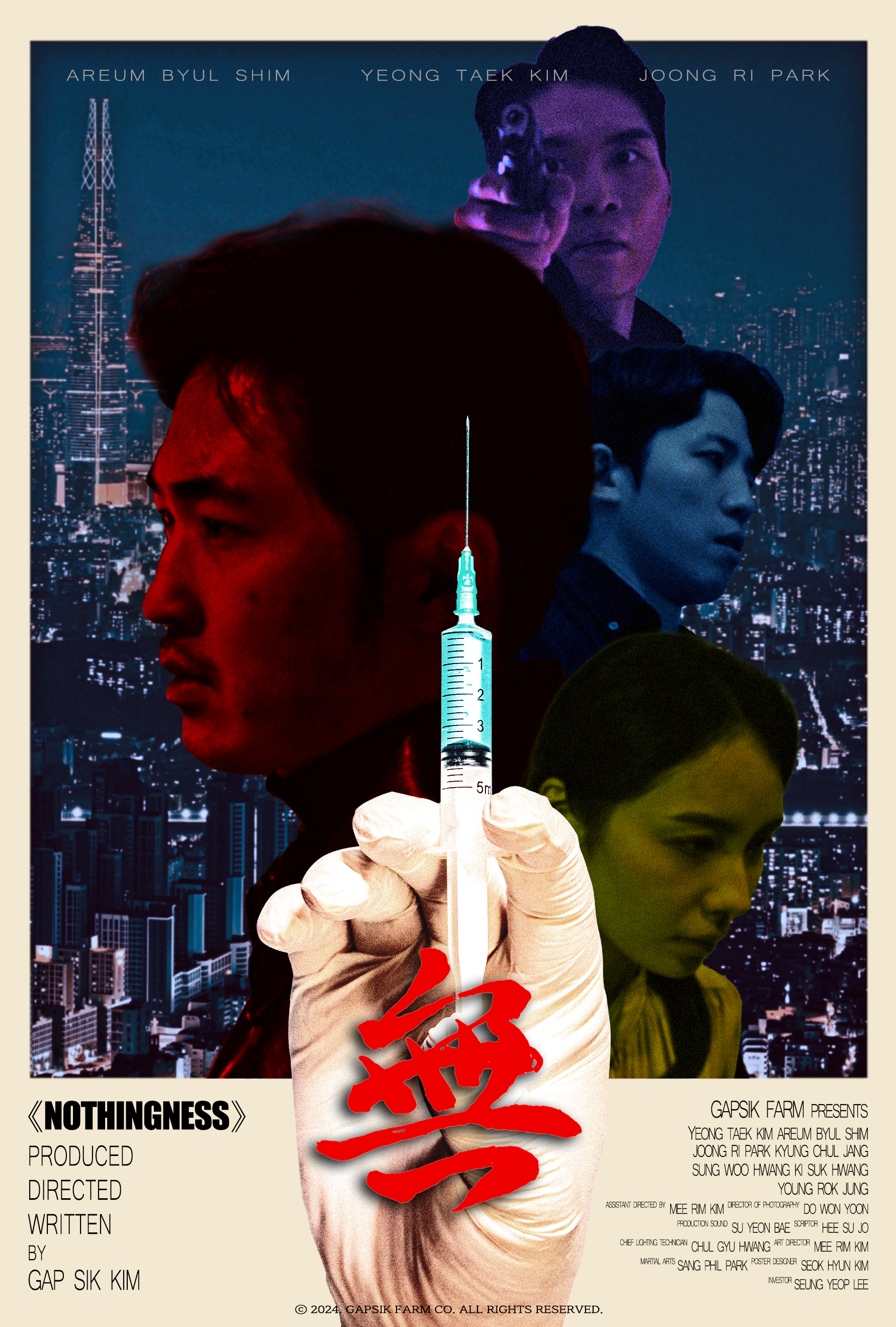
DitO (Takashi Yuki, 2024)

A defeated boxer and absent father rediscovers the will to fight after an unexpected reunion with the daughter he abandoned to chase his dreams in Takashi Yuki’s Philippines-set sporting drama DitO. The title translates simply as “here” which is what Eiji (Takashi Yuki) and those around him eventually accept themselves as being, striving to create a place for themselves to belong rather than fruitlessly searching for one and finding themselves denied.

A contrast is eventually drawn between Eiji, an ageing boxer who remained in the Philippines when his wife (Machiko Ono) and child returned to Japan, and Joshua, a 17-year-old aspiring boxer and surrogate son figure whose boxing dreams are suddenly dashed by unexpected defeat and the death of his father from a long illness. Faced with these two blows, Joshua declares that he’s going to choose his family in giving up boxing to look after his younger siblings in direct contrast to the choice Eiji made to let his family leave him so that he could continue chasing a boxing glory he never achieved. 

When his now 17-year-old daughter Momoko (Momoko Tanabe) shows up out of the blue and tells him her mother has passed away, he’s a defeated figure still nagging his kindly boss Tamagon to set him up with a fight though having apparently fallen out with his coach some years previously. Her father’s living conditions evidently come as a shock to Momoko as she winds her way through the narrow alleyways of a local slum towards a small courtyard where Eiji lives in a home stewn with cardboard boxes that has no functional gas supply or other cooking facilities. In her youth, she’d seen him as a hero who keeps fighting no matter what, but here he’s clearly given up and is far from the saviour she hoped he’d be after travelling all the way from Japan where she believes she has nothing and no one to go back to. 

Meanwhile, as he reminds her the Philippines is not Japan and she finds it difficult to adjust to an environment that much less safe at least for women as her father cautions her not to go walking around alone and especially at night. Tamagon and coach Sese also paradoxically remind them that they shouldn’t trust Japanese people after the pair are scammed by an offer of an apartment which in truth seemed far too good to be true by a pair of Japanese expats apparently expressly targeting their fellow countrymen. Yet as she said, everything she has left in the world is “here” and so Momoko too decides to forge her own future in the Philippines rather than go looking for one if while also recapturing the past of her happy childhood memories from when they all lived together as a family. 

As Sese says, Eiji’s internal battle has narrowed his vision of the world and cost him the will to fight must as Joshua says that in understanding his fear he has lost the desire to fight it in the anxiety that he may lose. What they learn is that they must stand and fight for what they want, never giving in win or lose, though they will always have the familial solidarity of the boxing gym whatever else may happen to them. Essentially a family drama, the film is in part a tale of father and daughter learning to reconnect but also of the importance of making an active choice to “here” rather than passively existing in a place not of your own choosing. 

Momoko’s decision to clean her father’s long neglected house is not only a symbol of her desire to lighten his life and jolt him out of his inertia, but of a determination to make a home for herself and maybe even get the gas turned back on so she can use the kitchen. Nevertheless, it’s also clear that “here” is wherever you are and the thing is to embrace the now or change it and fight for your place to belong rather than let it beat the spirit out of you. In the end being a hero really just means staying in the fight with no fear of losing because you know you won’t stop fighting.


Faraway Family (彼方の家族, Taro Kawasaki & Eisuke Sakauchi, 2023)

It may be a truism to say that you never really know what’s going on in other people’s lives, but even if a family looks superficially happy and gives the impression everything is going just perfectly for them that might not actually be the case. The title of Taro Kawasaki & Eisuke Sakauchi’s Faraway Family (彼方の家族, Kanata no Kazoku) has a double meaning in that in the Japanese title can be also read as “Kanata’s Family” which is the name of the hero and also a word meaning “somewhere in the distance” which is in fact how both of the boys feel their fathers to exist. 

Kanata may feel it more closely in that he lost his father in the 2011 tsunami and has never really dealt with the grief having moved to Yamagata with his mother. Kanata’s father also had quite a difficult relationship with his fisherman grandfather who was intent on railroading him to take over the boat and seemingly never had a good word for anyone yet his father lost his life after heading to the harbour to look for him explaining only that he was family. Now the only breadwinner in the family, his mother has to work to support them and is therefore often absent, leaving him money to buy dinner from a convenience store which he usually eats alone. 

Having become withdrawn and fearful of making new relationships that may end suddenly, Kanata also has the added stigma of being someone from Fukushima in the wake of the nuclear disaster. His new teacher, Yoshikazu, makes a well-meaning faux pas in telling Kanata to consider him a father figure yet as it turns out Yoshikazu is a fairly compromised one. On being introduced to his classmate Riku who is also Yoshikazu’s son he thinks he’s had his face rubbed in it with this picture of the perfect family.

But what he discovers is that Riku has many of the same problems as himself seeing as he also fears he does not really fit in his family and wonders if they’d be happier and better off if he weren’t in it. Unlike Riku, Kanata doesn’t seem to be overly burdened by parental expectation and despite the problems between his father and grandfather his early childhood seems to have been happy and filled with love and cheerfulness. His problem is more to do with what he’s lost and the resulting sense of absence it’s left behind as he finds himself eternally missing his father. 

For Riku meanwhile, it’s the connection itself which is painfully absent. The more he tries to connect with Yoshikazu the more it seems to backfire while Yoshikazu seems obsessed with the idea of his getting into Japan’s most prestigious university mostly for his own gratification as double proof of what a great teacher and father he is. Or else, to mask his own sense of inadequacy in that he would feel embarrassed professionally if his own son turned out not to be academically inclined. Riku’s family don’t celebrate birthdays and he can’t ever remember getting a present but when he decides to try and buy one for Yoshikazu it’s a reminder of a happier memory when he simply played with him as a loving father rather than a hard taskmaster driving him on to a vicarious goal as evidence of his controlling nature. 

Kanata seems to have had more than his share of tragedy in life and is painfully aware of the things just our of reach but also increasingly that not all of them are and if you’re not careful you can in fact be the one to push them away. Shooting in the icy snow of a Yamagata winter, Kawasaki and Sakauchi capture the frostiness of the boys’ emotional isolation but also the quickening warmth of their friendship as they bond over their shared loneliness in pining for an absent father. What Kanata learns is to embrace the things that seem somewhere far away for they do at least exist there, even if no longer present in a physical sense, and that the memory of them can be warm and comforting rather than painful or lonely. 


Faraway Family screened as part of this year’s Osaka Asian Film Festival.

Original trailer (no subtitles)

Tsujiura Renbo (辻占恋慕, Daisuke Ono, 2021)

Is there a point at which you should accept your artistic dreams won’t come true, cut your losses, and try to transition into a more conventional life? That’s the dilemma the heroes of Daisuke Ono’s Tsujiura Renbo (辻占恋慕) find themselves contending with while wondering if it’s better to compromise your artistic integrity and surrender to the realities of the contemporary entertainment industry or resign yourself to the idea of your art becoming merely a side gig rather than a full-time occupation. 

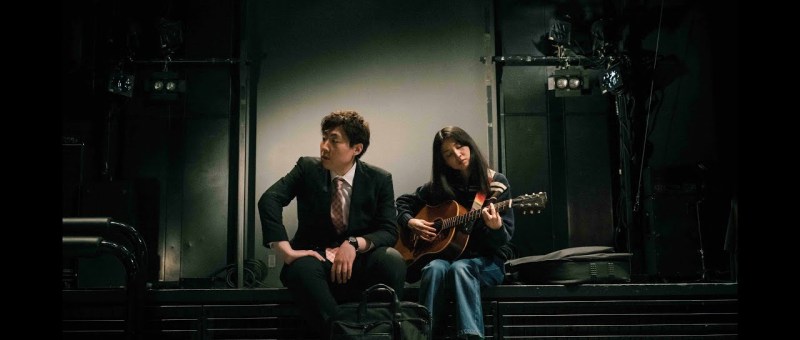
The dilemma is all the more acute for Shinta (Daisuke Ono) because he’s recently turned 30 and is experiencing a moment of existential crisis. The band he’s been in since college has never really got anywhere, and this particular evening his guitarist, Naoya, hasn’t even bothered to turn up. Luckily for him, a sullen young female folksinger, Emi (Saori), offers to accompany him for just the one track so that he can still try and rustle up some interest in a few CDs but it’s clear during their set that Emi has real star power effortlessly outshining him vocalising on his own song. Shinta thinks the gig is up, eventually deciding his efforts might be better placed in helping Emi receive the recognition she deserves becoming her manager after spending a weird night in her apartment which is also the office of her record label which has only one other artist and is essentially the last hurrah of an ancient retiree. 

Part of Emi’s problem is that she’s an old school folksy singer-songwriter with intense Meiko Kaji energy. Even those who support her worry her music’s too old-fashioned for a chart-obsessed industry while her tsundere personality is distinctly at odds with the traditional ways in which female artists are marketed in what is still an incredibly sexist environment. Emi had complained that the club at which she first met Shinta was populated largely by slightly creepy middle-aged men there to see the main act, underground idol star Azuki (Rena Kato) who specialises in upbeat yet bland pop and makes the majority of her money through meet and greet sessions with her top fans who are perhaps sometimes dangerously obsessed with her star persona. These kinds of fans aren’t generally interested in folk music, but even so Emi is repeatedly advised to go down the same path of selling handshakes and autographs to ticket buyers more interested in the fan experience than hearing anything she has to say.

To that extent, it’s odd that neither Shinta nor anyone considers harnessing her tsundere energy to hook a different kind of audience that might be attracted to her defiance rather than the bland cuteness represented by Azuki. Azuki meanwhile may be cynical but perhaps she’s also sensible, explaining to Shinta that after hearing he and the others earnestly discussing music she decided it was better to go in a different direction realising she’d soon age out of the underground idol demographic in which the average career might last only a few months, deciding to turn her idol persona into a marketable brand and more or less ignoring the musical part of her act altogether. Shinta begins to wonder if he’s been marketing her wrong, that he shouldn’t have tried to push Emi towards the mainstream but focus on her unique talent as an old school live act. 

Then again, each 30 years old and already exhausting their budget perhaps it’s simply too late to move beyond the live house circuit. A visit from a colleague of Emi’s at the callcentre where she works to make ends meet, herself an aspiring actress, warns him that Emi may be at her limit but unable to quit in part in fear of letting him down even as their relationship is constantly eroded by the pressures of trying to make their musical dream come true. She has real talent, but doing what it would take to become successful might kill it and her, a music critic from a big paper bluntly telling Shinta that though he can see her newer album is more “commercial” that’s only made it “bland” robbing it of everything that once made it interesting. If playing to crowds of weird old men who’ve only come because Azuki told them to is as good as it gets, maybe it’s best to accept defeat rather than watch Emi tear herself apart. As it turns out the reason Naoya never turned up to the gig was that he won big on pachinko and realised he had much more chance of making a life for himself on that than he ever had with music. Maybe it doesn’t work out in the end and all you have is “nostalgic love” for a period in time, but that might not be so bad in and of itself and the music will always be there for you whether anyone’s listening or not.


Original trailer (no subtitles)

Push Pause (ココでのはなし, Ryoma Kosasa, 2023)

A small hotel becomes a refuge for those “struggling with the everyday” according to live-in helper Utako in Ryoma Kosasa’s heartwarming drama, Push Pause (ココでのはなし, Kokoro de no Hanashi). As she said, most of their customers are there because they’re uncertain of something and looking to take take some time out for reflection, much as she is while otherwise taking advantage of the tranquil and unjudgemental space of the inn along with the comfort it offers.

Guest House Coco is however suffering too amid the post-pandemic decline in custom. Th owner Hirofumi, attempts to sell his bike to pick up some extra cash only to discover it worth much less than he thought. The first of their guests, Tamotsu, is struggling for similar reasons seeing as the owner of the batting cages where he works is considering closing down as customers continue to stay away leaving him floundering for new direction. Helping an old friend move brings him into contact with someone he worked with for the Paralympics, but it only seems to fuel his sense of insecurity reflecting that unlike his friend he has no talents or ambitions and isn’t sure he wants to return to work for with him because it only makes him feel bad.

For Xiaolu, meanwhile, she’s dealing with issues as of a different order while house hunting in Tokyo ahead of a job transfer. Though her colleague had agreed to help her, he suddenly tells her he’d rather she didn’t come mostly it seems because he’s afraid she’ll expose him as an otaku thanks to their shared love of anime and people in the office will make fun of him. But then he also drops in that most of his colleagues are subtly racist, even insensitively adding that Xiaolu doesn’t “look Chinese” on first glance especially as her Japanese is so good unwittingly exposing his own latent prejudice. Her parents in China keep calling her to come home especially as her grandmother is in poor health leaving Xiaolu feeling guilty and now slightly unwanted unsure if it’s a good idea to accept the transfer or even remain in Japan at all.

Even Izumi, a permanet resident of the guest house, accidentally hurts her feelings in innocently asking if she’s from China on hearing her name though as it turns out Izumi was herself born in Manchuria and apparently a war orphan though in truth she seems nowhere near old enough to have been born in the 1940s. In any case, Izumi is the beating heart of Coco providing the warm and homely environment that sets people at their ease and makes them feel welcome and accepted. As she tells Xiaolu, fate has a way of bringing people together or at least getting them where they need to be so they can make an informed choice about their futures.

That’s why she echoes the title of the film in giving some advice to the young from a position of age in telling them that it’s alright to slow down, take a few moments to think things through rather than feeling as if they need to charge ahead. According to her, youth is just a part of your life that doesn’t even last very long so there’s no need to rush through it which seems like valuable advice to near middle-aged inn owner Hirofumi who is considering proposing to his girlfriend but is uncertain because she has children already and he isn’t sure they’ll accept him. Utako too has her own problems she’s in part been hiding from in leaving her home town to hole up in the inn. 

As if bearing out the sense of community that arises at there, Utako reveals that they stay in contact with their guests giving them the sense of a secure place to return to where they’ll always be accepted and cared for. Thanks to the support of the others at the Coco, each of them begin to find new directions in their lives and are able to proceed with more confidence and certainty. Warmhearted and empathetic Kosasa’s gentle drama is and ode to the quiet solidarity and unexpected connections that arise between people each struggling with the everyday but finding new strength in each other.