Left-Handed Girl (左撇子女孩, Tsou Shih-Ching, 2025)

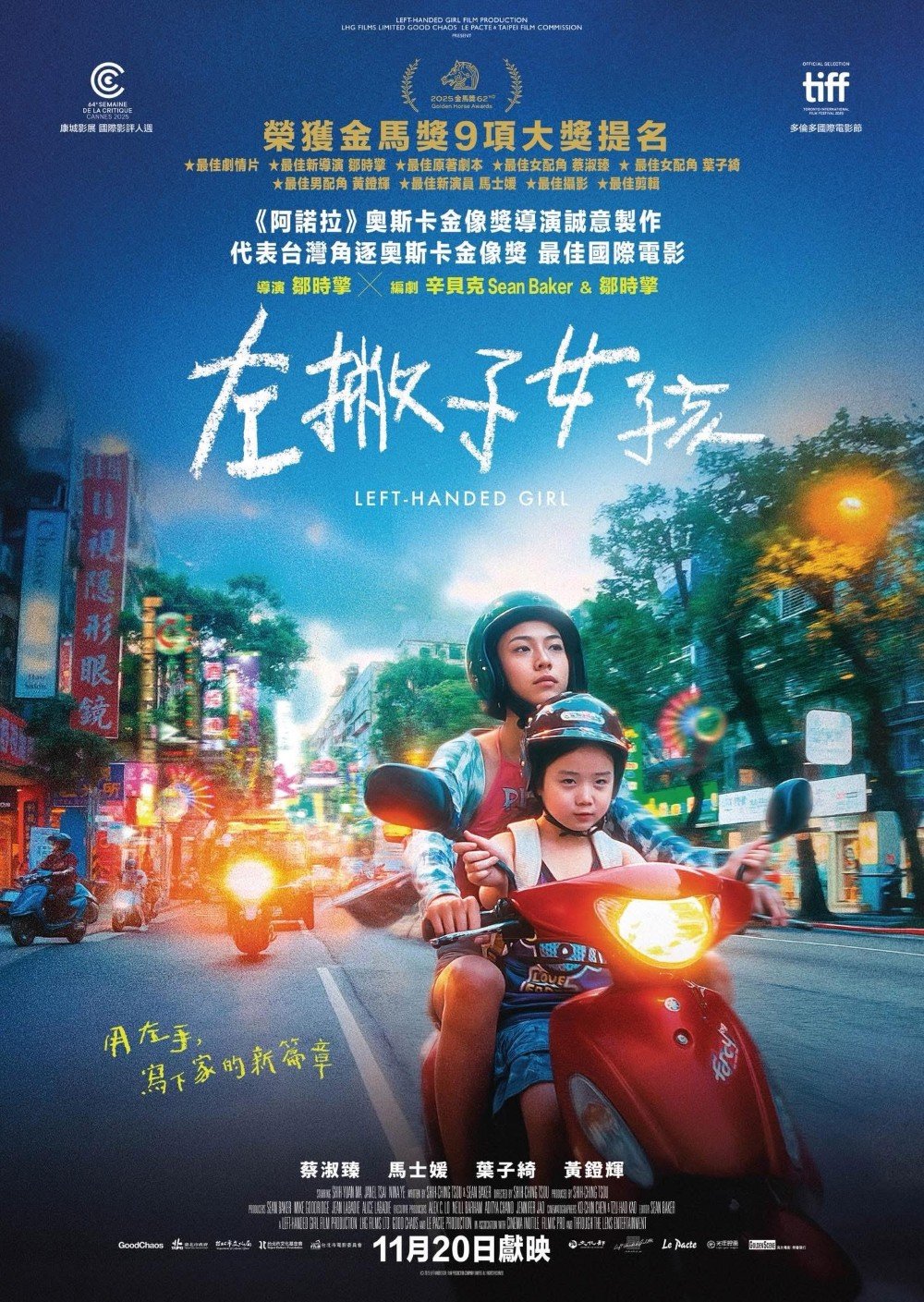
A small family’s attempt to start over by moving to Taipei is frustrated by the baggage they take with them and that which was already there in Tsou Shih-Ching’s whimsical family drama, Left-Handed Girl (左撇子女孩, zuǒpiězi nǚhái). As women alone, they must contend with a patriarchal society and harsh economic environment along with a conservative culture that is often unforgiving of difference and reluctant to grant second chances to those it believes have transgressed its boundaries.

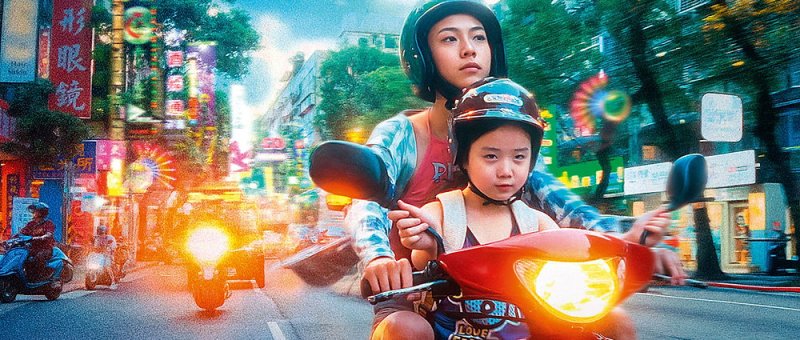
The titular left-handed girl, I-Jing (Nina Ye) describes the city as seeming like a magical place, though it’s certainly noisy and indifferent to her presence. Her mother Shu-Fen (Janel Tsai) laments that their apartment is smaller than it looked in the photo, as if signalling a sense of disappointment even before their new life has started. Oldest sister I-Ann (Ma Shih-Yuan) never finished high school and has got at a job at betel nut stand where the boss explains to a new recruit that her job is to create a sexual fantasy for the customer. I-Ann’s grandmother chastises her for her revealing outfit, warning her about “perverts and psychos” and that it’s dangerous to dress like that in the big city.

The grandparents are representative of a generation who grew up under an authoritarian regime and are fiercely traditional. Though the grandmother tells him to let it go, I-Jing’s grandfather is outraged and offended by her left-handedness. He tells her that it’s the Devil’s Hand meant only for doing the Devil’s work and bans her from using it in his home. I-Jing takes him a little literally and comes to believe that her left hand is an evil entity, but rather than being afraid, sees it as somewhat liberating in allowing her to do morally questionable things such as shoplifting. Only when an action habitually conducted with her left hand while forcing herself to draw with her right has unforeseen and tragic consequences does she begin to believe that her hand is a liability and consider cutting it off.

While her grandmother appears to be involved with some kind of human trafficking gang to make extra money, she’s reluctant to supply any more financial aid to Shu-Fen partly because of complaints from her siblings and particularly her sister. Though the grandmother had said the apartment would be left to the three of them equally, Shu-Fen knows she’s planning to leave everything to their brother whom she continues to idolise, though he’s long since moved to Shanghai and rarely visits. Awkwardly turning down another gig from her handler, she tells him her son has organised a lavish celebration for her 60th birthday. In reality, the daughters have planned everything with the son only arriving to mop up the glory. That it’s other women who perpetuate these outdated, patriarchal social codes is fully rammed home by the arrival of the wife of I-Ann’s boss with whom she has been having an affair. On learning that I-Ann is pregnant, she demands that I-Ann give the baby to them to raise if it’s a boy as they only have three girls. 

Shu-Fen, meanwhile, finds herself returning to care for her estranged husband who is dying of terminal cancer despite his abandonment and ill-treatment of her. Her decision doesn’t seem to be motivated by compassion or lingering affection so much as obligation. She feels she has to do this for him because he has no other family and she is still technically his next of kin. I-Ann in particular, along with the rest of her family, does not approve and is irritated that she’s once again allowing herself to be dragged down by a man. After he passes away, Shu-Fen is liable not only for all his medical fees but his funeral too, leaving her unable to meet her current expenses such as the rent for her pitch at a local hawker site where she supports the family with a noodle stand.

Her family also don’t seem to take to Johnny (Brando Huang), a man who seems nice and supportive, but also works as a market trader. The family appear to look down on him and implicitly on Shu-Fen for being engaged in what they see as a lowly occupation in much the same way that I-Ann becomes a figure of fun on bumping into some people from high school who are all now in university, though she left with no qualifications. Because of her betel nut store occupation, the boys treat her like a sex worker, while the boss, whom she did not know was already married, evidently never took their relationship very seriously. A desire to avoid reputational damage results in a series of destructive secrets that are abruptly blown open during the emotionally tense 60th anniversary party, but it does perhaps clear the air allowing the three women to reinforce their bond and finally begin living their own lives.


Trailer (English subtitles)
Life For Sale (售命, Tom Teng, 2021)

A nihilistic insurance broker chases existential validation in Tom Teng’s darkly comic crime drama, Life for Sale (售命, shòu mìng). Drawing inspiration from the novel by Yukio Mishima by the same name, the film takes aim at the commodification of life under a relentlessly capitalist society while its hero gradually discovers liberation in reaching an accommodation with death that begins to give meaning to his existence. Sucked not only into local gangster intrigue but shady international conspiracy, he finds himself forming a tentative relationship with an equally depressed neighbour who has troubles of her own. 

Ironically enough, Liang (Fu Meng-po) is a life insurance broker which quite literally means it’s his job to figure out exactly how much a life is worth. As for himself, he’s convinced his life is worthless and is obsessed with the idea of suicide while seemingly reluctant to actually die. He looks up banal ways to end his life on the internet and discovers that almost everything including carrots, cinnamon, and chewing gum, becomes poison if you consume enough of it. When he’s called into his boss’ office shortly after punching an irritating colleague in the face, he’s given a good idea of what his own life is worth when she tells him that the company bought a year of it with his salary but he’s been a poor investment and has actually cost them money through this rubbish sales record. It’s at this point he decides to call the corporate life quits and, taking inspiration from a copy of Life for Sale he found on the bus, decides that he should try monetising his life by selling it on the internet. 

His first offer is from creepy gangster Wang who repeatedly claims there’s nothing in the world his money can’t buy. He wants to send Liang on a dangerous mission to retrieve his wife’s dog from a rival gangster who’s kidnapped it, while a mysterious woman is also trying to recruit him for some kind of experimental research programme. Perversely he continues to think of his life as his own even having sold it resenting those who now think they own him and contemplates suicide as an expression of his autonomy. He comes to realise that his life is the one thing he has while simultaneously accepting that having lost it he is effectively dead already and has nothing left to lose. The realisation is liberating, his nihilism intensified as he resolves to do whatever he can to survive in part so that he might save others. 

Having begun with a darkly humorous take on the dehumanising nature of modern capitalism in which there is a price tag on each and every life, the film slides towards existential contemplation as Liang finds himself caught in the crosshairs not only of internecine gangland drama between the sinister wang and flamboyant Liao mediated though a chaotic hit on a dodgy policeman, but of an international conspiracy which is intent on doing something not entirely ethical to his body. Despite his newfound ruthlessness he is effectively emasculated firstly by the mysterious woman who tells him that he is a coward who does not deserve to be called a man and then by his neighbour who having lost faith in him declares that she will have to save her son herself thereby defining the value of her own life. 

All the while, Liang is plagued by a little bug that follows him around and seems to lead to trouble while perhaps echoing his capacity to survive. When he asks someone why they continue to smoke despite knowing the risks, he is ironically told that everyone has a little bit of a death wish and continues to leverage his own in a determination to at least make his death if not his life mean something. Then again, even post transformation he can’t seem to escape from the world in which everything is for sale agreeing to sell his life but drawing the line at his soul. On the run though perhaps no longer from himself, Liang has at least gained a new appreciation of the value he places on his own life and those which define the lives of others if strangely unaffected by failure or tragedy. Quirky production design and comic book-esque absurdity hint at the underlying satire but also contribute to a kind of origin story for a superhero escapologist looking for agency in a continually exploitative existence. 


Life For Sale screens at Lincoln Center 24th July as part of this year’s New York Asian Film Festival.

Original trailer (Traditional Chinese / English subtitles)

You Have To Kill Me (我是自願讓他殺了我, Chan Chun-Hao, 2021)

An earnest policeman discovers nothing is quite as he thought it to be in Chan Chun-Hao’s adaptation of the novel by Feng Shi, You Have to Kill Me (我是自願讓他殺了我, wǒ shì zìyuàn ràng tāshā le wǒ). Drawn into a dark web of intrigue which eventually points to abuse of power and a low regard for human life, he is forced into a realisation that even as a law enforcement officer he can never be certain of what is real and what is not while caught in the middle in a battle of between parents each trying desperately to protect their sons. 

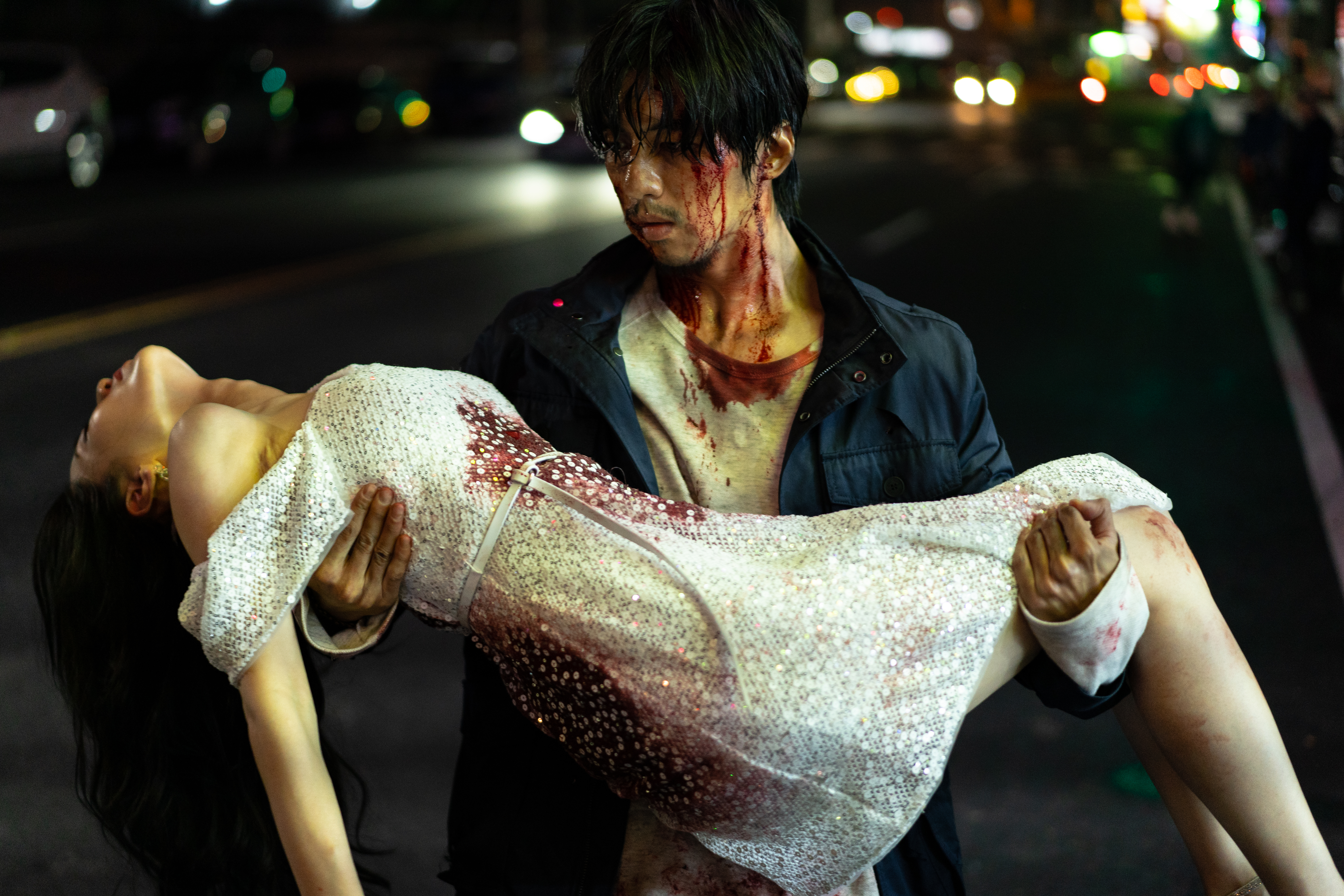
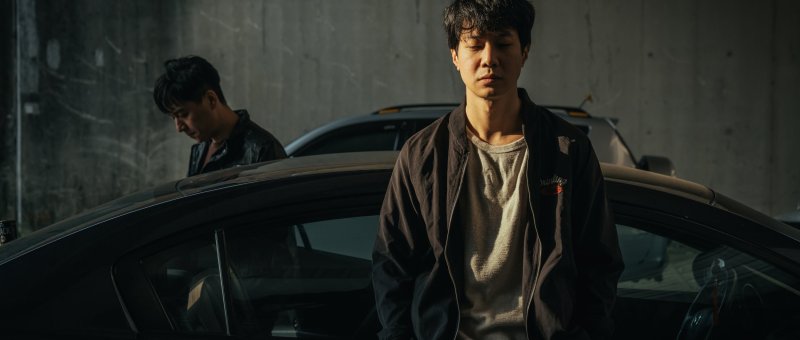
About to propose to his live-in girlfriend Kai (Janel Tsai), Shing’s (Cheng Jen-shuo) world comes crashing down when he and his partner Ye-ze (Xue Shi Ling) are dispatched to the mountains and discover that she is the victim of the homicide they’ve been sent to investigate. Shing apprehends the apparent killer, Li Zi-jian (Snoopy Yu), running away from the scene, but the situation is complicated when it turns out that Zi-jian is the son of a local politician, Chairman Li (Yin Chao-Te), and while he admits to the killing claims that he did it at the instigation of Kai who was suffering from terminal cancer and wanted him to help her escape her suffering. A look at Kai’s medical records bears out his story, but on closer examination Shing realises the documents don’t add up. His suspicions are confirmed when Kai’s parents, whom he had seemingly never met, arrive and fail to identify the body claiming instead that it is another woman who had been harassing their daughter, Lin Jing. 

Shing is forced to accept that he might not have known the woman he wanted to marry and that their relationship was founded on a lie, uncertain how much of any of it might have been real. Meanwhile he runs into a series of bureaucratic roadblocks as the chairman continues to disrupt the investigation in order to protect his son, eventually having Shing taken off the case leading him to investigate all alone discovering even more uncomfortable truths that cause him to question his reality. Leaving aside the minor plot hole that it seems unusually easy to live under an assumed name in contemporary Taiwan even if you’re involved in activities which would generally require an extensive background check, Shing has good reason to be confused as he dives ever deeper into an amoral morass in which those with power are prepared to manipulate it for their own ends without much thought for the lives of others. “That’s how much a person is worth” the chairman baldly states signing a settlement agreement over something else his son may or may not have done, later claiming that it doesn’t matter if he caused someone’s death “accidentally” and he’d do it all again to save his son. 

Even so, the chairman may have limits in that his attempts to manipulate the system are bureaucratic in nature and seemingly unnecessary at least it seems as if there would be easier ways to achieve his aims without directly harming others even if they would risk lives indirectly. Meanwhile his accomplice is also seemingly involved in order to protect their family, willing to compromise themselves morally to protect their elderly relatives while believing nothing that bad would come of their actions. Then again, Shing finds himself on the receiving end of further recriminations accused of having failed to protect the woman he knew as Kai from herself leaving her with only a dark path to ensure that justice would be done and corruption exposed. 

While Zi-jian feared he was a burden to his father feeling himself unloved even as he went to such drastic lengths to protect him, Kai/Jing was also afraid to fully trust Shing fearing she’d one day disappoint him unable to move on from her traumatic past without putting it to rest. Taking aim firmly at the societal corruption that allows the rich and powerful to misuse their position for their own gain while ordinary people suffer Chan’s noirish drama situates itself in a murky world of constant uncertainty in which even an earnest policeman can be largely oblivious of the lives of those around him while the purest of motivations can lead to only darkness and misery.  


You Have To Kill Me streams in the US April 4 – 10 as part of the 14th season of Asian Pop-Up Cinema.

Original trailer (English subtitles)