Marking 50 years since Okinawa’s reversion to Japan, Japan Society New York’s Visions of Okinawa: Cinematic Reflections looks back to 1972 with a series of films either set or actually made around the time of this transitional moment each reflecting on the islands’ complex history and unique local culture. Running May 13 to June 3, the season will feature a series of in-person screenings and online streaming with two documentaries by Nihon Documentarist Union available to stream worldwide (excl. Japan & Taiwan).
In-Theater Screenings
All in-person screenings will take place in Japan Society’s auditorium, located at 333 E. 47th Street in New York, NY.
Set immediately before Okinawa’s reversion to Japan, Go Takamine’s first feature is a magical realist exploration of a culture at a turning point of history as the village prepares for a wedding between a Japanese teacher (played by Haruomi Hosono) and a local girl who is already carrying the child of a man who has lost his spirit.
A computer programmer tasked with recreating the Battle of Okinawa explores the history of the islands while in dialogue with her late lover in the final feature from Chris Marker.
A teenage girl travels to Okinawa on the eve of its Reversion along with a friend in search of a boy who may be her half-brother and is guided around the islands by a grizzled war veteran in an uncharacteristically breezy summer adventure from Nagisa Oshima.
Also known as Okinawa Yakuza War, Sadao Nakajima’s jitsuroku classic stars Sonny Chiba as a unhinged gangster whose hegemony is threatened on several fronts when Hiroki Matsukata’s loyal footsoldier is released from prison after knocking off the heads of two rival gangs only to find their space filled by encroaching mainland yakuza.
Told mainly in the disappearing Okinawan language, Go Takamine’s second feature is an anarchic magical realist musical fable in which a day labourer is forced to flee to the forest after sleeping with his boss’ voluptuous daughter and unwittingly discovering she is an anthropomorphised pig only to gain superpowers thanks to a sympathetic tree spirit and subsequently use them in the service of the Okinawan independence movement.
Shot over 15 months from April 1969 to July 1970 Motoshinkakarannu takes its name from a euphemism for sex work in the Okinawan language and captures the islands on the brink of transition through the eyes of sex workers, yakuza, tourists, and American servicemen.
Long thought lost until rediscovered in 2005, Asia is One examines a legacy of exploitation by mainland mining companies of the Taiwanese and Korean migrants working in harsh conditions in the mines.
Visions of Okinawa: Cinematic Reflections runs in person at Japan Society New York May 13 to 21 and online May 14 to June 3. Full details for all the films are available via the official website where tickets are already on sale while rentals for the movies streaming online are available via Japan Society’s streaming platform with passes for all three films available from May 14. You can also keep up with all the year-round events by following Japan Society Film on Facebook, Instagram, and Twitter.
For most people, the Pacific War ended in 1945. For Hiroo Onoda it may in a sense never have ended though he laid down his arms in 1974, 30 years after his initial dispatch, having spent the intervening three decades pursuing guerrilla warfare in the Philippine jungle the last two of them entirely alone. Arthur Harari’s three-hour existential epic, Onoda: 10,000 Nights in the Jungle (Onoda, 10 000 nuits dans la jungle), explores the psychological dimensions of his quasi-religious conviction in the righteousness of a mission which is in one sense no more than to survive along with his refusal to accept that the war is over and his personal struggle has been pointless.
Immediately in opening the film in 1974 with a young man identified only as a “tourist” (Taiga Nakano) arriving on the island in search of Onoda (Kanji Tsuda), Harari draws a direct contrast between these two arrivals and subsequent departures. As he says, the Tourist is just that in town for a specific purpose after which he will leave and though you might be able to say the same of Onoda who came to the island of Lubang in late 1944 his reality was very different. On luring him out of the jungle by playing the patriotic war song he had sung with the other soldiers who unlike him accepted the surrender, the Tourist poignantly tells Onoda that he has travelled to over 50 countries whereas Onoda in a certain sense has never left Japan. “This island belongs to us” he’s fond of insisting seeing it as a piece of the Japanese empire which others are trying to take from him but he alone must defend.
As we discover, the young Onoda (Yuya Endo) had wanted to become a pilot but washed out of the training program because of a fear of heights and was subsequently put forward for a kamikaze squadron. The irony of his life is that he is a man who refused to die for the emperor, his will to survive bringing him to the attention of Major Taniguchi (Issey Ogata) of the notorious Nakano spy school who sells his students a line that they are the good guys helping to liberate East Asia from Western imperialism. Trained in guerrilla warfare part of Onoda’s mission is to foster an uprising in the local population whom he assumes will also oppose American influence never realising that he is in fact a part of a destructive colonising force they will also seek to repel not least because of the way they have been treated by Japanese forces.
Onoda’s first meeting with his captain on arriving on Lubang is interrupted by the arrival of the mayor of a nearby town who has come to complain that Japanese soldiers have been stealing food supplies from local farmers. This comes as a surprise to Onoda who is obviously not fully aware of the reality on the ground. His initial orders are largely ignored by the remaining NCOs who get up and leave during his briefing knowing that what he’s proposing is impossible. These men are already battle weary, many of them are sick, and they are running low on supplies. Onoda is 22 and fresh faced, arriving full of energy and patriotic zeal assuming these men are simply lazy or lack ideological commitment. He has no grounds to wield authority and no combat experience that would permit him to understand the circumstances in which he finds himself. In an especial irony, his first kill occurs after the war has (for everyone else) ended and he will himself go on to commit acts of atrocity against the local population which he justifies as acts of war.
The military song which he is fond of singing celebrates there being no more bandits, yet banditry is essentially what he has been reduced to calling into question any idea of heroism which might be attributed to his refusal to accept the wartime defeat. In his Nakano spy school training, Onoda had been encouraged to ignore the accepted rules of war, that all is permissible in the pursuit of victory. He is also told that the prize for the “secret war” he is conducting will be a “secret glory” that goes unrecognised by others while he alone will possess true integrity in knowing that he never wavered in his mission. Yet there is something in him which weakens when he encounters the Tourist and is told that most of Japan believes him to be dead, rendering his struggle an irrelevance.
He begins to admit the concept of surrender but only if given new orders from Taniguchi whose contradictory teachings have informed the course of his life, yet Taniguchi like many of his generation in the Japan of 1974 does not want to face his wartime past. The bookshop he now runs sells no military books and he claims not to remember Onoda or Lubang refusing his responsibility for his role in the conflict now filled with shame and regret. Yet it’s also possible that Onoda misunderstood the nature of the mission he’d been assigned, that in saving him from the kamikaze squadron because he did not want to die, Taniguchi gave him only one order – to survive. “You do not have the right to die” he reminds the recruits while giving them the ultra-individualist mantra that they must be their own officers which is in essence the paradoxical instruction to obey no orders but their own meaning that Onoda was always free to accept defeat.
The psychological consequences of doing so, however, may have been too great. Coming of age in a militarised society, he already feels himself emasculated and embarrassed by his failure to become a pilot essentially because he is afraid to die. An awkward meeting with his father (played by film director Nobuhiro Suwa) resembles that of a Spartan woman sending her son to war with the instruction to return with his shield or on it. To return in defeat is psychologically impossible and suicide forbidden and so the only choice is inertia. In this Onoda may be hiding in the jungle unable to face a post-war future, descending into delusional conspiracy when presented with evidence that the war is over choosing to see the attempts of others to discourage him from his mission as proof of its importance, as if he and the remaining soldier sticking with him are key players in geopolitical manoeuvring worthy of such an elaborate plot. To believe the world is wrong is easier than to accept that he’s wasted his life in service of a mistaken ideal while failing to prove himself a man by the standards of a heavily militarised society.
He’s tempted out of his delusion only by the Tourist who confronts him with the face of a new Japan entirely unknown to him, a Japan of economic prosperity, of the Shinkansen, of democracy. Being taken off the island means he must finally leave his dreams and delusions behind to enter a new post-war reality. Harari frames the island of Lubang as a psychological realm, the topography of Onoda’s delusion, but is also mindful of the islanders living outside it whom Onoda terrorises under the justification of war no better than a bandit in his quest for survival. In Harari’s oneiric landscapes, Onoda’s vistas are forever haunted by the spectres of his latent regret in the reflections of the boy he once was who came to Lubang to prove himself a man only to leave it a ghost.
Onoda: 10,000 Nights in the Jungle opens in UK cinemas April 15 courtesy of Third Window Films. It will also be released on blu-ray May 16 in a set which also features an interview with actor Kanji Tsuda plus an interview with director Arthur Harari, DOP Tom Harari and assistant director Benjamin Papin.
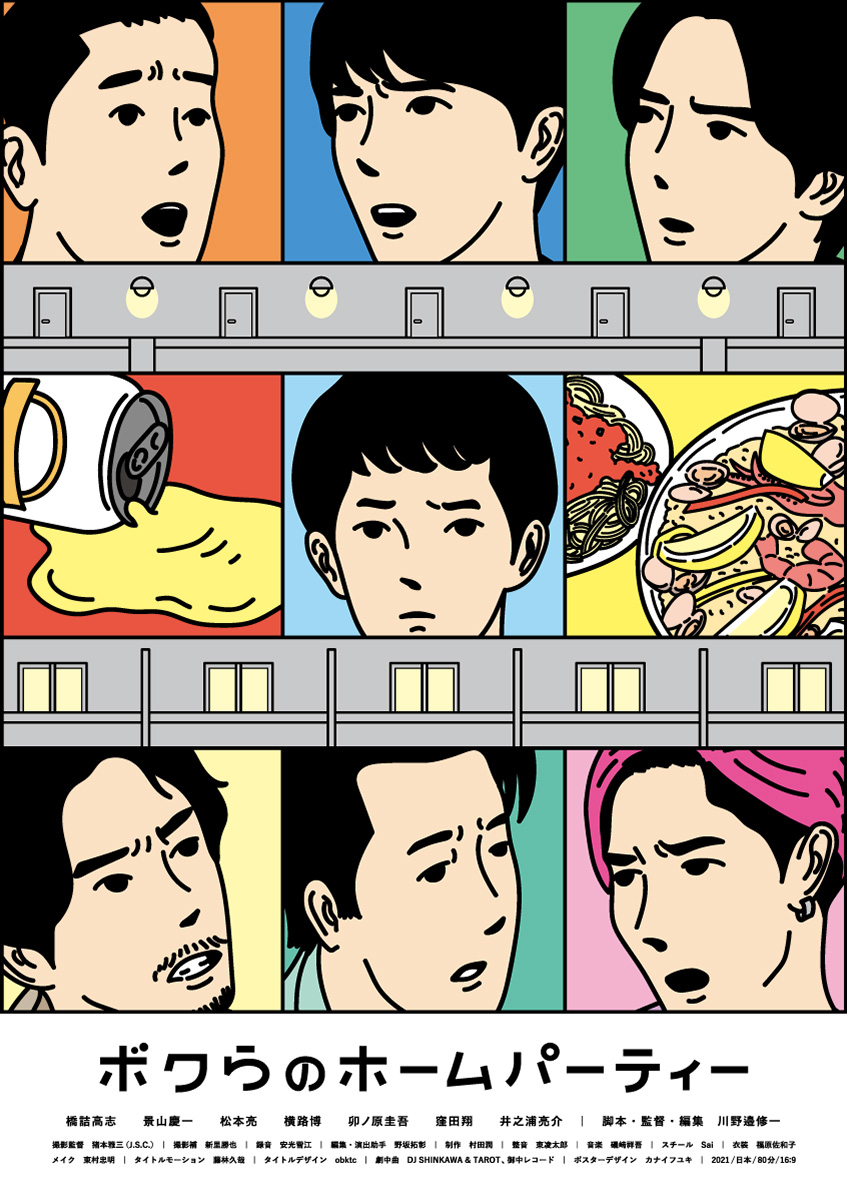
The pressures of living in a still conservative society quietly build towards a small explosion provoking a moment of catharsis among a series of gay men some of whom are lovers or long term friends while others are meeting for the first time each bringing with them their own particular fears and anxieties. Inspired by his own life experiences, Shuichi Kawanobe’s Our House Party (ボクらのホームパーティー, Bokura no Home Party) presents a naturalistic view of gay life in contemporary Tokyo in which the six men find solace in their friendship while outside battling a sometimes unsympathetic society.
The slow burn drama waiting to tank the party revolves around the relationship between hosts Akito and Yashushi who have been together for seven years, Akito having accidentally overhead his boyfriend with another man, Kenichi, through a phone call Yasushi presumably didn’t mean to answer. Despite living together so long, Akito is not out at work and finds himself deflecting potentially invasive comments from his boss about his plans for marriage while he and a recently engaged colleague not so subtly attempt to set him up with a female co-worker who has romantic issues of her own, all of them oblivious to Akito throwing longing looks at their handsome waiter in the local izakaya. When the party begins to get out of hand and provokes a complaint from the couple’s neighbours, Akito’s hostile response implies that they have faced similar complaints before which he believes to be rooted in homophobia, that they simply object to him living there. “All our lives we’ve been trying not to cause trouble” he adds, “where do you expect us to go? Why do we have to apologise?” pushed into a moment of rebellion by the emotional intensity of the present situation that is later unexpectedly echoed by Kenichi who reminds them that they’ve suffered enough, insulted and looked down on, unable to voice their feelings freely and seeing their relationships crumble under the constant pressures of a sometimes hostile society all of which leads them to hurt each other without really meaning to.
Yet the catalyst for all this is a naive and idealistic college student hopelessly in love with his straight best friend invited to the party after being taken under the wing of kindly bar owner Sho who introduces him to the scene and tries to help him loosen up while accepting his sexuality. Tomoya acts as a kind of judge or arbiter, only just learning the rules of this society but somehow feeling betrayed by its contradictions and hypocrisies. Only he can see that Akito is not really enjoying the party and makes several attempts to check in with him only to see something he shouldn’t have and partially misunderstand it, his illusions a little shattered as he recalibrates his internal sense of morality. Meanwhile he’s both matched and challenged by the lovelorn Masashi who has come in the company of recent hook up Naoki but dreaming of a stable relationship disappointed by Naoki’s assertion that he doesn’t do commitment while picking a fight with Sho over a disagreement about the importance of physical intimacy in romantic relationships.
Nevertheless through all of these heated debates and fraught emotional crises the men achieve a kind of catharsis in having cleared the air and agreed to return to the sense of solidarity they had felt before only with a little more clarity. “Don’t lie to yourself about how you feel, you’ll only make yourself miserable” Sho had advised the conflicted Tomoya convincing him to join the fun by pointing out that if you don’t like it you can always go back to where you were, advice that might go as well for all as they begin to interrogate how they really feel along with the fears and anxieties that cause them to behave the way they do until approaching a moment of calm after the storm cleared with all truths aired and seemingly at least forgiven. Taking place largely within the claustrophobic and intense environment of the apartment, Kawanobe captures a naturalistic vision of contemporary gay life through the eyes of a series of jaded not-quite-middle-aged men and a naive youngster discovering both himself and a new community only to be confronted by the difficulties and contradictions of life in a society he believed to be better than it is.
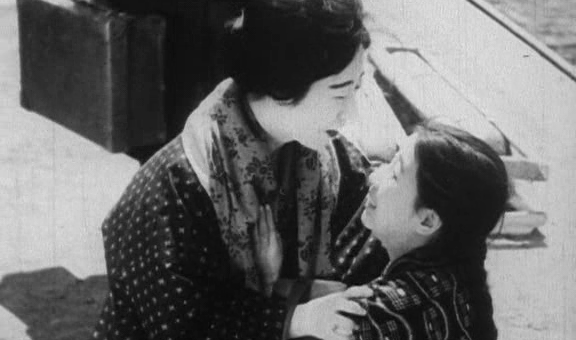
A family broken by economic shock and destructive male pride is eventually mended through Christian faith in Torajiro Saito’s 1929 silent melodrama The Dawning Sky (明け行く空, Akeyuku Sora). Though most of his work is currently presumed lost, Saito became known as the “god of comedy” while working at Shochiku’s Kamata studios yet Dawning Sky while affecting a cheerful tone is marked by a sense of sadness and anxiety that perhaps reflects the precarities of the world of 1929.
Recently widowed Kyoko (Yoshiko Kawada) has learned to bear her grief by doting on her newborn daughter Reiko, though her world is about to implode as the bank operated by her previously wealthy father-in-law Junzo (Reikichi Kawamura) has collapsed leaving the family in financial ruin. Kyoko’s parents approach Junzo offering to take her back, but the idea provokes only intense resentment in Junzo’s wounded pride as he takes it that they no longer feel his family is good enough for their daughter now that he is no longer rich. A traditionally minded woman Kyoko pleads with him to stay but he will have none of it, throwing her out but insisting on keeping Reiko with him. Out of old-fashioned ideas of loyalty, Kyoko decides that she will not return to her parents nor marry again but is at a loss for what to do sadly wandering about ominously near a bridge before catching sight of the cross on a Christian church and feeling herself saved. Some years later, Kyoko is sent to a small town as a female pastor where, by total coincidence, Junzo is also living with Reiko (Mitsuko Takao) and now working as a lowly coachman.
The cause of Kyoko’s forced dislocation is located directly in the economic shock of the late 1920s which causes Junzo to lose his family bank and with it the social status which gives his life meaning, but it’s also implicitly the demands growing consumerist capitalism which have already undermined traditional familial bonds and responsibilities. Junzo is so consumed by resentment towards Kyoko’s family, who may have made the offer for pure-hearted reasons rather than snobbish disdain for Junzo’s ruined state, that he coldly separates a mother from her child and thinks nothing of the consequences seeing only red in his internalised shame in having failed in business. Yet true happiness is evidently not possible until he finally learns to abandon his lust for material success. “I’m poor, I know, but life is nice and carefree because I have my granddaughter” he explains to one of his passengers having reconsidered his priorities and come to realise it’s familial bonds which are most important after all.
Nevertheless, he continues to hide the truth from Reiko having told her that both her parents are dead while she continues to pine for a mother she’s never known. Her little friend Koichi meanwhile is the only son of his widowed mother who is bedridden and unable to work. As the family is poor Koichi is responsible not only for her care, they’ve rigged up a kind of machine which automatically dispenses her medicine while he isn’t there to administer it, but for the cooking and cleaning too. The two children first bond when Reiko discovers a wounded pigeon shot by Koichi and scolds him that he has no right to kill living things though he only wanted to feed his sick mother, the pair of them deciding to bury the pigeon and give it a proper funeral. This brings her to the attention of the pastor, Kyoko, who is proving especially popular in the local community because of her innate kindness and compassion. But in suspecting that Reiko may be her daughter, Kyoko is at a loss as to how to move forward unwilling to disrupt her life with Junzo by telling her the truth while torn apart inside by her wounded maternity and new duties to her Christian faith.
The film’s overt religious overtones are perhaps surprising for the world of 1929 as is the near universal approval with which the church is viewed in the local community with only the strange and bookish Hide refusing to attend on the grounds that he hates Christians while all of the other children begin hanging out inside largely because of Kyoko’s warmth and kindness. It is finally Christian virtues which allow the family to be repaired, Junzo overcoming his sense of wounded male pride when faced with Reiko’s constant pining as the pair eventually make a mad dash towards the station on learning that Kyoko has decided to leave town rather than risk causing Reiko further pain by disrupting her new life. “God’s grace brought them together” as the benshi intones, yet as much as Kyoko’s maternity is restored she remains a liminal figure returning not to Junzo’s house but only to the church as its pastor recommitting herself to her religious duties while looking out sadly as Reiko plays with the other children in the beautiful countryside suggesting that the ruptured bonds of the traditional family cannot ever be fully repaired.
Saito’s elegant mise-en-scène has its moments of poignancy in the expressionist angles of Kyoko’s walk into darkness or frequent employment of superimposition, not to mention the intensity of its climactic storm scene intercut the with the spiritual ferocity of Kyoko’s desperate praying surrounded by candles in the dark and empty church, but the film is first and foremost a melancholy tale of familial reunion which, while in some senses incomplete, nevertheless suggests that true happiness exists only in simplicity, the family repairing itself through jettisoning contemporary ideas of capitalistic success and social hierarchy in order to embrace their natural affection for each other.
Does something have to have an ending to be meaningful or could eternity be the point? Inspired by Ken Liu’s short story, Kei Ishikawa’s near future tale Arc (Arc アーク) envisages a world without death if perhaps not for all in which bodily immortality has been achieved, but what would that mean for humanity no longer faced with mortal anxiety, how should it reorient itself in the absence of sickness or old age while the possibility of endlessness for the self has removed the urge for immortality through childbirth? These are all of course questions which have no one answer, though what the heroine finally discovers is that in the end it may be the choice itself of when to live or when to die that may lend her life at least its meaning.
Even so, hers is a particular anxiety bound up with frustrated maternity having abandoned a baby she gave birth to at 17, too afraid of the responsibility to accept it. At 19, Rina (Kyoko Yoshine) is spotted at a club by a mysterious middle-aged woman, Ema (Shinobu Terajima), who runs a revolutionary cosmetics company which has pioneered a new way of preserving the bodies of the dead turning them into uncannily lifelike mannequins with a new process known as plasticisation. To Ema’s mind, true liberation comes from accepting transience, that once life has left it the body is just an object which might be repurposed for her art but then at the same time perhaps she is attempting to hold on to something that should be released, interfering in a natural process and while intending to offer comfort to those bereaved preventing them from letting go or moving on with their lives. Her much younger brother Amane, meanwhile, actively wants to stop time while alive utilising a similar technology to halt the ageing process and overcome the tyranny of death.
In a strange way, Ema’s desire to restore a body which is no longer alive to ideal condition is also an acknowledgement of death which she believes is not the opposite of life but a necessary part of it. In overcoming the fear of death, she claims, a transcendental beauty will reveal itself. Amane meanwhile seeks to overcome death physically, but as Rina is warned his health revolution may not bring happiness to mankind not least because it exposes a persistent inequality in which eternal youth is available only to those with the means to acquire it, creating a new underclass not only of the poor but those whose bodies are not able to accept the treatment. Amane sees his creation as a dividing line in human history which will necessarily divide humanity into two groups, those who choose to join his revolution and those who do not (though interestingly he does not consider a third group who actively opposite it). Even so he sees it as a choice and accepts the right to reject immortality even going so far as to build a dedicated centre where those who choose to live a “natural” lifespan can do so in dignity and comfort.
The concept of personal choice appears to be key, Ema too replying that her decision to stick with plasticisation rather than Amane’s treatment is her right though she too eventually hits a wall in the imperfection of her craft and the depths of her grief. She tells Rina to live her life freely encouraging her to live fully in the moment, while she too is quick to remind others that the decisions are theirs to make as regards their life and death. It’s not death nor the fear of it that are the problem, but the inability to choose as Rina finally acknowledges in remarking that the ability to decide its end point gives her the means to carve the arc of her life overcoming death through full existential control having in a sense closed a circle in facing her own sense of maternal failure. Shifting from the warmth and natural beauty of a beach in summer to the dark and brutalist environments of the BodyWerks lab, and from the muted colour of Rina’s youth to the black and white of her youthful old age, Ishikawa’s near future sci-fi-inflected tale suggests it’s not so much death that frightens you but helplessness and as in all things the answer lies in autonomous choice.
Japan Society New York has announced its latest monthly screening series running April 15 to July 22 and featuring four anime classics from Mamoru Oshii’s sci-fi landmark Ghost in the Shell through to Masaaki Yuasa’s wild night in Kyoto, The Night is Short, Walk on Girl.
Preceded by a 6PM pre-screening party with Japanese foods and snacks provided by Kikkomanplus Sapporo beer
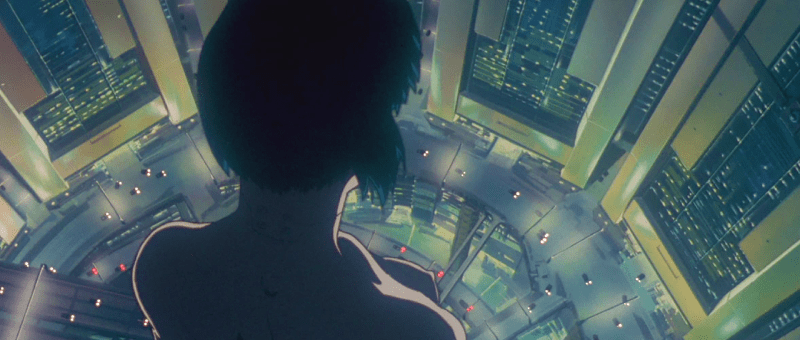
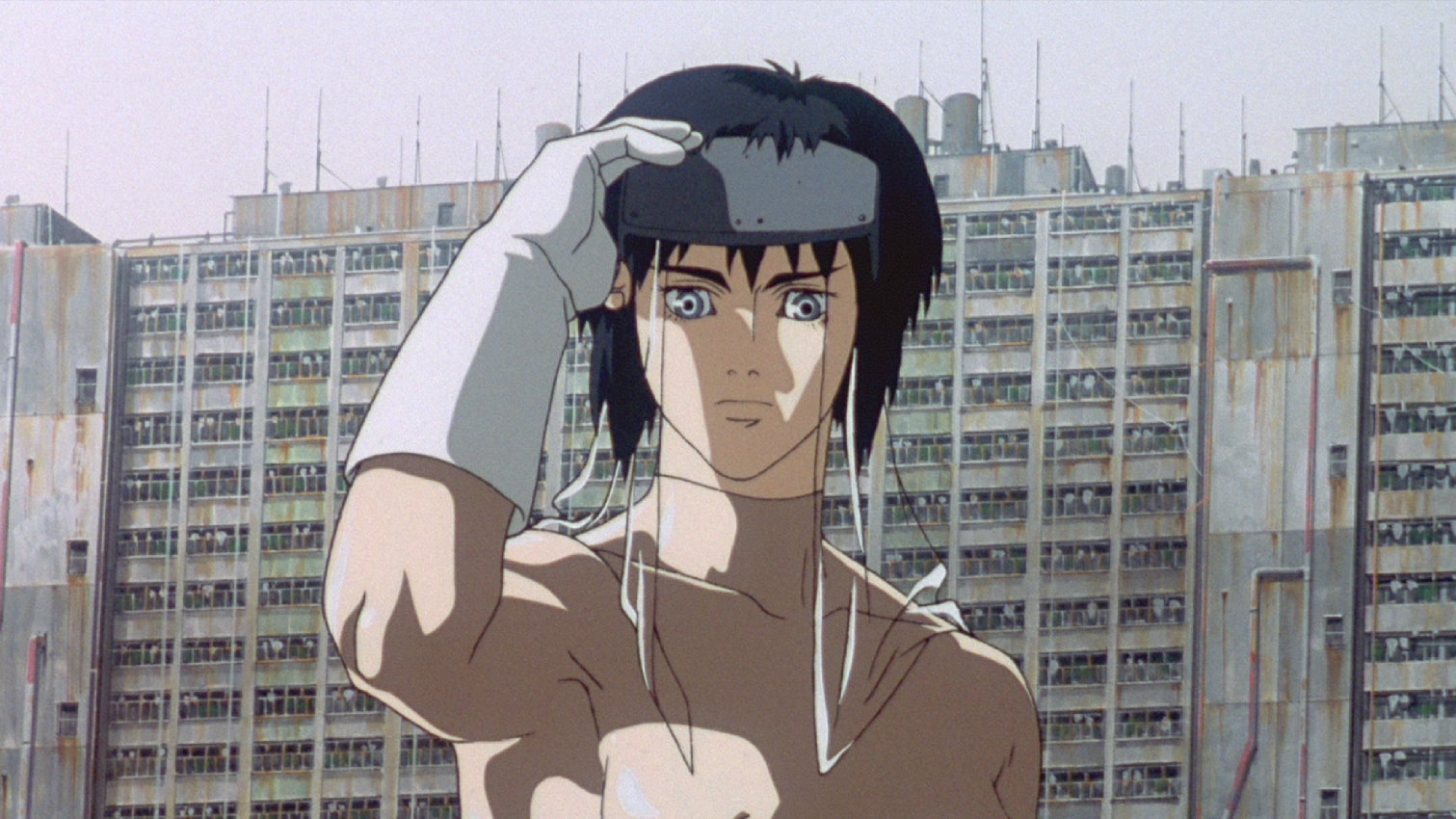
Mamoru Oshii’s landmark adaptation of the manga by Shirow Masamume in which cybernetically enhanced police officer Major Motoko Kusanagi finds herself hunting down the elusive Puppetmaster following a spate of cyberbrain hackings.
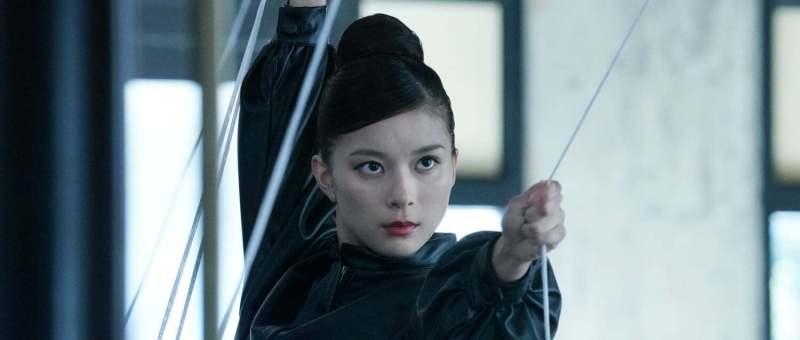
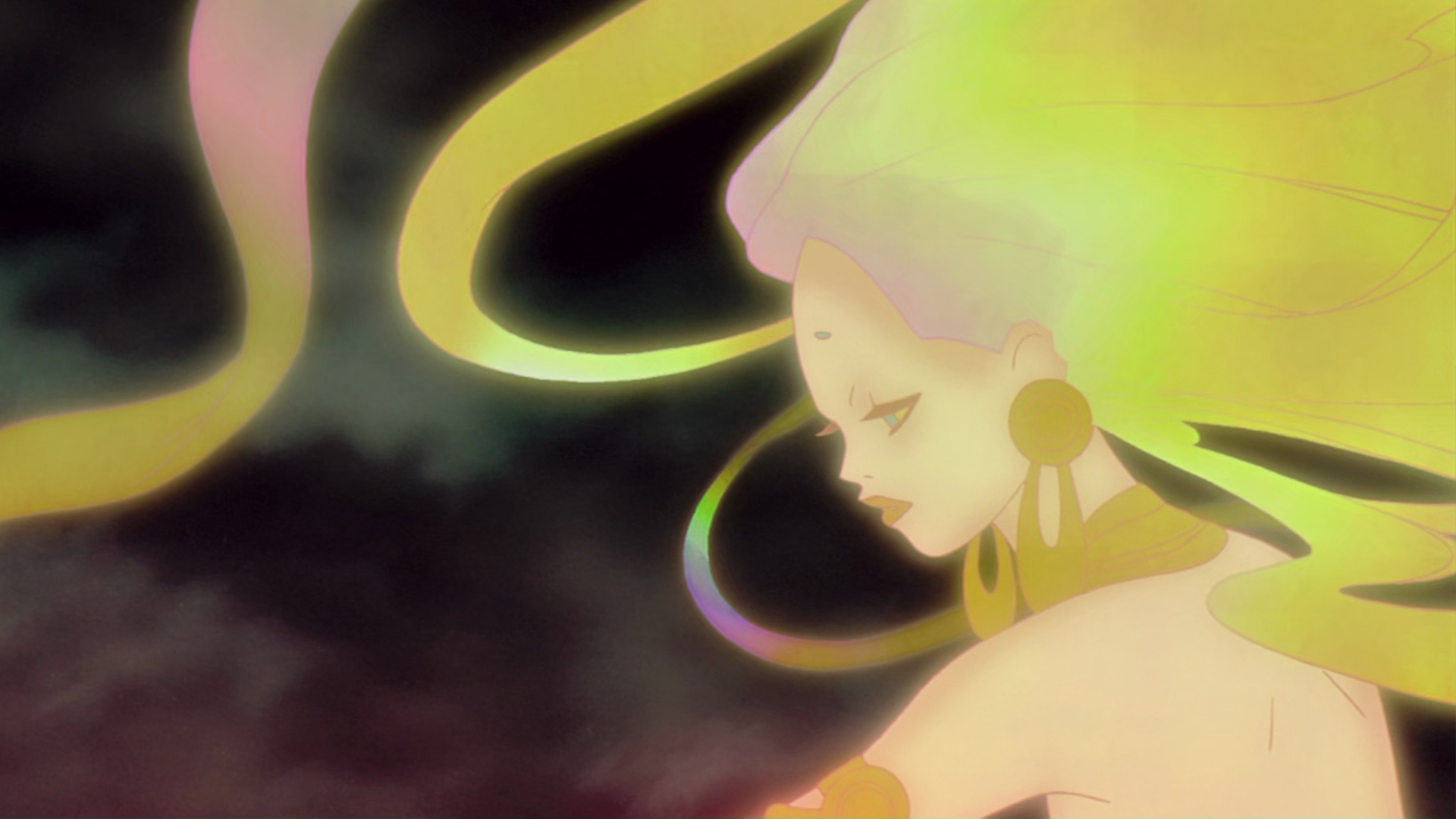
Produced as a companion piece to the Matrix: Reloaded, this nine-part anthology film features contributions from Cowboy Bebop’s Shinichiro Watanabe, Ninja Scroll’s Yoshiaki Kawajiri, and Redline’s Takeshi Koike. Screening on 35mm in its original English-language voice track.
Adapted from the novel by Tomihiko Morimi, Maasaki Yuasa’s madcap odyssey through a single night in Kyoto follows college student Otome on her quest for a book from her childhood all while a young man goes on a few adventures of his own hoping to win her heart. Review.
25th anniversary screening of the Studio Ghibli classic set the 14th century in which a young warrior cursed by a diseased boar spirit finds himself swept into a local conflict between a forest princess and the neighbouring iron town hellbent on destroying the Earth.
The series runs monthly April 15 to July 22 at Japan Society New York where tickets are already on sale.
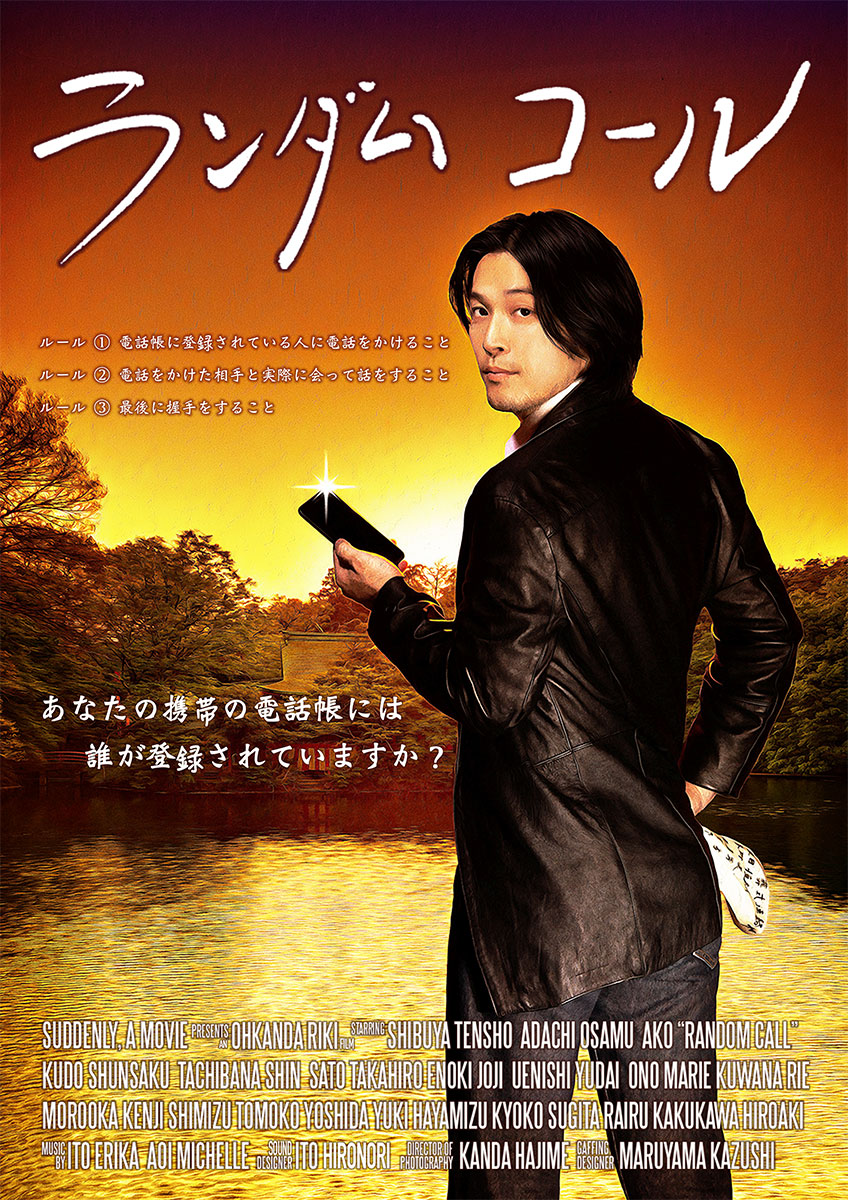
We may be more connected than ever before but now that it’s so easy to stay in touch we hardly every think of doing it. When was the last time you called someone just because with no specific reason in mind other than a desire to spend time with them? Struggling in his career and personal life, the hero of Riki Ohkanda’s heartwarming dramedy Random Call (ランダム・コール) begins to reconnect with his sense of humanity after a series of meetings with contacts from his phone selected at random each of whom teach him something about himself while reminding him that he is not alone and even if he’s not always been his best self love him anyway.
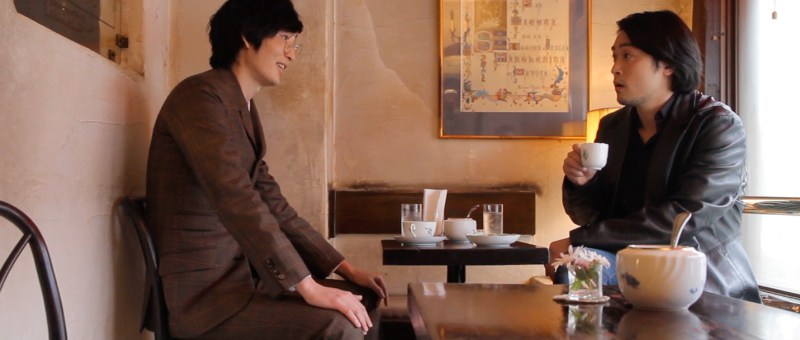
A little over 30, Ryo’s acting career has not worked out as well as he’d hoped and he’s beginning to get depressed, isolated by his internalised sense of failure while believing he’s sunk too much into his dream of becoming a successful actor to simply give up as several people including his mother advise him to do. The random call he gets from old friend Shintaro is then a kind of lifesaver reminding him he’s not been forgotten though he’s slightly bemused to discover that Shintaro claims to have no reason for wanting to meet, except he does in fact have an ulterior motive. Inspired by a recent experience in which he became ill abroad and people just helped him out of nothing other than simple human compassion, he’s embarked on the “Random Call” social experiment the results of which he hopes to turn into a book. The idea is he calls a number at random from his phone’s contact book and asks them to go for coffee making sure to shake their hand before he leaves, just checking in with old friends with no other demands or expectations. Inspired, Ryo decides to try it out for himself and encounters various reactions to the unusual project.
Perhaps that’s understandable, after all it’s natural enough that we mainly contact people when we want something from them so it’s only fair that some are annoyed or confused to discover there is no “point” to the meeting. It probably doesn’t help that the first “random” call is to a business contact, Saito, a TV producer, rather than to a friend with whom it might be more natural to meet up for a drink out of the blue. Saito is then irritated and suspicious, annoyed that Ryo is “wasting” his time assuming he’s making an awkward attempt to network but then something strange happens. He gives in to the magic of the random call and takes it at face value, accepting the warmth of an unexpected friendship and leaving a little happier than he arrived.
But then, Ryo finds himself not being entirely honest with some of his encounters painting himself as more successful than he’s actually been talking up meetings about movies after hearing of another friend’s award-winning career success and recent marriage though as we later discover the friend wasn’t being entirely honest either. Meanwhile, he cheats a little in making a not all that random call to old friend Mie after learning that she may have fallen on hard times but she tells him that her contact list is mainly full of people she’d rather not speak to so random calling’s probably not for her though she does begin to tag along on some of his adding an additional perspective to his quest for connection through which he gradually begins to realise that his inner insecurities have him led to treat people badly with the consequence that they don’t always remember him fondly.
Of course it doesn’t always work out, people don’t answer his calls, have moved away, or leave abrupt voicemails explaining they’re not lending him any money but even if it’s awkward or painful both sides gain something from the encounter emerging with a little more confidence in the knowledge that they haven’t been forgotten or else gaining a little closure to some unfinished business that allows both parties to begin moving forward. Through his various re-encounters, Ryo re-establishes a sense of connection with the world around him, encouraging and encouraged by others, and walking with a new sense of positivity into a less lonely future.
What is “music”? Adapted from the manga by Akira Saso, Masaaki Taniguchi’s Musicophilia (ミュジコフィリア) finds its heroes grappling with a series of conceptual insecurities attempting to draw lines around what the what word might mean while torn between conservation and innovation as they struggle to find their own voices. Yet as the hero comes to realise, you can’t make music on your own letting go of his resentment and childhood trauma to remember his natural love of sound while repairing his relationship with his estranged half-brother in the wake of his father’s death.
Gifted the talent of synesthesia in the ability to perceive shape and colour in the sounds of nature, Saku (Kai Inowaki) harbours a deeply held resentment towards “music” which he believes destroyed his family life, his mother (Misuzu Kanno) having been seduced by well-known composer Kishino (Kanji Ishimaru) as a student and thereafter forced to give up her dreams of becoming a professional cellist. Though he had contact with his father in his childhood, his stepmother never missed the opportunity to make him feel inferior while her own son, Taisei (Ikusaburo Yamazaki), became his father’s protege. Saku was not even allowed to touch his piano as if he were somehow unworthy of his artistic legacy. Having enrolled in art school in Kyoto, he nevertheless ends up being adopted by the contemporary music club which practices avant-garde and experimental techniques only to re-encounter his brother who is now in the third year of a PhD and an unpleasant elitist privately insecure about his musical talent.
Everyone agrees that Taisei’s playing is technically perfect, but somehow dull lacking the individual spark of a true creative genius merely a carbon copy of his father’s teaching. Saku’s new friend Nagi (Honoka Matsumoto) compares Taisei’s skill unfavourably with the untrained talent of his brother, insisting that Saku’s music has the colour of joy and shape of kindness while Taisei’s sounds like notes arranged by a machine. Taisei is indeed cold and arrogant, snapping back at Saku’s question “what is music?” with the reply that music is what he’s played, as if he owned it and it only belongs to him. He even breaks with protocol and insults his professor claiming that his criticism is down to “internal politics” because he and his father did not get on, publicly criticising his translation of a German textbook on music telling him to “grasp the fundamentals of language” while his professor urges him to master the fundamentals of composition rather than arrogantly insisting his playing is unimprovable because it is the definition of “music”. Of course, some of this is his own insecurity afraid he can’t match up to his father and worried that in the end all he is is a poor imitation. For his part, Saku is often less than kind to Taisei, Nagi trying to point out to him that he’s better that but simultaneously finding him heading in the same direction as he tries to overcome an internal insecurity in order to rediscover his musical voice while unfairly lashing out at those around him.
Taisei sucks the joy of out music, and indeed everywhere else, through his arrogant perfectionism his treatment of violin-playing girlfriend Sayo (Noa Kawazoe) approaching the abusive as he consistently runs her down and blames her for his own sense of dissatisfaction, while Nagi meditates on how freedom can make you lonely, herself seemingly the only one who thinks she’s in a musical, as the youngsters find themselves isolated by their own desire for artistic expression. Yet what the two men discover is that their father may have intended something else for them and that his desire was that they’d rediscover the innocent connection they’d had as children able to help each other should they become stuck either in life or in music. Saku’s natural talent is born of being immersed in the world around him realising that this too is “music” while Taisei struggles to move forward too obsessed with technical perfection to allow his music to breathe only rediscovering his humanity after an immense humbling that allows him to re-immerse himself in the natural world. At heart a coming-of-age tale in which two young men learn to put their differences aside and rediscover their childhood bond, Taniguchi’s gentle drama also offers a mild critique of academia and the tendency of institutions to exploit and manipulate talent only to wash their hands of it if something goes wrong placing funding above ethical concerns but eventually discovers that music is everywhere if only you’re willing to listen.
A struggling Tokyo actor begins to re-appreciate small-town wholesomeness after returning home for the first time in many years on learning of his semi-estranged father’s death in Renpei Tsukamoto’s heartwarming drama My Father’s Tracks (僕と彼女とラリーと, Boku to Kanojo to Rally to). As much a celebration of the idyllic countryside villages around the city of Toyota in Aichi, obviously closely associated with the automobile industry, Tsukamoto’s gentle coming-of-age tale sees its hero find his purpose in returning to his roots while gaining a new perspective on his parents’ relationship and the father he’d always resented who became a local hero but was never around when his family needed him.
At 29 Taiga (Win Morisaki) is still trying to make his mark as an actor in Tokyo, his dejected manager complaining his trouble is that though he’s quick and clever he’s essentially soulless which is why he’s failing to captivate the audition panel. He repeatedly ignores calls from his semi-estranged father Toshio (Masahiko Nishimura) and then answers one on the urging of a friend only to utter some very unkind words before unceremoniously hanging up. The next time he answers his phone, however, the call is from an old friend and neighbour, Miho (Mai Fukagawa), letting him know that his father has passed away suddenly of a heart attack. Though they had not been on good terms, Taiga cannot help feeling guilty that his final words to his father were so harsh especially as he’d called to invite him to visit the following November.
Though everyone in the town seems to have held Toshio in high regard, he was a frequent fixture on the local TV channel for which Miho works, both Taiga and his older brother Hiroyuki (Ryuta Sato) who has become a cynical and heartless businessman feel only contempt for him for having selfishly neglected his family while travelling all around the world as a mechanic with a champion rally team not even making it home in time to see their mother before she passed away of a longterm illness. Taiga can’t forgive him for leaving his mother lonely, but later comes to reflect that perhaps he wasn’t best placed to fully understand the relationship between his parents and may have misinterpreted something which as he later puts it only a husband and wife can know. Meanwhile, it seems his father had also been a supportive force in the community having given jobs to those who might not ordinarily find them in a mechanic with a criminal record, an old man past retirement age, and a young woman so shy she is largely unable to speak. Taiga can see how important his father was to these people and worries what will happen to them now whereas his coldhearted brother is deaf to their pleas planning to close the business and have it and the family home bulldozed as soon as possible to settle the estate without undue delay.
Hurt even more deeply that Taiga, Hiroyuki has become cruel and cynical often running his brother down rolling his eyes that no one makes a living from a “hobby” while insisting this isn’t one of his “namby-pamby” plays. He claims that he needs the money to protect his family, something that he feels his father failed to do in spending all his time on a “hobby” of his own even shutting down his own small son’s curiosity and desire to join in with the other kids’ fun. Even so after repeatedly telling him to “man up” and get a real job, Hiroyuki is less than impressed by Taiga’s desire to take over the family business which he admittedly knows nothing about having acquired a driving license solely for a role, only relenting when threatened by a flamboyant human rights lawyer with the name of a legendary samurai (Riki Takeuchi).
Nevertheless, marshalling the skills he picked up in Tokyo and working alongside the locals Taiga begins to rediscover the sense of purpose he’d been missing while gaining a new understanding of his father and greater sense of future possibility. Despite complaining that there is “nothing here” in comparison to Tokyo only for Miho to remind him of all the things Tokyo doesn’t have or that are freely given in Toyota but need to be paid for in the city, he quickly settles back in to small town rhythms and begins to accept his father’s legacy finally finding his sense of direction and taking his place in the driving seat of his own life. A heartwarming tale of familial reconnection and the power of community, not to mention a celebration of rural small-town Toyota, My Father’s Tracks insists life is a rally, all about the going there and coming back, walking on blazing a trail and never giving up no matter the sharp corners and unexpected turns a life may take.
If you can achieve financial independence in the contemporary society, then what is or should be the primary purpose of and motivation for marriage, what does it mean, should you want it at all or is it merely an outdated institution designed to keep women in their place by making them dependent on men? Adapted from the manga by Mari Okazaki, Momoko Fukuda’s Will I Be Single Forever? (ずっと独身でいるつもり?, Zutto Dokushin de Iru Tsumori?) finds a series of young women asking just these questions wondering why it is everyone themselves included is still intent on viewing marriage and motherhood as the only markers of success as if none of their other achievements really matter if they’re going to write spinster of this parish on their headstone.
10 years previously the now 36-year-old Mami (Jun Hashizume) shot to stardom penning a best-selling book about how it isn’t a sin to be single and the worst thing isn’t to be alone but to settle for less solely to escape loneliness. These days, however, she’s beginning to wonder, growing fearful of what it might mean to spend the rest of her life alone and worrying she’s about to miss the marriage boat witnessing it pass by passively without making a concrete decision of her own. Expressing her views on a talk show where “the troubled women of today are slapped with harsh reality”, Mami disappoints some of her longtime fans who found validation in her book reassured that there was nothing wrong in their desire to live independently rather than get married right after college and become regular housewives. Yet they are also ageing and facing the same dilemma, wondering if their life choices are really OK or if they’re missing out on a family life by refusing to settle for Mr. Almost-Right.
The film’s English-language title flips the Japanese as if the question is self-directed, the women asking themselves when Mr. Right’s going to come along or worrying about the consequences if he never shows up, while the Japanese is more like the dreaded question every young woman is asked by an invasive female relative at a family gathering reminding her she’s not getting any younger and will end up alone if she’s not careful. Meanwhile, Mami is reminded that women who’ve bought their own apartments seldom marry, men aren’t interested in women who can be financially independent and don’t need to rely on them for economic support as Yukino’s (Miwako Ichikawa) longterm boyfriend explains breaking up with her immediately before moving in together as it turns out right next to Mami though she doesn’t know it as she takes out her frustrations online through an embittered anonymous Twitter account.
For her, the point of marriage is supposed be escaping loneliness yet as her school friend Ayaka (Eri Tokunaga) will testify marriage can be the loneliest thing of all. Her husband is happy to play with the baby but hands it back every time it cries or needs changing unwilling to engage with the less fun sides of marriage or parenthood. Husbands are emotionally absent and rarely help at home, Ayaka’s trying to be helpful by taking the baby to the park so that she can focus on her chores both leaving her out of their fun and reinforcing the idea the home is all her responsibility and none his. “Don’t end up like me” Mami’s mother (Mariko Tsutsui) advises instantly seeing that her decision to marry casual boyfriend Kohei (Yu Inaba) just because he asked is doomed to end in failure, warning her that you have to “be ready to live alone” even if you marry, “no good comes of being a slave to a husband” she adds uttering the unthinkable in trying to warn her daughter of the realities of a patriarchal marriage.
And as it turns out though five years younger vacuous rich kid Kohei is a patriarchal man whose friends all praise him for being brave and understanding in marrying an older woman while he pats himself on the back for being progressive in granting her permission to continue using her maiden name professionally after they marry. When they go to meet his conservative parents he criticises her outfit for making her look “old” while he’s worn shorts to a fancy restaurant and then orders a ridiculous green soda drink, forcing Mami to go along with his mother’s prodding that she’ll give up work when they marry to devote herself to childrearing though he’d also refused to attend a fertility/genetic screening session Mami had recommended on the grounds that it’s unnecessary because he’s a man as if childbirth is only a female concern and only women can have fertility issues or potential problems in their medical history. The more she tries to voice her worries the more he overrules her, the final straw coming as he refuses to listen to her anxiety about getting behind the wheel of a car, generally unnecessary in Tokyo, having previously been involved in an accident. She begins to wonder why it’s so important to follow the “correct path” even if it brings you no happiness solely in order to avoid people asking you with barely suppressed pity if you’re going to be single forever.
The question comes from an older era in which it was it was near impossible for a woman to survive without a husband, but now that she can why should she put up with poor treatment and restrictions on her freedom if she is perfectly capable of supporting herself? Much younger than the others, sugar baby / professional socialite Miho (Sayuri Matsumura) meanwhile has gone the other way in trying live off men without the constraints of marriage only to find herself hamstrung by patriarchal expectations once again in having failed to realise that her lifestyle has an expiration date while she’s painted herself into a corner with no qualifications or work experience at the age of 26. The bulk of her business model is already rooted in the selling of other younger, prettier women as party guests for wealthy men and the consequences of continuing down that path are largely unpalatable to her.
Touched by a further TV update from Mami, each of the women has a kind of epiphany that allows them to move forward into happier lives reassuring them that it’s alright to ask for more and they don’t have to hold any part of themselves back to meet the outdated expectations of traditional femininity, even Miho finding another way of harnessing the skills she does have to achieve true independence. The answer is not a total rejection of marriage or committed relationships but a reacknowledgment that to marry or not should be their own choice based on their own happiness rather than something you have to get over with to avoid the social stigma of becoming an old maid. A relatable exploration of the lives of young women in the contemporary society Fukuda’s empathetic drama eventually advances that in the end the best cure for loneliness is female solidarity in the face of a still overwhelmingly patriarchal society.













 Windows on Worlds