Asleep (白河夜船, Shingo Wakagi, 2015)

asleep posterBased on the third of three short stories in Banana Yoshimoto’s novel of the same name, Asleep (白河夜船, Shirakawayofune) is an apt name for this tale of grief and listlessness. Starring actress of the moment Sakura Ando, the film proves that little has changed since the release of the book in 1989 when it comes to young lives disrupted by a traumatic event. Slow and meandering, Asleep’s gentle pace may frustrate some but its melancholic poetry is sure to leave its mark.

Terako (Sakura Ando) is a young woman who sleeps a lot. Almost all the time, in fact. The kept woman of a married man whose wife, oddly enough, is in a coma following a traffic accident, Terako has been in a kind of limbo since her former roommate and good friend committed suicide by taking an overdose of sleeping pills. Prior to her death, Shiori had taken up an unusual occupation – she lies next to lonely strangers who just want to know that someone is watching over them while they sleep and will be there when they awake. This also meant that she rarely had the opportunity to sleep herself as her occupation demanded keeping a watchful eye over her charges and falling asleep on the job seemed like a lapse of professionalism.

Mr. Iwanaga, Terako’s boyfriend, is an enabler of the first order. He prefers that Terako not work so that she’s available for him whenever he feels the need to call meaning that she’s always at home, sleeping. She sleeps and sleeps but finds no relief from her exhaustion. Even her dates with Iwanaga feel “like the shadow of a dream”. The constant flashbacks and meandering timelines perfectly reflect someone trying to think through the distorted reality of fractured sleep where the boundaries between dream and reality have become impossibly blurred.

There’s an odd sort of triumvirate of sleeping women here – Terako herself who does little but sleep but is still constantly exhausted, Shiori who denied herself sleep until ultimately deciding to take enough sleeping pills to go to sleep forever and Iwanaga’s wife who’s trapped in coma. At one point, in a conversation which either happened some time ago or not at all, Shiori remarks that Iwanaga has Terako “on pause” because he’s afraid to move on from his wife (the fact of his having an affair while his wife is lying in a hospital bed even has Terako labelling him a cold, unfeeling man but then she says she likes that kind of thing anyway). It’s as if she’s waiting for someone to hit the spacebar to wake her up again, though Iwanaga is “on pause” too – torn between the choice of abandoning his wife who will likely never wake up and being labeled heartless, or sacrificing the rest of his life in devotion to a memory.

Help does come, in a way, through the intervention of a either a dream or a kind of cosmic transference – an impossible conversation between two women equally in need of it. Shingo Wakagi’s adaptation is more interested in psychology and existential questioning than it is in hard realities or concrete solutions. A vignette of a moment in a young woman’s life, Asleep gives us little in the way of backstory or explanatory epiphanies, and finally ends in the characteristically ambiguous way many Japanese novellas often do though there is a hint at a possible shift in Terako’s life offered by the final images. A poetic meditation on dream, memory, grief and loneliness, Asleep is beautifully framed, if appropriately distant, look at modern life in limbo.


Reviewed at Raindance 2015

First Published on UK Anime Network in 2015.
Makeup Room (メイクルーム, Kei Morikawa, 2015)

SBLEkl5First Published on UK Anime Network


It’s a little known fact that everyone seems to know, but the Japanese pornography industry is one of the most lucrative in the world producing countless hours of “AV” or “adult video” movies every year. No one expects the world of erotic filmmaking to be glamorous, but rest assured Makeup Room is not interested in exploring the dark side of the industry either. For the characters involved in this rather witty backstage drama it’s just another working day filled with personal concerns and petty office disputes.

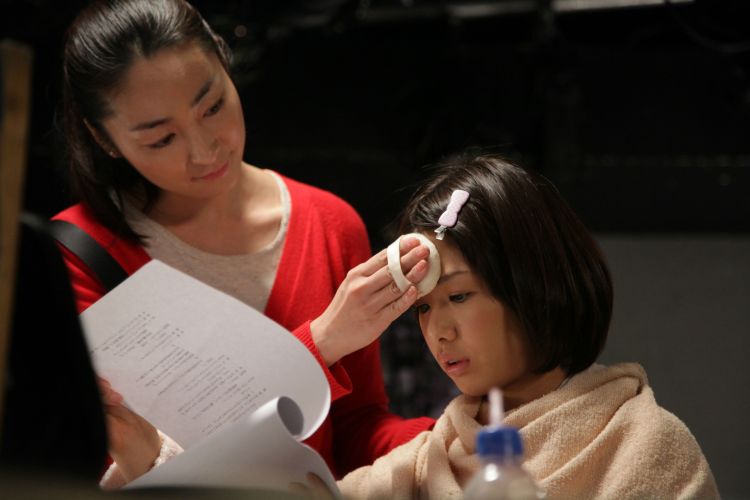
In fact, Makeup Room began as a stage play and occupies just the one set – the green room where the various starlets hang out before the performance. The star of the show in here is the veteran makeup artist, Kyoko, who is responsible both for creating whichever look the director has asked for from innocent school girl to sexy cop or dominatrix and for providing guidance and moral support as she chats away to the various divas and ingenues who occupy her chair. Porno shoots happen very fast, the team only have a brief amount of time in this location before the next crew arrive to shoot another porno so everything needs to go to plan. Today, nothing goes to plan. The lead actress is late, another actress has an undisclosed tattoo meaning she’ll have to switch roles requiring some hasty script edits, and the new girl who’s apparently an inexperienced nymphomaniac is having a few last minute jitters. The director’s stressed, the veteran actress is getting antsy and they’re all just lucky Kyoko is around to keep everything running smoothly!

Makeup Room starts with a rather worrying disclaimer to the effect that this was an extremely low budget shoot and that given the materials available, there is a degree of stuttering in the video which cannot be fixed. In actuality it isn’t that much of a problem but you’d have to admit Makeup Room is never a very pretty looking film. Perhaps appropriately it has a very cheap video look and a simplistic directing style using mostly static shots camera from different angles of its one set location.

However, the rather basic approach does allow the script and performances to shine. Undoubtedly witty, the dialogue both rings true and offers a fair amount of humour at the expense of the diverse cast and crew many of whom are played by real life AV actresses making their “debuts” in a purely narrative film. This is not a tale of fallen women forced into the sex industry through a series of traumatic events, each of the women is fine with their career choice and likes what they do. Though one character reveals that many of the people in her life don’t know what she does and not all of those who do approve, including her boyfriend who’s only just found out and not taken it well, mostly the women talk about the practicalities of their work. Whether that’s having a tattoo that’s much larger than your manager tells people it is, or having your nails done right before finding out you’re down for a lesbian scene meaning they’ll all have to be cut off, or chatting about the way your work is going to change as you get older, the kind of workplace problems that occur perhaps aren’t altogether different than those women experience in all industries.

Director Kei Morikawa has had a long career in the AV industry as well as in more mainstream fare and makes good use of his personal experience to create a film which at least feels very authentic as well as giving the impression of a group of friends getting together to send themselves up in classic style. Full of frank humour though very little explicit content, Makeup Room comes across as a warm and refreshingly straightforward look at the Japanese porn industry though its extreme low budget stylings are likely to put off viewers who prefer the glossier side of things.


Out now from Third Window Films

Fires on the Plain (野火, Shinya Tsukamoto, 2015)

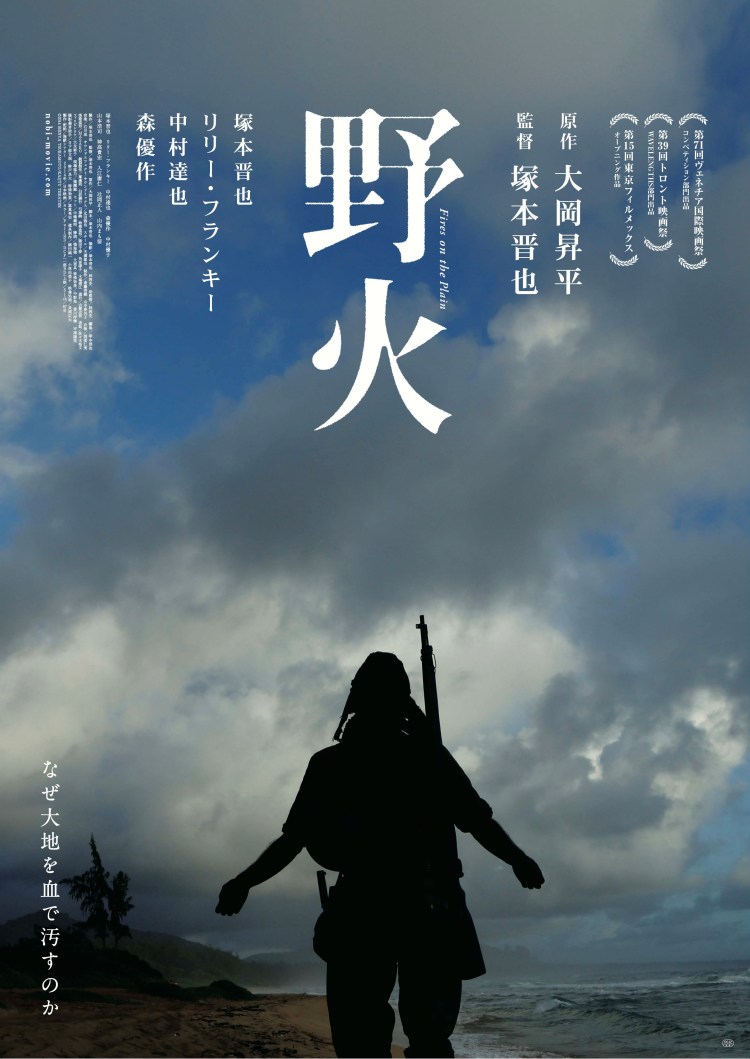
fires on the plain 2015 posterShinya Tsukamoto is back with another characteristically visceral look at the dark sides of human nature in his latest feature length effort, Fires on the Plain (野火, Nobi). Another take on the classic, autobiographically inspired novel of the same name by Shohei Ooka (previously adapted by Kon Ichikawa in 1959), Fires on the Plain is a disturbing, surreal examination of the effects of war both on and off the battlefield.
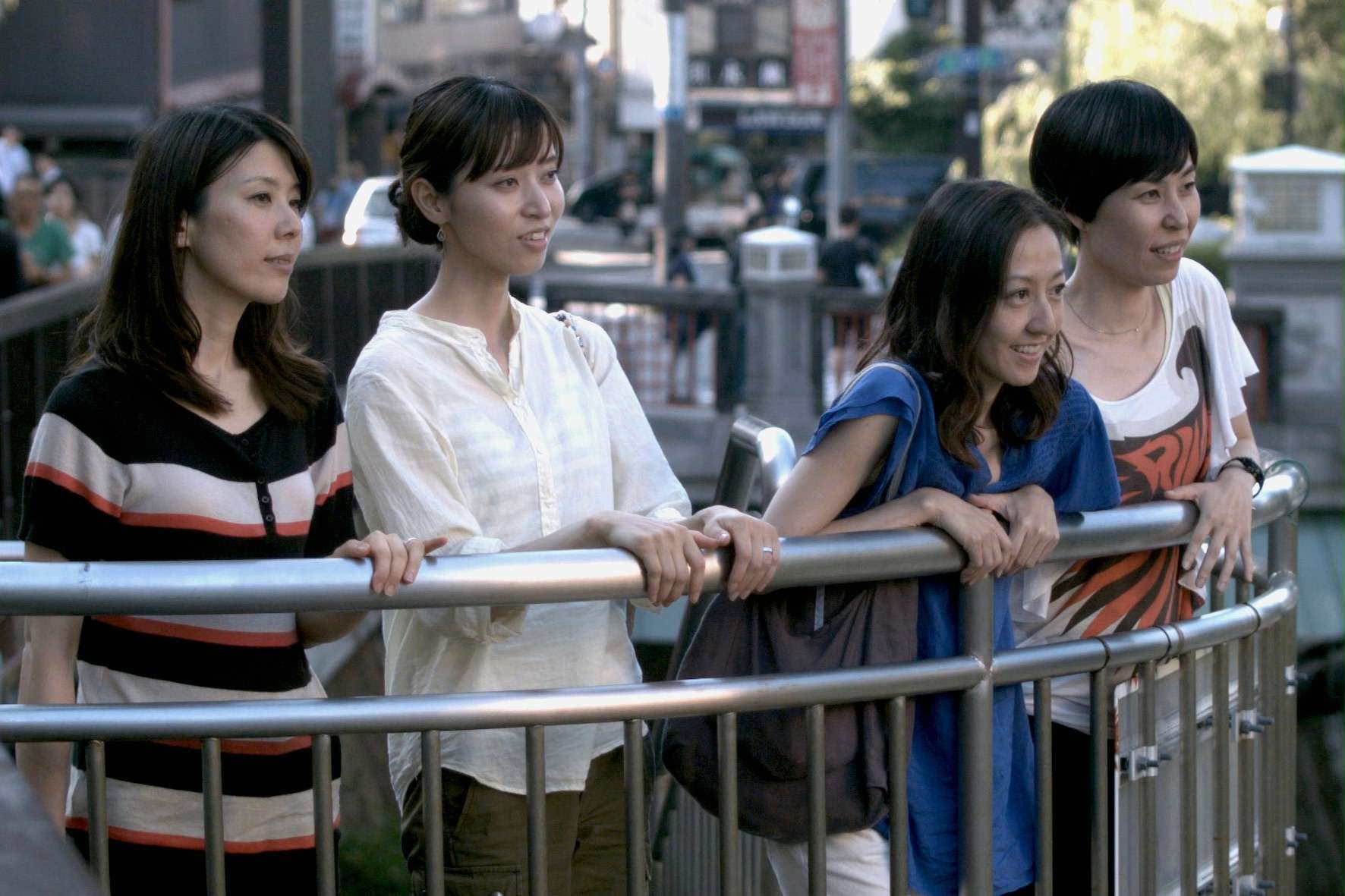
Late in the war when it’s almost lost though no one wants to admit it, Corporal Tamura (Shinya Tsukamoto) finds himself suffering with TB on the Philippine island of Leyte where supplies, and tethers, are running short. Shortly after being punched in the face by his commanding officer, he’s given five days’ worth of supplies and ordered to march to the field hospital for treatment as no one wants a sick man weighing down the unit. Only, when he finally arrives at the field hospital, they have their hands full (literally) with the battlefield wounded. Marching back to his unit again, Tamura is ordered back to the field hospital and told to use his grenade to ease the burden on his fellow soldiers if refused. So begins Tamura’s fevered, mostly solitary odyssey across the beautiful landscape of the Philippine jungle suddenly scarred with corpses, the starving and the mad.

Tsukamoto’s adaptation sticks closer to the original novel than Ichikawa’s 1959 version, though both eschew Ooka’s Christianity. Tamura is a man at odds with his fellow soldiers. Formerly a writer he’s “an intellectual” as one puts it, and a little on the old side for a corporal. Coughing and wheezing, he shuffles his way through just trying to survive. Unlike Ooka’s original novel in which the protagonist’s Catholicism makes suicide an unavailable option, it’s the memory of Tamura’s wife which stays his hand on the pin of his grenade. Tamura wants to go home, to escape this hellish island full of the walking dead, hostile locals and hidden clusters of enemy troops.

To get home, to survive, what will it cost? There was barely any food left to start with. The original five days’ worth of rations Tamura was given amounted to a handful of yams. On his second trip to the military hospital he was given nothing at all. There’s no wildlife, even if you manage to find some plant roots they’ll need cooking. Of course, there is one abundant source of food, except that it doesn’t bear thinking about. Tsukamoto’s version takes a less ambiguous approach to the idea of cannibalism than Ichikawa’s which removed Tamura’s moral dilemma by having his teeth fall out through malnutrition and rendering him unable to indulge in “monkey meat” even if he might have succumbed. Death feeds on death and there’s no humanity to be found here anymore where men prey on men like animals.

There’s no glory in dying like this. Half starved, half mad and baking to death in the heat of a foreign jungle abandoned by your country which cared so little for its men that it never thought to conserve them. When you make it home, if you make it home, you aren’t the same you that left. The things you had to do to get there stay with you for the rest of your life, and not just with you – with all of those around you too. Wars don’t end when treaties are signed, they survive in the eyes of the men who fought them.

A timely and a visceral look at the literal horror of war, Tsukamoto’s Fires on the Plain is a refreshingly frank, if stylised, examination of the battlefield. Limbs fly, heads explode, organs are exposed and brain fragments leak out of ruined corpses. At any other time, Leyte would be a paradise of lush vegetation, colourful flowers and beautiful blue skies but it’s corrupted now by the fruits of human cruelty. This is what it means to go to war. There’s nothing noble in this – just death, decay and eternal grief. Though the film often suffers from its low budget and some may be put off by the stark, hyperreal cinematography, Fires on the Plain is another typically troubling effort from the master of discomfort and comes as a warning bell to those who still think it is sweet and fitting to die for one’s country.


Reviewed at Raindance 2015.

Original trailer (English subtitles)

First published by UK Anime Network.

Happy Hour ハッピーアワー ( Ryusuke Hamaguchi, 2015)

get.doThere are a number of films which centre around an unexpected disappearance. The negative space of the missing person both in their physical and emotional absence brings with it its own mini black hole, sucking those left behind into a pit of confusion and despair which forces them to consider their own lives in more detail than they’d ordinarily be comfortable with. For the four women at the centre of Happy Hour, a five and a bit hour long film from Ryusuke Hamaguchi (The Depths, Touching the Skin of Eeriness) the sudden escape of the “lynchpin” Jun sends each of the women into a tailspin as they re-examine their stable, if unfulfilling, existence.

The four women are Sakurako – a housewife and mother to a teenage son, Jun – her best friend since middle school, Fumi – who works in events and is married to an editor, and Akari – a divorced nurse. The four became friends just because Jun thought they’d all get on so introduced Fumi and Akari forming the little quartet of late 30s ladies. They hang out together and talk about the general kinds of things women talk about – their husbands, jobs, children etc. However, Jun has a secret she hasn’t told the group. She’s in the middle of contesting a divorce from her emotionally abusive husband who refuses to consent, necessitating a long and nasty court battle. When the truth is revealed in an unwise way, it causes a rift in the group and brings the cracks in its foundations closer to the surface. When the gang enjoy one last trip to a hot spring, Jun stays behind and then never comes home. Without their binding thread, will the three women’s relationships to each other and to the other people in their lives be able to survive?

Each of the women in Happy Hour has her own particular sadness. Each in each, they’re all lonely or in some way dissatisfied with the way their lives have turned out. Sakurako married her high school sweetheart, has a nice home, a not unhappy marriage and a teenage son who’s doing OK until he gets himself into a more serious situation. However, her husband believes in a strict division of labour where he takes care of everything outside of the home (i.e. earning the money) and she the inside meaning he has little input into the raising of his son and refuses to help her when she really needs his support. She longs to be noticed again – as a woman, but also as a person outside of “wife” or “mother” which have begun to sound more like job titles or names of appliances rather than warm terms for the most important person in your life.

Fumi’s problem is similarly common – she resents her husband’s interest in another woman. Though Fumi and Takuya look like a model couple, they both work so much that they’re hardly ever together and are in danger of drifting apart. Takuya seems taken with a young novelist he’s working with and though Fumi says she doesn’t have a problem with it because she trusts him, she does and she doesn’t. Matters come to a head first at the hot springs resort where the women are taking a holiday while Takuya escorts Nose, the novelist, as she explores the resort for a series of onsen themed short stories. Later when Nose arrives for a book reading, Fumi’s frustration is palpable as Takuya’s clueless insensitivity continually places her in an awkward position.

Akari’s problems aren’t atypical either as finding herself divorced at 38 she’s the only one in her group of friends without a husband and perhaps worrying about running out of time to find one. She’s the loud mouth of the group, the one who isn’t afraid to speak her mind though she tends to speak without thinking and make the situation worse. However, her brashness is masking a deeper lack of confidence as she worries about being valued both inside and outside of work. Though we’re constantly told how important she is in her working environment both as a steady pair of hands and as a mentor to the younger members of staff, doubt seems to creep into her mind and she finds complements hard to believe.

The person we get to spend the least amount of time with is Jun, whose problems are a little more unusual. Married to a scientist with a cold and logical approach to life, her marriage has turned into a prison sentence with an unrelenting gaoler of a husband. Kohei’s love is selfish to the extreme, he says he loves Jun so he has to keep her even though he knows she doesn’t want him.

Occasionally, the four begin to feel like archetypes in somewhat contrived situations designed to help the film explore the contemporary lives of middle-aged women. Perhaps Jun really did select them for their complementary qualities – a little like a girl group with the fluffy one, the quiet one and the feisty one, but every so often it’s a little on the nose. Hamaguchi largely manages to make the extreme running time work for him by giving his characters the necessary breathing space, allowing key episodes the room to develop into deliberate tedium. Both the early workshop and later book reading, almost the two axes of the film, play out in essentially real time, pushing towards a particular kind of abstract realism.

Happy Hour fully justifies its mammoth running time but does undoubtedly stumble at certain stages. Still, it supplies ample room for exploring the everyday lives of its wide-ranging cast and more particularly of its central group of women each of whom, essentially, just want to be seen. Turning in surprisingly pleasing production values for its low budget approach, Happy Hour is an ambitious if not always successful film but even where it fails it’s never less than interesting.

A Snake of June ((六月の蛇, Shinya Tsukamoto, 2002)

Mr9TSdN - ImgurOne day, I will add some new content to this blog! Today is not that day. Nor is tomorrow, or the day after or the day after that (probably) but someday soon and for the rest of my life! Sorry, carried away there. Anyway, review of the newly restored HD blu-ray release of Shinya Tsukamoto’s masterpiece A Snake of June up at UK Anime Network. It’s very weird and I love it a lot.


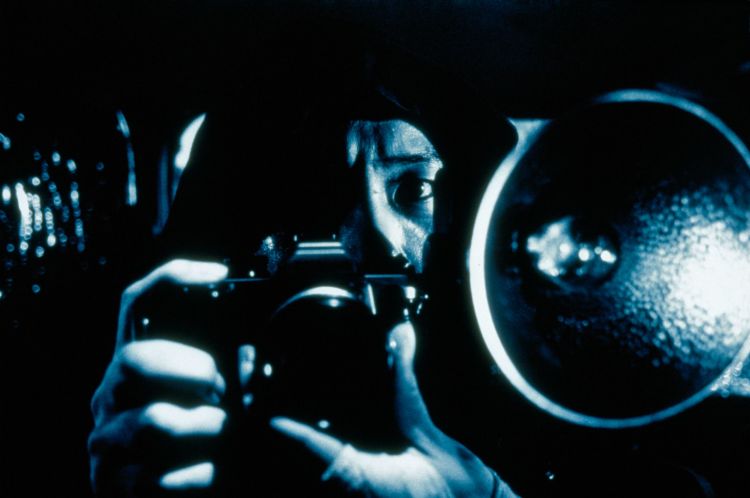
Shinya Tsukamoto made his name with body horror infused, pulsing cult hits such as Tetsuo the Iron Man, Tokyo Fist and Bullet Ballet (all of which are also available in the UK on blu-ray courtesy of Third Window Films). He’s no stranger to the avant-garde, the surreal or the troubling but even then Snake of June takes things one step further than even his generally intense filmmaking would usually go. A literal “blue movie”, Snake of June is the story of one woman’s sexual awakening, her husband’s release from OCD and the final fulfilment of the couple’s relationship set against the backdrop of a cold and unfeeling city.

Rinko is an attractive, if slightly mousy, young woman who works a telephone counsellor at a Samaritans-like call centre. As for her homelife, she lives in an upscale Tokyo apartment with her salaryman husband Shigehiko. It’s unkind to say, but the couple are a total mismatch – Rinko, young and pretty even if a little shy, is obviously way out her slightly overweight, balding middleaged husband’s league. Though they seem to have a pleasant enough relationship, there’s no spark between them and they live more like friends or roommates than a married couple. Shigehiko also has an extreme love of cleaning and a touch of OCD that sees him more often caressing the bathtub rather than his wife.

All that changes however when Rinko receives a mysterious envelope full of voyeuristic photos of her masturbating and looking up erotic material on the internet. Soon enough, it turns out these are a “gift” from a troubled photographer, Iguchi, who had planned to commit suicide before talking to Rinko on the helpline. Now he wants to help her by encouraging her to embrace her sexuality and her deepest, darkest desires. Iguchi sets her several tasks to set her on her way such as buying sex toys and walking through town in revealing outfits in an attempt to make her more comfortable with her own sexuality. However, having watched Rinko blossom, Iguchi eventually turns his attention to her husband and events take a decided turn for the surreal.

Erotic – yes, in some senses of the word, but never exploitative. Shot in a melancholy blue designed to mimic the color of the falling rainwater that stains a rainy season June in Tokyo, A Snake of June is a neon inflected journey into urban isolation where the demands of city life drown out the inner fire of those who live in it. Shy and repressed Rinko makes her first foray into town wearing the ridiculously short skirt her blackmailer has “prescribed” for her nervously, clutching a long umbrella in front of her like a shield. Making the same journey sometime later Rinko walks with a swagger, almost dancingly flirtatious she owns herself – her former shield is now a sword. Her “awakening” has nothing to do with her husband or with Iguchi, it’s something she’s achieved for herself and by herself and has left her a happier and more complete person than she’s previously been allowed to be.

Her husband, Shigehiko, by contrast hasn’t quite come to terms with this new version of his wife and even when graphically confronted with it responds in an entirely passive, selfish way. Cracking Shigehiko’s shell will require a little more than gentle coaxing, manipulation and blackmail and thus begins the nightmarish second volume of the film which becomes increasingly bizarre from here on out. Strange drowning themed sex shows where a woman bangs a drum and you have to wear a funny cone on your face which only lets you view everything through a tiny circle like the iris of a an old silent movie? It’s certainly an unorthodox solution.

Like all of Tsukamoto’s work, A Snake of June is exquisitely shot with its blue tint only adding to its native beauty. This new blu-ray edition from Third Window Films remastered from the original negative and supervised by Tsukamoto himself is a pristine presentation of the film which reveals all the tiny details that were rendered invisible by previous transfers. Strange and surreal, A Snake of June is a richly multilayered film dripping with symbolism, not to mention urban melancholy, that has lost none of its power in the intervening years since its shocking debut.


Stuck on Tsukamoto? Here are some more reviews by me:

Also, look out for a review of his latest movie Fires on the Plain which is ready to go some time soon!

Over Your Dead Body (喰女 クイメ, Takashi Miike, 2014)

003_b
Oh! I think there’s something in your eye…

Review of Miike’s latest (well, not really latest…maybe recent? Does recent still work? This is Miike after all) classy horror shocker Over Your Dead Body up at UK Anime Network. It’s OK but it’s not very scary, gets a bit too clever for its own good and shows you a film you’d much rather be watching than the one that you came for. It’s fine though, really. And quite pretty to look at.

over-your-dead-body-(2014)-large-picture 4
see what I mean?

Nobody could ever accuse Takashi Miike of being a slouch and his breakneck pace of film production continues here with a more classically subdued take on the horror genre than his casual fans may expect. It’s not the first time the director has dipped a toe into the world of kabuki theatre – indeed he’s no stranger to the stage and his most recent outing made sure to inject a little of his characteristic craziness including space aliens and references to Star Wars. Over Your Dead Body is much more in the vein of Harakiri than of Audition or Ichi the Killer and despite its often grotesque overtones and suggestions of supernatural machinations its chief merit is in the beauty of its stagecraft rather than in its infrequent thrills.

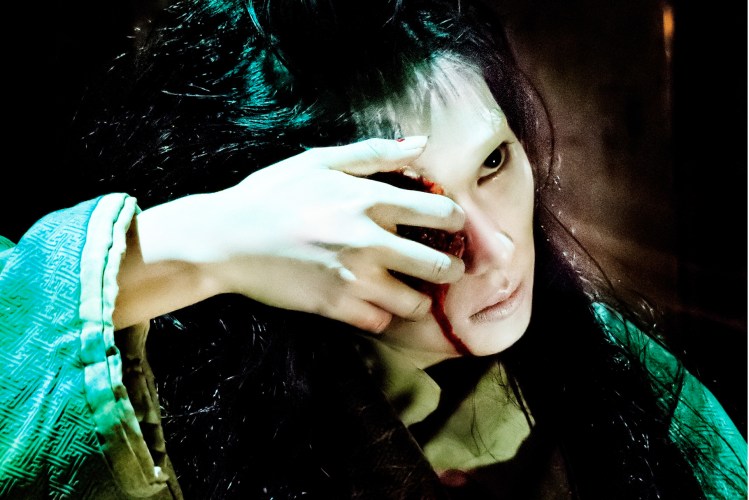
Miyuki (Ko Shibasaki) is a successful kabuki actress and has landed a plum leading role in the classic play Yotsuya Kaidan. Using her status and connections, she’s been able to wangle the central male role in the piece for her boyfriend, Kosuke (real life kabuki superstar and previous Miike collaborator in Harakiri Ichikawa Ebizou XI), with whom she’d like to settle down and have a family. Kosuke, however, has a wandering eye and may not be quite as committed to the relationship as Miyuki. Before long, onstage and offstage events begin to blur as supernatural forces, mental illness and distorted realities begin to take their toll on this unlucky troupe of actors.

Yotsuya Kaidan is a true classic of kabuki theatre. Filmed countless times, it’s the story of down on his luck samurai Iemon who’s in love with a young woman but denied by her father thanks to his lowly status. Eventually, Iemon murders him and hides the body so he can marry his one true love after an appropriate amount of time has passed. However, Iemon’s crimes begin to weigh heavily on his conscience and having got what he wanted he finds himself haunted and unable to live the happy life he’d dreamed of. His dreams of becoming a high ranking, respected samurai consume him and when he’s offered the opportunity to marry into a more impressive family he makes a shocking and bloody decision.

The darkness of this stygian tale doesn’t take long to seep into the “real” world and it quickly becomes near impossible to distinguish between several different layers of reality. Wronged heroine Miyuki’s behaviour becomes increasing erratic as her rather cold and calculating boyfriend Kosuke gradually takes on the cruel persona inherited from Yotsuya Kaidan’s Iemon. Her elaborate revenge plot seems to go around in circles, culminating in an extremely bloody and completely insane set piece before heading off into the realms of the supernatural.

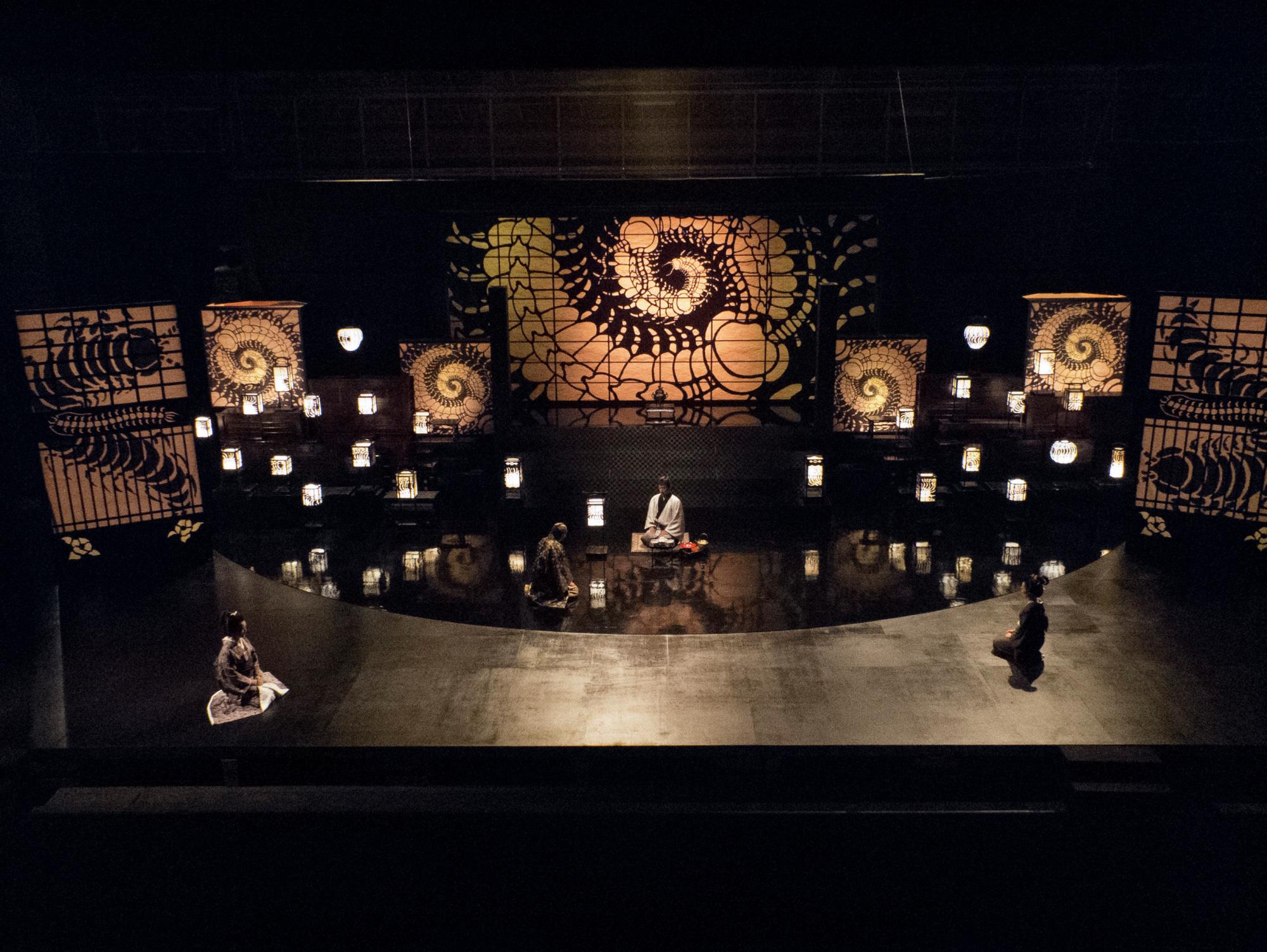
However, the real success of the film lies in the kabuki scenes themselves and some viewers may even windup wishing they were watching Yotsuya Kaidan instead. Built with an unfeasibly beautiful theatrical set utilising a modern, fully revolving stage Miike blurs us seamlessly from the theatricality of the stage set into the world of the play. Always beautifully filmed, the world of Yotsuya Kaidan comes to life before our eyes whereas the regular “reality”, our world with its everyday demands, feels cold, sterile and emotionless. One actor even remarks that he wishes the world of the play were real – quite an odd thing to say considering it’s a morality play about the wages of sin which is soaked in blood including that of a young infant.

Despite the committed performances of the cast, the off stage antics which ought to be the focus of the film end up feeling superfluous. Ultimately, despite its relatively short running time Over Your Dead Body feels like a short story unwisely expanded into a novella which might have benefitted from stronger editorial control. The overall tone is one of unexplained mystery but its refusal to explain itself is more likely to frustrate rather than delight and something about its plot machinations just never manages to come together in a satisfying way.

Something of a mixed bag, Over Your Dead Body is not without its merits – it looks beautiful for one thing, yet never manages to engage. It lives and breathes in its kabuki scenes and perhaps a filmed kabuki production of Yotsuya Kaidan may ultimately have proved more satisfying. Gore fans and lovers of the bizarre who stay with the slow burn approach will find a lot to like in Over Your Dead Body but die hard horror aficionados  maybe advised to look elsewhere for their supernatural thrills.


Here be a trailer:

If you’re a Miike fan don’t forget that another of his more “recent” efforts will also be screening at the London Film Festival before being released on DVD & blu-ray by Manga in November – Yakuza Apocalypse, which sounds like a very boring film about a weird frog or something? Yeah, you probably wouldn’t like it anyway. *buys all the tickets*

Wanna read more about Miike?

Phew – that was actually a lot of work. Someone remind me I’ve already done it so I don’t have to do it next time. Takashi Miike probably made ten more movies while I was writing that list!

The Yellow Handkerchief (幸福の黄色いハンカチ Yoji Yamada, 1977)

siawasenoWhen you hear the name Yoji Yamada, you pretty much know what you’re getting. A little laughter, a few tears and a reassuring if sometimes sad ending. You’ll get all that and more with the Yellow Handkerchief although, to allow a minor spoiler, the ending is anything other than sad even if it provokes a few tears. Yes it’s sort of syrupy and it’s not as if it breaks any new cinematic ground but once again Yamada has been able to work his magic to turn this romantic melodrama into a warm, funny and ultimately affecting tale.

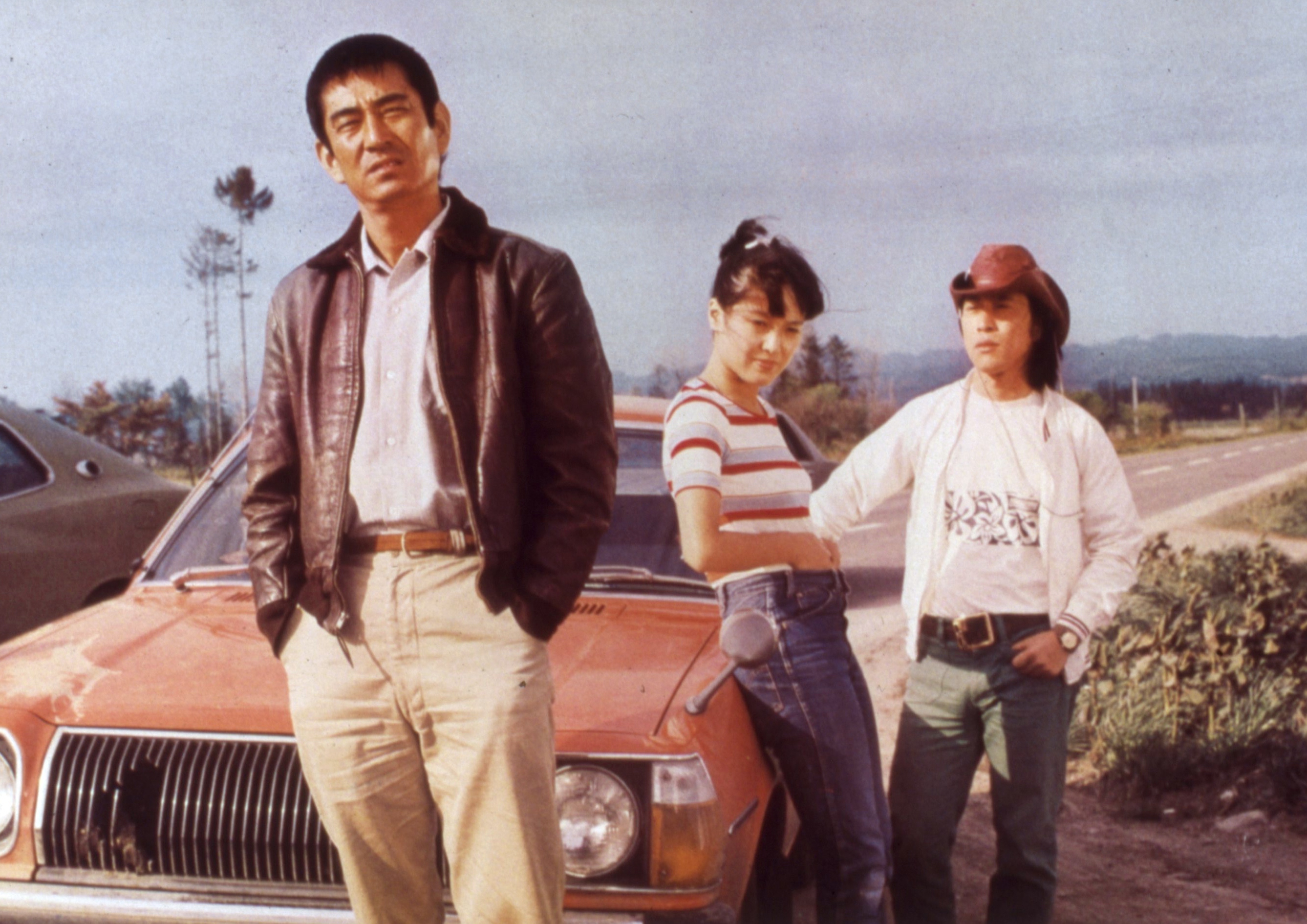
Kin-chan, nursing the pain of unrequited love buys a garish red car and goes north where he attempts to pick up girls in fairly cack handed ways. Finally he hooks one outside of a station as she’s too shy and polite to tell him to buzz off. Things get decidedly awkward until the pair bond over a shared hatred of miso noodles at which point Akemi becomes a little more lively. A short way into their road trip, they meet the forlorn figure of Yusaku (Ken Takakura) who ends up joining them on their random road trip around Hokkaido. However, Yusaku’s brooding nature raises a few questions – where has he been, where is he going and why does he both very much want to go and not want to go at all?

Given that it’s Ken Takakura playing Yusaku, you might have a few ideas and you wouldn’t be *entirely* wrong but Takakura amply proves there’s more to his talents than playing a yakuza badass in series of extremely popular but by then out of fashion gangster movies. Suffering from an excess of nobility, Yusaku is a man who’s made a series of poor life choices and is slowing building up the courage to find out if a particular bridge he tried to burn is still salvageable.

Kin-chan and Akemi by contrast turn out to be a pair of live wire odd balls with Kin-chan desperately chasing Akemi and Akemi blithely ignoring him. Despite various attempts to shake Kin-chan off he generally ends up coming back (one time with a giant crab dinner) and getting himself into all kinds of hilarious trouble. They may be the film’s comic relief but in their story proves strangely moving too.

The Yellow Handkerchief won the very first Best Picture award at the Japanese Academy Prize ceremony back in 1978 as well as a host of other awards from Kinema Junpo and other critical bodies and it’s not hard to see why. It’s a prestige picture, and a pretty saccharine one at that, but Yamada makes it all work and comes out with a genuinely affecting piece of cinema. Filmed against the gorgeous backdrop of the island of Hokkaido, The Yellow Handkerchief is the ideal rainy day movie and though it may all end in tears they are far from tears of sadness.

The Happiness of the Katakuris (カタクリ家の幸福, Takashi Miike, 2002)

DB9gUGk
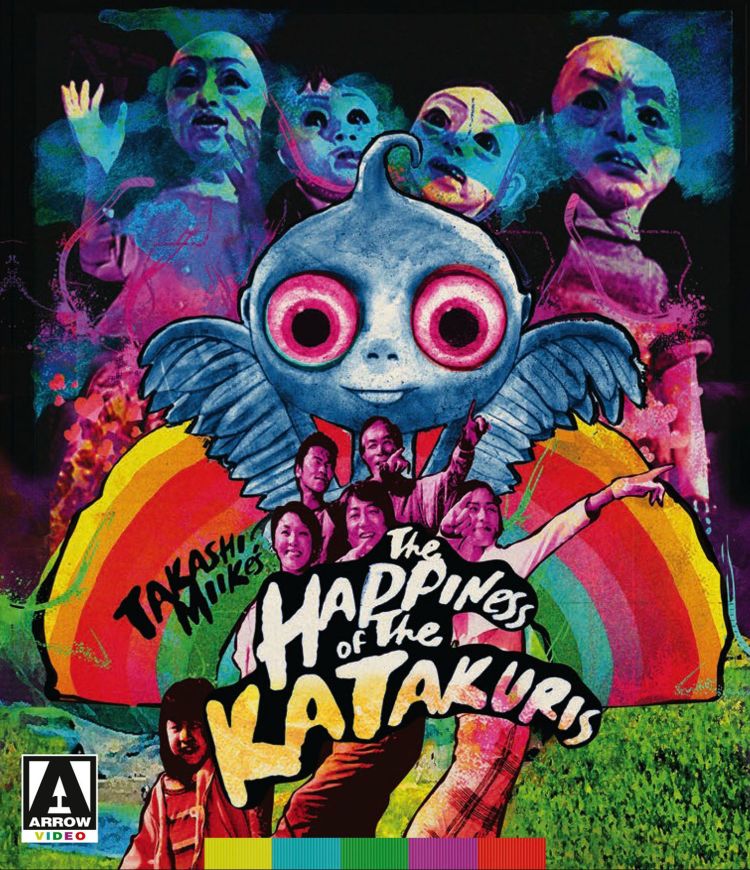
This new cover art from Arrow is actually really great, isn’t it?

Arrow Films are really spoiling us lately when it comes to amazing Japanese cinema – they’ve given us some cool ’60s classics and forgotten gems like Lady Snowblood, The Stray Cat Rock movies, Branded to Kill, Massacre Gun and Retaliation but now they’ve zapped back to the more recent past and brought us one of Takashi Miike’s zaniest and best loved efforts, The Happiness of the Katakuris. You don’t need me to tell you what this crazy, zombie and murderous inn keeper themed musical psychedelic masterpiece is about but you can read my review of the film and Arrow’s new HD effort over at UK Anime Network. (Spoiler, it’s pretty great).


Ah, Takashi Miike – that unpredictable Japanese auteur who’s equally at home with bloody yakuza dramas, gore soaked satire and strange fever dream experiments. There’s no denying his out put is decidedly patchy, which given his prolific career isn’t particularly surprising, but there’s really nothing he won’t at least try. Such is the joy of a Takashi Miike movie. The Happiness of the Katakuri’s wasn’t the first time he made use of musical sequences in his films and it wasn’t the last, but it is one of the craziest. Inspired by the 1998 Korean film The Quiet Family (debut movie of Kim Jee-woon) The Happiness of the Katakuris is, essentially, a family drama which incorporates shady goings on at a guest house, singing zombies, volcanoes and weird stop motion creatures appearing in people’s soup only to fly off with their uvulas (dangly bit between your tonsils).

The film begins with a young girl finding a weird looking creature in her soup which then rips out her uvula and flies off with it before before being snatched by a crow which is then hit with a log by an old man with surprisingly good log throwing game. The old guy is the grandpa of a family which runs a small hotel in the middle of nowhere. Family patriarch Masao used to be a shoe salesman but after losing his job was convinced to buy a hotel after a tip off that a road was supposed to be built nearby which would likely mean lots of customers. Predictably, the road has not materialised and the fledgling inn isn’t exactly packing them in. Besides grandpa, Masao is helped out by his long suffering wife, grown up daughter with a little daughter of her own and a grown up yet seemingly feckless son.

At last, a guest arrives but unfortunately dies soon afterwards. Bearing in mind the declining state of their new business, Masao makes the decision to quickly bury the body in the woods rather than report the death and suffer the negative publicity. Just when things were looking up, another two guests arrive and then promptly die too (in somewhat embarrassing circumstances). As if that weren’t enough, love sick daughter Shizue has fallen in love…again! With “Richard” the secret Japanese love child of the British royal family who’s also some kind of sailor which is why it’s difficult to get in touch with him. All told through the child’s eye view of the youngest member of the family, Shizue’s daughter Yurie, this was one crazy summer in the life of this strange family.

It would be wrong to call The Happiness of the Katakuris a musical, there’s no real musical through line so much as a collection of musical sequences inserted at points of high tension. The musical numbers themselves often act as parodies of other genres with their traditional ballads, karaoke video style sequences and the bonkers Sound of Music-esque field frolicking. Then there’s the singing corpses – who knew zombies were so jolly?

It all undeniably gets a bit grim as the family have to contend with burying the bodies of their unfortunate customers all the while waiting for someone to finally build this long promised road so their business can take off. Each of them is chasing a different kind of “happiness” the father in looking for success in business which will lead to financial security for the family, the daughter in looking for love (in all the wrong places) but it takes the totally bizarre death filled adventure of demons, corpses and escaped murderers to make them realise that they had what they needed to be happy all along – each other. The Katakuris may not be a model family, but everything runs better when they work as a team and they are very happy together no matter what strange adventures befall them. Despite all the trappings of weirdness, The Happiness of the Katakuris maybe Miike’s most subversively conservative film as it ultimately fulfils the role of that most Japanese of genres, the family drama, in which the traditional family is reformed and everything in the world is right again.

Available for the first time in HD, Arrow’s new set is nothing short of a wonder. Shot near the beginning of the digital age before the cameras where anywhere near as good as they are now, you wouldn’t assume The Happiness of the Katakuris would look this good and even if it does show its age here and there the presentation is pretty much top notch and the best it’s ever going to look. The set also comes with a host of special features, some ported over from the original release but also adds a Takashi Miike commentary with critic, Miike champion and sometime actor Toshitoki Shiota in Japanese with English subtitles but also, in an appropriately strange and surreal option, a dubbed version with actors “playing” Miike and Shiota speaking their lines in English too. You also get an entirely new commentary from Japanese film scholar and Miike expert Tom Mes of the recently deceased Midnight Eye plus a short video essay about Miike’s career and a couple of new Miike interviews too.

Almost 15 years on, The Happiness of the Katakuris remains as endearingly bizarre as it did on its first release and is truly worthy of its status as a beloved cult movie that continues to be the go-to weird Japan choice for the genre savvy cinephile. Back and better than ever, this new set from Arrow breathes new life into the film and is a great excuse for another stay at the White Lover’s Inn.


Here’s a trailer for the film:

If Takashi Miike x musical madness is your thing you also need to see Ai to Makoto (AKA For Love’s Sake) – available in the UK from Third Window Films.

Also a mini reminder for Miike fans that Over Your Dead Body is going to be at Frightfest and is apparently going to receive a UK release from Yume Pictures (the same people who released A Tale of Samurai Cooking: A True Love Story, now available on UK DVD). Miike madness is back! In more ways than one.

Over Your Dead Body trailer:

Fukuchan of Fukufuku Flats Released on UK DVD Today

44ea2aa088e78643f1ee584fde4e3d2eQuirky comedy Fukuchan of Fukufuku Flats is released on UK DVD today by Third Window Films. I reviewed the film for UK Anime Network back when it was screened at Raindance last year and I also had the opportunity to interview the director Yosuke Fujita while he was over here doing promotion.

Fukuchan of Fukufuku Flats UK Anime Network Review (previous link post)

Yosuke Fujita Interview also for UK Anime Network (previous link post)

I also reviewed the portmanteau movie Quirky Guys and Gals which Fujita directed a segment of (the “Cheer Girls” bit with the overly helpful cheerleaders) and the movie also contains a short film by Mipo O (The Light Shines Only There) about a woman who’s neglected to pay her electricity bill so it’s well worth a look (also released in the UK by Third Window Films).

Here’s a trailer for Fukuchan

Anyway I completely loved this movie. It also has an amazing song (with thanks again to Genkina Hito who tracked it down).

You should all go and watch this very funny film right now because I want to see more movies by Fujita (and I’m selfish like that).

P.S.

The Tale of Princess Kaguya is also out today and you can read a review of that over here . ‘Tis very good though you likely knew that already 😉

The Funeral (お葬式, Juzo Itami, 1984)

The FuneralThe Funeral is the debut film from actor and director Juzo Itami, probably best known for his crazy food odyssey Tampopo. Like all of Itami’s films, The Funeral is, essentially, a social satire and though not as raucous as the later Tampopo it does a fine job of mixing a traditional comedy of manners with a poignant examination of end of life rituals. Full of naturalistic details, The Funeral is a surprisingly warm film that’s much more about laughter than tears.

Successful actress Chizuko suddenly gets a phonecall in the middle of a shoot to say that her father has died suddenly and unexpectedly. Her mother would appreciate it if they could hold the funeral her house and if Chizuko and her actor husband Wabisuke would take charge of the funeral arrangements. Wabisuke is extremely reluctant but eventually agrees letting himself in for a whole new world of complications as the couple find themselves negotiating on the price of coffins, organising food for a wake and trying to work out what the most appropriate “donation” for a priest is. That’s not to mention trying to accommodate the wishes of all the relatives who will also be descending on them for the duration of the funeral which will last three whole days….

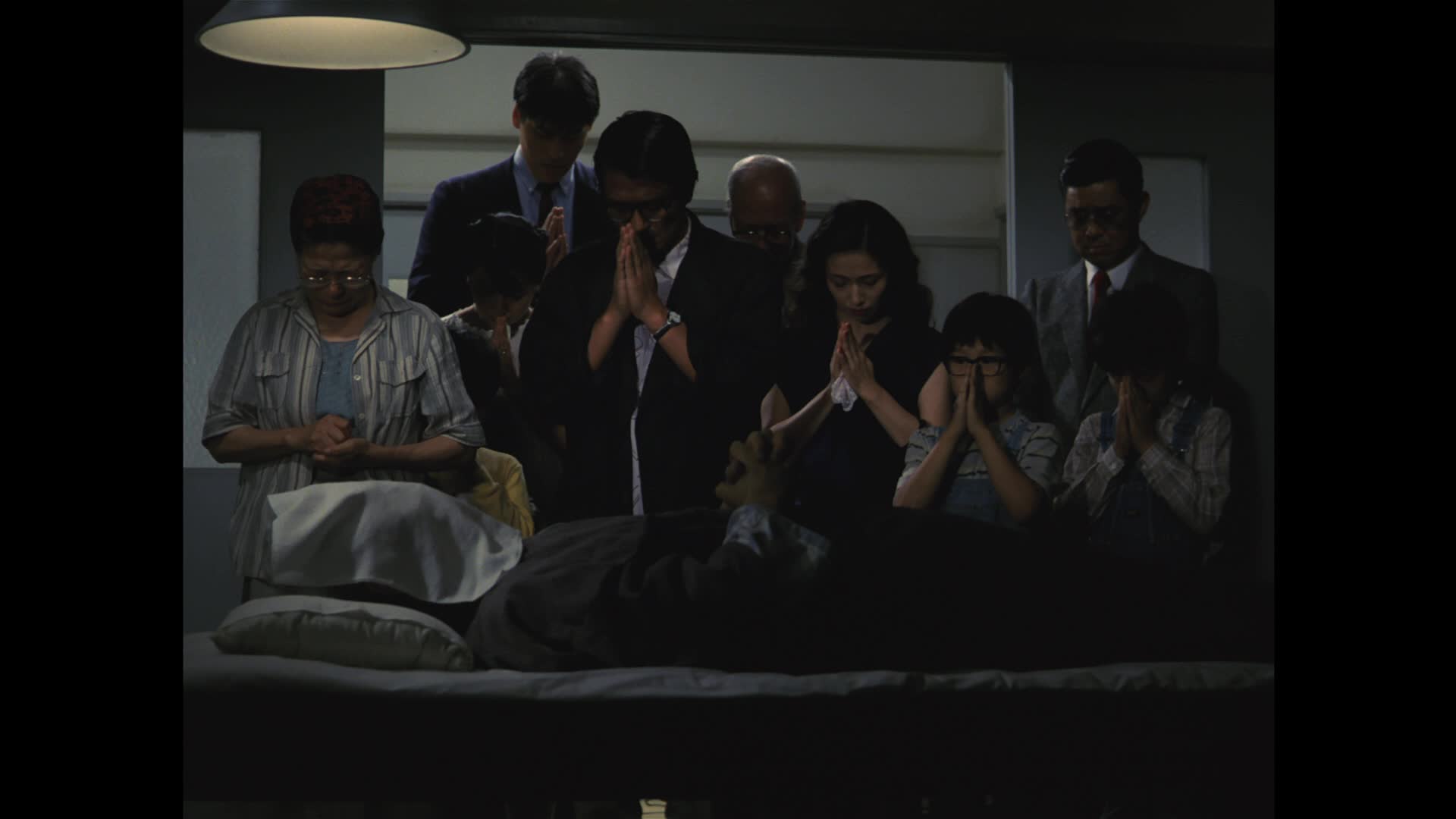
Funerary customs are the sort of thing you just assume everybody knows to the point that it can be a little embarrassing if you find yourself in the situation of having to ask. Luckily there are trained professionals available to help organise the main structure of events but when it comes down to the small details – what you should say, where you should stand and for how long, who’s invited and who isn’t, things can get tricky. In one hilarious moment, Chizuko and Wabisuke find themselves watching a VHS tape entitled “The ABCs of Funerals” and taking notes furiously as if learning lines for a new play.

Suddenly everything is a complicated decision and everyone seems to have their own opinion on matters. Having successfully got hold of a coffin, the couple need to decide whether to take the body home first or transport it in the coffin as advised by their very helpful funeral director. The majority of the family are in favour of the comparatively simpler option of putting the body into the coffin now and leaving it that way but an older uncle seems quite distressed by this new fangled business and laments that they don’t do it like this back home.

Said older uncle and business tycoon continues to find fault with various things including the direction of North which he insists the deceased’s head should be facing causing him to stare at the coffin and walk around the house waving his arms trying to work out, literally, which way is up. However, he’s also responsible for one of the more shocking breaks with appropriate behaviour as he starts trying to stage direct the final goodbyes so he can get a good photo, at one point asking the grieving widow to just “hold it a second” and “maybe get a little closer to his face” while he snaps away trying to capture the moment. Mind you, he’s not the only one to throw the book of etiquette out of the window as most people would probably list inviting your mistress to the funeral of your wife’s father as one of the top ten things you should never do.

However, these moments of everyday lapses in morality are just one of the film’s charmingly naturalistic elements like the priest (played by veteran actor Chishu Ryu) arriving in a very expensive car and obsessing over a series of French tiles. From a collection of shoes in different sizes scattered outside the family home to the children’s morbid curiosity in checking out the furnace at the crematorium the film is shot through with the tiny details of everyday life that are likely to find recognition everywhere. In fact the brief period of time with the whole family assembled together before the funeral really begins could easily be any other springtime celebration rather than the solemn occasion that has brought them all together this time. Even the artsy black and white video shot by a friend of Wabesuki’s to document the event shows the family laughing together and the children playing happily even as they learn the proper way to light funerary incense.

Of course, that doesn’t mean it doesn’t have its share of sorrows too – the film is called The Funeral after all and the final funeral oration given by the grieving widow is likely to leave many viewers complaining of something in their eye (especially given the couple’s rather strained relationship in the early part of the film). However, as usual Itami successfully manages to avoid sticky sentimentality in favour of a warm, natural and most importantly funny exploration of family dynamics and social customs. Not as madcap or laugh out loud funny as some of Itami’s later work, The Funeral is nevertheless a wry and witty comedy that knows how to play a merry tune on your heartstrings.