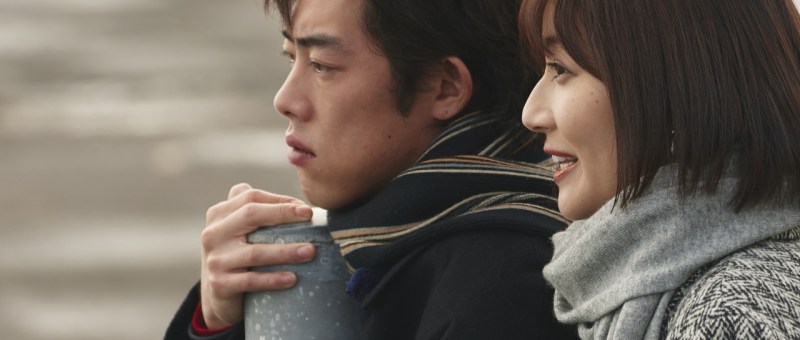
Noise (ノイズ, Ryuichi Hiroki, 2022)

The dark heart of small-town Japan is fully exposed in Ryuichi Hiroki’s ironic tale of murder and mass deception, Noise (ノイズ). “It’s for the sake of the island” the heroes are fond of claiming, one morally dubious justification leading to another as they contemplate the greater good saving their town while eroding its soul assuming of course that it had one to begin with. Addressing everything from rural depopulation to a back to the land philosophy, Hiroki’s quietly escalating drama imbues its “idyllic” wholesome island with an unsettling sense of quasi-spiritual unease as its well-meaning hero begins to buy in to his own saviourhood deciding all things are permissible so long as they serve the town. 

Following a recent trend, Keita’s (Tatsuya Fujiwara) big plan for saving the island is through the cultivation of black figs which he hopes to turn into a local industry boosting the economy and encouraging young people from the mainland to repopulate the rapidly ageing village. Ironically enough, it’s this that brings him to the attention of recently released ex-offender Mutsuo (Daichi Watanabe) whose kindly probation officer has brought him to the island in the hope of finding him an honest job so he can restart his life in a wholesome and supportive environment. Unfortunately, however, Mutso suddenly kills the old man for no particular reason and then begins wandering the island generally acting suspiciously and alarming the islanders including Keita’s best friend Jun (Kenichi Matsuyama), a hunter. When Keita returns home and discovers the bottle he’d seen Mutso drinking from lying in his garden and his small daughter Erina missing, he assumes the worst. He, Jun, and their childhood friend Shin (Ryunosuke Kamiki) recently returned to the island to take over as its one and only policeman, finally track Mutsuo down to one of the greenhouses and challenge him only for Mutsuo to fall over and hit his head during the tussle. 

Obviously on a personal level it’s not an ideal situation for the three guys but their first thoughts are for the island. Keita was supposed to be its saviour and now he’s killed someone in right under the figs that were supposed to rescue the economy. If this gets out it’s game over for everyone. The first lesson new policeman Shin had been taught by his departing predecessor (Susumu Terajima) had been that a policeman’s job is about more than enforcing the law and sometimes what’s “right” might not be “best” for the town using the example of a middle-aged woman with a history of bad driving who’d hit a wild boar. If she lost her license the family’s life would become impossible, so seeing as it’s “only” an animal, perhaps it’s better not to bother logging it as a “crime”. Faced with this situation, Shin decides the greater good of the island is more important and that covering up the crime is best thing for everyone only to be caught out when mainland police arrive having been alerted by the probation officer’s daughter. 

The situation is complicated by the fact that the town had been in the running for a government development grant based on the potential of the figs which gives everyone a reason not to want the scandal of a murder taking place on the “idyllic” wholesome island where according to the mayor, Shoji (Kimiko Yo), there is “absolutely no crime”. That may largely be true especially given the attitude of local law enforcement but is also an ironic statement seeing as we later discover Shoji apparently cannot sleep without her trusty taser by her side, just in case. Having lied in trying to cover up the murder, Keita is later forced to get even more of the townspeople involved in the conspiracy while they are it seems surprisingly happy to help because they believe in him as the saviour of the town and are prepared to do pretty much anything to help save the island. 

Stoic yet omniscient police detective Hatakeyama (Masatoshi Nagase) sneers at the villagers’ tendency to see all outsiders as enemies. “Typical of a dying town” he adds, commenting on the way the combination of isolation and desperation has brought the townspeople together as they present a united front in the face of the things they think threaten their small-town wholesomeness, some objecting to the idea of new residents moving in a fear which is ironically borne out in the arrival of a man like Mutsuo. Yet their small town wasn’t all that wholesome to begin with. Shoji had told the three guys to eliminate the “noise” that disturbs the island though in the end it isn’t’ so much Mutsuo who created the disturbance as their own quasi-religious determination to save the island by whatever means necessary. Keita wants to save the island because the island once saved him, but in saving it like this he ironically destroys the very qualities he hoped to preserve in building their new future on blood and lies. 

Meanwhile the strain of trying to conceal a murder exposes the cracks in the foundations of the friendship between the men, earnest policeman Shin continually conflicted in betraying his own ideals, while hunter Jun’s personal insecurity in continually playing second fiddle to saviour Keita who is so obsessed with the idea of being the island’s chosen one that he never notices the pain in each of his friends, gives rise to a degree of instability in their otherwise carefully crafted plan. Maybe this island isn’t so idyllic after all, keeping a dark hold on the bewitched Keita as his increasingly worried wife Kana (Haru Kuroki) suggests concerned he’s “becoming someone else” in buying in to his own messianic hype. “What are you trying to protect?” Hatakeyama had asked him hinting at the dark side of the furusato spirit but also at his misplaced priorities as the forces of greed and anxiety threaten to consume the wholesome soul of moribund small-town Japan. 


Noise streams in Europe until 30th April as part of this year’s Udine Far East Film Festival.

international trailer (English subtitles)

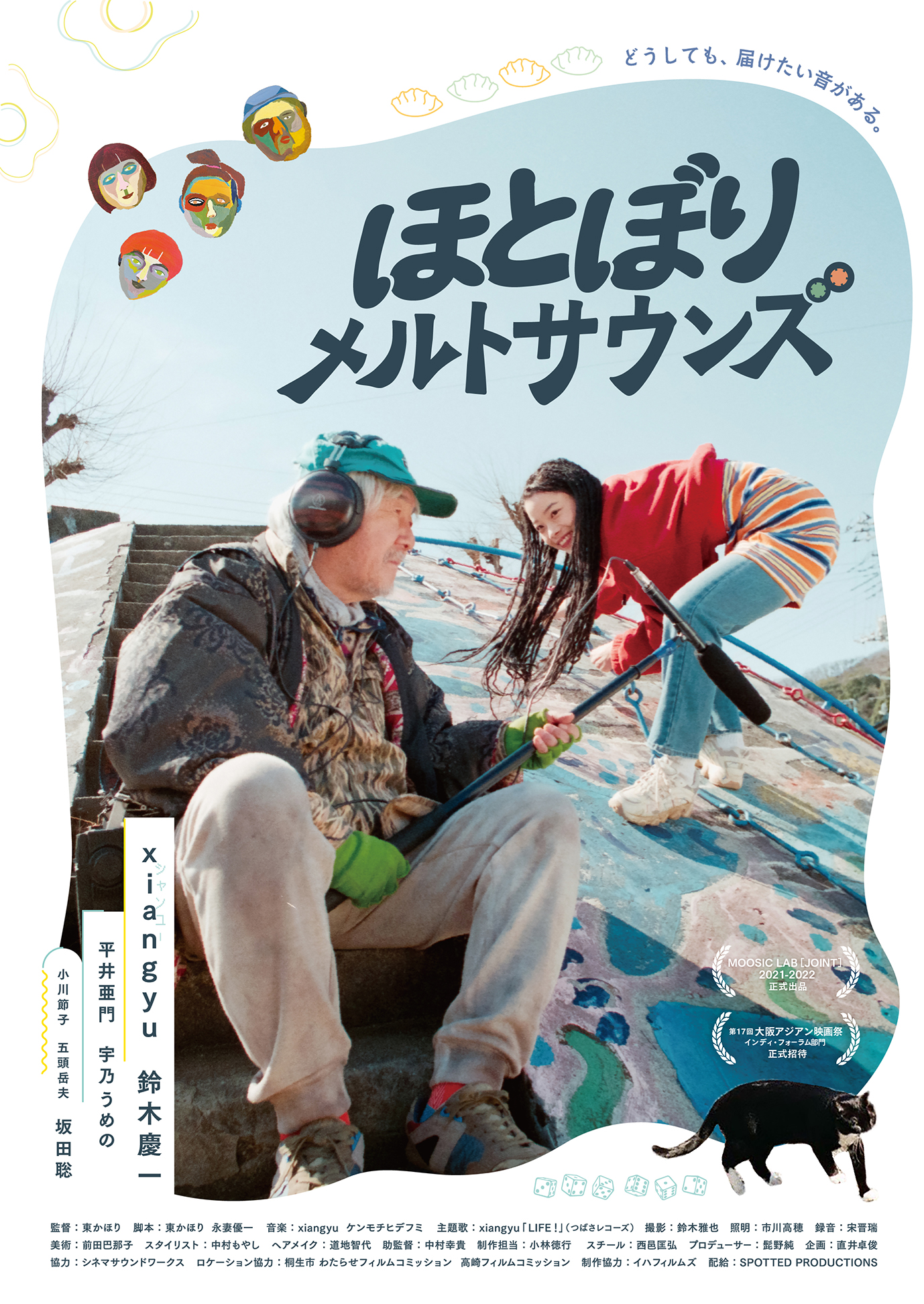
Melting Sounds (ほとぼりメルトサウンズ, Kahori Higashi, 2021)

“They’re all dealing with something. They have nowhere to go back to” an old man sighs watching a cohort of similarly aged men doing callisthenics in a local park knowing that they’re about to lose this place too. A Moosic Lab production, Melting Sounds (ほとぼりメルトサウンズ, Hotobori Melt Sounds) is about what you keep and what you have to let go as the heroes try to preserve a disappearing soundscape while unable to resist the march of progress as even their little backwater finds itself at the mercy of modernising developers. 

Hoping for a solo getaway, Koto (xiangyu) arrives at the rural home of her late grandmother only to discover a strange man, Take (Keiichi Suzuki), camping in the garden. As she will repeatedly, rather than enlist the authorities Koto invites Take into the house where it’s warmer and discovers that he’s in the middle of an important project recording ambient noise from around the village attempting to capture the banal sounds of everyday life such as someone going to the dentist or a young couple having a pointless argument in the street. Meanwhile, the pair receive a visit from a young man, Yamada (Amon Hirai), bearing a tablet featuring the face of a woman, Hiroko (Umeno Uno), trying to explain to them that the house needs to be knocked down so they should hurry up and move out. Unfazed, Koto once again asks Yamada to come and sit under the kotatsu where it’s warm, the young man later taking a break from his job to stay with them under the pretext of convincing them to leave while they’re later joined by Hiroko who also becomes increasingly conflicted and decides to join their small family. 

Just as Take had said they’re all dealing with something, Koto having become estranged from her father whom she no longer talks to, Take as we discover recording the sounds on old-fashioned speaker walkmans for his late sister who was killed in a landslide, and Hiroko and Yamada each conflicted in their work for a greedy amoral developer who reveals that he too was responsible for evicting mostly elderly people from their homes in a town that has since become famous for bubble tea. The four of them are already displaced by the modern society, as are the men doing callisthenics in the park as they watch their town gradually dismantled around them, pushed out even from disappearing and depopulated rural Japan by an encroaching modernity. The developer claims he wants to rejuvenate the town to attract young people to return but is indifferent to what is being lost such as the recording of the nostalgic five o’clock chimes which so moves Hiroko, adding only that they no longer have them where they are only for Hiroko to suggest that you can only hear them if you’re pure of heart. 

Take claims he’s making a “grave of sounds” but he’s also capturing a moment in time and with it the essence of life. As he puts it everything has a sound from a flower blooming to air conditioners and church bells, each of them a part of something bigger immersed in the now. As he points out, everything comes to an end eventually, be it love or friendship or even family. The recordings are a kind of proof of life, but paradoxically also its passing the final implication being that all things have their season and it’s best to enjoy them while there’s time. Small-town Japan may be disappearing or at least changing even if the promised bubble tea might not be quite what you’d expect but that doesn’t necessarily mean it all has to go. 

Thanks to Koto’s warmheartedness, inviting each of them into the house despite having arrived for a “solo” getaway, the trio of youngsters find a new solution to their sense of lonely disconnection discovering a kindred spirit in their shared desire for something simpler and more wholesome as they play boardgames together by candlelight, making curry and gyoza sure to record the sound of them sizzling. A warm and quirky ode to the various ways life can be improved by the simple act of stopping to listen, Kahori Higashi’s laidback debut may be about learning to let things go but also appreciating what you have while you have it and taking what you can with you while being kind and openhearted even in the face of those attempting to run you out of town.


Melting Sounds screened as part of Osaka Asian Film Festival 2022

Original trailer (no subtitles)

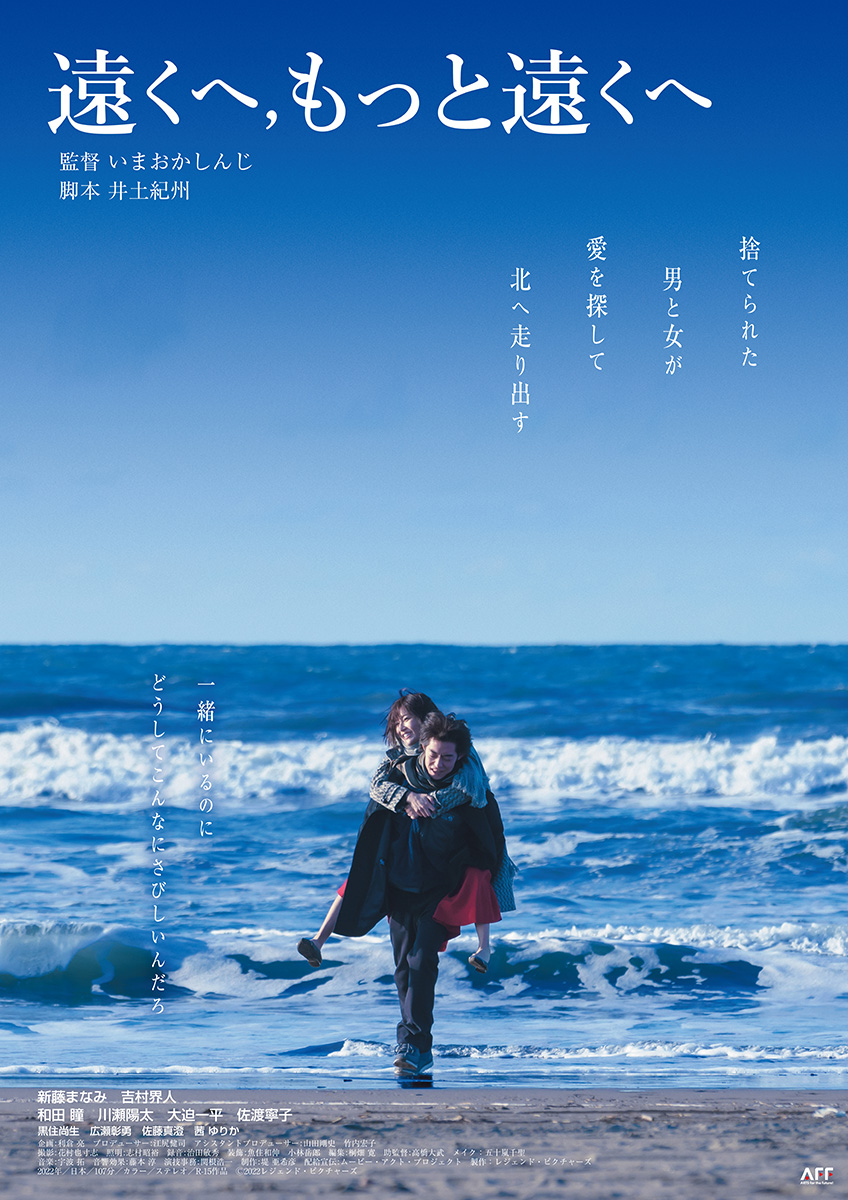
Far Away, Further Away (遠くへ,もっと遠くへ, Shinji Imaoka, 2022)

Is there an ideal way of coming to terms with the end of a marriage, or is better to take it as it comes? The heroine of Shinji Imaoka’s relationship drama Far Away, Further Away (遠くへ,もっと遠くへ, Tooku e, Motto Tooku e) thinks she has it all figured out and has started taking practical steps towards an efficient separation only to have the rug pulled from under her never having considered that her husband may also be unsatisfied and her attempts to mitigate his hurt feelings therefore less than relevant. Imaoka began his career in pink film and is probably best known outside of Japan for the erotic musical fantasy Underwater Love but has in recent years taken to more contemplative drama such as 2019 study in grief Reiko and the Dolphin, here continuing a key theme in the exploration of the difficulties in relationships between men and women. 

The main reason Sayoko (Manami Shindo) wants to leave her husband is that they’ve simply grown apart. Smiling gently at a sweet older couple looking at a two-seater sofa in the furniture store where she works, she reflects on their words that a marriage is weaker without common interests realising that she and Goro have none. A fishing obsessive, Goro usually retreats to his room after dinner to update his blog and fondle fishing equipment while her suggestion that she join him on his next trip is met with less than enthusiasm. Meanwhile, though she likes her job at the furniture store she’s beginning to feel as if she’s stuck in a rut and no closer to achieving her dreams of becoming an interior co-ordinator disappointed to discover a quote she’d written for younger couple who seemed happy enough in the shop screwed up in the park. One might assume they’ve obviously had an argument about it on the way home which probably isn’t anything to do with Sayoko but still she begins to wonder what the point is leading to Goro to advise her to quit her job laying bare the true source of his dissatisfaction in the marriage in that he was looking for a woman prepared to become a conventional housewife which in turn might explain why he’s not interested in the shared interests approach to marriage Sayoko suggests but prefers to maintain a separate lives model in which she takes care of the domestic while he has his work and individual hobbies to blow off steam. 

So distant from each other have they become that Sayoko hasn’t really realised she’s not the only one who wanted to end the marriage nor has he seemingly realised she’s in the process of leaving him. Her plan for a measured exit is nixed by her husband’s request for a divorce but through her quest to find a new apartment she gradually draws closer to lovelorn estate agent Yohei (Kaito Yoshimura) who is particularly interested in her story as his own wife, Mitsuko, left him seemingly out of the blue some years ago and he’s never really come to terms with it a part of him still assuming she’ll eventually come back. In a bid to find some closure Sayoko suggests they take off together to look for her so he can start to move on, heading north on a Hokkaido-bound road trip that takes her back to her own hometown where she reflects on her parents’ marriage after discovering her mother’s second life as a widow in which she has begun to fulfil herself as a singer no longer required to fulfil the role of the traditional housewife which Sayoko had rejected. 

Dealing with their respective baggage the pair grow closer and begin to move on together, further and further away until they reach the coast looking for a ferry to take them on to Sakhalin. The memories of old lovers retreat further and further away too, increasingly blurred and distant eclipsed by new ones even if a sense of loneliness remains. Contrasting the verdant natural vistas of rural Hokkaido with the greyness of Tokyo city life Imaoka adds a sense of childlike wonder as his heroine’s tendency to dance while repeating the same phrase with increasing intensity begins to rub off on her dejected love interest, making the case for striking out for a far off happiness rather than simply resigning oneself to an unsatisfying present. 


Far Away, Further Away screened as part of Osaka Asian Film Festival 2022

Original trailer (no subtitles)

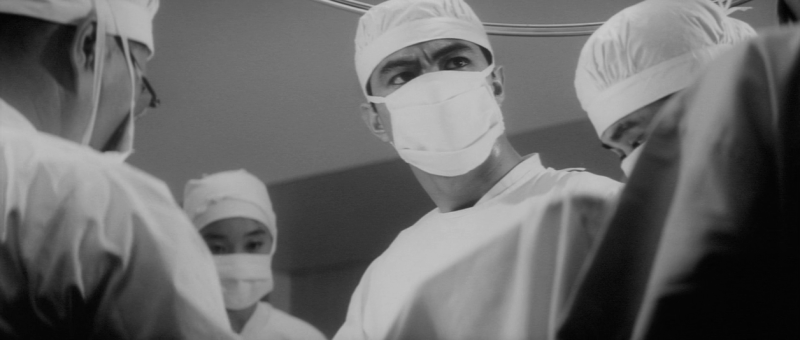
The Great White Tower (白い巨塔, Satsuo Yamamoto, 1966)

“It’s about the right thing to do, it’s about conscience, and Prof. Zaizen lacks conscience” according to a star witness at the conclusion of a medical malpractice trial in Satsuo Yamamoto’s adaptation of the novel by Toyoko Yamasaki, The Great White Tower (白い巨塔, Shiroi Kyoto). One of a series of films heavily critical of the medical system in the midst of rising economic prosperity, Yamamoto’s tense political drama presents the succession intrigue at a university hospital as an allegory for the nation as a whole implying that lingering feudalistic and authoritarian thinking has poisoned the contemporary society. 

This is in part reflected in the way in which major hospitals are often run as large family businesses where succession is a dynastic matter. In this case, however, the scene is a prominent university hospital in Osaka at which the head of the surgical department, Azuma (Eijiro Tono), is about to retire. Generally, one of his assistant professors would simply move up after being approved by a board comprised of other department heads but the problem is no one, and especially not Azuma, is particularly happy with the most likely candidate, Zaizen (Jiro Tamiya). The issue between them seems to be one of ambition and authority. Zaizen is regarded by all as an excellent doctor with a stellar track record but he is also cold and arrogant with no regard for departmental protocol all of which of course offends Azuma as does his background and person. The son of a country teacher, Zaizen prospered through the dedicated labour of his widowed mother along with family connections before marrying into the extraordinarily wealthy and influential Zaizen family who run a large obstetrics clinic. Consequently, he is free to pursue his interests and lacks the economic anxiety that might make another employee wary of pushing his luck. 

His humble background might have placed a chip on Zaizen’s shoulder but it’s also clear he’s part of a new generation that does things differently from the last, apparently keen to build a public media brand appearing in a glossy magazine which brands him “the magic scalpel” thanks to his success in treating pancreatic cancer. While they might not be able to argue with his track record, other doctors worry that Zaizen has developed a god complex and is slapdash with his practice often timing his operations and smugly pleased with himself when hitting a new record. Azuma first picks him up on this in the case of elderly patient, questioning his treatment decisions in accusing him of neglecting to fully consider the patient’s post-op wellbeing. This then becomes something of a recurring theme as good doctor Satomi (Takahiro Tamura) is minded to bring Zaizen in on the tricky case of a man, Sasaki (Nobuo Minamikata), he suspects may have pancreatic cancer but has been repeatedly diagnosed with chronic gastritis. 

Though it’s political intrigue that in some senses leads him to Zaizen, Satomi is otherwise depicted as the responsible physician who deeply cares for his patients’ wellbeing and not much at all for interoffice politics. Thus he continues to investigate Sasaki’s case even when other doctors tell him he’s wasting too much time on one patient and should just leave it at gastritis. Zaizen, meanwhile, is the exact opposite taking one look at the X-rays and deciding it is pancreatic cancer after all but thereafter ignoring Satomi’s advice after taking over the case refusing to run a CT scan to verify that the cancer hasn’t spread to the lungs as Satomi fears it might have. 

For Zaizen Sasaki ceases to matter, to him the human body is no different to a machine and he perhaps more engineer than doctor even as he proclaims medicine more art than science in insisting that he just knows the early signs of pancreatic cancer while others are unable to detect them. After the first operation we see him perform, a grateful wife stops to thank him profusely for saving her husband’s life though he treats her coldly and implies it’s all part of the job before going outside to celebrate his private glory in his record-breaking feat. It’s then a minor irony that he finds himself later slapped with a malpractice suit by Sasaki’s wife upset that he was unavailable as her husband was dying because he was preoccupied with the ongoing elections for Azuma’s successor.

The implication is that the dehumanisation of the health industry has reduced it to the status of any other company, the head doctors no better than ambitious salarymen whose lives are defined by their job titles. The various department heads eventually descend into factions with Azuma plumping for an external candidate, Kikukawa (Eiji Funakoshi), while others line up behind Zaizen or his internal rival Kasai (Koichi Ito). Influence is brokered largely by outright bribery or industry manipulation by external influential players including Zaizen’s wealthy father-in-law and a professor in Tokyo who can offer monetary perks, access to funding, and potential promotions to those willing to vote for their chosen candidate. The main argument against Zaizen is his bad character, yet the fact he has been carrying on an affair with a bar hostess is never used against him even as they prepare to smear a rival candidate with his mistress even suggesting they hire a hitman to take him out completely. Zaizen’s minions meanwhile make an ill-advised visit to Kikukawa to ask him to withdraw bizarrely stating the importance of maintaining “democracy” even as they themselves deliberately undermine it for their own gain.  

It’s this sense of feudalistic, fascistic authoritarian chumminess that Azuma’s daughter Saeko (Shiho Fujimura) later decries in asking her father why he did nothing to change such a destructive system while he himself had the power to do so the implication being that he saw no need because he continued benefit from it. Only she and Satomi present any kind of challenge to the hypocrisy that pervades the medical system but eventually discover that there is no place for integrity in the contemporary society. Zaizen miraculously falls upwards every time because his success is more expedient that his failure. Even the Tokyo professor brought in as an expert witness during the malpractice suit declares that Zaizen is unfit to be a physician because of his arrogance and total lack of human feeling but pulls back from testifying that he caused the death of his patient through negligence later explaining to a colleague that if a university professor were to be found guilty of malpractice it would undermine public faith in the medical system. 

If can’t they can’t have faith in the medical system, the very people who are supposed to care for them when they are most in need, how can they have faith in anything else? As the rather bleak conclusion makes clear, the entire system is rotten to the core and no longer has any place for idealists like Satomi who are continually pushed to the margins by those jockeying for power in this infinitely corrupt society defined by hierarchy and cronyism while ordinary people, like Sasaki, continue to pay the price. Just as in his opening sequence, Yamamoto takes a scalpel to the operations of the medical industry to expose the messy viscera below but ultimately can offer no real cure in the face of such an overwhelming systemic failure. 


Original trailer (no subtitles)

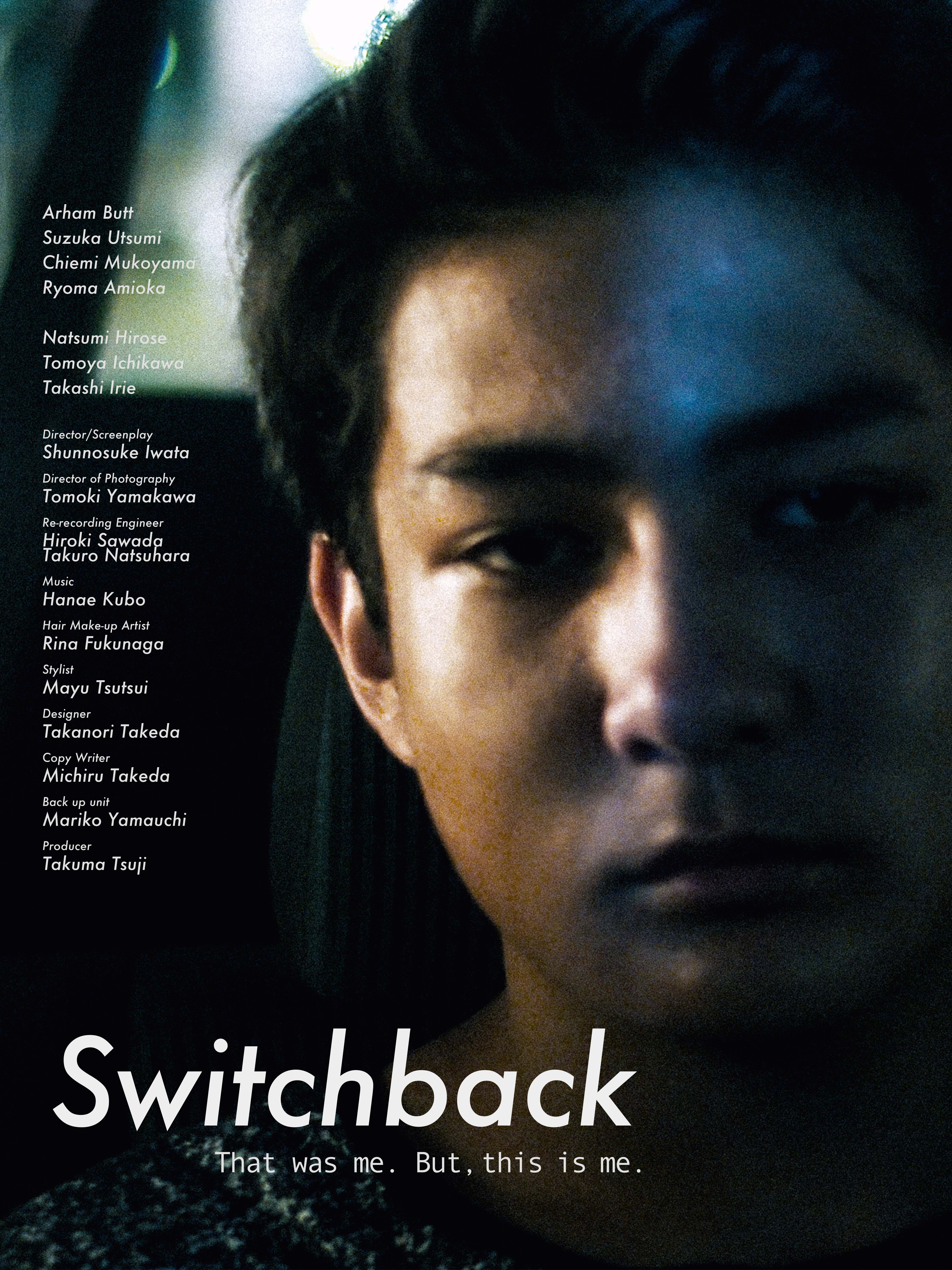
Switchback (スイッチバック, Shunnosuke Iwata, 2022)

Really, everything in life is a learning experience but how should you feel if something that you thought was quite profound and serendipitous was actually engineered even if the way you reacted to it wasn’t? The young heroes of Shunnosuke Iwata’s Switchback (スイッチバック) find themselves caught in a moment of confusion uncertain how far they should trust the adult world while equally at odds with each other and trying to figure out what it is they may want out of life. 

Brazilian-Japanese teenagers Arham and Chiemi are attending a summer workshop project along with basketball enthusiast Suzuka while her childhood friend Eiichiro never actually shows up. Led by Tokyo influencer Rei, the kids will be working together in order to produce a video of a ball bouncing through the countryside. By reversing the footage to make it seem as if the ball is on its own little adventure she hopes to create a sense of the uncanny and with it a new perspective. Arham doesn’t quite get the point of it, but participates anyway and ends up forming a special bond with an old man in a wheelchair they encounter who has a hobby of flying drones. Yet when he finally arrives, Eiichiro claims to have seen the old man walking around and accepting something from Rei assuming he must be some kind of stooge and the children’s adventure they’ve all been on since has been a setup. 

Arham is very invested in the old man’s story and outright rejects Eiichiro’s suggestions that he isn’t “real”, carrying out an investigation into everything he told them about a former airfield that had been built in their town during the war and was later bought by a media company for recording aerial footage. What he discovers is that all of that seems to be true save for one crucial personal detail the old man had mentioned, leaving a grain of doubt in his mind while he continues to resent Eiichiro despite being unable to come up with a reason as to why he would lie. Eiichiro is in fact not quite telling the whole truth though he’s right about the old man, engaging in a kind of engineered adventure of his own but later offers the explanation that adults too are often frustrated and they may have tried to “destroy” Arham because they’re jealous of his cheerful and openhearted nature. 

Even though he concedes that he still experienced what he experienced for himself after meeting the old man, developing an interest in drones and learning a lot of local and aviation history, Arham is uncertain how he should feel about being manipulated, disappointed on trying to confront Rei and hearing exactly the same speech as she’d used in her influencer videos explaining her approach to life and art aiming to give young people a head start in gaining new experiences without them realising that they’re being taught something even if she doesn’t otherwise attempt to push them in a particular direction simply provide the catalyst for growth. Chiemi experiences something similar when she’s offered the opportunity to become a model, a skeevy older man repeatedly telling her she is suited to the work and may have a promising future, adding that she has a quality of ferocity that “Japanese” kids don’t while she complains that she dislikes being told what does and doesn’t suit her preferring to do as she pleases whether other people think it suits her or not. 

Suzuka meanwhile quietly struggles to fit in on her own having come to the town only eight years previously hinting that she and her family may have moved in the wake of the 2011 earthquake but stating only that she doesn’t like to talk of it either traumatised or fearing stigmatisation. Unity came first security second she claims of her basketball team reflecting on the positivity she experienced as they came together before a match in the face of their opponents. The kids perhaps do something similar as they each in their own way react to adult duplicity while deciding to take it in their stride embracing the experiences they’ve had as their own. Rei’s social experiment could easily have backfired leaving them cynical and indifferent, unwilling to believe in or pursue anything fearing that there is no objective truth only manipulation but in they end they run the other way, deciding to trust each other and themselves while creating new experiences of their own. Produced in celebration of the 50th anniversary of the town of Obu in rural Aichi Prefecture, Iwata captures the beauty of the local landscape along with the natural openness it engenders in allowing the children to become fully themselves as they ride their own individual switchbacks to adulthood.   


Switchback screened as part of Osaka Asian Film Festival 2022

Original trailer (no subtitles)

Onoda: 10,000 Nights in the Jungle (Onoda, 10 000 nuits dans la jungle, Arthur Harari, 2021)

For most people, the Pacific War ended in 1945. For Hiroo Onoda it may in a sense never have ended though he laid down his arms in 1974, 30 years after his initial dispatch, having spent the intervening three decades pursuing guerrilla warfare in the Philippine jungle the last two of them entirely alone. Arthur Harari’s three-hour existential epic, Onoda: 10,000 Nights in the Jungle (Onoda, 10 000 nuits dans la jungle), explores the psychological dimensions of his quasi-religious conviction in the righteousness of a mission which is in one sense no more than to survive along with his refusal to accept that the war is over and his personal struggle has been pointless. 

Immediately in opening the film in 1974 with a young man identified only as a “tourist” (Taiga Nakano) arriving on the island in search of Onoda (Kanji Tsuda), Harari draws a direct contrast between these two arrivals and subsequent departures. As he says, the Tourist is just that in town for a specific purpose after which he will leave and though you might be able to say the same of Onoda who came to the island of Lubang in late 1944 his reality was very different. On luring him out of the jungle by playing the patriotic war song he had sung with the other soldiers who unlike him accepted the surrender, the Tourist poignantly tells Onoda that he has travelled to over 50 countries whereas Onoda in a certain sense has never left Japan. “This island belongs to us” he’s fond of insisting seeing it as a piece of the Japanese empire which others are trying to take from him but he alone must defend. 

As we discover, the young Onoda (Yuya Endo) had wanted to become a pilot but washed out of the training program because of a fear of heights and was subsequently put forward for a kamikaze squadron. The irony of his life is that he is a man who refused to die for the emperor, his will to survive bringing him to the attention of Major Taniguchi (Issey Ogata) of the notorious Nakano spy school who sells his students a line that they are the good guys helping to liberate East Asia from Western imperialism. Trained in guerrilla warfare part of Onoda’s mission is to foster an uprising in the local population whom he assumes will also oppose American influence never realising that he is in fact a part of a destructive colonising force they will also seek to repel not least because of the way they have been treated by Japanese forces. 

Onoda’s first meeting with his captain on arriving on Lubang is interrupted by the arrival of the mayor of a nearby town who has come to complain that Japanese soldiers have been stealing food supplies from local farmers. This comes as a surprise to Onoda who is obviously not fully aware of the reality on the ground. His initial orders are largely ignored by the remaining NCOs who get up and leave during his briefing knowing that what he’s proposing is impossible. These men are already battle weary, many of them are sick, and they are running low on supplies. Onoda is 22 and fresh faced, arriving full of energy and patriotic zeal assuming these men are simply lazy or lack ideological commitment. He has no grounds to wield authority and no combat experience that would permit him to understand the circumstances in which he finds himself. In an especial irony, his first kill occurs after the war has (for everyone else) ended and he will himself go on to commit acts of atrocity against the local population which he justifies as acts of war. 

The military song which he is fond of singing celebrates there being no more bandits, yet banditry is essentially what he has been reduced to calling into question any idea of heroism which might be attributed to his refusal to accept the wartime defeat. In his Nakano spy school training, Onoda had been encouraged to ignore the accepted rules of war, that all is permissible in the pursuit of victory. He is also told that the prize for the “secret war” he is conducting will be a “secret glory” that goes unrecognised by others while he alone will possess true integrity in knowing that he never wavered in his mission. Yet there is something in him which weakens when he encounters the Tourist and is told that most of Japan believes him to be dead, rendering his struggle an irrelevance. 

He begins to admit the concept of surrender but only if given new orders from Taniguchi whose contradictory teachings have informed the course of his life, yet Taniguchi like many of his generation in the Japan of 1974 does not want to face his wartime past. The bookshop he now runs sells no military books and he claims not to remember Onoda or Lubang refusing his responsibility for his role in the conflict now filled with shame and regret. Yet it’s also possible that Onoda misunderstood the nature of the mission he’d been assigned, that in saving him from the kamikaze squadron because he did not want to die, Taniguchi gave him only one order – to survive. “You do not have the right to die” he reminds the recruits while giving them the ultra-individualist mantra that they must be their own officers which is in essence the paradoxical instruction to obey no orders but their own meaning that Onoda was always free to accept defeat. 

The psychological consequences of doing so, however, may have been too great. Coming of age in a militarised society, he already feels himself emasculated and embarrassed by his failure to become a pilot essentially because he is afraid to die. An awkward meeting with his father (played by film director Nobuhiro Suwa) resembles that of a Spartan woman sending her son to war with the instruction to return with his shield or on it. To return in defeat is psychologically impossible and suicide forbidden and so the only choice is inertia. In this Onoda may be hiding in the jungle unable to face a post-war future, descending into delusional conspiracy when presented with evidence that the war is over choosing to see the attempts of others to discourage him from his mission as proof of its importance, as if he and the remaining soldier sticking with him are key players in geopolitical manoeuvring worthy of such an elaborate plot. To believe the world is wrong is easier than to accept that he’s wasted his life in service of a mistaken ideal while failing to prove himself a man by the standards of a heavily militarised society. 

He’s tempted out of his delusion only by the Tourist who confronts him with the face of a new Japan entirely unknown to him, a Japan of economic prosperity, of the Shinkansen, of democracy. Being taken off the island means he must finally leave his dreams and delusions behind to enter a new post-war reality. Harari frames the island of Lubang as a psychological realm, the topography of Onoda’s delusion, but is also mindful of the islanders living outside it whom Onoda terrorises under the justification of war no better than a bandit in his quest for survival. In Harari’s oneiric landscapes, Onoda’s vistas are forever haunted by the spectres of his latent regret in the reflections of the boy he once was who came to Lubang to prove himself a man only to leave it a ghost. 


Onoda: 10,000 Nights in the Jungle opens in UK cinemas April 15 courtesy of Third Window Films. It will also be released on blu-ray May 16 in a set which also features an interview with actor Kanji Tsuda plus an interview with director Arthur Harari, DOP Tom Harari and assistant director Benjamin Papin.

Original trailer (English subtitles)

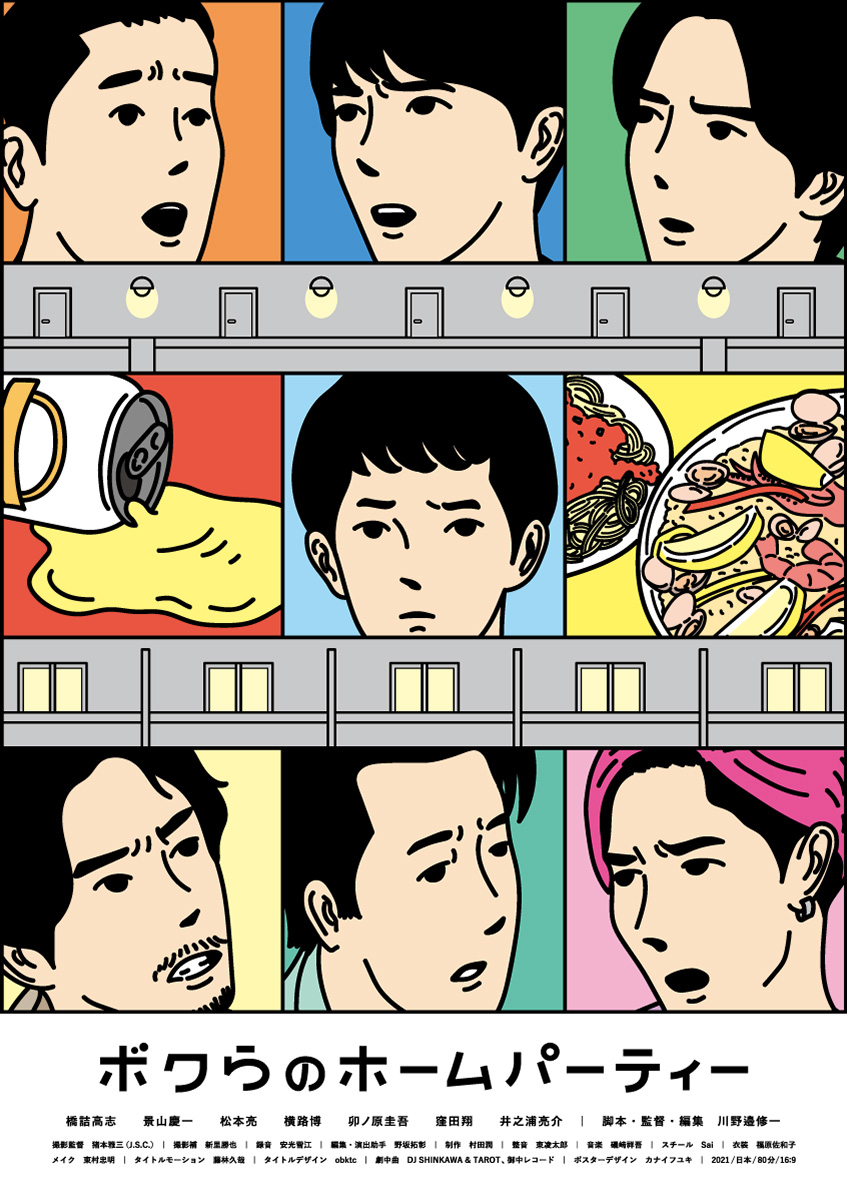
Our House Party (ボクらのホームパーティー, Shuichi Kawanobe, 2022)

The pressures of living in a still conservative society quietly build towards a small explosion provoking a moment of catharsis among a series of gay men some of whom are lovers or long term friends while others are meeting for the first time each bringing with them their own particular fears and anxieties. Inspired by his own life experiences, Shuichi Kawanobe’s Our House Party (ボクらのホームパーティー, Bokura no Home Party) presents a naturalistic view of gay life in contemporary Tokyo in which the six men find solace in their friendship while outside battling a sometimes unsympathetic society. 

The slow burn drama waiting to tank the party revolves around the relationship between hosts Akito and Yashushi who have been together for seven years, Akito having accidentally overhead his boyfriend with another man, Kenichi, through a phone call Yasushi presumably didn’t mean to answer. Despite living together so long, Akito is not out at work and finds himself deflecting potentially invasive comments from his boss about his plans for marriage while he and a recently engaged colleague not so subtly attempt to set him up with a female co-worker who has romantic issues of her own, all of them oblivious to Akito throwing longing looks at their handsome waiter in the local izakaya. When the party begins to get out of hand and provokes a complaint from the couple’s neighbours, Akito’s hostile response implies that they have faced similar complaints before which he believes to be rooted in homophobia, that they simply object to him living there. “All our lives we’ve been trying not to cause trouble” he adds, “where do you expect us to go? Why do we have to apologise?” pushed into a moment of rebellion by the emotional intensity of the present situation that is later unexpectedly echoed by Kenichi who reminds them that they’ve suffered enough, insulted and looked down on, unable to voice their feelings freely and seeing their relationships crumble under the constant pressures of a sometimes hostile society all of which leads them to hurt each other without really meaning to. 

Yet the catalyst for all this is a naive and idealistic college student hopelessly in love with his straight best friend invited to the party after being taken under the wing of kindly bar owner Sho who introduces him to the scene and tries to help him loosen up while accepting his sexuality. Tomoya acts as a kind of judge or arbiter, only just learning the rules of this society but somehow feeling betrayed by its contradictions and hypocrisies. Only he can see that Akito is not really enjoying the party and makes several attempts to check in with him only to see something he shouldn’t have and partially misunderstand it, his illusions a little shattered as he recalibrates his internal sense of morality. Meanwhile he’s both matched and challenged by the lovelorn Masashi who has come in the company of recent hook up Naoki but dreaming of a stable relationship disappointed by Naoki’s assertion that he doesn’t do commitment while picking a fight with Sho over a disagreement about the importance of physical intimacy in romantic relationships. 

Nevertheless through all of these heated debates and fraught emotional crises the men achieve a kind of catharsis in having cleared the air and agreed to return to the sense of solidarity they had felt before only with a little more clarity. “Don’t lie to yourself about how you feel, you’ll only make yourself miserable” Sho had advised the conflicted Tomoya convincing him to join the fun by pointing out that if you don’t like it you can always go back to where you were, advice that might go as well for all as they begin to interrogate how they really feel along with the fears and anxieties that cause them to behave the way they do until approaching a moment of calm after the storm cleared with all truths aired and seemingly at least forgiven. Taking place largely within the claustrophobic and intense environment of the apartment, Kawanobe captures a naturalistic vision of contemporary gay life through the eyes of a series of jaded not-quite-middle-aged men and a naive youngster discovering both himself and a new community only to be confronted by the difficulties and contradictions of life in a society he believed to be better than it is. 


Our House Party screened as part of Osaka Asian Film Festival 2022

Original trailer (no subtitles)

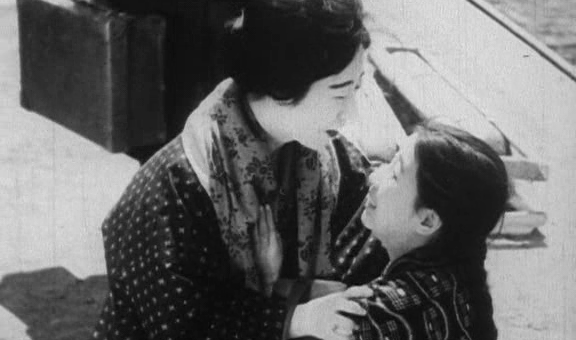
The Dawning Sky (明け行く空, Torajiro Saito, 1929)

A family broken by economic shock and destructive male pride is eventually mended through Christian faith in Torajiro Saito’s 1929 silent melodrama The Dawning Sky (明け行く空, Akeyuku Sora). Though most of his work is currently presumed lost, Saito became known as the “god of comedy” while working at Shochiku’s Kamata studios yet Dawning Sky while affecting a cheerful tone is marked by a sense of sadness and anxiety that perhaps reflects the precarities of the world of 1929.

Recently widowed Kyoko (Yoshiko Kawada) has learned to bear her grief by doting on her newborn daughter Reiko, though her world is about to implode as the bank operated by her previously wealthy father-in-law Junzo (Reikichi Kawamura) has collapsed leaving the family in financial ruin. Kyoko’s parents approach Junzo offering to take her back, but the idea provokes only intense resentment in Junzo’s wounded pride as he takes it that they no longer feel his family is good enough for their daughter now that he is no longer rich. A traditionally minded woman Kyoko pleads with him to stay but he will have none of it, throwing her out but insisting on keeping Reiko with him. Out of old-fashioned ideas of loyalty, Kyoko decides that she will not return to her parents nor marry again but is at a loss for what to do sadly wandering about ominously near a bridge before catching sight of the cross on a Christian church and feeling herself saved. Some years later, Kyoko is sent to a small town as a female pastor where, by total coincidence, Junzo is also living with Reiko (Mitsuko Takao) and now working as a lowly coachman. 

The cause of Kyoko’s forced dislocation is located directly in the economic shock of the late 1920s which causes Junzo to lose his family bank and with it the social status which gives his life meaning, but it’s also implicitly the demands growing consumerist capitalism which have already undermined traditional familial bonds and responsibilities. Junzo is so consumed by resentment towards Kyoko’s family, who may have made the offer for pure-hearted reasons rather than snobbish disdain for Junzo’s ruined state, that he coldly separates a mother from her child and thinks nothing of the consequences seeing only red in his internalised shame in having failed in business. Yet true happiness is evidently not possible until he finally learns to abandon his lust for material success. “I’m poor, I know, but life is nice and carefree because I have my granddaughter” he explains to one of his passengers having reconsidered his priorities and come to realise it’s familial bonds which are most important after all. 

Nevertheless, he continues to hide the truth from Reiko having told her that both her parents are dead while she continues to pine for a mother she’s never known. Her little friend Koichi meanwhile is the only son of his widowed mother who is bedridden and unable to work. As the family is poor Koichi is responsible not only for her care, they’ve rigged up a kind of machine which automatically dispenses her medicine while he isn’t there to administer it, but for the cooking and cleaning too. The two children first bond when Reiko discovers a wounded pigeon shot by Koichi and scolds him that he has no right to kill living things though he only wanted to feed his sick mother, the pair of them deciding to bury the pigeon and give it a proper funeral. This brings her to the attention of the pastor, Kyoko, who is proving especially popular in the local community because of her innate kindness and compassion. But in suspecting that Reiko may be her daughter, Kyoko is at a loss as to how to move forward unwilling to disrupt her life with Junzo by telling her the truth while torn apart inside by her wounded maternity and new duties to her Christian faith. 

The film’s overt religious overtones are perhaps surprising for the world of 1929 as is the near universal approval with which the church is viewed in the local community with only the strange and bookish Hide refusing to attend on the grounds that he hates Christians while all of the other children begin hanging out inside largely because of Kyoko’s warmth and kindness. It is finally Christian virtues which allow the family to be repaired, Junzo overcoming his sense of wounded male pride when faced with Reiko’s constant pining as the pair eventually make a mad dash towards the station on learning that Kyoko has decided to leave town rather than risk causing Reiko further pain by disrupting her new life. “God’s grace brought them together” as the benshi intones, yet as much as Kyoko’s maternity is restored she remains a liminal figure returning not to Junzo’s house but only to the church as its pastor recommitting herself to her religious duties while looking out sadly as Reiko plays with the other children in the beautiful countryside suggesting that the ruptured bonds of the traditional family cannot ever be fully repaired. 

Saito’s elegant mise-en-scène has its moments of poignancy in the expressionist angles of Kyoko’s walk into darkness or frequent employment of superimposition, not to mention the intensity of its climactic storm scene intercut the with the spiritual ferocity of Kyoko’s desperate praying surrounded by candles in the dark and empty church, but the film is first and foremost a melancholy tale of familial reunion which, while in some senses incomplete, nevertheless suggests that true happiness exists only in simplicity, the family repairing itself through jettisoning contemporary ideas of capitalistic success and social hierarchy in order to embrace their natural affection for each other.


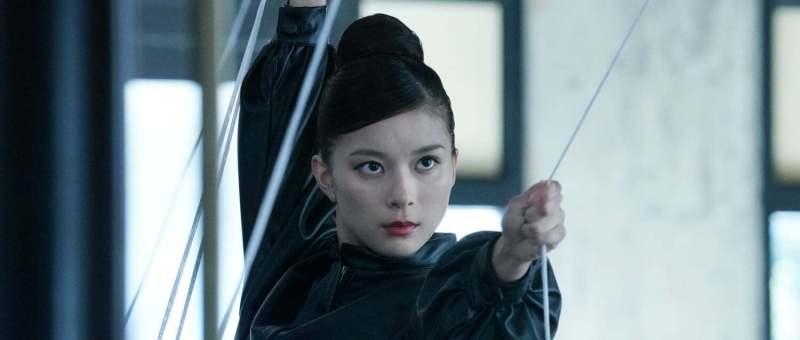
Arc (Arc アーク, Kei Ishikawa, 2021)

Does something have to have an ending to be meaningful or could eternity be the point? Inspired by Ken Liu’s short story, Kei Ishikawa’s near future tale Arc (Arc アーク) envisages a world without death if perhaps not for all in which bodily immortality has been achieved, but what would that mean for humanity no longer faced with mortal anxiety, how should it reorient itself in the absence of sickness or old age while the possibility of endlessness for the self has removed the urge for immortality through childbirth? These are all of course questions which have no one answer, though what the heroine finally discovers is that in the end it may be the choice itself of when to live or when to die that may lend her life at least its meaning. 

Even so, hers is a particular anxiety bound up with frustrated maternity having abandoned a baby she gave birth to at 17, too afraid of the responsibility to accept it. At 19, Rina (Kyoko Yoshine) is spotted at a club by a mysterious middle-aged woman, Ema (Shinobu Terajima), who runs a revolutionary cosmetics company which has pioneered a new way of preserving the bodies of the dead turning them into uncannily lifelike mannequins with a new process known as plasticisation. To Ema’s mind, true liberation comes from accepting transience, that once life has left it the body is just an object which might be repurposed for her art but then at the same time perhaps she is attempting to hold on to something that should be released, interfering in a natural process and while intending to offer comfort to those bereaved preventing them from letting go or moving on with their lives. Her much younger brother Amane, meanwhile, actively wants to stop time while alive utilising a similar technology to halt the ageing process and overcome the tyranny of death. 

In a strange way, Ema’s desire to restore a body which is no longer alive to ideal condition is also an acknowledgement of death which she believes is not the opposite of life but a necessary part of it. In overcoming the fear of death, she claims, a transcendental beauty will reveal itself. Amane meanwhile seeks to overcome death physically, but as Rina is warned his health revolution may not bring happiness to mankind not least because it exposes a persistent inequality in which eternal youth is available only to those with the means to acquire it, creating a new underclass not only of the poor but those whose bodies are not able to accept the treatment. Amane sees his creation as a dividing line in human history which will necessarily divide humanity into two groups, those who choose to join his revolution and those who do not (though interestingly he does not consider a third group who actively opposite it). Even so he sees it as a choice and accepts the right to reject immortality even going so far as to build a dedicated centre where those who choose to live a “natural” lifespan can do so in dignity and comfort. 

The concept of personal choice appears to be key, Ema too replying that her decision to stick with plasticisation rather than Amane’s treatment is her right though she too eventually hits a wall in the imperfection of her craft and the depths of her grief. She tells Rina to live her life freely encouraging her to live fully in the moment, while she too is quick to remind others that the decisions are theirs to make as regards their life and death. It’s not death nor the fear of it that are the problem, but the inability to choose as Rina finally acknowledges in remarking that the ability to decide its end point gives her the means to carve the arc of her life overcoming death through full existential control having in a sense closed a circle in facing her own sense of maternal failure. Shifting from the warmth and natural beauty of a beach in summer to the dark and brutalist environments of the BodyWerks lab, and from the muted colour of Rina’s youth to the black and white of her youthful old age, Ishikawa’s near future sci-fi-inflected tale suggests it’s not so much death that frightens you but helplessness and as in all things the answer lies in autonomous choice. 


Arc screens in Chicago on April 3 as part of the 14th season of Asian Pop-Up Cinema.

Original trailer (no subtitles)

Monthly Anime at Japan Society New York April 15 to July 22

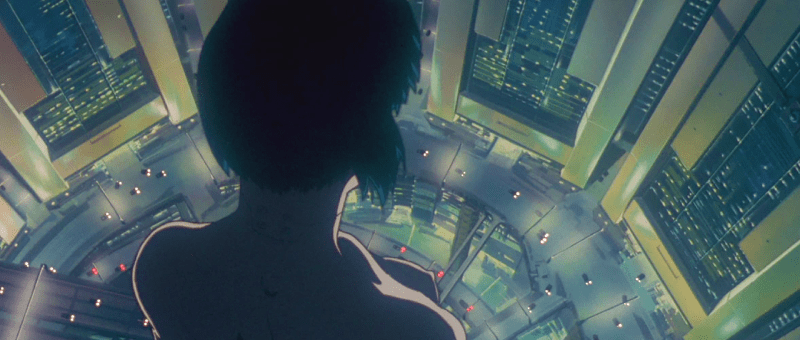
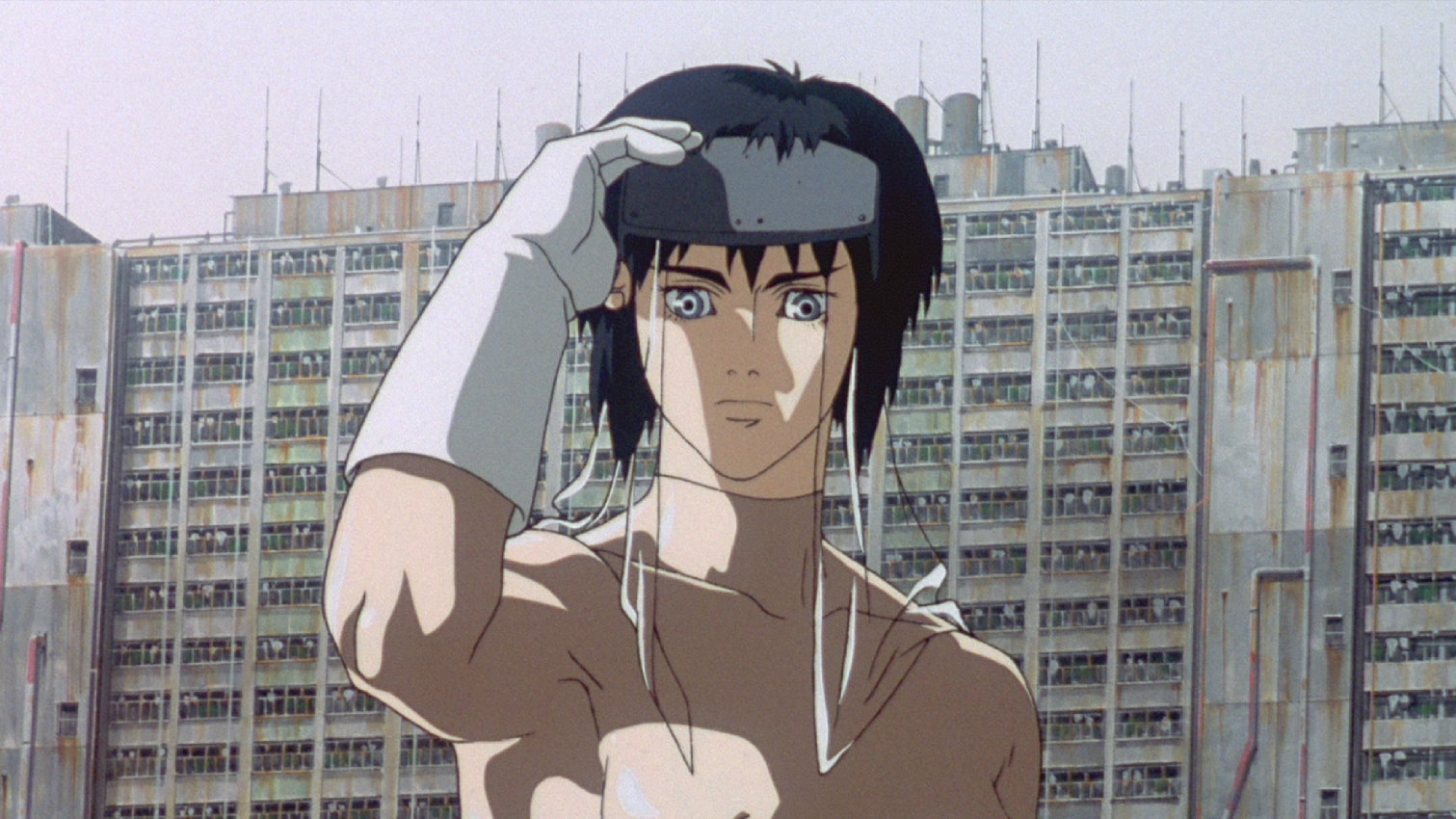
Japan Society New York has announced its latest monthly screening series running April 15 to July 22 and featuring four anime classics from Mamoru Oshii’s sci-fi landmark Ghost in the Shell through to Masaaki Yuasa’s wild night in Kyoto, The Night is Short, Walk on Girl.

April 15: Ghost in the Shell

Preceded by a 6PM pre-screening party with Japanese foods and snacks provided by Kikkoman plus Sapporo beer

Mamoru Oshii’s landmark adaptation of the manga by Shirow Masamume in which cybernetically enhanced police officer Major Motoko Kusanagi finds herself hunting down the elusive Puppetmaster following a spate of cyberbrain hackings.

May 27: The Animatrix

Screening on 35mm in English (original language)

Produced as a companion piece to the Matrix: Reloaded, this nine-part anthology film features contributions from Cowboy Bebop’s Shinichiro Watanabe, Ninja Scroll’s Yoshiaki Kawajiri, and Redline’s Takeshi Koike. Screening on 35mm in its original English-language voice track.

June 17: The Night is Short, Walk on Girl

Adapted from the novel by Tomihiko Morimi, Maasaki Yuasa’s madcap odyssey through a single night in Kyoto follows college student Otome on her quest for a book from her childhood all while a young man goes on a few adventures of his own hoping to win her heart. Review.

July 22: Princess Mononoke

Screening on 35mm

25th anniversary screening of the Studio Ghibli classic set the 14th century in which a young warrior cursed by a diseased boar spirit finds himself swept into a local conflict between a forest princess and the neighbouring iron town hellbent on destroying the Earth.

The series runs monthly April 15 to July 22 at Japan Society New York where tickets are already on sale.