INGtoogi: The Battle of Internet Trolls (잉투기, Um Tae-hwa, 2013)

A keyboard warrior enters a masculinity crisis after being ambushed in real life and taking a beating from an online rival in Um Tae-hwa’s graduation film, Ingtoogi: The Battle of the Internet Trolls (잉투기, Ingtoogi). Though the title may promise something more like a slacker comedy, Um subtly hints at the loserville of the contemporary Korean society which is, as the hero’s mother suggests, “only for the select few” leaving men like Tae-sik (Uhm Tae-goo), in contrast to the film’s title, losing the will to fight.

20-something and unemployed, Tae-sik still lives at home with his mother and fills his life with online fighting games. Lured to a park on the pretext of selling an online game item, Tae-sik is unexpectedly attacked by fellow gamer ManBoobs and becomes a laughing stock for getting beaten up in the street. Vowing revenge, Tae-sik makes his way to a mixed martial arts gym named Ingtoogi which as the coach explains means “we’re still fighting” and begins training in preparation to publicly call out Man Boobs for a fair fight on safer ground.

But Tae-sik is now traumatised and has become frightened of everything, hallucinating being punched in the face and in fact afraid of getting hit. It’s this sense of fear along with his wounded masculinity that he’s trying to avenge through violence and male dominance, but in order to do so has to resort to carrying around a kitchen knife as rather phallic replacement for his fractured manhood while otherwise trained by an equally disaffected teenage girl herself a former mixed martial arts champion.

Young-ja’s (Ryu Hye-young) high school class is perhaps surprisingly asked to debate capitalism in broadly positive terms only for her best friend to shock her by giving a detailed, text book answer about the loss of individuality later explaining that her nagging mother bribed the teacher to get the topic in advance so she could prepare. Young-ja is an orphan living alone though watched over by her martial arts expert uncle, Wook, but Tae-sik too has a nagging mother who is particularly disappointed in him for embarrassing himself by getting beaten up and going viral online. She wants to emigrate to Costa Rica vowing that it’s too hard to live in Korean society which is only for the elites. Tae-sik has no desire to move and in a pointed criticism states that though he and his mother live in the same space he does not feel as if they “live together” suggesting that the demands of contemporary capitalism and her job as an estate agent have placed a divide between them.

Indeed, when she suggests that Tae-sik learn the trade from her she in fact ends up in a physical altercation with a homeowner that is observed by the entire neighbourhood just standing and watching much as they’d watched Tae-sik getting beaten up online. The film seems keen to present his generation as one already beaten into submission and retreating behind the shield of their computer screens rather than taking risks in real life while those like Man Boobs who is later revealed to have been suffering with poor mental health are perhaps looking for something more “real” offline but have few ways to express themselves outside of violence. Even Man Boobs’ friend who set up the attack and filmed it is revealed to be a failed boy band star whose bid for fame in a capitalist society has crashed and burned leaving him with nothing. 

Yet for all that Tae-sik and his friend Hee-jun (Kwon Yul) who learns to take his knocks faster are fairly skeevy each attempting to ask out the teenage Young-ja despite being in their 20s, Hee-jun following up on a tip off from one of the other “loser” fighters about how to set up a date to take advantage of girl. Far from overcoming his powerlessness, what Tae-sik has to get used to is being beaten and effectively accept his “loserdom” if continuing a futile attempt to fight his dismal circumstances by less than productive means in simply not giving in and grinning through the blood no matter how many knocks he takes. The inane insults of online commenters present themselves as a kind of Greek chorus enshrouding Tae-sik in his self-loathing and powerlessness but do so only as a means of masking their own, ranting against the darkness from the comparative safety of their anonymous online personas. Though underlined by a quiet irony, Um paints a bleak picture of the contemporary city in which masochistic violence has become the only escape from an oppressive society.


INGtoogi: The Battle of Internet Trolls screened as part of this year’s London Korean Film Festival.

Trailer (English subtitles)

A Taxi Driver (택시 운전사, Jang Hoon, 2017)

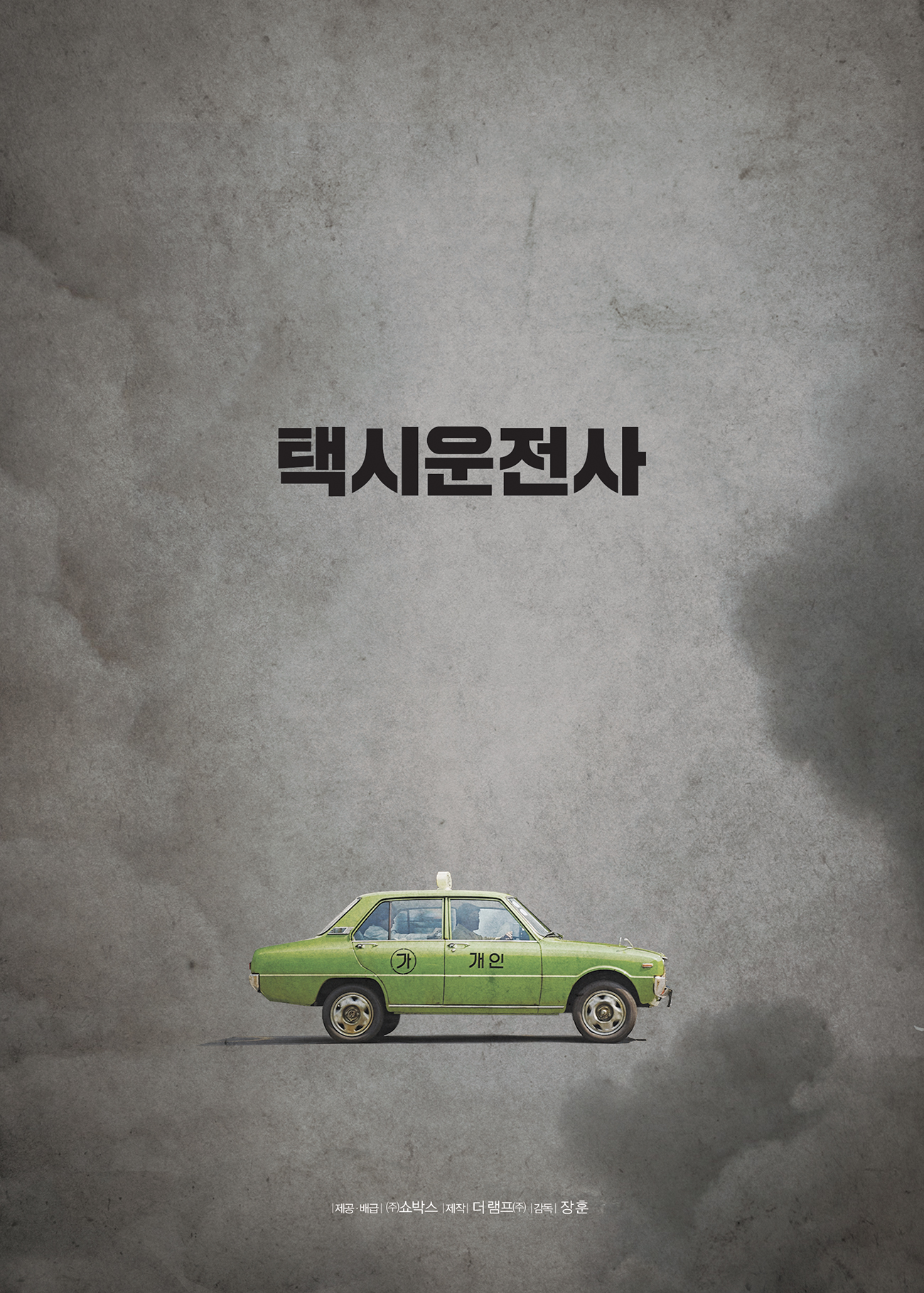
A Taxi Driver PosterIn these (generally) well connected days of mass communication when every major event is live broadcast to the world at large, it’s difficult to remember a time when dreadful things might be happening the next town over yet no one knows (or perhaps dares to ask). Until 1979, Korea had been under the control of an oppressive dictatorship which was brought to a sudden and bloody end by the murder of the president, Park Chung-hee, at the hands of one of his aides. Though the democracy movement had been growing, hopes of installing a modern governmental system were dashed with the accession of the de facto president, General Chun Doo-hwan, who reinstated martial law, placing troops on the streets on the pretext of a possible North Korean invasion. In an event known as the Gwanjgu Uprising, a long term peaceful protest led by the area’s large student population was brutally suppressed with large numbers dead or wounded by government soldiers.

Meanwhile, in Seoul, regular Joe taxi driver Kim Man-seob (Song Kang-ho) is trying to go about his everyday business and is finding all of this protesting very irritating, especially when he is forced to swerve to avoid a young man running from riot police and breaks the wing mirror on his otherwise pristine vehicle. Man-seob thinks these kids don’t know they’re born, if they’d spent time abroad like he did in Saudi Arabia, they’d know that few places are quite as nice as Korea. A single father raising his young daughter alone, Man-seob’s major worry is money. He’s four months behind on his rent and his daughter keeps getting into fights with the landlord’s son. Actually, the rent might not be such a pressing problem seeing as Man-seob’s landlord is a close friend and colleague – close enough for him to cheekily ask to borrow the money to “pay” him so his friend’s wife will stop being so mean. When he overhears another driver boasting that he’s picked up an improbably large fare that’s exactly the same amount as the money Man-seob owes, Man-seob bluffs his way into stealing it out from under him. Man-seob, however, has not stopped to consider why a foreigner wants to pay him an insane amount of money to drive from Seoul to provincial Gwangju.

Like many in the Korea of 1980, Man-seob is a man just trying to get by. He has his private sorrows, but largely avoids thinking about the big picture. To him, the Seoul protest movement has become such a normal inconvenience that he keeps cream in his car to help cope with the smell of the smoke bombs. He thinks all of this rancour is just kids out of control and will eventually blow over when order is restored.

Others feel differently. A BBC journalist relocated from Korea to Tokyo describes the situation as “tense” and avows that this time something may be about to break. Tokyo in 1980 is a nice place to live, but extremely boring if you’re an international journalist and so German reporter Peter (Thomas Kretschmann) catches the next flight out with the intention of investigating the rumours of state sponsored violence coming out Gwangju.

Though Man-seob’s original motivation is the money, the events he witnesses in Gwangju have a profound effect on the way he sees his country. Bypassing roadblocks and sneaking into a city under lockdown, Man-seob and Peter witness acts of extreme violence as the army deploys smoke grenades, beatings, and bullets on a peaceful assembly of ordinary people. Prior to the military’s intervention, the atmosphere is joyful and welcoming. The people of Gwangju dance and sing, share meals with each other, and all are excited about the idea of real social change. This juxtaposition of joy and kindness with such brutal and uncompromising cruelty eventually awakens Man-seob’s wider consciousness, forcing him to rethink some early advice he gave to his daughter concerning her difficult relationship with the little boy next-door to the effect that non-reaction is often the best reaction.

Rather than focus on the Uprising itself, Jang presents it at ground level through the eyes of the previously blind Man-seob and the jaded Peter. Inspired by real events though heavily fictionalised (despite a search which continued until his death, Peter was never able to discover the true identity of the taxi driver who had helped him), A Taxi Driver (택시 운전사, Taxi Woonjunsa) is a testament to the everyman’s historical importance which, even if occasionally contrived, speaks with a quiet power in the gradual reawakening of a self-centred man’s sense of honour and personal responsibility.


A Taxi Driver was screened as the sixth teaser for the upcoming London Korean Film Festival 2017. Tickets for the next and final film, The Villainess which screens along with the official programme launch at Regent Street Cinema on 11th September, are on sale now.

Original trailer (English subtitles)