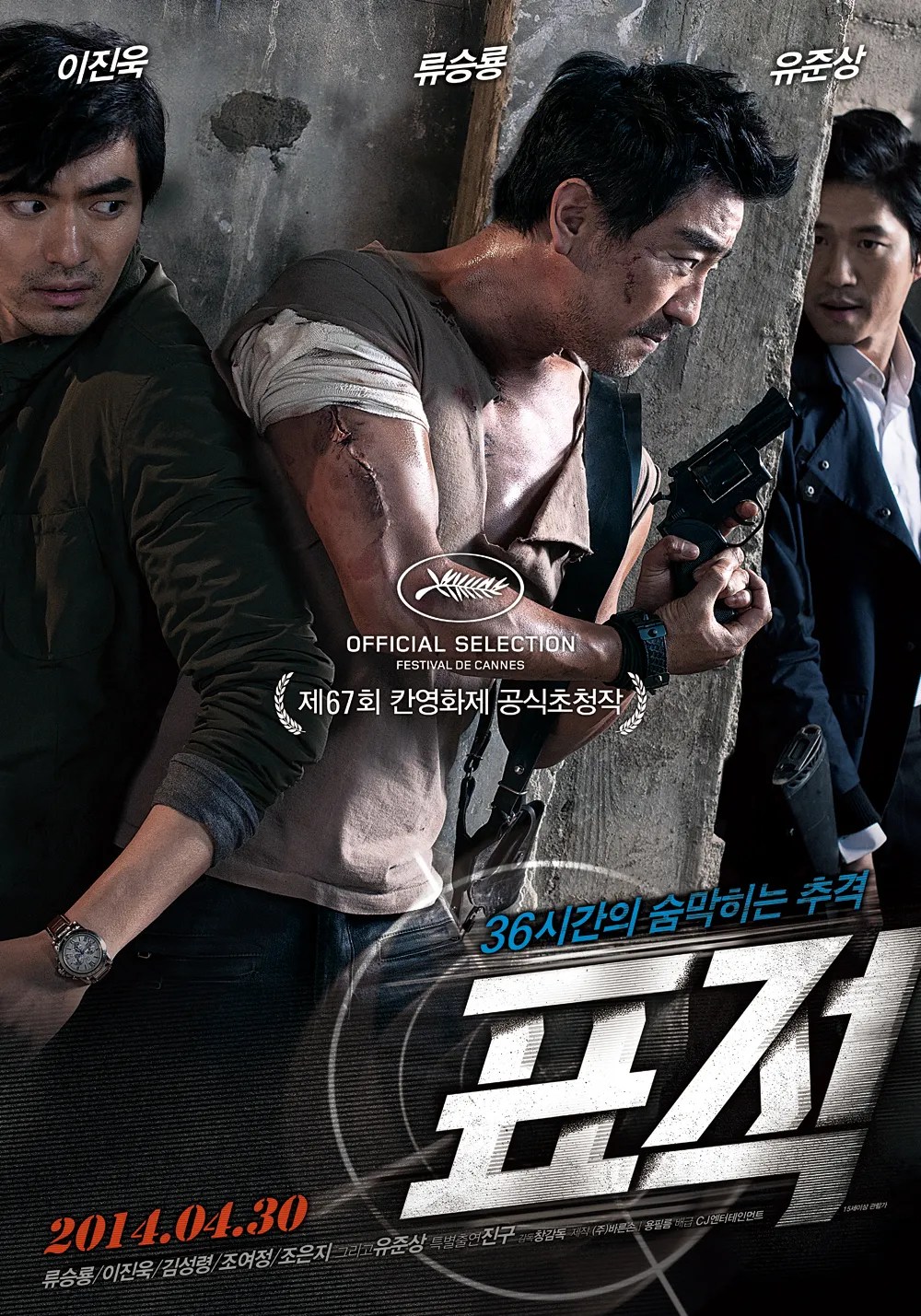
The Target (표적, Chang, 2014)

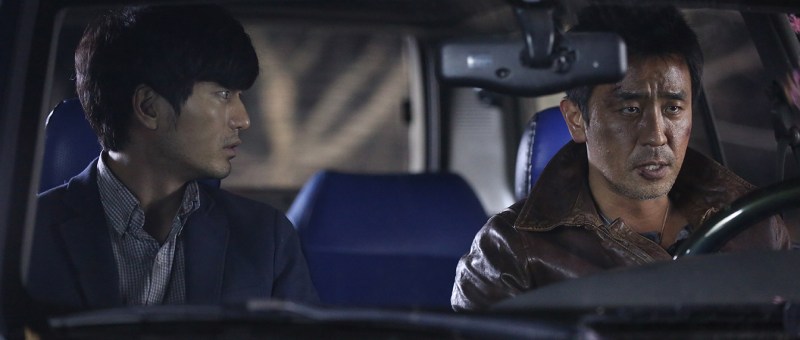
A doctor finds himself dragged into conspiracy after saving the life of a man framed for murder in Chang’s South Korean remake of the French action thriller Point Blank (표적, Pyojeok). Despite having seen off an assassin, Tae-jun (Lee Jin-wook) doesn’t take too long wrestling with his medical ethics when his pregnant wife is kidnapped and immediately decides to give up his patient to whoever is looking for him, but just like the bad guys, he’s picked the wrong man to mess with because Yeo-hoon is a former mercenary with nothing but revenge on his mind.

Tae-jun’s determination does however make it clear the extent to which people are prepared to compromise their morals when something important to them is threatened. The person that kidnapped his wife thought he no choice either and is only trying to protect someone close to him. They are all at the mercy of a corrupt system. It turns out that Yeo-hoon has been framed for murdering a businessman who manipulated the market to buy an apartment building at a cheaper price, but his partner would rather have all the money for himself so decided to knock him off. Corrupt police officer Song (Yoo Jun-sang) has been running a side business as a hitman aided by his team of equally compromised subordinates and decided that Yeo-hoon’s brother, who has learning difficulties, would make a good fall guy because they assumed he was an orphan with no family to go asking questions. What they didn’t bargain for was dealing with a ruthless and highly trained opponent like Yeo-hoon.

Tae-jun didn’t really bargain on that either and is originally unsure how far he can trust Yeo-hoon (Ryu Seung-ryong) though technically, they’re on the same side. The loyal police officers have the same issue, resentful of Song because he’s pinched their case rather than realising he’s only done so to cover up his own corruption. Nevertheless, like Tae-jun and Yeo-hoon, policewoman Soo-jin (Jo Eun-ji) is also after revenge for the loss of someone close to her. In truth, her tearful distress and inability to dispose of female superior’s belongings hints at a deeper connection than simple loyalty to her fallen comrade. Her need for revenge is as hot as Yeo-hoon’s, though she too originally believes Song’s version of events and is only motivated to look deeper precisely because it matters to her how her friend died.

There is then a theme of frustrated familial reunions that runs under that of the overriding corruption that surrounds them. Yeo-hoon returned home to reunite with his brother but is too late to stop him being drawn into Song’s web, while Soo-jin wants vengeance for her friend, and Tae-jun to save his wife and unborn child. Though not everything can be repaired, there is a final restoration of the family in the closing scenes in which Yeo-hoon is reunited with his dog and is symbolically adopted as a brother to Tae-jun and a new member of his family. To that extent, the film suggests that familial bonds are the ultimate defence and rebellion against the corruption of men like Song whom, one of his subordinate says, would even sell his parents for money.

Nevertheless, the real focus is propulsive action and Chang keeps the tension high as Ryu Seung-ryong shows off his skills as an action with several high-octane hand-to-hand combat scenes, along with shootouts and explosions even before the police station finale in which Yeo-hoon must attack the very structure of law enforcement to clear out its inherent corruption. Tae-jun, meanwhile, is more of a hapless stooge left with little other choice than to follow along behind Yeo-hoon while trying to weaponise the righteousness of the good police officers to locate and rescue his wife before the bad guys can take care of what they see as a loose end. For her part, Hee-joo (Cho Yeo-jeong) is mostly reduced to a damsel in distress, but at the same time in her role as a psychologist and is able to extend sympathy to Sang-hoon helping him see the error of his ways and further emphasising the film’s familial themes. Though incomplete, justice of a kind at least is served in the exposure of the corruption and the final moment of healing which exists outside the system in the reinforcing of the simple bonds between people.


Trailer (English subtitles)

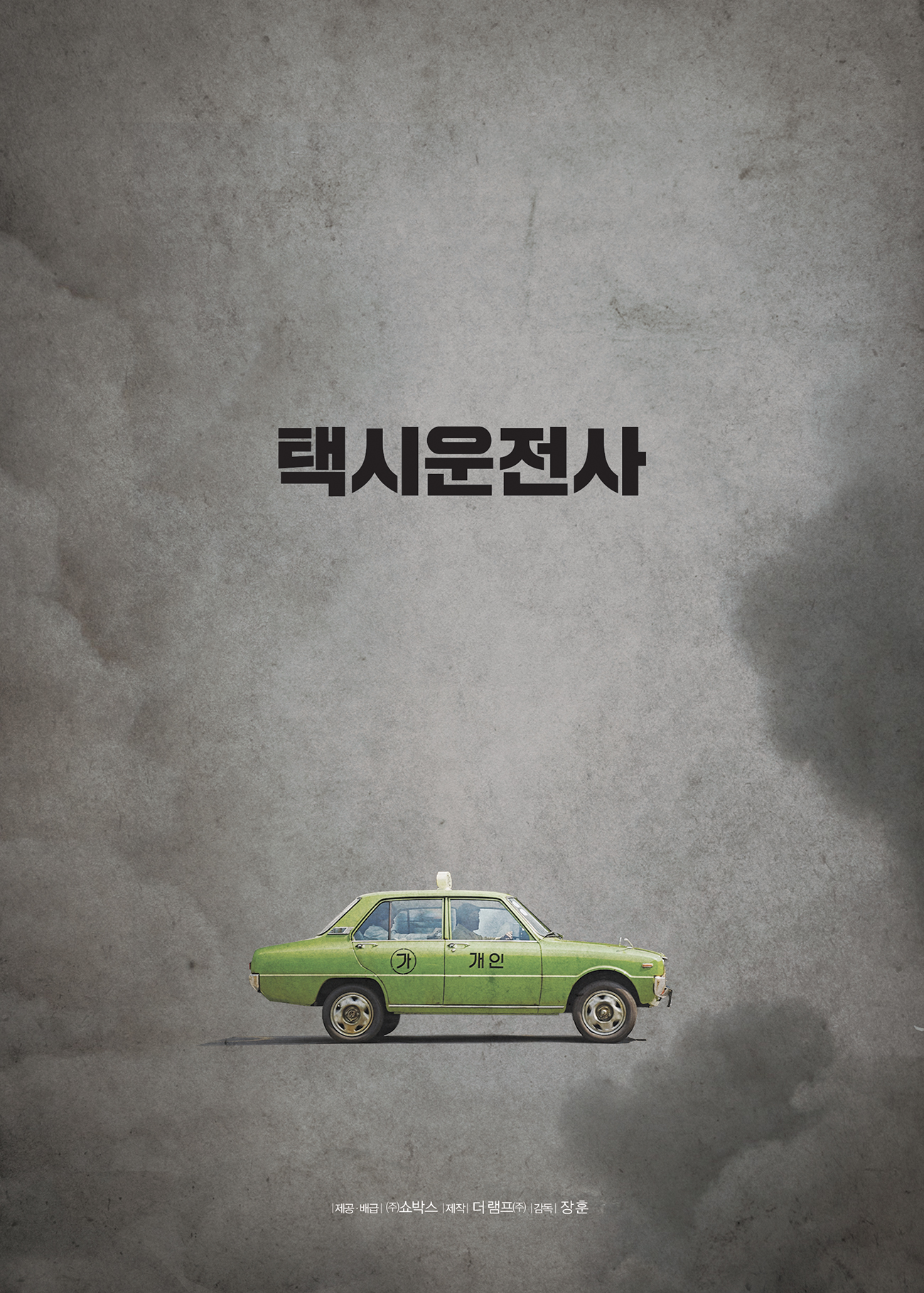
A Taxi Driver (택시 운전사, Jang Hoon, 2017)

A Taxi Driver PosterIn these (generally) well connected days of mass communication when every major event is live broadcast to the world at large, it’s difficult to remember a time when dreadful things might be happening the next town over yet no one knows (or perhaps dares to ask). Until 1979, Korea had been under the control of an oppressive dictatorship which was brought to a sudden and bloody end by the murder of the president, Park Chung-hee, at the hands of one of his aides. Though the democracy movement had been growing, hopes of installing a modern governmental system were dashed with the accession of the de facto president, General Chun Doo-hwan, who reinstated martial law, placing troops on the streets on the pretext of a possible North Korean invasion. In an event known as the Gwanjgu Uprising, a long term peaceful protest led by the area’s large student population was brutally suppressed with large numbers dead or wounded by government soldiers.

Meanwhile, in Seoul, regular Joe taxi driver Kim Man-seob (Song Kang-ho) is trying to go about his everyday business and is finding all of this protesting very irritating, especially when he is forced to swerve to avoid a young man running from riot police and breaks the wing mirror on his otherwise pristine vehicle. Man-seob thinks these kids don’t know they’re born, if they’d spent time abroad like he did in Saudi Arabia, they’d know that few places are quite as nice as Korea. A single father raising his young daughter alone, Man-seob’s major worry is money. He’s four months behind on his rent and his daughter keeps getting into fights with the landlord’s son. Actually, the rent might not be such a pressing problem seeing as Man-seob’s landlord is a close friend and colleague – close enough for him to cheekily ask to borrow the money to “pay” him so his friend’s wife will stop being so mean. When he overhears another driver boasting that he’s picked up an improbably large fare that’s exactly the same amount as the money Man-seob owes, Man-seob bluffs his way into stealing it out from under him. Man-seob, however, has not stopped to consider why a foreigner wants to pay him an insane amount of money to drive from Seoul to provincial Gwangju.

Like many in the Korea of 1980, Man-seob is a man just trying to get by. He has his private sorrows, but largely avoids thinking about the big picture. To him, the Seoul protest movement has become such a normal inconvenience that he keeps cream in his car to help cope with the smell of the smoke bombs. He thinks all of this rancour is just kids out of control and will eventually blow over when order is restored.

Others feel differently. A BBC journalist relocated from Korea to Tokyo describes the situation as “tense” and avows that this time something may be about to break. Tokyo in 1980 is a nice place to live, but extremely boring if you’re an international journalist and so German reporter Peter (Thomas Kretschmann) catches the next flight out with the intention of investigating the rumours of state sponsored violence coming out Gwangju.

Though Man-seob’s original motivation is the money, the events he witnesses in Gwangju have a profound effect on the way he sees his country. Bypassing roadblocks and sneaking into a city under lockdown, Man-seob and Peter witness acts of extreme violence as the army deploys smoke grenades, beatings, and bullets on a peaceful assembly of ordinary people. Prior to the military’s intervention, the atmosphere is joyful and welcoming. The people of Gwangju dance and sing, share meals with each other, and all are excited about the idea of real social change. This juxtaposition of joy and kindness with such brutal and uncompromising cruelty eventually awakens Man-seob’s wider consciousness, forcing him to rethink some early advice he gave to his daughter concerning her difficult relationship with the little boy next-door to the effect that non-reaction is often the best reaction.

Rather than focus on the Uprising itself, Jang presents it at ground level through the eyes of the previously blind Man-seob and the jaded Peter. Inspired by real events though heavily fictionalised (despite a search which continued until his death, Peter was never able to discover the true identity of the taxi driver who had helped him), A Taxi Driver (택시 운전사, Taxi Woonjunsa) is a testament to the everyman’s historical importance which, even if occasionally contrived, speaks with a quiet power in the gradual reawakening of a self-centred man’s sense of honour and personal responsibility.


A Taxi Driver was screened as the sixth teaser for the upcoming London Korean Film Festival 2017. Tickets for the next and final film, The Villainess which screens along with the official programme launch at Regent Street Cinema on 11th September, are on sale now.

Original trailer (English subtitles)