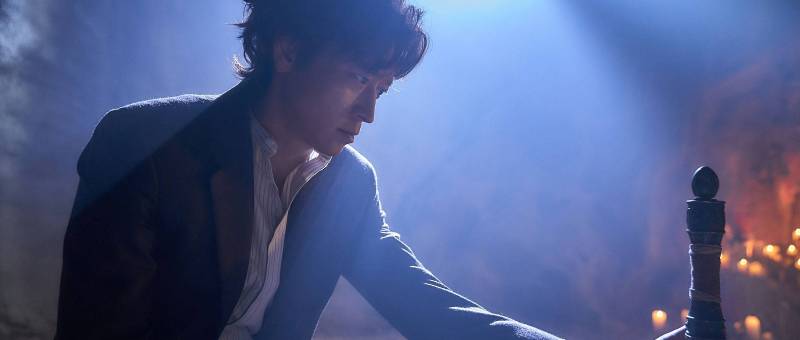
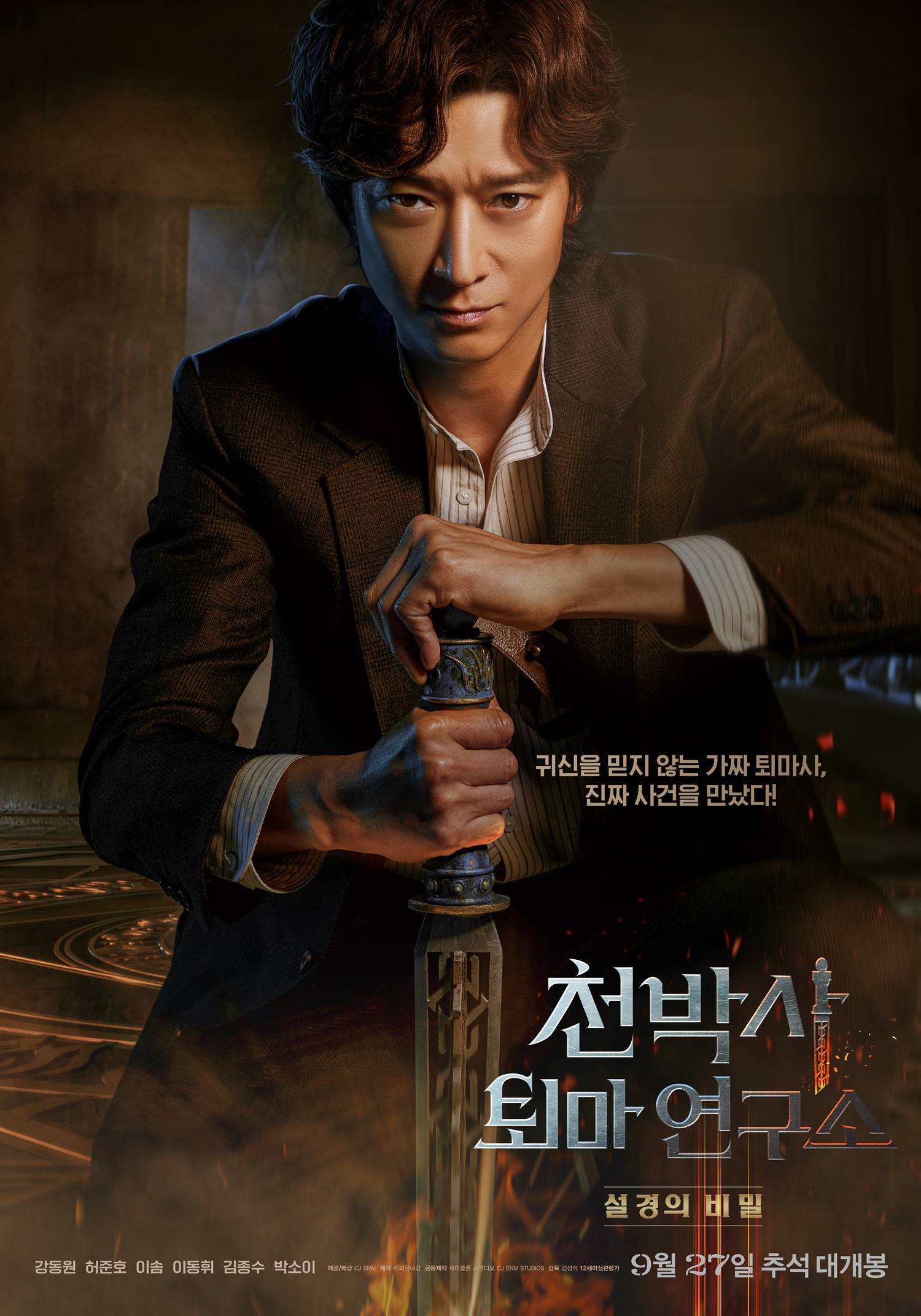
The titular Dr. Cheon (Gang Dong-won) doesn’t believe in ghosts. Some may see him as a scammer or a conman, but he is a real doctor and sees what he’s doing as a kind of role-play therapy exorcising the demons that disrupt human relationships through, essentially, giving people what they want but were unable ask to ask for. Inspired by a popular webtoon, Kim Seong-sik’s charmingly quirky supernatural adventure Dr. Cheon and the Last Talisman (천박사 퇴마 연구소: 설경의 비밀, Cheonbaksa Toema Yeonguso: Seolgyeongui Bimil) has a pleasing retro quality that recalls classic serials along with the wisecracking heroes of old as Cheon exorcises a few demons of his own while trying to constrain a great evil.
In a strange way, Cheon’s cynicism maybe a direct result of knowing that ghosts are real and one of them killed his brother and grandfather who was in fact the chief shaman. These days, Cheon is YouTube celebrity exorcist who runs what he calls a “high tech psych” company carrying out fake rituals with the aid of a series of special effects designed by “Apprentice Gang”, or more accurately his assistant In-bae (Lee Dong-hwi), featuring ominous wind and more dynamite than seems advisable. Kim has some fun casting the couple from the bunker in Parasite, on which he served as an AD, as wealthy homeowners with more money than sense convinced they’ve got a ghost largely because because their teenage daughter has recently become moody. Using Sherlock Holmes-like powers of deduction, Cheon assesses what’s at the heart problem in the family and gives each of them some spiritually endorsed advice such as that the husband should stop buying ugly statues his wife doesn’t like and the parents should cut the teenage daughter some slack.
As he suggests, every one is happy so it doesn’t really matter that he lied to them or that the ritual was fake because they’ve still been cured of what ails them albeit through some psychological manipulation rather than religious reassurance. Then again, those around Cheon may find it somewhat embarrassing that their teachings are being exploited to make money out of desperate people even if Cheon seems to think it was alright to scam the wealthy family because they can after all afford it. Conversely, he tries to turn down a young woman who comes to the office judging from her clothes that she wouldn’t be able to pay only to change his mind when she flashes a bag full of cash.
Unlike Cheon, Yoo-kyoung (Esom) actually can see ghosts and ought to be able to see through Cheon but perhaps chooses not to while he, refreshingly, does not take too long to re-accept the fact that ghosts are real after all and this one has a particular bone to pick with him personally. Kim casts the ghost world in shades of blue and gives them untold power, able to fly around in spirit form and possess one person after another in quick succession, while otherwise lending the empty streets a kind of warmth in the orange glow of the flares In-Bae uses to survey the landscape. With gorgeous production design and impressive effects, the film incorporates the trappings of shamanism from drums to lines of prohibition but deepens its lore with a series of key artifacts as Cheon finds himself reaccepting his destiny as a shaman while weilding the sword of justice.
In any case, the film seems to ask why not both, suggesting that Cheon’s fake shaman business is sort of real anyway and in its way provides healing not least to himself. They are all haunted by ghosts of the past whether they see them or not, while Cheon’s eventual quest is one of vengeance that would also allow him to lock away his trauma in a sealed room deep underground and bound by the chains of hell. The sight of the many sutras the villain had placed to possess and control the townspeople suddenly bursting into flames implies a kind of liberation or purification in which the dark presence has finally been lifted even if it may not be for long. Hugely entertaining and fantastically witty, Kim ends the film with a post-credits sequence teasing a potential series and the irresistably intriguing further adventures of Dr. Cheon, fake shaman and real exorcist, showman and swordsman battling evils both ancient and modern.
Dr. Cheon and the Lost Talisman screened as part of this year’s London Korean Film Festival.
International trailer (English subtitles)
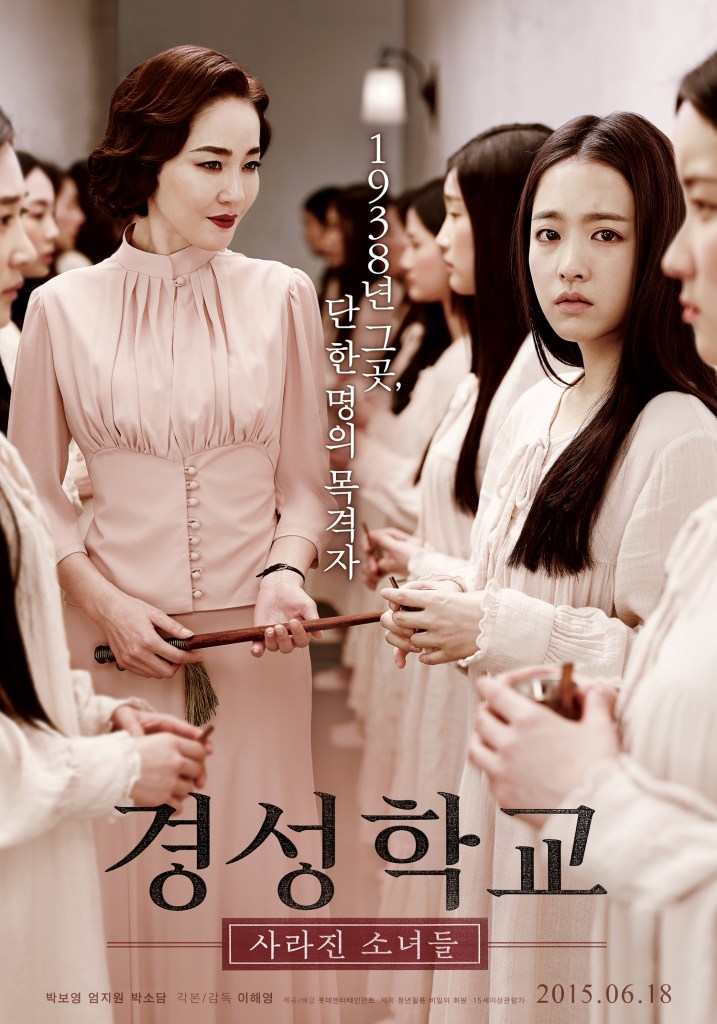 The Silenced (경성학교: 사라진 소녀들, Gyeongseonghakyoo: Sarajin Sonyeodeul) has all the classic genre aspects of the boarding school horror story familiar to fans of gothic literature everywhere, but this is no Victorian tale of repressed sexuality and hallucinatory psychosis. What The Silence does is take all of these essential elements and remix them as a metaphor for the horror of colonialism. Surrounded by quislings and forced into submission in order to survive, how does the essential soul of an oppressed people survive? The Silence would seem to argue that perhaps it can’t, but can evolve and learn to resist its colonisers even if it has to bend to do so.
 Windows on Worlds