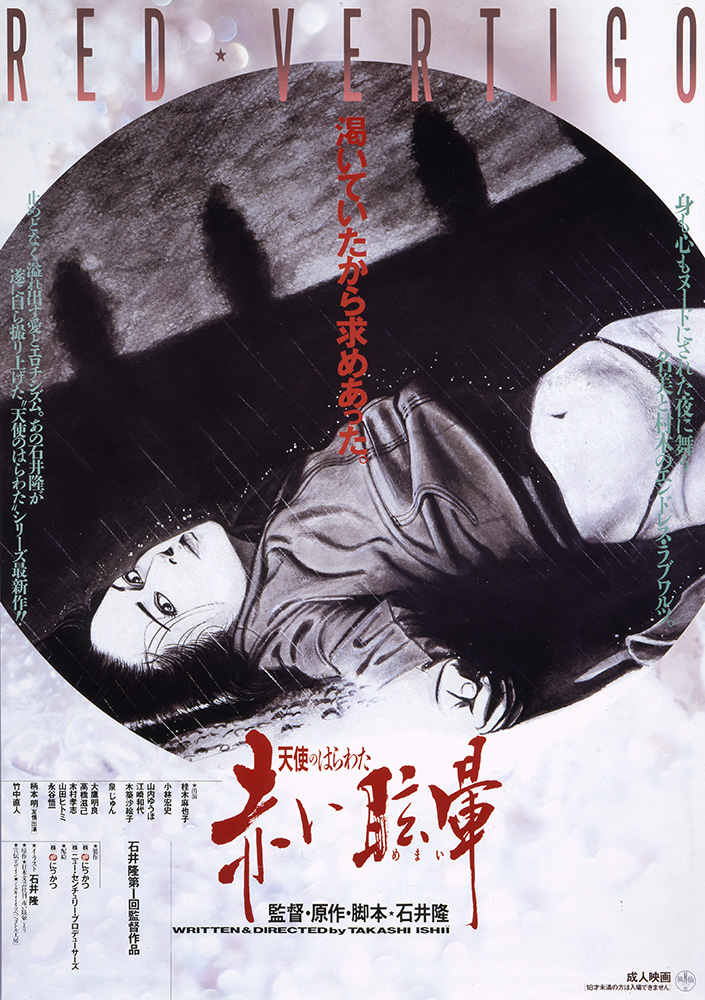
Angel Guts: Red Vertigo (天使のはらわた 赤い眩暈, Takashi Ishii, 1988)

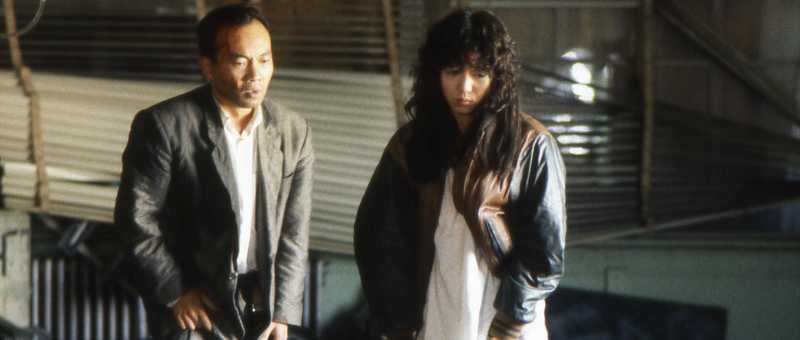
Throughout the Angel Guts series, a woman named Nami and a man called Muraki somehow come together and explore the complex interplay between men and women. In his first directorial effort adapting his own source material Takashi Ishii takes the series in a dreamlike and melancholic direction, shaving off some of its harsh edges but also fully indulging in a nourish sense of fatalistic nihilism. They may not know it, but these are of course two people dancing on the edge of an abyss with no place to go back to.

In fact, the very nature of sleeping and waking has become blurred for exhausted nurse Nami (Mayako Katsuragi) despite the heart monitors bleeping all around her. She thinks of her boyfriend, Kenji (Hirofumi Kobayashi), who takes erotic photographs he claims are all of her, but doesn’t seem altogether sincere under the red lights of his darkroom as he repeatedly asks Nami to pose for him. Her patients, meanwhile, often call her for reasons that aren’t strictly medical. Trying to stay awake on her rounds, she’s violently accosted by two men only for her supervisor to insist that the room is currently vacant. Perhaps Nami dreamed it, though the experience is traumatic enough for her to go home early and inadvertently catch Kenji with one of his models in their apartment. He tells the model that he’s not interested in marriage, though she asks about his “wife”, adding to Nami’s pain and confusion on hearing him describe their relationship so casually.

Meanwhile, Muraki is dreaming more literally. He imagines himself fondling a woman who runs a bar before being coaxed towards an ominous-looking bath that presages his visit to the love hotel with Nami. We hear that his wife has left him, and that he’s being hounded by debt collectors while on the run after embezzling a large amount of money from his company believing it was “easy” and that no one would really notice or care. This is, after all, an age of excess that would only later become known as the Bubble era, though the bubble has certainly burst for Muraki. Ironically enough, he’ll meet a sticky end after getting on the wrong side of a man driving a Mercedes (Akira Emoto) as if he were literally gunned down by a rampant status-driven consumerism. The man looks and behaves like a yakuza, but is unusually reckless even if hotheaded in believing he’s been treated with an insufficient amount of respect for a man with a fancy ride.

Nami too is hit by a car, literally colliding with Muraki who first thinks he’s killed her and somehow made his situation even worse. On realising she’s still alive, though having measured her pulse with his thumb which proves nothing other than his own heart is still beating, he decides to assault her instead later explaining that he just wanted warmth which only makes him seem even more pathetic. Nami, however, fights back wielding a plank like a phallic object and taking back control only for Muraki to keep her prisoner in an abandoned building. There is, however, something that develops between the pair with the rain beating down and isolating them from the outside world. Stuck in this liminal place, they each accept that they have no place to go back to and therefore have only each other. 

But there is really no salvation in this harsh world and nowhere to go which is why Muraki is stopped in his tracks and Nami condemned to a perpetual waiting even if she’s found a kind of freedom dancing alone in her limbo state and under the colourful neon lights of the abandoned warehouse. Asked what he most feared in this world, a character in David Lynch’s Twin Peaks replied “the possibility that love is not enough,” an idea which seems to echo through Ishii’s melancholy urban landscapes, all garish neon offering the semblance of warmth but always drenched in rain. Even interior spaces seem misty and uncertain, leading us into a kind of dream space otherwise indistinguishable from waking life. Muraki and Nami are, however, evidently on different paths and unlikely to find their way back to each other even if either of them manage to break free of their respective dead ends.


Angel Guts: Red Vertigo is available as part of The Angel Guts Collection released on blu-ray 23rd February courtesy of Third Window Films.
Angel Guts: Red Porno (天使のはらわた 赤い淫画, Toshiharu Ikeda, 1981)

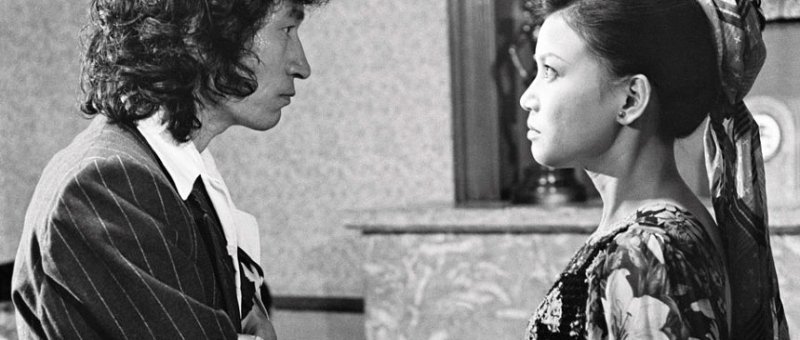
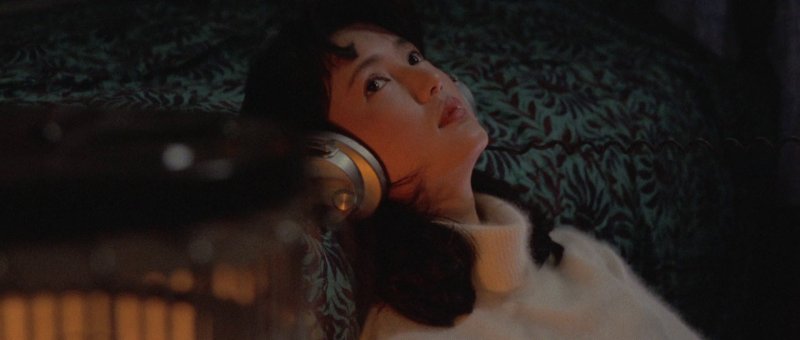
“Lots of perverts around these days”, Nami (Jun Izumi) sighs to herself on becoming convinced that someone’s stalking her. She isn’t wrong, but her increasing paranoia bears out the sense of threat in the contemporary city. Perhaps something has happened to her before, or maybe it’s because she’s a young woman living alone who has been receiving dirty calls from anonymous heavy breather, but she can’t escape the sense of being watched even when she’s at home on her own.

Nami isn’t a well-known person, but it’s not beyond the realms of possibility that some strange man has followed her home from the department store where she works after taking a liking to her. She sees herself clearly as not that kind of woman, and ostensibly leads a very proper life with a decent job and her own apartment. The fact that she masturbates under her kotatsu might be both an expression of her loneliness and an attempt to own her sexuality, but also hints at its illicitness in the fact that it is hidden and out of view. When her friend asks her to fill in at her part-time gig, Nami agrees out of politeness but far from the simple modelling job she was expecting, she’s forced into a shoot for a bondage magazine and becomes an unexpected pinup star.

The reason she’s so popular may indeed be because of the real shock and confusion obvious in her almost comical expression. Though the team from the magazine want her to come back promising a sizeable paycheque, Nami refuses and is unable to accept the image of herself as a pornographic model. When a man, Muraki (Masahiko Abe), chases her into a ladies’ bathroom at the train station, she keeps telling him that she’s not that sort of woman, but there’s uncertainty in her voice and what she most seems to want is vindication. Meanwhile, she’s basically harassed into an affair with her married floor manager who gets her drunk and takes her to a hotel room explaining that she was regarded as the “hardest girl to get” among the department store staff. He becomes increasingly forceful as Nami resists before finally giving in and thereafter continuing an affair with him. 

Even before she became an accidental magazine star, Nami was indeed the focus of unwanted attention and felt herself threatened by simply by existing in a male society. Muraki peeps on the teenage girl who lives in the posh house next to his rundown apartment building as she, ironically, masturbates by shoving an egg into her vagina and cracking it open with a set of pencils. Later it seems as if the girl knew Muraki was watching her, but evidently continued to do it anyway. In any case, Muraki’s peeping is also a kind of class transgression as is his fantasy of raping his landlady after she enters his apartment without permission in the belief that he’s been stealing women’s underwear. Unable to get a job, his existence is fairly dismal and he’s viewed with suspicion by his neighbours due to his slovenly appearance and uncouth manner. He too becomes fixated on Nami’s photo, fantasising about her as a possible source of salvation based only on her image in the magazine.

When he eventually encounters Nami, he too like her boss first seems as if he means to force himself on her, but then pulls back, explains that his feelings are genuine, and he’d rather meet her in a more normal way in a public place to go on a conventional date, making clear that he’s interested in Nami, not just the image of her from the magazine onto which he’s projected his own fantasies. But conversely, as much as it might inspire a sense of hope in the readers, the photo is also a liability and when her floor manager discovers it, he attempts to blackmail her into shifting the dynamics of their relationship so that he’d no longer have to pay for hotel rooms or expend any extra funds on Nami. Despite the fact her friend has been a nude model for ages, Nami is dismissed from the department store. The boss describes her as “just a slut”, though lamenting it’s a shame seeing as she was so pretty as he instructs her floor manager to fire her, bearing out the double standard that men are free to view these images but scorn the women who are in them.

Nevertheless, the encounter with Muraki and being let go from the department store provoke a kind of liberation in which Nami flips the kotatsu over and masturbates with the chair leg bathed in the red glow of the heater. She has perhaps fully embraced her sexuality, indulging in rope play and no longer hidden beneath the curtain of the blanket but orgiastically pleasuring herself out in the open. Muraki, meanwhile, pays another sort of price in being the prime suspect in a rape and murder just because the neighbours think he’s a bit weird and assume it must be him. He continues to cling to the idea of Nami as a kind of salvation, while she too seems drawn to him and is about to throw away the magazine and say goodbye to this sorry episode in her life until a potential happy ending is abruptly cut short. Filled with urban melancholy, the film paints both Muraki and Nami as prisoners of their society, unable to find self-acceptance or security save in the frustrated bond they unexpectedly discover in their shared desire for escape.


Angel Guts: Red Porno is available as part of The Angel Guts Collection released on blu-ray 23rd February courtesy of Third Window Films.

Curse of the Dog God (犬神の悪霊, Shunya Ito, 1977)

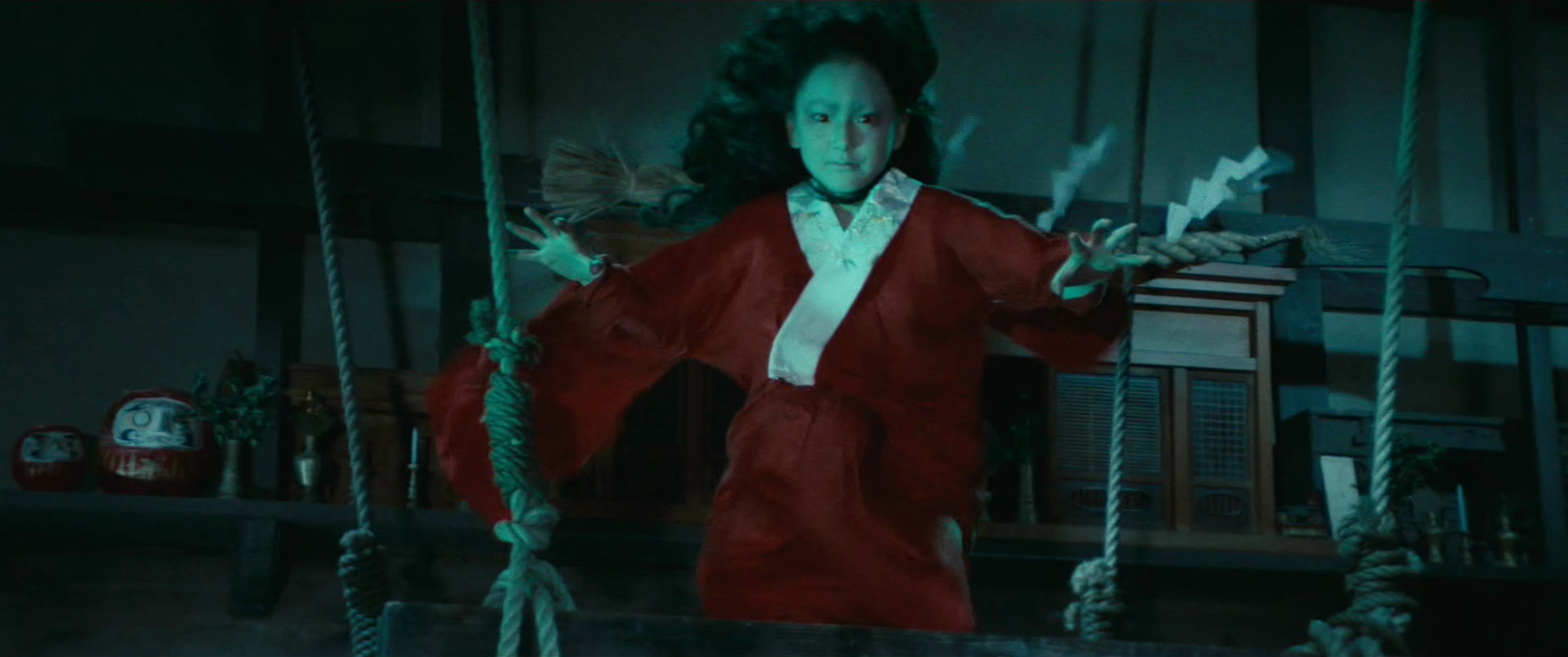
By the late 1970s, Japan was a very prosperous place and the cutting edge of modernity yet old beliefs die hard and those who run afoul of a natural order they assumed had long been forgotten will pay a heavy price for their arrogance. After a four-year hiatus following the third of the Female Prisoner Scorpion films, Shunya Ito returned with a strange slice of folk horror The Curse of the Dog God (犬神の悪霊, Inugami no Tatari) in which it is indeed the city invaders who have transgressed these ancient boundaries in their wilful indifference to the natural world.

The conflict between these two Japans is clear in the opening sequence in which three men pass through a tunnel in a truck bearing the logo of a nuclear power company and emerge into a village where a group of boys jump out from behind a row of tiny haystacks wearing masks made of leaves. The boys crowd around the van asking the strangers why they’re here and they jokingly tell them that they’ve come to look for “treasure,” which turns out to be a quest to find uranium in the local mountains. Otherwise uninterested in the village or the landscape, the men back their truck into a dilapidated roadside shrine which then collapses, and subsequently run over a little boy’s dog which had attempted to stop their car by barking fiercely at them. Rather than stop to apologise or comfort the boy who is cradling his dead dog in his arms, the men sheepishly drive off as if embarrassed. 

Of course, the shrine turns out to belong to the Dog God who is guardian deity of these mountains and now incredibly annoyed not just by the destruction of the shrine and killing of the dog, but by the men’s intention to tear the natural world apart looking for something which could prove very destructive even if they claim they want to use it responsibly to fuel the economic rocket which is Japan in the 70s. The Kenmochi family, the head of which, Kozo, is the local mayor are very receptive to the firm’s entreaties and immediately grant them access to their land while arranging a marriage which at least in part dynastic between Kozo’s daughter, Reiko (Jun Izumi), and the head of the expeditionary group Ryuji (Shinya Owada). But once they return to the city, the other two men die in mysterious circumstances, one entering a kind of trance and walking off the roof of the hotel after the couple’s formal wedding reception and the other attacked by a pack of wild German Shepherds in the middle of Tokyo. 

Reiko is quick to exclaim that it’s all the fault of the Dog God, though it’s never quite clear whether or not she is aware that her family is the subject of an ancestral curse because they themselves offended the deities by getting their hands on the land cheaply when it was used as collateral for a loan. In contrast to the Tarumis, the family of Reiko’s best friend Kaori (Emiko Yamauchi) and her little brother Isamu (Junya Kato) who is the boy whose dog they killed, the Kenmochis put on heirs and graces and as if they were the ancestral aristocracy of this area rather than having made a speedy class transition thanks to someone else’s misfortune and the vagaries of the post-war era. The Tarumis, meanwhile, live in a much more humble home and dress in a much more traditional mountain village manner. Patriarch Kosaku (Hideo Murota) point-blank refuses to sell his land and will have little truck with Ryuji or the mine once it opens, leaving the family regarded as outcasts within the village. 

But then there is a definite and literal pollution signalled by the arrival of the prospectors. At a meeting, it’s suggested that the sulphuric acid they’re using to flush out the uranium in inaccessible areas of the mine could contaminate the local groundwater which is a problem when many families are still taking their water from wells but they all laugh it off. Sometime later Ryuji is horrified to see dead fish floating in the river, while his own in-laws, the older generation of the Kenmochi family, are also killed by ingesting contaminated water. A rumour arises that the culprit is the Tarumis who have poisoned the wells out of spite, and when Ryuji tries to raise the alarm after getting a positive result for sulphuric acid in the water supply the company tell him to pin it on them instead. 

The intrusion of modernity has interrupted the careful, if woefully feudal, balance of the village with terrifying and tragic consequences. Yet Kosaku is also surprised, asking how a city man like Ryuji could really believe in something like a “curse”. The shamans they bring in to do a ritual also blame everything on the Terumis, adding the suggestion that the ill will is motivated by Kaori’s sexual jealousy over Ryuji giving rise to yet another interpretation of the curse’s origin besides the Kenmochi’s class transgression and the unintentional offence caused by the destruction of the shrine. Then again, perhaps it really is all because of the Dog God in a great confluence of coincidences that have led to this incredibly strange and unfortunate situation. In the end, even the film’s purest character, the Kenmochi’s small daughter Mako (Masami Hasegawa), is possessed by the evil spirit and made to take her revenge with a remorseful Ryuji desperately trying to repair what he himself broke in the acceptance that he should not have come here and was the catalyst for this confrontation with fate. Weird and haunting even in its bizarre obscurity the film nevertheless makes a case for the protection of the dark heart beating at the centre of the contemporary society which speaks of something older that cannot be crossed and most specially by those hellbent on a hubristic path to prosperity that has little respect for the land.


Case of the Disjointed Murder (不連続殺人事件, Chusei Sone, 1977)

Case of the disjointed murders posterJapanese cinema of the 1970s fell hard for the prestige murder mystery. Following the success of The Inugami Family, an early and unexpected hit thanks to Kadokawa’s “innovative” marketing strategy, multi-cast detective dramas dominated the box office for the rest of the decade. Meanwhile, ATG had been known for serious and high-minded avant-garde cinema throughout the 1960s but its brand of left-leaning, politically conscious, arthouse-fare was tantamount to box office poison in the increasingly consumerist post-Asama-Sanso world. ATG’s Kindaichi-centric Death at an Old Mansion, updated to the present day, pre-dated Ichikawa’s series for Toho by a whole year and perhaps signalled their resignation to shifting into the mainstream. By 1977, that transition was perhaps complete with former Nikkatsu Roman Porno director Chusei Sone’s adaptation of a classic serial penned by Ango Sakaguchi, an author of the “Buraiha“ school well known for chronicling post-war aimlessness.

Set in the summer of 1947, Case of the Disjointed Murder (不連続殺人事件, Furenzoku Satsujin Jiken, AKA Unrelated Murder Cases) is a classic country house mystery in which a series of high profile writers are invited to a mansion owned by a wealthy family, the Utagawas. Only, as it turns out, many of the letters of invitation are forgeries or have been doctored so that several unexpected guests have arrived including dissolute artist Doi (Yuya Uchida) whose presence is particularly awkward because he is the former husband of the host Kazuma’s (Tetsuro Sagawa) new wife Ayaka (Junko Natsu). Soon enough, one of the guests is murdered, and then another, and still more, seemingly for no real reason. Amateur detective Kose (Kazuya Kosaka), one of the “unexpected” guests, tries to piece the crime together to prevent its expansion but finds himself outflanked by a lack of material evidence.

Sakaguchi’s original tale ran as a newspaper serial which promised a cash prize for anyone clever enough to identify the murderer(s) before the truth was revealed as it eventually is in true country house mystery fashion with the detective explaining everything in a lengthy monologue while all the interested parties sit around a dinner table. The gamified nature of the serial is perhaps the reason for the large cast of characters comprising of Utagawa family members, the literary house guests, and staff all of whom become mixed up in the ongoing crime drama which Kose comes increasingly to believe is engineered rather than random as it might originally seem.

The “supposed” random chaos of the the “unconnected” murders is a key part of Sakaguchi’s interrogation of post-war anxiety. For a time it seems as if these mostly quite unpleasant people have taken the opportunity of being trapped within a claustrophobic environment to air out their own grievances with each other in an atmosphere already tainted with violence and resentment. Meanwhile, the moral corruption of the Utagawa household continues to come back to haunt them in the sexual transgressions of the late grandfather who apparently fathered several illegitimate children in addition to those from multiple marriages. The half-siblings bring additional strife into the Utagawa home in Kazuma’s incestuous desire for his half-sister Kayoko (Hitomi Fukuhara) who returns his affections and even hopes to marry her brother, while he has also transgressed by “buying” Ayaka from her venal first husband Doi.

As in most Japanese mysteries, however, the motives for murder turn out to be banal – simply monetary greed and seemingly nothing more even if backed up by a peculiar kind of romanticism. Such unbound desire for riches is perhaps another symptom of the precariousness of the post-war world in which individual survival is all in a chaotic environment where financial security is more or less impossible for those not already born into wealth. Kose begins to solve the crimes through the “psychological traces” the killer(s) leave behind, the various ways in which “scenes” are calculated and contrived but fail to entirely mask the truth which lies behind them.

Which is to say that the mechanics behind the killings ultimately become secondary to their psychological import in which Kose analyses superficial relationships to uncover the depths which underpin them and their implications for a conspiracy of crime. This persistent amorality in which human relationships and connections are subverted for personal gain is yet another example of post-war inhumanity in which the corruption of the war has destroyed the “innocence” of pre-modern Japan and provoked nothing more than a moral decline born of a confused anxiety and a generation struggling to adjust itself to a new reality.

Death at an Old Mansion aside, the ‘70s mystery boom had a peculiar obsession with post-war crime in the comparative comfort of the economic miracle. 30 years on, society was perhaps ready to ask more questions about an intensely traumatic moment in time but equally keen to ask what they might say about another anxious moment of social change only opposite in nature. No longer quite so burdened by post-war regret or confusion, some began to wonder if consumerism was as dangerous as poverty for the health of the national soul, but nevertheless seem content to bask in the essential cosiness of a country house mystery in which the detective will always return at the end to offer a full and frank explanation to a roomful of compromised suspects. If only real life were so easy to explain.


Original trailer (no subtitles)

Love in the Mud (泥だらけの純情, Sokichi Tomimoto, 1977)

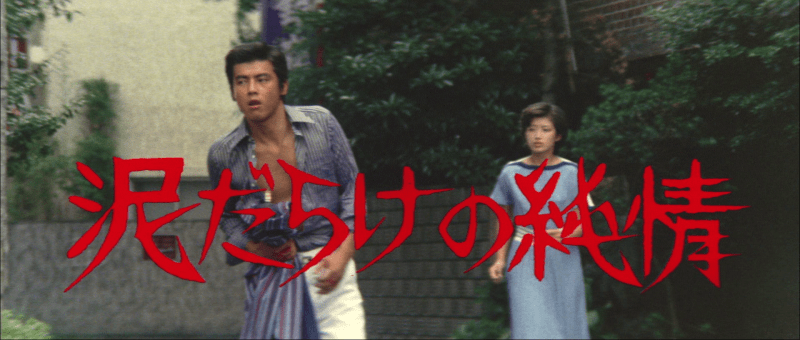
Love in the Mud posterJapanese youth cinema was in a strange place by the late 1970s. Angsty seishun eiga had gone out with Nikkatsu’s move into Roman Porno and the artier, angry youth films coming out through ATG were probably not much for a teen audience. The Kadokawa idol movie was only a few years away but until then, films like Love in the Mud (泥だらけの純情, Dorodarake no Junjo) arrived to plug the gap. Based on a novella by Shinji Fujiwara which had been previously adapted by Ko Nakahira in 1963 in a version starring Sayuri Yoshinaga and Mitsuo Hamada, Love in the Mud is a classic tale of poor boy meets rich girl and ends in a predictably hopeless way but in deep contrast to the prevailing culture of the time, the film takes the “junjo” or “purity” in its title literally in its innocent chasteness.

As the camera pans over a rapidly developing city, it settles on a bright red, flashy sports car being driven by Mami (Momoe Yamaguchi), the daughter of the Japanese Ambassador to Spain, with her friend sitting cheerfully in the passenger seat. Disaster strikes when the pair are run off the road by a biker gang who taunt them from outside the car, threatening rape and robbery. Luckily for them another gangster turns up, beats up the bad guys and saves the girls but alarm bells should have been ringing when he asks Mami to step out of the car and “thank him properly”. Mami, stupidly, does what she’s told and the girls are hijacked by gangsters round two. When they reach the shady place the gangsters are planning to have their wicked way with them, a third wave of gangster appears, disapproves of the goon’s intentions and heroically fights them off. However, the girls’ saviour is stabbed in the stomach and then later stabs and kills the leader of the aggressors.

The noble gangster, Jiro (Tomokazu Miura), tells the girls to run – which they do, but somehow Mami can’t quite bring herself leave him. A thoroughly middle-class girl, Mami is at university studying English literature but her dream is to open a hat shop in Paris and she spends most of her spare time working with a hat designer. In the absence of her father, Mami’s uncle (Ko Nishimura) has been looking after her but is the classic upperclass male who thinks the hat stuff is just a hobby and what Mami needs is a good husband as soon as possible. Accordingly he’s set her up with a pleasant enough business contact he hopes will both support Mami in the manner to which she’s been accustomed and his business dealings too.

Your average teenage girl might not be in such an extreme situation as young Mami, but most can certainly sympathise with her lack of agency. The life her uncle has planned for her is not what she wants but more than that, she’s acutely aware of being denied a choice in her future. She may be rich, but she’s never been free. Jiro, by contrast, grew up poor in tragic family circumstances and enjoys his own kind of freedom even if he feels himself constrained by his social class and lack of opportunities following a life in care with no real education. Not actually a yakuza but a gambler and petty punk living on the fringes of the underworld, Jiro has been content to live a meaningless life of empty gains but as his rescuing of Mami and her friend shows, he has a kind heart which extends to delivering presents to the daughter of a melancholy bar hostess currently living in an orphanage.

Jiro’s nobility is of a true and pure kind. After Mami comes forward to testify in Jiro’s defence, she tries to strike up a friendship but Jiro rebuffs her. He’s too smart not to know posh girl and poor boy never ends well, but then they do have a real connection which proves hard to kill. Their social differences are made apparent when Mami makes the naive decision to invite Jiro to a party at her fancy mansion. He buys a nice suit and an expensive necklace as a present, but Mami’s nanny doesn’t want to let him in and when Mami introduces Jiro to her uncle he whips out a checkbook causing Jiro to leave enraged. Nevertheless Mami chases Jiro through the shadier parts of Shinjuku, taking her first taste of gyoza, frequenting underground nightclubs and mahjong parlours, and swapping her elegant outfits for the casual jeans and T-shirts of Jiro’s world.

While all of this is going on, Jiro is also embroiled in the gang trouble which started with the stabbing in the beginning. A “friend”, almost, of the local policeman, it’s not surprising suspicion falls on Jiro and he faces a bleak future if he chooses to remain in Shinjuku. The courtship of the pair is a stuttering, nervous affair in which the emboldened Mami chases Jiro whose sense of honour teaches him to try and avoid her all the while he too is smitten. This is, however, a chaste and innocent love. Jiro and Mami spend a night together gazing at the moon but all they do is talk and the climax of the romance is met firstly with an innocent hug, and then a troubling slap from Jiro which is designed to show the depth his love in his desire to push Mami away, rather than anything more explicit.

A tragic tale of love across the class divide, Love in the Mud indulges the worst aspects of its genre in the fetishisation of doomed romance and extreme dedication the idea of “pure” emotion. The force that keeps Jiro and Mami apart, rather than entrenched social mores and differing forms of oppression is a kind of fatalistic pessimism which says the only true love is death. Perhaps too innocent and too chaste, Love in the Mud never earns its melodramatic ending but does what it needs to in appealing to its teenage target audience, neatly anticipating the genial edginess of the idol movie but failing to move much beyond capturing its moment as a snapshot of late ’70s youth culture.


Original trailer (no subtitles)


Sorekara (それから, AKA And Then, Yoshimitsu Morita, 1985)

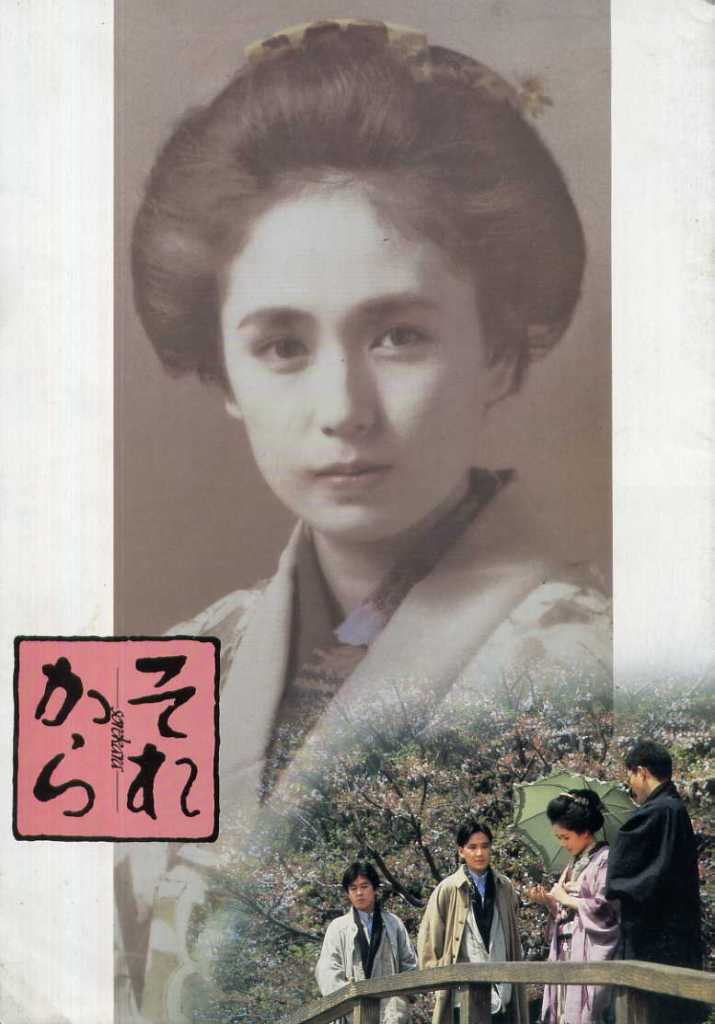
Sorekara PosterYoshimitsu Morita had a long and varied career (even if it was packed into a relatively short time) which encompassed throwaway teen idol dramas and award winning art house movies but even so tackling one of the great novels by one of Japan’s most highly regarded authors might be thought an unusual move. Like a lot of his work, Natsume Soseki’s Sorekara (And Then…) deals with the massive culture clash which reverberated through Japan during the late Meiji era and, once again, he uses the idea of frustrated romance to explore the way in which the past and future often work against each other.

Daisuke (Yusaku Matsuda) is a youngish man approaching early middle age. Thirty years old and a “gentleman” of leisure, he lives in a world of perpetual ennui where he even has to hold his hand to his chest to check that his heart is indeed still beating. His days might have gone on aimlessly had it not been for the unexpected return of an old friend from university, Hiraoka (Kaoru Kobayashi), who has been dismissed from his job following a series of problems with his superiors which has also landed him with a considerable debt to repay and no prospects of further employment. Adding to his sorrows, Hiraoka and his wife, Michiyo (Miwako Fujitani), have recently lost their infant child and have been told that due to Michiyo’s poor health they may not be able to have any more. Daisuke wants to help them, but he’s also facing a lot of pressure from his family to accept an arranged marriage which will further his father and brother’s prospects and is becoming conscious of the relative lack of freedom his life of dependent idleness entails.

Men of Daisuke’s era have perhaps had it hardest coming of age during a period of massive social change which is incomprehensible to the older generation. He’s a well educated man, an intellectual, who can speak several languages and is given to introspective contemplation, but he’s also inherited the worst of European classism as he’s come to believe that working for money is beneath his dignity as a gentleman. He’s completely unable to identify with his friend who needs to work to eat and enjoys none of the various safety nets which are provided by his own wealth and privilege. Nevertheless, he does want to try and help Hiraoka and is dismayed to discover just how little power he has do anything for him.

Hiraoka and Daisuke were part of a group of friends at university which also included another boy who, sadly, died of an illness and his sister – Michiyo, who eventually married Hiraoka. At the time, Daisuke himself had fallen in love with Michiyo but out of a misconceived idea of “chivalry” – another unnecessary adoption of European romanticism, he stepped aside in favour of his friend. This has proved to be a disaster all round and Michiyo and Hiraoka are trapped in an unhappy union which has made Michiyo physically weak and caused Hiraoka to spend the money he should be using to pay back his massive debts on drink and geisha so he can avoid going home. Daisuke’s adherence to a code of morality which is more affectation than anything else is shown up to be cowardice, another way of avoiding adulthood, as he uses his intellectual ideas to mask what is really a fear of rejection.

Daisuke later comes to believe what he did in not acknowledging his own feelings towards Michiyo was “a crime against nature”. He now finds himself at another crossroads as he faces the choice between conforming to the rigidity of his upperclass life in marrying the woman his father has chosen for him and continuing to be financially dependent, or embracing his individuality and striking out on his own to finally claim the woman he’s always loved (and, tragically, has always loved him). In choosing to make a life with Michiyo, Daisuke would be taking several transgressive actions – firstly acting against his own self image by entering the world of working men and secondly by stealing a married woman away from her husband which is no simple matter in the still relatively conservative Meiji era society.

Ultimately, the film is much more a story of Daisuke’s journey of self realisation than it is a melodrama with a love triangle at its centre though Sorekora certainly embraces these aspects too. Morita opts for a more classical tone here with a number of long, unbroken takes and static camera shots yet he also affects a strange, dreamlike tone in which the present and the past seem to co-exist, each drifting one into the other. He intercuts scenes which echo the film’s ending into the main body of the action as well as showing us the early days of Daisuke and Michiyo’s unresolved romantic connection which is poignantly brought out by an experimental technique in which the foreground appears almost like a freeze frame while the rain carries on falling behind them. At certain points there are also some surreal sequences in which Daisuke is travelling on a train but is surrounded by fellow passengers who suddenly each pull out a large sparkler or another where a gaggle of men all dressed just like him are crowded into the the other end of the train and looking at the moon through the open roof of the carriage.

A prestige picture, but one with a healthy dose of strangeness, Sorekara is an inexpressibly sad film full of the tragedy of wasted time and the regret that comes with not having acted in way which satisfies your authentic self. In order to live a life that’s true to himself Daisuke must finally learn to risk losing everything but the film’s ambiguous ending may ask whether the cost of following your heart may not be too heavy a one to pay.


Unsubtitled trailer: