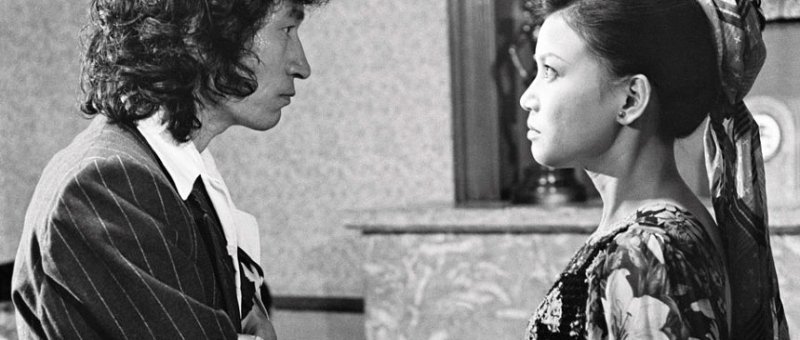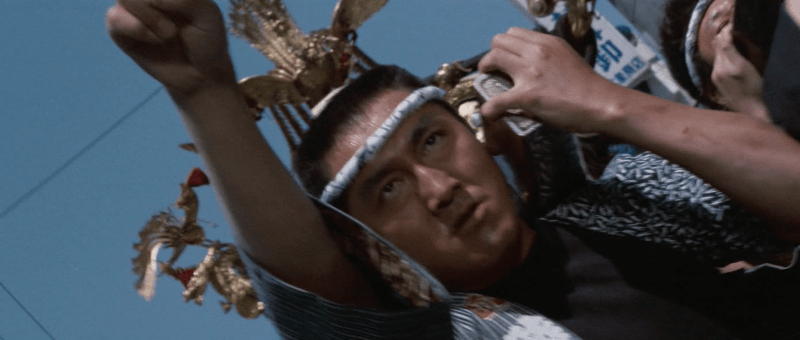
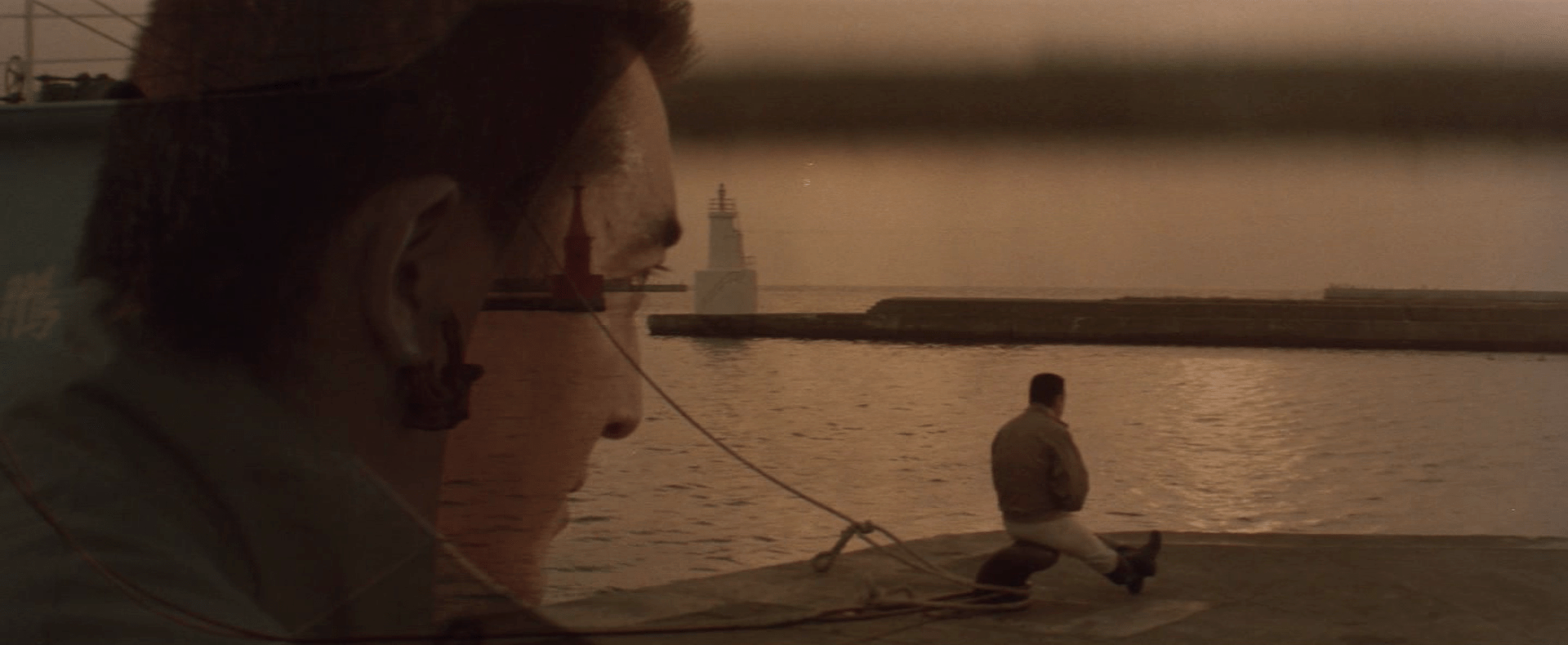
Festival Champ (お祭り野郎 魚河岸の兄弟分, Norifumi Suzuki, 1976)

Who doesn’t love a festival? The hero of Norifumi Suzuki’s Festival Champ (お祭り野郎 魚河岸の兄弟分, Omatsuri yaro: Uogashi no Kyodai-bun) loves them so much that he travels all over Japan to help out in places where young men have become thin on the ground thanks to increasing urbanisation and rural depopulation. Following the success of Suzuki’s entries in the Truck Yaro series in 1975 and 1976, the film was part of a new line of comedies and sports movies launched by Toei as well as a vehicle for Hiroki Matsukata who was trying to move on from yakuza movies.

Katsuo (Hiroki Matsukata) is however something of a goodhearted bruiser who is always getting into manly scraps and especially at the festivals he travels to which is a pretty good hook for an ongoing series. But it’s not all that great for his employer who runs a family fishmonger’s at the Uogashi fish market and complains that Katsuo’s always running off and causing trouble. The fish market itself takes on an exoticised quality in the opening sequence which features a voice over from karate queen Etsuko Shihomi, here in a purely dramatic role, who is the daughter of a well-to-do traditional Japanese restaurant and travels there daily by speedboat to pick up the best fresh fish available. Suzuki throws in some documentary-style stock footage and statistics about the market that lend a strangely corporate feel, but then homes in on its capacity as a community hub. Kiyoko says it’s her favourite place precisely because there’s nothing formal about it. Deals are done through body language and you don’t need any kind of resume to work there, everyone’s welcome. 

That may be the implied contrast between Kiyoko’s father, who owns an upscale place and cultivates genuine relationships with local fishermen and brokers, and local boy made good Kurosaki who has supposedly become the CEO of a restaurant chain, itself a symbol of the soulless corporation of ‘70s Japan. Kurosaki rocks up dressed like a yakuza, but everyone treats him as a successful businessman and in part thanks to Katsuo’s boss Zenjiro’s recommendation is eager to make deals with him but predictably he’s running a huge scam that could destroy the local economy. Zenjiro is later faced with the difficult decision of selling his family business to repay all the other fishermen and brokers that have fallen foul of him. 

It’s this societal sense of unfairness that stripper Kumi (Terumi Azuma) hints at when she says she feels “frustrated” and that her long-lost brother Eiji (Toru Emori) probably feels even more frustrated than she does after he slaps her having found out that she’s become a burlesque dancer. As she points out to him, he ran away from home and left her behind with the aunt that was cruel to them so what exactly he expected her to do is a mystery. In the end, it’s his own fault for abandoning her, so he has no leg to stand on in criticising her for the way she’s lived her life. Kumi is well accepted in the local community and walks around in very elegant attire which gives her the air of an “ojosan” or upperclass lady to much greater extent that Kiyoko has in her love of the earthy world of the fish market. The fact that she turns out to be suffering from a tragic terminal illness perhaps only reinforces this sense of unfairness, that the modern world has essentially poisoned her and she can no longer survive in it.

The only things that give her solace are Katsuo and the idea of joining in carrying a shrine festival which would seem to be ways of reconnecting with a more essential Japaneseness. Despite his rowdiness, Katsuo is as she describes him the kindest person she’s ever met and a more positive vision of a still traditional masculinity that looks to protect the community and those around him. He gets into a fight with Eiji, but after exchanging a few blows the men become firm friends, while it’s trying to hook his wimpy friend Kinichi up with a date that brings him to Kumi in the first place. Meanwhile, it seems like Ayuko (Junko Natsu) has a crush on him and despite Zenjiro’s exasperation with Katsuo, everyone expects that he will eventually marry her and take over the family business. 

And so, it’s only a violent, but also quite funny, intervention from Katsuo that can eventually overcome the disruption Kurosaki threatens. Suzuki throws in a lot of his trademark weirdness including all of Zenjiro’s other daughters having fishy names, and a local sex worker who is insatiably aroused by octopuses followed by a gag in which Katsuo is trolled with a suggestive-looking shellfish, but mostly rests on a sense of qualified wholesomeness and community all carried on Katsuo’s broad shoulders as the lone guardian of a more essential Japaneseness otherwise uncorrupted by venal post-war capitalism.


*Norifumi Suzuki’s name is actually “Noribumi” but he has become known as “Norifumi” to English-speaking audiences.
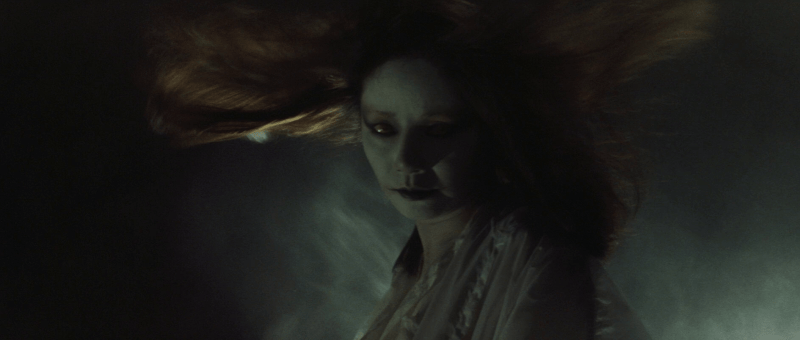
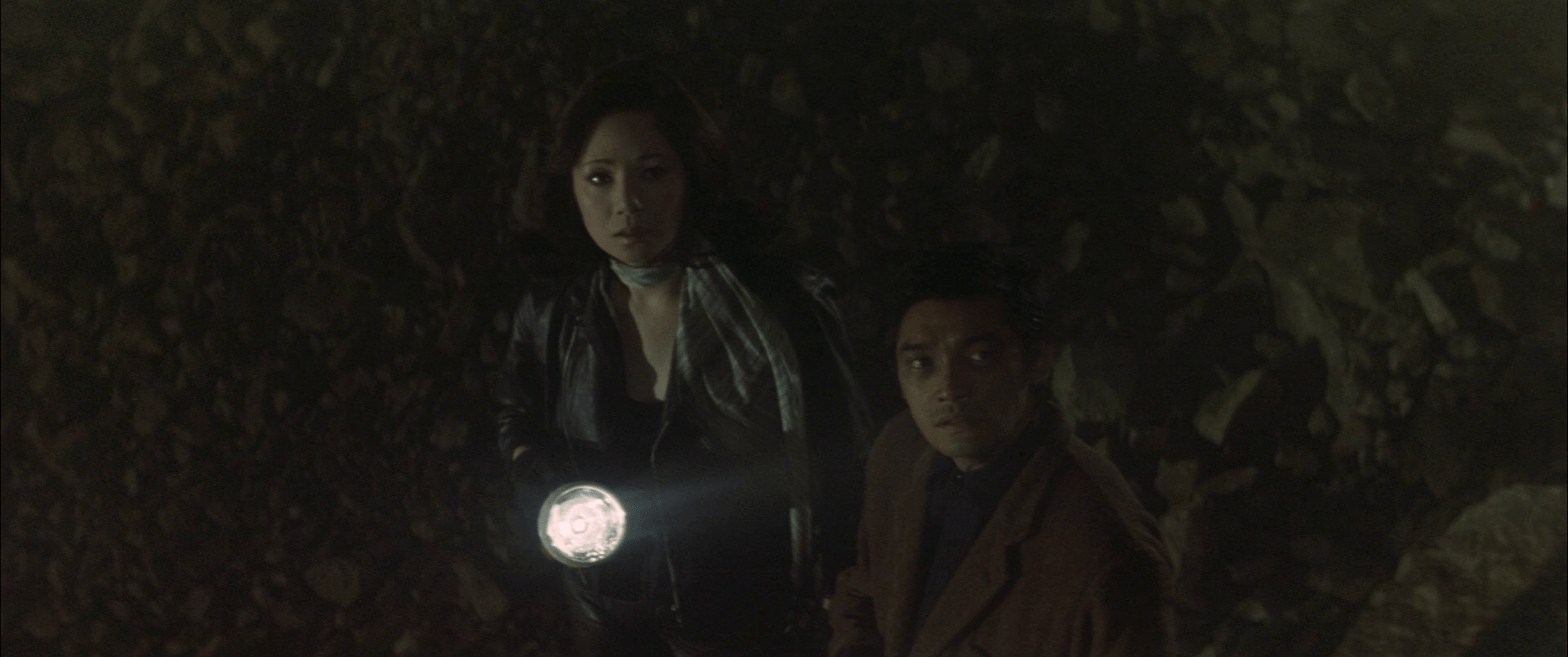
Village of Eight Gravestones (八つ墓村, Yoshitaro Nomura, 1977)

Can a curse end up being “real” just because people believe in it? Unlike many of his other crime films which were adapted from the novels of Seicho Matsumoto, Yoshitaro Nomura’s The Village of the Eight Gravestones (八つ墓村, Yatsuhaka-mura) edges towards the idea that the curse at its centre is real in a more literal sense with grimly grinning samurai standing on their hilltop and rejoicing in the fulfilment of the 400-year campaign of vengeance, but also hints at a toxic legacy of enmity and warfare along with a karmic sensibility found in many of Seishi Yokomizo’s other mysteries in which a noble family must account for the way it gained its riches. 

In this case, the Tajimi family which now owns most of the village became prosperous after betraying a band of eight displaced samurai during the Sengoku era. Fleeing the battlefield in defeat, the samurai had originally frightened the villagers when they came down off the mountain but were in actuality non-threatening, simply settling down to a life of farming and peaceful co-existence. But some members of the community became greedy and accepted the promises of riches from a rival clan for the service of eliminating the eight samurai. Cruelly inviting them to the local festival in what seemed like a moment of acceptance as members of the village, they betrayed them killing some by poison and others by the sword. 

Now, hundreds of years later, the Tajimi family is on the verge of extinction with the eldest daughter unable to bear children and the oldest son bedridden and soon to die which explains why they’re keen to track down long lost grandson Tatsuya Terada (Kenichi Hagiwara) who was presumably adopted by his stepfather and bears his name after his now deceased mother Teruko left the family to escape her abusive relationship with half-mad husband Yozo (Tsutomu Yamazaki). Surprisingly, it’s his maternal grandfather Ushimatsu Igawa (Yoshi Kato), who comes looking for him only to drop dead as soon as they meet of apparently strychnine poisoning in the first of several murders that all echo the ancestral curse placed upon the Tajimi family by samurai leader Yoshitaka Amako (Isao Natsuyagi) as he died. 

Like many of Nomura’s films this too features a journey only this one is in a sense into the past as Tatsuya ventures to the rural heart of Japan hoping to see his mother’s birthplace and satiate his curiosity about his birth father. What he discovers there is obviously a lot of what seems like unfounded local superstition along with a degree of unpleasant stigmatisation as he’s immediately accosted by a shamaness who calls him a murderer to his face for his connections with the Tajimis to whom he feels himself a stranger, and then is later blamed for all the weird goings on which only began after he arrived. The film uproots itself from the original 1948 setting to the present day which perhaps lessens the impact of its central theme about the legacy of violence and betrayal that is stoked by war and enmity along with the destructive capacity of human greed that encourages some to betray others for their own advancement only to discover that success founded on human sacrifice will never get you very far. 

Ironically in a more real world sense, it turns out to be greed that motivates these present crimes with the villain hoping to usurp the Tajimi family fortune and utilising the curse as a means to do so. Much of the action takes place in a network of underground caves filled with glowing green lakes where the villain eventually takes on demonic proportions, face ghostly white with yellowish eyes and a crazed expression that echoes those of the samurai as they died. Nomura hints at the sense of ancient dread in this very old place while also surprisingly bloody in his flashbacks which feature scenes of shocking violence including severed heads one of which seems to lick its lips and stare intently even while on display. This being a Kindaichi (Kiyoshi Atsumi) mystery, the famous detective does indeed appear though remains a background presence quietly solving the crime behind the scenes while Tatsuya searches for the key to his own history and an escape from this legacy of violence and destruction in reclaiming his own identity.


Original trailer (no subtitles)

Case of the Disjointed Murder (不連続殺人事件, Chusei Sone, 1977)

Case of the disjointed murders posterJapanese cinema of the 1970s fell hard for the prestige murder mystery. Following the success of The Inugami Family, an early and unexpected hit thanks to Kadokawa’s “innovative” marketing strategy, multi-cast detective dramas dominated the box office for the rest of the decade. Meanwhile, ATG had been known for serious and high-minded avant-garde cinema throughout the 1960s but its brand of left-leaning, politically conscious, arthouse-fare was tantamount to box office poison in the increasingly consumerist post-Asama-Sanso world. ATG’s Kindaichi-centric Death at an Old Mansion, updated to the present day, pre-dated Ichikawa’s series for Toho by a whole year and perhaps signalled their resignation to shifting into the mainstream. By 1977, that transition was perhaps complete with former Nikkatsu Roman Porno director Chusei Sone’s adaptation of a classic serial penned by Ango Sakaguchi, an author of the “Buraiha“ school well known for chronicling post-war aimlessness.

Set in the summer of 1947, Case of the Disjointed Murder (不連続殺人事件, Furenzoku Satsujin Jiken, AKA Unrelated Murder Cases) is a classic country house mystery in which a series of high profile writers are invited to a mansion owned by a wealthy family, the Utagawas. Only, as it turns out, many of the letters of invitation are forgeries or have been doctored so that several unexpected guests have arrived including dissolute artist Doi (Yuya Uchida) whose presence is particularly awkward because he is the former husband of the host Kazuma’s (Tetsuro Sagawa) new wife Ayaka (Junko Natsu). Soon enough, one of the guests is murdered, and then another, and still more, seemingly for no real reason. Amateur detective Kose (Kazuya Kosaka), one of the “unexpected” guests, tries to piece the crime together to prevent its expansion but finds himself outflanked by a lack of material evidence.

Sakaguchi’s original tale ran as a newspaper serial which promised a cash prize for anyone clever enough to identify the murderer(s) before the truth was revealed as it eventually is in true country house mystery fashion with the detective explaining everything in a lengthy monologue while all the interested parties sit around a dinner table. The gamified nature of the serial is perhaps the reason for the large cast of characters comprising of Utagawa family members, the literary house guests, and staff all of whom become mixed up in the ongoing crime drama which Kose comes increasingly to believe is engineered rather than random as it might originally seem.

The “supposed” random chaos of the the “unconnected” murders is a key part of Sakaguchi’s interrogation of post-war anxiety. For a time it seems as if these mostly quite unpleasant people have taken the opportunity of being trapped within a claustrophobic environment to air out their own grievances with each other in an atmosphere already tainted with violence and resentment. Meanwhile, the moral corruption of the Utagawa household continues to come back to haunt them in the sexual transgressions of the late grandfather who apparently fathered several illegitimate children in addition to those from multiple marriages. The half-siblings bring additional strife into the Utagawa home in Kazuma’s incestuous desire for his half-sister Kayoko (Hitomi Fukuhara) who returns his affections and even hopes to marry her brother, while he has also transgressed by “buying” Ayaka from her venal first husband Doi.

As in most Japanese mysteries, however, the motives for murder turn out to be banal – simply monetary greed and seemingly nothing more even if backed up by a peculiar kind of romanticism. Such unbound desire for riches is perhaps another symptom of the precariousness of the post-war world in which individual survival is all in a chaotic environment where financial security is more or less impossible for those not already born into wealth. Kose begins to solve the crimes through the “psychological traces” the killer(s) leave behind, the various ways in which “scenes” are calculated and contrived but fail to entirely mask the truth which lies behind them.

Which is to say that the mechanics behind the killings ultimately become secondary to their psychological import in which Kose analyses superficial relationships to uncover the depths which underpin them and their implications for a conspiracy of crime. This persistent amorality in which human relationships and connections are subverted for personal gain is yet another example of post-war inhumanity in which the corruption of the war has destroyed the “innocence” of pre-modern Japan and provoked nothing more than a moral decline born of a confused anxiety and a generation struggling to adjust itself to a new reality.

Death at an Old Mansion aside, the ‘70s mystery boom had a peculiar obsession with post-war crime in the comparative comfort of the economic miracle. 30 years on, society was perhaps ready to ask more questions about an intensely traumatic moment in time but equally keen to ask what they might say about another anxious moment of social change only opposite in nature. No longer quite so burdened by post-war regret or confusion, some began to wonder if consumerism was as dangerous as poverty for the health of the national soul, but nevertheless seem content to bask in the essential cosiness of a country house mystery in which the detective will always return at the end to offer a full and frank explanation to a roomful of compromised suspects. If only real life were so easy to explain.


Original trailer (no subtitles)