Dream Home (維多利亞壹號, Pang Ho-cheung, 2010)

“In a crazy city, if one is to survive, he’s got to be more crazy.” according to the opening titles of Pang Ho-cheung’s surprisingly poignant slasher satire Dream Home (維多利亞壹號). In the 10 years since the handover, the average wage has increased by a measly 1% while house prices have risen by 15% in 2007 alone. Sheung’s (Josie Ho) one overriding mission in life is to buy a flat for her family to live in, but it’s clear that her struggles to become a homeowner aren’t the only pressure points in her life in an increasingly capitalistic society. 

As we later discover, Sheung is set on one particular flat because the building it’s in stands on the spot where she once lived as a child before her family was pushed out by rampant gentrification. In essence, she’s just trying to take back what’s hers and restore her family’s sense of dignity and security. A flashback to her childhood reveals her father’s own insecurity in having been unable to secure a larger living space in which she and her brother could have their own rooms while her grandfather, a sailor, longed for a sea view and the sense of an expanding horizon otherwise denied to the family in a cramped Hong Kong council flat. In a touch of irony, Sheung’s father himself worked in construction building apartment blocks he couldn’t afford to live in and in the end it killed it him through exposure to asbestos and other dangerous fibres. 

Sheung works at a bank but is conflicted about her job cold calling account holders to try to get them to buy into dodgy loans neatly echoing the film’s closing moments which hint at a coming economic crash precipitated by the subprime mortgage crisis which will threaten Sheung’s homeowning dream. Her friends think she’s crazy to buy a flat at all, but she’s completely fixated on repairing her broken childhood by taking back her family home and ending her displacement. Meanwhile, she’s in a dissatisfying dead end relationship with a married man which largely takes place in love hotels he sticks her with the bill for and turns up late to only to immediately fall asleep. When Sheung asks him for a loan to help pay for her father’s medical care after the insurance she got for him is voided because he never told her he’d been diagnosed with a lung complaint before she took it out, he tells her to use her deposit fund instead and give up on homeownership because only fools like her would buy in such a volatile market. 

Disappointment in both her personal and professional lives continues to place a strain on Sheung’s fragile mental state that eventually tips her over the edge. Hoping to bring the apartment’s price down, she goes on a murder spree in the building killing it seems partly out of resentment and otherwise pure practicality. There is irony here too, in that she kills her victims with the weapons of their privilege. A cheating husband who comes home unexpectedly after lying to his wife that he’s gone golfing but was actually with his mistress is whacked on the head with a golf club while an obnoxious stoner kid is stabbed in the neck with his bong. Sheung murders a Filipina helper, but also the snooty middle-class woman who employed her by using the vacuum pack machine the helper had been using on her behalf. One might ask if she really needed to kill the helper or the pair of Mainland sex workers in the next apartment, but when it comes to devaluing property prices “massacre” sounds much better than “killing” and so it’s the more the merrier. 

In the end, it’s this city that’s driven her out of her mind with its status-obsessed consumerism and constant sense of impossibility. After her killing spree, she doesn’t even seem very conflicted about selling dodgy loans to vulnerable people not so different from herself while she was so desperately trying to get approval on a mortgage there was no way she could afford despite working a series of other part-time jobs including one selling designer handbags to the kind of wealthy women she resents. Her dream apartment has a view quite literally to kill for, though there’s a sense that Sheung’s dream will always be futile with the same motivations that brought her here leading to the mortgage crisis and economic shock that could eventually take it from her. Bloody, gory, and at times sickeningly violent Pang’s satirical horror show paints contemporary capitalism as the real villain and even in its dark humour reserves its sympathies for the wounded Sheung pushed to breaking point by a pressure cooker society. 


Dream Home available to stream in the UK until 30th June as part of this year’s Odyssey: A Chinese Cinema Season.

International trailer (English subtitles)
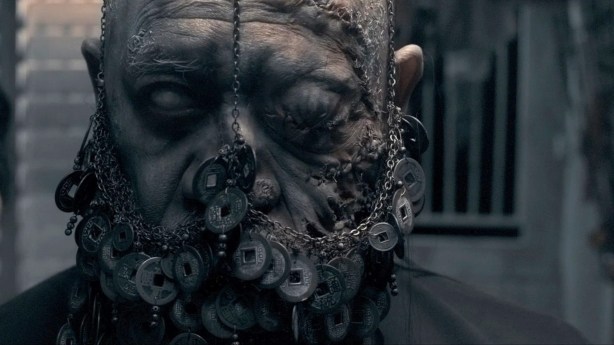
Rigor Mortis (殭屍, Juno Mak, 2013)

rigor mortisReview of this slick but not very scary horror movie up at UK Anime Network.


Juno Mak may be most familiar to UK viewers as the star of the rather macabre thriller Revenge: A Love Story but he began his career as canto pop singer in Hong Kong at just 18. An unlikely superstar in many ways, Mak has gone on to endure scrutiny over his career and family background whilst managing to carve his own path in the perilous Hong Kong entertainment industry. Having made his acting debut with Revenge: A Love Story he now makes another unusual move and steps behind the camera with a slick, modern horror film that seeks to pay homage to the much loved 1980s Mr Vampire movies.

Ditching the series’ trademark humour, Mak’s is a more meta take on its subject matter as it begins with the once famous actor Chin carrying a cardboard box full of his paltry possessions into a rundown apartment complex where he plans to end his own life. His plans are frustrated though as his newly lifeless body is possessed by the building’s resident ghosts. However, luckily or unluckily, the guy who runs the local noodle store doubles as an exorcist and manages to expel the demons from Chin’s body just in time to save his life. His troubles don’t end there though as a nice seeming old lady neighbour hides a terrible secret as does a frightened woman who often roams the corridors with her young albino son. Someone is indulging themselves in a bit of necromancy which threatens to change life on the block for ever more.

It’s certainly a very dour and gloomy affair as the suicidal Chin has flashbacks of his life as an A-list star with a pretty wife and a cute-as-button son whose last voicemail Chin keeps replaying. It’s all gone wrong for him already which is presumably why he’s come to live in such a “modest” place. He comes to build up a tentative relationship with the frightened woman and her son but they have traumas of their own linked to the strange haunting of the building. Mrs Mui who lives upstairs is the archetypal nice old lady who takes in sewing because she’s bored but after her husband dies in a freak accident she’ll stop at nothing to bring him back. It’s her husband that’s the stiff from the movie’s title (well perhaps – perhaps not) and she’s roped in a priest to work some black magic to bring him back but it isn’t really working necessitating her to take ever more drastic measures.

The Mr. Vampire movies are a Hong Kong institution and particularly well loved by the generation who grow up watching them in the ‘80s. However, they are considerably less well known here and viewers expecting a Western style “vampire” story are going to be disappointed. Chinese “hopping” vampires are more like a vampire/zombie hybrid – they feed on qi (life force) but shuffle like zombies and have about the same level of intelligence. There’s only one reanimated corpse here but Mak also throws in a couple of J-horror influenced ghosts with grudges that are also martial arts masters – as are the Taoist priests who are around to keep them in check. Mak has largely ignored the genre’s humorous aspects and gone for a fairly po-faced, supernatural martial arts drama which largely works but may have the less genre savvy viewer feeling a little lost.

Everyone’s just very bored in a very modern way – their ennui is close to religious. The former vampire hunter who runs the noodle stall downstairs and makes sure to produce extra food for the benefit of his customers who’ve already passed over (after all, they still need to eat, right?) spends all day in his boxer shorts and dressing gown and doesn’t even bother to put on any special vampire fighting gear. Chin is, obviously, suicidal and most of the other residents of the block are facing metaphorical demons even if they aren’t actually battling physicals ones (there are a lot of metaphorical layers in the film if you’re the sort that likes to see them). It’s all very cool in a slick and modern way but sometimes feels a little pompous and fails to engage.

Simply put, Rigor Mortis not quite as much fun as one might hope but also lacks the depth that might have made the experience feel more worthwhile. Having said that, it all looks great – aesthetically the film is very interesting and has a lot going for it including some unusually well made and impressively realised special effects. It is all a little style over substance though and the film’s final twist feels like a step too far (as does a strange mid credits shot and odd post credits sequence). There’s something a little cold and unengaging about Rigor Mortis (perhaps appropriately so) but it still has its moments and fans of slick, good looking martial arts movies with a supernatural bent may find a lot to enjoy.


Actually, this trailer is quite creepy though:

Available now in the UK from Metrodome.