Jang-Gae: The Foreigner (醬狗, Chang Chih-Wei, 2020)

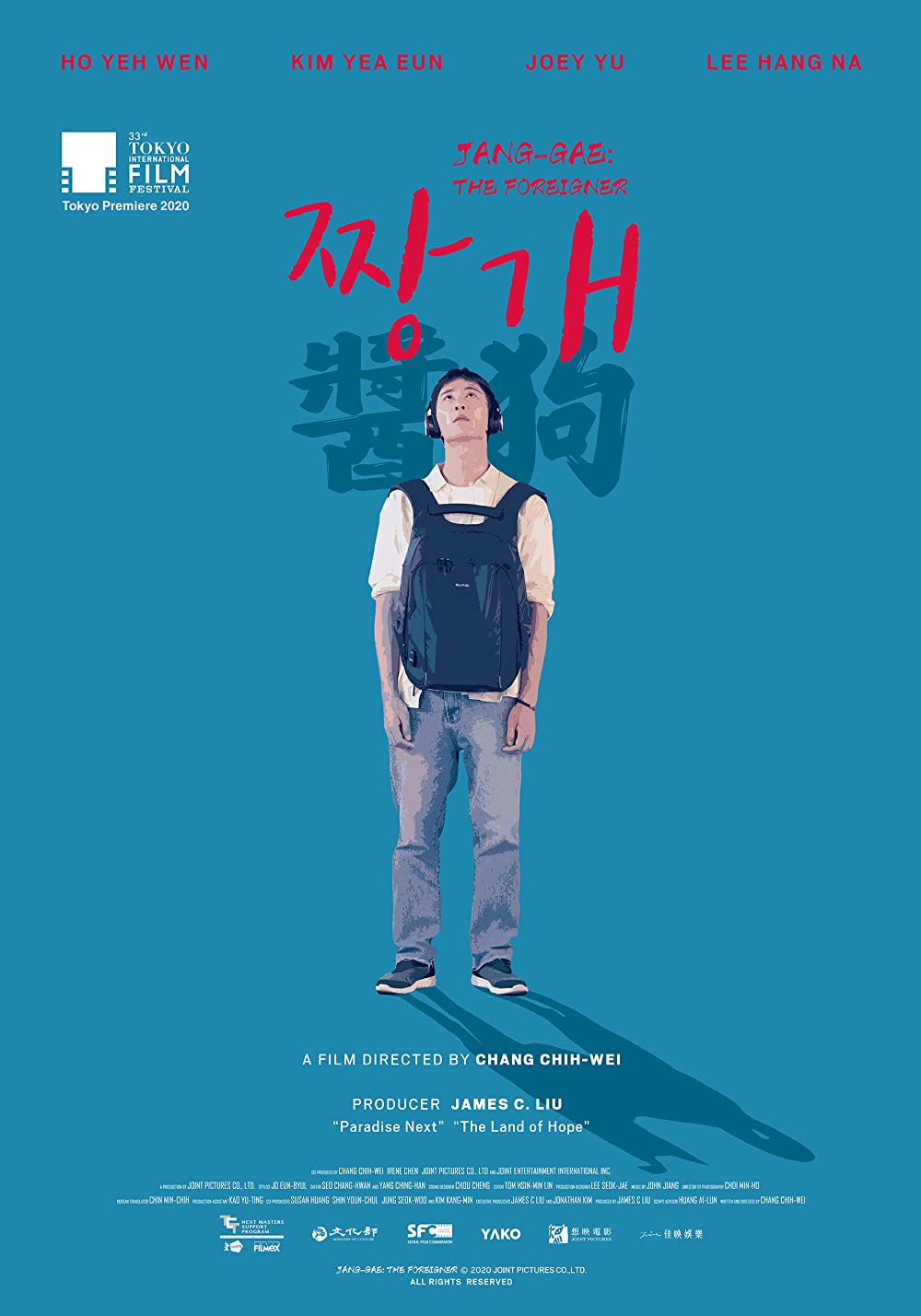
An angry young man struggles to repair his fracturing sense of identity in Chang Chih-Wei’s provocatively titled Jang-gae: The Foreigner (醬狗, jiàng gǒu). “Jang-gae” is in itself a derogatory term for Korean-Chinese translated literally as “sauce dog”, while the film’s hero Gwang-yong (Ho Yeh-wen) feels himself to be a perpetual outsider continually othered in Korea but having little affinity for his Chinese roots and dreaming of a future in the US having been short-listed for a scholarship programme only to be confronted with the contradictions of his identity when his father is taken ill and having the wrong kind of passport may jeopardise his dreams of going abroad. 

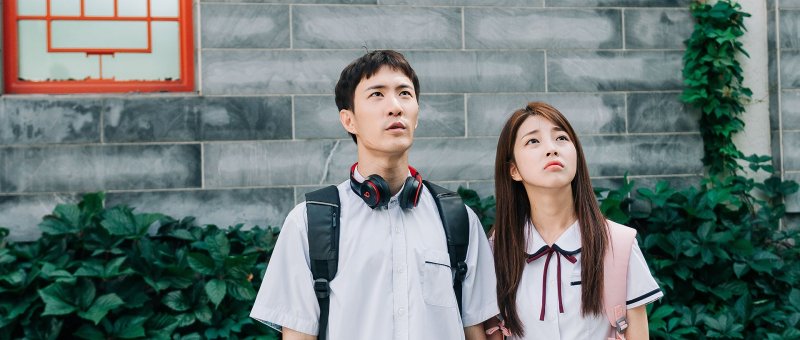
For reasons unknown to him, Gwang-yong’s father Seo-sang (Joey Yu) pulled him out of the Chinese-medium school he’d been studying at and moved him to a regular Korean high school instead. Although a straight-A student and in fact the class monitor, Gwang-yong experiences constant xenophobic microaggressions from his classmates who sarcastically repeat the common Chinese greeting “Have you eaten yet?” and refer to him as “sauce dog” while the teacher expresses surprise that “even a foreigner like Gwang-yong” has mastered Korean history. The teacher’s remark is quite ironic in that Gwang-yong may have a Taiwanese passport but he was born and raised in Korea, as, it happens, was his father. In fact, his family has no real connection with Taiwan, his grandfather fled Mainland China during the civil war and presumably applied for a Republic of China passport as a supporter of the Nationalist Party. In any case, his passport is also a non-citizen one which grants no right of abode because his family has no household registration in Taiwan meaning in essence that Gwang-yong is stateless and has no citizenship of any sort. 

For obvious practical reasons, he wants to apply for a Korean passport which he’s entitled to by right of birth as his mother is a Korean citizen but his father won’t have it. Meanwhile, despite bullying him the other boys all complain that foreigners have it easy believing that he got a leg up in the scholarship scheme for being non-Korean while he’ll also be exempt from the National Exam and military service (which as he points out he’d have to do in Taiwan if he were a full citizen there), but being exempt from each of these requirements for Korean citizens leaves him feeling even more excluded reinforcing the sense that he’s not really a part of the culture in which he has grown up in the only country he’s ever known. He tells his mother that he just wants to live a dignified life in Korea, but is ruffed up by a trio of thuggish men later claiming to be police immigration officers accusing him of overstaying on his visa not so much as even apologising after forcibly pulling his wallet out of his pocket and seeing his birthplace listed as Korea on his ID. 

Most of his animosity is directed at his father who speaks to him only in Mandarin and is in general authoritarian and unsupportive, yet his father’s illness also causes him to lash out at his mother laying bare his own internalised shame in berating her for having married someone who was Korean-Chinese as if all his problems would have been solved if she’d only married somebody Korean, blaming her rather than standing up against the xenophobia and prejudice which pervade his society. Meanwhile the girl he has a crush on at school, Ji-eun (Kim Yea-eun) who is also an outcast having moved schools after the grandmother who was raising her passed away, just wants to get out of “Hell Joseon” and doesn’t much care where to. He points out swapping Hell Joseon for Taiwan’s “Ghost Island” might not make much difference, but discovers that his accidental statelessness leaves him doubly disadvantaged denied his full rights in either place while equally unable to escape. 

Even so his father’s illness forces him to reconsider not only his relationship to him but to his Chinese heritage along with the Korean, Ji-eun also reminding him that the people who make it in Korean society are the ones who learn to stand up for themselves which perhaps informs his final act of rebellion against the bullies no longer willing to be meek or apologetic but directly challenging their attempts to intimidate him having gained a new confidence. A gentle coming-of-age tale in which a young man comes to understand both his father and his heritage Jang-Gae: The Foreigner never shies away from the problems faced by ethnic minorities in contemporary Korea nor the inequalities of the non-citizen passport but does allow its conflicted hero to find a degree of equilibrium in himself secure in his own identity. 


Jang-Gae: The Foreigner streamed as part of the 14th season of Asian Pop-Up Cinema.

Original trailer (English subtitles)
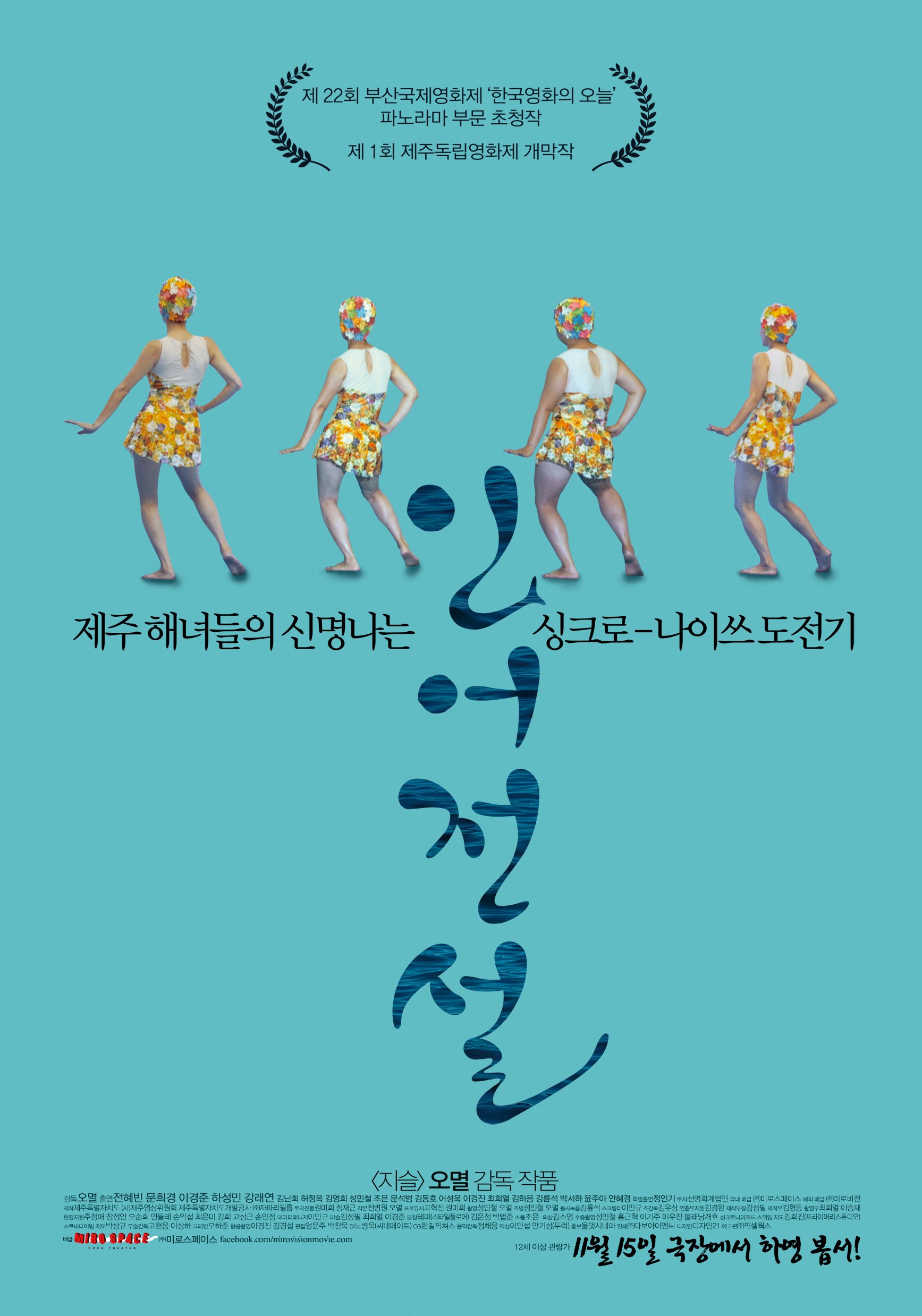
Mermaid Unlimited (인어전설, O Muel, 2017)

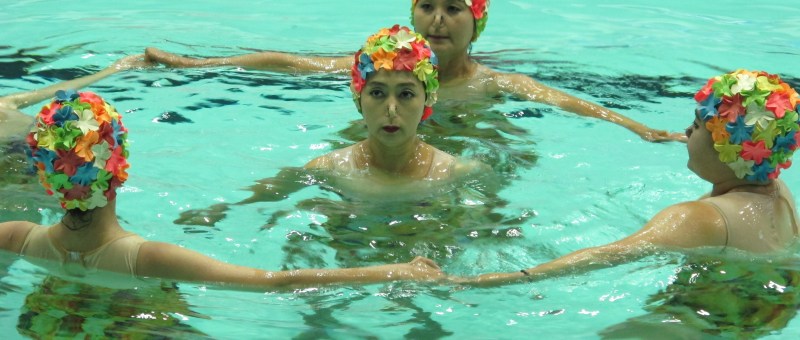
Venal city corporatism meets traditional Jeju culture in O Muel’s quirky comedy Mermaid Unlimited (인어전설, Ineojeonseol). An island movie showcasing the laidback charms of a disappearing way of life through those of the haenyo divers, Mermaid Unlimited is also an early example of cinema’s recent fascination with the art of synchronised swimming in which this most organised of sports helps a troubled young woman get a much needed reset in her life thanks to the down-home wisdom of the island aunties and the healing waters of Jeju.

A well-meaning government body has come up with a plan to promote synchronised swimming by getting a team of traditional haenyo divers as a warm up act before a national competition to be held in Jeju in the hope of making the sport “more accessible”. Former national team member Ga-yeon (Kang Rae-yeon) is under a lot of pressure to get a medal, not least to dispel the doubts of a hostile suit upset at having been passed over for project lead. In any case, she recommends an old colleague, Yeong-ju (Jeon Hye-Bin), who was the leading light of their old squad to coach the island ladies so they can perform a routine as requested by the PR people. However, there are several issues with this plan. The first being that village chief Bongseok (Lee Kyung-joon) has been a little over enthusiastic in agreeing to the idea seeing as there are very few remaining haenyo in the local area and many of them are understandably getting on in years. Meanwhile, Yeong-ju is in the middle of an extended personal crisis and is in fact a functioning alcoholic. 

Nevertheless, her appearance on the island immediately causes a commotion not least with Bongseok who is instantly smitten. She is herself, however, not perhaps convinced, instantly earning the ire of the defacto leader of the haenyo, the feisty and foulmouthed Okja (Moon Hee-kyung), after thoughtlessly describing the women as a load of old grannies, doubtful if they are really worthy of her precious “water ballet”. What ensues is a less than genial face off as the two women try to prove themselves queen of the seas through a petty competition which ends inconclusively and with a degree of drama but does eventually broker a kind of solidarity if only as they slag off their useless menfolk. In any case, the island ladies begin training in earnest while attempting to deal with their own quirky island problems. 

The island is certainly home to a fair few characters from Bongseok, smitten and overexcited while slightly clueless as to what the project entails (selling his empty swimming pool as bound to fill up next time it rains), to Okja’s wayward son Mansoo (Eo Sung-wook) and his bad romance, the pregnant haenyo who wants to give birth the old-fashioned way, a strange shanmaness and her son who has learning difficulties, and the young woman who desperately wants to become a haenyo despite her mother’s objections. Yeong-ju had a point when she suggested there weren’t many younger women around, most of the haenyo are indeed middle aged or older, and it’s fair to say this is a way of life fast disappearing. Okja laments that they haven’t been able to catch much lately, and later we hear of the building of a sea wall which may be having a detrimental affect on sea life so much so that there are reports of an elderly diver from a few villages over going missing at sea while protesting. Even so, the old women remain fiercely proud of their island culture and determined to protect it, seeing in the synchronised swimming exercise a way to show off their existence, something which perhaps mildly backfires bringing an influx of foreign tourists to the island hoping get the haenyo experience much to the confusion of the underprepared though very excited Bongseok. 

Through her friendship with Okja and the gentle support of the other island ladies who’ve seen enough of life to be unjudgemental, Yeong-ju begins to work through her unresolved trauma and alcohol issues while falling in love with island life and the traditional haenyo culture. A gentle ode to the wholesome charms of Jeju with its beautiful ocean vistas and hard spun rural wisdom, Mermaid Unlimited makes the case not only for the power of female solidarity but of bodies in unison as a means of existential healing through shared endeavour. 


Mermaid Unlimited streams in Poland until 6th December as part of the 14th Five Flavours Film Festival.

Original trailer (no subtitles)

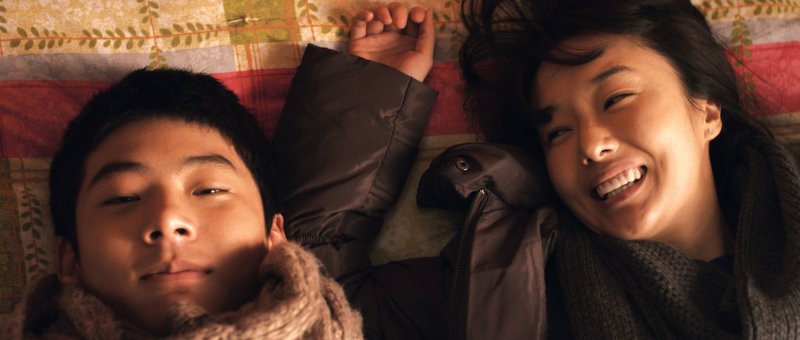
Juvenile Offender (범죄소년, Kang Yi-kwan, 2012)

“Can you forgive me just this once?” the protagonist(s) of Kang Yi-kwan’s Juvenile Offender (범죄소년, Beomjoe Sonyeon) sheepishly ask hoping to be pardoned for their transgressions, only to be met with the cynical, disappointed frown of those who’ve heard it all before. An empathetic character study, Kang’s steely drama lays bare the various ways in which patterns of behaviour ironically repeat themselves despite the best intentions of all involved while even those who earnestly do their best to break the cycle find themselves sabotaged by a rigid and unforgiving society. 

At 16, Ji-gu (Seo Young-joo) lives with his elderly grandfather who is bedridden and seemingly in terrible pain. Falling in with a bad crowd, he finds himself breaking into a wealthy home, reassured by one of the other boys that it’s fine because it belongs to a relative. Unfortunately, however, they’re caught when the lady of the house returns home unexpectedly, Ji-gu accidentally pushing her as he tries to escape. This is particularly bad news as, we discover, Ji-gu is already on probation for a previous assault charge after fighting with some other kids who made fun of him because of his poverty. Arrested, he’s the only one of the teens to have no representation in the room and the judge, trying to be sympathetic, eventually decides that in the absence of effective parenting some time in an institution might be the most beneficial option despite the fact that there will be no one left to look after grandpa. 

His grandfather’s eventual death while he is inside is one of many things adding to Ji-gu’s sense of guilty frustration, but it also allows a well-meaning guidance counsellor at the detention centre to realise that Ji-gu’s long absent mother who he’d assumed to be dead is in fact very much alive. Surprisingly, she agrees to see him but alarm bells should perhaps be ringing when she fails to turn up to sign for his release only to arrive a day late just as he’s about to be given into the custody of a social worker. Hyo-seung (Lee Jung-hyun) is evidently excited to take on this new challenge of becoming a mother to a 16-year-old boy, but it’s not long before you realise she hasn’t quite thought this through. 

As she outlines to Ji-gu by way of an explanation, she was only 17 when she gave birth to him. Overwhelmed by the responsibility and shame of being an unwed teenage mother she left him with her parents intending to commit suicide. There is something in her that is permanently arrested at the age she was she when became pregnant, forever relying on the kindness of (virtual) strangers but more often than not pushing her luck and outstaying her welcome. For the moment, she’s working as a trainee hairdresser and rooming with her wealthy boss in a fancy Gangnam apartment. Ji-gu will have to bunk with her, taking the bed while she throws some pillows on the floor. It’s less than ideal, but nevertheless mother and son begin to rebuild their relationship through a continual exchange of roles as Hyo-seung figures out the kinds of things she’s now responsible for such as getting Ji-gu re-enrolled in school, while he perhaps starts to allow himself to be looked after while realising that his mother really needs looking after too. 

The trouble is the past won’t let them go. Hyo-seung’s well-meaning attempt to get Ji-gu into an elite Gangnam school backfires when the snooty teacher refuses to take a boy from juvie, advising him to explore “alternative education” or sit the exams privately. He meanwhile ends up re-encountering an old friend, an act in itself which threatens his probation, but also brings additional complication in the revelation that his former girlfriend Sae-rom (Jun Ye-jin) gave birth to his child while he was inside but was disowned by her family who forced her to give the baby up for adoption and has become a melancholy exile living in a shelter for girls in a similar position. 

The ironic symmetry with his own life is not lost on him, his mother sadly explaining that his conception was no grand romance but a momentary lapse of teenage judgement with a boy who gave her a fake name and was never heard from again. Tracking Sae-rom down she wants nothing to do with him, though he is struck by the self harm scars on her arm neatly mirroring those on Hyo-seung’s wrists, his mother wailing that her life was ruined in an instant by his father whose mistake he has just unwittingly repeated. He vows to take responsibility, cruelly snapping back that he doesn’t want Sae-rom to turn out like Hyo-seung making plain he knows all about her life of petty grifting, but realistically how can he when he’s only 16 and on the run from himself frightened of making a mistake and ending up back inside. 

Each outcasts in their own way, consumed by the social stigma of being an unwed teenage mother (still an unpardonable offence even in 21st century Korea) or of being a juvenile offender, the trio attempt to move on with their lives but find themselves continually blocked either by an unforgiving, often wilfully exploitative society or by their own sense of hopeless inertia. “Can you forgive me just this once?” Ji-gu repeatedly asks, really meaning to do better this time only for his anger and frustration to ruin everything he’s worked so hard to acheive. Still, perhaps it’s not him that needs forgiving so much as the unforgiving society that needs to regain a sense of compassion for those who transgress against its unfair and arbitrary sense of moral righteousness. 


Juvenile Offender streamed as part of this year’s London Korean Film Festival.

International trailer (English subtitles)