The Ghost (령, Kim Tae-kyung, 2004)

According to her university tutor, the anxiety of our present times stems from the identity crisis that we all feel, yet Ji-won’s (Kim Ha-neul) identity crisis is deeper than even she knows. Having lost her memory following an accident, she takes it as a good opportunity to start again, planning to leave her clingy, widowed mother behind to study overseas. Yet the unremembered past won’t seem to let her go as she’s haunted by a series of mysterious figures that push her towards investigating the person she may have been before.

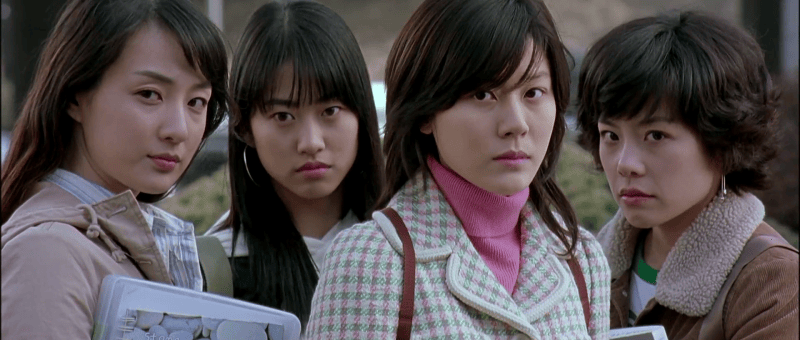
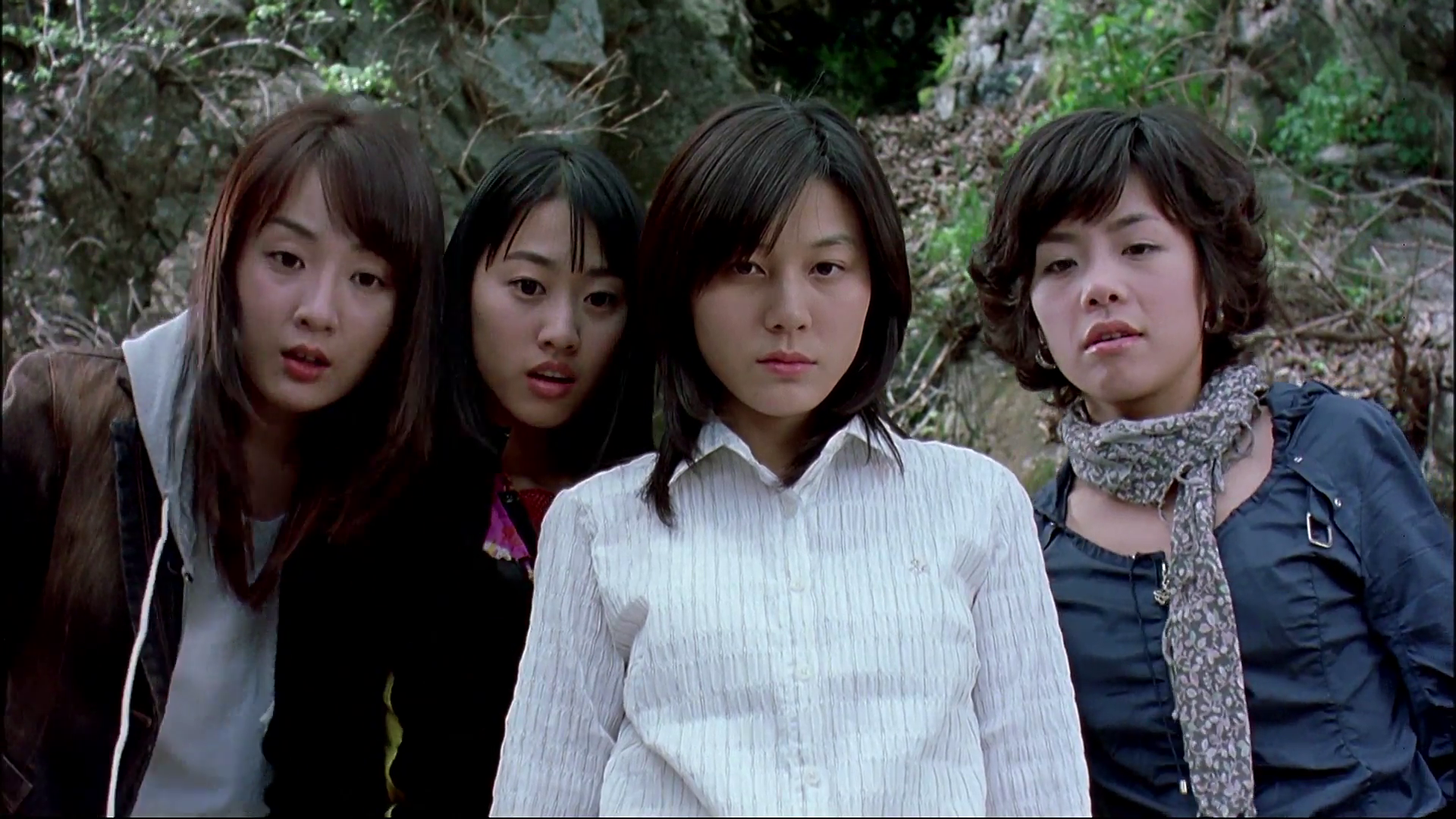
This is not altogether welcome for Ji-won, as she begins to realise that prior to her accident, she may not have been a very nice person. She begins having visions of being told off by herself and comes to understand that she and her high school friendship group, who have now almost all been killed or gone mad, were involved with bullying another girl, Su-in (Nam Sang-mi), ostensibly because she was poor while they were all wealthy. Further flashbacks hint that she and Su-in may once have been friends, though Ji-won’s financial status improved markedly so that she could join the posh girl group and no longer wanted to associate with someone like Su-in.

Su-in laments that because of their poverty, neither of them had many friends besides each other when they were younger, and that now Ji-won is rich, she’s suddenly friends with everyone, hinting at the rather superficial nature of friendships and the snobbishness of the surrounding society in which relationships are often divided along the lines of social class. Ji-won, however, resents this, rejecting Su-in’s claim that no one was friends with her and insisting she’s nothing like Su-in in deliberately seeking to exclude herself from the ranks of the poor by suggesting she’s innately different. “I’m not who I was,” she ironically says, as if she had been somehow reborn following her parents’ financial success. But at the same time, Su-in has a similar mindset. When Ji-won asks her what she wants to be when she grows up, she replies only “you”, wishing this new future not only of financial comfort but friendship and acceptance for herself.

After joining the mean girl group, it’s as if Ji-won punished Su-in deliberately in order to make it clear that she is not like her and now belongs to this new elite class free of the stigma of poverty. Su-in meanwhile is willing to put up with a degree of mistreatment in order to be accepted by the group and remain “friends” with Ji-won, whom she still seems to care about. It does seem that college student Ji-won is a different, nicer person, who only has one friend in a boy a couple of years older who’s just returned from military service (Ryu Jin). Perhaps having lost her memories she’s essentially a blank slate who never learned these kinds of petty hierarchies as a child and as an adult has a better ability to see how arbitrary and unkind they really are. At any rate, she is not who she was, but is still targeted by a force she has not yet identified, just as she has still not identified herself.

The Ghost (령, Ryeong, AKA Dead Friend) seems to be drawing quite heavily from the J-horror phenomenon, though making its watery spirits and Ouija boards very much its own. The final twist is indeed quite ingenious and completely unexpected, proving that finding the ghost’s body doesn’t always lift the curse, especially if it’s not the one the ghost was after. The screenplay is extremely well constructed, lending a degree of psychological nuance and internal consistency in the constant mirroring of Ji-won and Su-in while hinting that the real terror here may be not just prejudice but what the fear of it will do to someone’s outlook and behaviour, causing them to act in terrible ways simply to prove that they are not the other but only one of us, which is to say someone worthy of respect. That kind of rage, it seems, is not cured by death. Kim Tae-gyeong’s eerie ghost story is drenched in a particular kind of loneliness that suggests all along they could have been friends if it weren’t for social exclusion and the arbitrary stigmas of a highly stratified society.


Trailer (English subtitles)
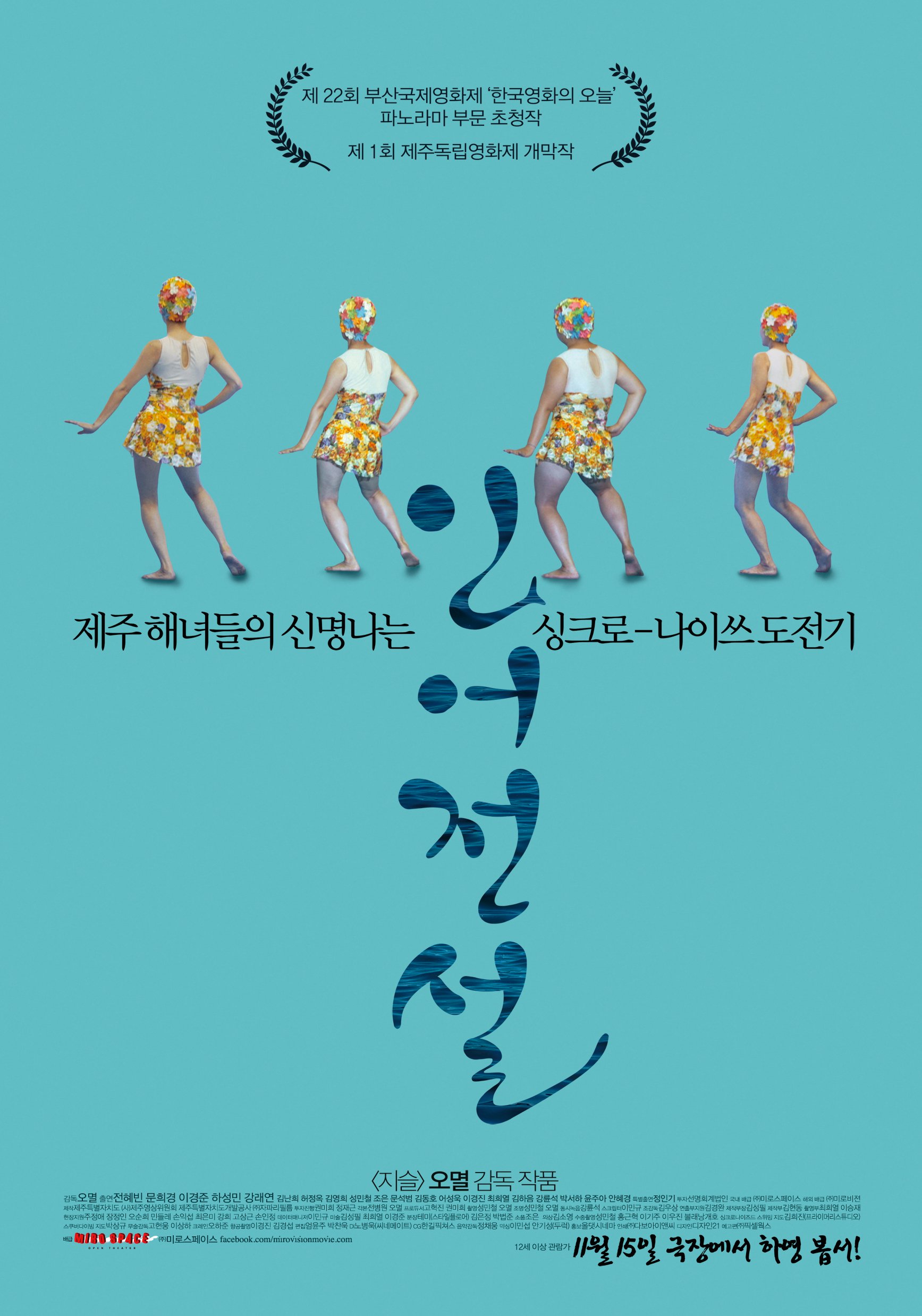
Mermaid Unlimited (인어전설, O Muel, 2017)

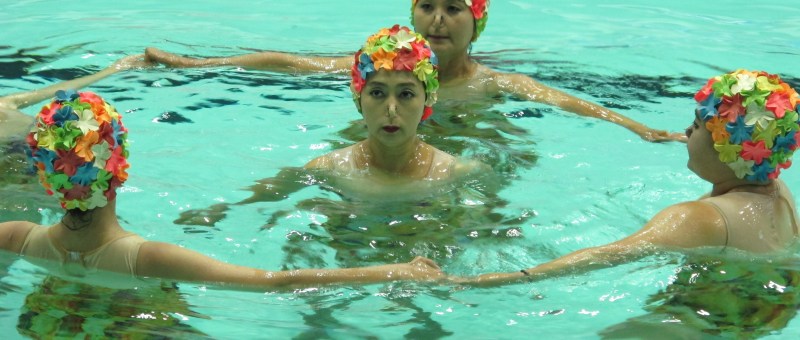
Venal city corporatism meets traditional Jeju culture in O Muel’s quirky comedy Mermaid Unlimited (인어전설, Ineojeonseol). An island movie showcasing the laidback charms of a disappearing way of life through those of the haenyo divers, Mermaid Unlimited is also an early example of cinema’s recent fascination with the art of synchronised swimming in which this most organised of sports helps a troubled young woman get a much needed reset in her life thanks to the down-home wisdom of the island aunties and the healing waters of Jeju.

A well-meaning government body has come up with a plan to promote synchronised swimming by getting a team of traditional haenyo divers as a warm up act before a national competition to be held in Jeju in the hope of making the sport “more accessible”. Former national team member Ga-yeon (Kang Rae-yeon) is under a lot of pressure to get a medal, not least to dispel the doubts of a hostile suit upset at having been passed over for project lead. In any case, she recommends an old colleague, Yeong-ju (Jeon Hye-Bin), who was the leading light of their old squad to coach the island ladies so they can perform a routine as requested by the PR people. However, there are several issues with this plan. The first being that village chief Bongseok (Lee Kyung-joon) has been a little over enthusiastic in agreeing to the idea seeing as there are very few remaining haenyo in the local area and many of them are understandably getting on in years. Meanwhile, Yeong-ju is in the middle of an extended personal crisis and is in fact a functioning alcoholic. 

Nevertheless, her appearance on the island immediately causes a commotion not least with Bongseok who is instantly smitten. She is herself, however, not perhaps convinced, instantly earning the ire of the defacto leader of the haenyo, the feisty and foulmouthed Okja (Moon Hee-kyung), after thoughtlessly describing the women as a load of old grannies, doubtful if they are really worthy of her precious “water ballet”. What ensues is a less than genial face off as the two women try to prove themselves queen of the seas through a petty competition which ends inconclusively and with a degree of drama but does eventually broker a kind of solidarity if only as they slag off their useless menfolk. In any case, the island ladies begin training in earnest while attempting to deal with their own quirky island problems. 

The island is certainly home to a fair few characters from Bongseok, smitten and overexcited while slightly clueless as to what the project entails (selling his empty swimming pool as bound to fill up next time it rains), to Okja’s wayward son Mansoo (Eo Sung-wook) and his bad romance, the pregnant haenyo who wants to give birth the old-fashioned way, a strange shanmaness and her son who has learning difficulties, and the young woman who desperately wants to become a haenyo despite her mother’s objections. Yeong-ju had a point when she suggested there weren’t many younger women around, most of the haenyo are indeed middle aged or older, and it’s fair to say this is a way of life fast disappearing. Okja laments that they haven’t been able to catch much lately, and later we hear of the building of a sea wall which may be having a detrimental affect on sea life so much so that there are reports of an elderly diver from a few villages over going missing at sea while protesting. Even so, the old women remain fiercely proud of their island culture and determined to protect it, seeing in the synchronised swimming exercise a way to show off their existence, something which perhaps mildly backfires bringing an influx of foreign tourists to the island hoping get the haenyo experience much to the confusion of the underprepared though very excited Bongseok. 

Through her friendship with Okja and the gentle support of the other island ladies who’ve seen enough of life to be unjudgemental, Yeong-ju begins to work through her unresolved trauma and alcohol issues while falling in love with island life and the traditional haenyo culture. A gentle ode to the wholesome charms of Jeju with its beautiful ocean vistas and hard spun rural wisdom, Mermaid Unlimited makes the case not only for the power of female solidarity but of bodies in unison as a means of existential healing through shared endeavour. 


Mermaid Unlimited streams in Poland until 6th December as part of the 14th Five Flavours Film Festival.

Original trailer (no subtitles)