Sasori (さそり, Joe Ma Wai-Ho, 2008)

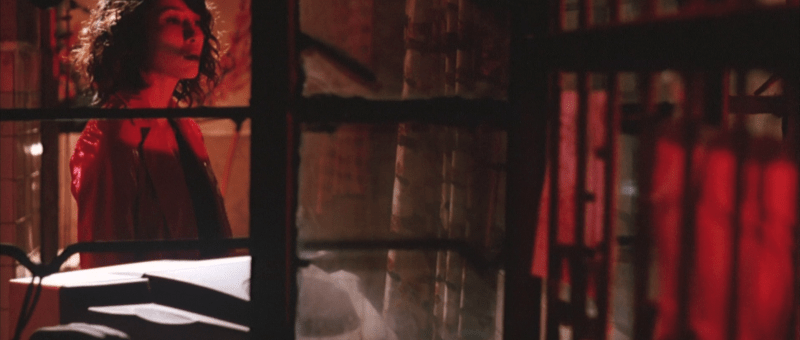
Sasori had been dormant for a decade before being resurrected in this Hong Kong co-production directed by Joe Ma. She is, however, a very different Nami Matsushima (Mizuno Miki) who becomes less a feminist avenger than a sociopathic killer, albeit one fixated on revenge and with ambivalent feelings towards her former lover, Hei Tai (Dylan Kuo Pin-Chao), who evidently did not have enough faith in her to realise that she didn’t murder his entire family just because she felt like it.

Nevertheless, in contrast to other Namis, she did make the decision to do it and went through with stabbing Hei Tai’s sister in the heart right in front of him even if she did it to protect him from the crooks who’d invaded their home. Motives are never explicitly explained, but it’s later suggested that Hei Tai’s professor father may have been knocked off by a rival scholar/gangster researching “inhuman organ treatment”. In any case, the goons that break into her home sexually assault Nami and tell her the only way to save Hei Tai is to help them kill his father and sister. Unfortunately, Hei Tai does not seem to recognise the position she was in nor her transgressive love for him, so is filled with boiling rage and resentment. Curiously, Nami never actually explains either, but is by that point mired in a women’s prison where she contends with the sleazy warden (Lam Suet) and the cellblock’s toughest lady, Dieyou (Natsume Nana), through the medium of cage-based mud wrestling.

This Nami’s transformation is obvious when she rips the loose skull fragment from a woman with learning difficulties she’s befriended and uses it to kill Dieyou. The moment at which she kills Dieyou’s sister, a woman she has no quarrel with, solely to unbalance her rival is presented as a kind of climax in which Nami herself appears to get off on the act of killing. During this earlier stretch of the film, Nami’s victims are largely female and killed for petty reasons. Seemingly cowed and beaten down, she does what the warden says rather than opposing him or like other Nami’s stabbing him in an eye. 

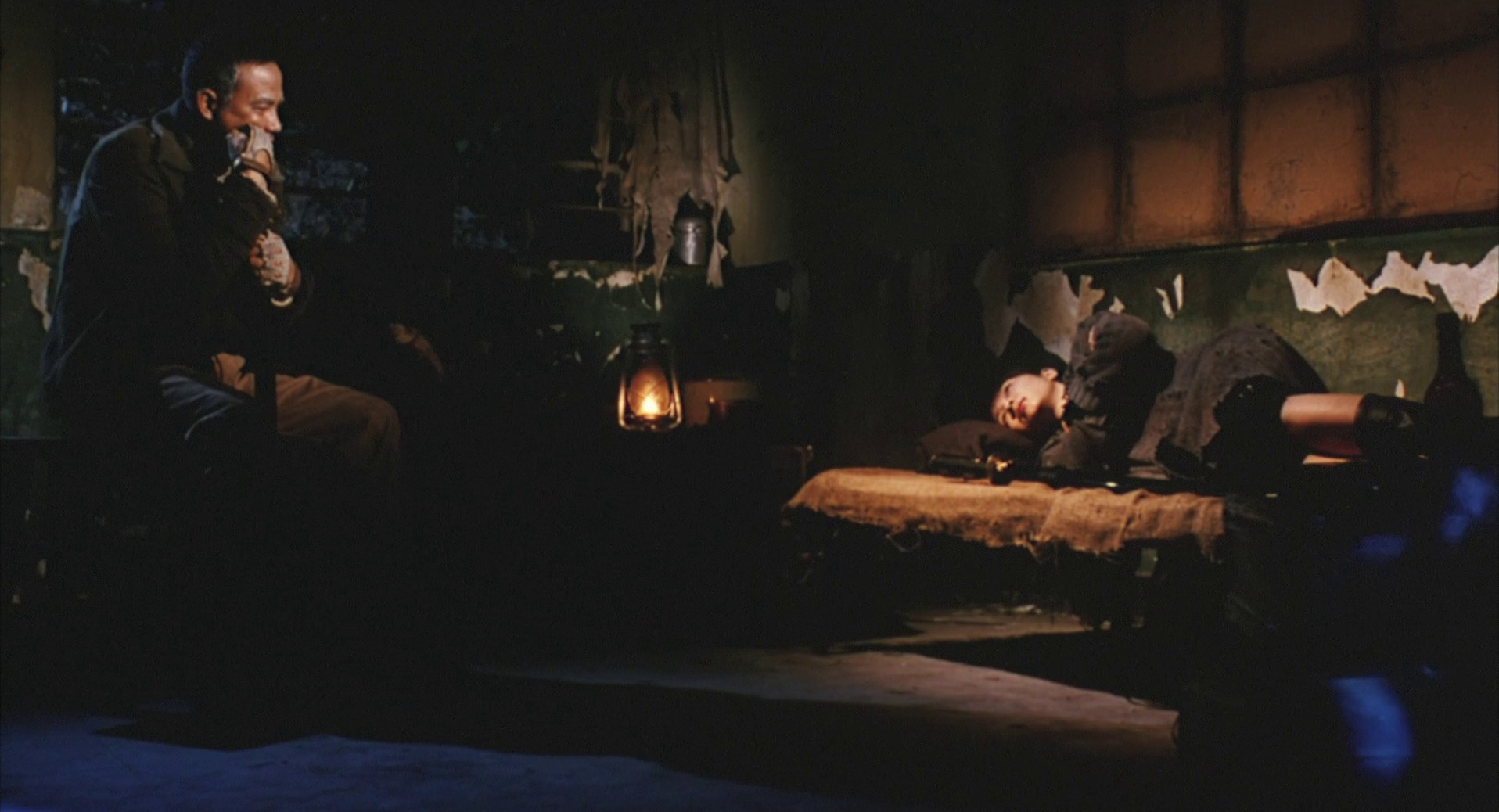
This does, however, eventually allow her to escape if as a corpse rescued by a mysterious “corpse collector” (Simon Yam Tat-Wah) who gifts her a Japanese sword and teaches her kung fu so she can achieve her revenge. It’s at this moment that she becomes a kind of supernaturally powered embodiment of vengeance, but it’s immediately made clear that the only revenge she seeks is personal. Spotting a pimp kicking a sex worker in the street, she strikes him down but only tells the sex worker that she doesn’t plan to kill her too otherwise making no further attempt to help her. Ma then takes the action back to its manga roots, relying on obvious wirework to lend a kind of unreality to the fight scenes even if the hand-to-hand combat is generally more realistic. 

But at the same time, Nami steps into a more arthouse space in a meditation on time and memory that seems to be borrowing a little from Old Boy or perhaps 2046 as she walks into a bar where the barman tells her that he can hypnotise people to erase their memories though he doesn’t they should. Re-encountering Hei Tai who no longer remembers her or his past life as a policeman, she finds herself ambivalent about her revenge, on one level resenting him and on another wondering if she has the right to start over without the problematic fact of her having been responsible for the deaths of Hei Tai’s whole family. 

There are many things that don’t really make all that much sense, from the inhuman organ research to Hei Tai’s possibly selective amnesia. Nevertheless, Ma piles on the style with a particularly 2000s Hong Kong aesthetic with its neon lighting and woozy camera work but also adopts a retro sensibility brought out by the use of mainly post-sync sound in which the Japanese actors are dubbed into Cantonese. By the film’s conclusion, Nami has once again become a legend but this time a much less palatable one not so much avenger for an oppressed minority as a cold-blooded and sadistic vigilante interested in little more than personal revenge.


International trailer
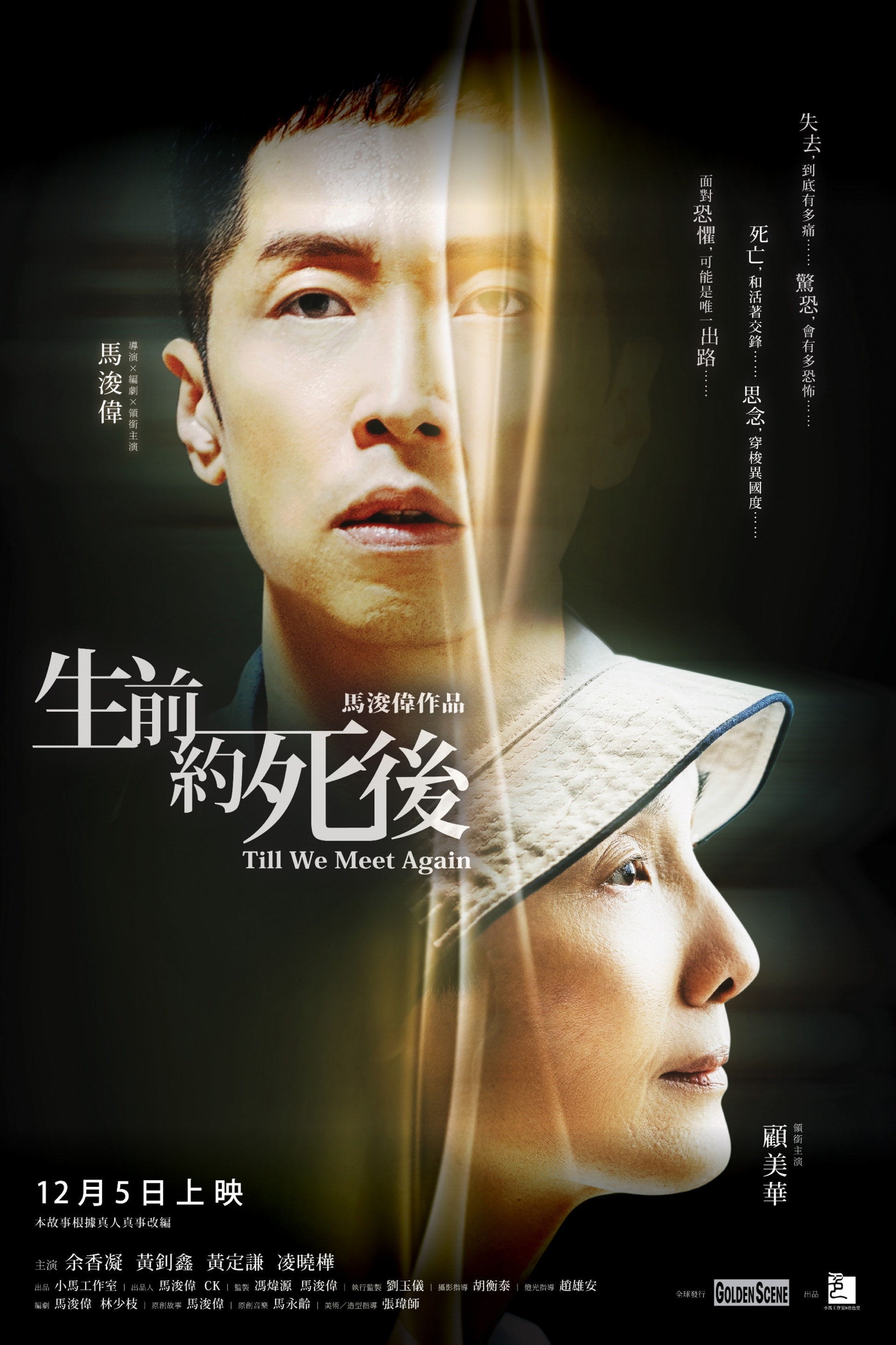
Till We Meet Again (生前约死后, Steven Ma, 2019)

“What if you let go of my hand and I get lost?” an over anxious little boy asks his mother. “Then you should stay where you are,” she tells him, “Mum will definitely come back for you.” It’s an instruction the now adult Wai (Steven Ma Chun-Wai) has perhaps taken too literally, struggling under the weight of grief and filial guilt while standing still waiting for his mother to find him again in the hope of earning her forgiveness for a sin he does not quite want to remember. Semi-autobiographical, Steven Ma’s Till We Meet (生前约死后) again is at once a dark psychodrama of man undone by loss but also a deeply touching evocation of an unbreakable mother son bond. 

Now a solitary salesman, 30-something Wai has only one wish – to reunite with his mother whom he hasn’t seen in over 10 years fearing that she bears some kind of grudge against him. We in fact see Mui (Josephine Koo Mei-Wah), his mother, angrily telling another woman, Lai (Bee Wong Chiu-Yam), that she refuses to see her son though the scene is not quite as it first seems. After abruptly quitting his job, Wai wanders out into the street and endures some kind of mental breakdown after which he visits his psychiatrist who reminds him that his mother is dead and has been for some time. 

Wai avows that he doesn’t like taking his medication because it makes him feel “sluggish” but increasingly finds his mental universe fracturing, shifting between sepia-tinted memories of his early childhood during which his mother first became ill and his life as a young man during which she suffered a relapse and later passed away. We begin to doubt Wai’s perception, uncertain if people and events he encounters are “real” or a product of his psychosis. His mother, ghost or merely spectre of memory, hovers on the sidelines apparently unwilling to see him though perhaps for his own good in hoping he will finally be able to move on and learn to be happy in acceptance of his loss. 

Tracey (Jennifer Yu Heung-Ying), his perhaps unrealistically invested psychiatrist, reminds Wai that he isn’t the only person who’s ever been bereaved or felt abandoned, left behind by those who have gone far away. She herself lost her mother young and was then abandoned by her father who left her in the care of an uncle who too abandoned her and ran off with all her father’s money. Another ghostly, perhaps imagined, conversation with Mui reveals that again Tracey may not have the full story and may never get it but unlike Wai may still have the chance to achieve a kind of closure with the traumatic past. He meanwhile carries the burden of his repressed guilt as it slowly works its way to the surface, cutting through his fragile psyche like a knife. 

While Mui’s conversations with third parties presumably taking place entirely within Wai’s mind may hint at a deeper psychological crisis they are essentially attempts to work out his guilt and shame, one-sided dialogues that eventually guide him back towards an acceptance of the truth he was intent on forgetting beginning with the traumatic fact of his mother’s death. Perhaps to some Wai’s maternal attachment may seem extreme, as the psychiatrist echoes in reminding him he’s not the only son to suffer such catastrophic loss, but it’s underpinned by a sense of filial guilt that lies at the heart of their bond in his worry that his own distress pushed Mui into pursuing a path she may otherwise have rejected on the grounds it would only cause her more pain for an additional few weeks of life. 

Trapped in his grief and guilt, Wai staggers through a nightmarish existence elegantly manifested in Ma’s abrupt tonal shifts as Wai finds himself staggering along a darkened corridor complete with faulty lighting and a single exit, while the sky itself seems to brighten to more romantic tones as he embraces a fantasy of a happier time drawing closer either to a kind of closure or the victory of his delusion whichever way you wish to read it. A painful journey through guilt and grieving, Ma’s unsparing drama provides few easy answers for living with loss but does perhaps allow its hero a degree of escape if only in unreality. 


Till We Meet Again streams in the UK until 15th February as part of Focus Hong Kong

Original trailer (English / Traditional Chinese subtitles)