Fusa (その木戸を通って, Kon Ichikawa, 1993)

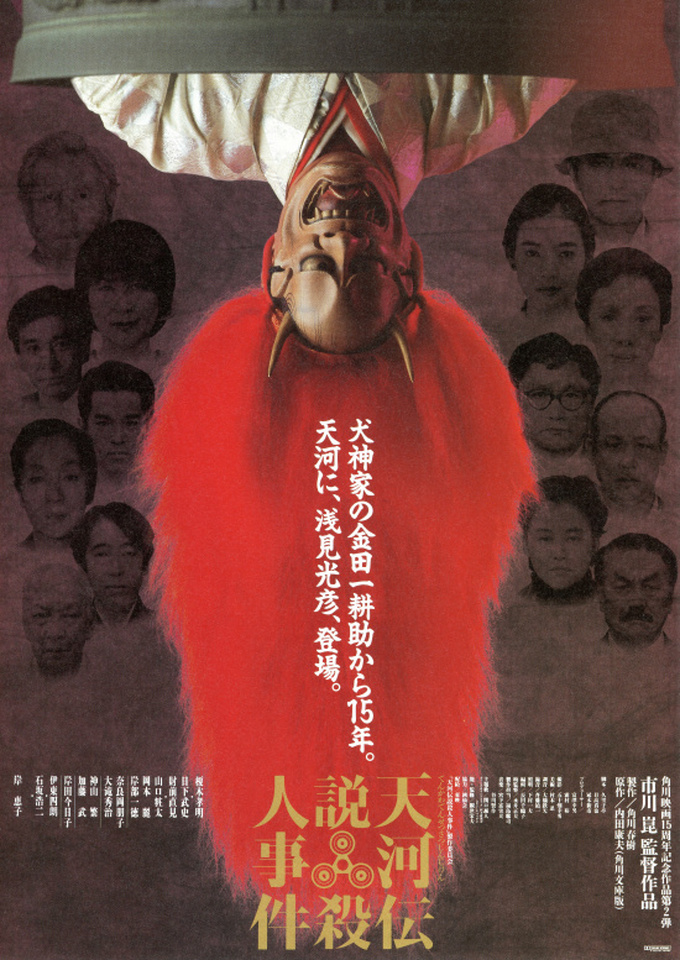
Kon Ichikawa’s Fusa (その木戸を通って, Sono Kido wo Totte) opens on a note of artifice. Misty rain and the verdant green of the forest give way to total darkness in which leaves appear, followed by the hero, Seishiro (Kiichi Nakai) tending a bonsai tree. As light brightens the scene, we see that he is seated beyond the veranda of his home which has taken on the appearance of a proscenium arch framed by the open shoji. It’s almost as if this space, in which Seishiro will enter his own reverie, is one of unreality as distinct from the interior which is busy with the preparations for the marriage of Seishiro’s only daughter, Yuka.

17 years previously, however, it was his own marriage he was preoccupied with when a mysterious woman arrived at his home claiming to have lost her memory and knowing only his name while he was away doing the annual audit. This is a little ironic, because “Seishiro Hiramatsu” hadn’t  been his name for very long and, in fact, he struggled to remember it or answer when called. The second son of an Edo lord, Seishiro had been adopted into the Hiramatsu clan and has made an advantageous match with the daughter of a lord, Tomoe. The presence of the mysterious woman threatens Seishiro’s position and path to advancement when Tomoe happens to catch sight of her, assuming she’s an old flame from Edo trying to rekindle things with Seishiro.

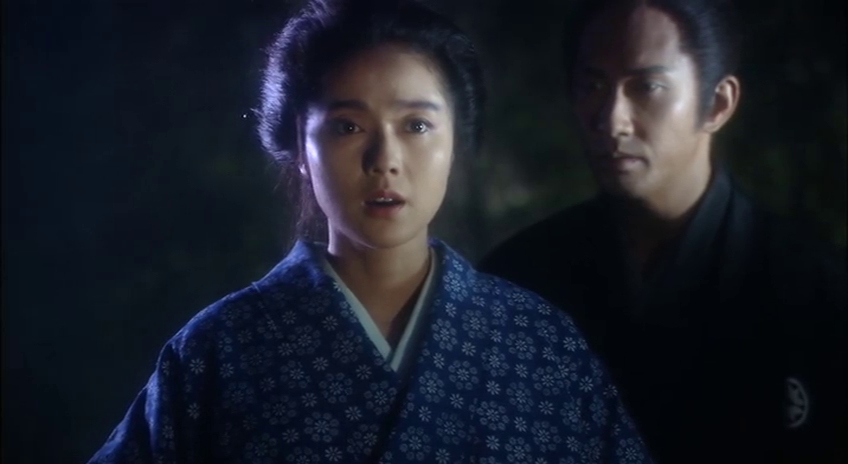
He, meanwhile, assumes the woman’s arrival is part of a plot to discredit him and ruin his engagement, presumably perpetrated by a jealous rival. For those reasons, he instructs his retainer Yoshizuka to have the girl sent away, but he and his wife (Kyoko Kishida) feel sorry for her and wish to take her into the household. Seishiro comes up with the ingenious plan of throwing her out and following her to see if she meets up with whoever sent her, but becomes protective when she is nearly assaulted by a pair of local louts. Despite himself, he becomes absorbed in the mystery, but at the same time both he and the woman, whom they name “Fusa” (Yuko Asano), become worried that if she did in fact regain her memory, she would have to leave.

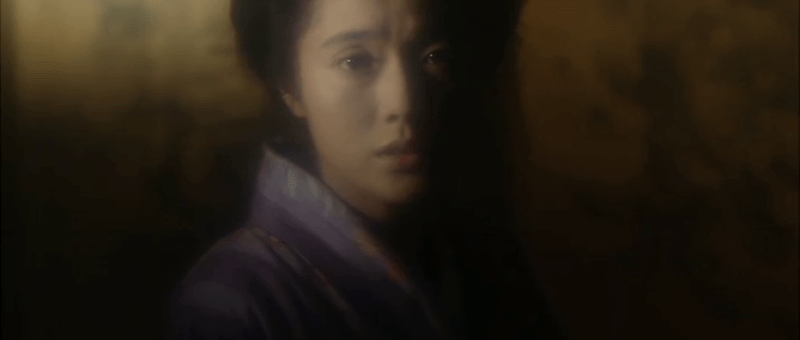
Fusa sometimes enters a kind of trance state, staring at the mystical forest behind the house in way that gives her a supernatural air. That she arrives so suddenly aligns her with a tradition of ghost story and folklore, suggesting that she may be some kind of forest spirit that like the Snow Woman would have to leave once the spell was broken. She describes herself as feeling as if he had been possessed or were trapped within a dream. As Seishiro learns later, she may not have known his name at all, but only taken it from one of his servants, while her past remains opaque. Nevertheless, they are blissfully happy and conceive a daughter together before Fusa suddenly disappears with the same suddenness as she arrived. She had often had visions of a bamboo path and a wooden door beyond which seem to lurk the secrets of her past, but it may not be possible to return after passing through.

Seishiro continues to believe she will one day remember them and return, but at the same time knows to treasure the small bubble of happiness they once had no matter how long it lasted. The truth is only that she was here and then gone, which isn’t so much of an unusual story and requires little explanation, though Seishiro never really solves the mystery as he had vowed to do. Perhaps like Fusa, he didn’t really want to risk breaking the spell. Based on a story by Shugoro Yamamoto, the film was produced by Fuji TV as a test feature for NHK’s “Hi-Vision” high-definition television channel with the consequence that it was shot on hi-def video tape and later transferred to 35mm for international festival screenings. For those reasons, it’s not a particularly handsome film and obviously low budget, but even so Ichikawa makes the most of the medium, leaning into its soft focus to create an ethereal and mysterious atmosphere. Playing with colour and light, he often frames Fusa as the only one in colour in an otherwise monochrome scene as if perhaps suggesting that it’s Seishiro’s world that lacks reality rather than hers. An ominous violet light seems to emanate from the misty forest, but in truth perhaps all here are ghosts looking for a way to go beyond the wooden door but, at the same time, hoping they won’t find it.

Murder of the Inugami Clan (犬神家の一族, Kon Ichikawa, 2006)

the inugami family 2006 posterBeginning his career in the late 1940s, Kon Ichikawa was a contemporary of the leading lights of Japanese cinema during the golden age though has never quite achieved the level of international acclaim awarded to studio mate Akira Kurosawa. Unlike Kurosawa however, whose career floundered the wake of the studio system’s collapse, Ichikawa was able to go on making films through the difficult years of the 70s and 80s precisely because he was willing to take on projects that were purely commercial in nature. His biggest box office hit was an adaptation of the Seishi Yokomizo novel The Inugami Family which led to a further four films starring the author’s eccentric detective Kosuke Kindaichi. 30 years later, in what would turn out to be his final film, Ichikawa took the unusual step of remaking his biggest commercial success and even more unusually decided to recast several of the same actors in their original roles.

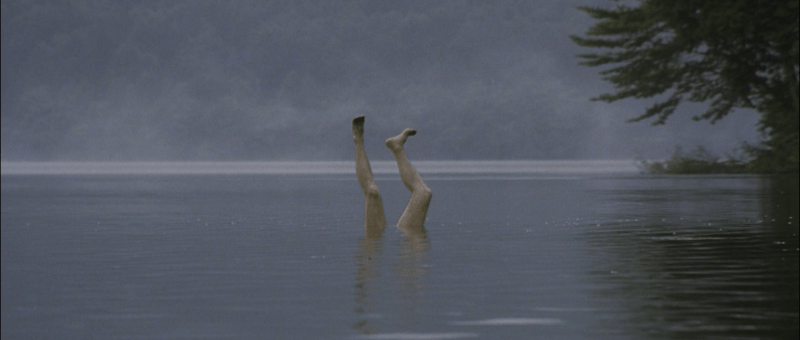
The script remains almost identical to the 1976 version though slightly slimmer. In 1947, pharmaceuticals magnate Sahei Inugami (Tatsuya Nakadai) dies leaving a confusing will which upsets absolutely everyone – not least his three daughters whom he fathered with three different women none of whom he was legally married to. Sahei has elected to leave the bulk of his estate to a young lady, Tamayo (Nanako Matsushima), who is not part of the family, on the condition that she marry one of his grandsons though he stresses that she is free to choose. If she chooses to marry someone else, the estate will be split between the three grandsons and another illegitimate son fathered with a maid whose whereabouts are apparently unknown. With such a vast fortune at stake, it is not long before the first murder occurs.

The most major difference between the 1976 and 2006 versions is, perhaps counterintuitively, the budget. Whereas the 1976 version had been one of the “taisaku” prestige pictures which dominated the mainstream cinema of the era and had the marketing genius of a young Haruki Kadokawa behind it, the 2006 version is a much more modest affair with minimal production values and a noticeably unfussy approach. The 1976 version, like the other instalments in the ‘70s series, also boasted a starry cast including golden age star Mieko Takamine, even employing Kyoko Kishida in a tiny two scene role as a blind koto teacher. Perhaps the strangest and most experimental choice made by Ichikawa in terms of his “remake”, is the one to cast original star Koji Ishizaka as the eccentric detective, reprising his role from the earlier film 30 years later. In fact, many of the other characters whose ages are not important are also played by the original actors including the bumbling policeman (Takeshi Kato) and his sidekick who appear throughout the series (comedy director Koki Mitani makes a noted cameo in the spot occupied by Seishi Yokomizo in the original adaptation).

The recasting adds to the level of uncanniness created by the dissonance between the opulence of the 76 version, and the austerity of that from 2006. This time around, Ichikawa shoots in 16:9 rather than (the then) TV friendly 4:3, but in the scaled back hyperrealist style common to lower budget dramas from the 2000s. The flat digital cinematography only serves to add to the general lifelessness of the drama which features only the main players, the sole crowd scene occurring during a flashback to the repatriation shot to match the accompanying stock footage just as in the 1976 version. Whereas Ishizaka and the other veterans are mainly acting within the broader yet largely naturalistic style of 70s cinema, the younger members have adopted the decidedly theatrical tones common in contemporary indie drama which somewhat undercuts the strange mix of camp fun and serious drama which had defined the Kindaichi series.

In contrast to the ‘70s movies, Ichikawa plays it uncharacteristically safe – opting for many of the same techniques but reining them in, using plain black and white instead of negative, easing back on the gore, and lowering the level of violence. The results are decidedly mixed and though the central mystery has not changed, the 2006 edition proves a much less satisfactory experience that does not so much attempt to recapture the strange magic of the original as throw it into contrast through its absence. The story of the Inugami murders is, like many a Kindaichi mystery, one less of greed and selfishness than the lasting effects of repression, frustrated desires, and difficult loves and as such it is timeless, yet lightning doesn’t strike twice and Ichikawa’s second attempt at bottling it only goes to show that there’s little to gain in slavishly aping the past.


Original trailer (English subtitles)

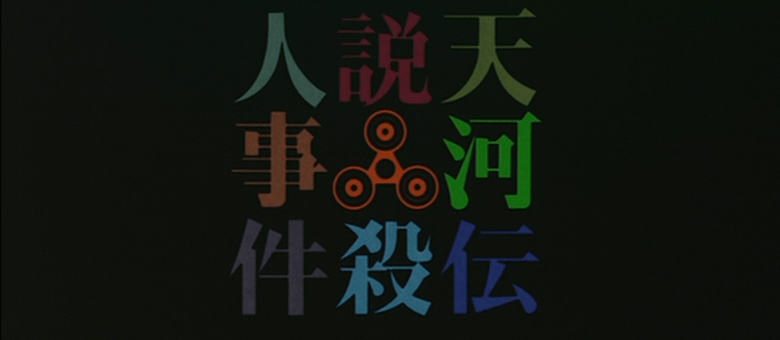
Noh Mask Murders (天河伝説殺人事件, Kon Ichikawa, 1991)

noh mask murders posterFor one reason or another, Japanese mystery novels have yet to achieve the impact recently afforded to their Scandinavian brethren. Japan does however have a long and distinguished history of detective fiction and a number of distinctive, eccentric sleuths echoing the European classics. Mitsuhiko Asami is just one among many of Japan’s not quite normal investigators, and though Noh Mask Murders (天河伝説殺人事件, Tenkawa Densetsu Satsujin Jiken) is technically the 23rd in the Asami series, Kon Ichikawa’s adaptation sets itself up as the very first Asami case file and as something close to an origin story.

Ichikawa, though he may be best remembered for his ‘60s arthouse masterpieces, was able to go on filmmaking where others perhaps were not precisely because of his forays into the populist with a series of mystery thrillers including several featuring top Japanese detective Kindaichi (who receives brief name check in Noh Mask Murders). Published by Kadokawa, Noh Mask Murders is produced by Haruki Kadokawa towards the end of his populist heyday and features many of the hallmarks of a “Kadokawa” film but Ichikawa also takes the opportunity for a little formal experimentation to supplement what is perhaps a weaker locked room mystery.

Asami (Takaaki Enoki) begins with a voice over as four plot strands occur at the same temporal moment at different spaces across the city. In Shinjuku, a salaryman drops dead on the street, while a young couple enjoy a secret tryst in a secluded forest, a troupe of actors rehearse a noh play, and Asami himself is arrested by an officious policeman who notices him walking around with a dead bird in his hand and accuses him of poaching. As he will later prove, all of these moments are connected either by fate or coincidence but setting in motion a series of events which will eventually claim a few more lives before its sorry conclusion.

To begin with Asami, he is a slightly strange and ethereal man from an elite background who has been content to drift aimlessly through life to the consternation of his conservative family which includes a police chief brother. He harbours no particular desire to become a detective and is originally irritated by a family friend’s attempts to foist a job on him but gives in when he learns he will have the opportunity to visit Tenkawa which is where, he’s been told, the mysterious woman who helped him out with the policeman in the opening sequence keeps an inn. Hoping to learn more about her, he agrees to write a book about the history of Noh and then becomes embroiled in a second murder which links back to the Mizugami Noh Family which is currently facing a succession crisis as the grandfather finds himself torn over choosing his heir – he wants to choose his granddaughter Hidemi (Naomi Zaizen) who is the better performer but the troupe has never had a female leader and there are other reasons which push him towards picking his grandson, Kazutaka (Shota Yamaguchi).

As with almost all Japanese mysteries, the solution depends on a secret and the possibilities of blackmail and/or potential scandal. The mechanics of murders themselves (save perhaps the first one) are not particularly difficult to figure out and the identity of the killer almost certainly obvious to those who count themselves mystery fans though there are a few red herrings thrown in including a very “obvious” suspect presented early on who turns out to be entirely incidental.

Ichikawa attempts to reinforce the everything is connected moral of the story through an innovative and deliberately disorientating cross cutting technique which begins in the prologue as Ichikawa allows the conversations between the grandchildren to bleed into those of Asami and his friend as if they were in direct dialogue with each other. He foregrounds a sad story of persistent female subjugation and undue reliance on superstition and tradition which is indirectly to blame for the events which come to pass. Everyone regrets the past, and after a little murder begins to see things more clearly in acknowledging the wickedness of their own actions as well as their own sense of guilt and complicity. Noh is, apparently, like a marriage, a matter of mutual responsibility, fostering understanding between people and so, apparently is murder, and one way or another Asami seems to have found his calling.