Back To That Day (幕が下りたら会いましょう, Seira Maeda, 2021)

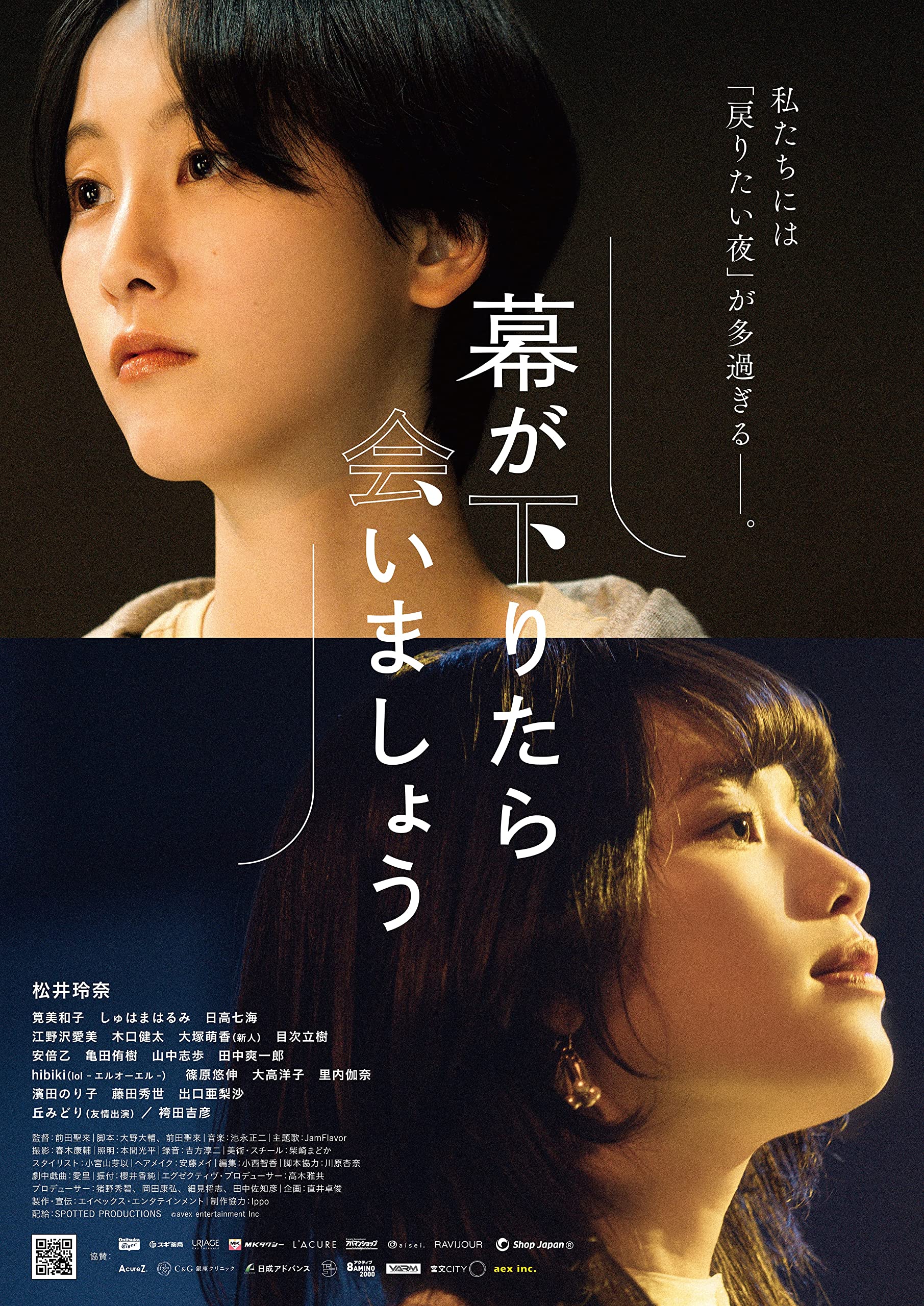
A young woman facing a life crisis is forced to reevaluate her relationships with art, friends, and family after learning that her estranged younger sister has suddenly passed away in Seira Maeda’s indie drama, Back to that Day (幕が下りたら会いましょう, Maku ga Oritara Aimasho). Facing a patriarchal society, the young women at the film’s centre wonder if it’s better to chase your dreams even if they won’t come true or contend with the unfair demands of contemporary salaryman culture in the hope of achieving conventional success and a comfortable life. 

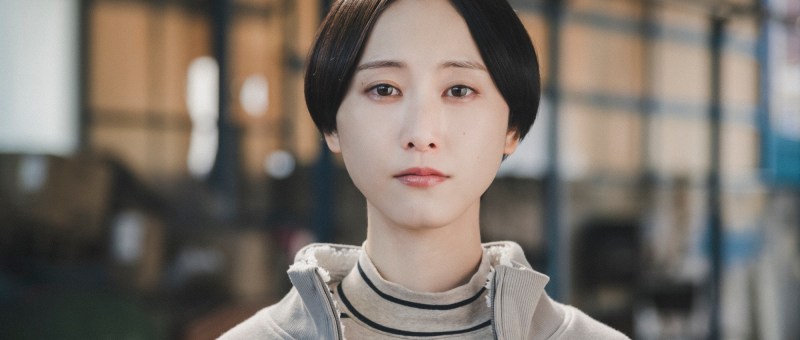
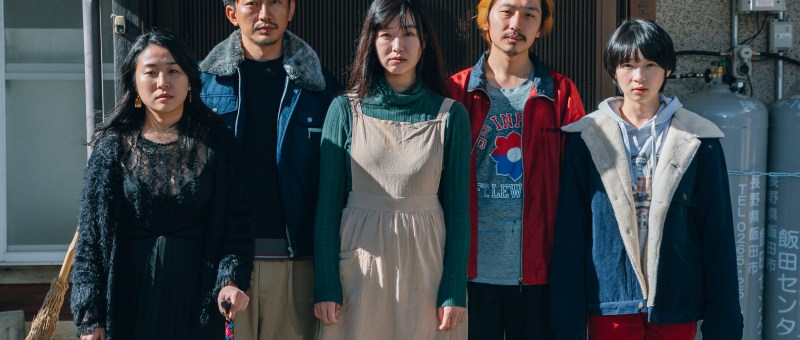
At around thirty, Manami (Rena Matsui) is beginning to lose patience with herself feeling that she’s achieved little in her career as a theatre director in the last 10 years while continuing to work part time at her mother’s hair salon. Her younger sister, Nao (Miwako Kakei), left abruptly for the city some time previously and the pair have hardly spoken since partly as we discover because of a high school falling out that continues to play on Masami’s mind in undermining her sense of confidence in her art. 

The two women have in many ways chosen different paths, Nao striking out by heading to the city and getting a regular office job and Manami staying at home trying to make it work in theatre but finding herself treading water. On the night that Nao dies, the sisters mirror each other each black out drunk collapsed in the street but only one of them is alone which in the end perhaps makes all the difference. Out to dinner with members of her theatre troupe celebrating an engagement, Manami has far too much to drink, much more than than anyone else or than is really appropriate becoming embarrassing in her belligerence as she lays into even her closest friends while others wonder why they bother with the troupe at all now that most of them are ageing out of their carefree days, have full-time paying jobs and growing familial responsibilities to take of. 

Nao, meanwhile as we discover, was pressured into drinking more than was wise by her boss at a semi-compulsory work do, an all too common form of power play in the contemporary working culture. Carrying her own share of guilt, Manami is alerted to this hidden source of her sister’s suffering by one of Nao’s colleagues, Mihashi (Manami Enosawa), who alone attended the funeral. Facing the same continued harassment, Mihashi is determined to confront her boss with the help of Niiyama (Kenta Kiguchi), an activist working on behalf of employees experiencing workplace bullying, but is later blamed herself with the implication that Nao drank on her behalf while she perhaps should have stayed to make sure she was alright before leaving for the last train. Her colleagues insist that Nao seemed cheerful and engaged with the party, while Manami and her actress friend Sanae (Nanami Hidaka) wonder if she wasn’t just playing the part, that in feeling disconnected from her family she wanted to feel accepted by those around her. 

In an unexpected turn of events, however, Manami decides to not to take Nao’s employer to task or attempt to change a dangerous and outdated workplace culture but to try and make peace with difficult relationship they had through restaging the high school play that set them apart which as it turns out was actually written by Nao but for which Manami had taken credit. Along the way she’s led towards a more commercial path by the duplicitous Niiyama who turns out to be a bit of a sleaze and not much better than those he claimed to be challenging. What she discovers is that restaging Nao’s play may not be the best way to honour her, gradually working through her grief and guilt by writing an original piece inspired by their relationship while reconsidering herself and her life up to that point. Of course, in one sense, she reduces Nao to a plot device in the mere motivation for her own creative rejuvenation while partially letting herself off the hook in discovering a family secret that explains a lot about her difficult relationship with her mother but does at least allow her come to terms with her sister’s death in letting her burn out bright just as in the alternate ending she’d crafted for Anna Karenina as a woman driven to extremes by the strictures of her society. 


Original trailer (no subtitles)
Qualia (クオリア, Ryo Ushimaru, 2023)

“What is happiness for a chicken?” a recent recruit to a chicken farm wonders, though as she later points out they all meet a grim fate in the end. Yuko (Kokone Sasaki), a timid, quiet woman is much like the chickens she farms though apparently content with her captivity echoing only that it’s enough for her that she feels needed by the family who otherwise mistreat her. Actor Ryo Ushimaru’s directorial debut Qualia (クオリア) examines the place of women in the contemporary family along with its seething resentments and petty paybacks. 

On spotting one hen that’s being bullied by the others, Yuko places it in a protective cage and wonders if it will one day be able to return to the others while perhaps aware that it echoes her own circumstances. Having married into the family of her husband, Ryosuke (Kenta Kiguchi), she’s become little more than a drudge bullied by her embittered sister-in-law Satomi (Maya Kudamatsu) who walks with a cane after an accident caused by her brother which gives her some additional leverage over him. Perhaps to escape the sense of constraint he feels in his familial relationships, Ryosuke has been having an affair with a woman from a roadstop that buys their eggs, Saiki (Ruka Ishikawa), who has spun a tale about a false pregnancy in an attempt to get him to take their relationship more seriously. When that doesn’t quite work, she fetches up and the farm and is mistaken for a job applicant, overjoyed on realising the position comes with room and board. The unsuspecting Yuko is all too eager to accept her, almost browbeaten by Saiki into overriding her internalised compulsion to clear it with Satomi and Ryosuke first. 

Yuko is such a people pleaser that even after finding out about Saiki’s claims to be carrying her husband’s child she welcomes her into their home as if tacitly admitting her inferiority to this other woman who has done what she couldn’t do in conceiving a child. Much more direct by nature, Saiki cruelly retorts that becoming a mother is the key part of being a wife while making pointed and barbed remarks that express her desire to elbow Yuko out of the way and take her rightful place at Ryosuke’s side. After moving in, she quickly takes over the domestic space by requesting that she be allowed to help with the cooking and cleaning while Yuko takes care of the chickens outside, playing the part of the perfect housewife in an attempt to undercut Yuko’s place within the family.

Yet she also seems to feel sorry for Yuko and disapproves of the way Ryosuke treats her with his bullying manner and emotional coolness. Ryosuke had told her that he never loved Yuko and had married her only because his sister told him to, hinting at his feelings of emasculation amid this otherwise matriarchal environment where Satomi effectively rules the roost. The irony is that there are supposedly only female chickens on the farm which is how they ensure none of the eggs they send out are fertilised. If they find out any of the new chicks they take in are male, they get “removed” by conflicted farmhand Taichi (Chikara To) who is a bit of chicken obsessive and finds it hard to square his affection for the birds with this responsibilities as a farmer which mean they’ll all be “removed” when they stop laying and therefore lose their purpose.

The same is true for Yuko. Unable to conceive she’s now being replaced by a subsequent generation and has lost the will to fight back unable even to say that she objects to any of these new arrangements. Ryosuke, a rooster in the henhouse though one whose masculinity is scrutinised, seems to want a reaction from her but all she can tell him is that she treasures the memory of him proposing to her with all the chickens cheering them on and that she’s satisfied just with that one romantic moment. The question remains whether she too will one day find the courage to fly the coop and escape her bullying at the hands of the other women or otherwise discover a way to reassert herself that doesn’t leave her at their mercy. In any case, Ushimaru’s quirky, surreal dramedy eventually discovers that chickens too can fly if only they’re given the chance to do so.


Qualia screened as part of this year’s Nippon Connection

Original trailer (English subtitles)

Twilight Cinema Blues (銀平町シネマブルース, Hideo Jojo, 2023)

Japan’s mini theatres have been in a status of crisis since the pandemic. Already struggling under the weight of changing times the immediate restrictions pushed many over the edge unable to entice older regulars back into screens or find a new audience among the young. This is doubly bad news for the industry as a whole as it’s mini theatres that allow indie films the platform they need to succeed and without them there is little avenue for films produced outside of the mainstream. Like Lim Kah-Wai’s Your Lovely Smile, Hideo Jojo’s Twilight Cinema Blues (銀平町シネマブルース, Ginpeicho Cinema Blues) similarly extols the virtues of the mini theatre which is not just somewhere to watch films but a place to belong that has room for anyone and everyone that wants to be there.

That’s more than true for Takeshi (Keisuke Koide), a struggling man approaching middle age who’s become near destitute and is almost sucked into a welfare scam targeting the homeless by a pair of shady yakuza claiming they run an NPO. At the orientation he runs into Kajiwara (Mitsuru Fukikoshi ), the owner of a mini theatre who declines to join the gangsters’ scheme but offers Takeshi the opportunity to bunk in his storeroom while working part-time little knowing that to Takeshi this particular mini cinema is like a return to source allowing him to rediscover his love of film.

But the mini cinema itself is also struggling. They simply don’t get bums on seats and Kajiawa is behind on paying his staff. Though they have a small collection of regulars, they aren’t enough to keep the lights on on their own. Even the projectionist is thinking he’ll probably retire along with the machine. Unable to afford new films, Kajiawara relies on cheap and easily licensable classics such as old favourite Casablanca but is largely unable to see away out of his situation while feeling guilty over ending what was effectively a family business and local landmark. The building’s 60th anniversary, 60 being a symbolic number in Japanese culture as it represents a full turn of the Chinese zodiac and literal new start, presents an opportunity to both Kajiawara and Takeshi to begin to move forward by renewing their faith in cinema.

The faith of Takeshi’s homeless friend Sato (Shohei Uno) needed no renewing. Though he had nothing, the ability to see a film twice a month made him feel human while the community at the cinema is perhaps the only one that still accepts him. He offers a small prayer after every film, and instructs Takeshi that he should the same. But his openhearted faith is also his undoing, allowing him to fall for the yakuza scam little realising they’ll force him to work for them taking half of the social security payments they helped him sign up for in the process. In the outside world, men like Sato find only exploitation and prejudice with cinema their only refuge.

Then again, filmmaking isn’t easy. A young woman who desperately wanted her debut film to play in her hometown cinema has based her first feature on the life of her father, a failed film director who drank himself to death (in a neat allusion to Oshima’s Cruel Story of Youth, her film’s title literally translates as “cruel story of a director”). Similarly, the suicide of a much loved assistant director has prevented those around him from moving on, preoccupied with the shock his death caused them in its suddenness and lack of obvious cause. They blame themselves sending their lives into a downward spiral that results in crushing financial debts and the end of a marriage. In some ways, the film is an ode to the ADs who keep everything running, including on occasions the director, and are in a sense the custodians of filmmaking.

Still, it’s clear that not everything can seamlessly repaired. Times have moved on even if some have been left behind and you can’t always simply reclaim what you’ve lost, but you can always start again with another spin of the wheel and make the most of what you’ve got. It won’t be the same, but that doesn’t mean it won’t be good. Jojo’s heartwarming tale of cinema has an undercurrent of darkness and despair running beneath, but also suggests that the silver screen can be a beacon hope when the world is at its bleakest and not least for those whose existence largely lies behind it.


Screened as part of this year’s Japan Foundation Touring Film Programme.

Original trailer (English subtitles)

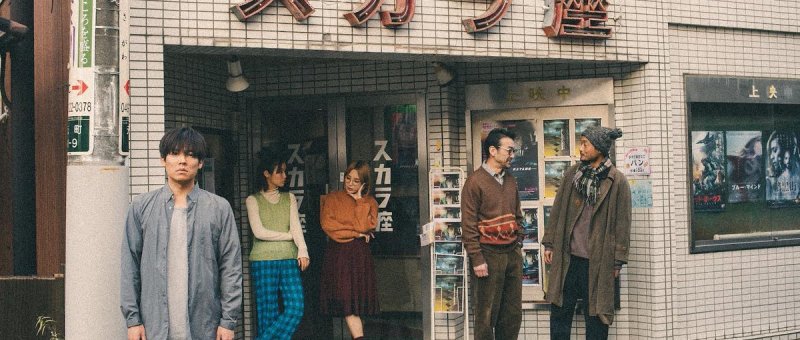
POP! (Masashi Komura, 2021)

You’ve heard “turn that frown upside down”, but are you ready for turn that heart into a…well, perhaps that’s a sentence not worth finishing. The heroine of Masashi Komura’s MOOSIC LAB venture Pop! finds herself in a world of existential confusion on realising that what she assumed to be a heart symbolising love was in fact a giant bum intended to moon an indifferent society. Suddenly she doesn’t know up from down, her entire existence rocked as she contemplates life, love, and the pursuit of happiness on the eve of her 20th birthday. 

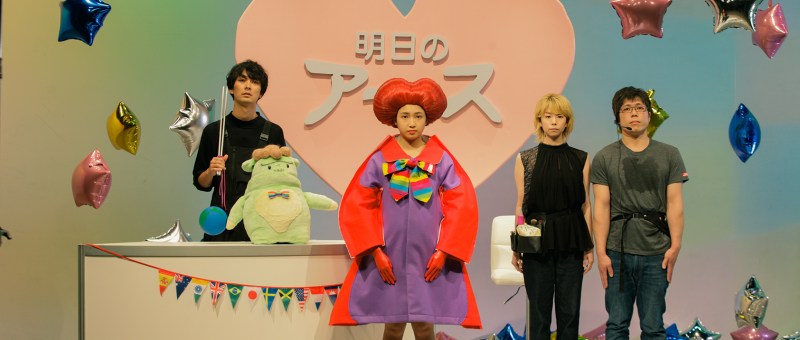
19-year-old Rin (Rina Ono) is currently the presenter/mascot character of local TV charity program “Tomorrow’s Earth Donation” which aims to collect money for the world’s disadvantaged children. Meanwhile, she also has a part-time job as a car park attendant which she takes incredibly seriously even though almost no one ever turns up (including her mysterious co-worker Mr. Numata). In fact, its Rin’s earnestness and youthful naivety which seem to set her apart from her colleagues, makeup artist Maiko later complaining that she makes others uncomfortable with her goody two-shoes act while her bashful present to puppeteer Shoji on his birthday of a framed portrait she’d drawn of him seems to elicit only confusion and mild embarrassment from her bantering co-workers. 

Nevertheless, she’s beginning to wonder about love, in her own way lonely and unfulfilled simultaneously confused and disappointed by the direction of her life. She dreamed of becoming an actress, but is now little more than a front for this strange enterprise in which she, characteristically, believes with her whole heart. Deep down, she just wants everyone to be happy and is sure that if people smiled more the world would be a brighter place. Wearing a giant red wig shaped like a heart, she reads out messages purporting to be from children outlining their dreams for the future even when they’re as banal and materialistic as wanting to become a race car driver. Unfortunately, however, she continually stumbles when asked to read a cue card featuring her own dream, fully scripted for the character she’s supposed to be playing. 

On her first audition, she was shouted out of the room by a director insisting her admittedly over the top improvised death scene was nothing more than attention seeking. The TV news attributes a similar motive to a mysterious bomber currently plaguing the city whom Rin accidentally witnesses one day fleeing the scene of his crime. For some reason struck by his strange presence, and perhaps disillusioned with her brief foray into online dating, Rin develops a fondness for him believing he is just like her because the pattern of his bombings corresponds to the shape of a giant heart enveloping the city. “We must get serious about saving the world!” she announces to her colleagues, “Let’s do it with a bang!” she ironically adds. She may, however, have slightly misunderstood his mission statement especially as when questioned as to his motives he tells her that he does it for the benefit of all because no one else will. 

In any case, she remains hopelessly naive, confused by a strange man who brings his van to the car park presumably for “privacy” and strangely unconcerned by an alarming message on an abandoned car left with its door open which states the driver won’t be needing it anymore. She role-plays direction and agency, but in the end goes nowhere until literally carried away by her “adult” realisation that it’s probably not possible for everyone to smile all the time and it’s not her job to make them. Caught up in the slightly duplicitous world of the cynical program makers who perhaps mean well but are hamstrung by the problems of contemporary Japan, desperate for pictures of smiling children only to realise that none are writing in and hardly any of them know any to ask, she maintains her desire for world peace even while privately conflicted in having lost sight of her own dream. Adopting a little of the bomber’s anarchist swagger, she allows herself to be swept up by a final flight of fancy towards a more cheerful world. Shot with a colourful “pop” aesthetic and a hearty slice of absurdist irony Komura’s strange fairytale is stuffed full of heart and has only infinite sympathy for its earnest heroine’s guileless goodness.


POP! screened as part of the 2021 Osaka Asian Film Festival.

Original trailer (no subtitles)