Women of the Night (夜の女たち, Kenji Mizoguchi, 1948)

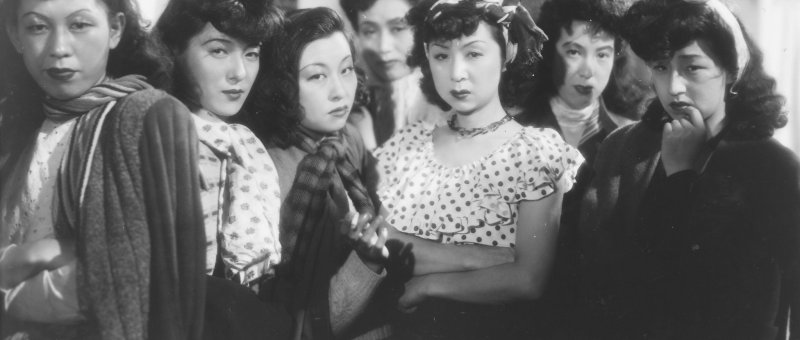
Women of the Night still 1Cinema of the immediate post-war period generally leaned towards upbeat positivity, insisting that, yes, the situation is painful and difficult but it wouldn’t always be this way, at least as long as ordinary people kept their chins up and worked hard to build a better future. Mizoguchi’s Women of the Night (夜の女たち, Yoru no Onnatachi) is very much not interested in this rosy vision of future success being sold by a new morale boosting propaganda machine, but in laying bare the harsh and unforgiving nature of a society that was fast preparing to leave a significant part of its population far behind. Women suffer in war, but they suffer after war too – particularly in a society as stratified as Japan’s had been in which those left without familial support found themselves entirely excluded from the mainstream world.

Fusako (Kinuyo Tanaka), a noble, naive woman still hasn’t heard from her presumably demobbed husband and is living with her in-laws. Her young son has tuberculosis and she is desperately short of money. Selling one of her kimonos, Fusako is excited to to hear of an “interesting proposition” but is repulsed when she realises the saleswoman is inciting her to an act of prostitution. After all, she says, everybody is doing it.

After undergoing a series of tragedies, Fusako thinks things are beginning to go right for her when she manages to get a secretarial job through the kindness of a connection, but it turns out that Mr. Kuriyama (Mitsuo Nagata) is not all he seems and his business may not be as legitimate as Fusako believed it to be. Another small miracle occurs on a street corner as Fusako runs into her long lost sister, Natsuko (Sanae Takasugi), formerly living in Korea and now repatriated to Japan, but a return to normal family life seems impossible in the still smouldering ruins of Osaka filled with black marketeering, desperation, and hopelessness.

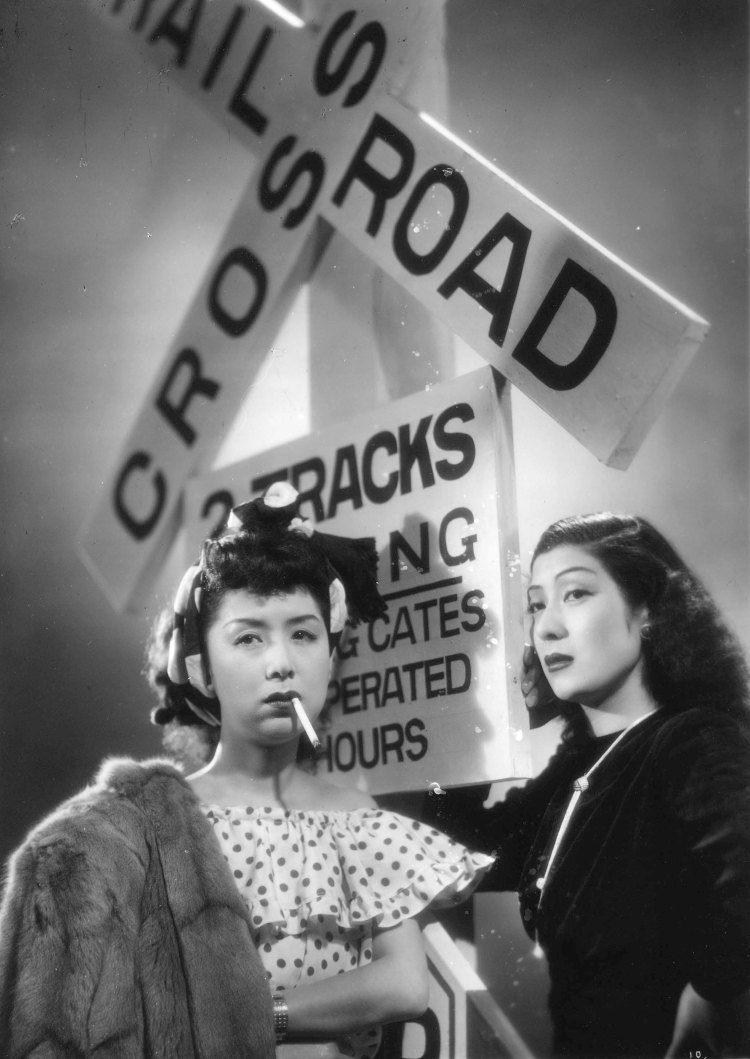
Inspired by the Italian Neo Realist movement, Mizoguchi makes brief use of location shooting to emphasise the current state of the city, still strewn with rubble and the aftermath of destruction. Osaka, like Natsuko and Fusako, finds itself at a cross roads of modernity, paralysed by indecision in looking for a way forward. Fusako, the kinder, more innocent sister dresses in kimono, does not smoke, and is committed to working hard to build a new life for herself. Natsuko, by contrast, dresses exclusively in Western clothing, smokes, drinks, and works as a hostess at a dancehall with the implication that she is already involved in casual forms of prostitution.

Natsuko’s way of life, and later that of Fusako’s much younger sister-in-law Kumiko (Tomie Tsunoda), is painted as a direct consequence of an act of sexual violence. Having been raped during the evacuation from Korea, Natsuko feels herself to have been somehow defiled and rendered unfit for a “normal” life, relegated to the underground world of the sex trade as an already damaged woman. Fusako disapproves of her sister’s choices and is alarmed by the unfamiliar world of bars and dance halls but eventually ends up in the world of prostitution herself as a result of emotional violence in the form of cruel yet incidental betrayal. Fusako’s “descent” into prostitution is less survival than an act both of revenge and of intense self-harm as she vows to avenge herself on the world of men through spreading venereal disease.

Mizoguchi’s attitudes towards sex work were always complex – despite displaying sympathy for women who found themselves trapped within red light district as his own sister had been, he was also a man who spent much of his life in the company of geishas. Nevertheless Women of the Night veers between empathy and disdain for the hosts of post-war “pan pans” existing in codependent female gangs in which violence and hierarchy were as much an essential part as mutual support. The film opens with a sign which instructs women that they should not be seen out after dark lest they will be taken for prostitutes, respectable women should make a point of being home at the proper hour. Later, when Fusako is picked up by a police raid, she comes across a woman from the “purity board” who wants to hand out some pamphlets to help women “reform” from their “impure” ways and temper their presumably insatiable sexual desire. Fusako quite rightly tells the woman where to go while the others echo her in confirming no one has volunteered to live this way because they like it. Starving to death with a pure heart is one thing, but what are any of these women supposed to do in a world that refuses them regular work when they have already lost friends and family and are entirely alone with no hope of survival?

A third option exists in the form of a home for women which has been set up for the express purpose of “reforming” former prostitutes so that they can lead “normal” lives. The home provides ample meals, medical treatment and work though its attitude can be slightly patronising even in its well meaning attempt to re-educate. Again the home is working towards an ideal which is not evident in reality – there are no jobs for these women to go to, and no husbands waiting to support them. Incurring yet another tragedy, Fusako receives a well meaning lecture from a male employee at the home to the effect that it’s time for women to work together to build a better world for all womankind but Fusako has seen enough of the sisterhood realise that won’t save her either and leaves the man to his platitudes trailing a dense cloud of contempt behind her.

Yet Fusako does change her mind, finally reunited with the missing Kumiko who has also fallen into prostitution after running away from home and being tricked by a boy who pretended to be nice but only ever planned to rob and rape her. In a furious scene of maternal rage, Fusako rails against her plight, enraged by Kumiko’s degradation which ultimately forces her to see her own. Brutally beaten by the other women for the mere suggestion of leaving the gang, Fusako is held, Christ-like, while she pleads for an end to this existence, that there should be no more women like these. The storm breaks and the other women gradually come over to Fusako’s side, depressed and demoralised, left with no clear direction to turn for salvation. Mizoguchi ends on a bleak note of eternal suffering and continuing impossibility but he pauses briefly to pan up to an unbroken stained glass window featuring the Madonna and child. Fusako emerges unbroken, taking Kumiko under her maternal wing, but the future they walk out into is anything but certain and their journey far from over.   


Screened at BFI as part of the Women in Japanese Melodrama season. Screening again on 21st October, 17.10.
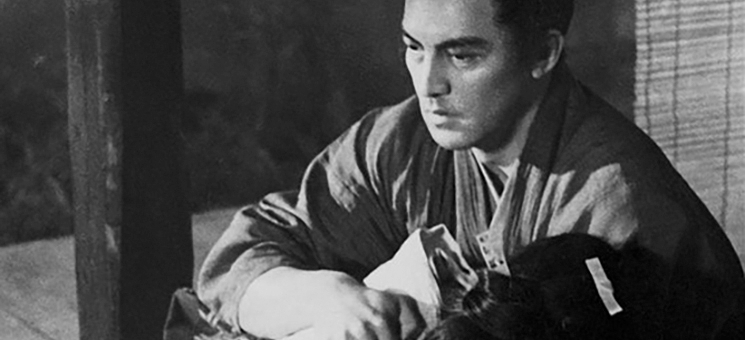
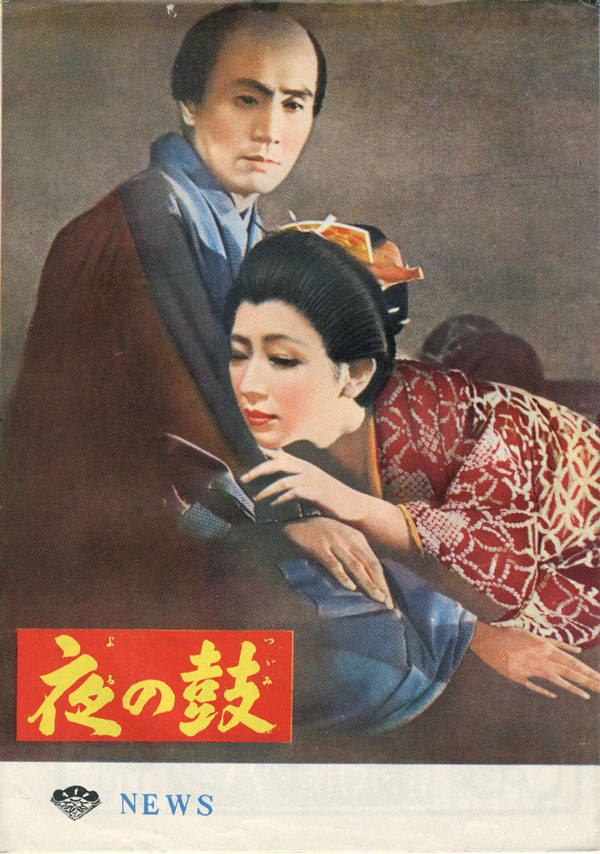
Night Drum (夜の鼓, Tadashi Imai, 1958)

night-drum

The works of Chikamatsu Monzaemon continue to have a large influence over Japanese drama even if not as frequently and directly adapted as they were in the immediate post-war period. Famous for tales of tragic love suicides and romantic heroes who risk all in the service of deep emotion, Chikamatsu’s works perhaps found even greater resonance in the turbulent years in which individual freedom and adherence to tradition found themselves in even greater conflict than ever before. Tadashi Imai makes the most of Chikamatsu’s melancholy fatalism to take a sword to the samurai order itself with all of its arcane rules and the essential hypocrisy which underlines its cruelty.

Hikokuro Ogura (Rentaro Mikuni) has been in Edo for a year with the shogun and is now on his way home. Stopping at an inn, he has a low level argument with his brother-in-law who warns him the men are getting restless and need to blow off some steam preferably with some sake. Hikokuro is in charge of the purse strings and knows all of this pageantry costs money the clan do not quite have hence he’s reluctant to fritter it away on alcohol no matter how much the men might resent him for it.

That’s not to say Hikokuro is a particularly officious person, he’s kind and cheerful by nature but also tired and eager to get home after such a long time away. His wife, Otane (Ineko Arima), is very happy to see him but something seems different about her and there’s a tension in the air among some of the other women. It seems, there are rumours about Otane and a travelling musician (Masayuki Mori) who frequented the house during the summer while Hikokuro was away. Rumours are often just that, especially in these petty circles of nobility, but female adultery is punishable by death and so is not something to be gossiped about idly.

Night Drum (夜の鼓, Yoru no Tsuzumi) begins with the ominous sound of the drum itself, beating out the inevitably tragic fate of all concerned with a melancholy fatality. The tale proceeds in a procedural fashion as the authorities become involved, hearing witness testimonies and trying to discover if there could be any truth at all in these unpleasant rumours. Matters are further complicated by the pecuniary difficulties the clan currently finds itself in – the elders are half hoping it is true because it would be a good excuse to expel the Ogura household and thereby save the money which goes on its upkeep. They are aware, however, that they’re talking about the life of a previously unblemished woman as well as the ruin of her extended family.

The life of a retainer is not as easy as it sounds and we’re constantly reminded of just how much money is necessary to keep up appearances. The clan authorities are dismayed when they hear of Otane earning money on the side through needlework though other retainers are quick to confess their wives also help out, they just can’t survive on such meagre stipends. Each lord is required to hire servants as befits their status but they aren’t given the money to do so. Hikokuro is also required to serve the shogun in Edo every other year for at least twelve months meaning Otane is left alone at home with almost nothing other than her needlework to do except wait patiently for her husband’s return.

Given these circumstances, it’s easy to understand how such pernicious rumours might begin. The sole basis of the evidence seems to rest on a tip off that Otane is thought to have been alone in a room with a man who is not her husband. That she may be put to death solely for the crime of sharing the same space as someone of the opposite sex seems extreme, but this is the feudal world where rules and propriety are all. The men can cavort with geishas to their heart’s content, but Caesar’s wife must be above suspicion.

The action unfolds piecemeal as each of the various witnesses offers their testimony of events. Given the gravity of the situation, few are eager to recount their suspicions – especially the other women who fear the rumour may be true but are also unwilling to believe it. Hikokuro does not want to believe it either but faced with such convincing, if circumstantial, evidence doubt creeps into his mind and finds an anchor in Otane’s guilt ridden behaviour. Ironically, this entire situation developed only because of Otane’s attempts to avoid it – remaining at an inn rather than travelling with a man on the road only for one of her husband’s friends to attempt to rape and blackmail her. Having had far too much to drink in an attempt to steel her nerves and cover up the embarrassing assault, Otane finds herself at the mercy of man who should have known better than to take advantage of another man’s wife in such a moment of weakness.

One stupid mistake born of alcohol, loneliness, and a series of male betrayals is enough to bring down the social order all on its own. Rentaro Mikuni plays the part of the previously affable wounded spouse with an exceptional level of nuance as he accepts his part in his wife’s downfall thanks to the the circumstances of their lives which have kept them apart and left her at the mercy of untrustworthy lords. There is anger here, and shame, but there is still love too which only makes the inevitable outcome all the more painful for everyone concerned. Hikokuro plays the part he’s expected to play, but it pains him and you can’t wipe a slate clean with blood. Imai has his eyes firmly on the civilised society with all of its rigid yet often cruel and unfair rules for living. Shot with a kind of hypnotic dreaminess in which each of our unfortunate players is swept along by events they are powerless to influence, Night Drum beats out the death knell of those who allow their individual desires to overwhelm their “civilised” conformity but it does so with a rhythm that is filled with anger rather than sorrow, for those who are forced to leave half their lives unlived in maintenance of the very system which oppresses them.


Irezumi (刺青, Yasuzo Masumura, 1966)

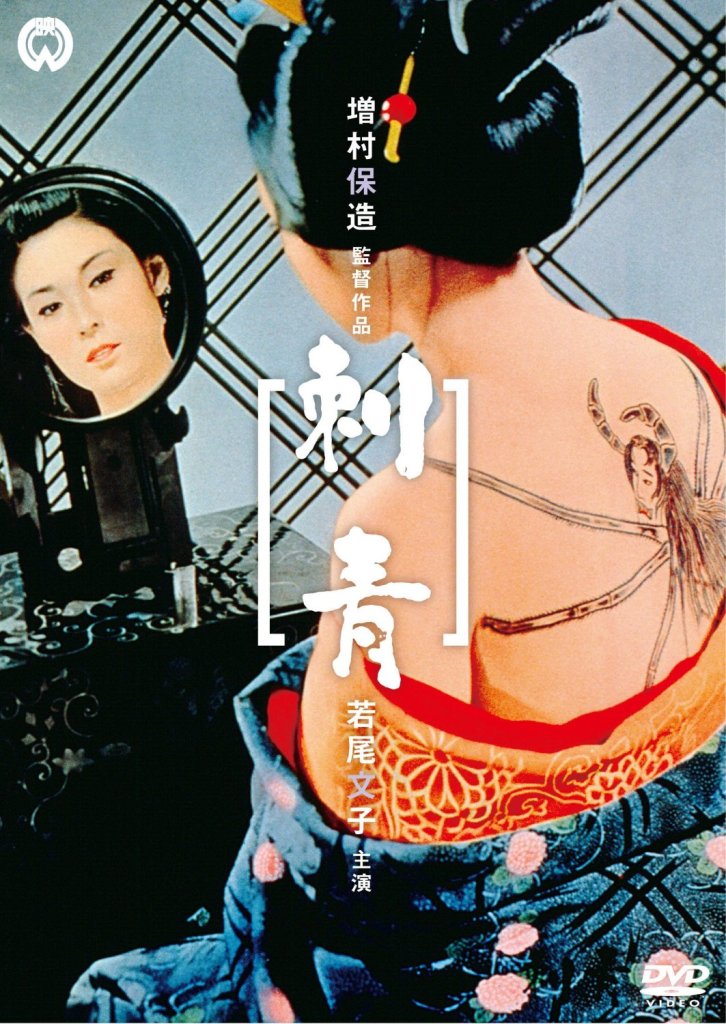
91HAEic7eNL._SL1500_Irezumi (刺青) is one of three films completed by the always prolific Yasuzo Masumura in 1966 alone and, though it stars frequent collaborator Ayako Wakao, couldn’t be more different than the actresses’ other performance for the director that year, the wartime drama Red Angel. Based on a novel by Tanizaki and scripted by Kaneto Shindo (Onibaba, Kuroneko), Irezumi is a supernaturally tinged tale of vengeance and betrayal.

The film begins in the middle as Otsuya, having been abducted and sold to a geisha house, is tied, bound and chloroformed so that a tattooist can mark her skin with the eery portrait of a spider with a human face. Skipping back awhile, it seems this came about as a consequence of Otsuya convincing the mild mannered assistant of her father, Shinsuke, to run away with her. The pair take refuge at the home of a family friend, Gonji, but after his advances towards Otsuya are rebuffed he arranges to have Shinsuke killed and Otsuya sold as a geisha. Shinsuke manages to get away after a bloody fight but he’s a gentle man and the violence of the encounter marks him. Otsuya, by contrast, finds she quite enjoys her new life and gets along OK with her pimp, Tokubei, who urges her to “feed on men”. Otsuya’s lusts become ever more violent with the spectre of the tattoo artist hovering in the background. Is the tattoo itself enacting these scenes of terrifying vitality or merely an excuse for releasing Otsuya’s true nature?

Shot in vibrant colour in contrast to Red Angel and many of Masumura’s other efforts from around the same time, Irezumi makes fantastic use of its lurid atmosphere. Sex and death and violence – hardly unusual themes for Japanese cinema though Irezumi feels like an early precursor to the exploitative pinky violence cycle of the following decade. In keeping with those films, Otsuya is another conflicted avenger, wreaking havoc on venial men who think they can buy and sell a woman’s soul as well as her body. As the violence mounts, Otsuya falls into a kind of mania and at one point exclaims that this isn’t really her at all, it’s all the fault of the spider on her back – trapping men in its silky web only to suck them dry and throw away the husk.

Whether Otsuya is herself an avenging warrior for the female sex or merely a demonic vision of the ultimate male fear is somewhat up for debate. Her transgressions are intentionally destabilising – she breaks with convention by “betraying” her father when she runs of with Shinsuke and not only that, she does so at her own insistence. Shinsuke himself is far too meek and mild mannered to have ever done such a thing entirely of his own will and is largely swept along by Otsuya for the entire course of the film. Only when he fears she may betray him does he decide to take action. Otsuya’s sexuality in itself is also transgressive, actively pursuing Shinsuke before a formal marriage and then even expressing her enjoyment of her new life in the pleasure quarters – neither attitude is one that is expected of the demure daughter of a noble house. Is she an emancipated woman, or fallen one? The film offers no clear judgement here but presents her both in terms of vengeful heroine and of terrifying villainess.

Along with its rather complicated structure beginning in a media res opening followed by a lengthy flashback sequence, Irezumi is never quite as successful as Masumura’s other mid ‘60s offerings. Though boasting a script by maestro Kaneto Shindo, a noted director in his own right and frequent visitor to the realms of horror, something about Irezumi fails to coalesce. That said, it does offer a visually arresting, generally interesting supernaturally tinged tale and yet another fantastic performance from its talented leading lady.


Irezumi is available with English subtitles on UK R2 DVD from Yume Pictures

Tattoo sequence from the film:

http://www.youtube.com/watch?v=pIlat5gmTAY