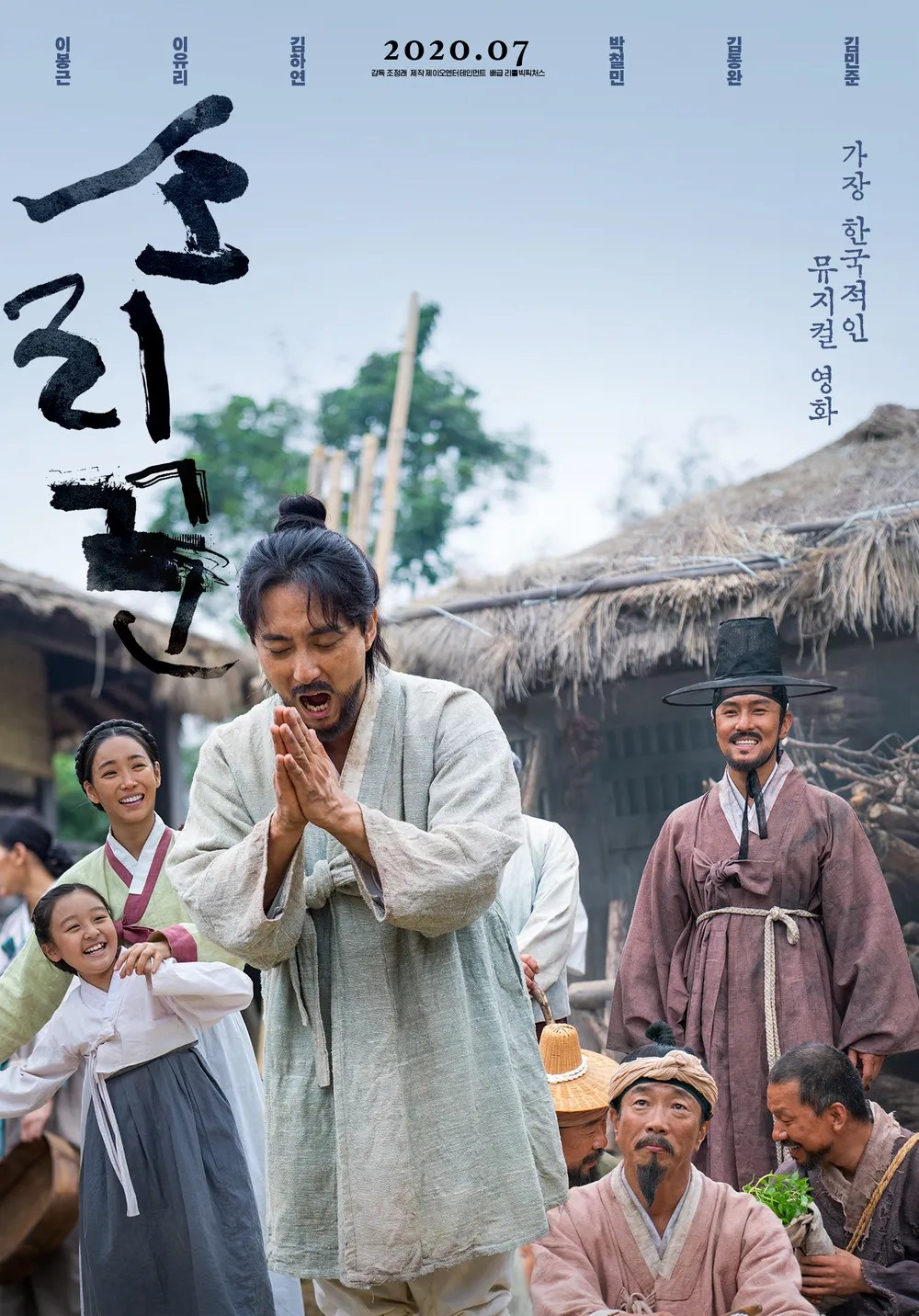
The Singer (소리꾼, Cho Jung-lae, 2020)

A Pansori singer shames the world into giving him his miracle in Cho Jung-lae’s musical fable, The Singer (소리꾼, Sorikkun). If there’s one thing you can bank on in old Joseon it’s that there is intrigue in the court, yet the rot seems to have penetrated even more deeply into the fabric of society as the hero discovers while looking for his kidnapped wife only later realising that the people who are supposed to protect you from violent criminals are in fact violent criminals themselves.  

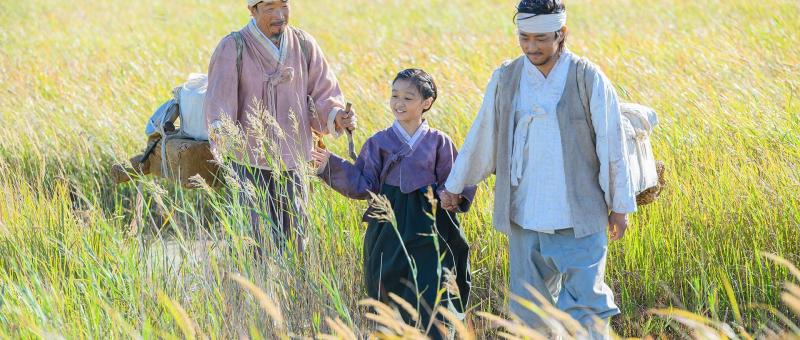
Set in 1734, the 10th year of King Yeongjo’s reign, the film opens with a cheerful scene as singer Hak-gyu (Lee Bong-geun) performs in the marketplace while his wife Gan-nan (Lee Yu-ri) and daughter Cheong (Kim Ha-yeon) watch from the sidelines. As the opening voiceover reveals, however, this is also a time of increasing chaos in which the accepted social order has broken down following successive incursions from China and Japan. The King has appointed a special courtier, Kim Tae-hyo, to investigate the so-called “Ja-mae gang” suspected of running a human trafficking ring while in collusion with corrupt lords. Of course, the king doesn’t know that Tae-hyo is one of the corrupt lords, but then there are so many of them to choose from. In any case, disaster strikes when Hak-gyu is late home after being accosted by a fan while returning some of the clothes Gan-nan had been mending to a nobleman and discovers his wife and child missing when he gets back. Gan-nan and Cheong have been kidnapped by the gang along with several others from the area. Cheong manages to escape thanks to her mother’s quick thinking but is badly injured and in a coma for some time eventually waking up to realise she has lost her sight. Hak-gyu along with his drummer friend Dae-bong (Park Chul-min) decides to take his daughter and search for his wife all over Korea if necessary. 

As the opening and closing titles remind us, Pansori gained popularity precisely because it told the stories of the common people and was often transgressively frank in its attacks on the class system, social inequality, and even the monarchy. Belonging to the lowest class of entertainers, Hak-gyu’s “lowborn” status is often used against him, the gang deliberately targeting those from the lower orders to enslave because they do not really think of them human, yet it is also in a sense his salvation in his innate ability to connect with ordinary people as he retells his life as fable gathering large crowds around him as he anxiously asks if anyone has seen his wife. He is joined in his travels by a “corrupt monk” he saves from drowning in a river, along with bumbling lower aristocrat supposedly bumming around too afraid to go home and tell his father he’s failed the civil service exam (again), providing an accidental microcosm of the current society. 

Yet what Hak-gyu didn’t know was that the gang is merely an extension of government oppression, corrupt lords flexing all of their muscles to fully exploit their subjects. Tae-hyo’s mentor reminds him that “politics is all about money” as the pair of them try to game the king pretending to hunt the gang that they are themselves running. A skilled seamstress, Gan-nan is firstly placed in the home of a local dignitary but later moved on to the mines for making too much trouble. She tells everyone she meets that she’s been kidnapped, but the nobles are all in on it and everyone else is too frightened to resist. Meanwhile, Tae-hyo and his fellow conspirators are also it seems in collaboration with the Japanese, buying up smuggled rifles to use in a potential insurrection. 

Drawing inspiration from his own life story, Hak-gyu re-imagines the gang as Chinese pirates and his daughter as a displaced princess determined to do whatever it takes to save her blind father, always leaving his audience wanting more with his cruelly positioned cliffhangers. He finds himself in an odd kind of trial by combat, given the opportunity to win back his life and his wife if only he make the heartless lords laugh or cry eventually saved only by his ability to move the hearts of others through the power of his sincerity. A Pansori fable in and of itself, Cho’s meta musical drama is fitting tribute to power of art to speak truth to power revealing its own truths in falsehoods and by it handing back the means to the people to demand justice and freedom.


Original trailer (English subtitles)

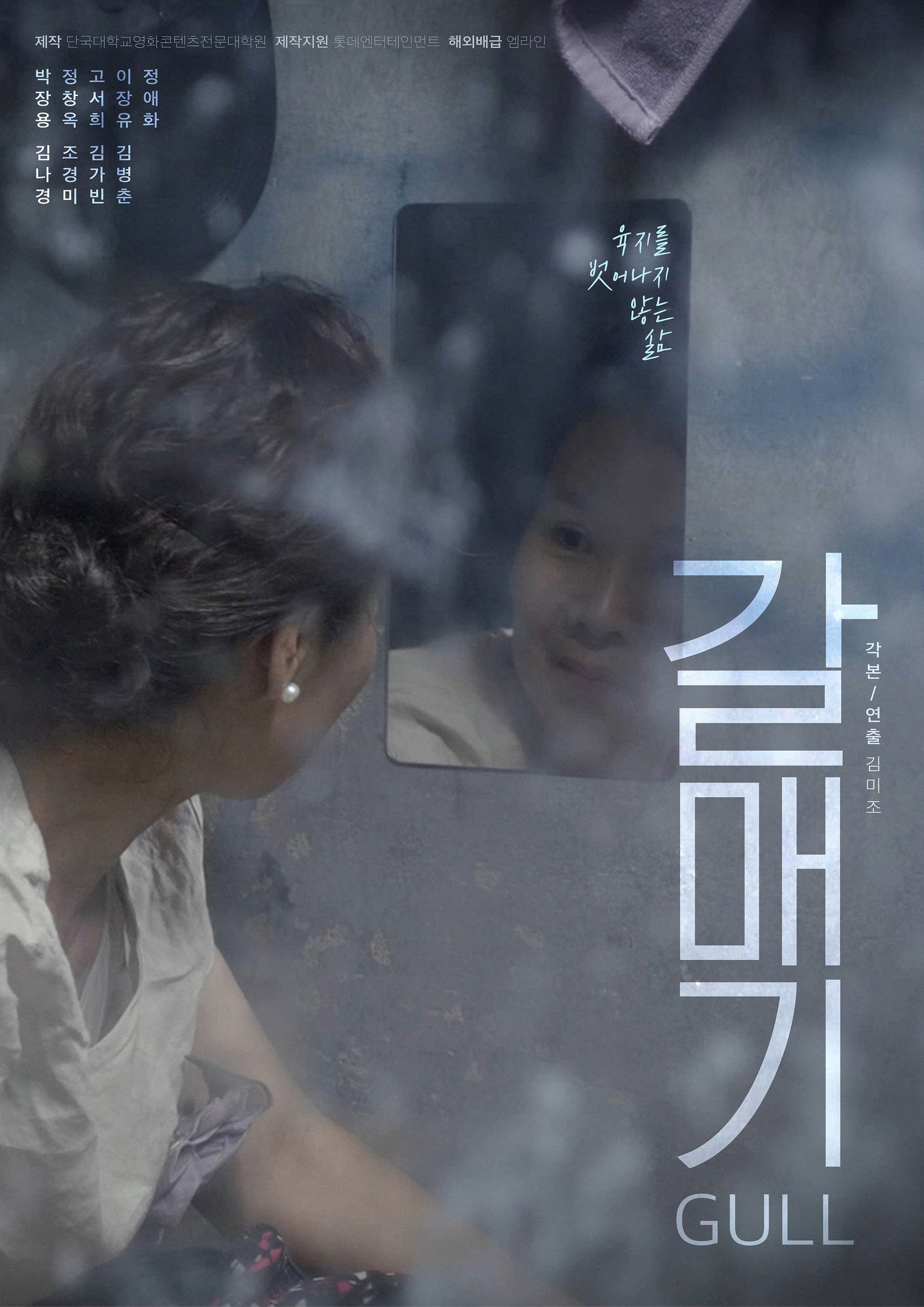
Gull (갈매기, Kim Mi-jo, 2020)

“Equality before the law must be enjoyed not only by the rich but by everyone. We must not let them get away with trampling on our human rights and right to life”, the leader of a protest against the forced relocation of his fish market intones over a loudspeaker in Kim Mi-jo’s incendiary Gull (갈매기, Galmaegi), but his words have a very different connotation to a middle-aged woman quietly seething in her protest gear as she watches from an upper window. She knows when he says “everyone”, it’s not quite what he means and that to that extent he does not truly believe what he’s saying because to be a woman in this society is to know that your human rights and right to life have been trampled on daily since the day you were born and if you try to resist someone will tell you you’re making a scene. 

30 years running a stall selling raw fish, O-bok (Jeong Aehwa) is excited about the marriage of her oldest daughter, In-ae (Go Seo-hui), though also a little anxious seeing as she’s marrying up, her fiancé’s family are educated people with good government jobs. In-ae jokes that her mother has an inferiority complex, but it is in a sense true in a half-realised acceptance of her marginalised position as a working class woman along with the frustrated dreams of her youth. Chatting on the phone with her mother who has dementia, O-bok reveals she’s proud that despite having missed out on an education herself as was the thinking for girls in those days, she managed to send each of her three daughters to college. She wonders why her mother didn’t do the same, and mourns all the things she could have done with her life if only she hadn’t been bound by societal expectations. 

Staying behind one evening to have a drink with her colleagues, she is assaulted by Gi-taek (Kim Byeong-choon), the man with the loudspeaker and the de facto leader of the protest and solidarity movement trying to ensure they cannot be pressured into accepting less than they’re owed in compensation when the market is closed. Stumbling home the following morning clearly in pain and having difficulty walking, O-bok is alerted to blood on the back of her skirt by a fellow female pedestrian, stopping into a bath house to rinse out her underwear. Aside from visiting a doctor for “bleeding”, she tells no one and does not return to the market for several days. Gi-taek, meanwhile, has the audacity to turn up at her door with premium seafood to ask after her health. 

Eventually O-bok explains what’s happened to In-ae, laying bare a generation gap as the younger woman tries to persuade her mother that she should it report it to the police. O-bok, however, is reluctant to make herself the subject of gossip, mindful of the effect it may have on her daughter’s marriage, and tries the old-fashioned way first in asking Gi-taek for an apology through an intermediary, complicating the situation in obviously being unwilling to say what it’s for. When he refuses, she takes her daughter up on the offer and files a complaint though perhaps knowing it’s unlikely to go anywhere seeing as she no longer has access to any material evidence.  

What she could not have expected is the extent to which her simple desire to see justice done would make her a social pariah. Of course, the situation is complicated by the economic precariousness of the fish market workers who cannot afford to lose out on the compensation money and are depending on Gi-taek to help them get it. The men find the whole thing embarrassing, making muted comments about O-bok’s drinking as if she brought this on herself, something her daughter later echoes in a moment of anger only to be disappointed in herself for saying it. Not knowing who made the accusation, her husband chuckles that rape is all a big joke because you “can’t rape a girl who doesn’t want to”, while the women are largely no better reminding her that this is the sort of thing you keep to yourself and try to forget as if they don’t know how that feels. 

“I’m so sick of people mouthing off about rights and all” a genial female shopkeeper confesses to O-bok, admitting that she has no idea why the man on the roof across the way with the sign is protesting, “He says things are unfair or something. I don’t even care.” “He’s just torturing himself” she adds, O-bok perhaps wondering too if that’s all she’s really doing, if her quest for justice is really worth it when no one seems to care. She wonders if they’d care more if she weren’t a 61-year-old market fishmonger but an educated woman with a good government job. Maybe we’re not all so equal under the law after all, but she can’t let them get away with trampling on her dignity. Shot with naturalistic detachment shifting to a rattled handheld, Gull is a crushing condemnation of a misogynistic, classist society but one that finds strength in its heroine’s resilience and newfound determination make herself seen if only by those ought to feel ashamed. 


Gull streams in the UK until 11th November as part of this year’s London Korean Film Festival.

Original trailer (English subtitles)